Best WHOOP Alternatives in 2026
If you like what WHOOP does but don’t love the subscription, the strap, or the complexity, you’ve got solid options in 2026.
By Anjali Singh · Jul 7, 2026
Category:Apps
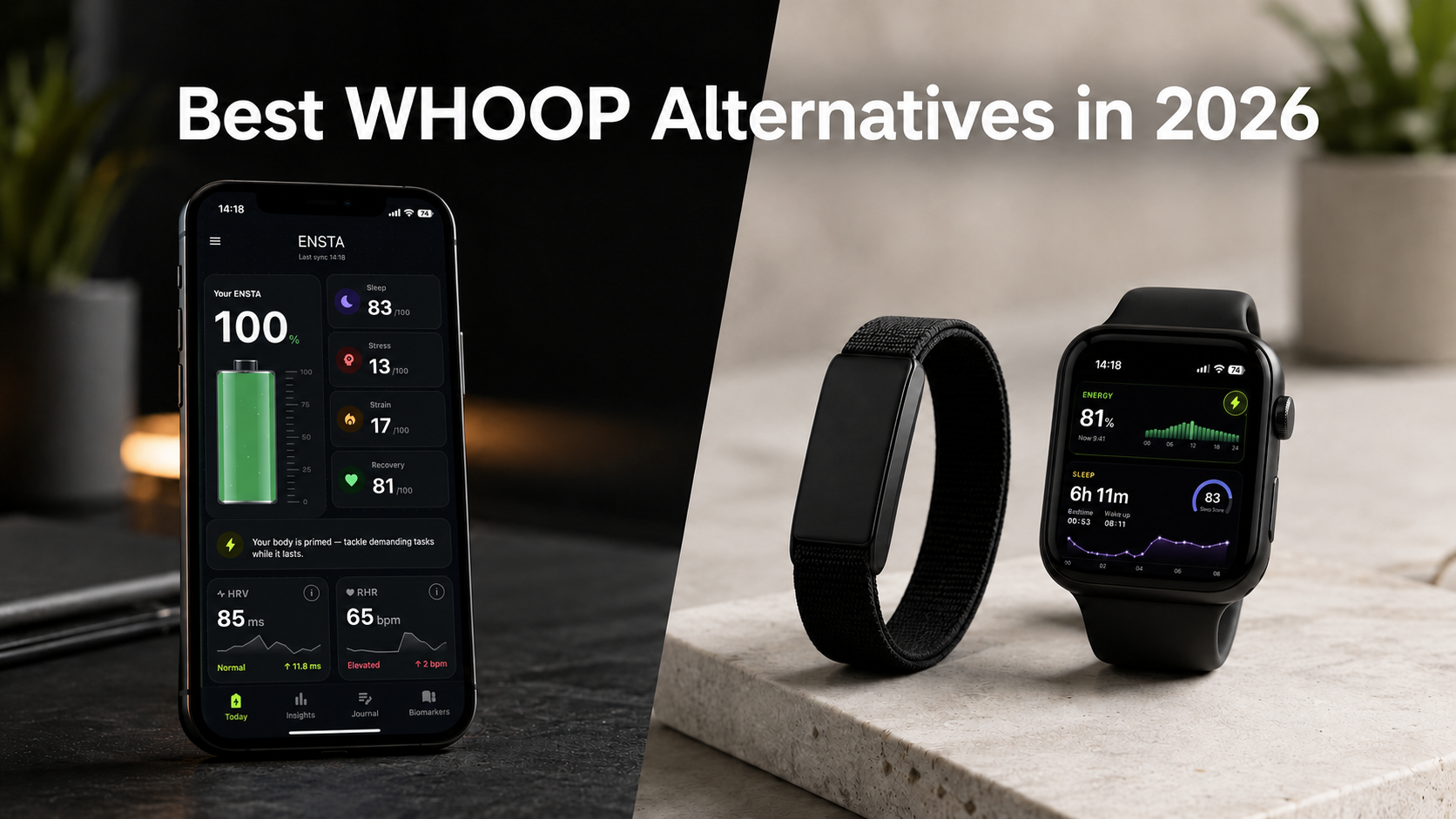
Not everybody wants the whole WHOOP setup. A lot of people just want to know what is going on with their energy and why they feel off.
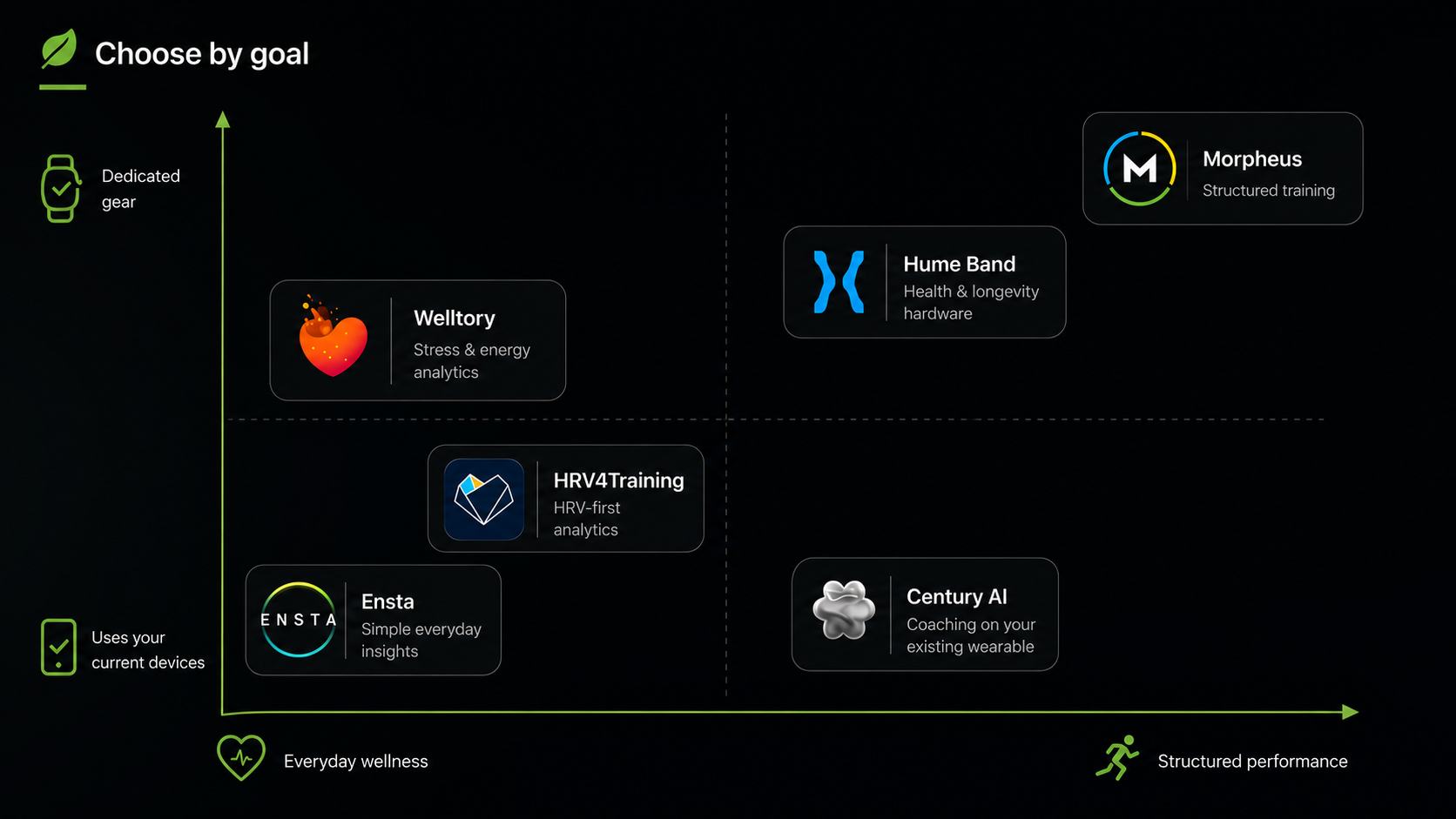
That is really what this list is for. Ensta is the easy one for most people because it is free and does not ask you to buy another device. HRV4Training is more for the HRV (heart rate variation) obsessed people. Morpheus is for folks who actually want structure in their training.
Welltory is better if you care more about stress and energy patterns. Hume Band is for the people who want a device and do not mind a more health-nerdy angle. Century AI is the “use the wearable you already have, but make it smarter” option.
WHOOP itself is not bad. It just asks for a lot. New band, monthly fee, another place to check numbers, another routine to keep up with. That works for some people, sure. But plenty of others are just trying to figure out why one day feels fine and the next day feels like they got hit by a truck.
So this article looks at the options from that angle.
Quick picks: best WHOOP alternatives in 2026
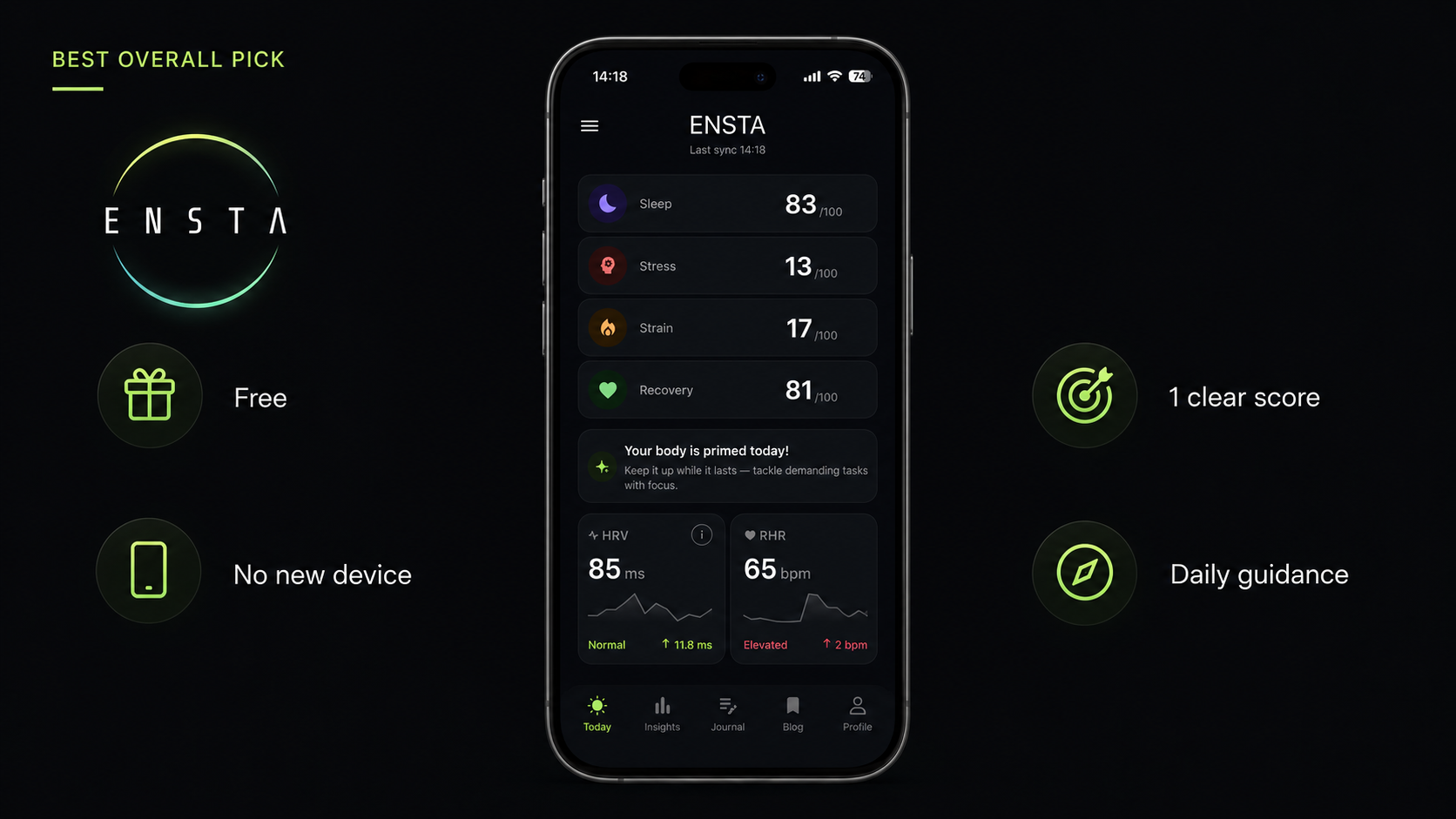
- Ensta - best for most people. It is a free, cross-device app with one simple Energy Score and clear daily guidance.
- HRV4Training - best for HRV-first recovery tracking. It uses a short morning test to give recovery points and readiness insights.
- Morpheus - best for structured cardio and conditioning. It pairs recovery scoring with dynamic heart-rate readings.
- Welltory - best for stress and energy analytics. It turns HRV, heart rate, and sleep into readable recovery patterns.
- Hume Band - best for device-based metabolic health tracking. It combines a screen-free band with longevity-focused metrics.
- Century AI - best if you want a coach layer on top of a wearable you already own. It turns your data into daily recovery and sleep scores.
Comparison at a glance
| App | Price & subs | Devices required | Single clear score? | Actionable guidance | Best for |
|---|---|---|---|---|---|
| Ensta | Free app. No hardware purchase required. | Works with devices you already use, including phone and connected wearables. | Yes. 0 to 100 Energy Score with simple ranges. | Strong. Explains why your energy looks the way it does and what to do today and tonight. | Most people who want a simple, free way to understand energy, sleep, stress, and recovery. |
| HRV4Training | One-time app purchase in most stores. | Phone camera or compatible HR sensor. | Yes. HRV4Training Recovery Points and readiness insights. | Good. Gives intensity recommendations and trend analysis based on your baseline. | HRV-curious users who like a morning test and simple go hard or back off guidance. |
| Morpheus | App plus proprietary M7 heart-rate monitor. No long-term lock-in. | M7 chest strap plus phone. Can also ingest sleep and activity data from other devices. | Yes. Daily recovery score and training zones. | Strong. Uses recovery-based zones and weekly cardio targets. | People doing structured conditioning who want zones and recovery tightly linked. |
| Welltory | Free tier plus optional subscription for deeper analytics. | Phone camera and or connected wearables for better data. | Yes, but with multiple scores like stress, energy, and balance. | Mixed. Offers lots of insight, though some users may find the metrics overwhelming. | People who want a health analytics dashboard rather than a pure athlete tool. |
| Hume Band | One-time band purchase. App-based coaching included. Premium tiers vary. | Hume Band plus app. | Yes. Recovery and metabolic-style scores. | Good. Gives lifestyle and habit feedback tied to metabolic and recovery markers. | People chasing longevity, metabolic health, and early warning signals. |
| Century AI | Subscription app. Free trial in most regions. | Popular smartwatches and bands via health platforms. | Yes. Daily health, recovery, and sleep scores. | Strong. Uses coaching-style suggestions and a daily health challenge. | Users who already log everything on a wearable and want a smarter interpretation layer. |
How we chose
We picked these alternatives using five simple filters.
How clear is the insight? What devices does it support? Do they tell you what needs to be done next? Is the price worth it? And which one helps you make sense of your day without making the whole thing feel like homework?
The point is simple: clarity, actionability, value, and ease of use matter most here.
Ensta - Best WHOOP alternative for most people
One-line verdict: Best for most people who want one clear energy score without buying another device.
Best for: People who want simple daily guidance, not a heavy training dashboard.
Ensta keeps things simple. It turns your sleep, stress, strain, heart rate, HRV, and activity into one Energy Score from 0 to 100, so that you can get a quick read without juggling multiple charts.
Compared with WHOOP, it feels lighter and easier to start with. You do not need special hardware just to try it, and it works across the devices you already use. The idea is to show more metrics while trying to help you understand how your body is doing, and what to do next.
Pros
- Free to download, with no extra hardware needed to start
- One Energy Score that is easy to check at a glance
- Clear explanations and practical suggestions
- Cross-device, so it does not lock you into one ecosystem
Cons
- Less sport-specific than athlete-first systems
- Works best when your sleep and HRV data are steady and consistent
Price / devices: Free app that uses data from devices you already own.
HRV4Training - HRV-first, app-only alternative
One-line verdict: Best for people who want HRV-first recovery tracking without a lot of fluff.
Best for: HRV-curious users who like a quick morning check-in and don’t mind a small daily ritual to get reliable recovery guidance.
HRV4Training is an app that has been around long enough to be properly studied, which already sets it apart. You do a short morning test, it reads your HRV (Heart Rate Variation), and it gives you recovery points and readiness guidance based on your own baseline. It is less all-in-one lifestyle coach and more of a simple signal that says, “push today,” or “keep it lighter.”
Pros
- One-time app purchase in most stores
- No dedicated wearable required
- Strong for people who like numbers and correlations (e.g., travel/alcohol/training load vs HRV)
Cons
- You need to remember a consistent morning test, which some people inevitably forget
- The focus on HRV means less hand-holding on sleep or lifestyle unless you dig into the trends yourself
Price / devices: It’s a one-time app purchase. Works exceptionally with a phone camera or compatible HR sensor.
Morpheus - Conditioning and recovery in one loop
One-line verdict: Best for structured training and recovery-based cardio.
Best for: People who want their recovery score to shape their workouts, or those who are running structured conditioning blocks and want recovery to directly dictate their cardio sessions.
Morpheus is built more for people who actually want guidance on how hard to train on a day-to-day basis. It pairs a daily recovery score with heart-rates that shift with your readiness, so the workout plan feels tied to your body instead of just your calendar.
Pros
- Recovery scores are tied directly to daily heart-rate zones and weekly volume targets
- Good for structured cardio and conditioning
- Integrates sleep and activity data from other devices to round out the picture
Cons
- Requires the M7 chest strap to unlock full features
- Better suited to people actually doing structured training, not casual step counting
Price / devices: Needs you to purchase the app plus proprietary M7 heart-rate monitor.
Welltory - Health analytics and stress radar
One-line verdict: Welltory tries to be your “health analytics dashboard” more than a pure training tool and is best to trace stress and energy patterns if you like data with a softer edge.
Best for: People who want a better read on stress, burnout, and day-to-day energy.
Welltory is less of a training app and more of a “what is my body dealing with right now?” kind of tool. It turns HRV, heart rate, and sleep data into stress and energy insights. Where Morpheus is more structured training aligned, Welltory will point out the real issue if you feel run down without the training data. And compared to WHOOP’s athletic tone, Welltory leans into stress, burnout risk, and daily energy patterns.
Pros
- Good at showing multiple scores (stress, energy, etc.) plus nice visual timelines
- Works with a wide range of devices and can fall back to phone-camera readings
- Good for people who want to understand work-life and stress, not just workouts
Cons
- Can feel a little busy if you want just one simple score
- Some people may find the metrics easier to admire than act on
- Subscription complaints show up around billing and cancellation, so it’s one to test carefully on the free tier
Price / devices: Free tier plus optional subscription. The app works with phone cameras and connected wearables.
Hume Band - Longevity-flavored WHOOP alternative
One-line verdict: Best if you want a band that keeps an eye on the bigger picture since it tries to connect your sleep, stress, and habits to biological aging and future-risk markers.
Best for: People that are chasing recovery plus “age slower” goals rather than purely athletic performance and care about recovery, metabolic health, early warning signals, etc.
Hume Band sits a little apart from the rest. It is a screen-free band paired with an app, and it leans into recovery plus metabolic-style metrics rather than pure workout tracking. That makes it feel more health-focused than gym-focused.
Pros
- Focus on recovery plus metabolic and longevity-style markers
- Screen-free and fairly low-distraction
- Aims to flag declining recovery and stress issues as early warning signs
- Combines recovery, sleep, and HRV tracking
Cons
- Proprietary metrics may take time to understand
- You’re buying into a dedicated band plus ecosystem, even if the framing is different
Price / devices: One-time band purchase. It comes with app-based coaching, with premium tiers varying.
Century AI - “coach layer” for the wearable you already own
One-line verdict: Best if you want a smarter layer (basically a coaching and synthesis layer) for the watch or band you already wear.
Best for: People who already track health data and want better interpretation.
Century AI is the answer to the “I already have a watch, now what?” problem. It pulls in data from popular wearables and turns it into daily recovery, readiness, and sleep scores, then adds coaching-style suggestions to help you actually use the data.
Where WHOOP asks you to commit to its own band, Century leans into “you already paid for good sensors, let us help you actually use them,” which is a pretty appealing value prop if your wrist is already spoken for.
Pros
- No new hardware; uses the wearable you already own
- Multiple scores plus a “daily health challenge” to keep things tangible
- Coaching-style advice that focuses on practical habits and trends
Cons
- Requires a subscription for full functionality
- Quality of insights depends heavily on how consistent your underlying wearable data is
Price / devices: It’s a subscription-based app. It works well with popular smartwatches and bands via health platforms.
App vs device: which do you actually need?
Some people want a new tool. Others want a better way to read the tools they already have. But where do you live?
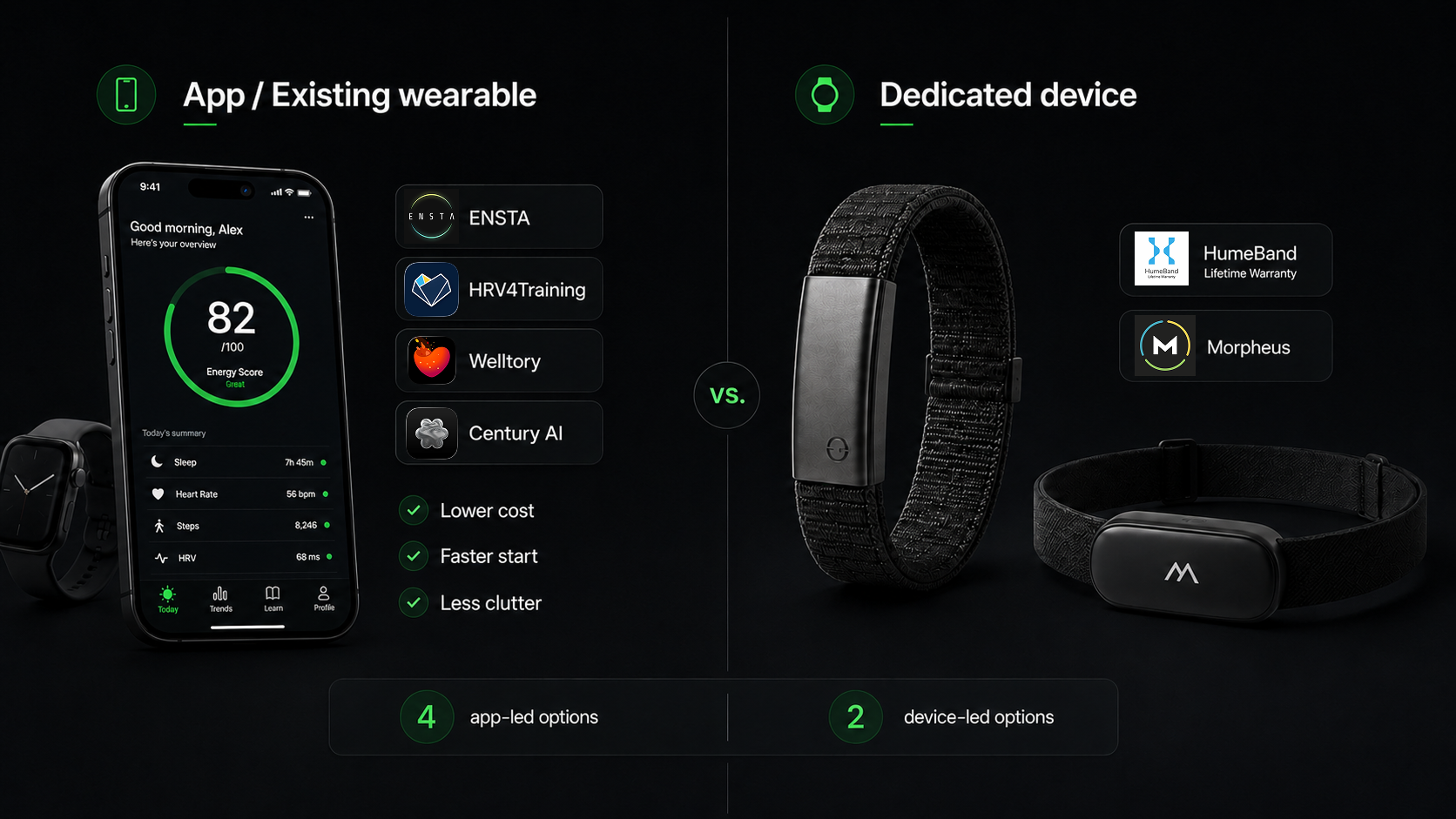
| You’re in the app camp if… | You’re in the device camp if… |
|---|---|
| You already have a tracker, or at least your phone is always on you. | You like having a physical band or strap as a daily reminder. |
| You want to start free or cheap, then pay only if it actually helps. | You don’t mind buying dedicated hardware to get deeper data. |
| You want one simple score and a little guidance, not a metrics jungle. | You want tighter guidance, more depth, and more structure. |
| Ensta or HRV4Training sounds like a smart first step. | A band or chest strap feels more like the right fit. |
| You want clarity without adding more clutter to your life. | You’re more into structured training or longevity tracking. |
FAQs
What is the best WHOOP alternative in 2026?
For most people, Ensta is the easiest place to start. It is free, works across the devices you already own, and gives you one simple Energy Score with clear daily guidance.
Do I need a wearable to track recovery?
Not always. Some apps can work with your phone or with devices you already use, while others are built around a dedicated strap or band.
Which WHOOP alternative is best for athletes?
If you want more structure, Morpheus is a stronger fit. It ties recovery to training zones, while Ensta is better if you want something lighter and more everyday.
Which WHOOP alternative is best for stress and energy tracking?
Welltory is a good pick if stress and burnout are the main thing you care about. It leans more toward health patterns than pure training guidance.
Is a free recovery app good enough?
For a lot of people, yes. A free app is often enough if you mainly want to spot patterns and make better decisions without getting too deep into training data.
Benefits, precautions, and where Ensta fits
These tools are useful because they help you notice the stuff you probably would have brushed off otherwise. Sleep debt. Stress creeping up. Training a little too hard. Or just the very normal reality that a late night on your phone can nuke your energy tomorrow.
That is the good part. Now the important part is to NOT treat them like they know everything. They’re useful mirrors, but they’re still just consumer sensors and algorithms, not diagnostic equipment or a stand-in for a real health professional when something feels properly wrong.
If you want something more hardware-heavy, Hume Band or Morpheus may be the better fit. But if you want one clear score, support across the devices you already use, and a simple nudge on what to do today, Ensta is probably the easiest one to recommend to most people.
For a lot of readers, that is the sweet spot. Not more noise. Not more things to manage. Just a little more clarity, which is usually what people are looking for anyway.
*This article is for informational purposes only and is not a substitute for professional medical advice, diagnosis or treatment.*