AI Health Coach: When Personalized Insights Help and When They Get Annoying
By By Mr.Apps · Jun 25, 2026
Category:Energy
Why health advice from your app can feel useful one day and ridiculous the next
The first time a health app told me to “prioritize recovery today,” I stared at the screen for a few seconds and felt personally offended.
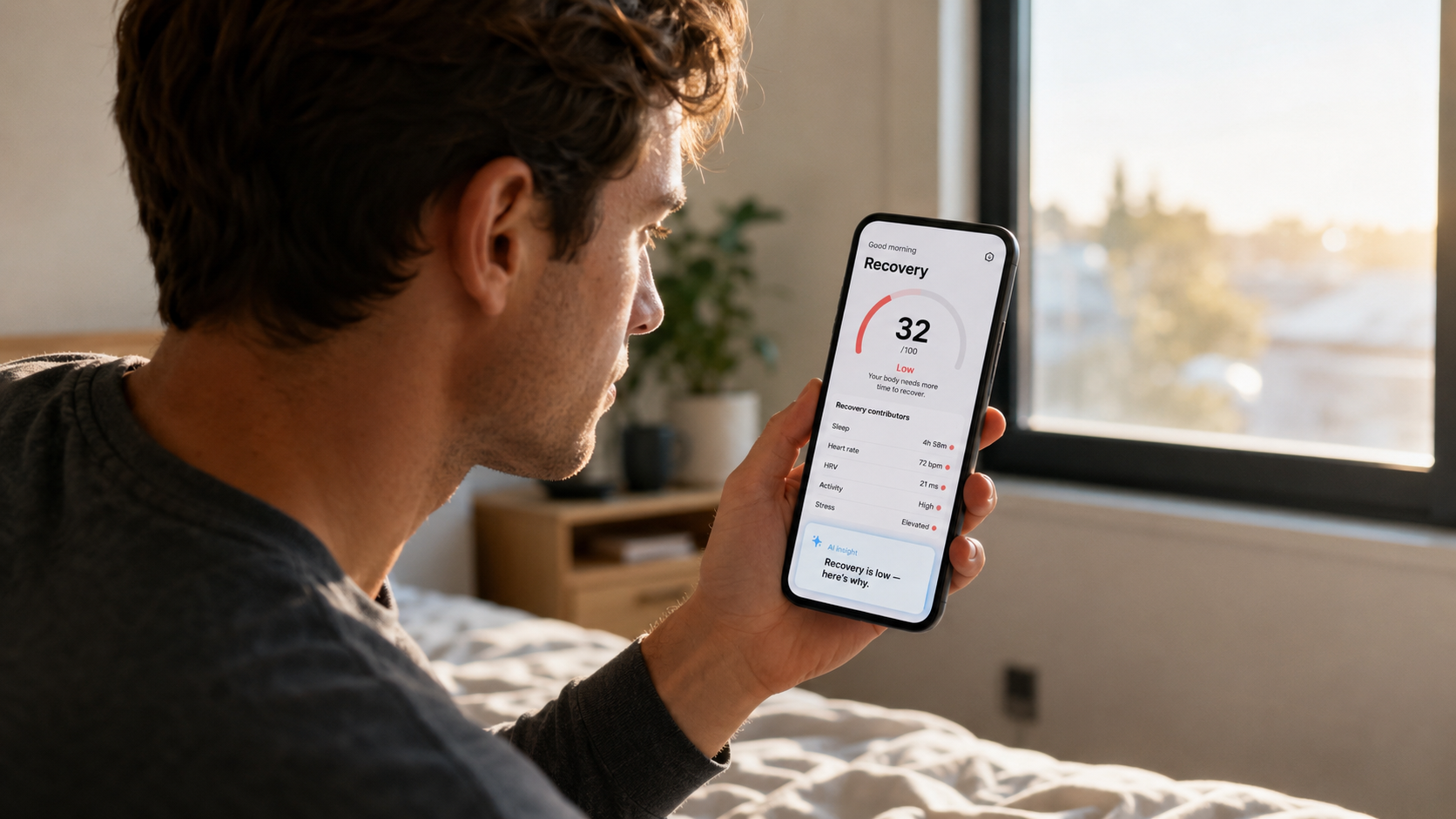
Not because the advice was wrong. It probably was not. My sleep had been bad, my heart rate was higher than usual, and I had the energy of a phone at 7 percent. The problem was that the advice did not tell me anything useful. “Prioritize recovery” is the kind of sentence that sounds helpful until you try to turn it into an actual Tuesday.
Should I skip training? Sleep earlier? Drink more water? Stop answering emails? Lie on the floor and become furniture?
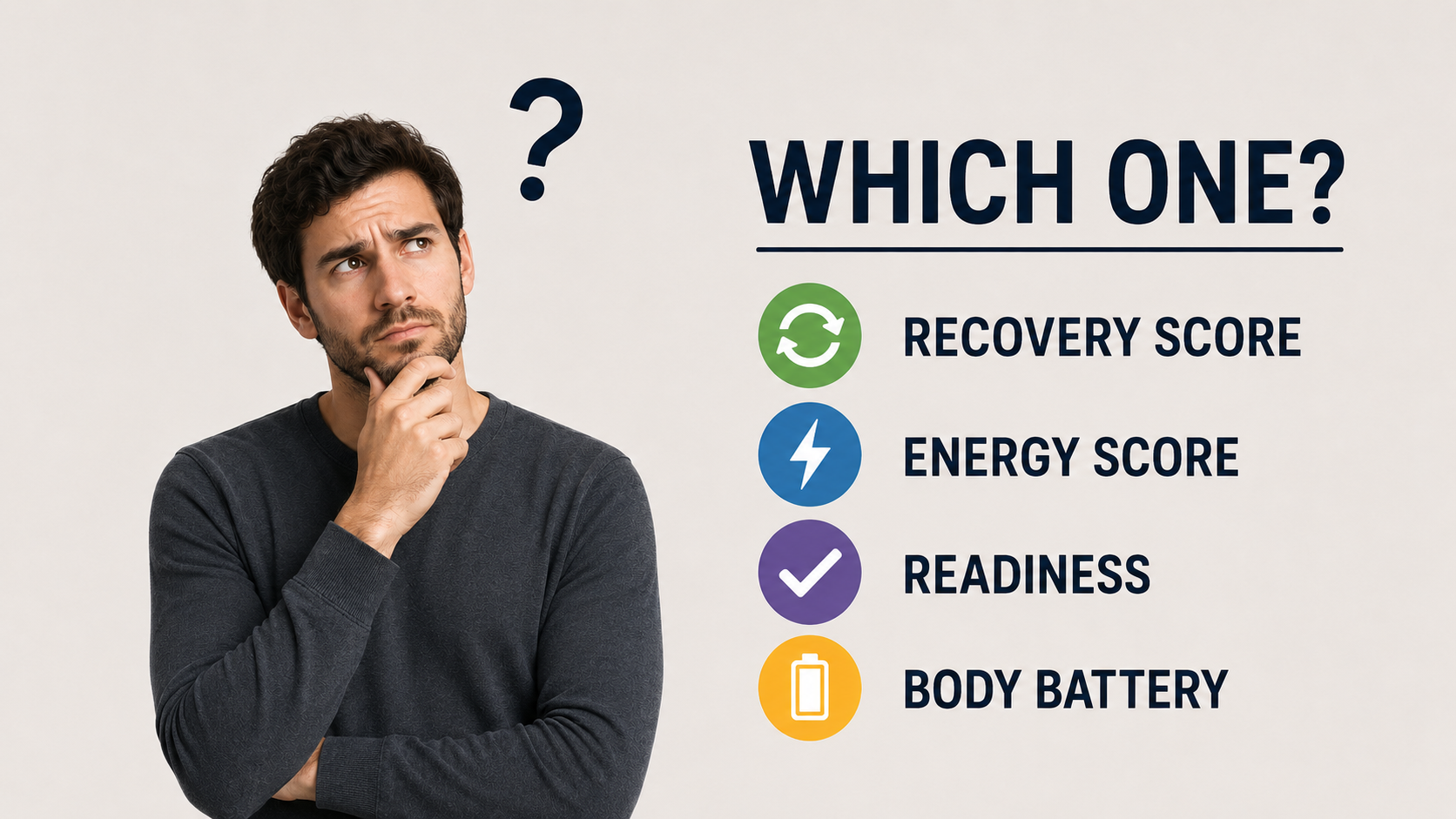
That is where most health apps still struggle. They collect a lot of information, but they do not always explain it in a way that fits real life. They can show sleep, heart rate, HRV, readiness, stress, steps, calories, strain, recovery, and ten other numbers before breakfast. But the real question is much simpler: what is going on, and what should I do next?
Google describes the Fitbit personal health coach as a fitness trainer, sleep coach, and wellness advisor working together, built to answer questions and give guidance from Fitbit data. That direction makes sense. People do not need more numbers. They need the numbers translated.
But that translation has to be short, specific, and honest. Otherwise, it becomes just another notification to ignore.
1. Data is not the same as understanding
Health apps are very good at counting.
They count steps, hours slept, active minutes, heartbeats, workouts, calories, recovery scores, breathing rate, and sometimes even how stressed the body might be. That sounds impressive until the app gives you a low score and leaves you to guess why.
A recovery score of 58 is not an explanation. A sleep score of 64 is not an explanation. A message saying “your body needs rest” is not an explanation either. Those are hints, not answers.
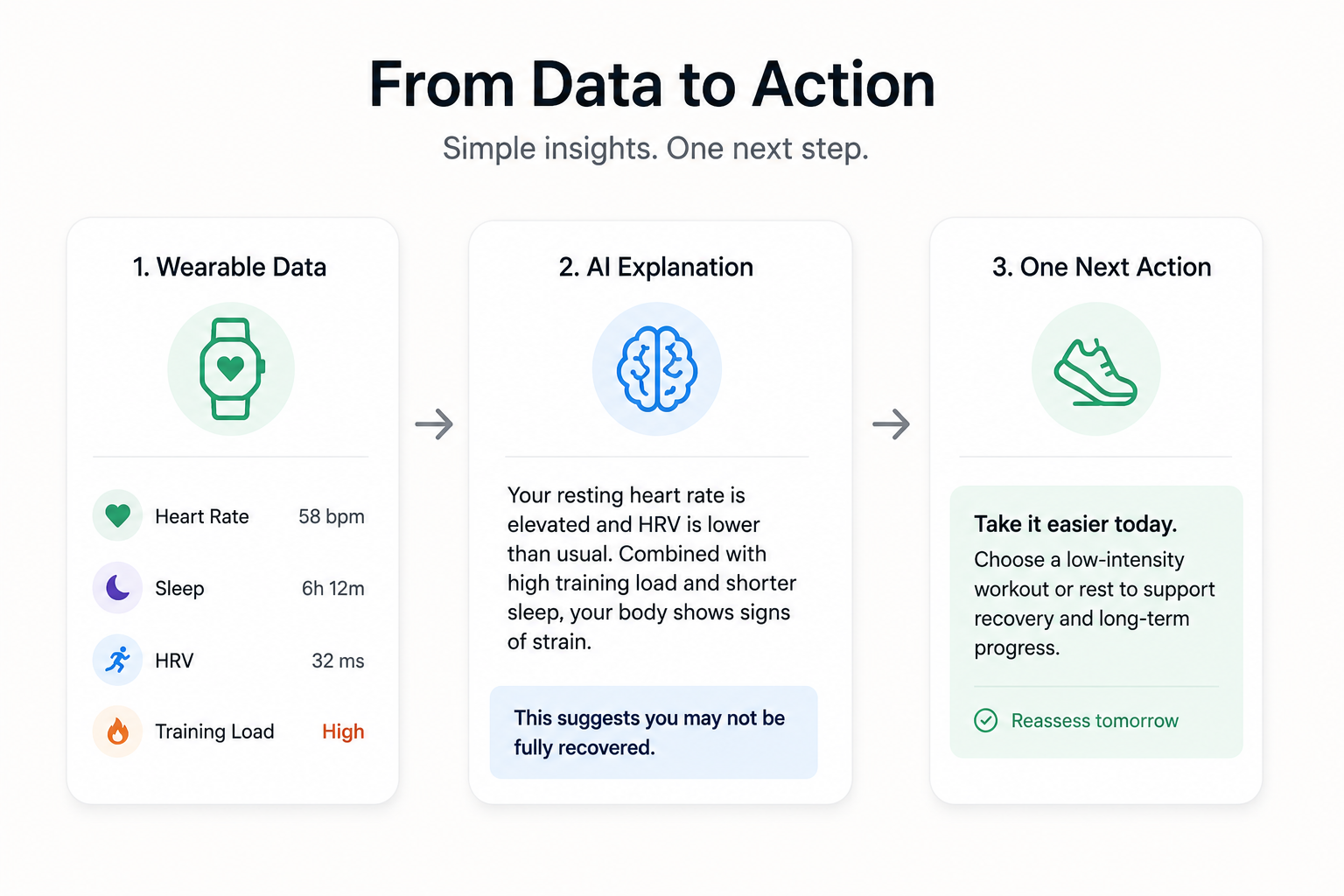
A useful app should connect the dots.
For example, instead of saying:
“Your recovery is low today.”
It should say:
“Your recovery is lower than usual. Your sleep was more interrupted, and your overnight heart rate was higher. Yesterday’s late workout or late meal may have contributed. Keep training lighter today and watch if things rebound tomorrow.”
That is the difference between data and understanding.
Research on wearable health data points to the same problem: turning personal data into actionable insights from wearable data is hard because sleep, exercise, stress, and recovery are messy. They do not behave like simple math problems. They depend on context.
That is why the best health advice from an app should feel less like a dashboard and more like a calm explanation from someone who actually looked at the whole picture.
2. The best insight is usually the shortest one
A good health insight does not need to be long.
In fact, the longer the message gets, the less useful it often becomes. Nobody wants to open an app in the morning and read a small essay about “honoring your body’s natural rhythm.” That kind of advice sounds nice, but it usually disappears from the brain before the coffee is ready.
A useful message should answer three things quickly:
What changed?
Why might it have changed?
What should be done next?
That is enough.
Something like this works:
“Your sleep duration was normal, but your sleep was more restless than usual. Your late bedtime may have contributed. Try moving your wind-down 30 minutes earlier tonight.”
That is useful because it is specific. It points to a real signal. It gives one action. It does not pretend to know everything.
The mistake many apps make is trying to sound encouraging instead of being clear. “You’ve got this” is fine from a friend. From a health app, it is not enough. If the app has the data, it should explain the data.
The best advice is not loud. It is precise.
3. Context matters more than confidence
Personalized advice sounds great, but it only works when the context is real.
An app can see that sleep was poor. It may see that heart rate was higher than usual. It may see that HRV dropped. But it may not know why. Maybe there was late caffeine. Maybe there was alcohol. Maybe the room was too hot. Maybe there was stress. Maybe someone’s child woke up three times. Maybe the watch was loose. Maybe the person is getting sick.
Without context, health advice can become confidently wrong.
Mayo Clinic makes an important point about health advice from new digital tools: these tools cannot examine you, run tests, or understand your full medical record. That warning matters even when the app is only talking about sleep, recovery, or training. The app may notice patterns, but it does not know the whole person.
That is why good advice should leave room for uncertainty.
Bad version:
“Your HRV dropped because you are stressed.”
Better version:
“Your HRV dropped, and your sleep was more restless. Stress, alcohol, illness, hard training, or poor sleep timing can all contribute. Check what changed yesterday.”
The second version is less dramatic, but much more trustworthy.
A health app should not act like it has a crystal ball. It should act like it has clues.
4. Advice gets annoying when it sounds fake
There is a certain kind of app message that immediately makes people close the screen.
“Great job listening to your body. Today is a beautiful opportunity to restore balance.”
That sentence may be harmless, but it is also not useful. It sounds like a wellness poster in a hotel gym.
Most people do not want their watch to become a motivational speaker. They want it to explain why they feel off, why a score changed, or what adjustment makes sense today.
The irritation usually comes from three things:
The advice is too vague.
The tone feels fake.
The message does not connect to the user’s actual data.
If someone asks, “Why did my recovery drop?” the answer should not be a lecture. It should be direct.
A better message would be:
“Your recovery dropped mainly because your resting heart rate was higher overnight and your sleep was more fragmented. Yesterday’s late workout may have contributed. Keep intensity moderate today and see if recovery improves tomorrow.”
That is enough. It respects the user’s time.
The American Medical Association says digital health tools should be used in ways that are ethical, responsible, and transparent. Transparency matters here because users should know why an app is giving advice.
“Take it easy today” is weak.
“Take it easy today because your overnight heart rate was elevated and your HRV dropped below your usual range” is much better.
The difference is trust.
5. A health app should know when to stop
There is a line that health apps should not cross.
They can explain patterns. They can suggest small experiments. They can help someone notice that late caffeine seems to hurt sleep, that hard workouts need more recovery, or that stress is showing up at night. That is useful.
But they should not diagnose medical problems. They should not make people panic. They should not pretend that a sensor on the wrist understands the whole body.
The World Health Organization has emphasized that digital health tools need ethics, trust, and safe use, especially as smarter systems become more common in healthcare. WHO describes its work on technology for health as focused on ethics, trust, and safer implementation.
That mindset matters for everyday health apps too. The stakes may feel lower than in a hospital, but bad advice can still cause problems. It can make someone ignore symptoms, train too hard, worry too much, or trust a number that was based on poor sensor data.
A responsible app should know when to say:
“This pattern has continued for several days. It could be related to stress, illness, poor sleep, training load, or another factor. Consider taking it easier and speaking with a healthcare professional if it feels unusual or does not improve.”
That is not dramatic. That is sensible.
The best health tools do not try to replace doctors. They help people notice what is worth paying attention to.
6. Good advice connects the number to the next move
The most useful health advice does not just explain yesterday. It helps decide today.
A low recovery score should help answer a real question:
Should training be lighter?
Should bedtime move earlier?
Should caffeine stop sooner?
Should today be a rest day?
Should this be ignored because it is one bad reading?
Should the pattern be watched because it keeps happening?
This is where a good health app can be better than a static dashboard. A dashboard shows everything. A good coach reduces the noise.
The best format is simple:
What happened.
Why it may have happened.
What to do next.
For example:
“Your sleep duration was normal, but your sleep was interrupted and your overnight heart rate was higher. A late dinner or stress may have contributed. Tonight, try a lighter dinner and a 10-minute wind-down before bed.”
That is useful because it turns a metric into a behavior.
The advice does not need to be perfect. It needs to be practical. A small action someone can actually do tonight is better than a perfect explanation that goes nowhere.
7. People get irritated when advice ignores real life
People do not hate health advice. They hate advice that acts like real life does not exist.
A sleep app telling a new parent to “get more rest” after the baby woke up four times is not helpful. A workout app recommending high intensity because the score is green, even though the person’s legs are destroyed from yesterday’s squats, is not helpful. A stress message saying “try to relax” during a brutal workday is not helpful.
The irritation comes from being misunderstood.
Good advice should feel aware of reality. It should ask for missing context instead of inventing it.
A better message might say:
“Your sleep was interrupted last night, but the reason is unclear. Was it stress, noise, childcare, alcohol, or something else?”
That kind of question is more useful than a confident guess. It also lets the person help explain the data, which matters because health data is not self-explanatory.
The future of personal health apps is not just better algorithms. It is better conversation.
Less lecturing.
Less pretending.
More useful questions.
More realistic next steps.
The honest take
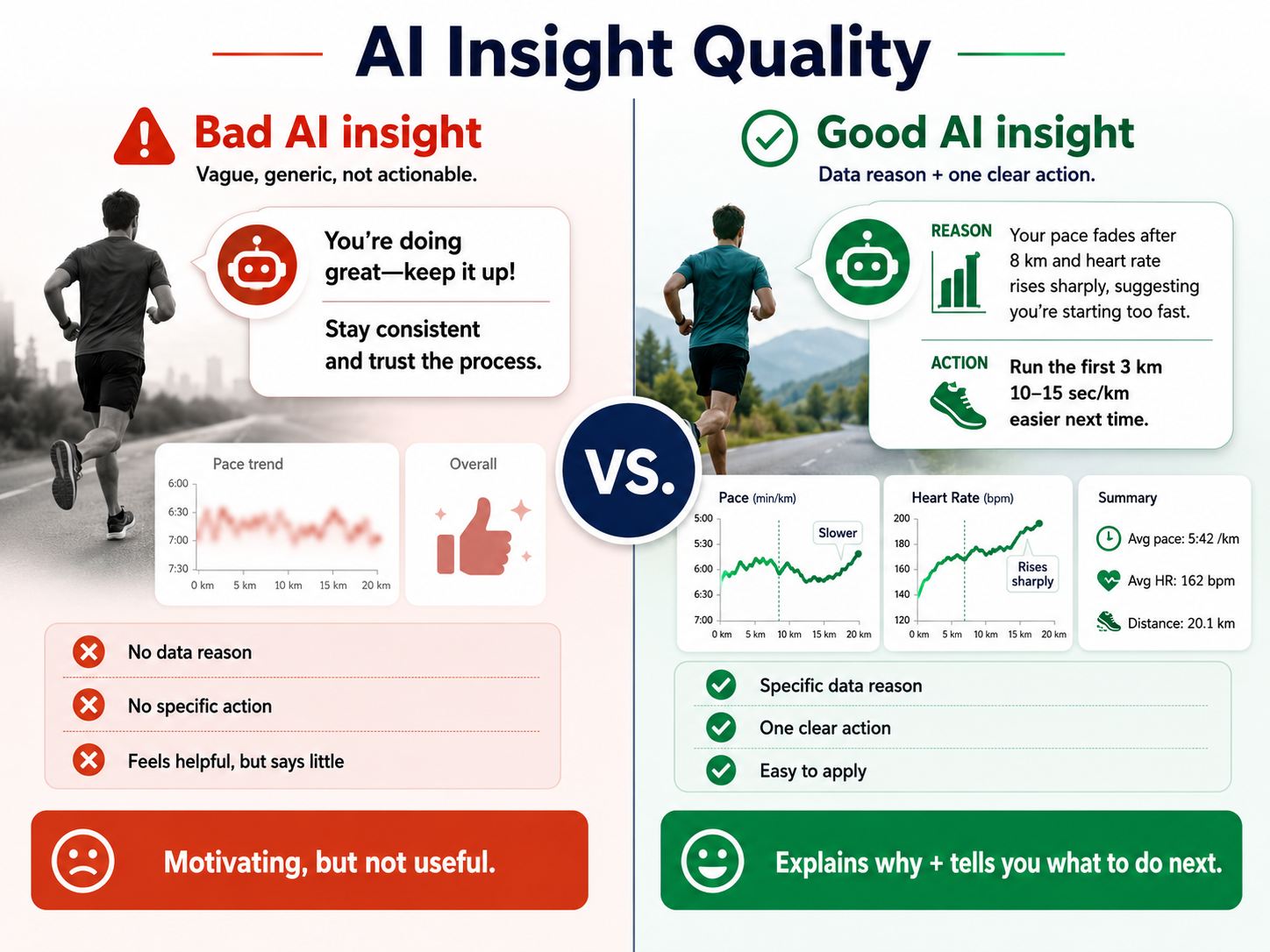
Health app advice is not useful just because it is personalized.
It is useful when it makes the body easier to understand and the next step easier to choose. It becomes annoying when it adds more words without adding more clarity.
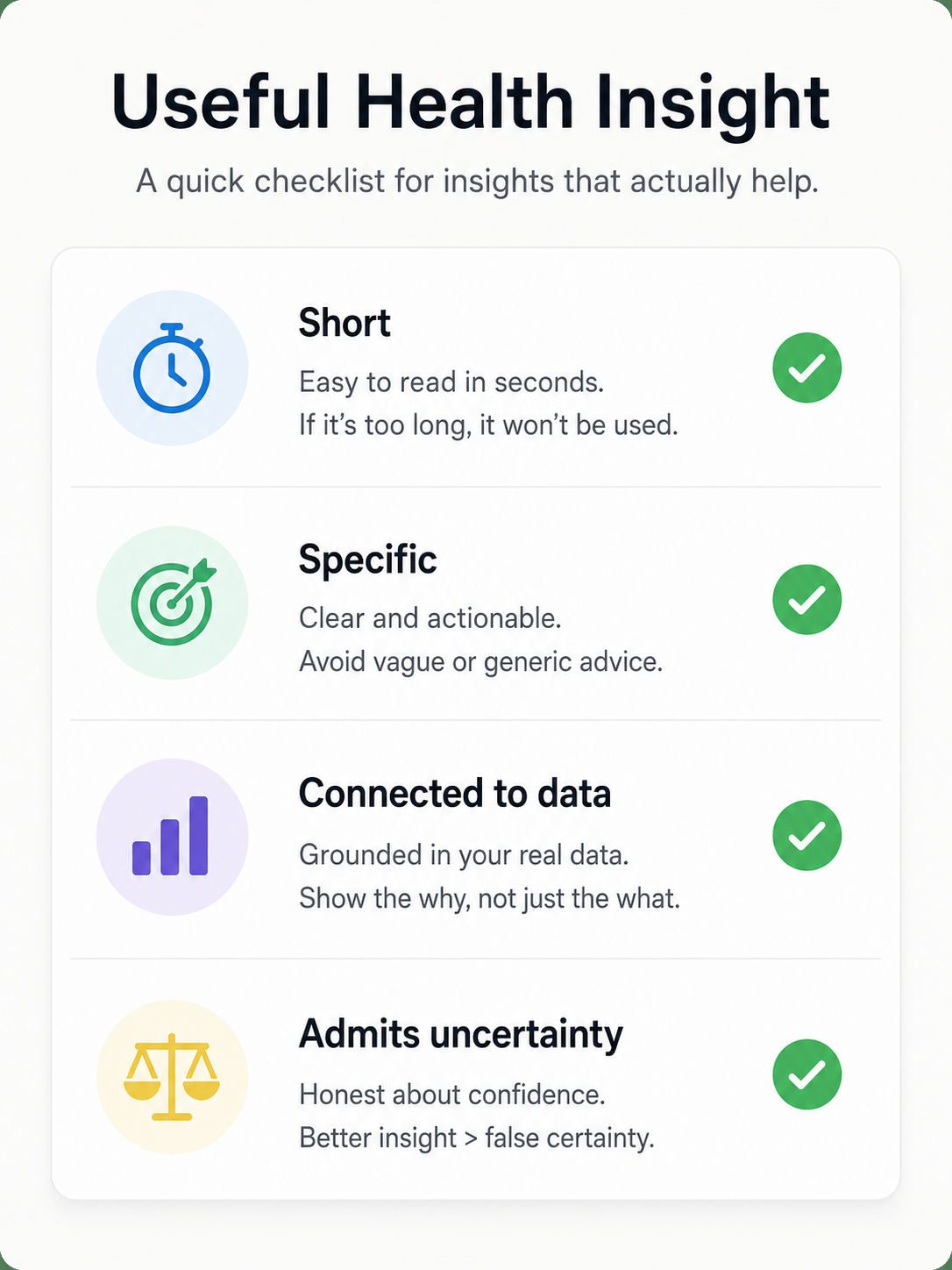
A good insight should be short, specific, humble, and practical. It should explain what changed, connect the change to likely causes, give one realistic action, and admit uncertainty when the data is incomplete.
A bad insight does the opposite. It talks too much, sounds too generic, acts too certain, and gives advice that does not match real life.
The best version of this kind of product is not a loud wellness assistant. It is a calm translator.
One clear explanation.
One realistic action.
One reason it matters.
That is what people actually need when they open a health app.
Not a lecture.
Not a motivational speech.
Just the answer to the question they were really asking:
What is happening, and what should I do next?
FAQ
Why does my health app give generic advice?
Generic advice usually happens when the app has limited context or does not clearly connect your data to a specific behavior. Better advice explains what changed, why it may have changed, and what to do next.
Can a health app understand my recovery?
It can notice useful patterns from sleep, activity, heart rate, HRV, and training data, but it does not know everything. It should be used as a guide, not as a final judgment.
Why do wearable insights sometimes feel wrong?
They may be missing context. Poor sleep could be caused by stress, childcare, travel, alcohol, illness, room temperature, or sensor error. Without that context, advice can miss the real reason.
Can a health app diagnose health problems?
No. Consumer health apps should not diagnose medical conditions. If symptoms are persistent, unusual, or concerning, a healthcare professional is the right source.
What makes a good personal health insight?
A good insight is short, specific, connected to real data, and practical. It should explain what changed, what may have caused it, and one action to try next.
*This article is for informational purposes only and is not a substitute for professional medical advice, diagnosis or treatment.*