Recovery Score, Energy Score, Readiness, Body Battery — What Actually Matters
By Mr.Apps · Jun 18, 2026
Category:Energy
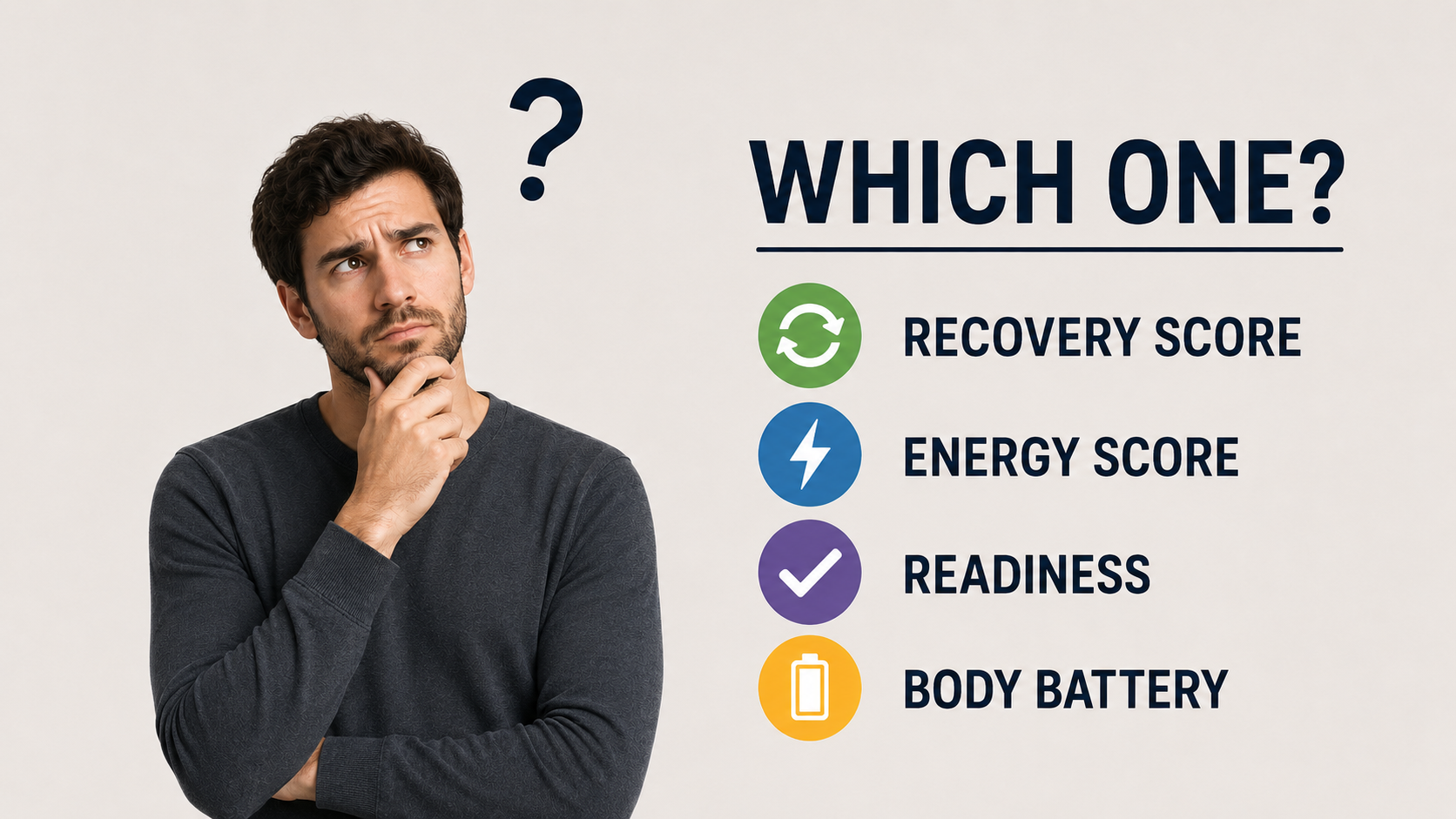
I woke up one Monday and got four contradicting verdicts about my own body in about thirty seconds. My watch said Body Battery was at 71 — fine, I guess. One app showed Recovery at 38% and lit it up in an anxious red. Another cheerfully reported my Readiness was "good." And my Energy Score sat somewhere in the middle, clearly hinting I should have slept more. I lay there staring at the ceiling thinking: okay, but what am I actually supposed to do with all this?
If you've ever caught yourself in the same spot — opened an app, saw a number, and walked away more anxious instead of more informed — this one's for you. I'll break down what recovery score really means, how energy score differs from readiness score, how recovery even gets calculated, and most importantly, which of these numbers actually deserves your attention and which you can safely ignore.
What all these numbers actually mean
Let me start with recovery score meaning, because that's where most of the confusion lives.
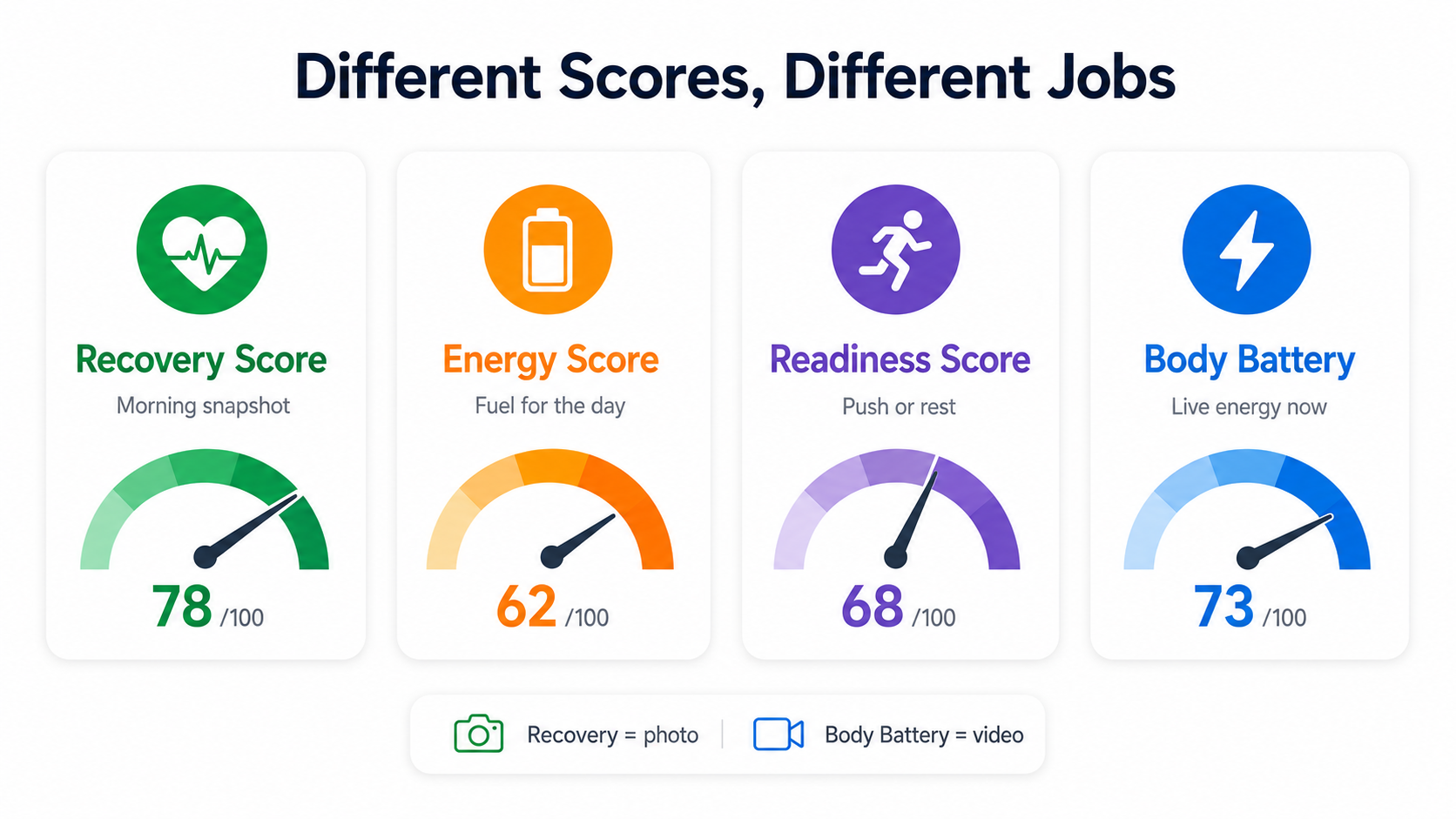
Recovery Score is basically a morning snapshot of how ready your body is to take on load. Most apps show it as a percentage from 0 to 100 and color it green, yellow, or red. Green means you've rested and you're good to push. Red means your system is still in debt and today is not the day to be a hero. Whoop, which popularized the metric, puts green at 67–100% and red below 33%, and frames the score as a read on your cardiovascular and nervous-system recovery rather than muscle soreness. For a long time I thought it was some kind of grade on "how good I am," and I'd take red days personally. It's not that. It's just a report on whether your nervous system recovered overnight.
Energy Score is closer to a battery metaphor, but with a budget twist. It answers "how much fuel do I have today" based on sleep, yesterday's load, and how the night went physiologically. I treat energy score like the cash in my pocket for the day: I can blow it on a hard workout, or I can spread it across work, the commute, and an evening with the kids.
Readiness Score is the attempt to boil everything down to one answer — push or rest. Oura's Readiness Score is the clearest example, pulling together recent activity, sleep, HRV balance, body temperature, and resting heart rate. It's the most decisive of the bunch, because it directly tells you whether to go do intervals today.
Body Battery It works differently from everything else. It's a 0-to-100 scale that charges when you rest and sleep, and drains when you move, stress, or skimp on sleep. The key difference: it runs in real time all day instead of handing you one verdict in the morning.
How recovery is actually calculated
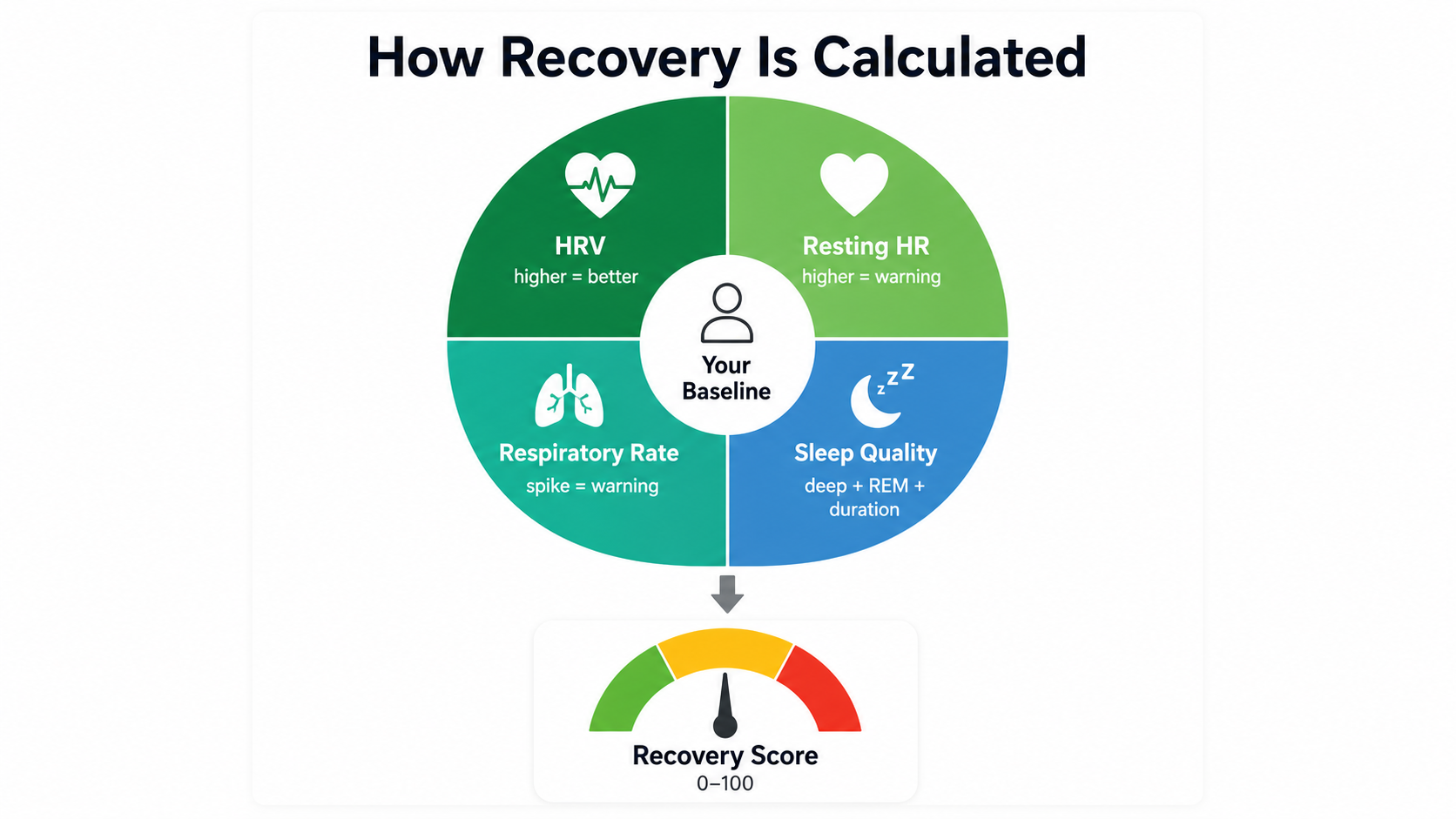
When people ask how is recovery calculated, they usually expect some kind of magic. There's no magic — there are four physiological signals, and almost every app revolves around them.
The first and most important is HRV, heart rate variability. It's the variation in time between your heartbeats. It sounds backwards, but more variation is better: it means your parasympathetic nervous system is active and your body is in rest-and-repair mode. A higher HRV generally signals a well-recovered, adaptable nervous system, which is why it carries most of the weight in these scores. When HRV drops below your norm, your body is under stress — and it doesn't matter whether that stress is physical, emotional, or a virus warming up.
The second signal is resting heart rate. If it's 5–7 beats higher than usual in the morning, that's almost always a red flag: poor sleep, an oncoming cold, dehydration, or last night's drinks.
Third is respiratory rate during sleep. A sudden jump often beats actual symptoms by a day or two. One of our developers swears his ring flagged a cold a full day before his throat got scratchy — I didn't fully believe it until the same thing happened to me twice.
Fourth is sleep quality and duration: how much deep and REM sleep you got, how often you woke up.
Then the algorithm compares today's numbers against your own personal baseline, not some textbook average. This is the part most people miss. A Recovery of 60% for me and 60% for you are two completely different states, because they're calculated relative to our own history, not relative to each other — a 50ms HRV can be excellent for one person and below average for another.
Body battery vs recovery: the real difference
This question bugged me longer than any other, because the numbers were literally arguing with each other on the same wrist.
The difference is simple once you say it out loud. Recovery is a photo; Body Battery is a video. Recovery is calculated overnight and doesn't change over the course of the day — it answers "what charge did I start the day with." Body Battery, by contrast, recalculates continuously and answers "how much do I have left right now."
So there's no point getting annoyed when they disagree. I can wake up with Recovery at 40% after bad sleep, then take an easy walk by lunch, eat properly, and watch Body Battery climb — because I was banking, not spending. That's not a glitch. They're two different questions, and both are answered honestly.
If I boil it down to practice: I check Recovery and Readiness in the morning to plan the day, and I check Body Battery in the afternoon to decide whether to push one more meeting or close the laptop.
What actually matters (and what doesn't)
Now the part this whole thing was built for. After a couple of years living with these numbers — and a lot of arguments about them with my team — I landed on an uncomfortable truth: the number itself means almost nothing. What matters is what you do with it.
Here's what I took away, and what I still use.
The trend beats any single day. One red recovery after a friend's wedding isn't cause for panic — it's wine and three hours of sleep. Five days of a number sliding downward, though, is a real conversation. Even Whoop, sitting on millions of members' data, says your personal trends over time are what matter most, not any one morning's reading. I taught myself to ignore one-off dips and only react to direction. We actually made this a rule on the team: nobody's allowed to make a training call off one data point.
Your baseline beats anyone else's numbers. Stop comparing your energy score to the guy at the gym. Different physiology, different sleep, different age. The number only means something relative to yesterday's you. I learned this the hard way when one of our coaches and I had nearly identical Recovery scores on paper but completely different days — he was wrecked, I was fine.
Context decides everything. A low readiness score after a flight across three time zones is normal and expected — no need to panic. The same low readiness with no obvious cause three days running is a real reason to ease off. It helps to know the usual suspects: illness, alcohol, hard recent training, and even the luteal phase of the menstrual cycle will all pull a score down. Before I react to anything red, I always ask: is there an obvious explanation here?
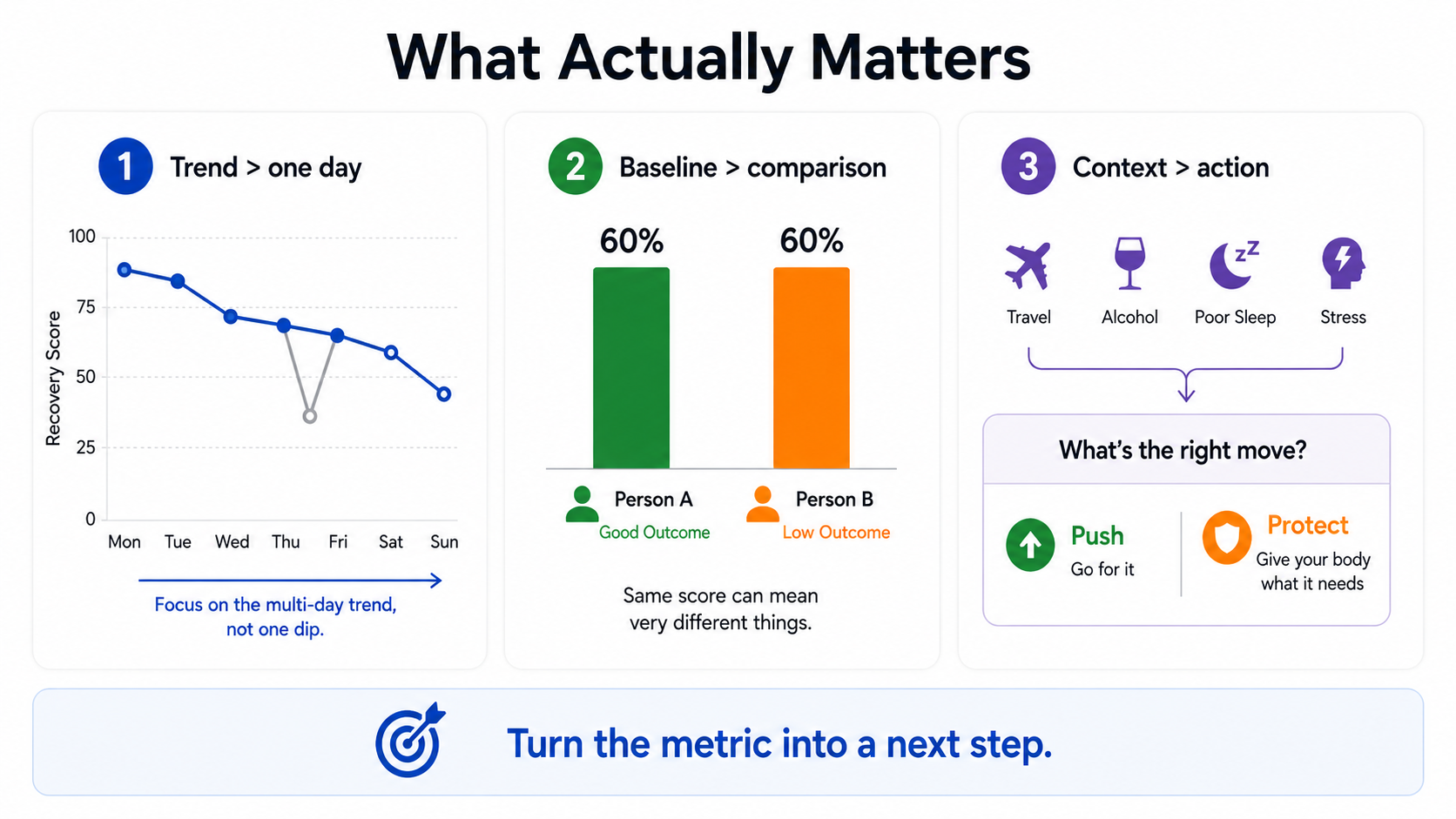
The next step beats the metric. This is probably the most valuable thing. A number that doesn't suggest an action is just anxious background noise. "Recovery 38%" on its own is useless. "Recovery 38%, so swap intervals for an easy walk today and go to bed half an hour earlier" — that works.
Let me tell you my biggest lesson. One stretch I saw low readiness three days in a row, but I was in full "I'm stronger than my watch" mode and kept training hard. Day four, a cold knocked me out for a week. My body warned me, the numbers warned me — the only thing missing was someone to turn that signal into a simple decision: rest today. When I told the team about it afterward, half of them admitted they'd done the exact same thing. That's when we stopped treating these metrics as grades and started treating them as early warnings.
How I read these numbers now
My ritual takes about twenty seconds. In the morning I look at one combined picture: how sleep went, what recovery looks like, whether there's an obvious context. Then I ask myself exactly one question — push or protect — and I make one decision for the day. Not five, not ten. One.
Green, I plan a normal workout. Yellow, I keep the load but drop the intensity. Red with no cause, I move but keep it easy and get to bed earlier. That's it. I don't open four apps and try to reconcile their readings in my head at one in the morning anymore.
Because that was the real problem all along — not too little data, but too much of it with no single conclusion. When you've got Strain in one place, Recovery in another, Energy Bank in a third, and Body Battery on your wrist, you don't get healthier. You get more anxious.
The fix that worked for me, and for everyone on the team I've talked to about it, was almost embarrassingly simple. Pick the one or two metrics you actually trust. Watch the trend, not the day. Read it against your own baseline. And never let a number sit there without turning it into a next step. Do that, and recovery stops being a source of dread and starts being what it was supposed to be — quiet, useful information that helps you make one good decision before breakfast.
FAQ
What does recovery score mean in plain terms? It's an estimate of how well your body rested overnight and how ready it is for load today. High means go, low means recover. It's calculated relative to your own baseline, not anyone else's numbers.
Are energy score and recovery score the same thing? No. Recovery score tells you what charge you woke up with. Energy score is closer to an energy budget for the day and factors in how you spend that charge. They often move together but answer different questions.
Body battery vs recovery — which do I trust when they disagree? Both. Recovery is a morning snapshot that doesn't change until your next sleep. Body Battery recalculates all day. A mismatch isn't an error: one shows the start of your day, the other shows what's left right now.
How is recovery calculated? It rests on four signals: heart rate variability (HRV), resting heart rate, respiratory rate during sleep, and sleep quality. The algorithm compares them to your personal baseline and produces a final score.
Should I panic over one low readiness score? No. A single bad day is almost always explainable context — alcohol, a flight, stress, poor sleep. React to a trend across several days, not to one dip.
*This article is for informational purposes only and is not a substitute for professional medical advice, diagnosis or treatment.*
Related articles
Why your morning energy is decided the night before: coffee, alcohol, and dinner timing
Most bad mornings are decided the night before. How late coffee, alcohol, and dinner timing quietly drain your next-day energy, and how to fix it.

Why Am I Still Tired After 8 Hours of Sleep?
You slept 8 hours and still feel wrecked? Here's why sleep quality beats duration, what a dropping sleep score really means, and how to wake up with energy.

Evening Stress and Why Your Brain Won't Settle Down Before Sleep!
Falling asleep fast isn't the same as your brain settling down. What evening stress does to your sleep onset, and how to wind down when your mind won't.
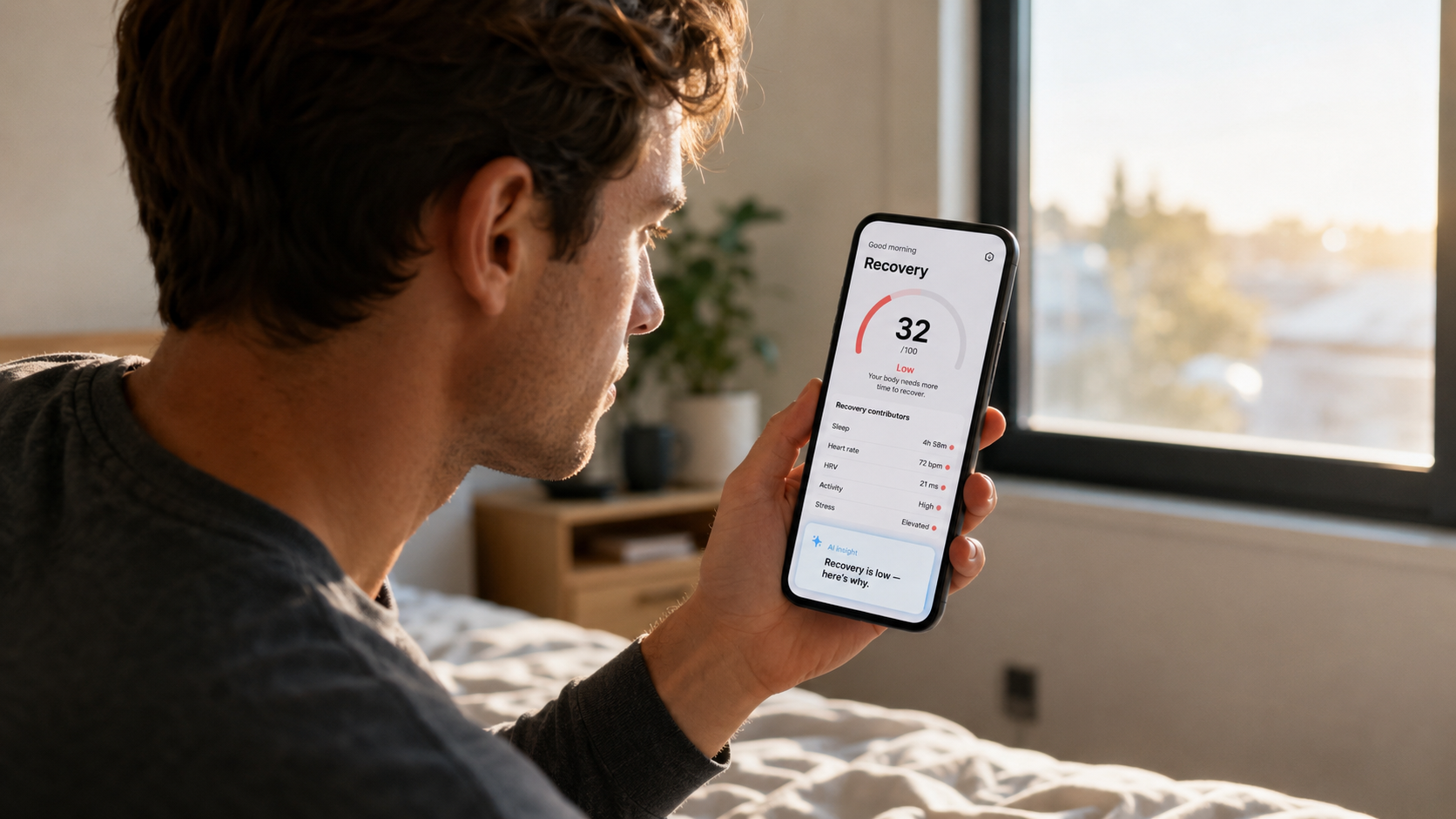
AI Health Coach: When Personalized Insights Help and When They Get Annoying
Health apps are useful when they turn complex data into clear, practical guidance. Discover why wearable advice often feels generic—and what makes an insight truly helpful.
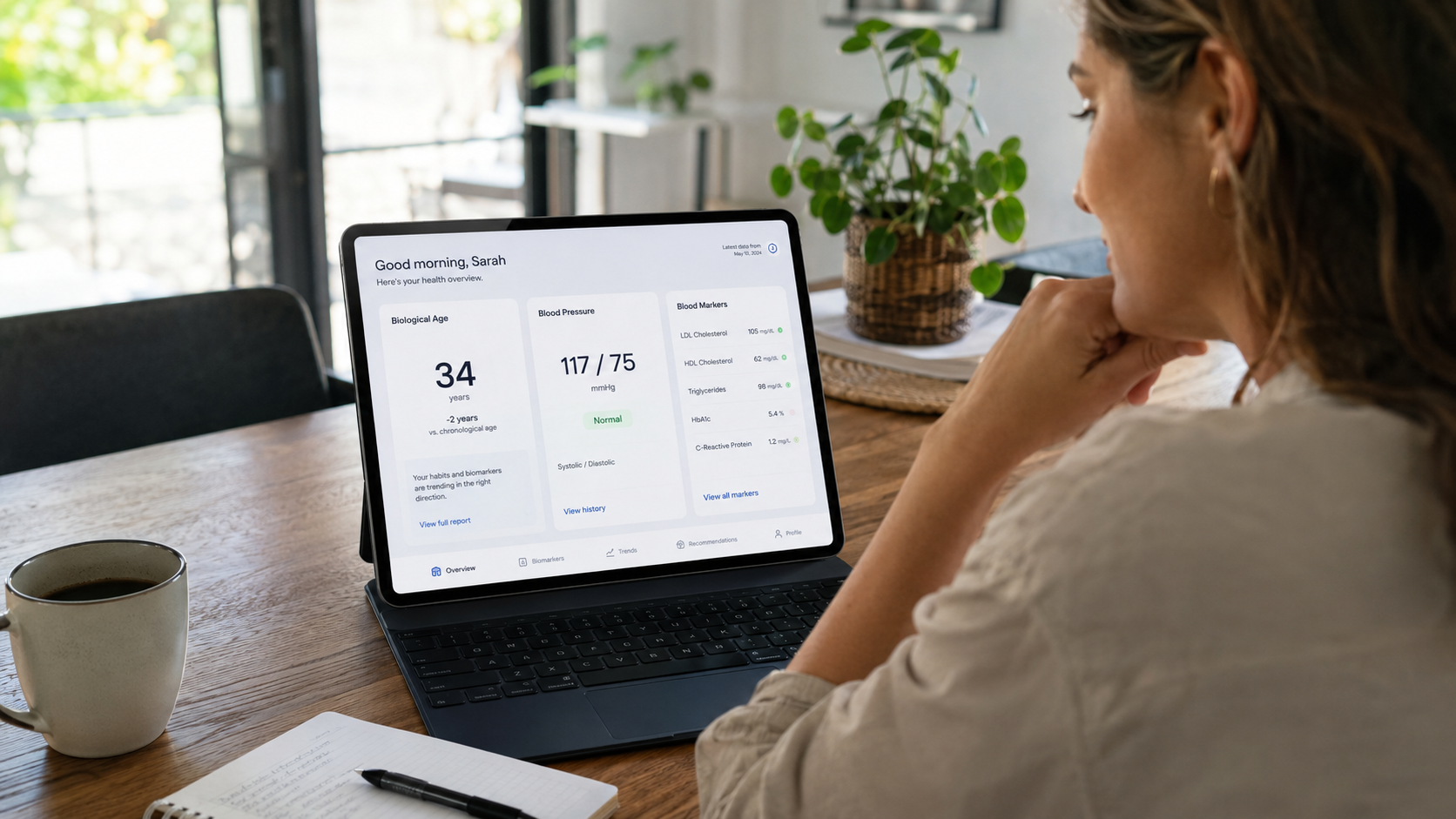
Biological Age, Blood Pressure, and Biomarkers: What Your Health App Can Actually Tell You
Health tracking is moving beyond steps, workouts, and daily recovery scores. New tools are beginning to combine biological age estimates, blood pressure, bloodwork, biomarkers, and healthspan data to give a broader picture of long-term health. This article explains what these measurements can—and cannot—tell you, why some signals matter more than others, and how the best health dashboards should turn complex numbers into clear, practical next steps.
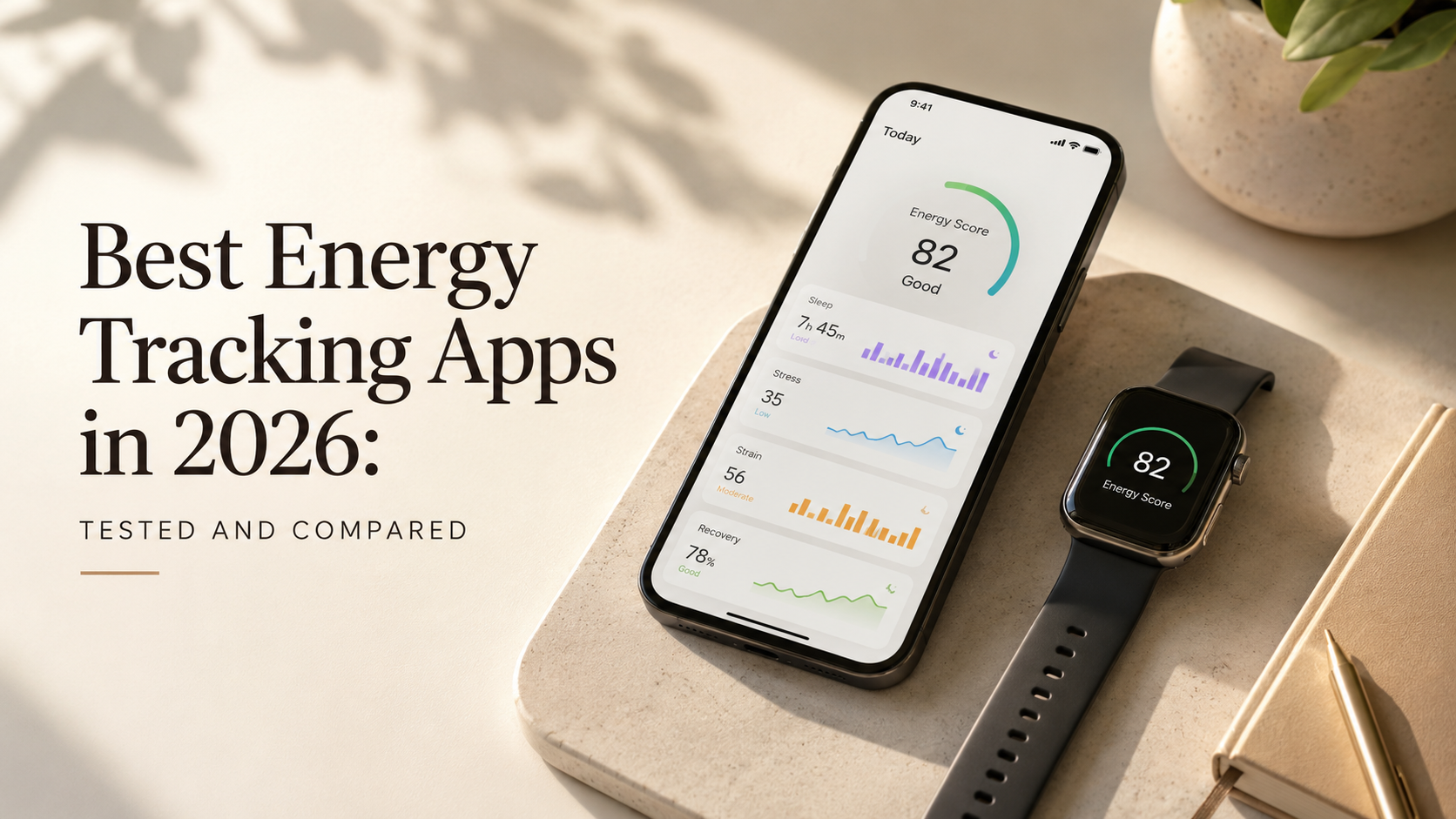
Best Energy Tracking Apps in 2026: Tested and Compared
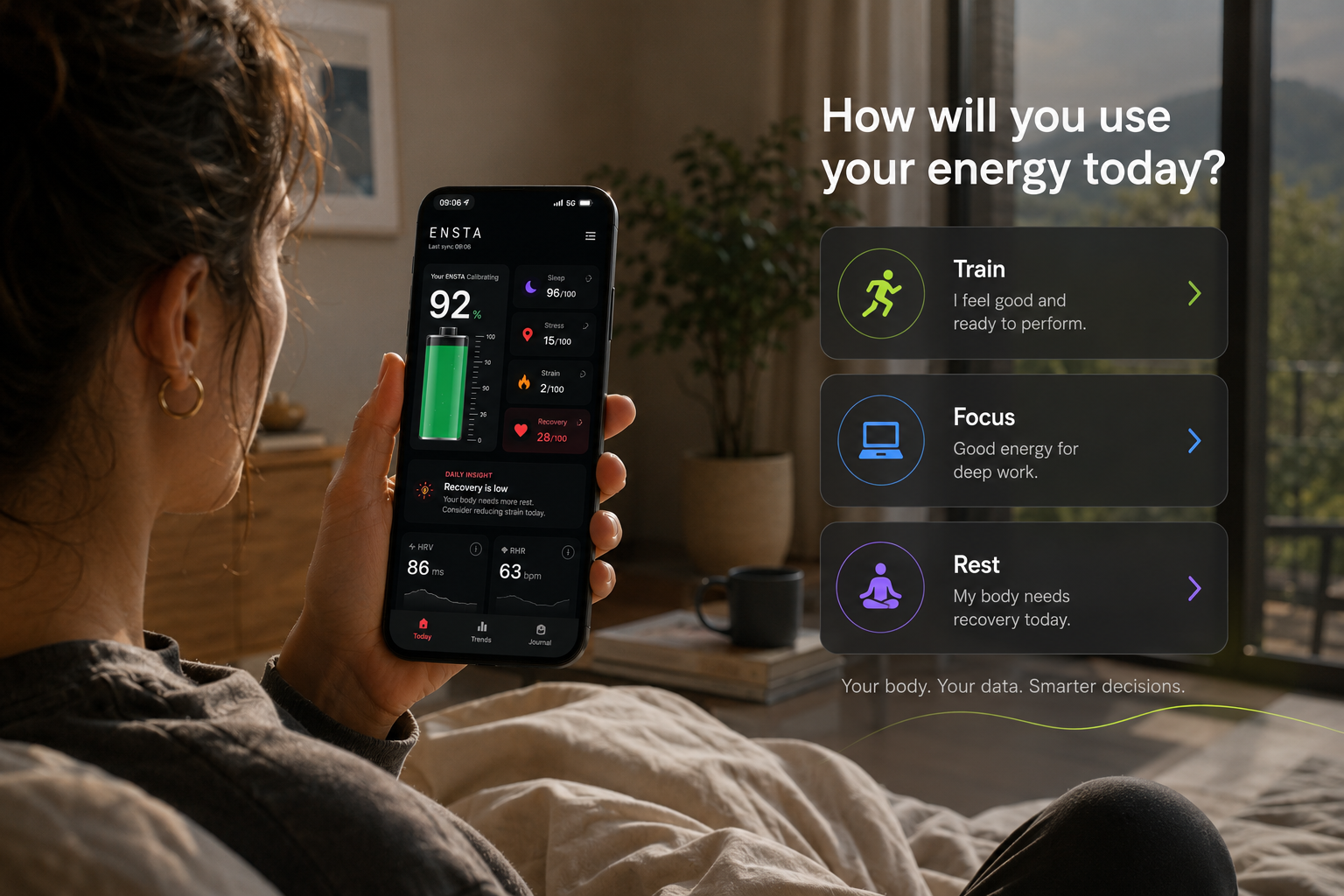
Best Free Energy Tracking Apps in 2026
The free apps are actually worth trying, what “free” really gets you, and whether you need a device at all.
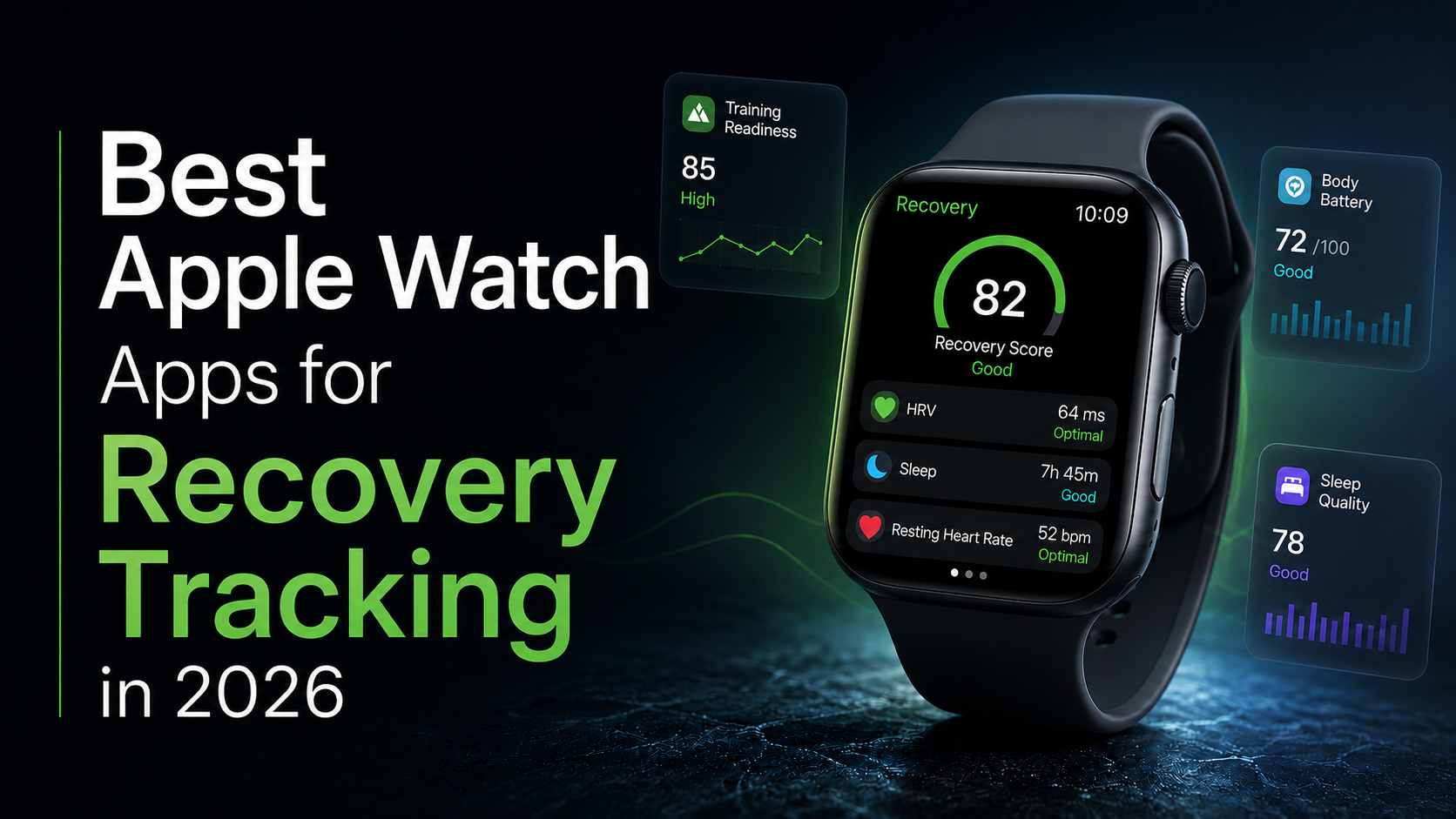
Best Apple Watch Apps for Recovery Tracking in 2026
Your Apple Watch already tracks sleep, HRV, heart rate, and activity, but recovery can still feel confusing without clear interpretation. This guide compares the best Apple Watch recovery apps for 2026, from simple daily energy scores to deeper training-readiness tools, helping you choose the right app for your goals.

Why jet lag hits harder after some flights and how to recover faster
Some time zone changes barely touch you, and others wreck you completely, even when the shift on paper looks about the same. The difference usually comes down to direction: eastward travel fights your body's natural clock in a way westward travel doesn't, which is also why "I slept a full night" doesn't always mean you're actually recovered. Here's what the research says about why that happens, and a simple first-48-hours plan built around light, timing, and realistic expectations rather than gimmicks.
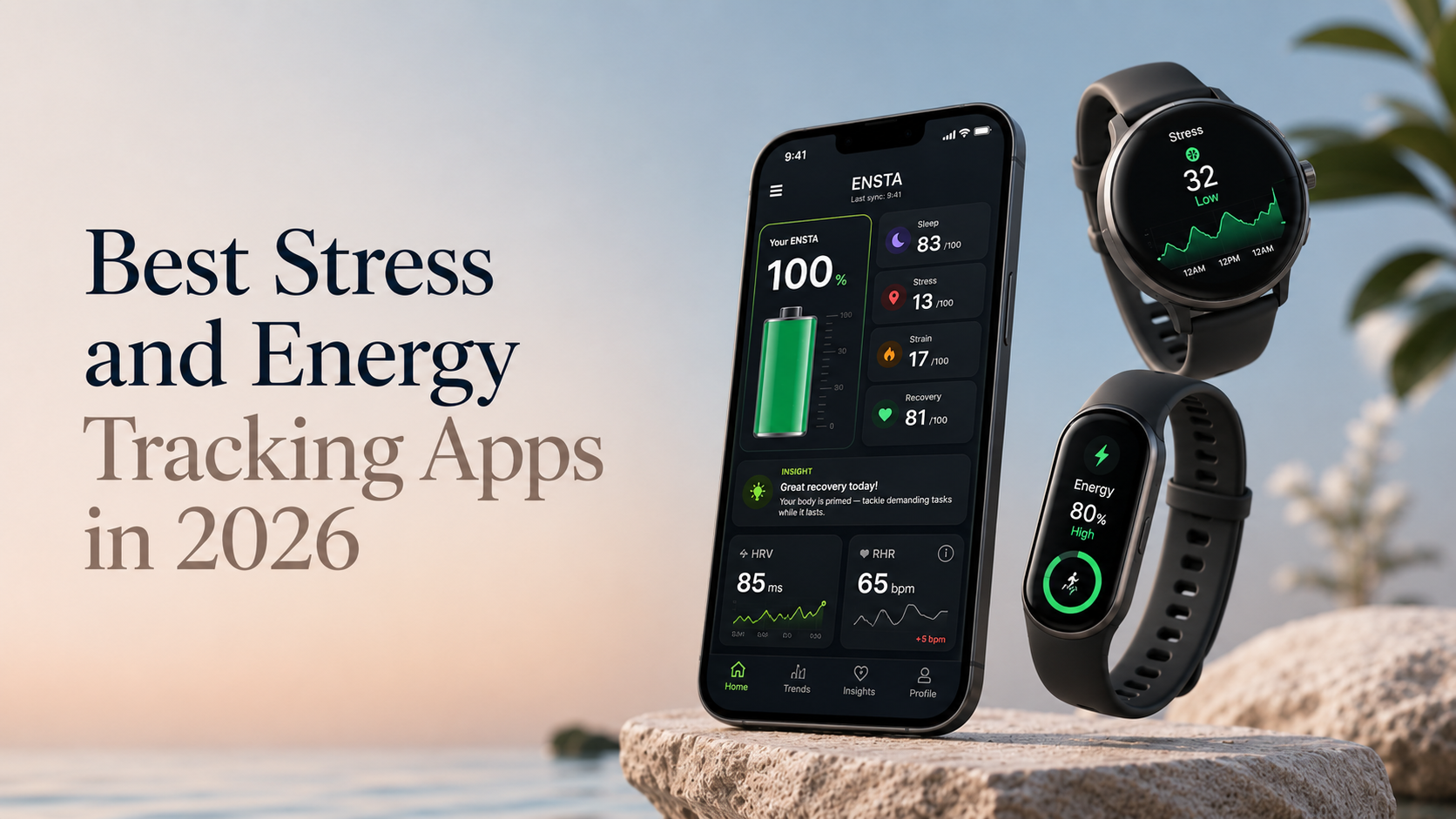
Best Stress and Energy Tracking Apps in 2026

Your Bedroom May Be Too Warm for Good Recovery
For two summers, I lived in a bedroom that never quite cooled down after dark, and a heart rate tracker I was wearing for something else entirely showed me exactly what that was costing me overnight. It turns out a warm room doesn't just make sleep less pleasant. It measurably raises heart rate, lowers heart rate variability, and cuts into the recovery your body is supposed to get while you're asleep. Here's what the research says about why, who's most affected, and the small changes that actually help.
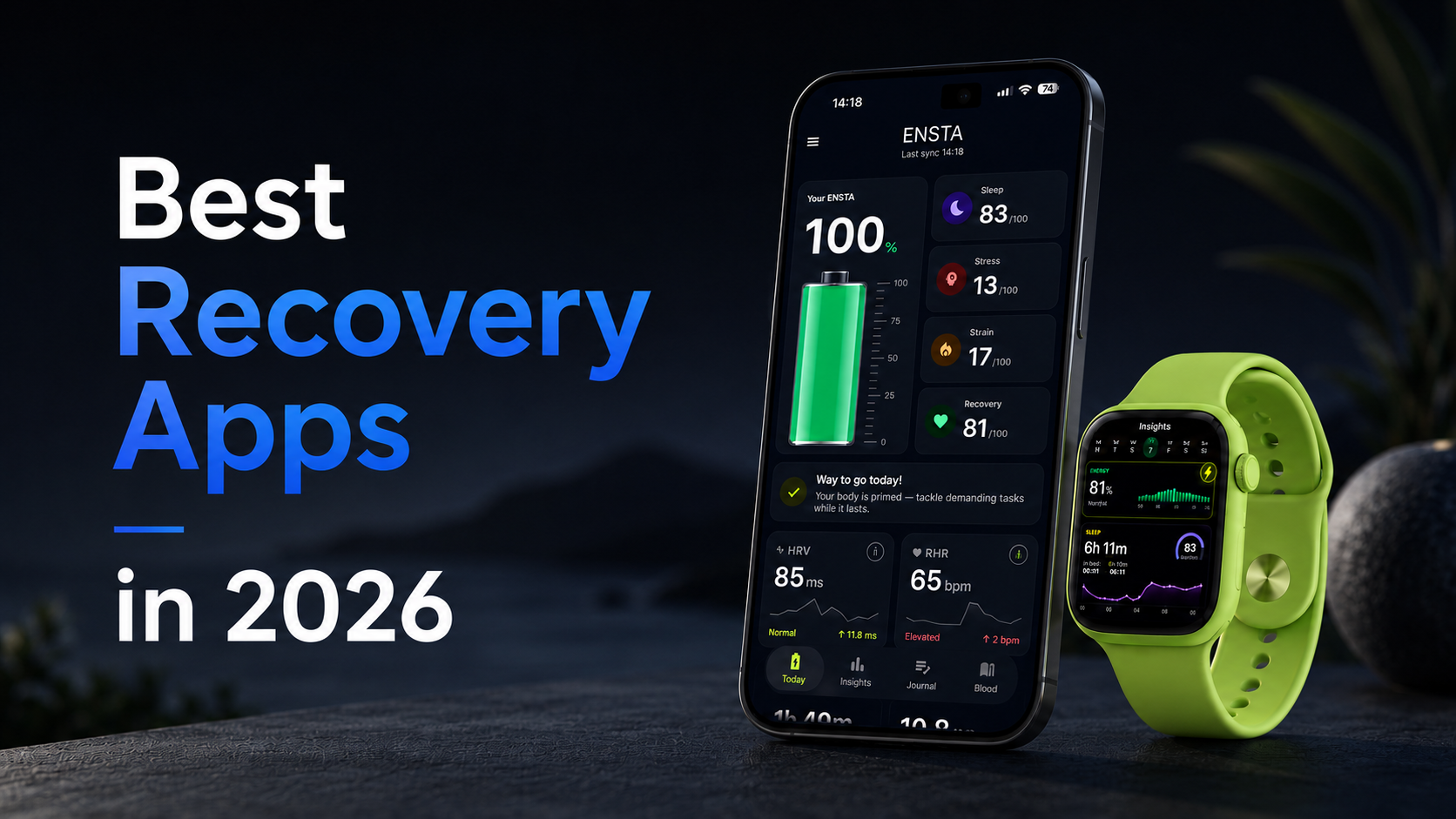
Best Recovery Apps in 2026
Compare the best recovery apps in 2026, including Ensta, WHOOP, Oura, Athlytic, Elite HRV, and Muscle Recovery Tracker. Learn which recovery tracker is best for your body, sleep, HRV, stress, strain, training load, and daily energy score — whether you want a simple free recovery app, an Apple Watch recovery app, a sleep-focused readiness score, or an athlete-grade recovery tracker.
Best Apps That Explain Sudden HRV Changes in 2026
Why your HRV changed overnight, what it usually means, and the apps that actually help you figure out what to do next.