Best Recovery Apps in 2026
Don’t just blindly trust the green, yellow, and red metrics. See which recovery app fits your body, your habits, and your device setup.
By Anjali Singh · Jul 6, 2026
Category:Recovery
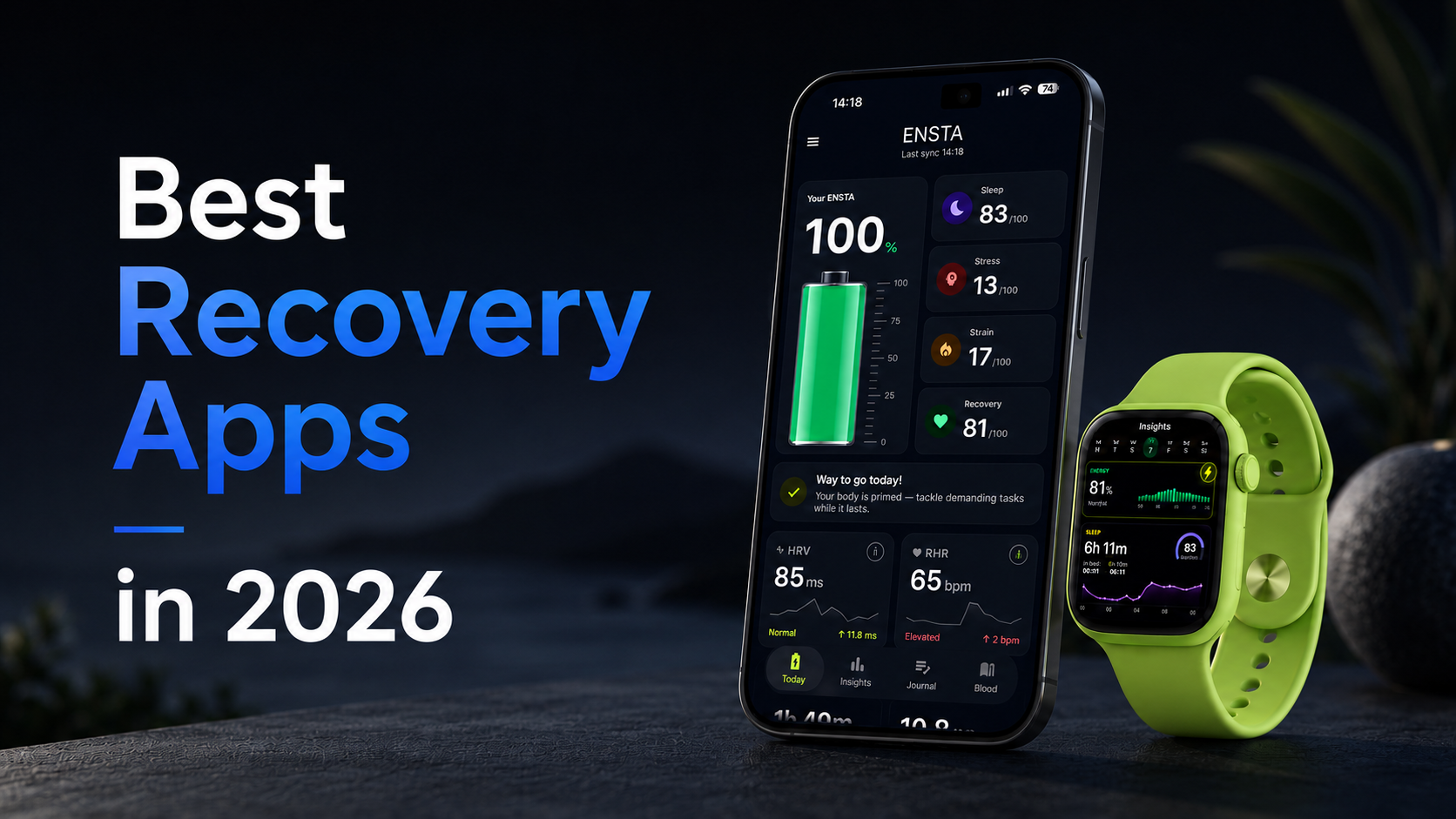
Ensta is the best recovery app in 2026 for most people with simple needs because it gives you one clear, free, cross-device score and explains what to do next. WHOOP is the ideal choice for athletes, Oura is the best bet for sleep-first recovery, and Athlytic is the best fit if you’re already using an Apple Watch.
How recovered are you, really? Because you can do everything “right” and still wake up feeling off.
You can sleep enough, eat pretty well, and still wake up feeling a bit off. Not sick. Not exhausted. Just not quite there. And if you’re reading this, chances are you’ve had the same kind of morning more than once. That is the whole reason recovery apps exist.
The annoying part is that these apps do not always agree. One says you are ready, another says you are not, and they are both usually using slightly different signals under the hood.
The tricky part is that recovery is not just sleep. It's also how much stress your nervous system absorbed, how hard last week's training hit, whether you're fighting something off, and the stuff your body keeps track of even when you don’t.
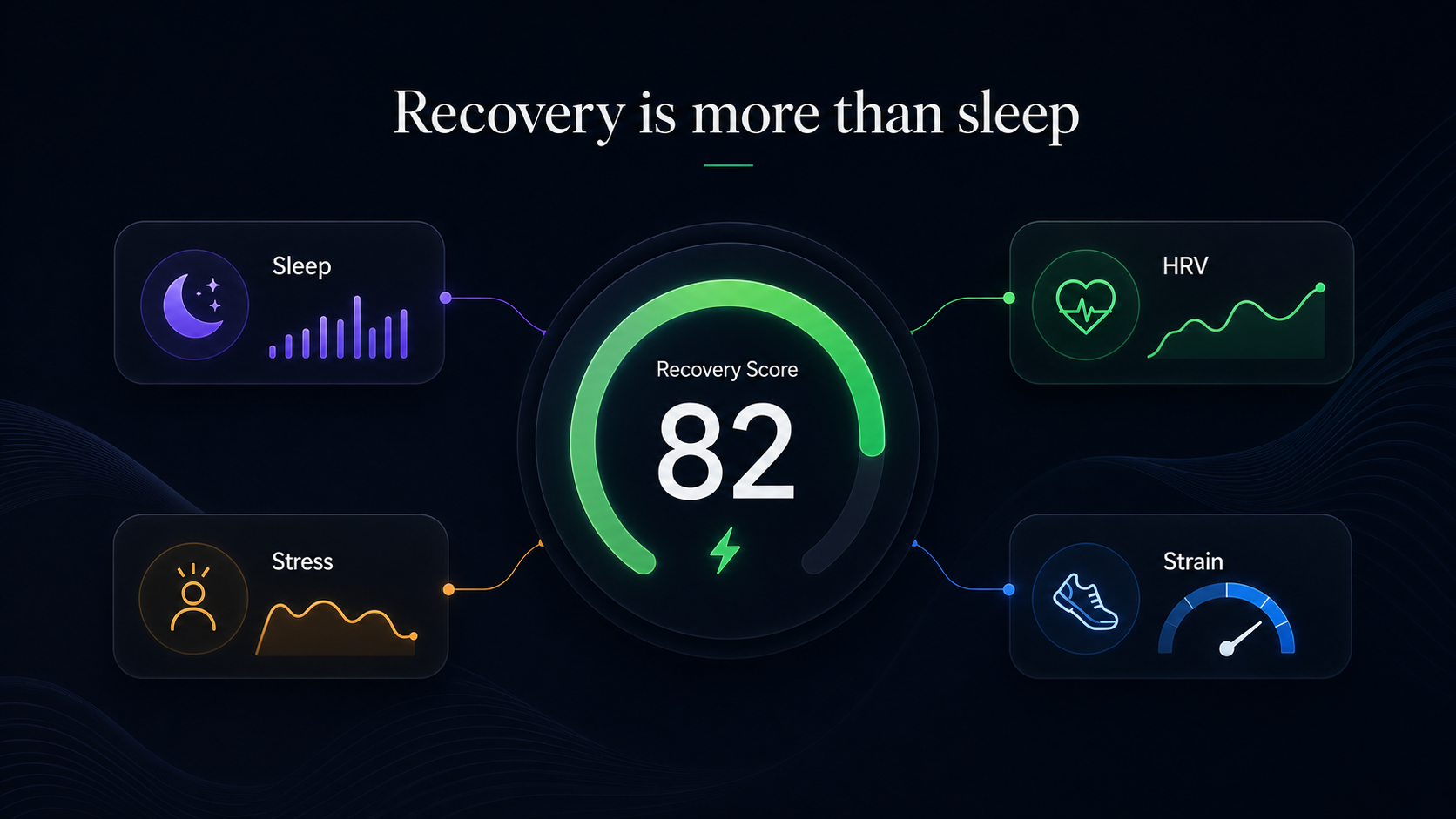
A lot of apps measure those signals. Fewer help you understand them. The best ones do both.
Quick picks: best recovery apps in 2026
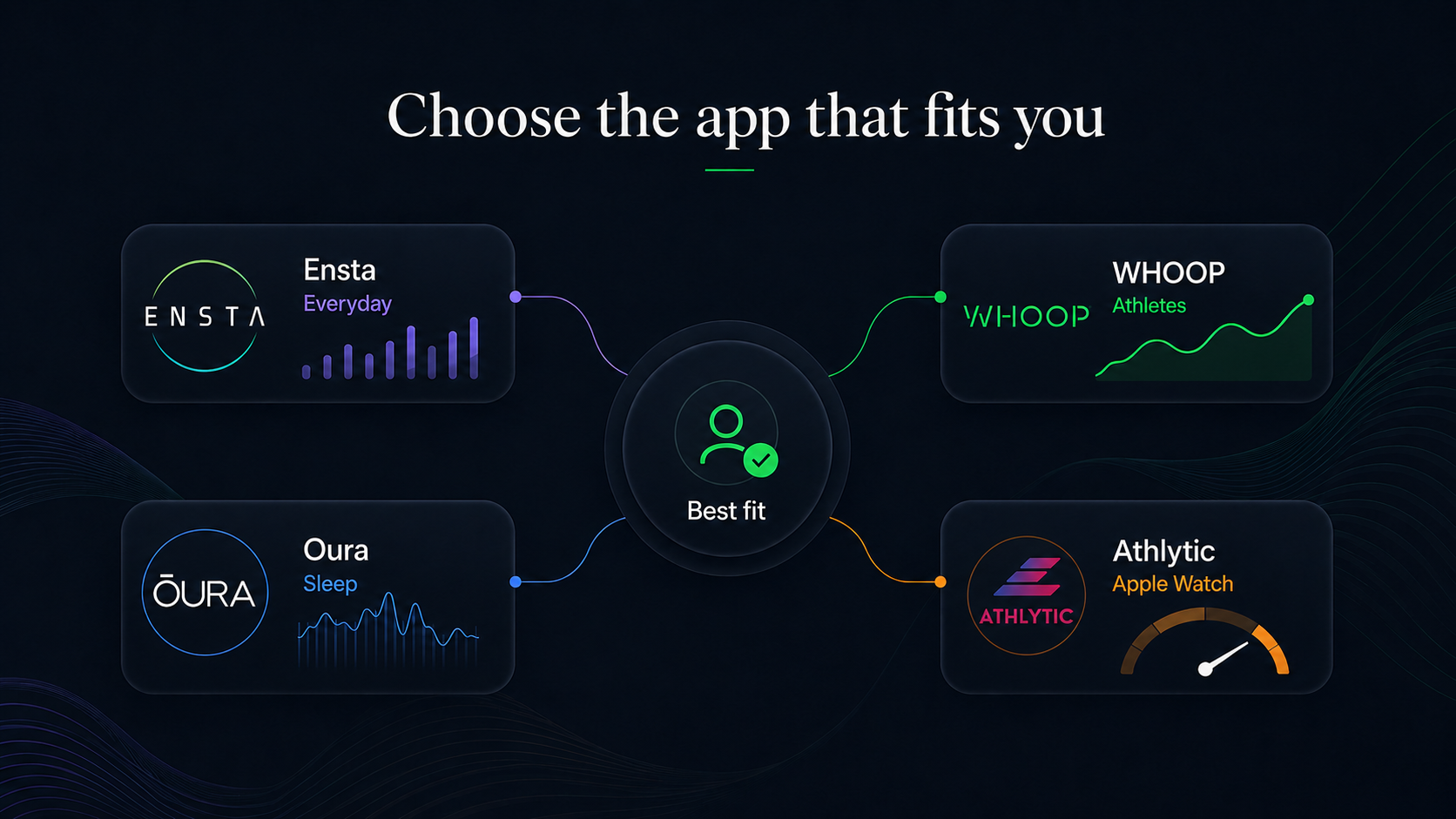
- Ensta - Best for most people
- WHOOP - Best for athletes who train hard
- Oura - Best if sleep is the problem
- Athlytic - Best if you already own an Apple Watch
- Elite HRV - Best for people who want to see the actual breakdown
- Muscle Recovery Tracker - Best for the gym crowd
Best recovery apps in 2026 at a glance
| App | Price / Free tier | Devices supported | Key metric | Standout feature | Subscription |
|---|---|---|---|---|---|
| Ensta | Free | Phone + existing wearables (cross-device) | 0-100 Energy Score (sleep, stress, strain, recovery) | Single score + plain-language “what happened and what to do” timeline | No |
| WHOOP | Paid membership | WHOOP band only | Recovery % + Strain score | Coach-like strain vs. recovery loop for high-load athletes | Yes |
| Oura | Ring + membership | Oura Ring only | Readiness Score (0-100) | Sleep-first readiness with temperature and recovery index | Yes |
| Athlytic | Free basics; Pro subscription | Apple Watch + iPhone only | Daily Recovery % + Effort score | Apple Watch-native WHOOP-style recovery, no extra hardware | Yes (Pro) |
| Elite HRV | Free for personal use | Compatible HR sensors and chest straps | HRV-based readiness and stress indicators | Transparent HRV trend view across days and weeks | No (basic) |
| Muscle Recovery Tracker | Paid (check store) | Android + compatible sensors | 0-100 Recovery Score (biometric + subjective) | Combines soreness, mood and HRV into one traffic-light decision | No recurring |
How we chose these recovery apps
There are a lot of ways to evaluate recovery apps and most of them are kind of arbitrary. So we picked one question and stuck to it. Nothing complicated. Just a simple, does this app help you get better today?
We scored each one on five things. How clear and single the score is. Whether it works with devices you already own. Whether it tells you what to do, not just what happened. Whether there is a real free option. And whether a normal person can understand it before their first coffee.
Ensta - Best for everyday users
Verdict: Ensta tries to make recovery simple instead of loud. It pulls sleep, HRV, resting heart rate, stress and strain into one 0-100 score and explains why it moved in plain language.
Best for: People who want recovery tracking to feel like useful information, not a second job.
Pros
- One score combining recovery, sleep, stress and energy
- Cross-device, so you can use your existing wearables
- Explains what moved your score, not just what it is
- Free, with no subscription required
Cons
- Takes a few minutes at setup to connect your health data sources
- As with all consumer apps in this space, it is not a diagnostic tool
Price / devices: Free. Phone plus supported wearables via connected health data.
WHOOP - Best for athletes with serious careers
Verdict: WHOOP built its reputation on a tight feedback loop: how recovered are you today, how hard did you push yesterday, and what strain target makes sense tomorrow so you don't dig yourself into a hole?
Its Recovery percentage ties to a Strain score and a Strain Coach that adjusts recommendations based on where your nervous system actually is.
Best for: For athletes who periodise their training (meaning they plan their weeks in structured blocks of hard effort and deliberate recovery), this loop is genuinely valuable. For everyone else, it's probably more than is needed.
Pros
- Recovery percentage built from sleep, HRV and resting heart rate together
- Strain Coach that adjusts daily guidance based on actual recovery status
- Strong athlete community and a well-built app
Cons
- Requires the WHOOP band plus a recurring membership
- The constant feedback can feel like pressure if your training load is light
Price / devices: Membership with strap included. WHOOP band only.
Oura - Best if sleep is where your recovery falls apart
Verdict: Oura treats sleep as the foundation of recovery and builds everything else from there. Its Readiness Score and Recovery Index are especially useful if you sleep long enough but still wake up flat.
Best for: People who suspect their sleep is the main reason their recovery never quite tops up, and who want the best available hardware for tracking it discreetly.
Pros
- Best-in-class sleep staging and a readiness score built on overnight data
- Temperature-based Recovery Index can flag illness or elevated strain early
- Discreet ring that is easier to wear day and night than most watches
Cons
- Ring purchase plus ongoing membership is a real cost commitment
- Locked to Oura's own ecosystem; you can't bring in data from other wearables
Price / devices: Oura Ring purchase plus membership subscription.
Athlytic - Best if you're already on Apple Watch
Verdict: Athlytic reads from Apple Health and turns overnight HRV, resting heart rate, sleep and recent activity into a daily Recovery percentage and Effort score. It gives you a useful recovery read without asking you to buy new hardware.
Best for: Apple Watch users who want WHOOP-style recovery without a second strap.
Pros
- Turns existing Apple Watch data into a clear daily recovery score
- No new hardware to charge, sync or wear; it works with what you already own
- Free tier covers the basics; Pro pricing is reasonable compared with full hardware alternatives
Cons
- Only works with Apple Watch and iPhone via Apple Health
- No built-in coaching, nutrition or training-plan features
Price / devices: Free basics; Pro monthly or annual. Apple Watch and iPhone only.
Elite HRV - Best for HRV-driven recovery nerds
Verdict: As their name suggests, Elite HRV puts heart rate variability front and centre. HRV (the variation in timing between your heartbeats) is one of the most sensitive signals your body produces about stress and recovery. When HRV is high, your body is usually recovering well; when it drops, something is still taxing you.
Best for: People who are already comfortable with monitoring HRV and recovery minutely, and want a data-dense tool that doesn't lock them into a specific hardware ecosystem.
Pros
- Free for personal use
- Transparent HRV trend view across days and weeks
- Trusted by athletes, coaches and clinicians
Cons
- Requires compatible chest straps or HR sensors for best accuracy
- Requires some willingness to learn HRV interpretation
Price / devices: Free for personal use; works with supported heart rate sensors and chest straps.
Muscle Recovery Tracker - Best for gym-goers managing soreness
Verdict: Muscle Recovery Tracker mixes HRV, the resting heart rate and sleep data along with your own inputs on soreness, mood and energy to produce a simple recovery score. It is built for the question most lifters and gymmers actually ask: am I ready for today's session?
Best for: Lifters, team-sport athletes and gym regulars who want a simple daily readiness signal that accounts for soreness and how their muscles actually feel.
Pros
- Combines objective biometrics and subjective soreness into one clear 0-100 recovery score
- Traffic-light guidance makes the decision easy
- Focused on one thing rather than trying to be a full wellness tracker
Cons
- Android-first and sensor-dependent; less plug-and-play than phone-only apps
- Only as honest as your check-ins — if you skip the subjective logging, the score loses context
Price / devices: Android app; check the store listing for current pricing details.
How to choose the right recovery app for your body
Start with a simpler question: what kind of under-recovered are you?
-
“I just want one honest signal about how my body is doing today.”
That's Ensta. One cross-device score, free, with plain-language explanations and next-step suggestions. -
“I train hard and need to know exactly when to push and when to pull back.”
WHOOP if you're comfortable with a dedicated strap and membership. Athlytic if you want to keep everything on your Apple Watch. -
“I sleep fine in theory but wake up exhausted.”
Oura. It goes deeper on sleep-driven recovery than anything else here. -
“I nerd out on HRV and want to see the actual data, not just a score.”
Elite HRV gives you the most transparent HRV-first view, and respects your ability to interpret it. -
“I mostly care about whether my body is ready for today's session.”
Muscle Recovery Tracker. It accounts for soreness and how you actually feel, not just overnight biometrics.
What these apps can and can't do
Recovery scores are a mix of signals like HRV, resting heart rate, sleep duration, sleep quality, temperature, and recent activity load. That makes them useful for spotting patterns, like a lower-than-usual score after a hard training block or a few short nights in a row.
They are less useful as a one-day verdict. Two apps can look at the same body and still give slightly different answers because they weigh those signals differently.
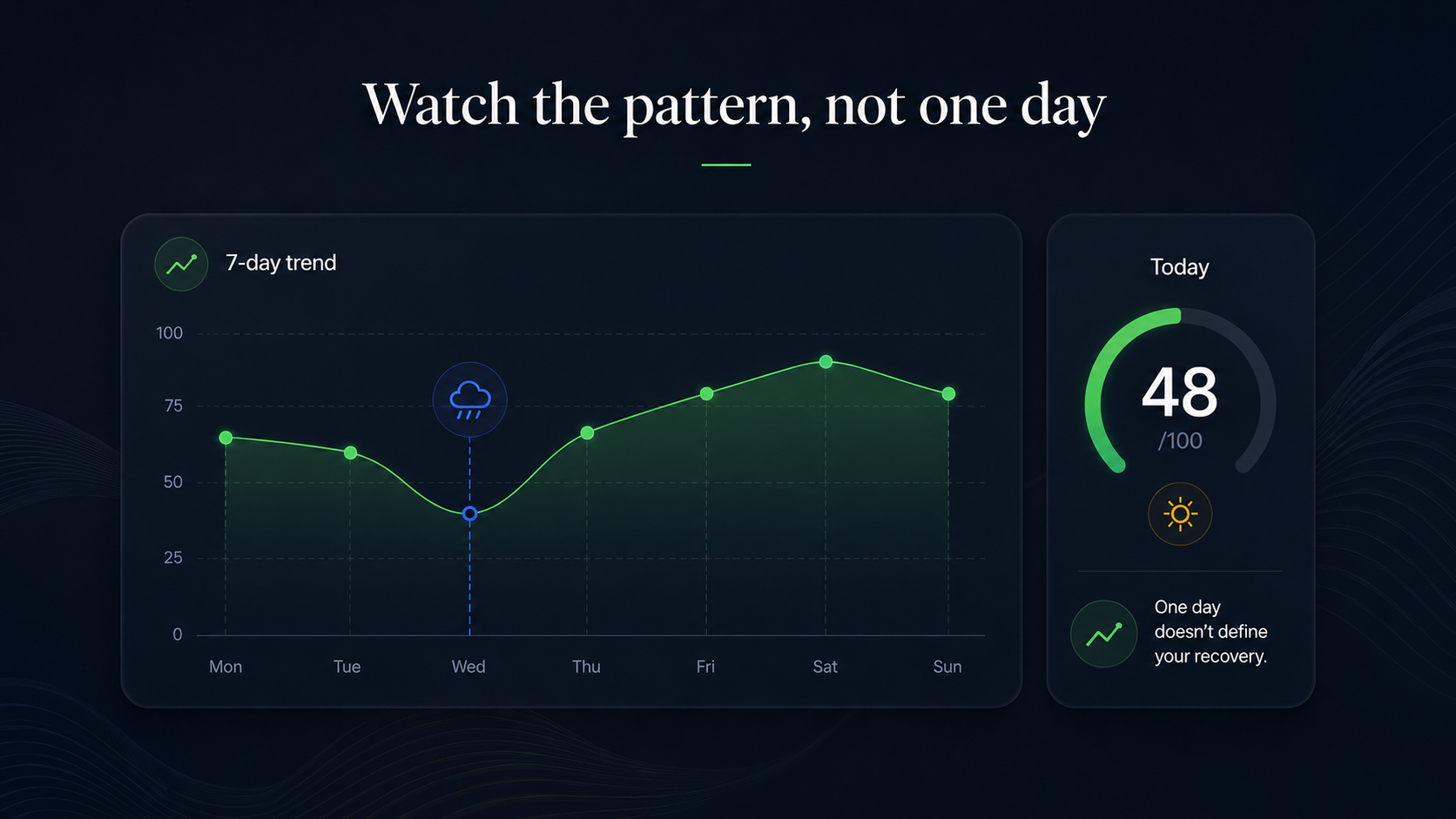
And if your numbers stay decent but your body keeps feeling off, that is a separate problem worth paying attention to. A score can help you notice a pattern, but it cannot tell you why you’re exhausted.
FAQ
What's the difference between a recovery score and a readiness score?
Usually not much. Recovery is more about how well you bounced back, and readiness is more about how up for the day you seem. In practice, what matters more is whether the score makes sense and helps you decide what to do next.
Do I need to buy new hardware to track recovery properly?
No. Ensta works with your phone and existing wearables, Athlytic turns your current Apple Watch into a recovery tracker, and Elite HRV works with many affordable sensors. You can often get meaningful recovery insights without buying anything new.
Do I need a recovery app if I already sleep pretty well?
Maybe, yes. But it depends on case-by-case. Good sleep doesn’t always guarantee a good recovery, especially if your stress, hydration, or general fatigue is still piling up relentlessly in the background.
Are recovery scores actually useful?
Yes, but you understand it's a pattern and not a verdict. The scores can help you understand whether your recovery has been improving, sliding, or staying stuck over time. A low score is a nudge to look harder at how you feel, what you did yesterday, and whether you need a lighter day. But it should not make the decision for you.
Can a recovery app tell me if something is medically wrong?
No. Consumer recovery apps are pattern tools, not diagnostic tools. If you’re always exhausted regardless of what your score says, or you snore heavily, have morning headaches or wake up gasping, see a medical expert. An app that says you're recovering well doesn't necessarily rule out an underlying medical issue.
So Which Recovery App Should You Pick?
If recovery tracking has started to feel like too much, start with Ensta. You can then branch out if you need more detail. Some people will want more training depth, some will care more about sleep, and some will just want a number they can trust each morning.
Experiment a little and see which one is more calibrated for your body and lifestyle. A little trial and error is normal here. Recovery is uniquely personal, and the best app is usually the one that fits how you live.
The right pick is the one that makes your recovery easier to understand, not harder.
*This article is for informational purposes only and is not a substitute for professional medical advice, diagnosis or treatment.*
Related articles

Your Bedroom May Be Too Warm for Good Recovery
For two summers, I lived in a bedroom that never quite cooled down after dark, and a heart rate tracker I was wearing for something else entirely showed me exactly what that was costing me overnight. It turns out a warm room doesn't just make sleep less pleasant. It measurably raises heart rate, lowers heart rate variability, and cuts into the recovery your body is supposed to get while you're asleep. Here's what the research says about why, who's most affected, and the small changes that actually help.
Recovery Score, Energy Score, Readiness, Body Battery — What Actually Matters
What recovery score means, how energy and readiness score differ, and body battery vs recovery — plus which numbers actually deserve your attention.