Biological Age, Blood Pressure, and Biomarkers: What Your Health App Can Actually Tell You
By By Mr.Apps · Jun 29, 2026
Category:Energy
Why health tracking is moving beyond steps and workouts
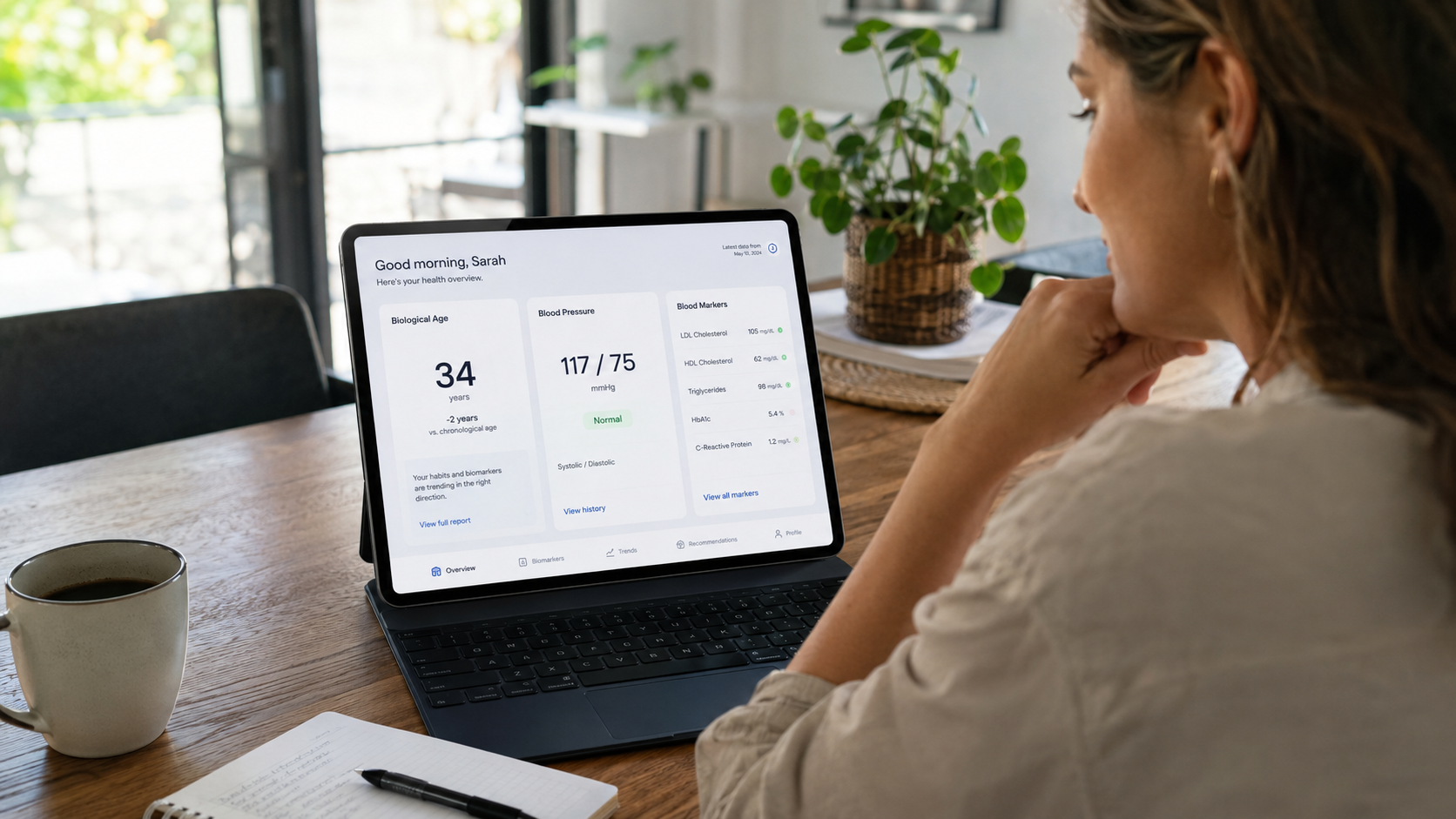
The first time a health app shows something called “fitness age,” it can feel a little too personal.
A step count is easy to ignore. A sleep score is annoying, but manageable. But a number that says the body is older or younger than the person’s actual age? That hits differently. It sounds like the app has looked inside the body and found the truth.
The problem is that most age-style health scores are not the truth. They are estimates.
That does not make them useless. It just means they should be treated as a conversation starter, not a verdict.
The National Institutes of Health has written about research into biological age as a way to estimate future health, but the useful idea is not that one age score can define a person. The useful idea is that certain health patterns may help estimate risk and guide better decisions.
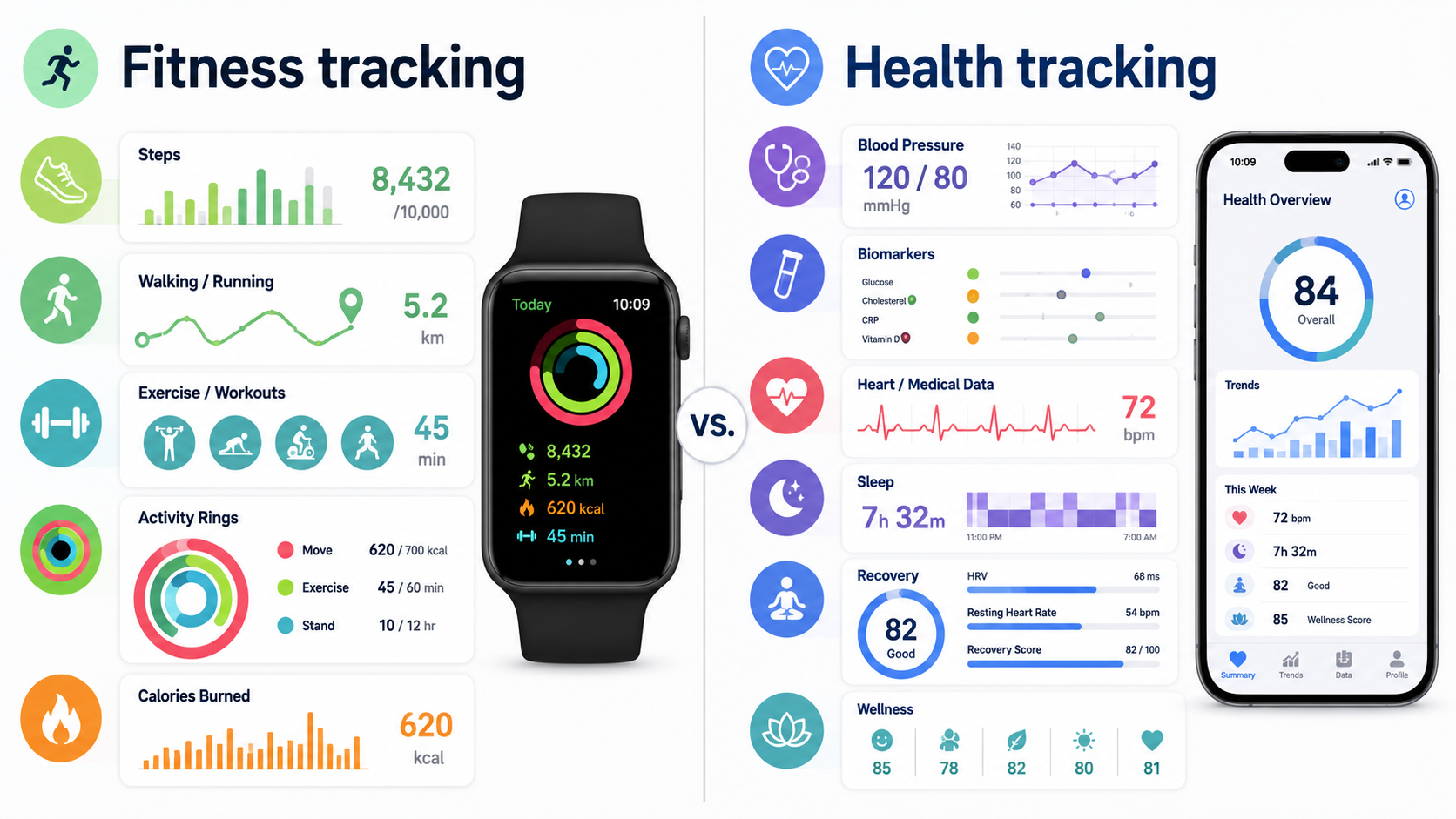
That is where health tracking is going next. Not just steps, workouts, calories, or sleep hours. More products are moving toward biological age, blood pressure, bloodwork, biomarkers, and healthspan.
In simple terms: not only “how active was today?” but “how well is the body holding up over time?”
That shift is interesting. It is also easy to misunderstand.
1. Biological age sounds simple, but it is not
Chronological age is easy. It is the number of years since birth. No app is needed for that.
Biological age is different. It tries to estimate how old the body seems based on signs of health, function, and risk. Depending on the method, it may use blood markers, fitness data, sleep, heart rate, inflammation markers, body composition, or other measurements.
The problem is that there is no single “real” biological age sitting inside the body waiting to be discovered. Different tools can use different formulas. One may focus on blood chemistry. Another may use fitness and heart rate. Another may use wearable data. Another may use DNA methylation or other lab-based markers.
That is why two apps can give two different answers and still both claim to be measuring biological age.
A review on aging biomarkers explains that biomarkers of aging help estimate biological age, but the field is complex because aging is not one process. The heart, muscles, metabolism, immune system, brain, and blood vessels do not all age in the same way or at the same speed.
That is the part many apps hide. A biological age number looks clean because one number is easy to understand. But the body is not one number.
A more honest version would sound like this:
“Based on current fitness, sleep, blood pressure, and blood markers, some health signals look strong, while others may need attention.”
That is less catchy than “You are 6 years younger,” but it is more useful.
2. Blood pressure matters more than most wellness scores
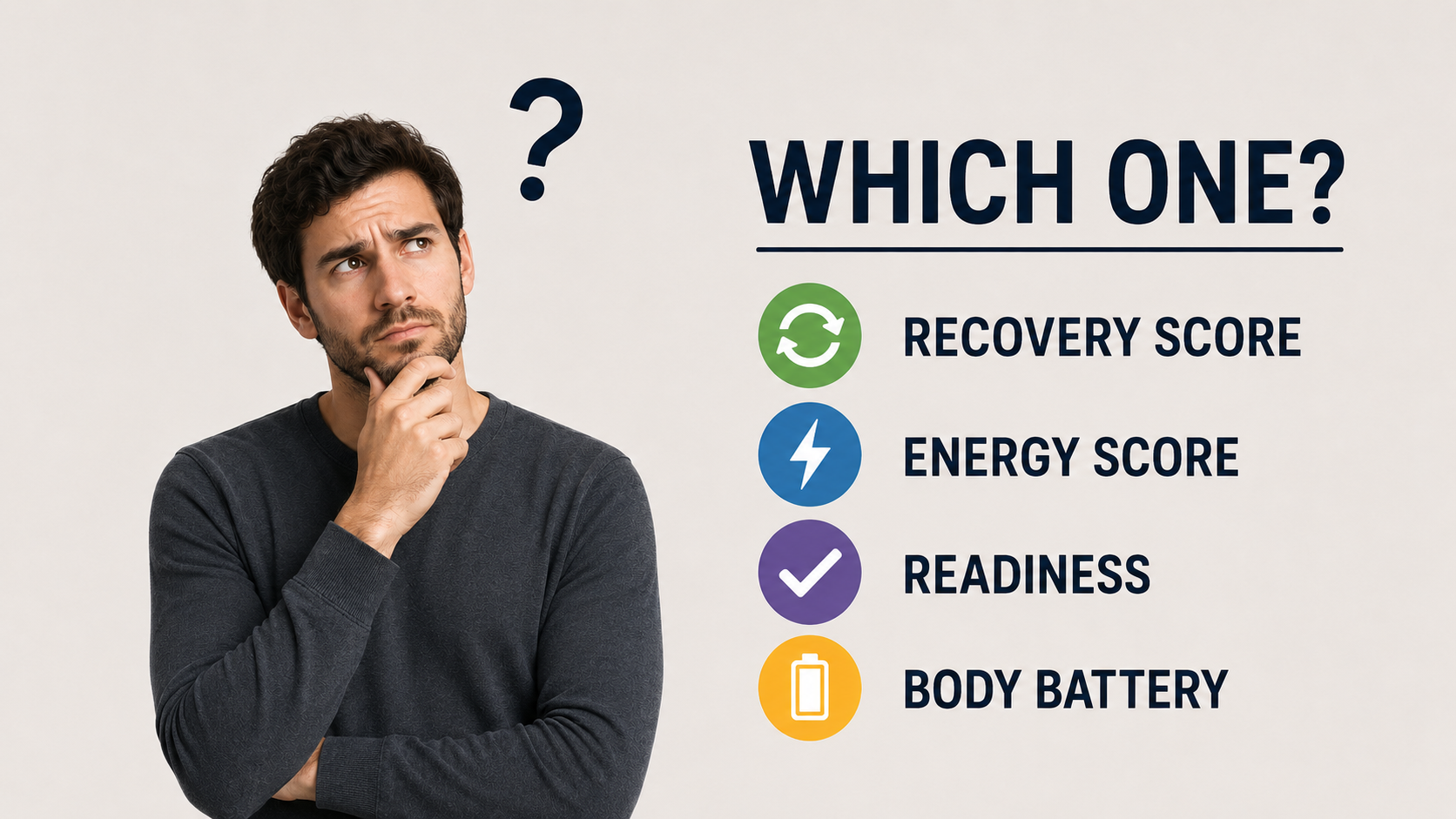
Recovery scores get attention. Sleep scores get attention. Readiness scores can change how someone trains that day.
Blood pressure often gets treated like something separate, old-fashioned, or medical. That is a mistake.
Blood pressure is one of the most important health signals because high blood pressure can quietly increase long-term health risks. It is not as trendy as HRV. It does not feel as futuristic as biological age. But it matters.
The American Heart Association recommends home blood pressure monitoring for people with high blood pressure, because it can help healthcare professionals understand whether treatment is working and help confirm high blood pressure.
The CDC also explains the correct way to measure blood pressure at home, including sitting properly, resting first, and avoiding food or drink shortly before measuring: CDC: Measuring Your Blood Pressure.
That last part matters because blood pressure is easy to measure badly.
A rushed reading after coffee, stress, stairs, or a badly positioned arm can make the number look worse than it really is. One reading is not always the story. The pattern matters.
This is where health apps need to be careful. A wearable blood pressure feature sounds powerful, but if the data is not accurate, it can create false reassurance or unnecessary panic.
The American Heart Association has noted that cuffless blood pressure technologies in wearables show promise, but they need real-world testing, validation, and transparency.
That is the right tone: promising, not magical.
3. Bloodwork gives context that wearables cannot see
A wearable can see behavior. It can see movement, sleep, heart rate, and sometimes breathing or temperature trends. But it cannot see everything happening inside the body.
Bloodwork adds a different layer.
A blood test may show markers related to cholesterol, glucose, inflammation, thyroid function, iron, liver function, kidney function, vitamin levels, or other health factors. These are not the same kind of signals as steps or sleep. They come from inside the system.
MedlinePlus explains that medical tests can help detect conditions, guide diagnosis, monitor health, and check whether treatment is working. That is exactly why bloodwork can make wearable data more useful.
Imagine poor recovery lasting for weeks. A wearable may show bad sleep, higher resting heart rate, and lower activity. That is helpful, but incomplete. Bloodwork may reveal low iron, thyroid issues, inflammation, poor glucose control, or another issue worth discussing with a clinician.
Or imagine the opposite. Someone feels fine, trains well, sleeps well, but bloodwork shows cholesterol or blood pressure moving in the wrong direction. The wearable may make the person feel healthy, but the lab markers add a warning light.
Neither layer is enough alone.
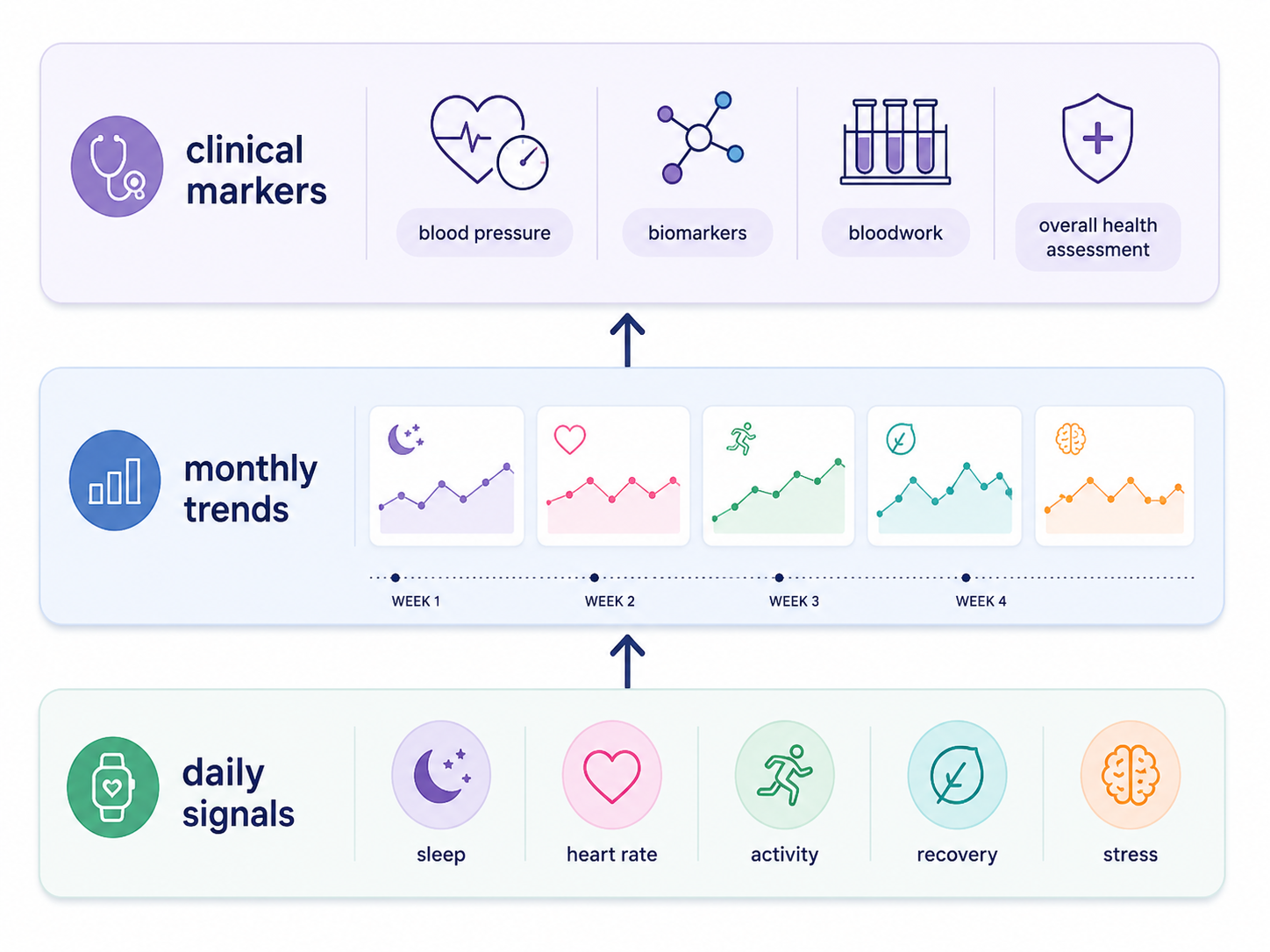
Wearables show daily patterns. Bloodwork shows internal markers. Together, they can create a more useful health picture than either one by itself.
4. Healthspan is a better goal than “younger”
The word “longevity” gets abused constantly.
Sometimes it means living longer. Sometimes it means selling supplements. Sometimes it turns ordinary habits into luxury science. But the more useful word is healthspan.
Healthspan is about how long a person stays healthy and functional, not just how long they stay alive. The goal is not simply to add years. The goal is to keep strength, mobility, energy, independence, and daily function for as long as possible.
The World Health Organization describes healthy ageing around the idea of functional ability and the capacities people need to do what they value. That framing is much more human than chasing a younger-looking number in an app.
A biological age score may be motivating, but it is not the goal. The goal is being able to walk, train, think clearly, sleep well, recover, work, travel, carry groceries, climb stairs, and live without the body becoming the main obstacle too early.
That is why healthspan tracking should not become another vanity metric.
The useful question is not:
“How young does the app say the body is?”
The useful question is:
“What is this number helping change?”
If a biological age score helps someone sleep better, move more, manage blood pressure, improve nutrition, or follow up on bloodwork, it has value. If it only creates anxiety or bragging rights, it is just another leaderboard.
5. Biomarkers should explain behavior, not replace it
Biomarkers can be powerful because they make invisible patterns visible.
Cholesterol can show risk that may not be felt. Blood pressure can be high without obvious symptoms. Glucose patterns can reveal how the body handles food. Inflammation markers can raise questions that sleep data cannot answer.
But biomarkers can also become a trap.
It is easy to collect more numbers and assume that more tracking equals better health. It does not. A person can track twenty markers and still ignore the obvious: poor sleep, too much stress, no movement, poor nutrition, alcohol, smoking, or no follow-up when something is abnormal.
A good health app should not turn biomarkers into a scoreboard. It should connect them to behavior.
For example:
“Your blood pressure readings have been trending higher. This is more important than today’s recovery score. Consider measuring at the same time each day, reducing intense training until the pattern is clearer, and discussing the trend with a healthcare professional.”
Or:
“Your sleep and resting heart rate have looked worse for two weeks, and your recent bloodwork showed low iron. This may be worth discussing with a clinician, especially if fatigue continues.”
That is helpful because it connects the marker to a decision.
The point of biomarkers is not to scare people. The point is to help people act earlier and more intelligently.
6. When blood pressure should matter more than recovery
Recovery scores are useful, but they can become too loud.
A green recovery score can make someone feel ready. A red recovery score can make someone feel broken. But some health signals deserve more attention than a daily readiness number.
Blood pressure is one of them.
If blood pressure readings are repeatedly high, that should not be ignored just because sleep looked good or HRV looked fine. A good recovery score does not cancel out a cardiovascular risk signal. The body can feel normal while blood pressure is still a concern.
That is why health dashboards need hierarchy. Not all metrics deserve the same weight.
A low sleep score may suggest adjusting bedtime. A poor recovery score may suggest lighter training. But repeated high blood pressure readings may suggest proper home measurement, tracking, and medical follow-up.
The American Heart Association’s guidance on home blood pressure monitoring also makes clear that home monitoring does not replace regular doctor visits. That line matters. Apps can support awareness, but they should not pretend to manage hypertension alone.
A useful health dashboard should be able to say:
“Your recovery score is normal, but your recent blood pressure readings are higher than your usual range. Focus on confirming accurate readings and follow up if the pattern continues.”
That is more responsible than treating every score as equal.
7. The best health dashboard is a translator
The future of health tracking should not be a screen full of unrelated numbers.
Biological age here. Blood pressure there. HRV somewhere else. Sleep score in another corner. Bloodwork in a PDF nobody wants to read. That is not a health dashboard. That is a filing cabinet.
The better version is a translator.
It should explain what changed, what matters most, and what action makes sense next. It should separate daily noise from long-term risk. It should tell someone when a number is probably just fatigue, and when a pattern deserves real attention.
A good dashboard might say:
“Your biological age estimate improved mostly because your fitness and resting heart rate improved. Your blood pressure trend has not changed, so that remains the main area to watch.”
Or:
“Your recovery has been low this week, but your blood pressure and resting heart rate are stable. This looks more like short-term training fatigue than a broader health change.”
That is the kind of explanation people need.
Not just a younger number.
Not just a red warning.
Not just a wall of charts.
A clear hierarchy: what changed, why it matters, and what to do next.
The honest take
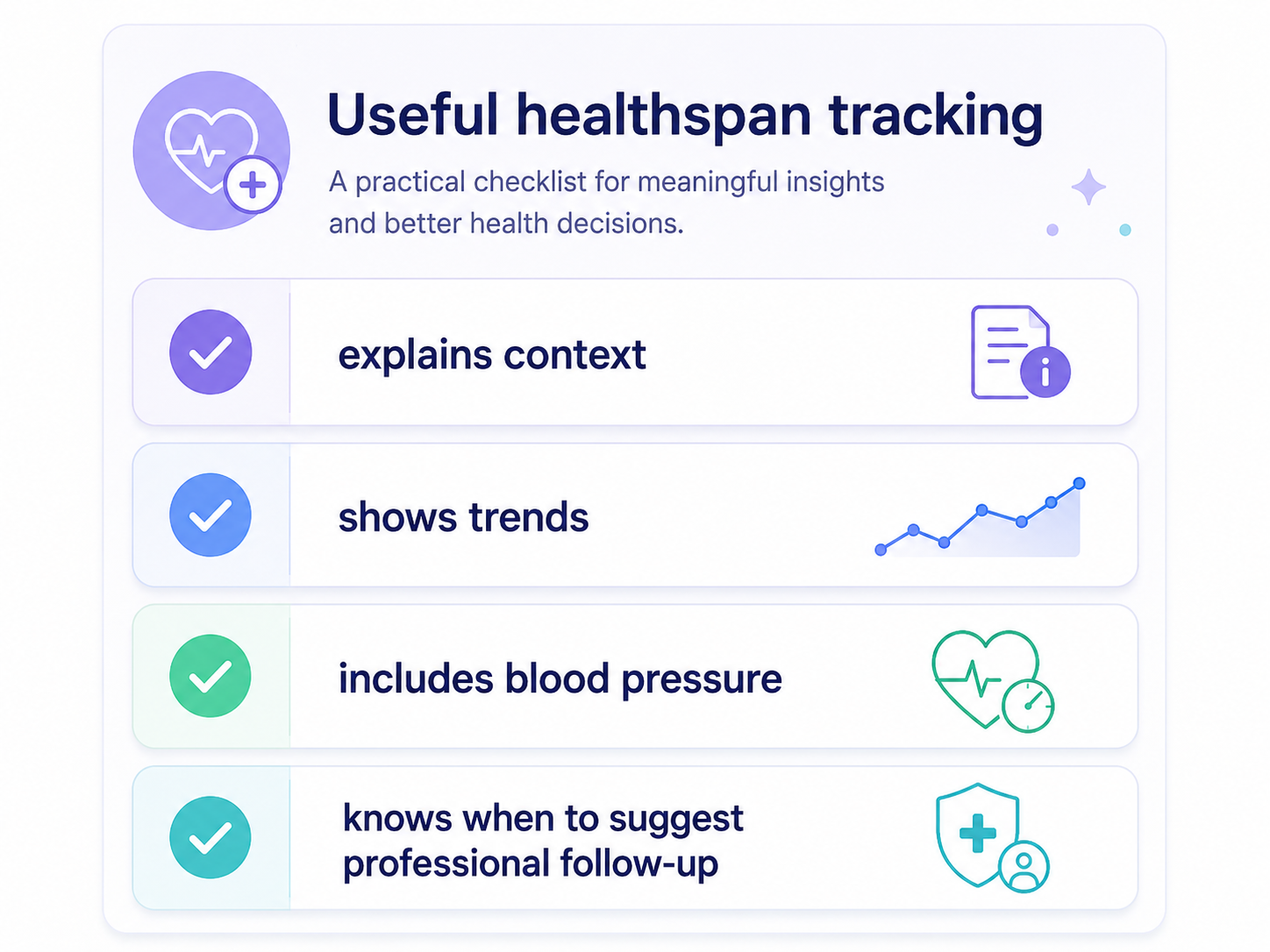
Biological age, blood pressure, biomarkers, and healthspan are not just trendy features. They show where personal health tracking is going.
But the useful version is not about making people obsess over a younger score. It is about helping people understand the body with more context.
Biological age can be motivating, but it is an estimate.
Blood pressure can be quiet, but it matters.
Bloodwork can reveal what wearables cannot see.
Healthspan is not about looking younger. It is about staying functional longer.
The best health tools will not be the ones that show the most numbers. They will be the ones that explain which numbers matter today, which ones matter over months, and which ones need professional attention.
That is the real shift.
From fitness tracking to health understanding.
From daily scores to long-term patterns.
From “you are younger than your age” to “here is what is changing, and here is what can be done about it.”
FAQ
What is biological age?
Biological age is an estimate of how old the body appears based on health, function, and biological signals. It is different from chronological age, which is simply the number of years since birth.
Can an app measure biological age accurately?
An app can estimate biological age, but it should not be treated as a perfect truth. Different tools use different formulas and data sources, so results can vary.
Why is blood pressure important in health tracking?
Blood pressure is important because repeated high readings can increase long-term health risks. It may matter more than daily wellness scores like recovery or readiness.
Can wearables replace blood tests?
No. Wearables can show daily behavior and physiological trends, but blood tests can reveal internal markers that a wearable cannot measure directly.
What is healthspan?
Healthspan refers to the years a person stays healthy, functional, and able to do what matters to them. It is different from lifespan, which only measures how long someone lives.
*This article is for informational purposes only and is not a substitute for professional medical advice, diagnosis or treatment.*
Sources:
NIH·PubMed Central·American Heart Association·CDC·American Heart Association·MedlinePlus·World Health Organization