Reading TSH and free T4 together in a fatigue review
By Mr.Apps · Oct 26, 2026
Category:Energy

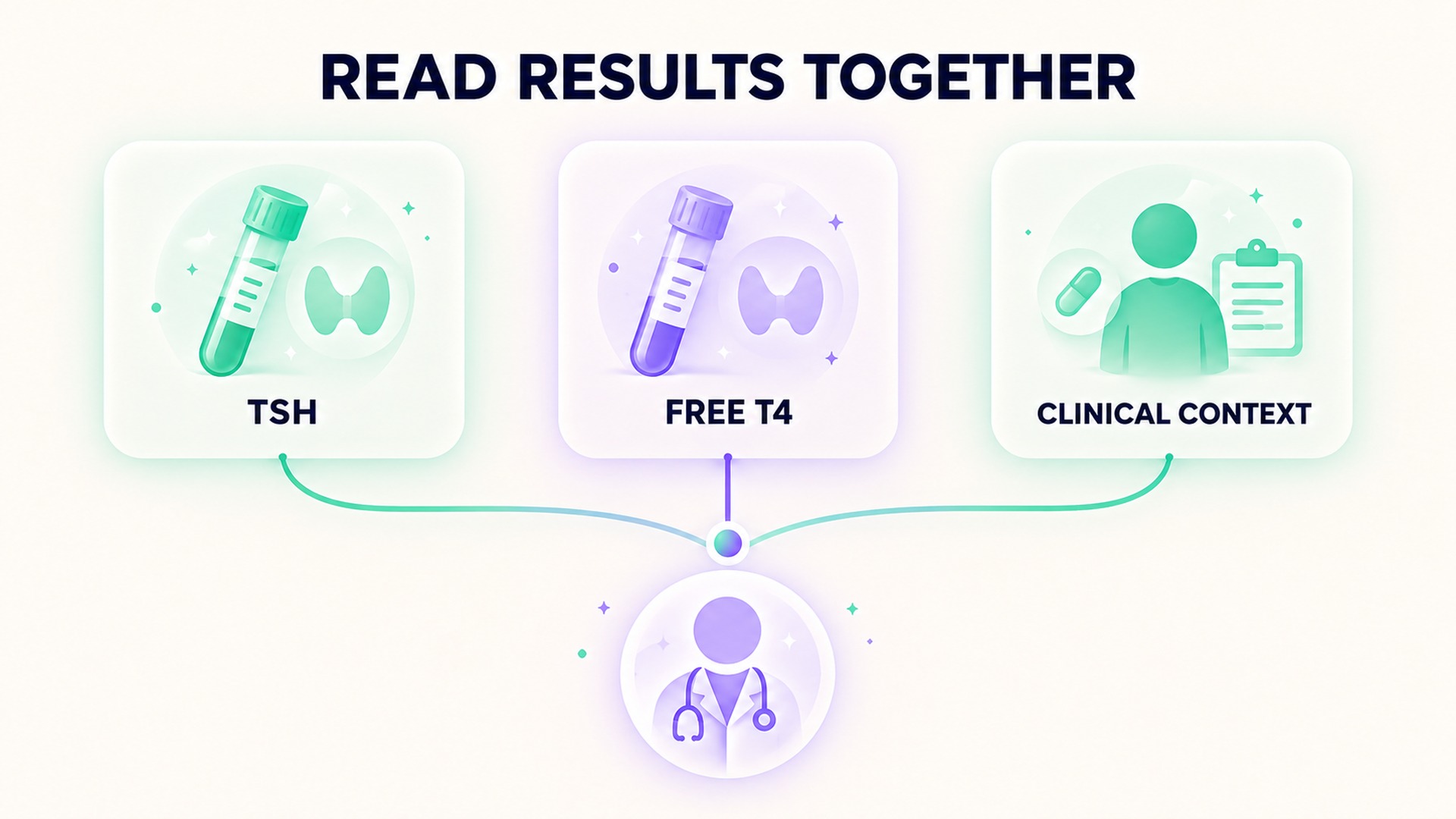
Fatigue is a real symptom, but it is not a diagnosis. It can arise from sleep disruption, medication effects, recent illness, mood, workload, nutrition, anemia, thyroid disease, and many other causes. A wearable can describe patterns in sleep or activity, yet it cannot determine whether thyroid function explains how someone feels. When thyroid blood work is part of a clinical review, the most useful reading often comes from looking at thyroid-stimulating hormone (TSH) and free thyroxine (free T4) together, then setting those results beside symptoms, medicines, and the reason testing was ordered.
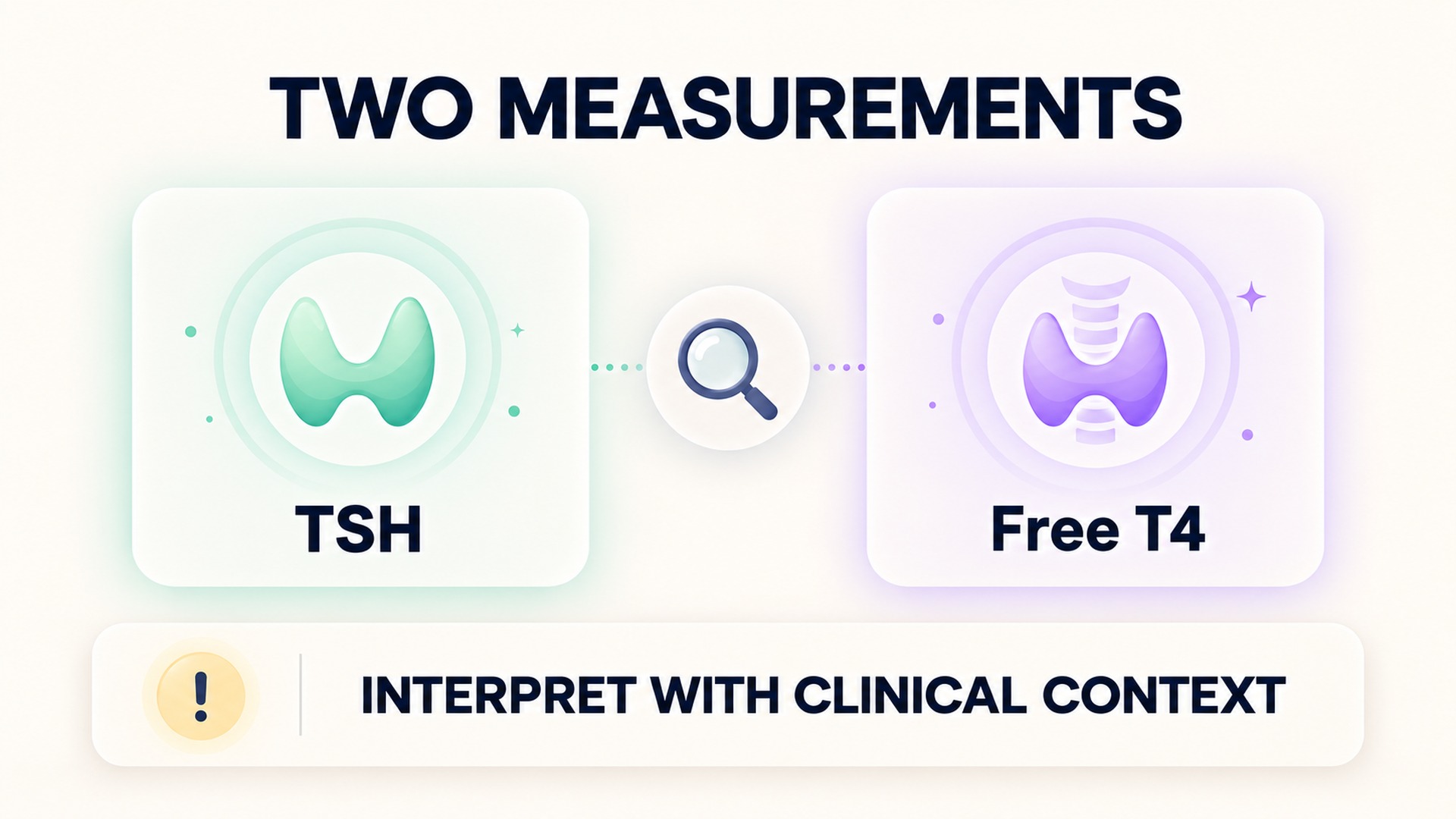
I approach these results as pieces of evidence with different roles. TSH is a signal from the pituitary gland that helps regulate thyroid hormone production. Free T4 is an estimate of the unbound portion of thyroxine available to tissues. Neither value, read in isolation, tells the whole story. The laboratory's reference interval matters, but so do the test method, the clinical question, prior results, and changes in treatment. A number can be useful without being self-explanatory.
What TSH contributes
The pituitary responds to thyroid-hormone feedback. When circulating thyroid hormone is low, the pituitary may release more TSH to signal the thyroid gland to make hormone. When hormone availability is higher, TSH production can fall. This relationship is why TSH is commonly used as an initial thyroid test. The TSH test overview explains that an abnormal TSH result may lead a clinician to order additional testing rather than treating the first number as a complete conclusion.
The pattern is informative, but it is not a simple dial that maps one-to-one to how a person feels. TSH can move in response to thyroid feedback and may not change at the same speed as symptoms or other blood measurements. A mildly out-of-range result can require a different discussion from a large change, a result that persists on repeat testing, or a value measured while treatment is being adjusted. The reference range is also specific to the laboratory and its method; comparing values from different laboratories without checking units and methods can make a trend look more direct than it is.
A clinician therefore asks what question the test is answering. Is this an initial evaluation of symptoms? Is it a follow-up after a medication change? Is there a known thyroid condition? Was the sample collected during an acute illness or another period that could affect interpretation? Those are not side details. They determine how much weight to give a result and what follow-up, if any, makes sense.
What free T4 adds
T4 circulates in the blood in bound and unbound forms. Most is attached to transport proteins; a smaller fraction is free. Free T4 testing focuses on that unbound fraction, while total T4 reflects both bound and free hormone. Changes in binding proteins can affect total T4 even when free T4 is less affected. The T4 test guide describes why clinicians may consider T4 with TSH and why the distinction between free and total measurements matters.
Free T4 provides a second view of the feedback system. A high TSH paired with a low free T4 may fit a different pattern from a high TSH with free T4 still within the laboratory interval. Likewise, low TSH with high free T4 differs from low TSH with a free T4 that is not elevated. These are patterns a clinician interprets, not a do-it-yourself code for diagnosis. A result can also be affected by pregnancy, serious illness, medicines, supplements, assay interference, and differences in the timing of testing. The clinical overview of thyroid testing describes the range of blood tests that may be used and the role of clinical interpretation.
Why the pair is more useful than either value alone
The central advantage of reading TSH and free T4 together is that the combination can reveal whether the regulatory signal and the circulating hormone estimate point in the same direction. TSH describes the pituitary response; free T4 adds information about one thyroid hormone in circulation. If the pattern is unexpected, it may signal the need to confirm the result, consider another test, review medicines, or ask whether a non-thyroid factor is affecting the measurements.
The relationship is not equally straightforward in every circumstance. Pituitary or hypothalamic disorders can change the usual relationship between TSH and thyroid hormone. Acute illness may affect test results. Some medicines and supplements can change hormone levels, binding proteins, or laboratory measurement. A recent dose adjustment can also make one value appear out of step with another while the body and treatment plan are still being assessed. These possibilities do not mean an abnormal result should be dismissed. They are reasons to interpret it with the whole clinical record rather than making a conclusion from a single screenshot.
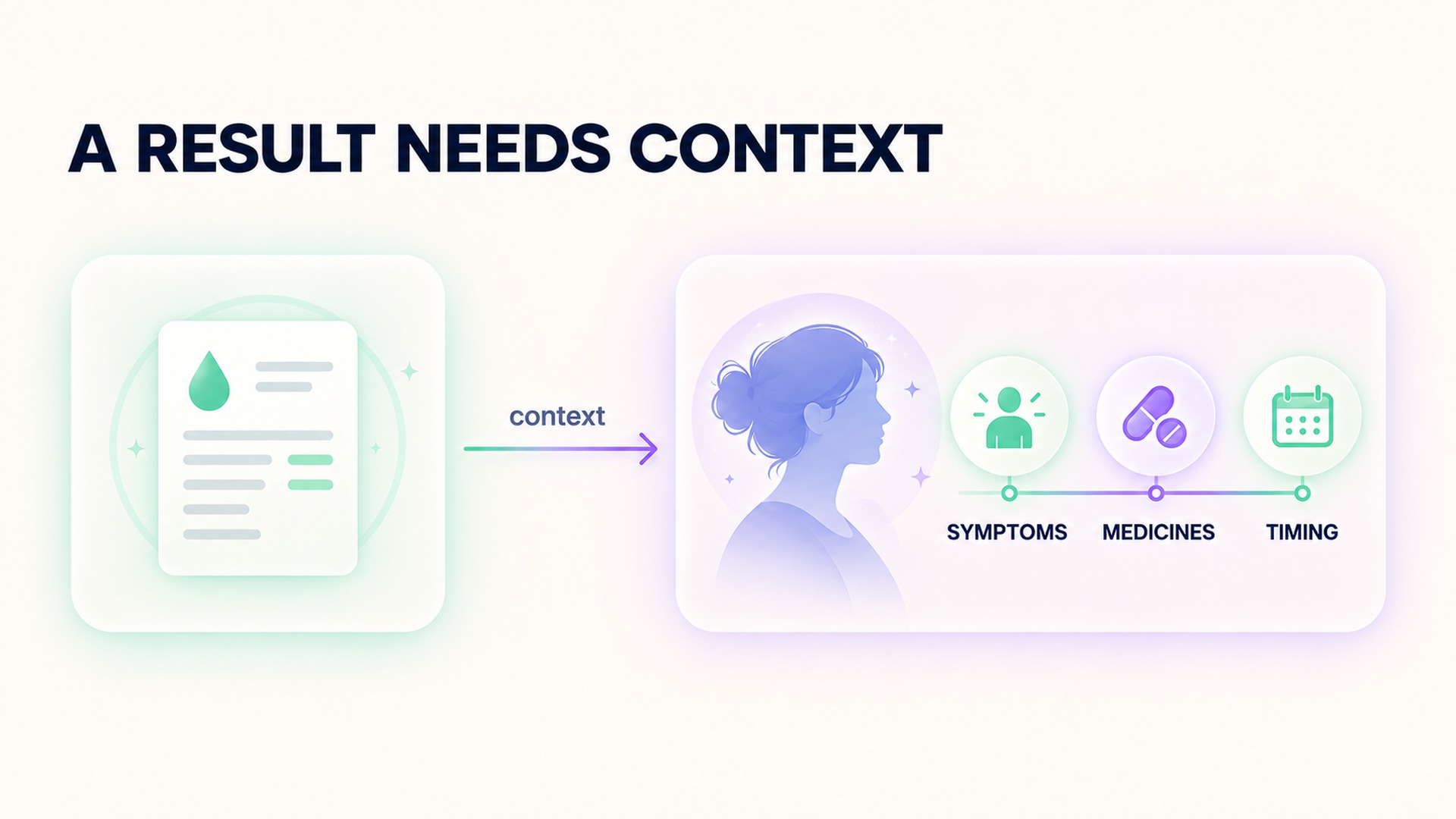
Symptoms also have limited specificity. Fatigue, changes in concentration, temperature sensitivity, bowel changes, or weight changes may appear in thyroid conditions, but they also occur for many other reasons. Symptoms can guide what to ask and which tests may be appropriate; they do not establish that the thyroid is the cause. Conversely, a person may have a laboratory pattern that needs attention even if the symptom picture is subtle. The explanation of thyroid function tests describes the feedback relationship and the limits of using one test as a complete picture. When the basic pattern leaves a question about cause, a clinician may consider a different test, such as an antibody test, rather than trying to make TSH answer every question. The thyroid antibody test overview describes one category of testing that can help evaluate autoimmune thyroid disease; it does not turn symptoms or a single antibody result into a complete assessment.
Build a useful record around the results
For a follow-up conversation, preserve the date of the blood draw, the exact test names, the reported values, units, and the reference intervals printed by that laboratory. Keep TSH separate from free T4 and do not replace the original result with a simplified label such as “normal” or “low thyroid.” If values come from different laboratories, note that change. A record that preserves the source information is more useful than a chart that smooths away differences in methods or units.
Add the reason the tests were ordered and a concise description of the symptoms being reviewed. Include when symptoms began, whether they are persistent or changing, and whether they affect daily function. The goal is not to create a long symptom diary for its own sake. It is to provide enough context for a clinician to decide whether the result fits the question, whether testing should be repeated, or whether another explanation deserves attention.
Medication and supplement context can matter. List prescribed thyroid treatment, the dose as directed, recent changes, and the timing of the most recent change. Also note other medicines and supplements when asked by the care team. Do not stop, start, or alter a prescribed treatment based on a wearable score, a single laboratory value, or a general online explanation. If instructions for taking a medicine or preparing for a blood draw are unclear, ask the clinician or pharmacist responsible for that care. Some supplements can also interfere with selected laboratory methods. The information about biotin and laboratory tests illustrates why a complete supplement list can matter to the laboratory and clinician. It is not a reason to stop a supplement on your own; report what you take and follow the testing team's instructions.
Keep app signals in their proper role
A sleep or readiness score may help someone notice that fatigue coincides with a period of disrupted sleep, heavy training, or illness. That observation can be useful background. It cannot show that thyroid hormone is low, establish that thyroid disease is present, or tell someone how to change treatment. Consumer sensors estimate selected behaviors or physiological signals; a laboratory test measures something different, and clinical assessment connects the findings to a person's history.
For that reason, keep the wearable record beside the clinical record rather than merging them into a single health verdict. A note such as “sleep was shorter during the week fatigue increased” preserves an observation. A statement such as “the low recovery score proves a thyroid problem” exceeds what the device can measure. The difference matters because it keeps an estimate from turning into a diagnosis or treatment instruction.
A broader discussion of how health measurements and app estimates should be interpreted is available in this overview of biomarkers in health apps. For the thyroid question itself, keep the original laboratory report and let the clinician interpret the pattern alongside symptoms, treatment, and other relevant findings. A clear record supports a better conversation; it does not replace one.
Questions people ask
Does a normal TSH rule out every thyroid problem?
No. TSH is an important test, but the appropriate tests depend on the clinical question and the person's history. Some conditions or circumstances can alter the usual TSH relationship. A clinician may review free T4, other thyroid tests, prior results, medicines, and symptoms before deciding what a result means.
Can fatigue alone show that thyroid hormone is low?
No. Fatigue has many possible causes and is not specific to thyroid disease. It is useful to tell a clinician when it began, how it has changed, and what else is occurring. A wearable may add context about sleep or activity, but it cannot identify the cause of fatigue.
Should a person change thyroid medication after seeing a lab result?
No medication change should be based on a general article, an app score, or an isolated number. Treatment decisions depend on the full clinical picture and the care plan. Ask the prescribing clinician how to interpret the result and what follow-up is appropriate before changing a dose.
*This article is for informational purposes only and is not a substitute for professional medical advice, diagnosis or treatment.*
Sources:
National Library of Medicine·National Library of Medicine·National Institute of Diabetes and Digestive and Kidney Diseases·American Thyroid Association·National Library of Medicine·Food and Drug Administration
Related articles

Why Metabolic Energy Efficiency and Daily Energy Are Different Concepts
Metabolic energy efficiency describes processes involved in handling fuel, while a daily energy score is usually a separate app estimate about patterns such as sleep, activity, and recovery. Similar wording does not mean the two measures track the same thing.

Why a Monthly Metabolic Trend Cannot Explain One Meal
A monthly metabolic trend summarizes signals across a longer window and cannot identify what one meal did to glucose or insulin. Read it as a broad estimate, keep meal notes in their proper context, and use clinical testing for medical questions.

How Charging Gaps Break a 24-Hour Energy Timeline
Removing a wearable to charge creates a period when the device may not record the signals used by an energy model. A 24-hour timeline should mark that gap instead of treating it as neutral or connecting the surrounding values as continuous measurement.

How to Compare Energy Drain Across Days With Different Starting Scores
The ending value alone can hide how much an energy score changed during the day. Compare the start, decline, timing and data coverage on the same scale before interpreting differences between days.

Why Missing Hours Need to Be Visible on an Energy Timeline
Connecting two known points across an unmeasured interval can invent a smooth story about the day. An energy timeline should mark missing hours clearly so estimates, observations and unknown periods remain distinct.

How to Tell Recharge From Reduced Drain in an Energy Timeline
A flatter energy curve can mean that the model estimates slower decline, while a rising curve suggests modeled recharge. Check the timeline’s direction, update timing and inputs before deciding which interpretation fits the display.

Why a Full Morning Energy Score Can Fall Quickly
A high morning energy score is a starting estimate, not a guarantee that the rest of the day will decline slowly. The later curve depends on what the model tracks, which inputs arrive and how the score represents changing demand.

How to Read a Predicted Energy Peak That Never Arrives
A predicted energy peak is an estimate of timing, not a promise that the day will follow a script. When it fails to appear, check coverage, update timing and changed inputs before deciding what the miss means.

Why an Energy Forecast Needs a Confidence Range
A single future line can look more certain than its inputs support. A forecast range can show how much the outlook may shift as new measurements, demands and model assumptions change through the day.

Why a Health App Needs an "I Cannot Do That" Setting
Health advice becomes more useful when it respects the limits of the day. An explicit constraint setting can prevent technically reasonable recommendations from becoming impossible instructions.