Why a laboratory sleep study can differ from a usual night at home
By Mr.Apps · Oct 19, 2026
Category:Sleep
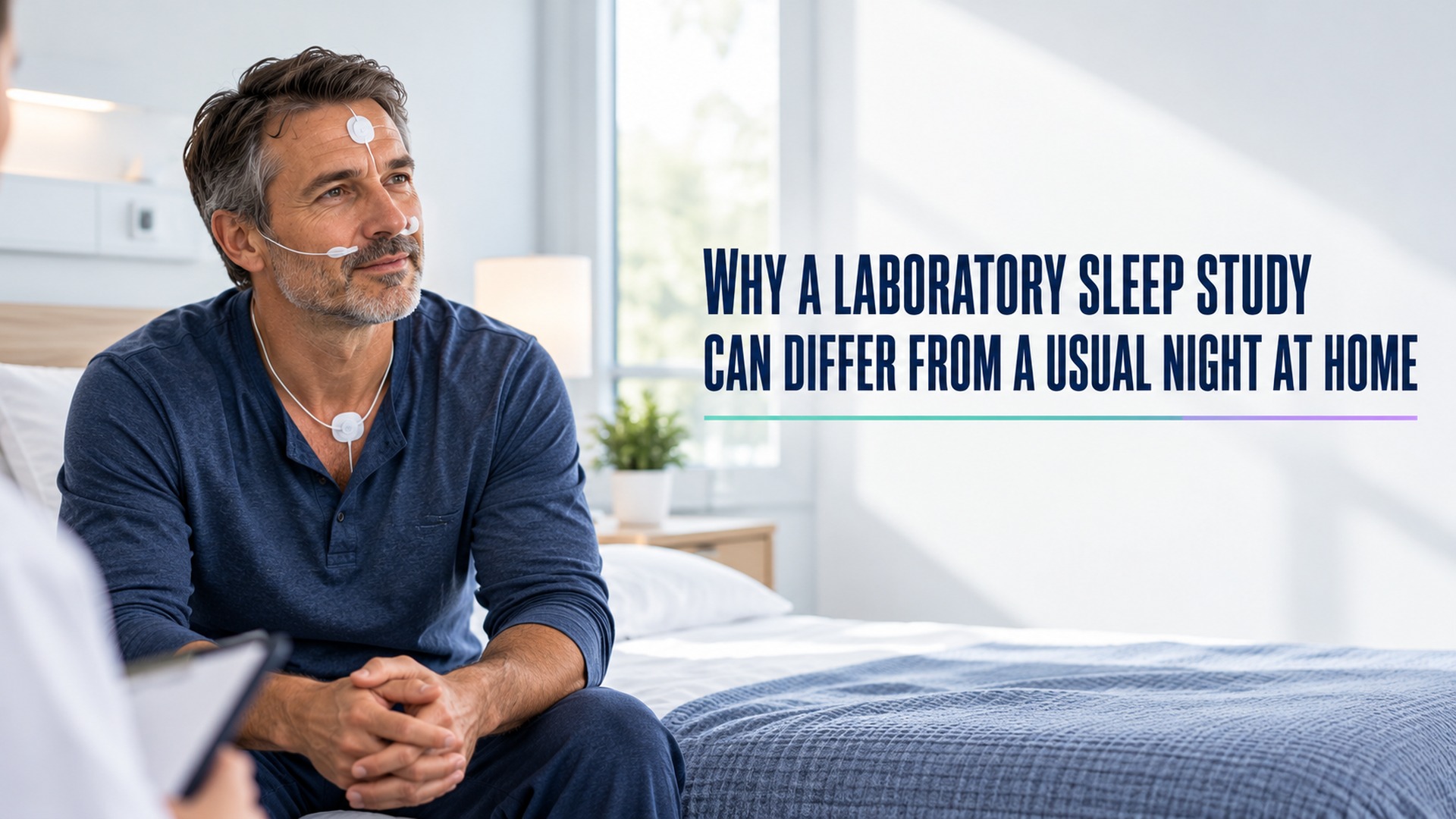
A night in a sleep laboratory is measured under conditions that differ from an ordinary night at home. Sensors record brain activity, eye movements, muscle tone, breathing, oxygen levels, heart rhythm, and other signals selected for the clinical question. The unfamiliar room, the equipment, and the timing of the appointment can also affect how sleep unfolds. A difference from a familiar night is possible, but it does not automatically make the study invalid. Interpretation should follow the referral question, recording quality, and clinical history, not resemblance to an average home chart.
A sleep study answers the question it was designed to investigate. It is not a perfect recording of every night, and it is not meant to reproduce a month of sleep in one sitting. A wearable average answers a different question using different signals. I would not use either result to cancel the other. Instead, note what was measured, what was unusual about the night, and how the clinician connected the data to the reason for testing.
Why the room and equipment can matter
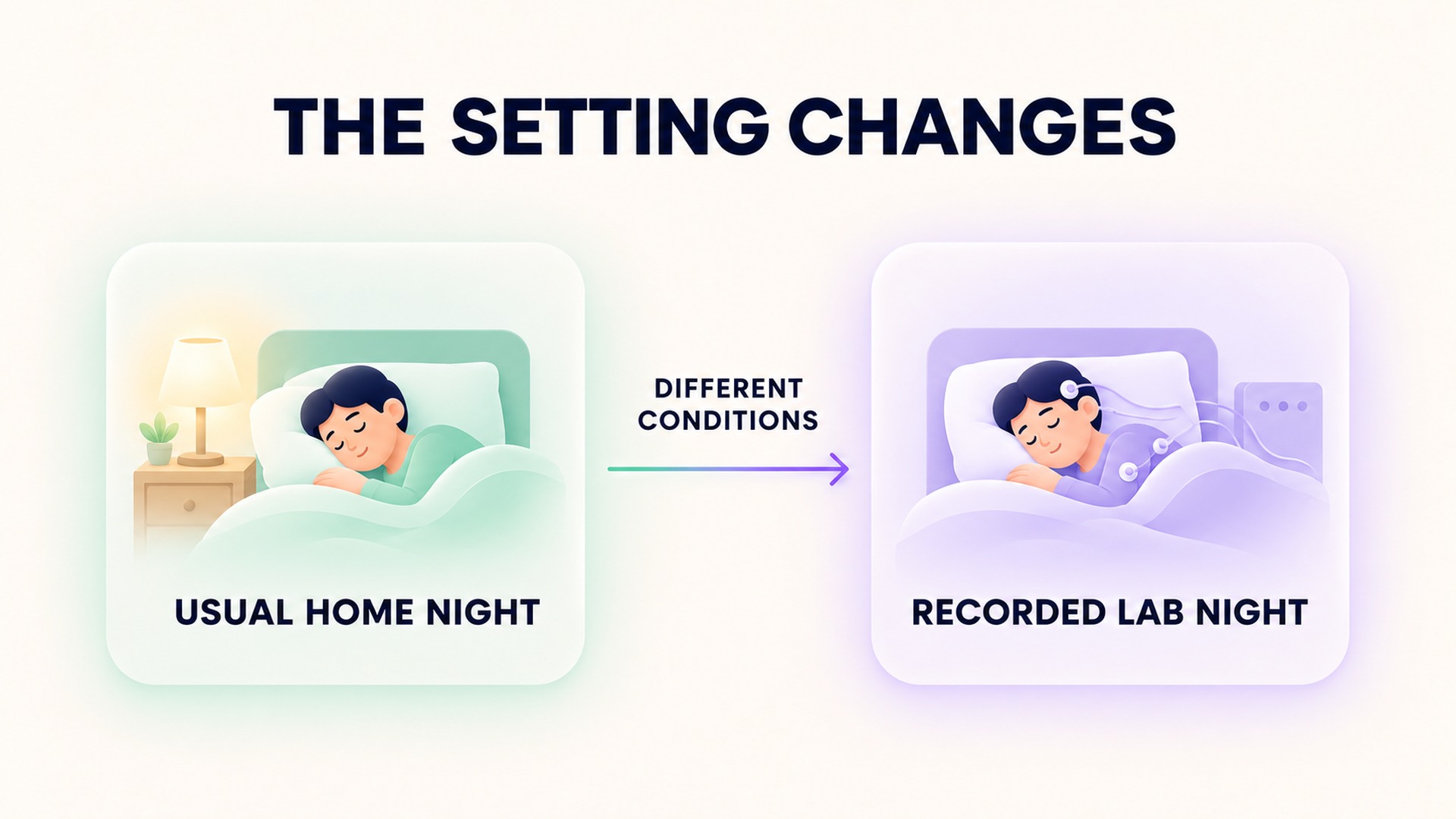
In a laboratory, sensors are attached to collect multiple signals. The wires and electrodes are necessary for the study, yet they may feel unfamiliar. The bed, room temperature, light, noise, staff checks, and fixed sleep window may differ from home. Some people fall asleep later or wake more often. Others sleep well enough for the study’s purpose. There is no single response that applies to everyone.
Researchers call some changes associated with a first measured night the “first-night effect.” In a study of healthy adults who spent two consecutive nights in a sleep laboratory, the researchers examined differences between the first and second nights. The findings do not mean every first night is substantially different or that a single study cannot be interpreted. They show why the testing context belongs in the discussion.
The size of any difference also depends on the population and outcome being studied. A systematic review of first-night findings in people with insomnia found changes in several sleep-continuity and architecture measures across the included studies. The review also noted limitations in the available evidence. Its results should not be applied as a prediction for every patient, but they show why a laboratory night needs interpretation in the context of the person and the purpose of the test.
The effect is not necessarily just about an unfamiliar building. Recording equipment itself can alter the experience, even when a person sleeps in a familiar place. A later study of first-night effects in familiar and unfamiliar environments reported that some differences occurred across environments when participants encountered the recording setup. That makes the question more specific than “Was the room strange?” The relevant details include the equipment, the protocol, the test purpose, and the person’s sleep before the appointment.
A person may also have an unusually late bedtime, travel before the test, or sleep less than usual the previous night. Those details can matter because the study is a sample from a particular period, not a full history. A study on the relationship between prior-week sleep regularity and first-night effects examined how sleep in the preceding week related to laboratory measures. That kind of evidence supports keeping recent schedule context available, without assuming it explains any individual result.
What the study can show
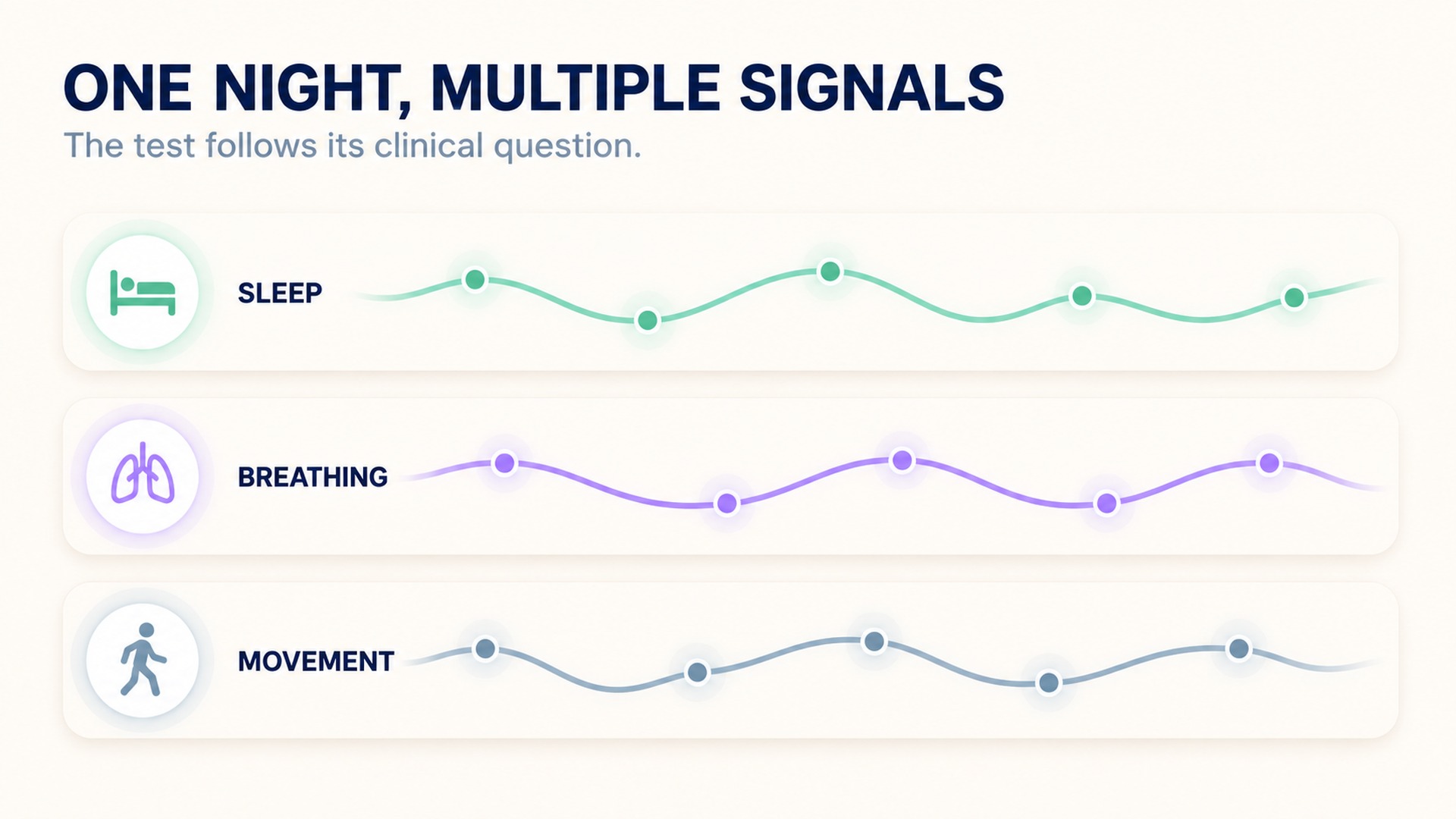
Polysomnography combines signals that a consumer device usually does not record in the same way. Depending on the test, clinicians may evaluate sleep stages, breathing events, oxygen patterns, limb movement, heart rhythm, or behaviors during sleep. A sleep apnea study and a test for unusual movements do not answer the same question. The study report should be interpreted in light of the reason it was ordered.
Clinical testing also has standards for how it is performed and scored. The clinical guideline for diagnostic testing in adults describes how laboratory polysomnography and home sleep apnea testing are used in appropriate clinical contexts. A home test can be suitable for some people being evaluated for obstructive sleep apnea, while laboratory testing may be needed when other conditions or clinical factors affect the choice. The right method is determined by the clinician, not by which result looks more familiar.
A single night can still provide useful information. If the recording captures the signals needed to evaluate the question, the clinician can interpret it alongside symptoms and medical history. A night with less sleep than expected may limit certain conclusions, but the presence of an unusual feature does not automatically erase the rest of the data. Ask which parts of the study were adequate for the question and which parts, if any, were limited.
A study can also show that more information is needed. That is different from proving that the study was wrong. A test may be inconclusive when signals are missing or when the recorded sleep does not support a clear answer. The next step might be to review the setup, compare the result with symptoms, or consider additional testing if the clinician believes it is appropriate. Do not infer that a home device can replace a repeat study or settle a result by averaging several nights.
Why home tracking is not a direct replacement
A wearable may be useful for a broad description of timing, movement, or estimated sleep continuity across several nights. That can help document a usual schedule or show when sleep varies. Most consumer devices do not record the full set of physiological channels used in a laboratory study. They infer sleep states from a smaller set of signals and proprietary methods. Their summary may look precise while answering a narrower question.
The official description of sleep studies explains that a sleep study records selected body functions to help diagnose sleep disorders. A consumer chart does not become equivalent just because both use the word “sleep stage” or show a timeline. If you bring wearable data to an appointment, label it as consumer tracking and keep it separate from the clinical report.
It can be useful to compare the timing around the laboratory night with the days before it. Keep a simple note of bedtime, wake time, travel, unusual schedule changes, and whether the laboratory instructions were followed. You do not need to reconstruct every detail. The goal is to help the clinician see whether the test night was broadly typical or had an obvious deviation. If you could not sleep because of the equipment, describe that plainly rather than converting it into a diagnosis.
The distinction between a study and a home average resembles the distinction between an observed sample and an estimate across time. A repeated home record can show variation, but it may not measure the physiological event under investigation. The laboratory can measure more channels, but it captures fewer nights. Together they may provide useful context when the clinician decides that both are relevant. They are not interchangeable versions of one score.
A related guide on how confidence should be shown beside sleep-stage estimates discusses why stage labels from consumer tracking need careful interpretation. The same care applies when comparing a consumer timeline with a clinical record. Check the method first, then ask what conclusion the evidence supports.
Questions to ask about a result
If the night felt very different, explain what was different and when it happened. Ask whether the recording contained enough sleep and signal quality to address the question. If you had difficulty tolerating sensors or were awake for long periods, mention that. The clinician can decide whether those details affect interpretation. A patient should not have to decide alone whether a study counts.
If a report does not match how you felt, ask which measurements and symptoms were considered together. Some sleep conditions are not defined by a sleep-stage percentage. Some require additional information, such as an overnight study followed by a daytime test. Others depend on breathing signals or observed behavior. The report’s conclusion should be connected to the test’s purpose rather than to a comparison with a consumer score.
A repeat study is not automatically needed just because the first night was unfamiliar. Repeating tests has cost and can disrupt routines. It may be considered when the original study did not answer the clinical question, when the signals were inadequate, or when symptoms and findings remain difficult to reconcile. That judgment belongs to the clinician, who can weigh the potential value of more data against the limits of another recorded night.
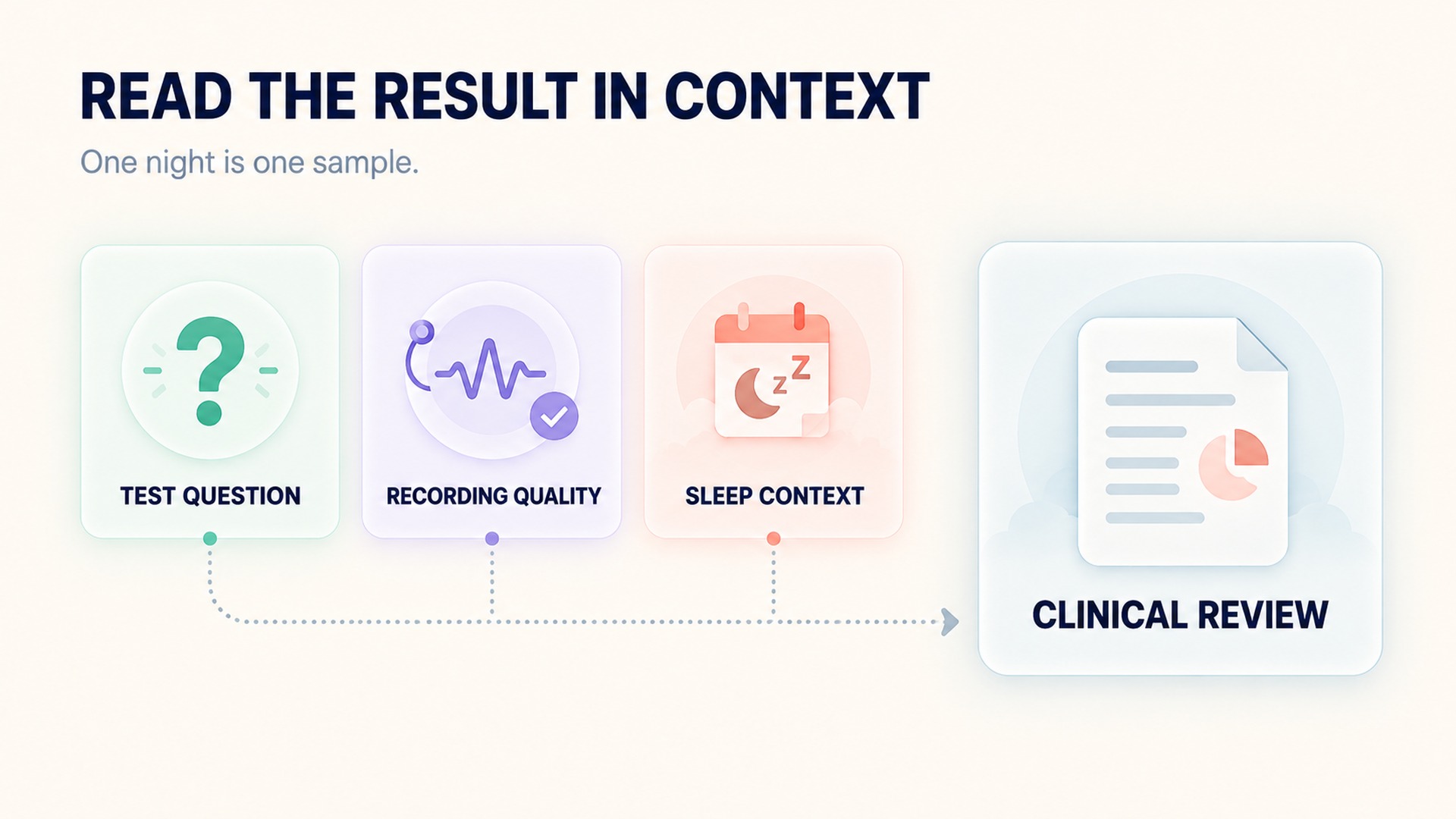
A laboratory sleep study may differ from a usual night because the setting, sensors, schedule, and prior sleep can shape the recording. That context belongs in the clinical interpretation, but it does not by itself invalidate the test. Keep the report, recent schedule notes, and home tracking clearly labeled as separate records, then ask which conclusions the study can support.
FAQ
Does a bad night in the laboratory make the study useless?
Not necessarily. The clinician can determine whether the recorded signals and amount of sleep were sufficient for the specific question being evaluated.
Should I use my wearable average instead of the laboratory result?
No. A wearable and a laboratory study measure different signals. Bring consumer data as context, but do not treat it as a replacement for clinical testing.
What should I tell the clinician after the test?
Describe unusual schedule changes, difficulty with the sensors, long periods awake, or anything else that made the night unlike home. Ask how those details affect the interpretation.
*This article is for informational purposes only and is not a substitute for professional medical advice, diagnosis or treatment.*
Sources:
Chronobiology International·Sleep·Journal of Sleep Research·Psychiatry Investigation·Journal of Clinical Sleep Medicine·National Heart, Lung, and Blood Institute
Related articles

How to Read a Sleep Graph When Deep Sleep Appears in Short Bursts
Short deep-sleep blocks on a wearable graph can reflect stage estimates, chart resolution, or missing sensor intervals. Read the time scale and coverage notes alongside the total sleep window before interpreting the pattern.

Why Sleep Stage Percentages Need a Confidence Indicator
A sleep-stage percentage can look precise even when the tracker has limited evidence for part of the night. A confidence indicator should explain whether it refers to signal coverage, classifier uncertainty, or validation against a reference method.

How to Tell Whether Zero Deep Sleep Is a Data Gap or a Classification Result
Zero deep sleep in a wearable graph can reflect an incomplete record or a classification that assigned no eligible interval to that stage. Check the full timeline, coverage notes, and the app’s stage method before interpreting the value.

Why Main Sleep and Naps Need Separate Breathing Analysis
Main sleep and naps can differ in timing, duration, sensor coverage, and how a tracker identifies each interval. A breathing summary should show which session it analyzed and keep a nap separate unless the product explains how both periods enter the same calculation.

Why a Percentage of Optimal Breathing Needs a Clear Denominator
A percentage of optimal breathing can look exact even when its denominator is unclear. Learn why a tracker should state which sleep minutes count, how it treats sensor gaps, and whether its method stays consistent across nights.

Why Bedtime Consistency Scores Can Misread a Deliberate Time Shift
A bedtime consistency score compares clock labels, but a deliberate schedule shift can make familiar sleep timing appear unusually variable. Check the score’s time frame, observation window, and treatment of transition nights before reading the result as a change in sleep quality.

Why a Sleep Tracker Needs a Time-Shift Mode
A time-zone change can alter the way a sleep tracker labels a night without showing when the body’s internal clock has adjusted. A temporary time-shift mode should preserve original timestamps, mark the transition, and pause comparisons that assume a steady schedule.

Why a Time Shift Should Pause Schedule-Based Coaching
A time shift can make schedule-based sleep advice compare local bedtimes against a different clock reference. A tracker should preserve each sleep record, pause stale coaching, and explain what observations it needs before the comparison resumes.

Why Blood Oxygen Average and Breathing Quality Percentage Should Not Share a Scale
A blood oxygen average and a breathing-quality percentage can both use percent signs while measuring different things. The interface should name each denominator, time window, and method so readers do not mistake one scale for another.

Why a Health App Day Boundary Should Follow the Main Sleep Window
A midnight-to-midnight calendar day can split one sleep period across two dates. A health app should identify the sleep window it uses to group overnight signals and explain how it labels nights that cross midnight or shift in timing.