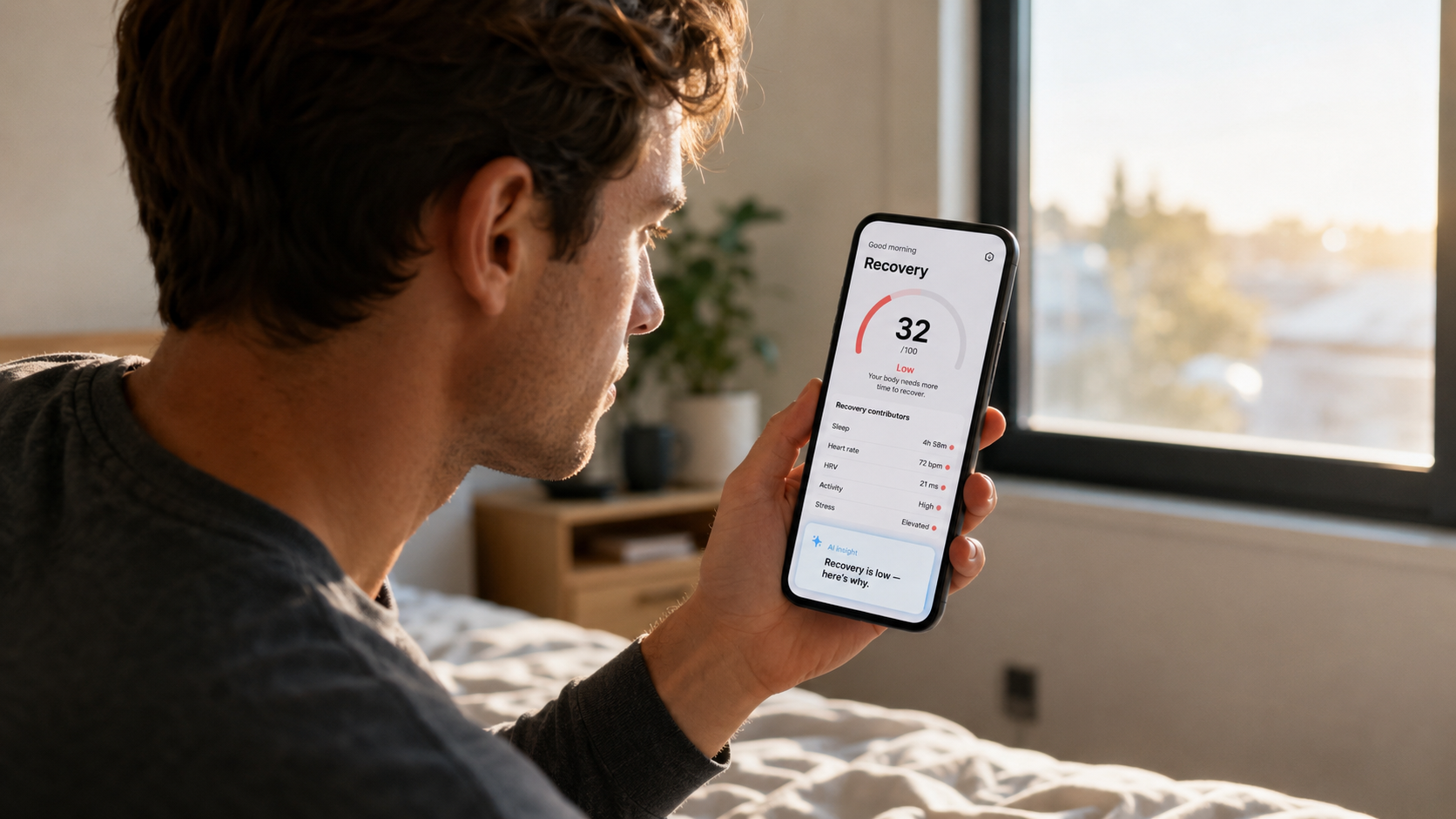
Why VO2 Max and Race Predictors on Wearables Often Argue With Reality
By Mr. Apps · Jun 24, 2026
Category:HRV
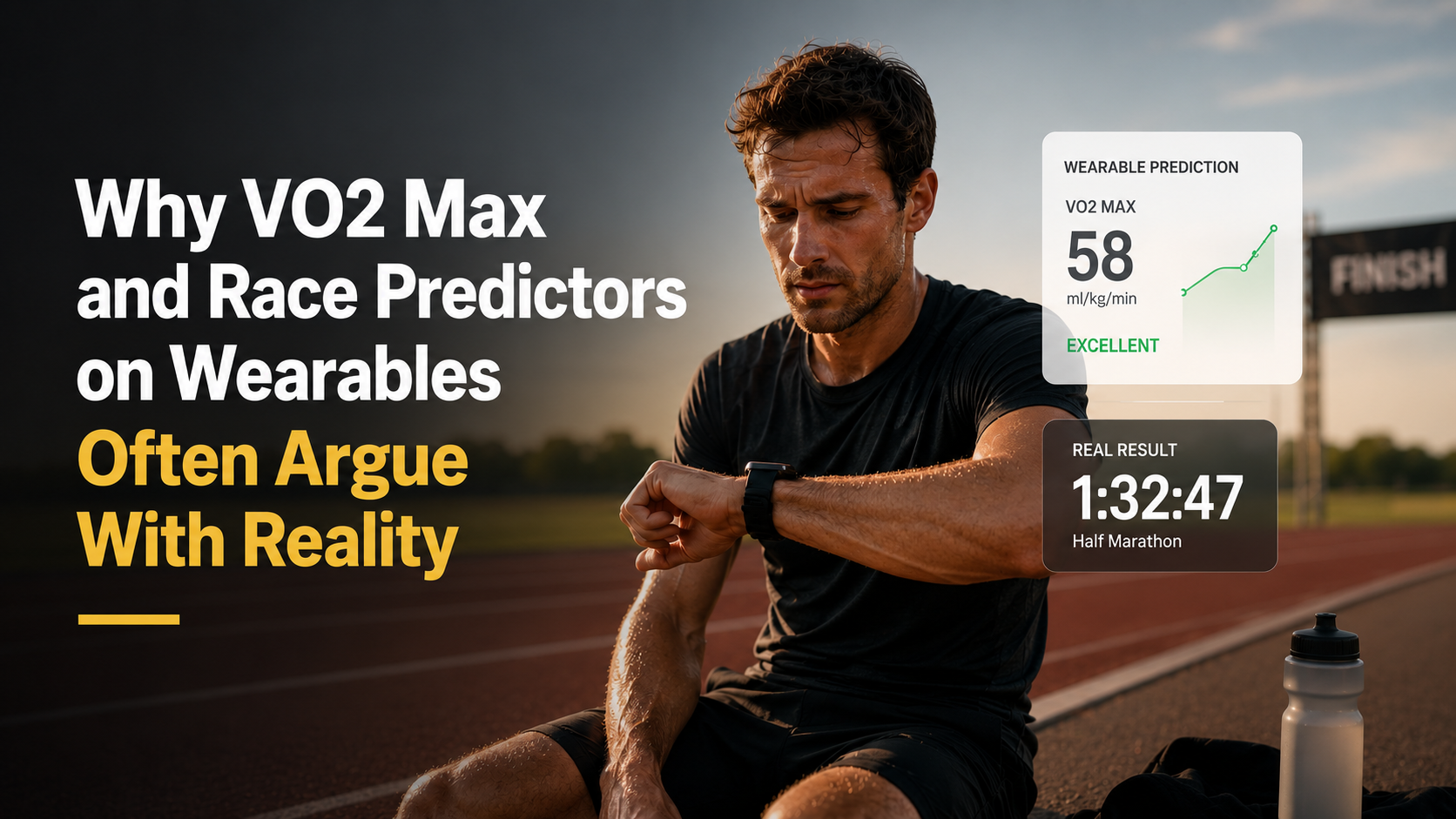
A teammate of mine walked into our Monday standup last July convinced he was falling apart. His watch had quietly dropped his VO2 max three points over two weeks, his race predictor had pushed his marathon estimate back by almost five minutes, and he genuinely wanted to know if something was wrong with his heart. Nothing was wrong with his heart. He had donated blood eleven days earlier, and the weather had jumped from a cool 14°C to a sticky 31°C in the same window. His watch knew about neither of those things. So it did the only thing it could: it watched his heart rate climb at a pace that used to feel easy, and it labeled that a loss of fitness.
That little moment is basically this whole article. Wearable fitness numbers aren't lies, but they're confident guesses wearing the costume of measurements, and the space between the guess and your actual body is where almost all the confusion lives. Me and my team read these numbers for a living, and the two questions we get more than any others are some flavor of "why did my VO2 max drop?" and "should I trust the race time on my wrist?" Here's the honest answer to both.
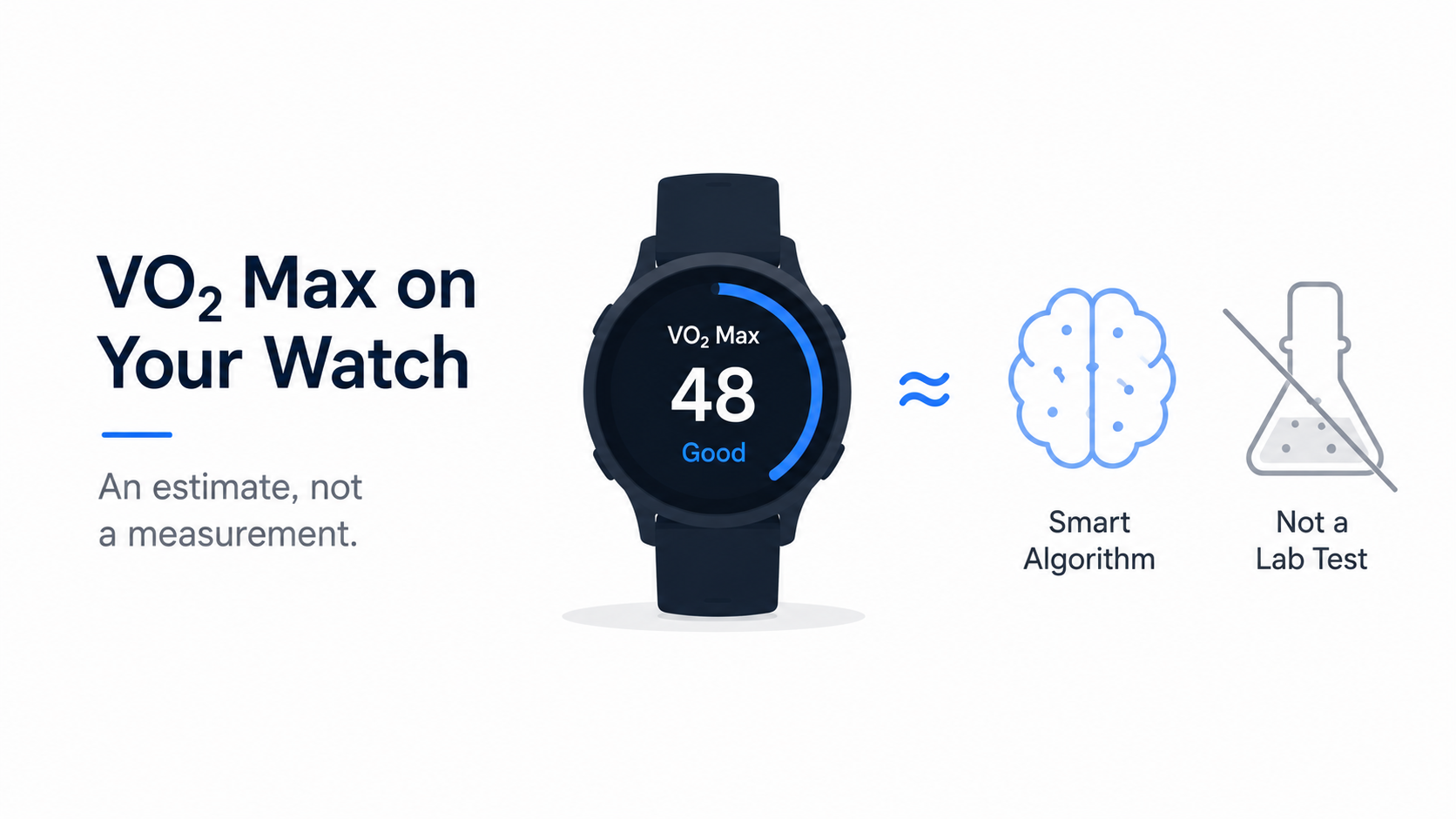
Your watch never actually measured your VO2 max
Let's start with the part nobody mentions when they hand you a shiny new watch: it doesn't measure oxygen at all. A real VO2 max test happens in a lab, with a mask sealed over your face while a technician ramps a treadmill or bike up to the point you can't keep going, and a machine reads the gases you breathe out. That's the gold standard, and validation studies that put consumer watches head-to-head against that lab equipment keep finding real gaps between the two. The wrist estimate lands in the neighborhood, but it's a guess, not a reading.
What your watch does instead is reverse-engineer a number from data it can actually reach. A lot of devices, Garmin especially, run on an engine originally built by a company called Firstbeat. The way that estimate is put together is honestly clever: it looks at how fast you're moving, how high your heart rate has to climb to hold that pace, how quickly your heart responds when you accelerate, and your breathing rate inferred from the tiny gaps between beats. Run faster at a lower heart rate than you did last month, and the algorithm concludes you got fitter. The logic is sound. The trouble is that heart-rate-at-a-given-pace gets nudged by a long list of things that have nothing to do with fitness, and the watch can't see a single one of them.
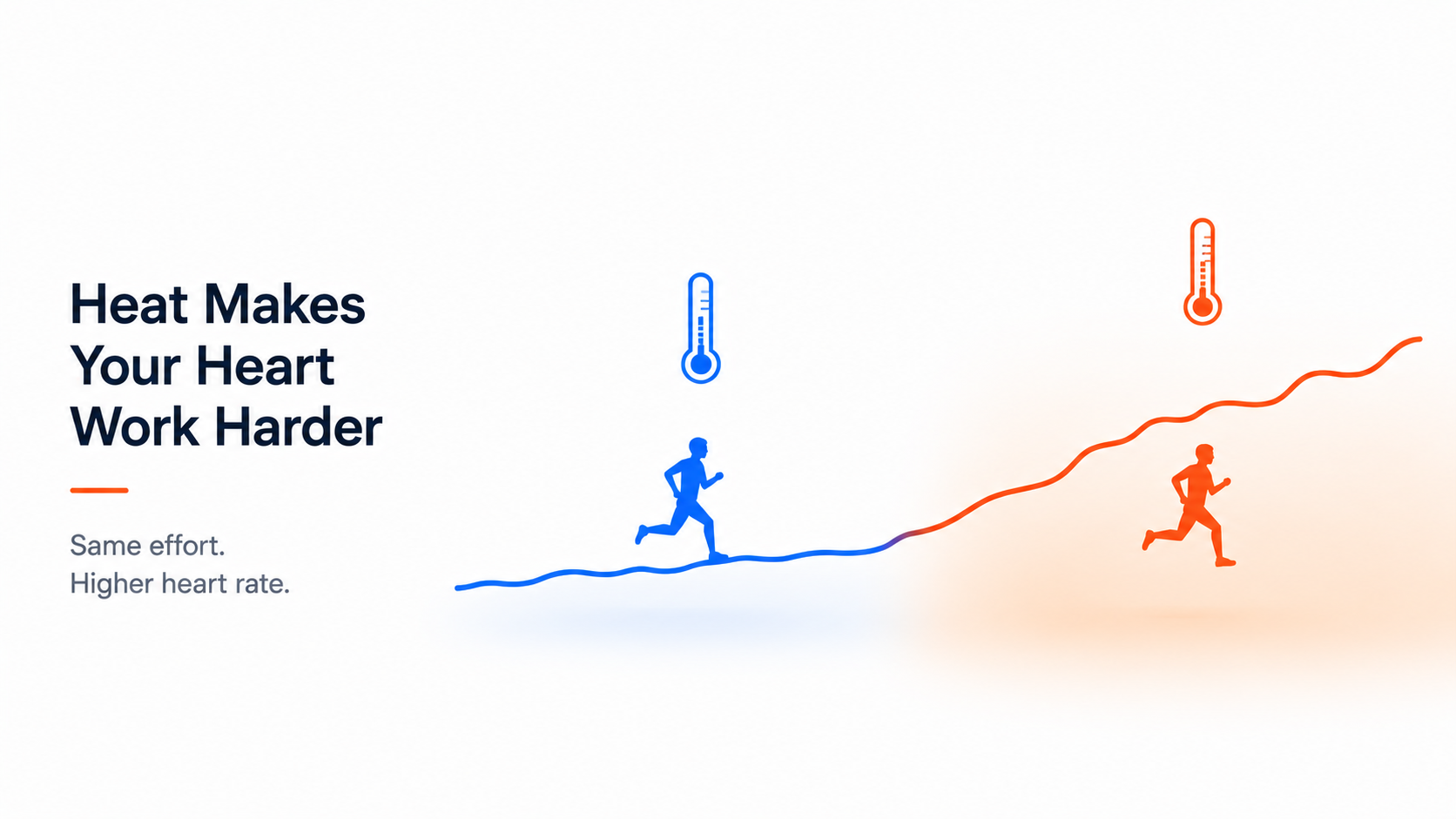
Heat, and how summer quietly robs you
Temperature is the big one. When it's hot, your body diverts blood to your skin to cool you down, plasma volume drops as you sweat, and your heart beats faster to deliver the same oxygen to your legs. That phenomenon is called cardiovascular drift, and it isn't a software bug. Controlled studies of exercise in the heat show that prolonged hot effort genuinely cuts the oxygen your body can use during that session, sometimes by double-digit percentages. Your watch sees the elevated heart rate, assumes your engine got weaker, and trims the number.
This is exactly why so many people in running forums report the same eerie pattern every year: VO2 max sinks in June and July, then mysteriously climbs back in October without any change in training. Garmin even acknowledges the summer dip directly and has heat-acclimation logic on some devices to partially correct for it. One of our beta testers relocated from a cool coastal city to a desert one for a three-month contract and watched his estimate slide for six straight weeks. He hadn't lost fitness. He'd lost air conditioning on his runs. When the season turned, the number came back on its own, which is the tell: real fitness doesn't bounce back in a week, but a weather artifact does.
Some bodies get a worse estimate than others, and it isn't your fault
Here's the uncomfortable part the marketing pages skip. The accuracy of the whole system rests on the optical heart-rate sensor on the back of the watch, which shines green light into your skin and reads the reflection. That technique is called photoplethysmography, and it does not treat everyone equally. Modeling work on how that optical signal behaves found that higher body mass and darker skin tones can wipe out a large fraction of the usable signal, in some device geometries more than half of it. Melanin absorbs green light, and more tissue between the sensor and the blood vessels weakens the reading. Less signal means more guesswork, and more guesswork means a shakier VO2 max sitting on top of it.
Then there are the small physical gotchas that quietly poison everything downstream. A friend of mine got a wrist tattoo, wore the watch over the ink, and couldn't figure out why his heart rate readings during intervals had gone haywire. Tattoo pigment scatters the sensor's light. Move the watch two centimeters up the arm onto bare skin and the problem vanishes. We've also seen the single most common silent error over and over: the watch defaults to assuming your maximum heart rate is 220 minus your age. If your true max is 185 but the watch thinks it's 176, every hard effort gets misread as more strenuous than it was, and your estimates skew low for months. We had a tester whose numbers jumped four points overnight, not because he trained, but because he finally entered a max heart rate he'd measured properly in a test.
The race predictor forecasts a race you'll probably never run
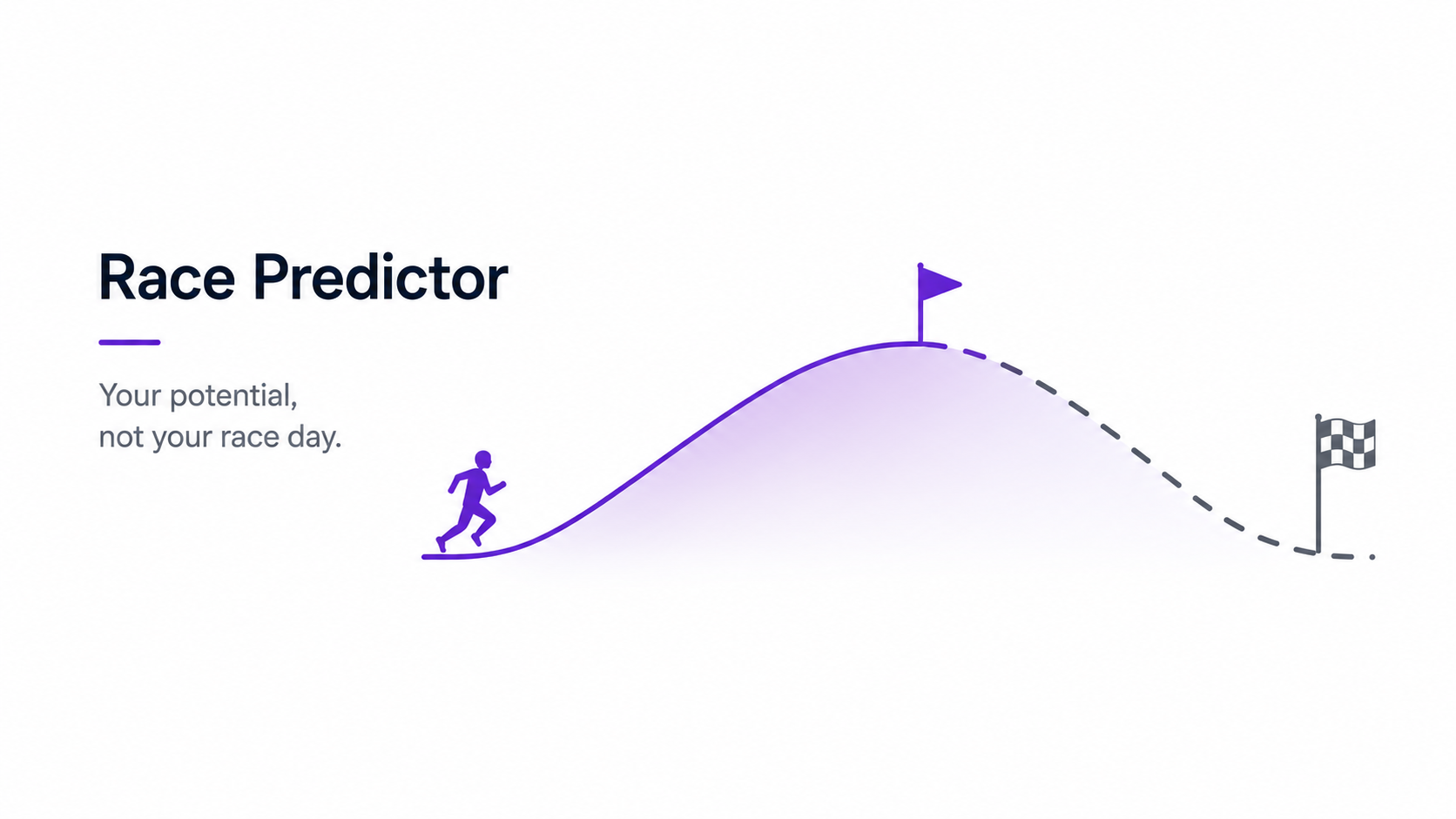
Now for the second question, because the race predictor inherits every flaw above and then adds its own. The predictor takes that already-wobbly VO2 max, applies a running-economy model, and spits out finish times for the 5K, 10K, half, and full marathon. For the shorter distances, where aerobic capacity dominates, it can be impressively close. For the marathon, it tends to live in a fantasy. Breakdowns of race-predictor accuracy point out that the marathon estimate routinely overshoots by 15 to 45 minutes, because the model quietly assumes a flawless race: perfect pacing, ideal weather, full taper, textbook fueling, and the muscular endurance to hold form past 30 kilometers. It predicts your ceiling, not your Tuesday.
I lived this one personally. Two springs ago my watch told me, with total confidence, that I was a 3:32 marathoner. My longest run in training had been 28 kilometers. I went out at 3:32 pace, felt heroic through halfway, and then the wall arrived at kilometer 32 like a closing door. I crossed in 4:08. The watch wasn't wrong about my aerobic engine. It was wrong about everything else that decides a marathon: my legs hadn't been taught to keep firing that long, the day was warmer than ideal, and no algorithm can model the specific misery of the final 10K. The predictor measured my potential and ignored my preparation, which are very different things.
How my team and I actually read these numbers
None of this means the metrics are junk. It means you have to use them for what they're good at. The single most useful habit is to stop reading the absolute number and start reading the trend. The reliable way to use a wearable VO2 max is to compare it only against itself, under similar conditions, over weeks rather than days. A drop from 52 to 49 during a heat wave tells you almost nothing. A steady climb from 49 to 53 across a cool, consistent training block tells you a lot.
Here's the playbook we actually follow. We pick one repeatable test, the same loop run at a comfortable effort every two to four weeks, and we only compare those efforts to each other. We never compare one person's number to another's, because a 48 on my wrist and a 52 on yours can come down to different settings or different skin, not different fitness. We treat the race predictor as a progress bar, not a promise: watching a predicted marathon move from 4:05 to 3:50 over a season is a real signal that the training is working, even though neither figure is what we'd actually run on race day. And when someone panics about a sudden drop, the first three questions are always the same: was it hot, did you sleep badly, and is your max heart rate set correctly? Nine times out of ten, the answer is in there somewhere.
The short version
Your watch is running a smart estimate built on heart rate, and heart rate is a leaky proxy for fitness. Heat, blood loss, bad sleep, a tattoo, a wrong setting, or just darker skin can all push the number around without your fitness changing at all. The race predictor stacks its own optimism on top of that. So read the direction, not the digit. Compare yourself to last month's self under the same conditions, not to a stranger or a clinical threshold. And if you ever truly need the real number, for a medical reason or because you're chasing something precise, book the lab and the mask. Everything on your wrist is a useful story about your fitness. It just isn't the measurement it pretends to be.
FAQ
Why did my VO2 max drop when my training didn't change?
Almost always, something other than your fitness changed first. A hot week, a bad night of sleep, dehydration, a recent blood donation, or even a watch worn loosely over a tattoo will push your heart rate up at a given pace, and the algorithm reads that elevated heart rate as a smaller engine. Look at the conditions around the drop before you blame your body. If the number recovers within a week or two once things settle, it was an artifact, not real fitness loss.
Is the lab VO2 max test really that different from what my watch shows?
Yes, and they're doing two different jobs. The lab puts a mask on your face and measures the actual gases you breathe, so it gives you a true number. Your watch never touches oxygen. It infers a number from heart rate, pace, and recovery, then corrects with assumptions it had to guess at, like your maximum heart rate. The watch is good for watching your own trend over months. The lab is what you book when you need the precise figure for a medical or performance reason.
Should I trust my watch's race predictor for marathon goal pace?
Treat the 5K and 10K predictions as roughly believable and the marathon prediction as your best-case ceiling, not a target. The marathon estimate assumes flawless pacing, cool weather, a full taper, and legs trained to hold form past 30 kilometers, and most of us miss at least one of those. Use it to track whether your predicted time is trending faster over a training block. Don't walk to the start line planning to run the exact number on your wrist, or you risk blowing up in the back half.
*This article is for informational purposes only and is not a substitute for professional medical advice, diagnosis or treatment.*