Single-sided cycling power relies on a symmetry assumption
By Mr.Apps · Nov 3, 2026
Category:Training

What a single-sided power meter estimates
A single-sided cycling power meter measures power from one side of the bicycle and uses that value to estimate total output. A common design doubles the left-side measurement as if the unmeasured side contributed the same amount. The assumption is simple and useful to understand, but it does not mean the device measured both legs independently. The estimate may track a rider's own training consistently while still differing from a bilateral measurement during a particular effort.
I read that displayed total as an estimate based on one side, not as a direct bilateral measurement.
Product documentation makes the calculation explicit. For example, the single-sided pedal description says its total-power figure multiplies the left-leg measurement by two. This is a device-specific design description, not a claim that every single-sided meter uses the same sensor location or software. Check the meter's manual to see which side it measures and how it constructs the displayed total.
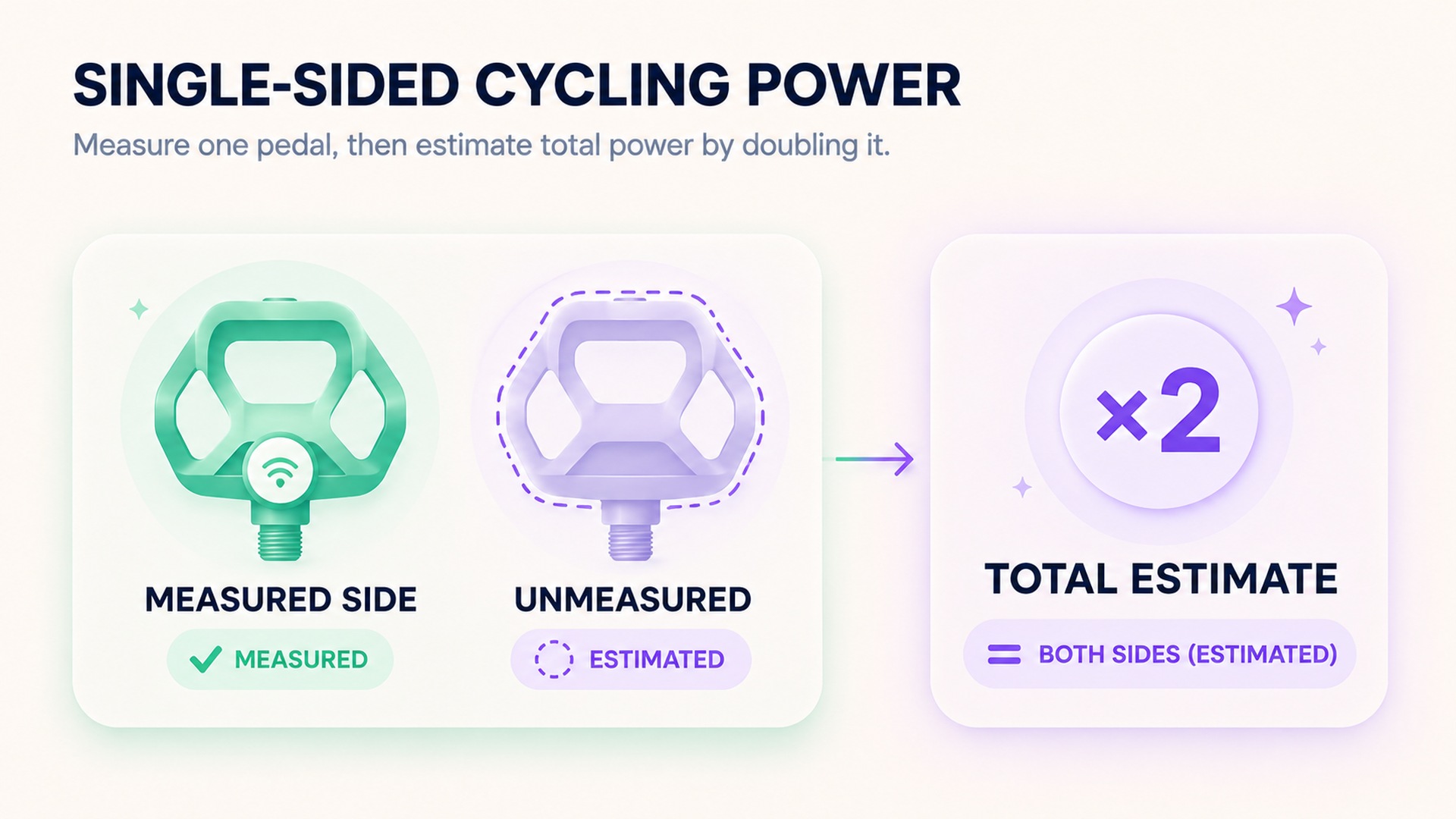
The symmetry assumption behind doubling
If the left leg contributes 100 watts and the right leg contributes the same amount over the same interval, doubling the left reading yields the combined 200 watts. If the unmeasured side contributes more or less, the doubled estimate will differ from the actual combined value. The number can therefore be precise as an output of the device's calculation without being a direct measurement of both sides.
This distinction is easy to miss because the head unit usually displays one total power number. That display may look like the total recorded by a bilateral system. The two values were derived differently. A bilateral meter collects information from both sides, whereas a unilateral meter uses one measured side plus a symmetry assumption. Check the source device before interpreting a change in total watts as a change in whole-body output.
The assumption is not inherently a flaw. A one-sided system can be a practical way to follow training when the sensor and recording setup remain consistent. Its limit becomes more visible when comparing it with a device that measures both sides, when the unmeasured leg's contribution changes, or when a workout includes different intensities or cadences. The manufacturer's support note on single-sided output describes doubling one side and notes that bilateral contribution can affect comparison with a trainer.
What research can and cannot establish
Cycling studies have measured differences between left and right contributions under specific test conditions. One study comparing bilateral asymmetry at different power outputs used ten competitive cyclists and reported that the measured asymmetry changed across its tested range. That finding does not describe every cyclist, every ride, or a clinical problem. It shows why a fixed equality assumption may not hold in every measurement context.
A later validation study of a unilateral pedal meter compared a left-only estimate with a bilateral reference at selected power outputs and cadences. The authors found that the accuracy of a unilateral estimate depended on the conditions tested. The study can inform how that device performed in that protocol. It cannot provide an individual rider's exact correction for future rides or prove that a person's legs are unequal in everyday cycling.
A review of cycling power-meter validation methods also points out that results from a one-sided device can be affected by the symmetry of the participants in a comparison study. A measured difference could reflect the device, the tested riders, the protocol, or interactions among them. That is why a study's sample and conditions matter when it is used to interpret an individual training file.
Keep the estimate separate from a diagnosis
A displayed left-right balance or a discrepancy between a unilateral meter and another source does not diagnose an injury, weakness, or movement disorder. The value is a measurement or estimate from particular equipment under particular conditions. A difference may vary with cadence, effort, fatigue, fit, sensor location, or the way the devices define a pedal stroke. Do not infer a health condition or prescribe corrective exercise from a single power balance number.
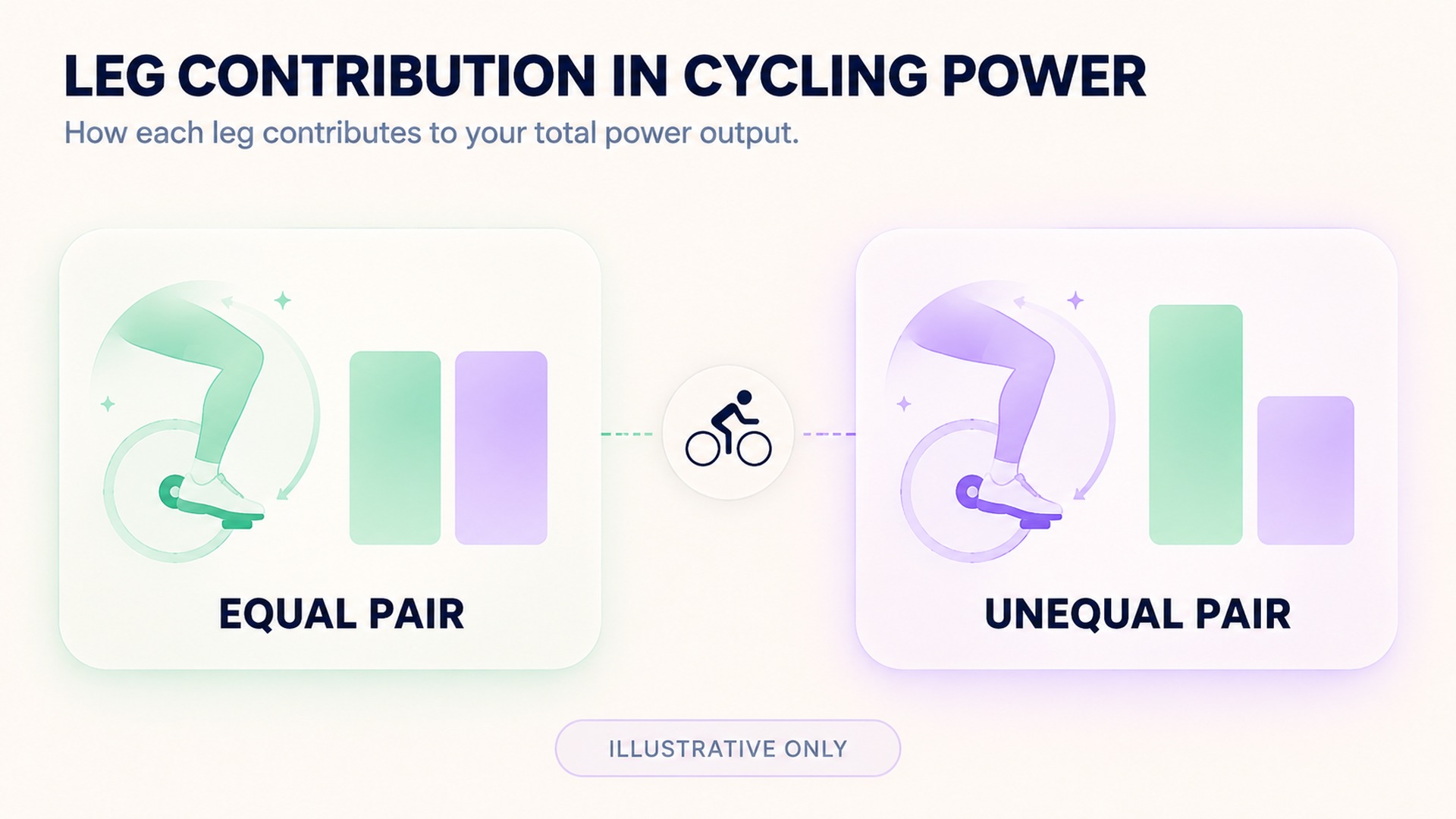
The research on how pedaling rate relates to bilateral asymmetry examined a specific question about cadence and leg contribution. Other studies use different groups, devices, and protocols. Together, they support a cautious reading: leg contributions can vary, and the amount of variation depends on the measurement conditions. They do not support a universal threshold that separates normal from abnormal cycling.
If a rider has pain, a new movement limitation, or a concern about function, those observations deserve appropriate professional attention. A unilateral power estimate is not a substitute for a clinical assessment. Likewise, a sensor's displayed balance is not proof of muscle output by itself, because a sensor measures mechanical quantities at its location and processes them through a device-specific algorithm.
Preserve which side the device measured
A training record should identify whether the sensor measured the left side, right side, both sides, or a combined point in the drivetrain. Note the meter model, firmware or app when relevant, crank length or other setup field requested by the device, and the source of the recorded activity. If the app has a setting that changes how single-sided data is scaled, preserve that state too. Do not silently apply another multiplier after the device has already done so.
This matters when equipment changes. Moving from a one-sided meter to a bilateral meter can create a new baseline even if the rider, route, and training goal stay the same. A head unit can also pair to a trainer and a pedal meter at once. In that case, label which device supplied the number shown in the activity. If a discrepancy appears, compare the device locations and measurement rules before deciding one unit must be wrong.
The recorded interval matters as well. Average power over a short surge differs from a sustained average, and an application can include or exclude zero values during pauses. A related guide to the effort duration behind a cycling power record explains why a watt number needs its time window. Keep duration, averaging rules, sensor side, and source together when you compare files.
Compare like with like where possible
For a trend within one meter, use the same sensor, side, setup, and recording method where practical. That does not remove every source of error, but it prevents an unmarked device change from looking like a physiological change. If the meter is reinstalled, the crank or pedal changes, or a second platform is introduced, record the change date. Preserve the raw file and avoid replacing historical values with a calculated correction.
For comparisons between a one-sided meter and a bilateral system, report both sources and describe the measurement difference. Do not make the numbers appear identical by changing a scale factor unless the manufacturer documents the adjustment and the basis is known. A software setting that doubles a single-side sensor should be checked to ensure it has not been applied twice. Retain the device's own export and the displayed source label.
If a one-sided value is consistent for a particular training use, it may still answer that limited question. It can help compare sessions recorded with the same meter and setup. The limitation is that the total is an estimate based on one side, not a direct observation of both legs. The person reviewing the data should be able to see that assumption before interpreting small differences or comparing the number with another measurement system.
Read the number with its method
A useful note can state “left-side measurement doubled by device” or “right crank only; total shown by device.” If the documentation says a particular meter uses another method, preserve that instead. Keep the unit in watts, the activity interval, the cadence or averaging context when relevant, and the sensor's location. A short description is better than a generic label such as “cycling power” when multiple sources feed the same app.
When the displayed number looks unexpected, check that the correct sensor is paired and that the application has not switched to another source. Review any calibration or zero-offset instruction in the product manual, but do not treat a calibration step as a change to the left-right symmetry assumption. That is a separate question from whether the sensor began at its correct unloaded baseline.
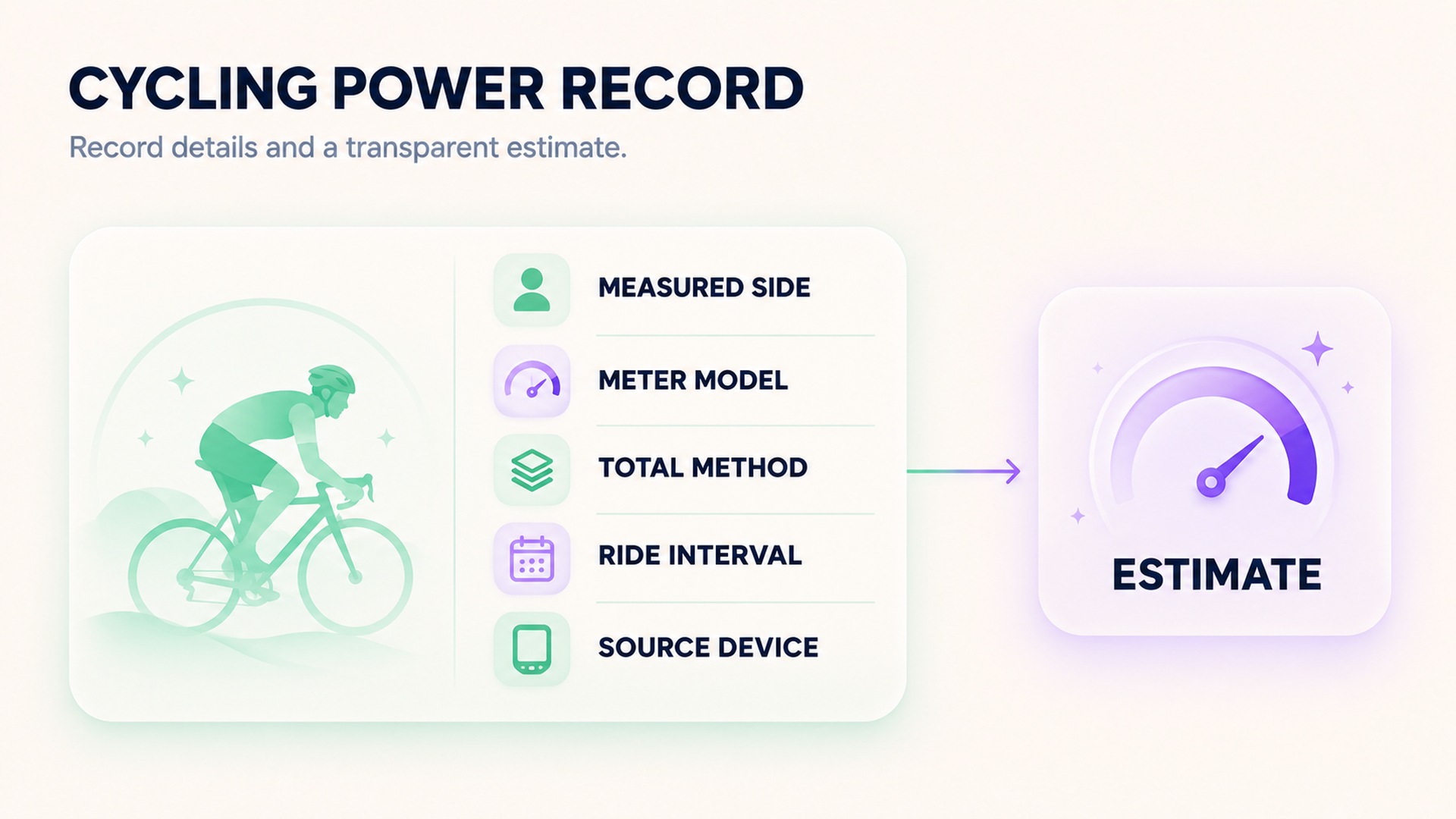
The most informative record is one that preserves the method alongside the value. A single-sided meter may estimate total output by doubling one measured leg. Bilateral contribution can differ, and research findings are tied to their tested participants and conditions. Keeping the sensor side, calculation method, device, and effort interval visible lets a reader use the trend for the purpose it supports without turning an estimate into a diagnosis.
Frequently asked questions
Does a single-sided meter measure both legs?
Not when its sensor is installed on one side only. Some devices estimate total power by doubling that side's measurement. Check the model documentation for its sensor location and calculation method.
Does a different estimate mean one leg is weaker?
No. A difference between devices or a displayed balance value does not establish weakness or injury. The result can depend on measurement location, device method, cadence, effort, and the conditions of the ride.
Can I adjust a single-sided meter to match a bilateral meter?
Use only a documented setting that applies to the exact device and configuration. Do not add a second multiplier or change historical data to force agreement; record the sources and methods separately.
*This article is for informational purposes only and is not a substitute for professional medical advice, diagnosis or treatment.*
Sources:
Favero Electronics·Garmin·International Journal of Sports Physiology and Performance·International Journal of Sports Physiology and Performance·Sensors·Journal of Biomechanics
Related articles
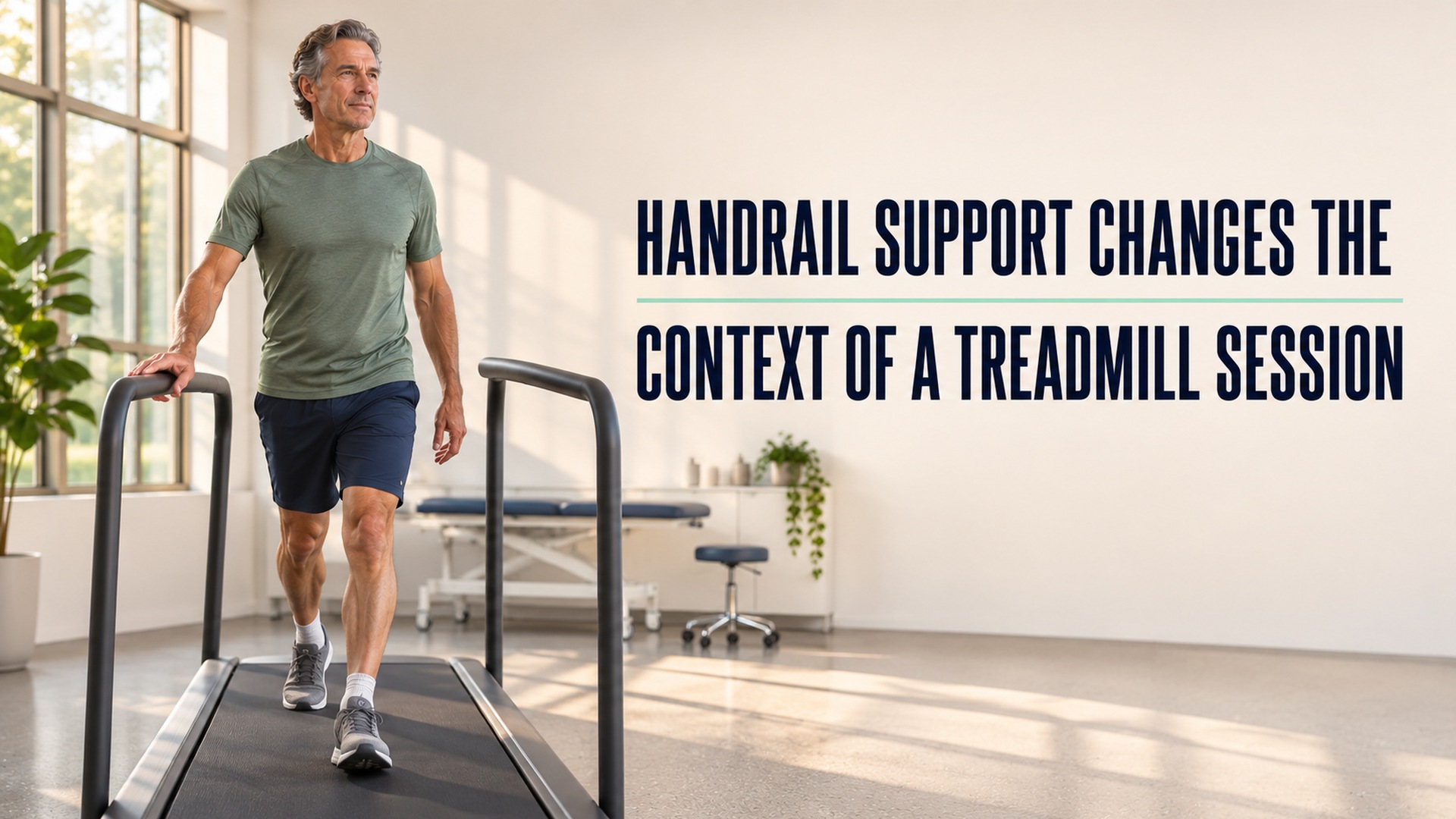
Handrail support changes the context of a treadmill session
Treadmill handrail use can change the movement task even when speed and incline stay constant. Record whether support was light, intermittent, or sustained so session comparisons do not assume the machine measured details it missed.
Treadmill incline percentages are not angles in degrees
Treadmill grade percentages and angles in degrees describe the same slope through different relationships. Preserve the machine's displayed unit and source so a workout setting is not mistaken for a measured angle.