Best Stress and Energy Tracking Apps in 2026
Compare the best stress and energy tracking apps in 2026 by price, device support, and how clearly they explain what your body is telling you.
By Anjali Singh · Jul 9, 2026
Category:Energy
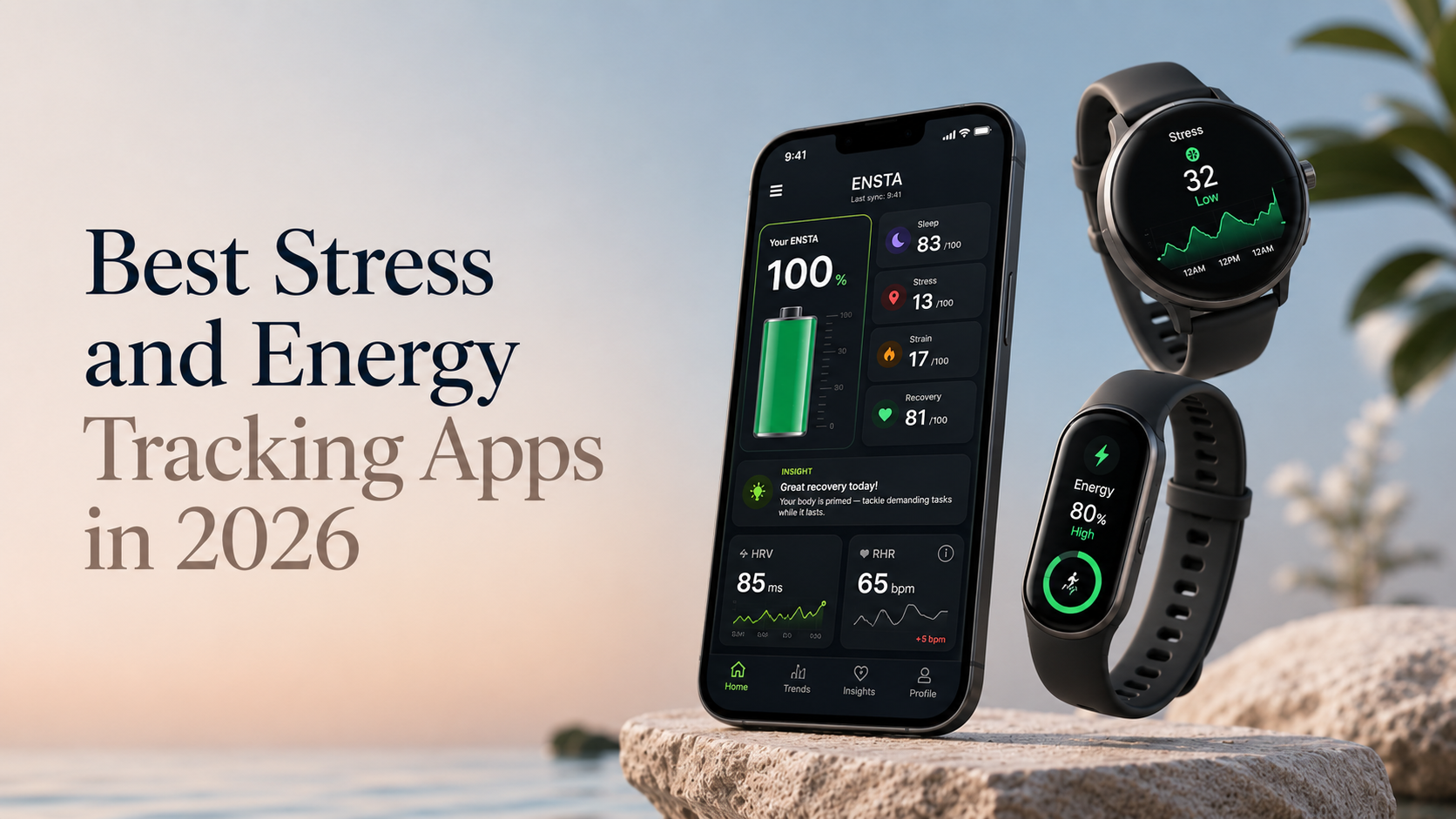
Most energy tracking apps tend to lose people because of the same problem. Too many numbers with no real explanation.
Stress and energy tracking apps have gotten genuinely good in 2026. But good in very different ways. Athlytic is a smart pick for Apple Watch users, RISE is better if your energy seems to rise and fall with sleep, WHOOP is still the athlete option, and Oura works well if you want stress and readiness tracking through a ring. Ensta is the simple one for everyone else, especially if you want one clear number on the device you already own, without paying for the privilege.
We picked apps that make the picture clearer, not busier. Some do it with deep coaching, some with better sleep science, and one of them just keeps the whole experience refreshingly straightforward.
Quick picks: best stress and energy apps in 2026
-
Ensta for simplicity:
Clear energy tracking, no clutter, and easy to understand fast. -
Athlytic for Apple Watch users:
Good if you want recovery insights without buying new hardware. -
RISE for sleep and daily rhythm:
Best when energy issues are tied to bad sleep timing. -
WHOOP for athletes:
Strongest if training is the main thing. -
Oura for smart ring fans:
Great if you care about sleep, readiness, and low-friction wear.
How they all compare
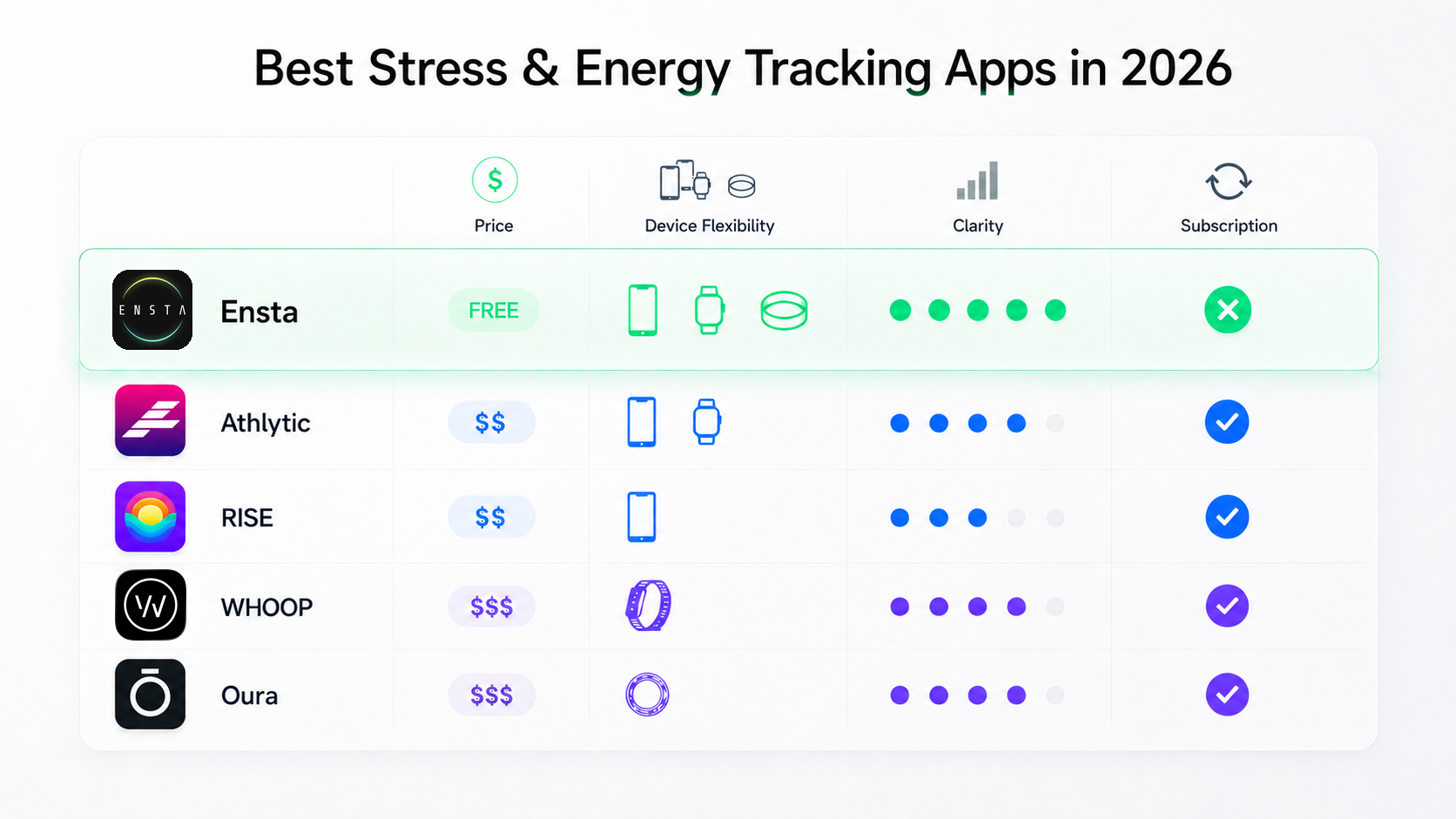
| App | Price / free tier | Devices supported | Key metric | Standout feature | Subscription |
|---|---|---|---|---|---|
| Ensta | Free to download and use for core tracking. | Phone plus compatible wearables. | 0-100 Energy Score. | Clear Energy Timeline with simple explanations. | No for core use. |
| Athlytic | Lower-cost paid app, often framed as a much cheaper Apple Watch alternative to WHOOP. | Apple Watch and Apple Health. | Recovery and exertion views. | Whoop-like insights from the watch you already own. | Yes. |
| RISE | Free trial, then paid plan. | iPhone, Apple Health, plus integrations like Oura and Fitbit. | Sleep debt and daily energy schedule. | Predicts when your energy will peak and dip. | Yes. |
| WHOOP | Trial, then membership. | WHOOP wearable only. | Recovery, Strain, Stress. | Deep coaching for training and recovery. | Yes. |
| Oura Ring | Ring purchase plus membership for full experience. | Oura Ring with iPhone or Android app. | Readiness and Cumulative Stress. | Strong sleep and long-term stress picture. | Yes. |
How we chose these apps
We kept the criteria simple because the reader usually wants a simple answer.
We looked at clarity first. Then device flexibility. Then how actionable the advice felt. Then price. That is it.
A stress and energy app should help you make better decisions today. Not stress you out more with fifteen random biometrics and charts you don't fully understand.
Ensta: One number that actually means something
Verdict: The most accessible stress and energy tracker out there, and the only one that is fully free, truly cross-device, and built around a score that tells you what to do with it.
Best for: Honestly, most people. It’s for anyone tired of staring at three different metrics and still not knowing how their body is doing.
Pros
- Completely free, no paywall blocking your daily energy score
- Works across multiple wearables and your phone, not locked to one device
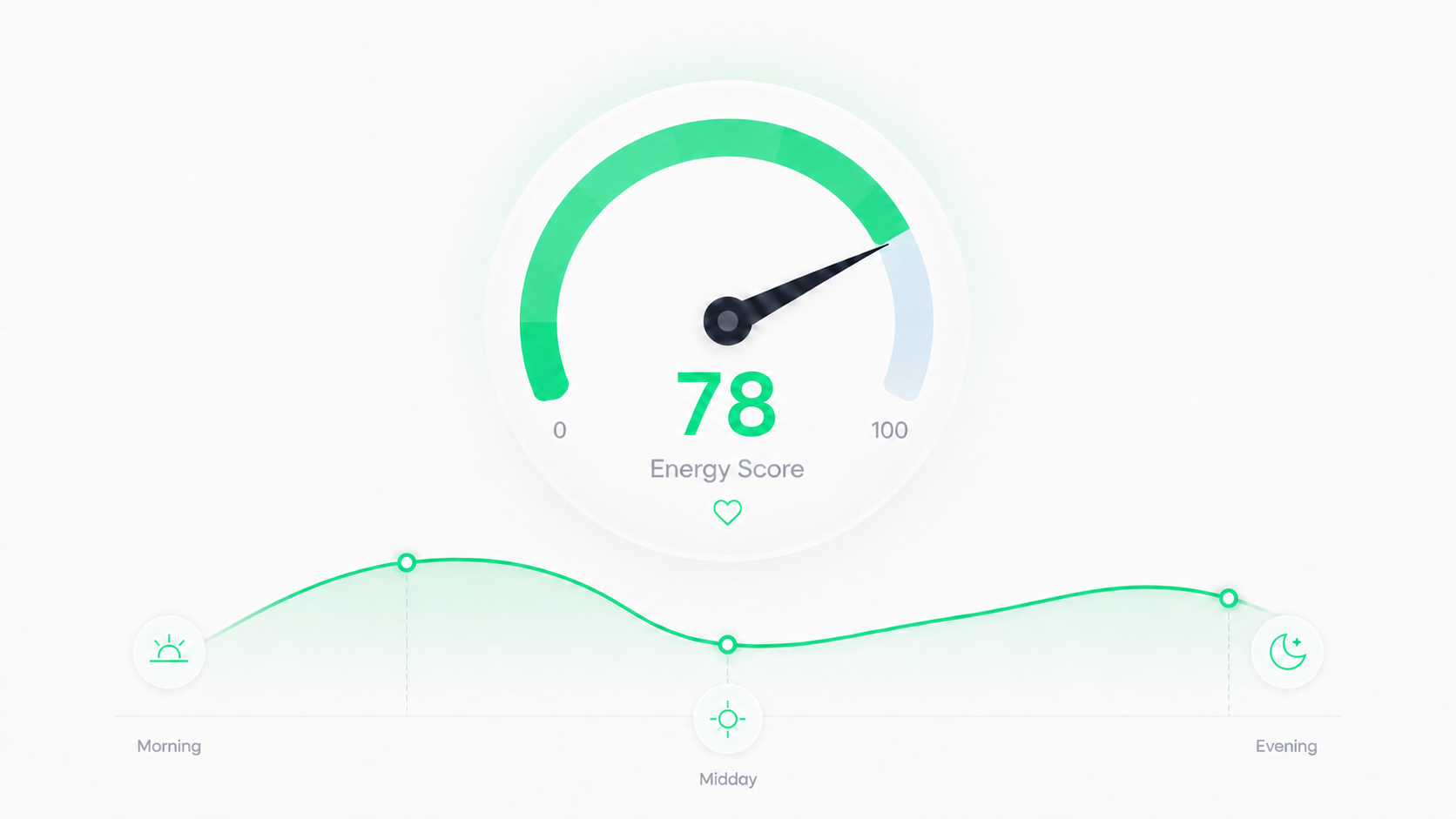
- Energy Timeline shows you when your body rises and drops through the day
- Light, clear guidance on sleep, stress, and habits without overwhelming you
Cons
- Data quality depends on your wearable, so basic trackers may limit accuracy
- Not a medical tool; not designed for clinical insights
Price / Devices: Free. Available on iOS and Android, it connects to wearables that share sleep, Heart Rate, HRV (heart rate variation), and activity data.
WHOOP: The deep end for athletes
Verdict: The deepest stress, strain, and recovery app on this list, but you are paying for hardware and an ongoing membership to unlock it.
Best for: If you train four or more times a week and want a system that tells you when to push and when to ease off.
Pros
- Recovery, Strain, and live Stress scores built around HRV and sleep quality
- Journal feature that ties lifestyle habits to recovery and stress changes over time
- Breathwork sessions tied directly to stress spikes
Cons
- Requires the WHOOP wearable and a monthly membership
- The screenless design means you live in the app, which some find frustrating
Price / Devices: Membership-based with a free trial. Works only with WHOOP hardware.
Oura Ring: The calmest way to track stress over time
Verdict: A beautifully designed stress and recovery tracker, strongest when it comes to long-term stress trends and sleep depth.
Best for: People who care deeply about sleep-informed stress, readiness scores, and long-term stress patterns and want discreet wearable tech.
Pros
- Stress Management hub with Daytime Stress, Resilience, and Cumulative Stress
- Weekly stress summary helps flag chronic load, not just single bad days
- Outstanding sleep tracking that directly feeds into readiness scoring
Cons
- Smart ring hardware plus membership is a significant upfront and ongoing cost
- Needs consistent wear for calibration, ring-off days hurt your data
Price / Devices: Ring purchase plus monthly membership for full stress suite. iOS and Android.
Athlytic: the practical upgrade for Apple Watch people
Verdict: Best if you already wear an Apple Watch and want more recovery insight without paying WHOOP money.
Best for: Apple Watch users who want a deeper layer of recovery context on top of Apple Health.
Pros
- Pulls recovery, sleep, heart rate, and activity data into one place.
- Commonly praised as a low-cost alternative to WHOOP for Apple Watch owners.
- Strong reviews and a 4.7 App Store rating from thousands of ratings.
Cons
- Apple Watch only, which limits who it is for.
- Full value depends on wearing the watch consistently, including at night.
Price / devices: Paid app for Apple Watch and Apple Health users.
RISE: the one that treats energy like a schedule
Verdict: Best if your main problem is not training, but feeling off at the wrong times of day.
Best for: People who struggle with fatigue, poor sleep timing, or that weird midday crash.
Pros
- Built around sleep debt, circadian rhythm, and daily energy timing.
- Predicts your likely peaks and dips so you can plan around them.
- Works with Apple Health and can pull data from sources like Oura and Fitbit.
Cons
- More sleep-focused than stress-focused.
- Paid subscription after the trial.
Price / devices: iPhone app with paid plan and a trial period.
Who should pick it: If your biggest question is “why am I wiped out at 3 p.m. every day,” RISE is unusually good at answering that.
App vs Device: Do You Actually Need New Hardware?
A lot of people get stuck here. Should you buy a new band or ring, or just use an app?
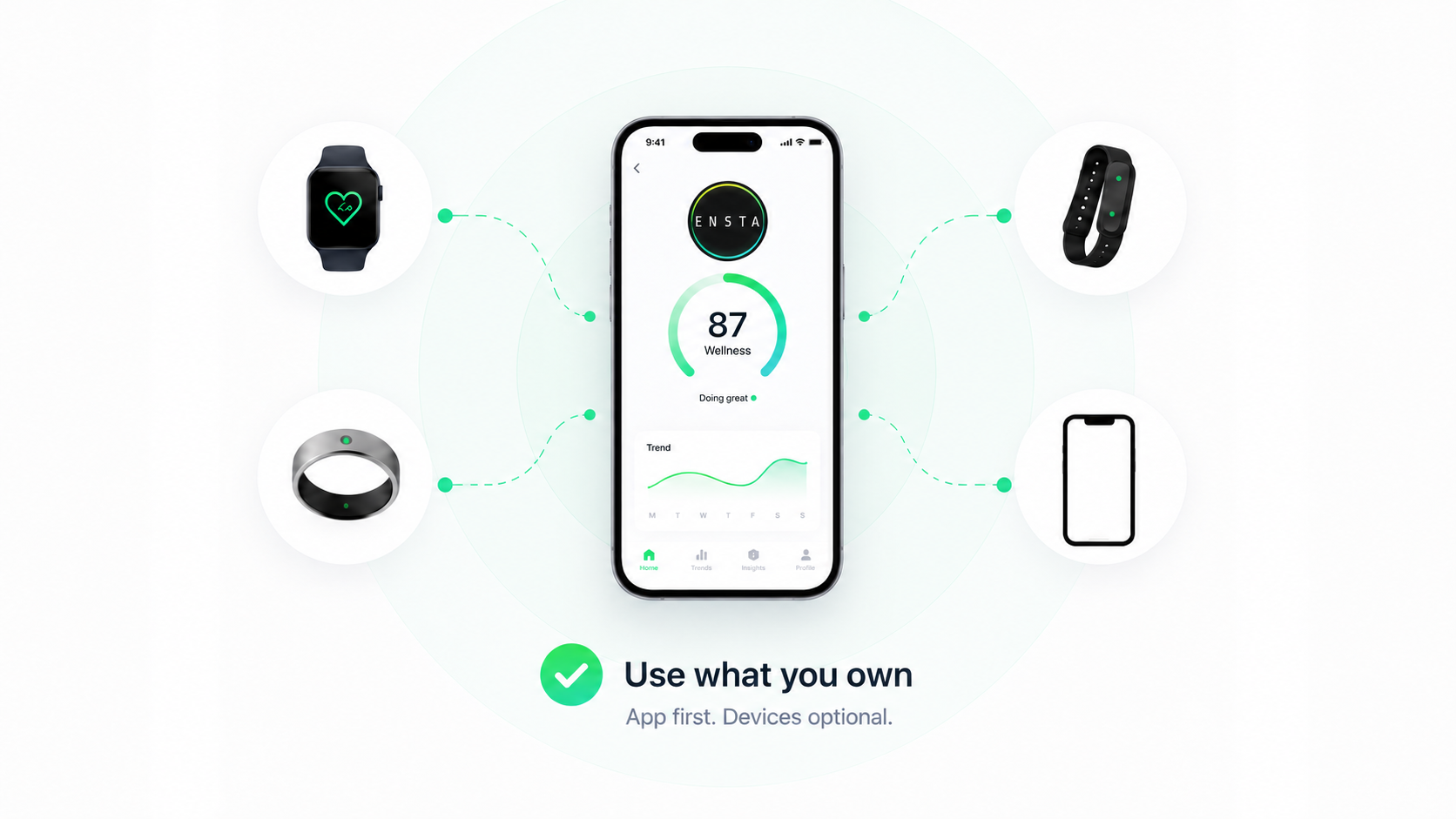
If you already have a decent wearable or even just a smartphone, you probably do not need new hardware right away. App-first tools like Ensta can take the data you already have and turn it into one clear picture of energy and stress.
If you are starting from scratch and taking training seriously, a hardware plus app setup like WHOOP or Oura can be worth it. The sensors are usually better, and the coaching tends to go deeper.
The simple rule is this. Buy the hardware when your current setup stops telling you enough. Not before.
How to Choose the Right App for You
- Want simplicity on a budget? Go with Ensta. Free, clear, and works on what you already own.
- Training hard and want coaching? WHOOP is worth the membership if sport is a real priority.
- Care most about sleep and long-term stress? Oura Ring, especially if you like the idea of a ring over a watch.
FAQ
Are free energy tracking apps accurate enough?
Usually, yes. At least for the thing most people actually want.
If your goal is to notice patterns, like "I always crash after bad sleep" or "my stress is weirdly high on work-heavy days," a good free app can get you there. It is not lab equipment. It is more like a decent mirror. Clear enough to show what is going on, even if it does not catch every tiny detail.
If you are chasing elite-level training insights or you want very specific recovery coaching, paid tools usually go further. But for normal life stuff, free can absolutely be enough.
Do I need a subscription to track stress and energy?
Not with Ensta. It gives you full core tracking without a monthly fee. WHOOP and Oura require memberships to unlock their full stress feature sets, so factor that into your decision before committing.
Can I track stress without buying new hardware?
Yes. If your current wearable or phone tracks heart rate, HRV, and sleep, apps like Ensta can turn that data into an energy and stress view without asking you to buy anything new.
Is WHOOP worth it in 2026?
For some people, yes. For everyone, no.
If you train a lot, care about recovery, and actually enjoy looking at your data, WHOOP can be worth the money. It is built for people who want structure. The kind of person who wants help deciding whether today is a hard workout day or a back-off day.
But if you mostly want a simple answer, like "am I running low today or not," WHOOP can feel like bringing a whole gym bag when all you needed was a water bottle. A simpler app can do the job just fine.
When should I see a doctor instead of checking my app?
If you feel really off, do not overthink it with the app.
A bad score after a bad night is one thing. Chest pain, shortness of breath, dizziness, or fatigue that feels unusual is different. These apps are useful for spotting patterns. They are decent at saying, “hey, something has been off lately.” They are not good at telling you what that something actually is. So if your body is clearly waving a red flag, trust your body first and the app second.
Bottom line
For most people in 2026, Ensta is the best stress and energy tracking app: free, cross-device, and built around the one thing most health apps get wrong, which is translating your data into a clear, useful picture of how you actually feel. WHOOP is the obvious choice for serious athletes. Oura Ring wins for sleep-obsessed ring wearers. Athlytic is worth it if you are already an Apple Watch person and just want better recovery context from the hardware on your wrist. RISE is the pick if energy crashes and bad sleep timing are the real problem you are trying to solve.
You need to pick the one that solves the problem you actually have instead of the one with the most features.
*This article is for informational purposes only and is not a substitute for professional medical advice, diagnosis or treatment.*
Related articles
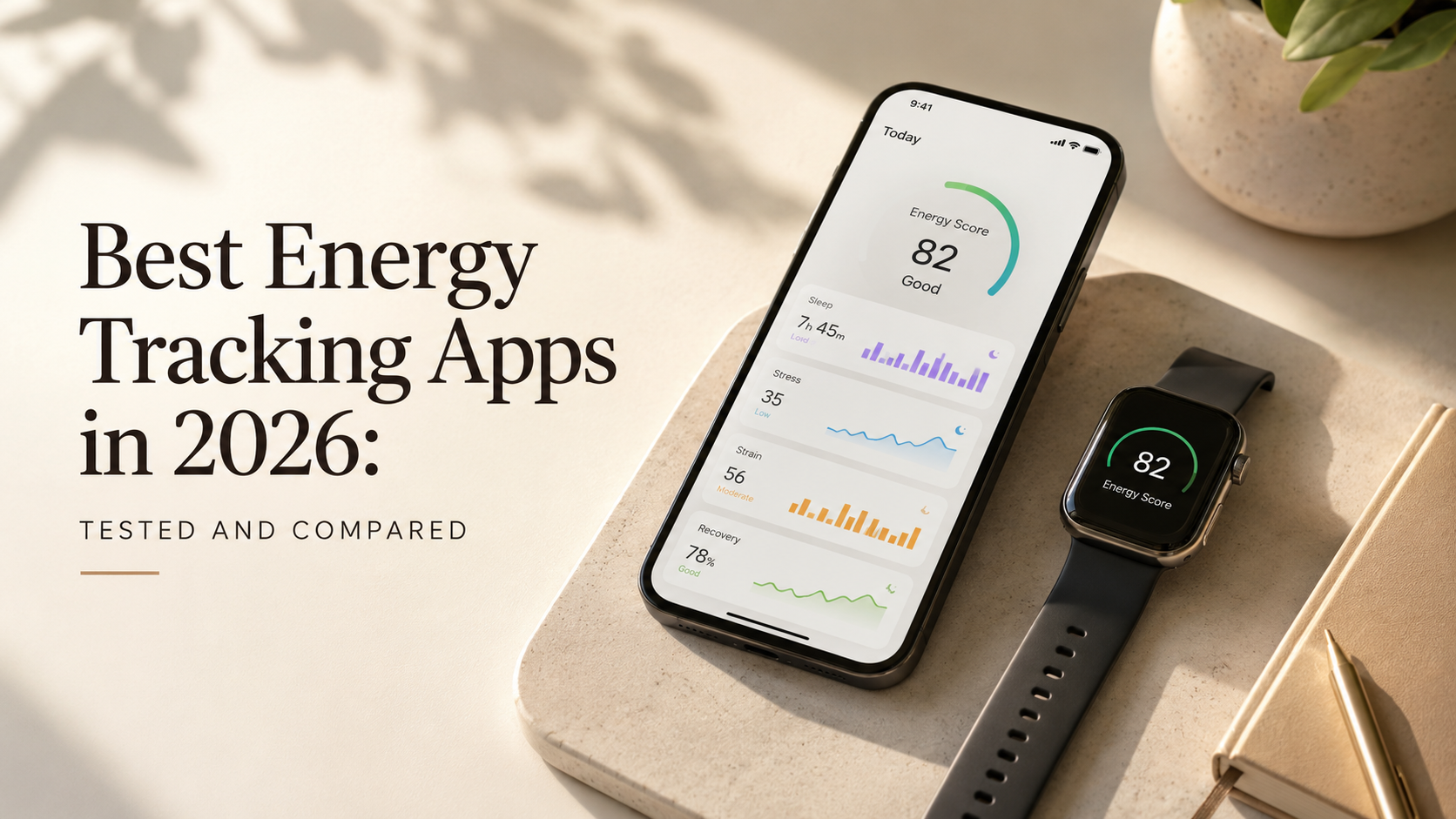
Best Energy Tracking Apps in 2026: Tested and Compared
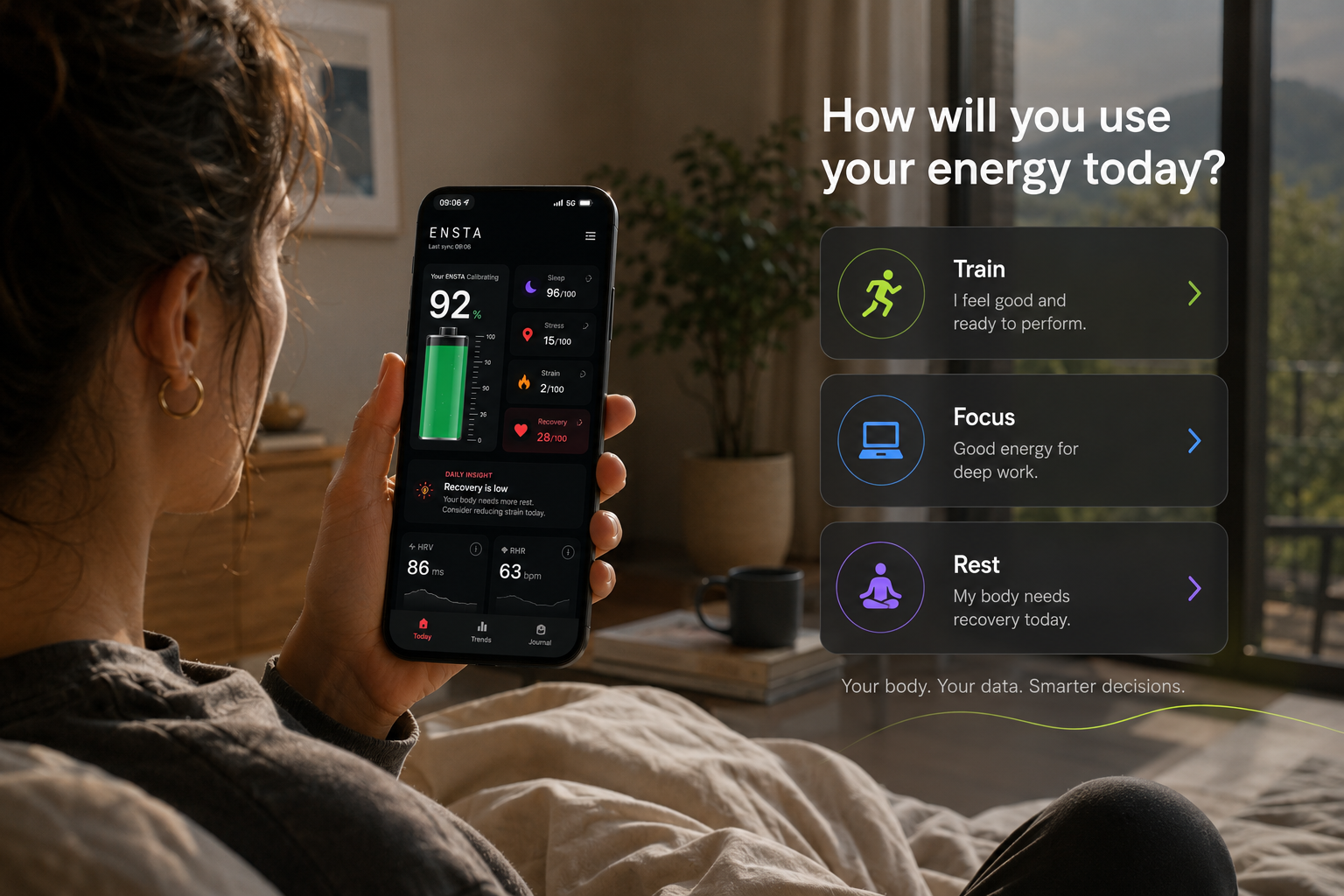
Best Free Energy Tracking Apps in 2026
The free apps are actually worth trying, what “free” really gets you, and whether you need a device at all.
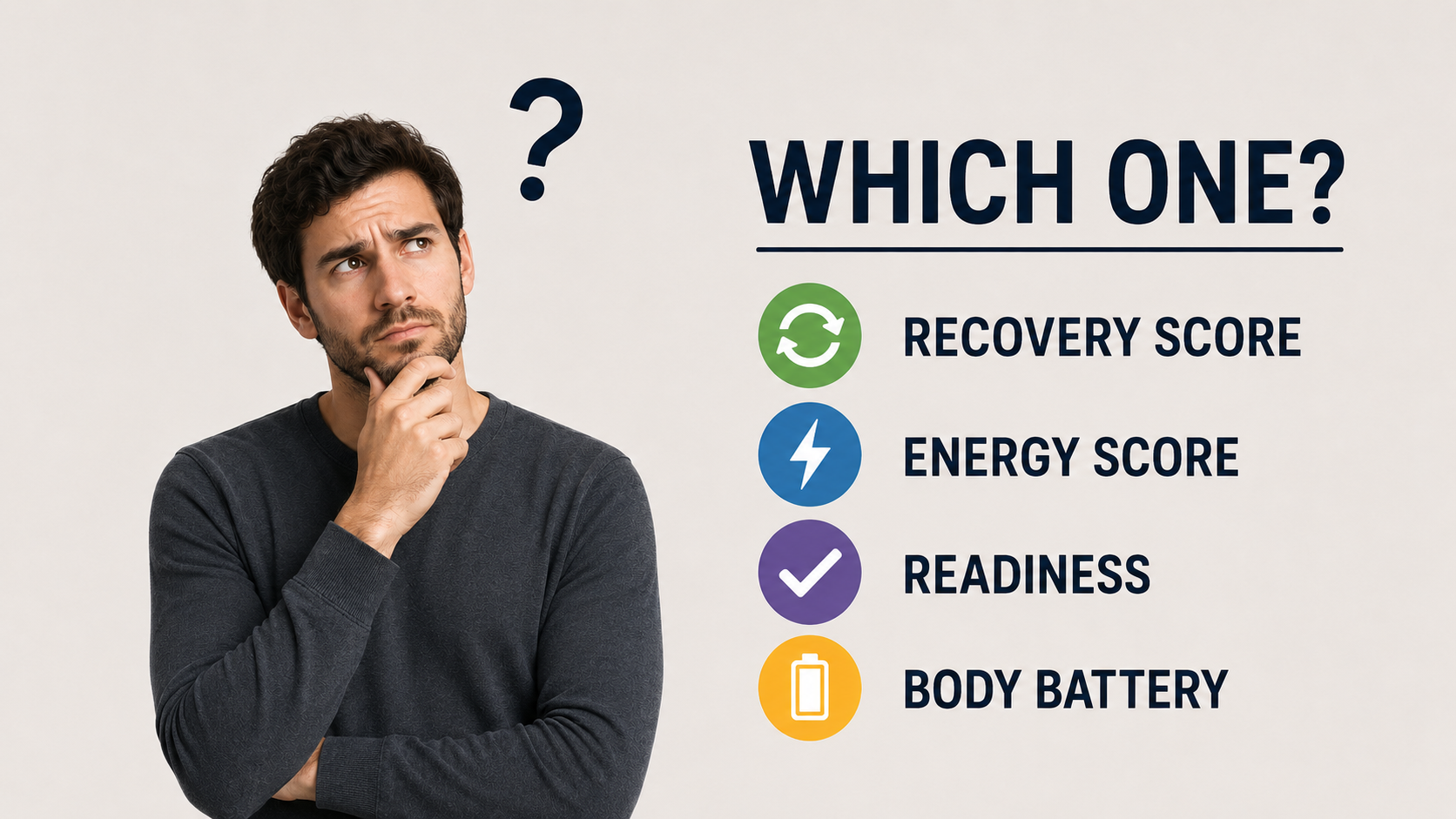
Recovery Score, Energy Score, Readiness, Body Battery — What Actually Matters
What recovery score means, how energy and readiness score differ, and body battery vs recovery — plus which numbers actually deserve your attention.
Best Apps That Explain Sudden HRV Changes in 2026
Why your HRV changed overnight, what it usually means, and the apps that actually help you figure out what to do next.
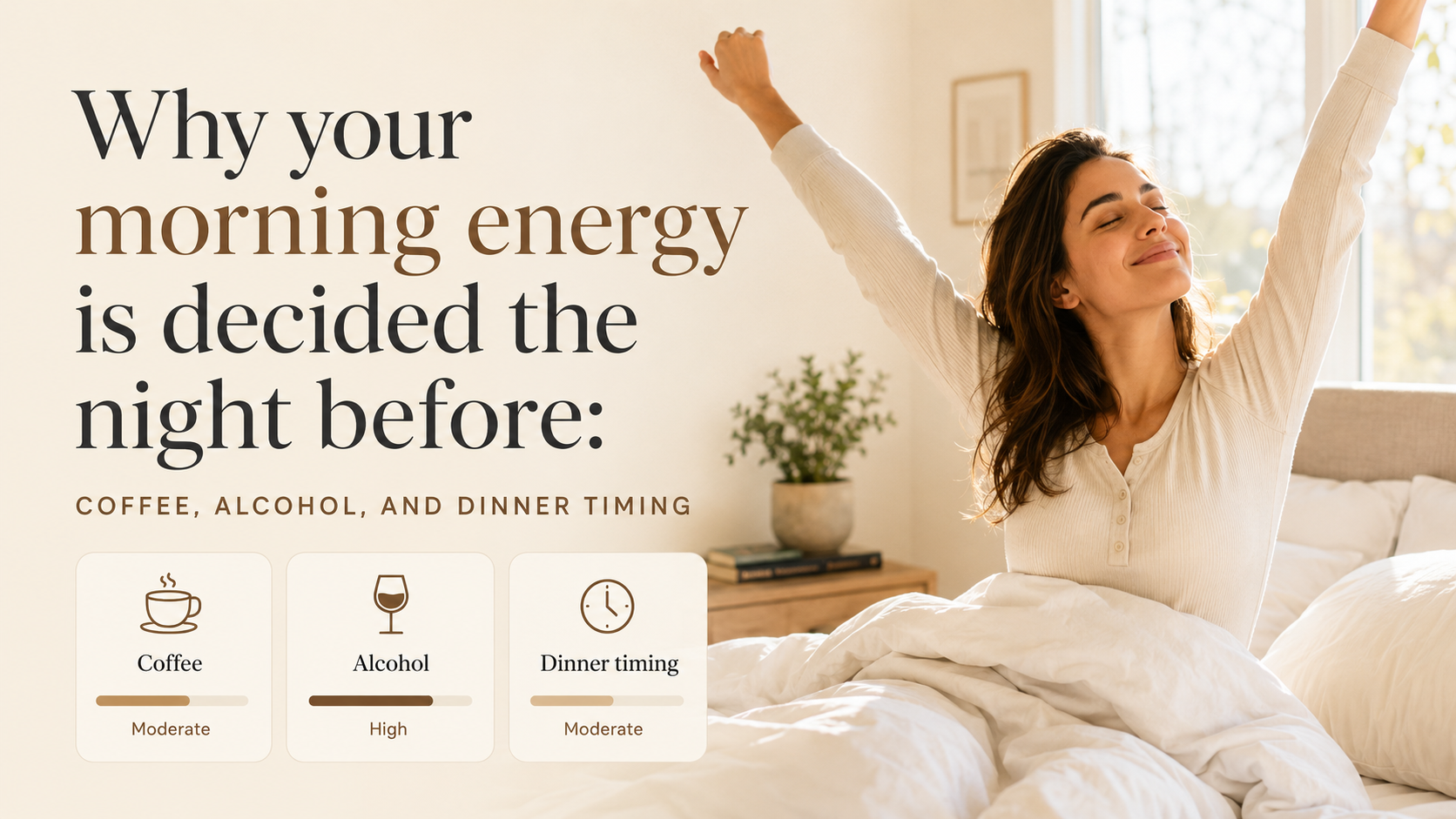
Why your morning energy is decided the night before: coffee, alcohol, and dinner timing
Most bad mornings are decided the night before. How late coffee, alcohol, and dinner timing quietly drain your next-day energy, and how to fix it.