How to protect your sleep when your job keeps changing the clock
By Mr. Apps · Jul 6, 2026
Category:Sleep
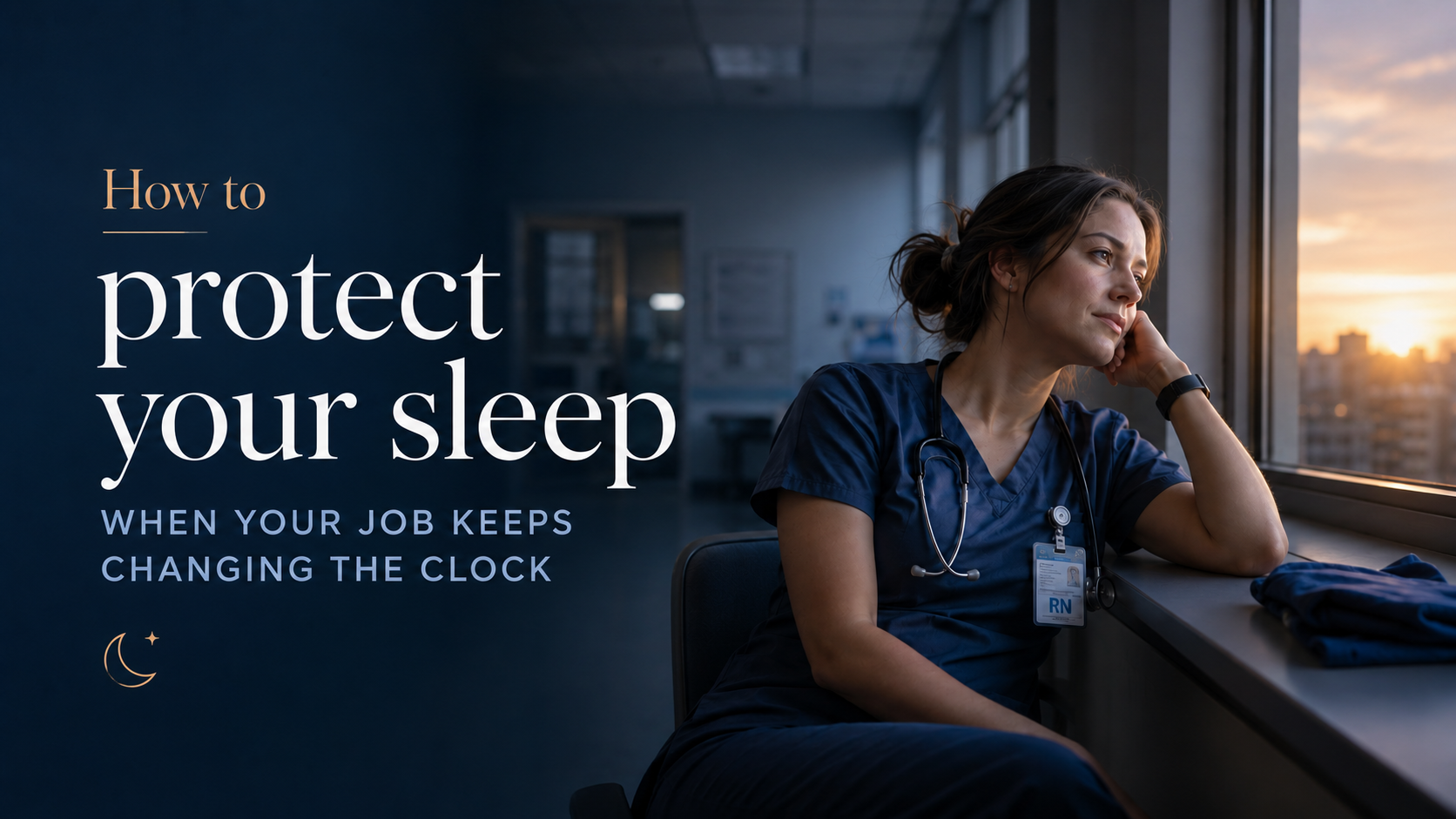
I spent the first several years of my career on a rotating schedule, and most of the years since on the other side of the desk, reviewing fatigue data for teams that work nights, evenings, and unpredictable on-call blocks. Both experiences taught me the same thing from different angles: shift work does not go badly because people lack discipline. It goes badly because the human body was never built to run a factory schedule.
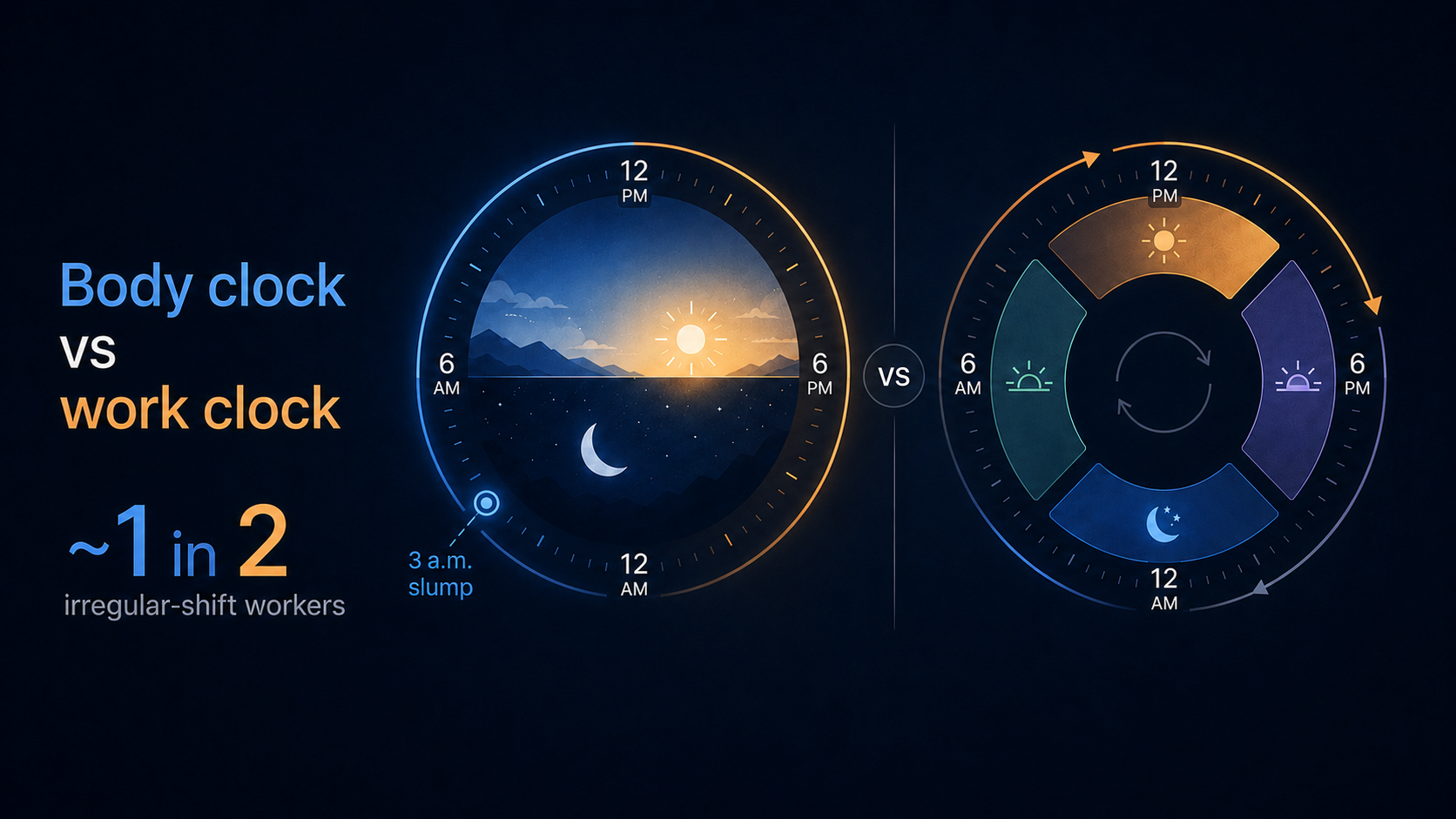
If your roster moves between nights, evenings, and days, you already know that ordinary sleep advice does not fit your life. Go to bed earlier. Cut caffeine after early afternoon. Keep a fixed bedtime. None of that accounts for a schedule that flips every few days. One large analysis of night shift workers in the UK Biobank found that shift work sleep disorder affects close to half of people on irregular schedules at some point, which says more about the schedule than about the people working it.
This is not a piece about achieving perfect sleep hygiene, because that's rarely realistic on a rotating roster. It's about reducing the damage: understanding why the fatigue feels different, building routines that survive contact with an unpredictable schedule, and knowing when to stop pushing through and get checked out.
Why shift work feels different from "just going to bed late"
During a stretch of overnight shifts early in my training, I remember standing in a stairwell around four in the morning, doing rough math on how many hours of actual daylight I'd been awake for that week. The answer was close to zero. I wasn't just short on sleep. My body was running on a clock that had nothing to do with the sun outside, and no amount of willpower was going to sync the two back up on its own.
That's the real difference between staying up late occasionally and working shifts long term. Your internal clock takes its cues from light, food timing, and activity, and it keeps pushing you toward daytime alertness and nighttime sleep regardless of what your schedule demands. Skip a night here and there and your body mostly forgives you. Ask it to be alert at 3 a.m. and asleep at noon, week after week, and the mismatch shows up in ways that have little to do with tiredness alone. Researchers have gone as far as classifying long-term night shift work as a probable carcinogen, a conclusion tied to the disruption of melatonin production, not to anything the workers themselves are doing wrong.
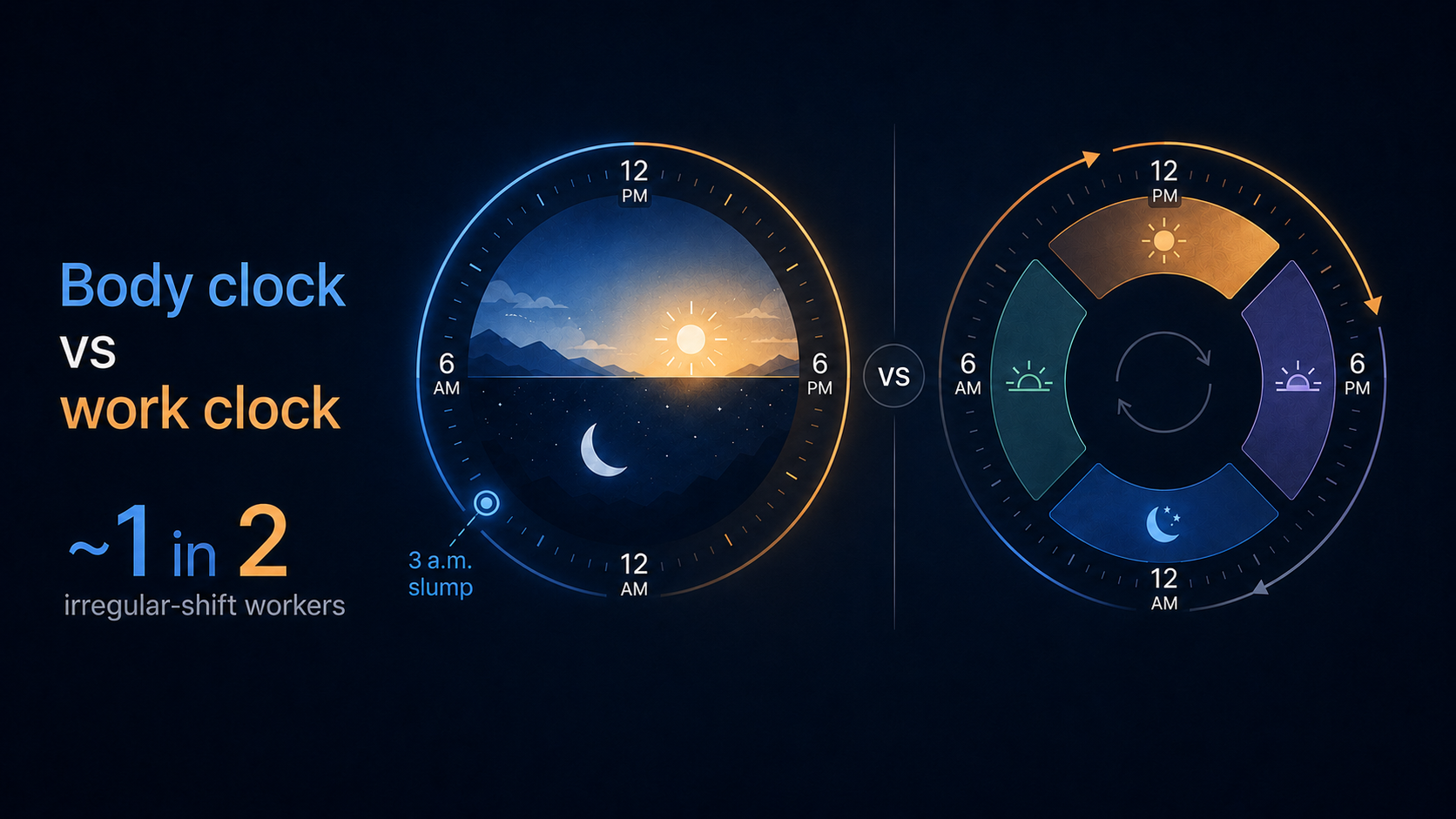
The cardiovascular system reacts too. The same clock that regulates sleep also times blood pressure, cortisol, and heart rate across the day, and reviews of shift work and cardiovascular health describe how that ongoing mismatch between the body's internal timing and a person's actual behavior is linked to higher rates of hypertension and heart disease over the years. I've had more than one colleague describe the feeling as jet lag without ever getting on a plane, which is about as accurate a description as I've heard.
What routines help between shifts
None of what follows will make shift work feel like a normal 9-to-5. The goal is smaller: protect enough sleep, on a consistent enough schedule, that you can function and stay safe.
The single habit that seems to matter most is what sleep researchers sometimes call an anchor sleep period: a block of time, even just four or five hours, that you protect every single day regardless of what shift you're on. Rather than trying to fully flip your schedule on days off and flip it back again for your next run of nights, you keep one overlapping window fixed and let the rest shift around it. It's less tidy than a textbook sleep schedule, but it gives your body something stable to hold onto.
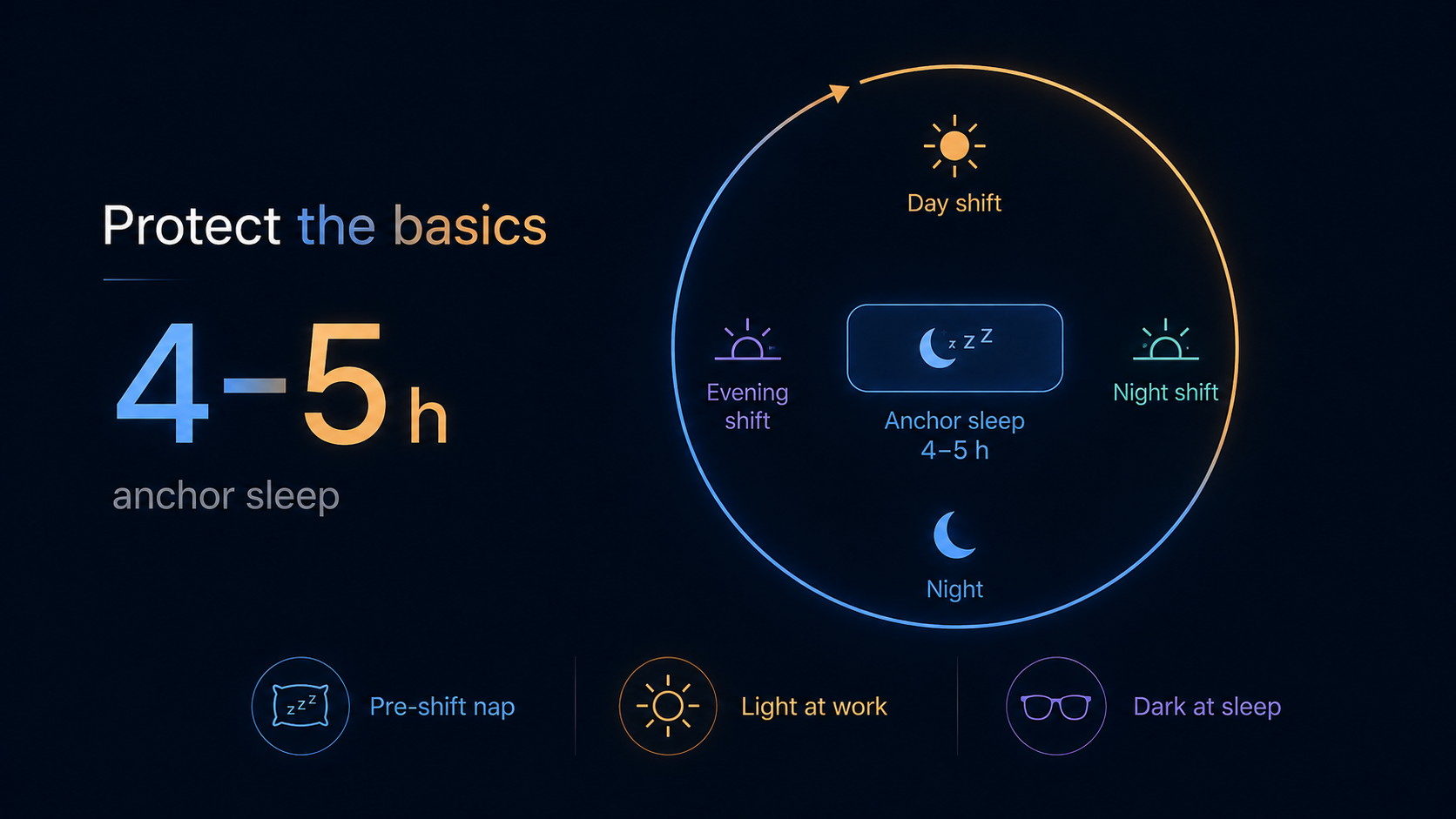
Naps deserve better press than they get. A short nap taken before a night shift, rather than after one, tends to blunt the worst of the 3 a.m. slump without leaving you groggy for hours. Timing light exposure helps too: bright light while you're working nights, sunglasses on the commute home if the sun is up, and a genuinely dark bedroom for daytime sleep, including blackout curtains or an eye mask if your windows won't cooperate. A review of non-drug approaches to shift work fatigue points to exactly these two levers, controlled napping and controlled light exposure, as having the strongest evidence behind them.
Meals matter more than people expect. Eating a large meal right before you try to sleep during the day tends to work against you, so a lighter meal near the end of a night shift and a proper meal after you wake up usually sits better than the reverse.
Then there's what I've started calling weekend reset failure, because it's the pattern that trips up nearly everyone on a rotating schedule at some point. Two days off feels like plenty of time to "get back to normal," so people push their sleep late into the day-shift pattern, stay up with family or friends, and assume they'll bounce back before the next stretch of nights begins. A field study tracking shift workers with diagnosed sleep disorder found that, unlike workers who were coping well, this group showed almost no meaningful catch-up sleep on their days off. The debt just carries forward. When I've sat down with rotating teams to look at their own fatigue data, the people doing best usually aren't the ones with the most disciplined-looking schedule on paper. They're the ones who accept a smaller, less satisfying reset on their days off in exchange for not starting their next run of nights already depleted.
When fatigue deserves medical review
Some degree of tiredness comes with the territory, and adjusting to a new rotation usually takes a week or two. What shouldn't be brushed off is fatigue that doesn't ease up once you've settled into a schedule, or that keeps recurring shift after shift for months.
The formal threshold clinicians use for shift work sleep disorder is symptoms of insomnia or excessive sleepiness tied to your work schedule that persist for at least three months, confirmed with something like a sleep diary rather than a gut feeling. A clinical overview of shift work disorder evaluation lays out that criteria and notes that the condition is often under-recognized precisely because people assume the exhaustion is just part of the job.
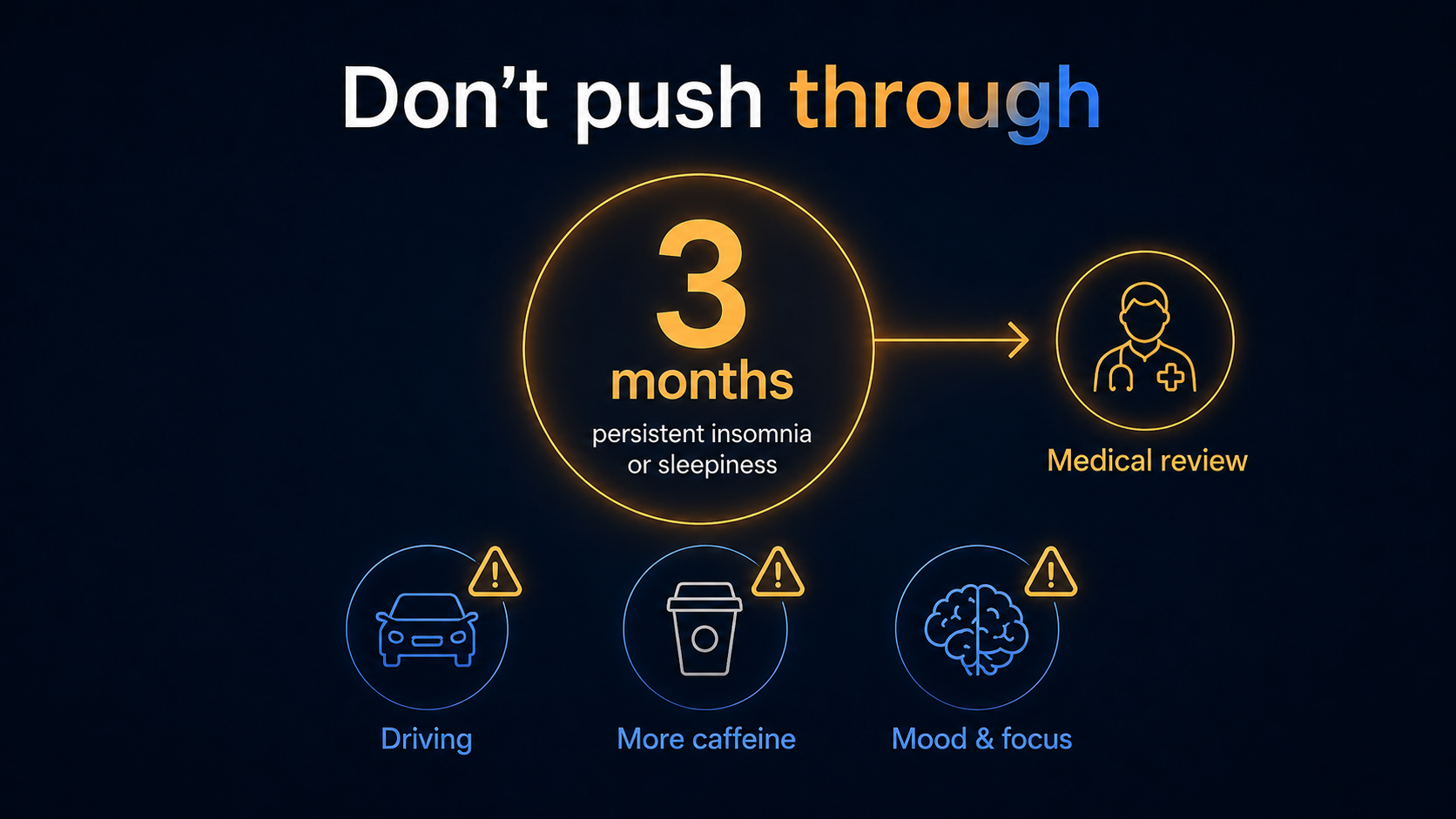
Certain signs are worth acting on sooner rather than later: catching yourself nodding off at the wheel on the drive home, needing escalating amounts of caffeine just to make it through a shift, or noticing your mood and concentration slipping outside of work as well as during it. One of the more memorable consultations I've done involved a control-room operator who had quietly picked up more night shifts than anyone realized, covering for colleagues, until a near-miss on the drive home made the problem impossible to ignore. Nothing about that situation was a personal failing. It was a schedule that had outpaced what one person's sleep could absorb.
If any of that sounds familiar, it's worth raising with a doctor rather than treating it as something to push through. Cognitive behavioral therapy adapted for shift work sleep problems has shown real, measurable improvement in both sleep quality and daytime functioning, and it's a far more sustainable fix than simply drinking more coffee and hoping for the best.
Shift work will probably never feel like a full night's sleep on a normal schedule, and I don't think it's honest to promise that it can. What's realistic is cutting the damage down to something manageable: a protected anchor sleep window, naps used on purpose instead of by accident, light and meals timed with some intention, and a lower bar for asking for help when the fatigue stops responding to any of it. That's not a perfect solution. It's just one that actually holds up against a schedule that keeps changing the clock on you.
FAQ
Does caffeine before a shift ruin my sleep afterward, or is timing what matters? Timing is what matters most. Caffeine taken early in a night shift can help with alertness, but having it in the last few hours before you plan to sleep, even if that sleep happens during the day, will likely delay how quickly you fall asleep and how deep that sleep is. Treat the hours before your sleep window as off-limits, whatever time of day that window happens to fall.
Can my body ever fully adjust to permanent night shifts? Partially, but rarely completely. Even long-term night workers tend to keep some daytime-oriented signals, especially if they're exposed to daylight on days off or around family and social schedules. Full adjustment is more achievable on a strict, unchanging night schedule with carefully controlled light exposure than it is on a rotating one, which is part of why rotating schedules tend to feel harder.
Is melatonin worth trying for shift work? It can help some people fall asleep faster during the day, particularly when timed to signal "this is your sleep period" rather than taken at random. It's not a fix for the underlying circadian mismatch, and doses and timing that work for jet lag don't always translate cleanly to shift work. It's worth discussing with a doctor rather than experimenting alone, especially if you're also dealing with other health conditions or medications.
A note on this article: sleep and fatigue are personal topics, and if you're finding that exhaustion is affecting your mood or wellbeing beyond what's described here, it's worth talking to a healthcare provider who can look at your specific situation.
*This article is for informational purposes only and is not a substitute for professional medical advice, diagnosis or treatment.*
Related articles
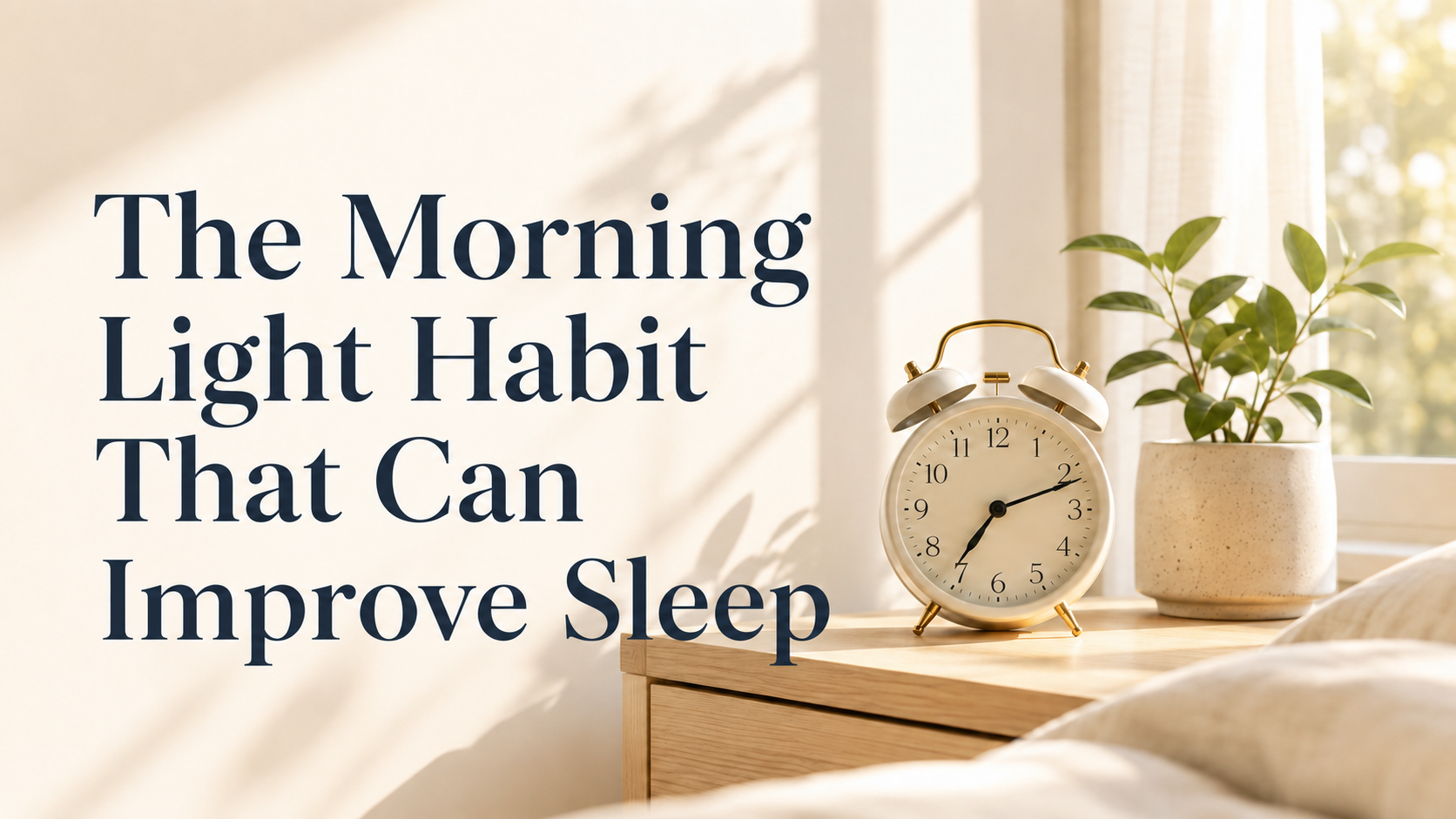
The morning light habit that can improve sleep without changing your bedtime
Most sleep advice focuses on the evening, dim the lights, put the phone away, but that's only half the equation. A few minutes of daylight soon after waking helps set your body clock earlier, making it easier to fall asleep at a reasonable hour that night, no bedtime changes required. Here's why it works, what actually counts as "morning light" in a real schedule, and when the habit alone isn't enough.

Why a regular sleep schedule may matter more than an extra hour in bed
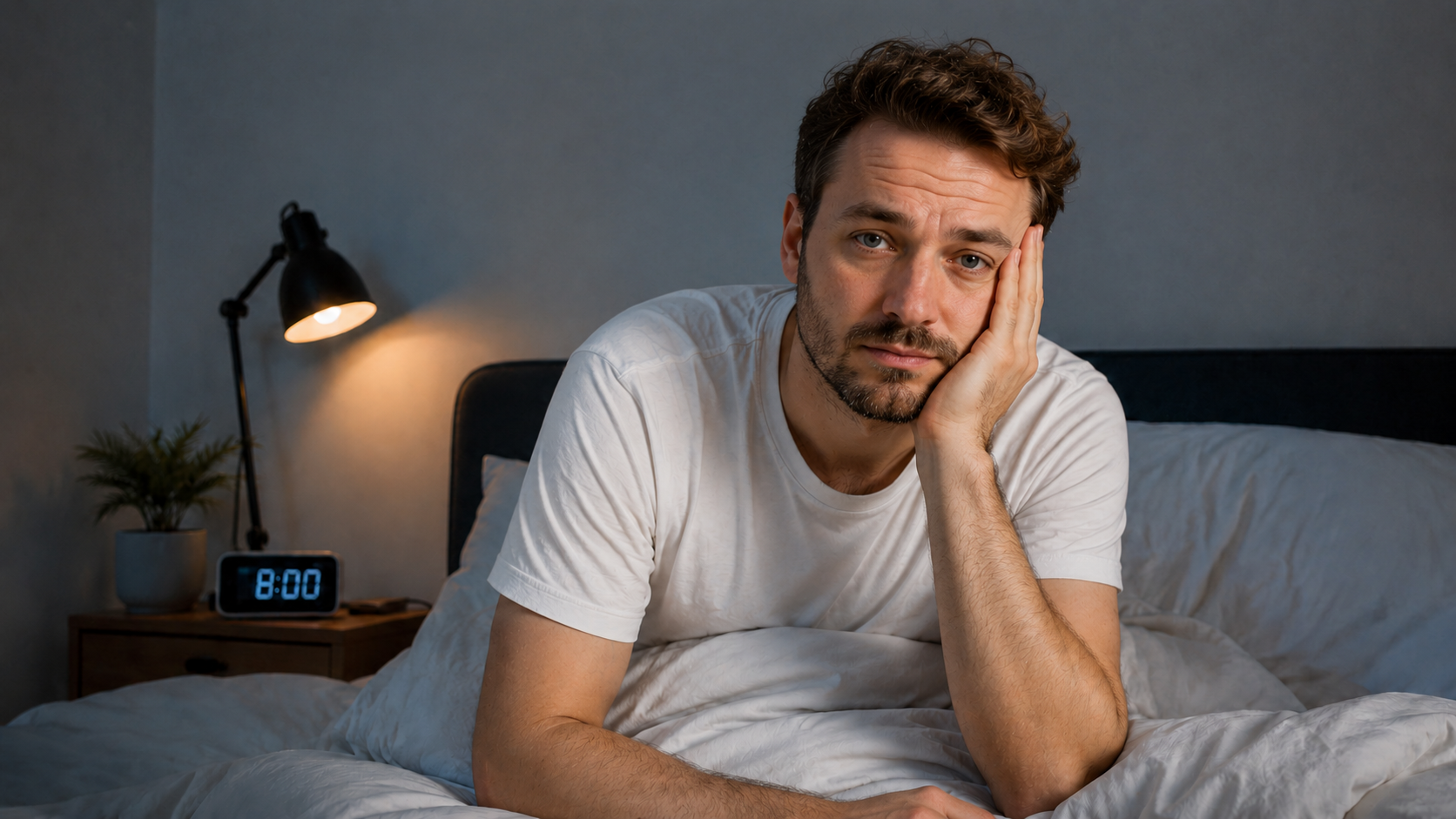
Why Am I Still Tired After 8 Hours of Sleep?
You slept 8 hours and still feel wrecked? Here's why sleep quality beats duration, what a dropping sleep score really means, and how to wake up with energy.
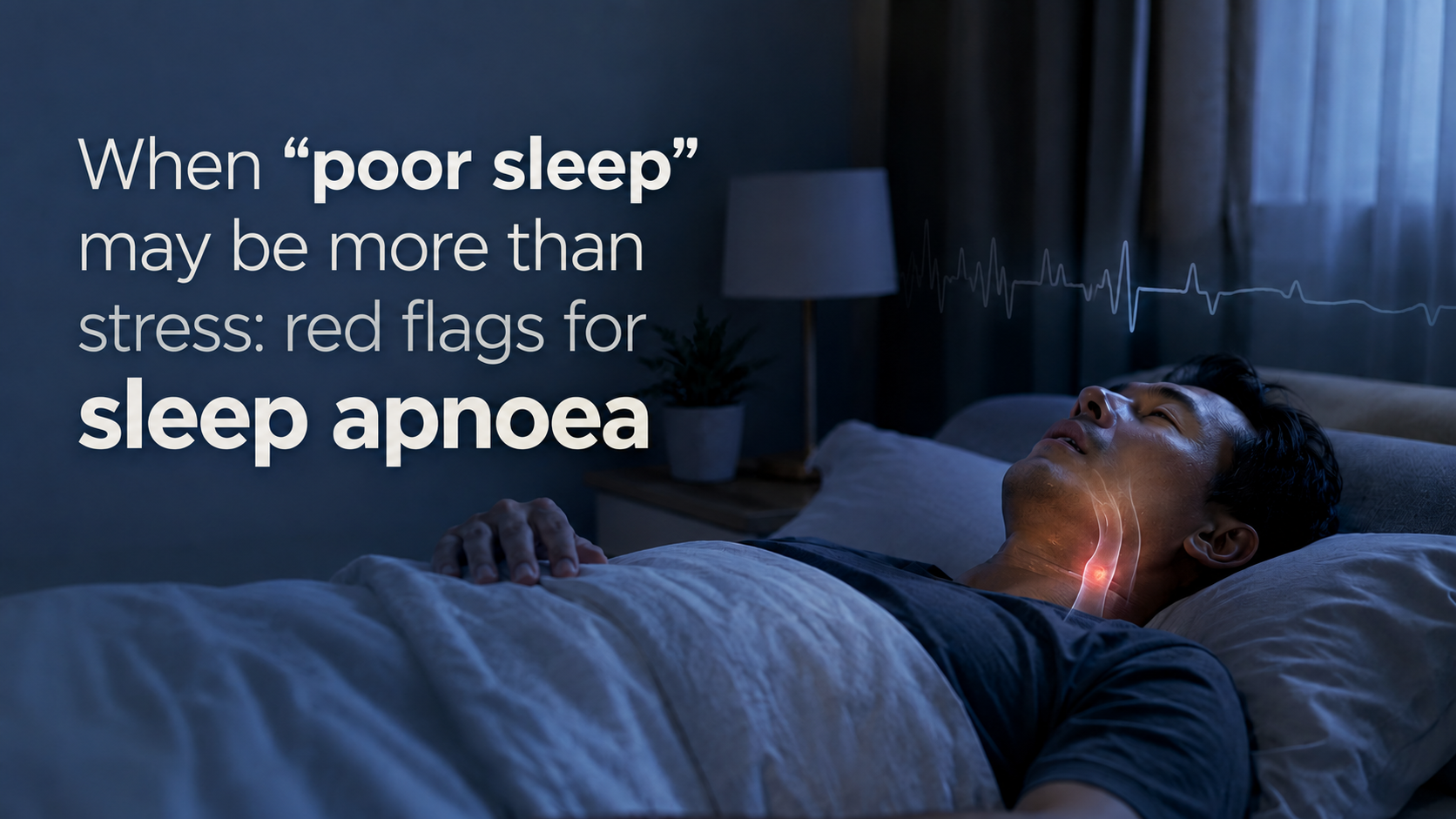
When "poor sleep" may be more than stress: red flags for sleep apnoea
Loud snoring gets dismissed as a quirk, morning headaches get blamed on stress, and daytime fog gets chalked up to a heavy calendar. Taken together, though, these signs can point to something a GP should know about: obstructive sleep apnoea. Here's what the real red flags look like, what home screening tools can and can't tell you, and when it's time to ask for a proper referral.
Evening Stress and Why Your Brain Won't Settle Down Before Sleep!
Falling asleep fast isn't the same as your brain settling down. What evening stress does to your sleep onset, and how to wind down when your mind won't.