Keep dietary cholesterol separate from cholesterol measured in blood
By Mr.Apps · Oct 28, 2026
Category:Apps
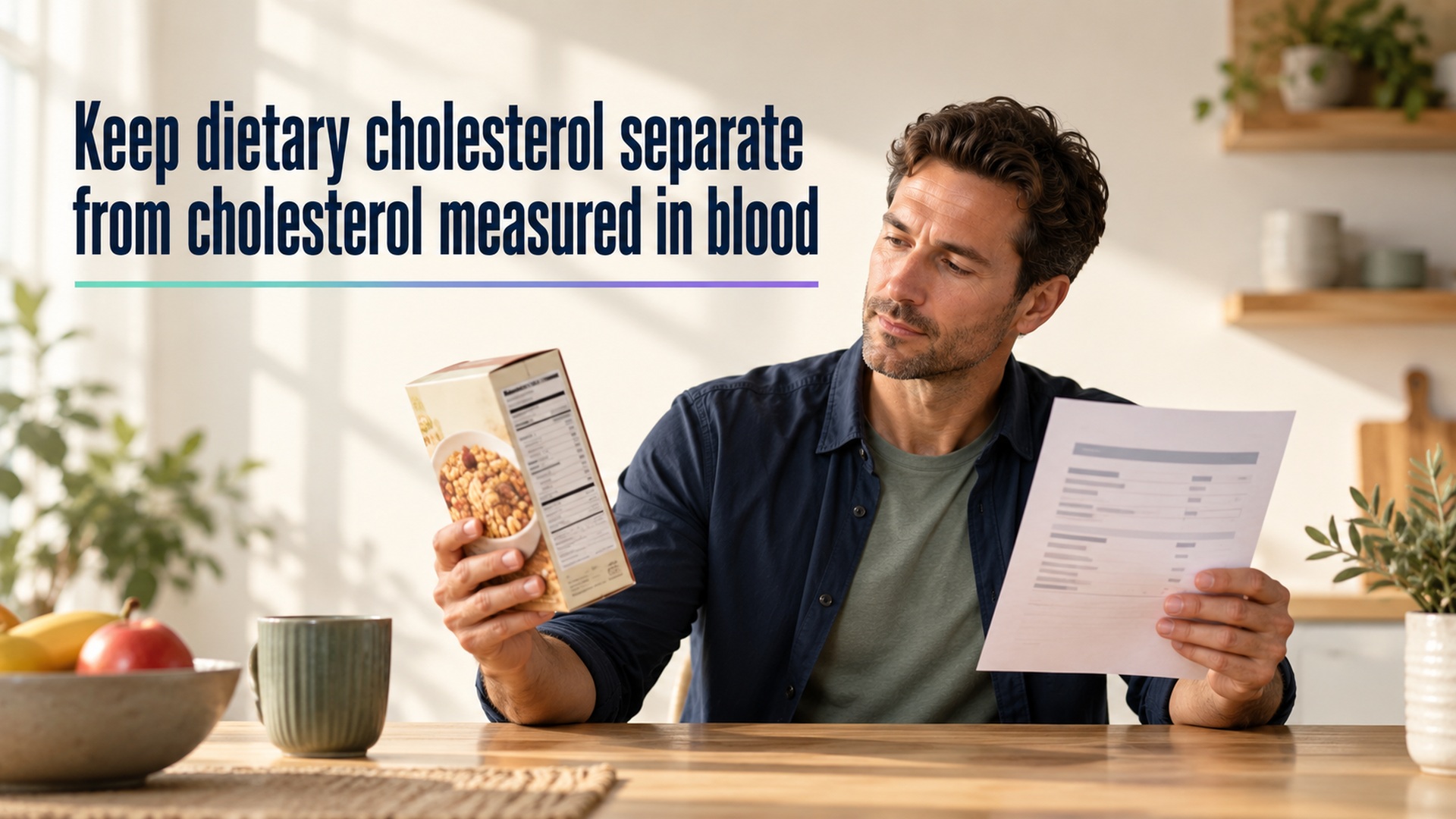
Dietary cholesterol in a food record and cholesterol measured in blood are different quantities. One describes an amount consumed; the other is a concentration measured in a blood sample. The shared word can make the figures seem directly comparable, but they answer different questions. I recommend keeping the food-log value separate from laboratory results and from any interpretation of cardiovascular risk.
What a food log records
Dietary cholesterol is the cholesterol present in foods. Packaged-food labels may list it in milligrams per serving, and a database can estimate it for a selected food and portion. The number belongs to that item and amount. It does not measure the cholesterol circulating in a person’s blood, and it cannot predict a later lab result by itself.
The cholesterol overview explains that dietary cholesterol comes from food while blood cholesterol is made by the body and measured in blood. The source of the food amount may be a package label, recipe calculation, or database entry. Record which food form and serving you used, especially when a value is imported from a search result. A portion mismatch can change the logged amount without changing anything about a blood test.
The Nutrition Facts panel may show cholesterol as milligrams and a percent Daily Value per serving. The interactive label guide for cholesterol describes that label context. Use the milligram amount for a food record if the app asks for the amount consumed. The percentage is a comparison to the label’s reference value; it is not another quantity to add to the milligrams.
What a blood test measures
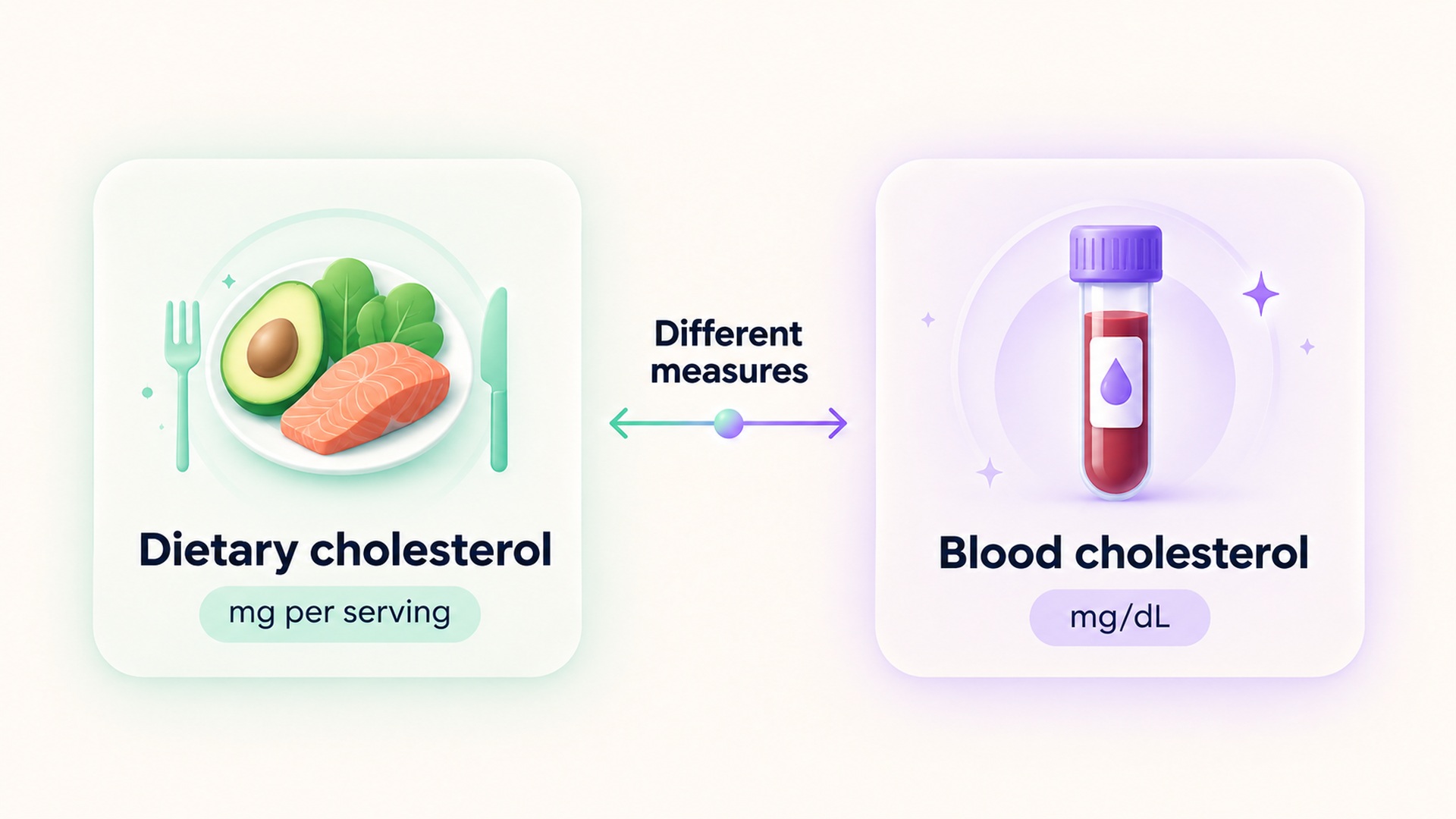
A lipid panel measures cholesterol and related fats in a blood sample. Results can include total cholesterol, LDL, HDL, and triglycerides, often with units such as milligrams per deciliter. These values are concentrations in blood. They are not grams or milligrams of cholesterol from foods.
The blood cholesterol test overview describes a cholesterol test as a blood test that measures cholesterol and triglycerides. It also explains that the result can include different lipid measures. A single food-log entry cannot be compared numerically with an LDL or total-cholesterol result because the units, samples, and meanings are different.
A lipid panel can include several results rather than one interchangeable “cholesterol” number. Total cholesterol summarizes parts of the panel, while LDL and HDL refer to different lipoprotein measures; triglycerides are another type of blood fat. Each value has its own name and interpretation. A food log that records dietary cholesterol does not contain those blood measures, even if the app uses a similar word in the field label.
The unit is an important clue. A food label may show milligrams per serving, while a laboratory report may show milligrams per deciliter of blood. Both can use milligrams, but the “per deciliter” denominator changes what the number means. Do not remove the denominator, convert one into the other, or compare the digits without the measurement basis. Keep the exact reported units in the record.
The cholesterol prevention guidance discusses food patterns and blood cholesterol in separate contexts. Diet can matter to health, but one food’s cholesterol amount is not a direct readout of an individual’s blood level. Blood results reflect the body’s production and processing as well as multiple health and lifestyle factors. A dietary record can support a broader discussion, but it does not replace testing or clinical interpretation.
Do not convert intake into a predicted result
There is no simple arithmetic that turns milligrams of dietary cholesterol into a blood concentration for a particular person. A food label gives a standardized nutrient amount for a serving; a blood test reports a measured concentration at a particular time. The terms may be related biologically, but a log total is not a forecast of the next lab panel.
Likewise, a lab result should not be used to rewrite a food record. If a blood value changes, that does not reveal which food caused it. If a food log shows a high or low intake on one day, that does not establish what a later lipid panel will show. Preserve the original measurement and its source instead of adjusting one record to make it resemble the other.
The same principle applies to averages and trends. A weekly food log might summarize several servings, while a blood panel reflects a sample collected at a specific time. The time windows differ, as do the measurement methods. A change in one record does not mechanically explain a change in the other. If a professional wants to examine both, preserve dates and source details so the relationship can be discussed without implying a direct conversion.
A food amount also depends on the selected product and portion. A generic database entry may describe a different food form from the package, so the logged dietary cholesterol could be off even before anyone considers a laboratory result. Verify the item, serving size, and consumed amount first. That improves the food record without turning it into a prediction.
Keep units and sources with the value
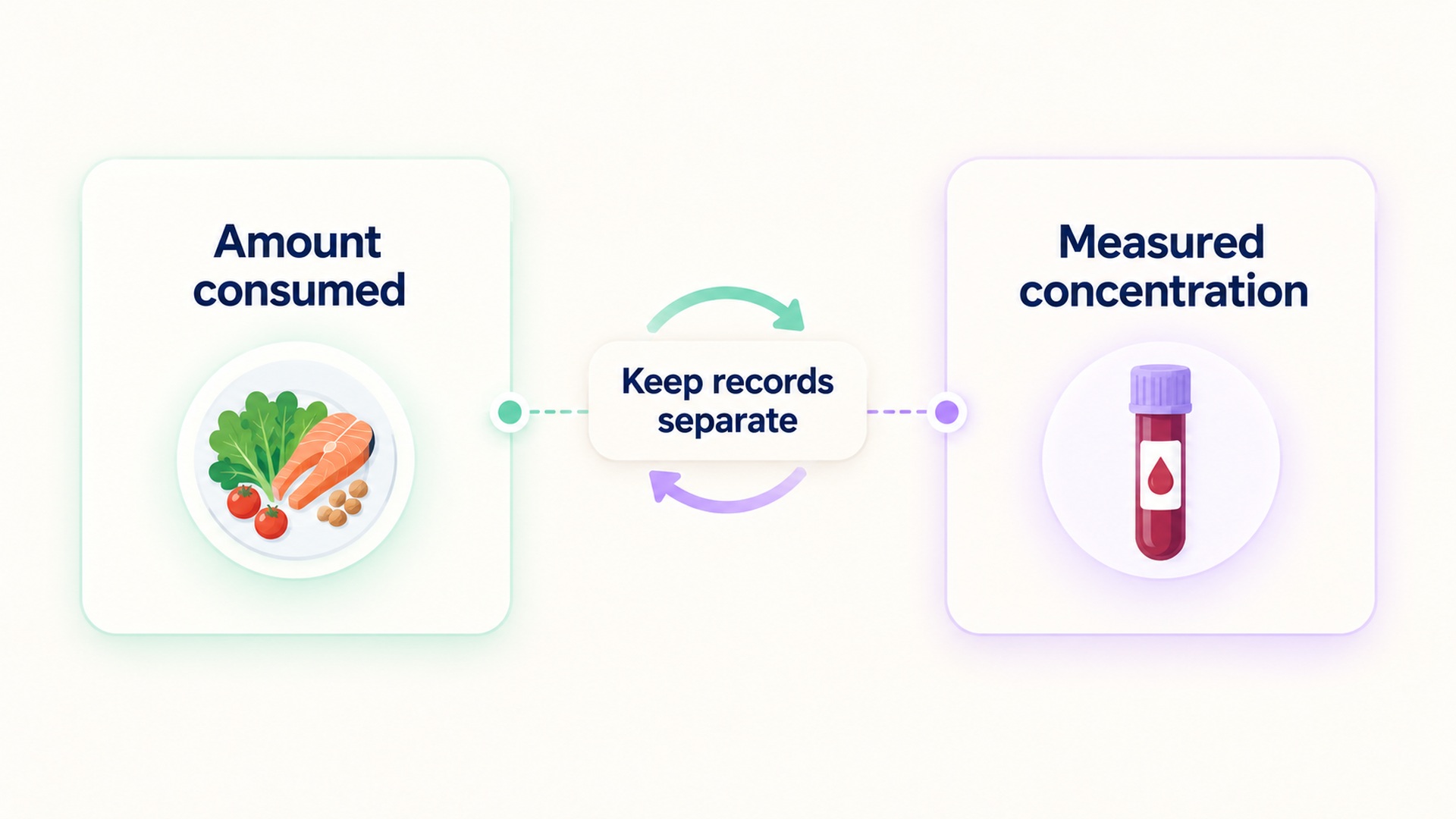
For food entries, check whether the app reports milligrams per serving, per package, or per a selected weight. The Daily Value label explanation describes where cholesterol appears on Nutrition Facts labels and how Daily Value percentages are used. Confirm serving size and number of servings before adding the amount to a daily total. If the entry uses a different unit basis, select a better match or record an estimate as an estimate.
A food database can be useful, but it should describe the same food form. The food composition documentation explains how cholesterol data are represented for foods that contain animal ingredients. A generic record may not match a packaged recipe, preparation method, or serving. For an accurate log, compare the product or food description, not only the nutrient value that appears first in a search result.
Dietary cholesterol is also distinct from total fat and saturated fat. A Nutrition Facts panel can list these as separate nutrients, so one value should not be used as a substitute for another. A food may contribute to a pattern through more than one component, but a cholesterol entry alone does not summarize the full composition of the food. Preserve the relevant fields separately if they are part of the question being reviewed. Keep the label serving attached to each amount. Keep its original source identifiable in each saved record.
For blood results, keep the sample date, units, and test name together. Do not enter a total-cholesterol result into a food intake field or copy a food amount into a lab field. If a clinician reviews both records, preserving their separate definitions makes the discussion clearer. Related questions about label identity are covered in checking the current label after scanning a food barcode; a matching product record helps food logging but still cannot predict a blood result.
Use both records for their proper purpose
A food record can show patterns in what was eaten over time. A blood test can show measured lipid concentrations at the time of sampling. Neither record alone explains every cause or establishes a complete health assessment. When a clinician asks for a food history, include the foods and amounts as recorded. When discussing a laboratory result, use the report’s exact test names and units.
Blood cholesterol travels in lipoproteins, and different measures have different meanings. Do not reduce those results to a single food number. Similarly, do not infer dietary cholesterol from a blood panel. The information can be considered together by a qualified professional, but it should remain separate in the record.
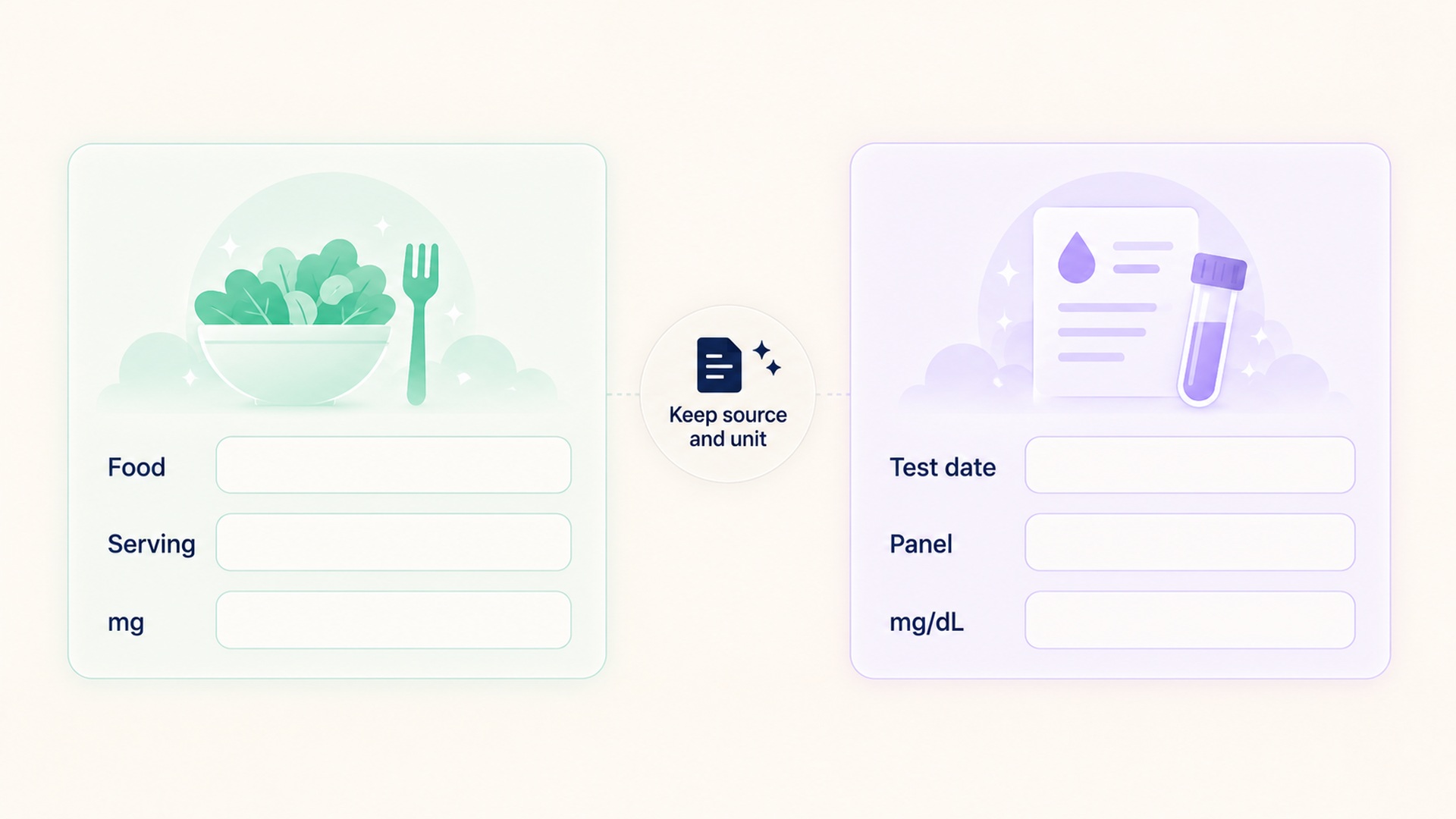
This distinction prevents two common logging errors. First, it avoids treating the label amount as a blood measurement. Second, it avoids treating a lab result as if it identified a particular food or meal. Both errors flatten context that is useful later. A clear record says what was measured, where the value came from, and what unit applies.
If the question concerns what was eaten, use the food record and its package or database source. If it concerns a measured lipid result, use the laboratory report with the collection date and exact panel fields. If the question is how the two relate for one person, bring both records to the clinician instead of calculating an answer from the shared word. This keeps each source useful for what it actually measures.
FAQ
Is dietary cholesterol the same as blood cholesterol?
No. Dietary cholesterol is an amount in food; blood cholesterol is measured in a blood sample, often as a concentration. The two use different units and describe different things.
Can I use my food-log total to predict a lipid-panel result?
No. A food-log total does not predict an individual blood result. Preserve both records separately and discuss their relevance with a qualified health professional.
Should I enter a blood cholesterol result in a nutrition app’s food field?
No. Use the correct field for the source and unit. A lab result belongs with laboratory data, while dietary cholesterol belongs with food and serving information.
*This article is for informational purposes only and is not a substitute for professional medical advice, diagnosis or treatment.*
Sources:
Centers for Disease Control and Prevention·U.S. Food and Drug Administration·MedlinePlus·Centers for Disease Control and Prevention·U.S. Food and Drug Administration·USDA FoodData Central
Related articles
Total fish oil weight does not reveal the EPA and DHA dose
The total weight of a fish-oil serving does not tell you how much EPA or DHA it contains. Read the Supplement Facts panel and keep total oil and its listed components in separate fields.

Folate equivalents and folic acid amounts should remain distinguishable
Folate labels may show dietary folate equivalents alongside a separate amount of folic acid. Keep both values distinguishable and use the one that matches the unit requested by your nutrition record.
Convert vitamin D units before adding supplements to a daily total
Vitamin D labels may state international units, micrograms, or both, and those values need a common unit before they are added. Check each serving and keep the arithmetic separate from decisions about supplementation.

Logging canned foods depends on whether the liquid was drained
A canned food can be weighed with its packing liquid or measured after draining, and those are different food forms. Match the label and database entry to the portion you actually consumed instead of applying a guessed adjustment.
Check the current label after scanning a food barcode
A barcode scan is a useful starting point, but the food record still needs to match the package in hand. Check the current label, serving basis, and amount eaten before accepting the entry.
Food weight ounces and fluid ounces require different entries
Ounces by weight and fluid ounces measure different quantities. Match the entry to the scale, measuring cup, package label, and food form before logging a portion.

Stable body weight does not rule out inadequate fueling for training
A steady body-weight trend does not show whether food intake supports training and normal body functions. Learn why scale readings need training, recovery, and health context, and when to seek individualized advice.

Carbohydrate replenishment and a normal recovery score are different signals
A normal recovery score does not show whether muscle glycogen has been replenished after exercise. Learn how to read training, food, and autonomic signals as separate pieces of context.

A beverage log does not capture all sources of dietary water
A drink tracker may omit water that comes from food, and an intake total does not establish hydration status. Learn how to label beverage entries, food moisture, and uncertainty separately.

Track digestive tolerance when dietary fiber increases
A nutrient total cannot show how a fiber change felt. Learn how to log food details, digestive symptoms, and uncertainty separately without assuming every symptom came from fiber.