Recording sleep paralysis without assigning it a sleep stage
By Mr.Apps · Oct 19, 2026
Category:Sleep
Sleep paralysis is an episode that happens around falling asleep or waking, when a person is aware but temporarily unable to move or speak. A sleep-stage graph cannot by itself identify the episode, explain its cause, or establish a diagnosis. If you want to keep a record, write down what happened and when, then leave the stage label to the method that can measure it.
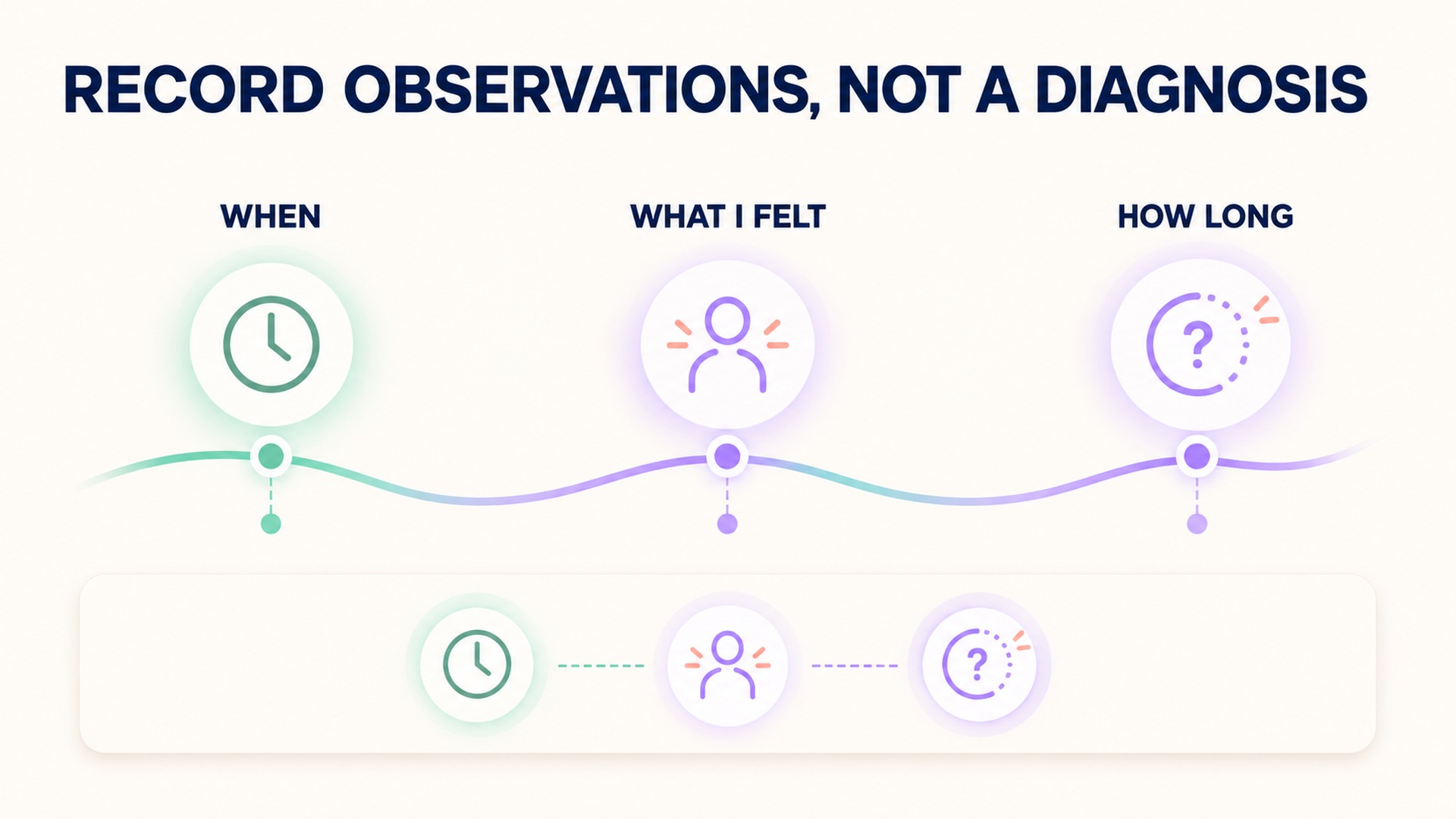
I would keep the entry descriptive and leave interpretation to the clinical review. A simple note can preserve details that are easy to forget: whether the episode began as you were falling asleep or waking, what movement or speech felt limited, how long you think it lasted, and whether other sensations occurred. These observations describe an experience. They do not prove that the episode was caused by a specific sleep stage or condition.
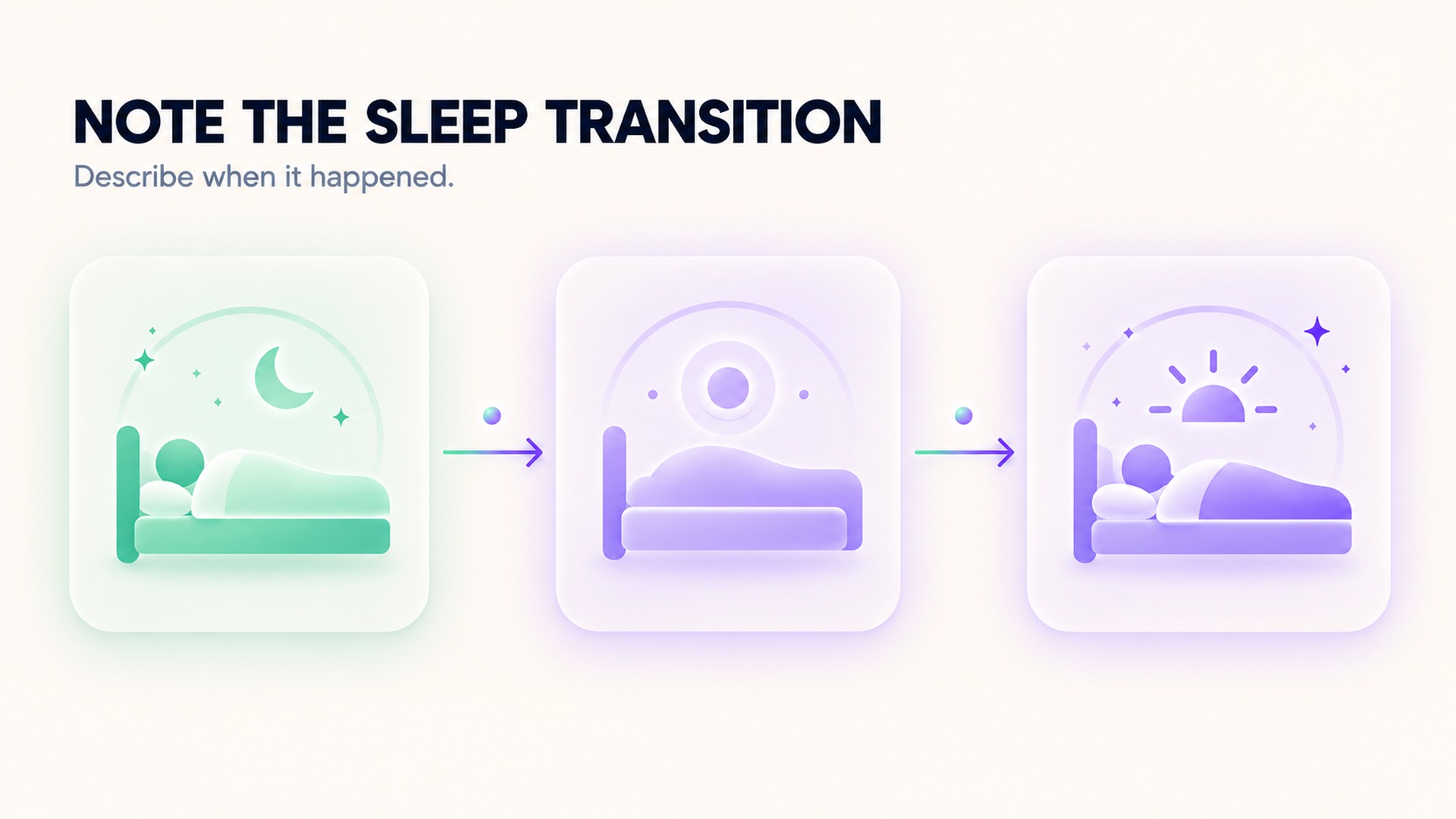
Describe the transition, not a stage label
Sleep paralysis is described as an overlap between awareness and the temporary loss of voluntary muscle movement associated with REM sleep. The event occurs at a transition into or out of sleep. That does not mean a consumer device can identify it from a REM estimate. A wrist sensor does not directly measure the full electrical and muscle signals used in a laboratory sleep study, and even a measured stage is only one part of clinical interpretation.
A clinical guide to recurrent isolated sleep paralysis describes episodes around sleep onset or awakening and explains that a diagnosis of the recurrent syndrome depends on a broader clinical history. A separate systematic review of factors associated with sleep paralysis found that reported experiences and associated factors vary across studies. A single event does not establish the recurrent disorder, and a list of possible associations cannot identify what caused one person’s episode.
The wording in a journal matters. “I woke and could not move for what felt like a short time” records the experience. “I was in REM” makes a claim about a physiological stage that may not have been measured. “My device caused it” makes a causal claim that the entry does not support. Keeping the note descriptive gives a clinician room to assess it without having to first undo an app’s confident label.
The same rule applies if a device shows a stage change near the time you remember the episode. A wearable estimate is not a direct recording of the event. The timing may be imprecise, sleep stages can be misclassified, and the app’s clock may not line up with the moment you noticed waking. The graph can be kept as a separate clue, with the understanding that it cannot verify what you experienced.
What a useful episode record can contain
A short episode note can include the date, approximate time, whether it occurred while falling asleep or waking, what you remember being unable to do, and how long it seemed to last. If there were sounds, images, pressure sensations, or a feeling that someone was present, record those as experiences rather than proof of an outside cause. Some people notice such sensations; others do not. Neither pattern should be added to the record if it did not occur.
You can add context that may help a clinical conversation, such as a recent shift in sleep timing, unusually short sleep, or repeated awakenings. Keep these as surrounding facts, not explanations. Research reviews have examined associations between sleep disruption and reported paralysis, but an association does not show that a particular schedule change caused a specific episode. A journal is better at preserving the sequence than resolving it.
If you are not sure how long the episode lasted, use “duration uncertain” instead of an exact number. A person may only know that it ended before a clock check or after a familiar sound. Recording false precision can make later comparisons look more reliable than they are. The same applies to frequency: count the episodes you remember and note that missed recollections are possible.
A device can supply a separate record of estimated sleep timing or movement. If you export those data, preserve the device name and date range. Do not merge the estimate with the episode description or let the app auto-fill a diagnosis. When the two timelines disagree, retain both with their sources marked. A clinician can decide whether either detail is useful.
Why a stage graph cannot diagnose the episode
Consumer sleep staging relies on estimates from sensors such as movement and pulse. It may not observe the brain and muscle activity needed to classify a brief transition. An event can also occur between the intervals that the device records or summarizes. A stage label that appears before or after an awakening does not show what was happening in the moment you were conscious and unable to move.
A laboratory recording could capture more physiological signals, but sleep paralysis is usually evaluated from a description of the event and the surrounding clinical history. A clinical review of sleep paralysis and REM-related experiences discusses research recordings in which sleep paralysis showed mixed features of REM sleep and wakefulness. That research explains why the experience can feel like both states. It does not establish that a consumer stage estimate can detect a particular person’s event.
Clinical assessment may also consider whether symptoms fit a broader sleep-wake problem. The clinical overview of narcolepsy describes excessive daytime sleepiness and other symptoms that can be assessed by a health professional. A sleep-paralysis episode alone is not enough to diagnose narcolepsy. If you also have persistent daytime sleepiness or other recurring symptoms, note them and ask for an evaluation rather than relying on the app’s stage display.
Do not use a single graph to rule out a condition either. A device may show no REM estimate near an episode, but that does not prove that the event was unrelated to sleep transitions. It may have missed the period or classified it differently. The appropriate interpretation depends on the experience, pattern, and whether other symptoms require attention.
A related article on how to interpret consumer sleep-stage percentages explains why a stage estimate should be presented with uncertainty. For an episode journal, the same principle means keeping the event description primary and any stage estimate secondary.
A clinician may distinguish sleep paralysis from other sleep-related events by asking when the symptoms began, how long they lasted, and whether movement or awareness changed. A review of REM-related sleep phenomena describes sleep paralysis, nightmares, and dream-enactment behaviors as different experiences with different assessment needs. Those distinctions are another reason to write what happened in plain language rather than selecting a stage or disorder label from a menu.
A separate review of REM parasomnia neurophysiology discusses how physiological findings in research recordings are interpreted. These papers provide clinical and research context; they are not checklists for self-diagnosis. A diary entry can help a professional ask focused follow-up questions, but it cannot rule out another explanation or determine whether a test is necessary. If you are unsure whether an event belongs in a sleep record, describe the timing and sensation without trying to classify it.
When to bring the record to a professional
Consider discussing the episodes if they happen repeatedly, cause substantial distress, interrupt sleep, or occur alongside persistent daytime sleepiness or other concerning symptoms. If an episode involves injury or another immediate safety concern, seek appropriate help. The record can help you explain the timing and what you experienced, but it cannot decide whether testing or treatment is needed.
A clinician may ask about sleep schedule, frequency, daytime symptoms, medication or substance context, and other sleep experiences. Answer from what you know, and mark uncertainty. There is no need to infer a stage, count dream content as a diagnosis, or recreate the episode with a device. If a professional asks you to complete a particular questionnaire or sleep diary, use that method and follow the instructions given.
The purpose of tracking is to make the experience easier to describe, not to turn the journal into a diagnosis. If you estimate duration, say that it is an estimate. You do not need to trigger an alarm, record a video, or change your routine to capture an episode. A clear record supports a better conversation because it separates what you felt, what you observed, and what a device estimated. That separation also prevents an app from making a confident claim about an event it did not directly measure.
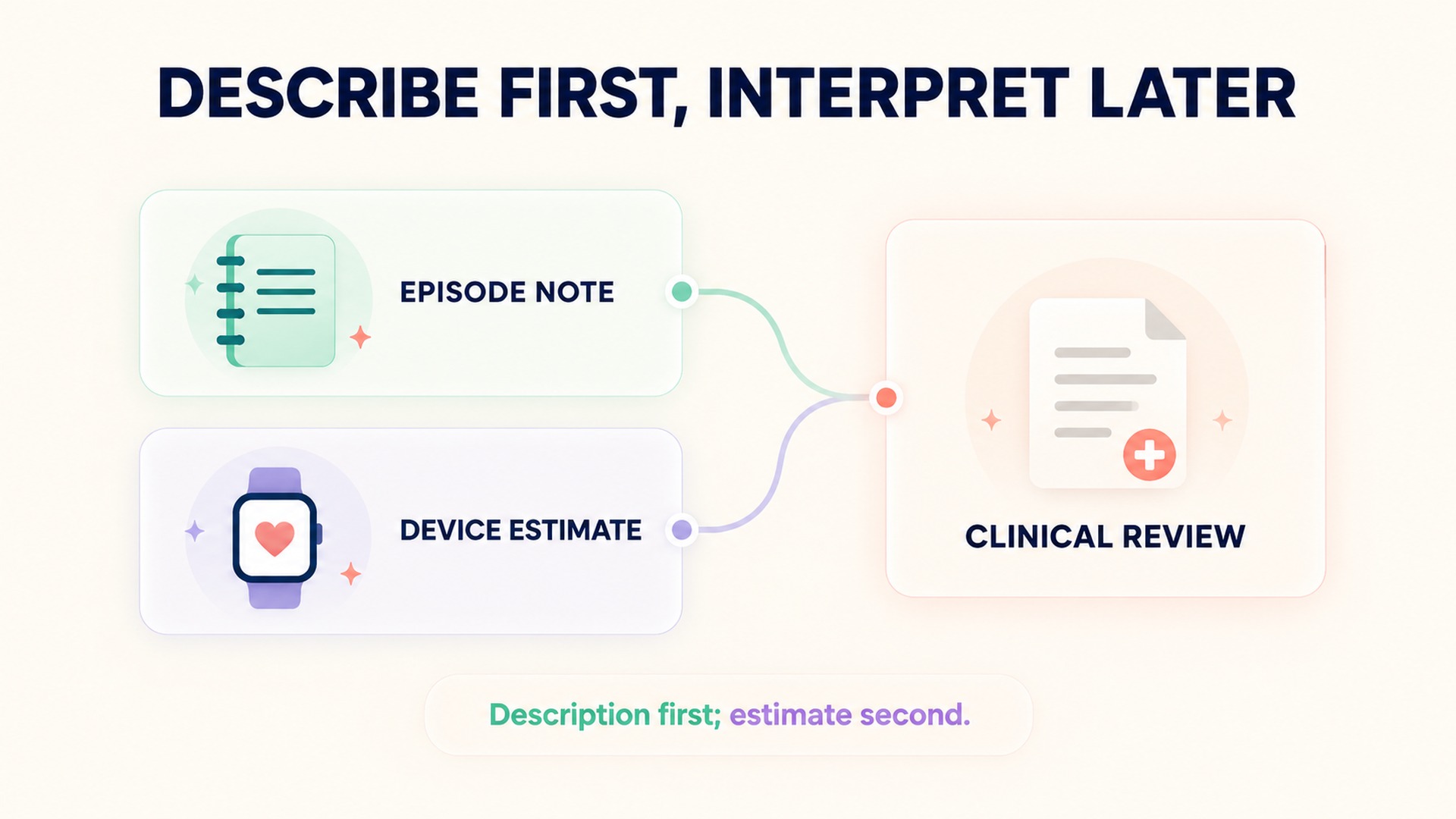
Record sleep paralysis as an experience around falling asleep or waking, with details you can recall and uncertainty stated plainly. Do not assign it a sleep stage from a wearable chart. If episodes recur or affect your wellbeing, share the pattern with a qualified health professional and let the clinical context guide any next step.
FAQ
Can a wearable confirm that an episode happened during REM sleep?
No. Consumer stage estimates cannot verify a brief sleep-wake transition or diagnose sleep paralysis. Record the episode separately from the device estimate.
What details should I write down?
Note whether it occurred while falling asleep or waking, what you could or could not do, any sensations you recall, and how long it seemed to last. Mark uncertain details as uncertain.
Does one episode mean I have a sleep disorder?
No. One episode does not establish a recurrent syndrome or another diagnosis. If episodes repeat or occur with persistent daytime symptoms, discuss them with a clinician.
*This article is for informational purposes only and is not a substitute for professional medical advice, diagnosis or treatment.*
Sources:
Neuropsychiatric Disease and Treatment·Sleep Medicine Reviews·Journal of Clinical Sleep Medicine·National Institutes of Health·Continuum·Handbook of Clinical Neurology
Related articles

Keeping prescribed breathing treatment separate from a sleep score
Sleep score and prescribed breathing treatment answer different questions. Learn how to keep the records separate and what to bring to a clinical follow-up.

Why a laboratory sleep study can differ from a usual night at home
A laboratory sleep study records sleep under conditions that can differ from home. Learn how to discuss an unusual test night without dismissing the clinical findings.

How to Read a Sleep Graph When Deep Sleep Appears in Short Bursts
Short deep-sleep blocks on a wearable graph can reflect stage estimates, chart resolution, or missing sensor intervals. Read the time scale and coverage notes alongside the total sleep window before interpreting the pattern.

Why Sleep Stage Percentages Need a Confidence Indicator
A sleep-stage percentage can look precise even when the tracker has limited evidence for part of the night. A confidence indicator should explain whether it refers to signal coverage, classifier uncertainty, or validation against a reference method.

How to Tell Whether Zero Deep Sleep Is a Data Gap or a Classification Result
Zero deep sleep in a wearable graph can reflect an incomplete record or a classification that assigned no eligible interval to that stage. Check the full timeline, coverage notes, and the app’s stage method before interpreting the value.

Why Main Sleep and Naps Need Separate Breathing Analysis
Main sleep and naps can differ in timing, duration, sensor coverage, and how a tracker identifies each interval. A breathing summary should show which session it analyzed and keep a nap separate unless the product explains how both periods enter the same calculation.

Why a Percentage of Optimal Breathing Needs a Clear Denominator
A percentage of optimal breathing can look exact even when its denominator is unclear. Learn why a tracker should state which sleep minutes count, how it treats sensor gaps, and whether its method stays consistent across nights.

Why Bedtime Consistency Scores Can Misread a Deliberate Time Shift
A bedtime consistency score compares clock labels, but a deliberate schedule shift can make familiar sleep timing appear unusually variable. Check the score’s time frame, observation window, and treatment of transition nights before reading the result as a change in sleep quality.

Why a Sleep Tracker Needs a Time-Shift Mode
A time-zone change can alter the way a sleep tracker labels a night without showing when the body’s internal clock has adjusted. A temporary time-shift mode should preserve original timestamps, mark the transition, and pause comparisons that assume a steady schedule.

Why a Time Shift Should Pause Schedule-Based Coaching
A time shift can make schedule-based sleep advice compare local bedtimes against a different clock reference. A tracker should preserve each sleep record, pause stale coaching, and explain what observations it needs before the comparison resumes.