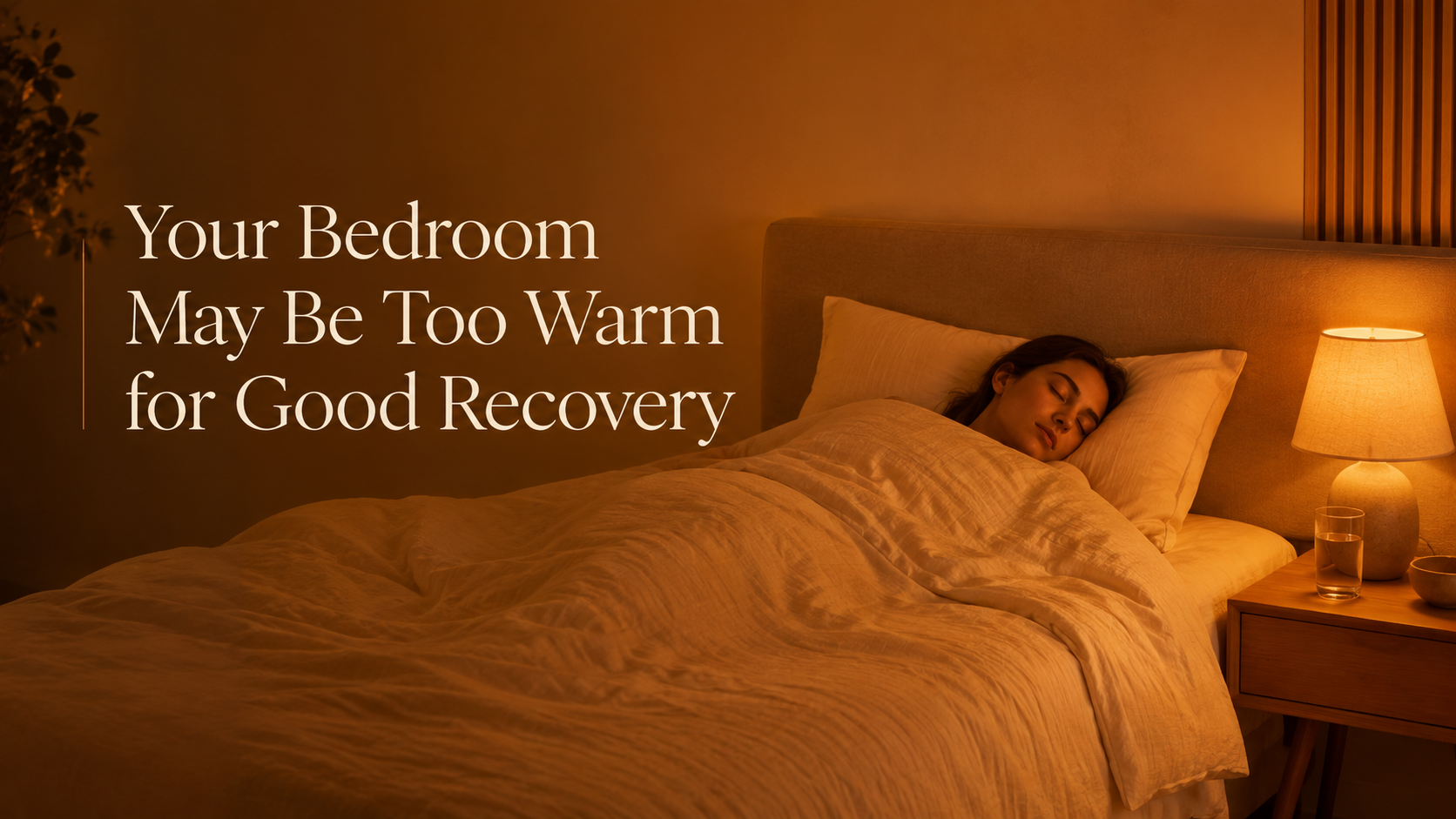
Your Bedroom May Be Too Warm for Good Recovery
By Mr. Apps · Jul 9, 2026
Category:Recovery
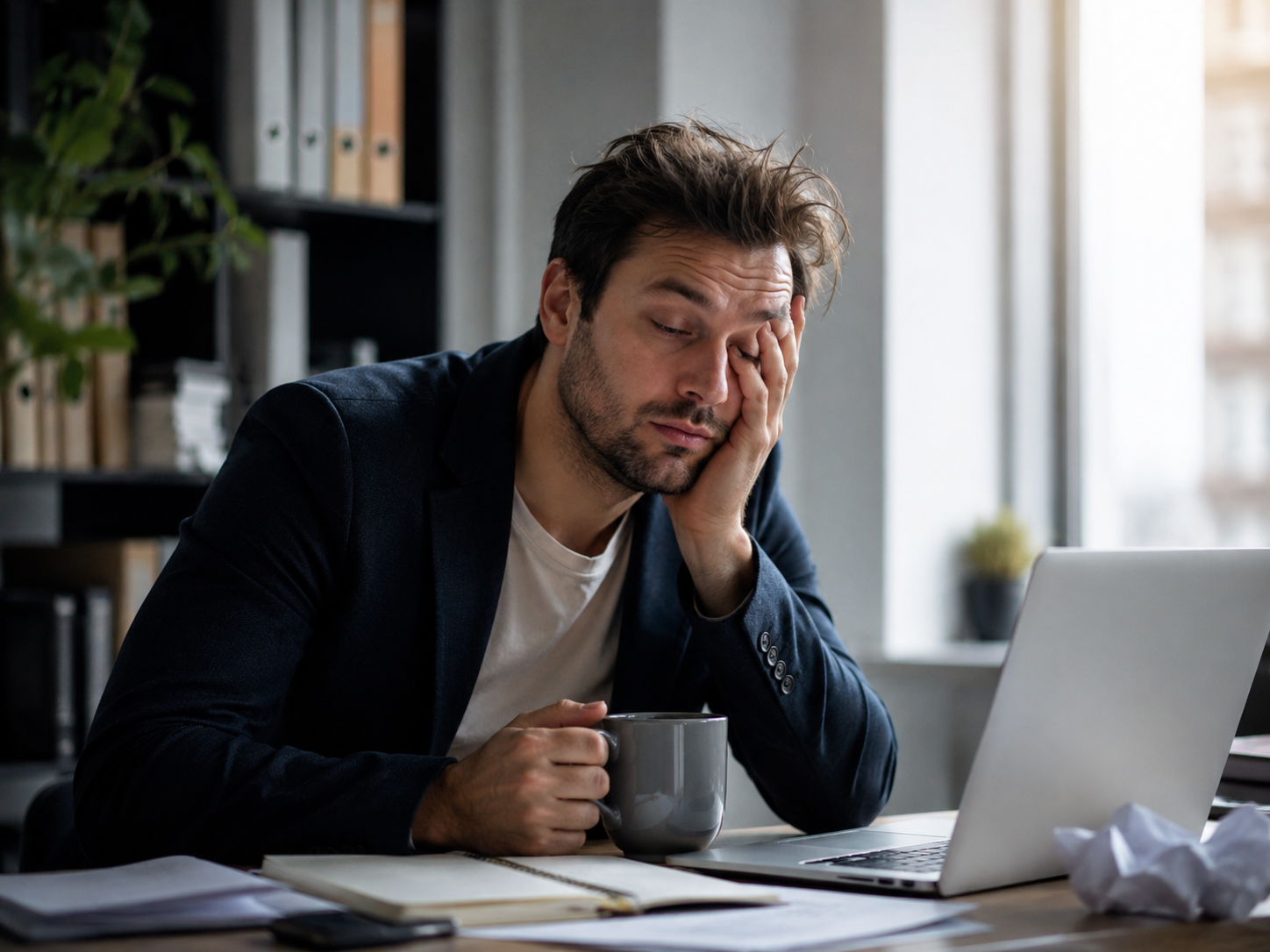
For two summers, I lived in a top-floor rental with a flat roof and almost no cross breeze. The bedroom held onto daytime heat well past midnight, and by the time I got into bed the walls were still warm to the touch. I didn't think much of it until I started wearing a heart rate tracker at night for an unrelated project and noticed something odd: my resting heart rate during sleep climbed by six to eight beats a minute on the hottest nights, and it stayed elevated for hours. My heart rate variability, a rough proxy for how well my nervous system was settling down overnight, dropped in step. I wasn't waking up gasping or drenched in sweat. I just felt like I'd worked a shift instead of slept one.
That stretch changed how I think about bedrooms. Most sleep advice focuses on screens, caffeine, and bedtime routines, all worth addressing, but temperature is the variable that quietly undoes the rest of it. If the room is too warm, none of the other habits get you very far.
Why Temperature Matters to Sleep Biology
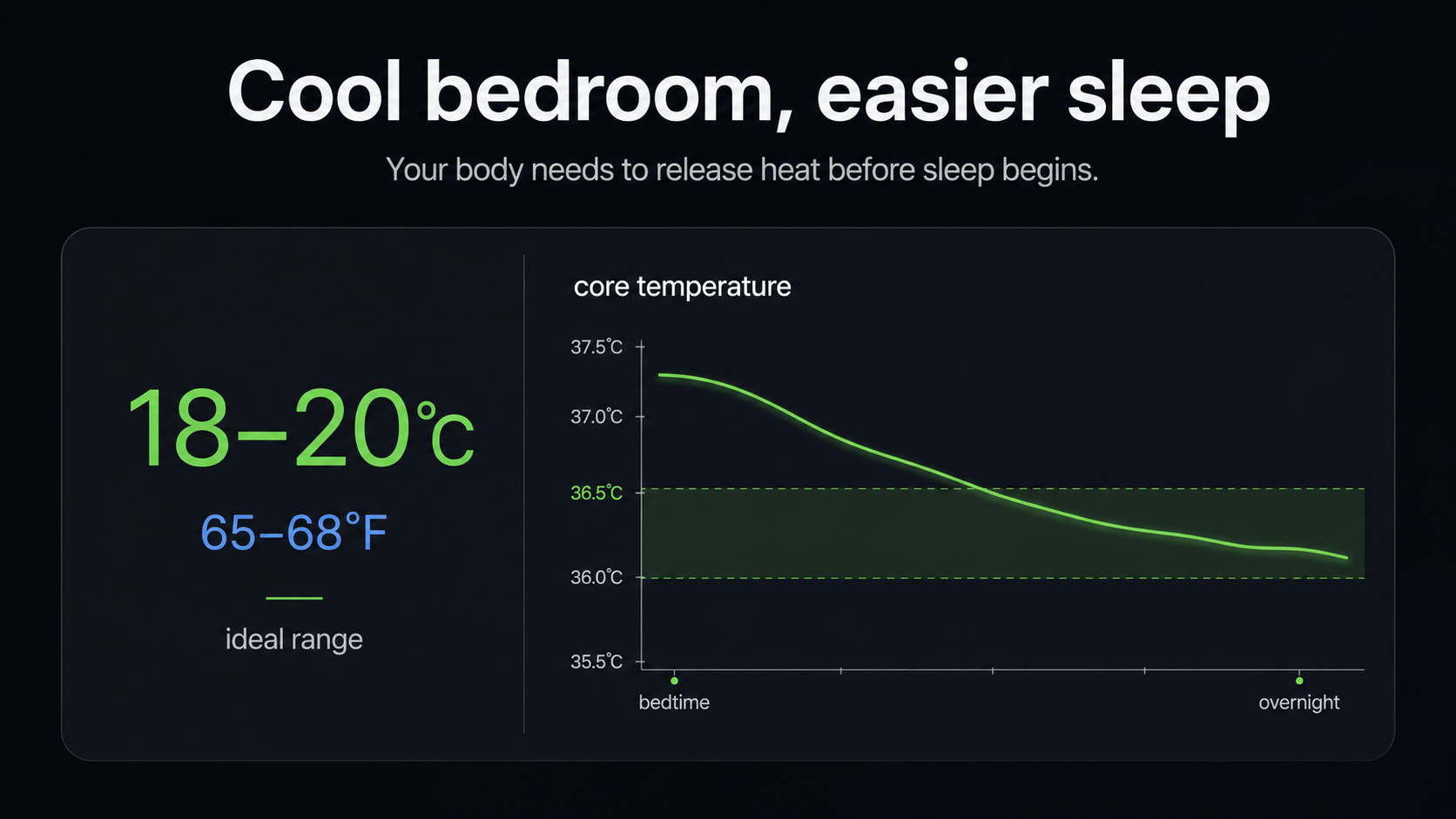
Falling asleep is partly a thermal event. Your core body temperature needs to drop by roughly a degree or two Fahrenheit for your brain to shift out of wakefulness, and that drop isn't passive. It happens because blood vessels in your hands and feet widen and release heat, which is why your feet sometimes feel warm right before you doze off even though your internal temperature is falling. The Sleep Foundation's overview of the research puts the ideal range for most adults at 65 to 68 degrees Fahrenheit, cool enough to support that internal drop without asking your body to fight off cold at the same time.
This is also the logic behind the old trick of taking a warm bath before bed. It sounds backward, warming yourself up to fall asleep faster, but a clinical sleep study on hot-water bathing timed before bedtime found that people who bathed one to two hours before sleep fell asleep faster than people who didn't bathe at all. The bath pulls blood to the skin surface, and once you get out, that heat radiates away quickly and drags your core temperature down with it. A bedroom that's already warm blunts the whole effect. There's nowhere for the heat to go.
What Warm Rooms Do to Overnight Recovery Signals
Falling asleep is only half the story. What happens for the next seven or eight hours matters just as much, and this is where a warm room does its quiet damage.
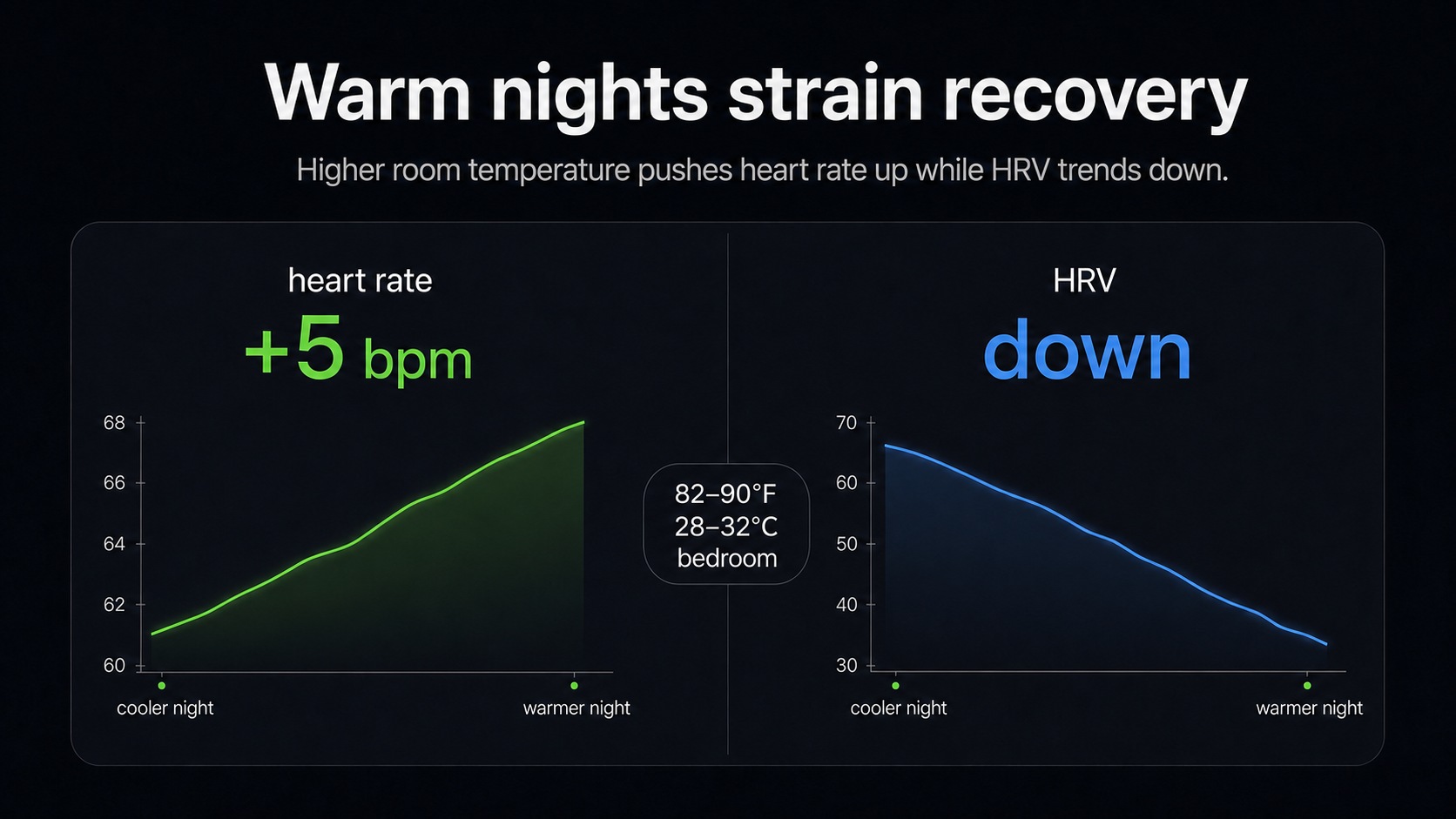
A 2025 observational study out of Australia fitted community-dwelling older adults with wearable sensors and tracked their bedroom temperature alongside heart rate and heart rate variability across an entire summer. On nights when bedrooms climbed into the 82 to 90 degree Fahrenheit range, participants were close to four times more likely to see their overnight heart rate jump by five beats per minute or more, compared with nights below 75 degrees. Heart rate variability moved in the opposite direction, which reflects less parasympathetic activity, the "rest and digest" side of the nervous system that's supposed to be doing the heavy lifting while you sleep.
This isn't an isolated finding. A broader review of the evidence on ambient heat and sleep pulled together studies from around the world and found a consistent pattern: higher indoor and outdoor temperatures are tied to worse sleep quality and shorter sleep duration, and the effect gets stronger during the hottest months and among people already vulnerable to heat.
None of this requires an actual heatwave to matter. A poorly ventilated bedroom on an ordinary summer night can push you into this range without you registering it as anything more than a slightly restless night.
Some People Feel This More
Not everyone experiences a warm bedroom the same way. Anyone going through the menopause transition already knows this: hot flashes and night sweats are thermoregulatory events, not just discomfort. As estrogen declines, the brain's temperature-control center effectively narrows its comfort zone, so a temperature swing that a younger sleeper wouldn't even notice can be enough to trigger sweating, flushing, and a full wake-up.
I've had more than one conversation with a colleague going through this transition who assumed her sleep had simply gotten worse with age, when the more immediate problem was that her bedroom ran two or three degrees warmer than it used to feel. Lowering the room by a few degrees and switching to lighter, more breathable bedding didn't fix everything, hormonal symptoms rarely have a single fix, but it cut down noticeably on how often she woke up and had to reset before falling back asleep.
Warm sleepers and people in naturally hot climates deal with a milder version of the same problem: a smaller margin between comfortable and disruptive, night after night, all summer long.
Small Changes That Help on Ordinary Nights
You don't need a full renovation to fix this. A few changes make a disproportionate difference:
- Set the thermostat to drop a few hours before bed rather than right at lights-out, so the room has time to cool.
- Choose bedding and sleepwear in natural or moisture-wicking fabrics. Synthetic sheets and memory foam mattresses both trap heat against your skin.
- Keep blinds or curtains closed during the day on any window that gets direct sun. A bedroom that stays cool in the afternoon has a real head start by bedtime.
- If you take a warm bath or shower before bed, time it so you finish an hour or two beforehand rather than right before getting under the covers.
- Use a fan, even a cheap one. Moving air feels several degrees cooler than still air at the same temperature, and it helps sweat evaporate if you do warm up overnight.
A cardiologist interviewed in a recent piece on hot-weather sleep habits made a point I think about often: room temperature plays a bigger role in sleep quality than most people assume, and small habits, like moving a hard workout earlier in the day instead of right before bed, keep your body from fighting its own cool-down process at the exact moment it's trying to wind down.
When I redid my own bedroom after that attic apartment, the single change that mattered most wasn't an air conditioner. It was moving the bed away from the wall that faced the afternoon sun and switching from a synthetic duvet to a lighter linen one. The room still isn't cold, but it no longer holds onto heat the way it used to.
What to Do During a Heatwave
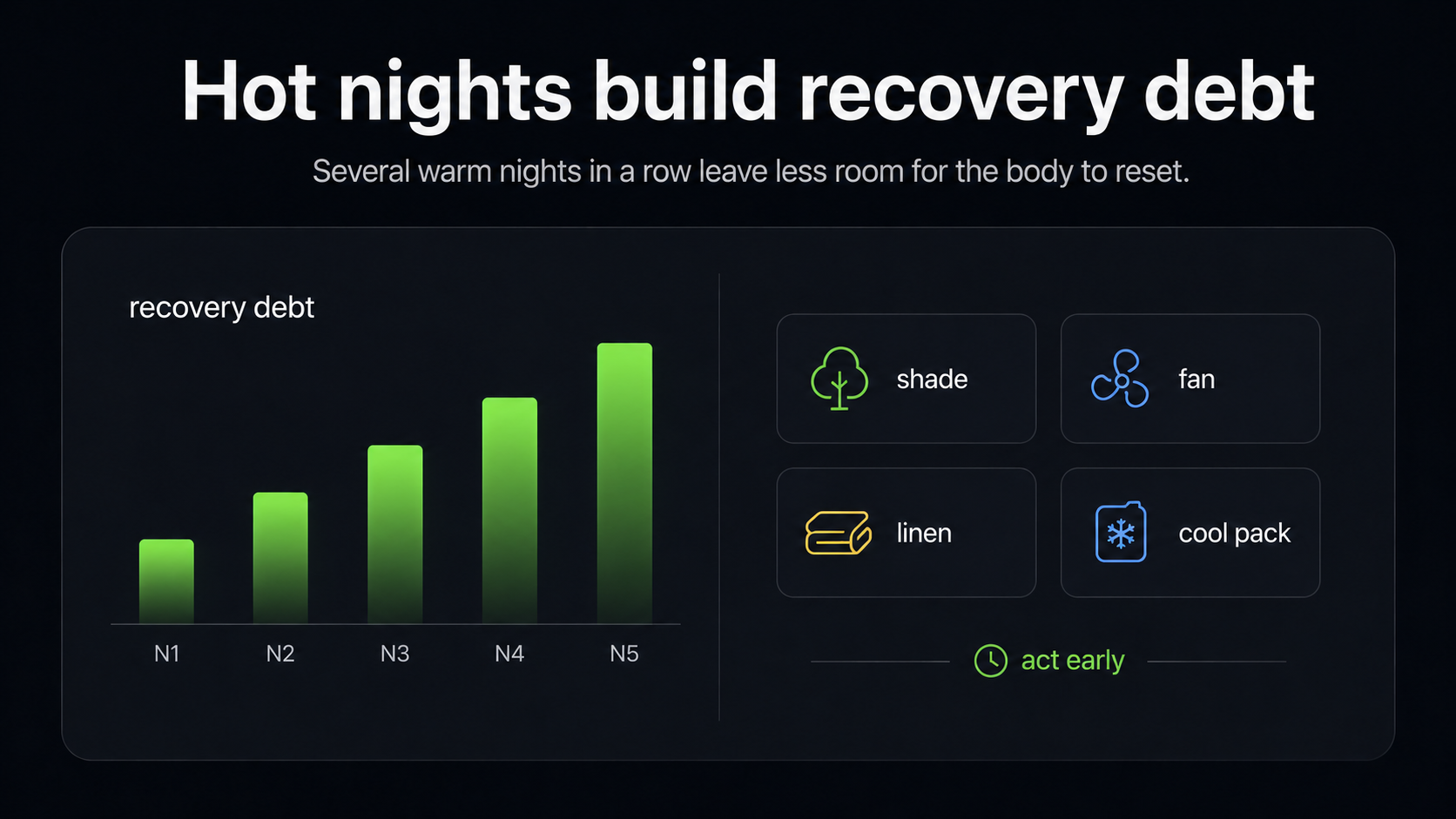
Heatwaves raise the stakes, especially for older adults and anyone with a cardiovascular condition. The same research group behind the bedroom temperature study I mentioned earlier later noted, in a summary of their findings, that a heart working harder for longer periods creates a kind of ongoing strain, one that limits how much the body can recover from the previous day's heat exposure before the next one starts. That's the real cost of a string of hot nights in a row. The tiredness is only the visible part. The recovery deficit builds underneath it, night after night.
During an actual heatwave, a few extra steps help: close windows and blinds early in the morning, before the outside air heats up, rather than opening them for a breeze that will only bring hot air in. Point a fan toward an open window once it's cooler outside than in, rather than just circulating warm air around the room. Keep a damp cloth or a cold pack near the bed for your neck or wrists, both places where blood vessels sit close to the surface and cooling has an outsized effect. And don't wait until the room feels obviously unbearable to act. By that point, your body has likely already been working overtime for hours.
FAQ
What's the best bedroom temperature for sleep?
Most sleep researchers put the ideal range at 65 to 68 degrees Fahrenheit, or about 18 to 20 degrees Celsius, for adults. That's cool enough to support the natural drop in core body temperature that sleep onset requires. Older adults sometimes do better a few degrees warmer, since thermoregulation becomes less efficient with age. Treat the range as a starting point and adjust based on how you sleep, not just how the room feels while you're awake and moving around it.
Can a warm bedroom really affect my heart, or does it just feel uncomfortable?
Both. Feeling uncomfortable is the more obvious problem, but research tracking overnight heart rate and heart rate variability has found measurable cardiovascular strain on warmer nights, even in people who weren't consciously aware they'd slept poorly. The effect is strongest in older adults and anyone with an existing heart or blood pressure condition, but the underlying mechanism, more effort spent moving blood to the skin to shed heat, applies to almost everyone to some degree.
What can I do if I don't have air conditioning?
Focus on keeping heat out during the day rather than only trying to cool the room at night. Close blinds on sun-facing windows before the room heats up, use a fan to keep air moving instead of relying on it to lower the temperature by itself, switch to breathable bedding, and time any hot shower or bath for an hour or two before bed rather than right beforehand. None of this requires special equipment, and together it closes a surprising amount of the gap.
*This article is for informational purposes only and is not a substitute for professional medical advice, diagnosis or treatment.*
Sources:
Sleep Foundation·Journal of Clinical Sleep Medicine·BMC Medicine·ScienceDirect·American Heart Association
Related articles
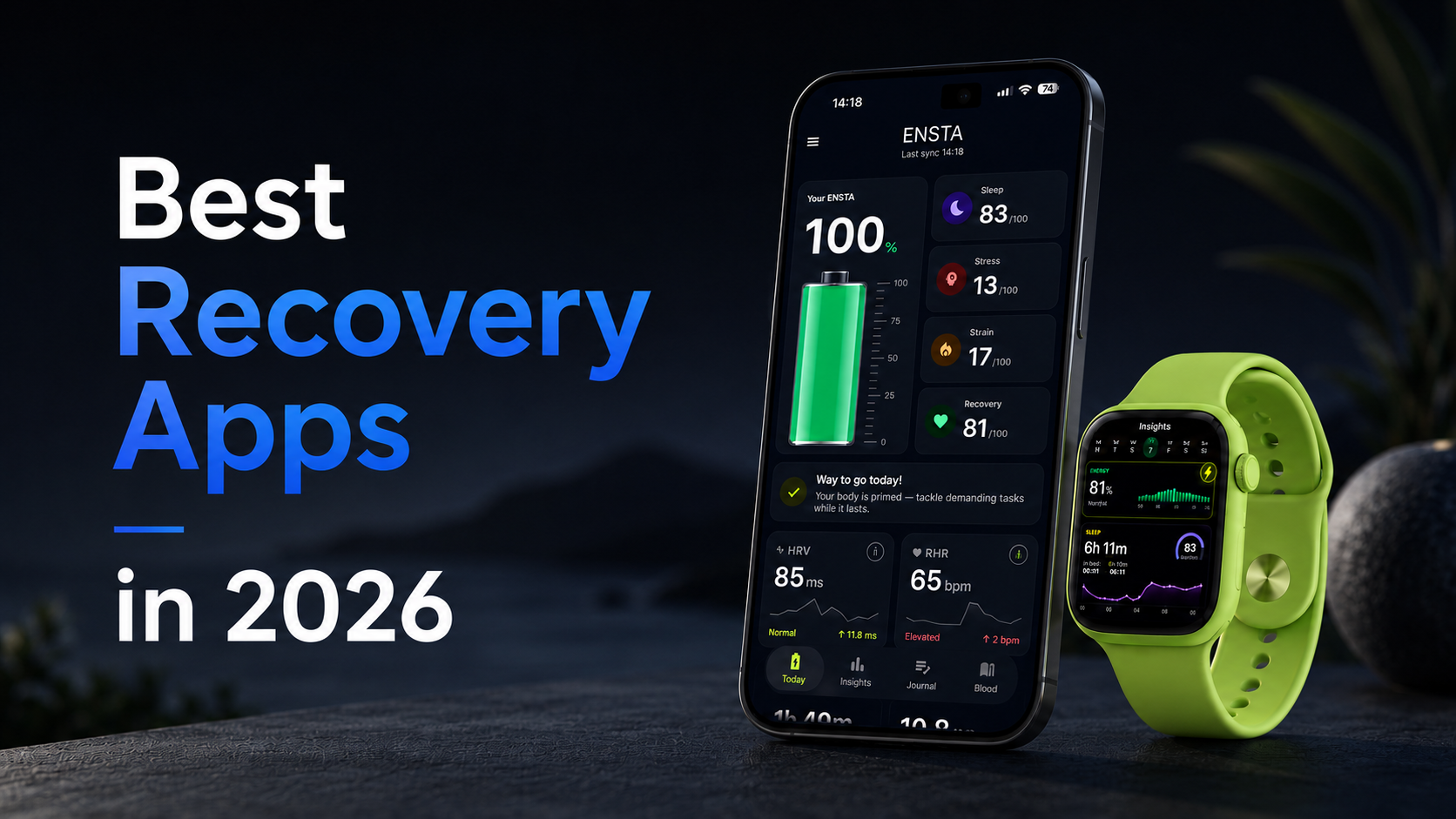
Best Recovery Apps in 2026
Compare the best recovery apps in 2026, including Ensta, WHOOP, Oura, Athlytic, Elite HRV, and Muscle Recovery Tracker. Learn which recovery tracker is best for your body, sleep, HRV, stress, strain, training load, and daily energy score — whether you want a simple free recovery app, an Apple Watch recovery app, a sleep-focused readiness score, or an athlete-grade recovery tracker.
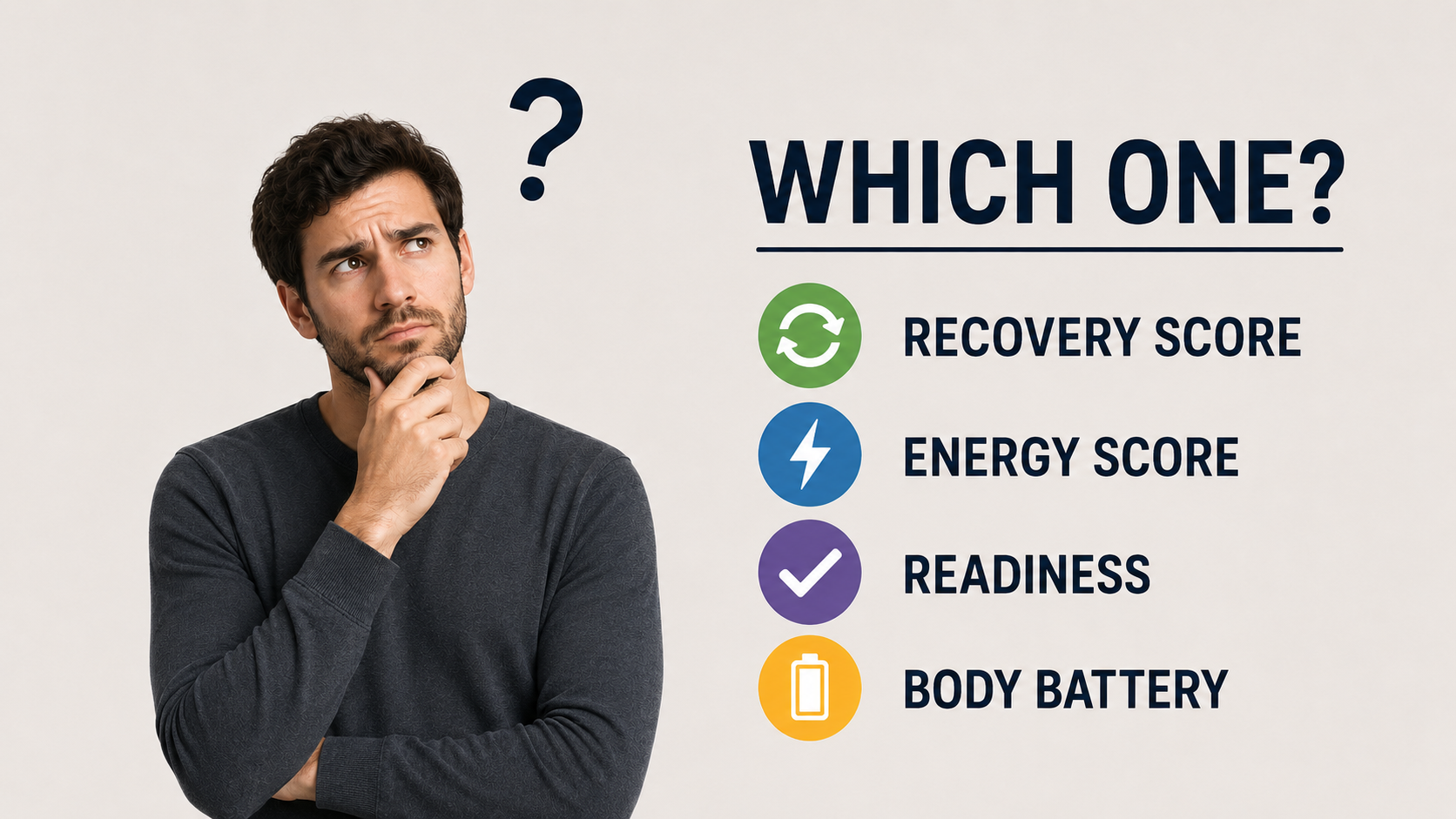
Recovery Score, Energy Score, Readiness, Body Battery — What Actually Matters
What recovery score means, how energy and readiness score differ, and body battery vs recovery — plus which numbers actually deserve your attention.
Why Evening Screens Can Leave You Wired but Tired
We're told blue light is why screens ruin our sleep, so we dim the display and turn on the warm filter. But if you've ever put the phone down exhausted and then lay there wide awake, the light was never the real problem. Here's what is.
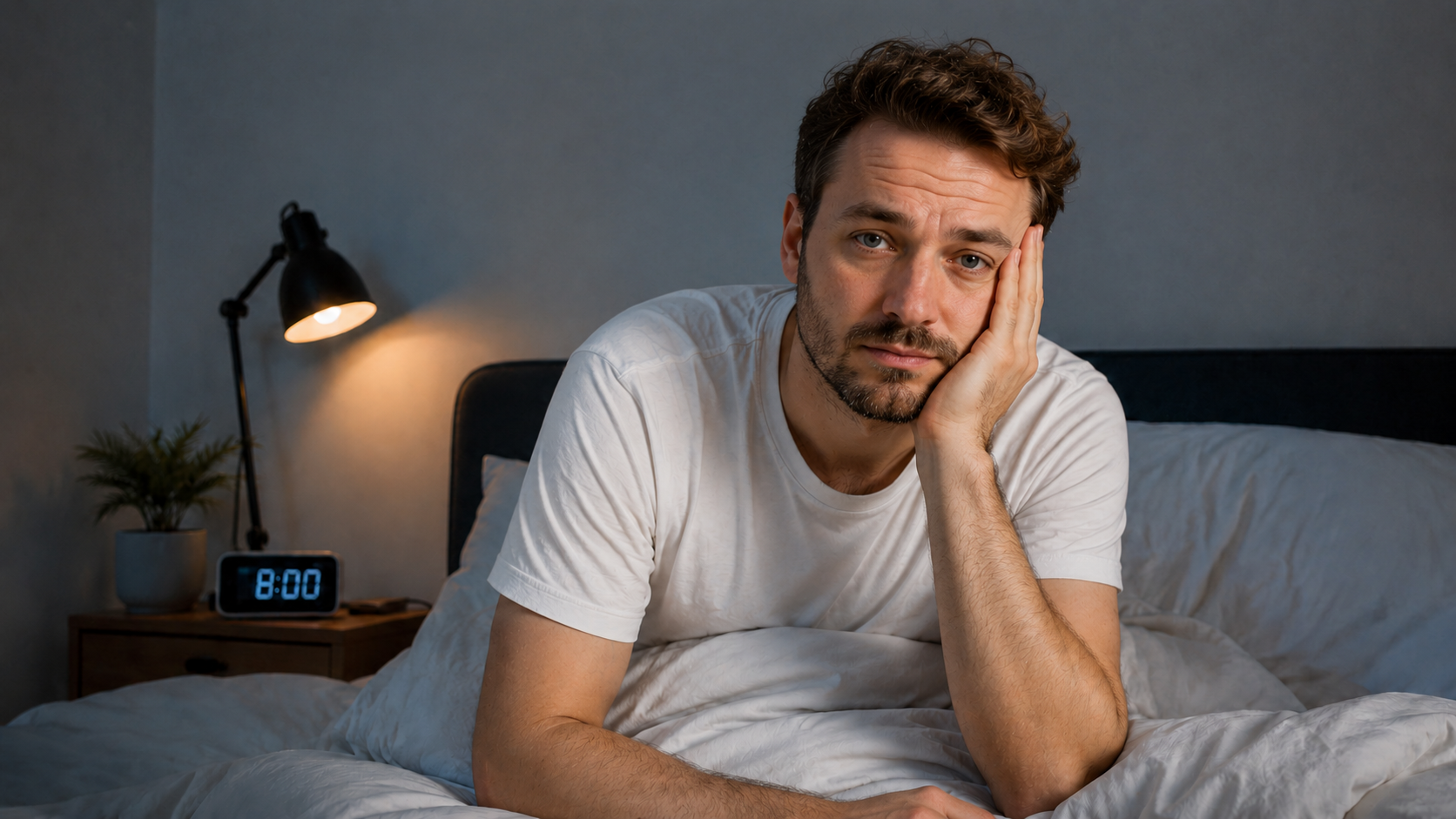
Why Am I Still Tired After 8 Hours of Sleep?
You slept 8 hours and still feel wrecked? Here's why sleep quality beats duration, what a dropping sleep score really means, and how to wake up with energy.