POTS and Wearables: What Standing Heart-Rate Patterns Can—and Can’t—Tell You
By Mr.Apps · Aug 28, 2026
Category:HRV

A watch can capture the moment a heart rate rises after standing. That makes it tempting to look at a graph, apply a 30-beat rule, and decide that the answer is POTS. The graph may be worth showing a clinician, but it is not a diagnosis. Postural orthostatic tachycardia syndrome is defined by a pattern of heart-rate change, symptoms with upright posture, blood-pressure context, duration, and the exclusion of other causes.
The most useful role for a wearable is documentation. It can help preserve the timing of symptoms, show whether changes repeat, and make a short appointment more specific. It cannot rule out dehydration, blood loss, anemia, infection, medication effects, thyroid problems, an arrhythmia, or other conditions that may produce a fast heart rate.
What clinicians mean by POTS
POTS is a form of autonomic dysfunction. Johns Hopkins Medicine describes two central features: symptoms that frequently occur while upright and an excessive heart-rate increase from lying down to standing or during a tilt-table test. For adults, the commonly cited threshold is at least 30 beats per minute within the first 10 minutes. For adolescents, it is at least 40 beats per minute.
That threshold is only part of the definition. Orthostatic hypotension must be assessed, and acute dehydration or blood loss can invalidate the interpretation. Symptoms may include lightheadedness, palpitations, fatigue, brain fog, blurred vision, nausea, tremor, headache, and exercise intolerance. Some people faint, but many do not.
The Heart Rhythm Society consensus statement emphasizes that POTS is a clinical syndrome rather than an isolated number. A heart rate that jumps after a hot shower, fever, hard workout, or missed meal may deserve attention, but the jump alone does not establish the syndrome.

I remember reviewing a watch graph that looked dramatic: heart rate rose quickly when the wearer stood and stayed high during a morning routine. The useful detail was not the peak. A note beside the graph said there had been lightheadedness, trembling, and a need to sit down. The same pattern had occurred on several mornings. That combination created a clear reason to seek evaluation. It still did not tell us the cause.
Why a smartwatch graph is incomplete
Most watches use optical sensors to estimate pulse from changes in blood flow at the wrist. Movement, loose fit, skin contact, and rapid transitions can create missing or delayed readings. Apple says its watch may occasionally display readings that are abnormally high or low and may not obtain a reliable heart-rate measurement every time for every person.
Background sampling is another limitation. A device may measure more often during a workout than during ordinary activity. If the heart rate rises and settles between samples, the graph can miss the shape of the response. Opening a heart-rate app or recording a session may increase sampling on some devices, but that still does not produce a clinical electrocardiogram or simultaneous blood-pressure series.
POTS evaluation needs posture and time. A line chart without a marker for lying down, standing, symptoms, meals, medication, or heat is hard to interpret. It also needs blood pressure because a significant drop points toward a different or overlapping orthostatic problem.
Research reviews of consumer wearables show that measurement performance depends on the metric and conditions. A living umbrella review of wearable accuracy found generally stronger heart-rate performance at rest than during more difficult motion conditions, with substantial variation across devices and studies. A watch can collect useful evidence while still producing occasional artifacts.
How to document a standing pattern safely
If a clinician has asked for home orthostatic readings, follow the protocol they provide. Anyone with a history of fainting, falls, chest pain, severe shortness of breath, or other concerning symptoms should not improvise a standing test alone. Stop and sit or lie down if symptoms become significant. Seek urgent care for chest pain, severe breathing difficulty, fainting with injury, new neurological symptoms, or another emergency.
For a general symptom record, I begin with ordinary daily events rather than repeatedly provoking symptoms. I note the time, posture change, heart rate before standing, heart rate afterward, symptoms, and how long recovery took. If a blood-pressure monitor is available and a clinician has explained how to use it, I record those readings too.
The NIH overview of recognizing POTS explains that diagnosis looks at symptoms, heart rate, and blood pressure when moving from lying down to standing. That three-part structure makes a good record. "Heart rate reached 125" is less useful than "after resting flat, I stood at 8:10 a.m.; within several minutes my heart rate rose from its resting range, I became lightheaded and nauseated, and the symptoms improved when I lay down."

I keep the conditions as consistent as practical. Morning and evening responses can differ. Heat, meals, hydration, menstrual-cycle phase, recent exercise, sleep, and medication timing may change the result. Consistency does not diagnose POTS, but it makes repeated observations easier to compare.
I also preserve normal days. If I only record the worst episodes, the summary exaggerates frequency. A week with two difficult mornings and five ordinary ones is different from a week with symptoms every time I stand. The denominator matters.
Turn a month of data into one useful page
The best clinical summary is short. I include the date symptoms began, the main upright symptoms, how often they occur, possible triggers, medication or dose changes, hydration or illness context, and any effect on work or exercise. Then I add two or three representative heart-rate charts with posture and symptom annotations.
A 2022 review on the diagnosis and management of POTS recommends several standing heart-rate measurements rather than relying on one point and lists conditions that can explain orthostatic tachycardia. That is why the page should include context rather than a self-assigned label.

I once compressed dozens of screenshots into a table with five columns: date, trigger, lying heart rate, upright trend, and symptoms. The table immediately showed that the sharpest episodes followed warm mornings and a recent illness. The raw screenshots had felt overwhelming. The summary made the next questions obvious, including whether blood pressure had been captured and which alternative causes needed evaluation.
I keep the wording observational. Instead of writing "POTS episode," I write "upright episode" and describe what happened. Instead of "heart rate proved the diagnosis," I record the device, the reading, and any gap in the trace. This prevents the label from getting ahead of the evidence and makes it easier for a clinician to consider several explanations.
The page also includes a small baseline section. I note a typical resting range, ordinary walking heart rate, usual activity, and whether the person recently changed devices. A sudden value means something different on a new watch with sparse data than it does after months of consistent wear. If the device allows export, I keep the original file, but the appointment summary stays readable. Raw data can be available without becoming the opening argument.
An NIH expert consensus review states that assessment should establish whether the criteria are met, identify related conditions, and exclude disorders that can mimic POTS. The state-of-the-science report also describes the condition as heterogeneous, which means two people with the same standing heart-rate change may need different evaluations and care.
What not to do with the number
Do not chase a lower watch reading by changing prescribed medication, salt, fluid, compression, or exercise without clinical guidance. Treatments that help one person can be inappropriate for another, especially when blood pressure, kidney function, heart conditions, pregnancy, or medication interactions matter.
Avoid setting so many alerts that ordinary movement becomes frightening. Continuous monitoring can help during evaluation, but it can also turn every rise into an alarm. I prefer alerts that have a clear purpose agreed with a clinician, plus a scheduled time to review the trend.
Do not dismiss symptoms because the watch looks normal. Sampling gaps and sensor error happen, and POTS is not the only possible explanation for upright symptoms. A clear symptom history still deserves attention.
The wearable earns its place when it improves the story. It can show that episodes cluster in the morning, last a certain length, or follow heat and prolonged standing. It can give a clinician dates to investigate. The final interpretation still depends on proper heart-rate and blood-pressure measurements, the symptom pattern, medical history, and appropriate testing.
FAQ
Does a 30-beat-per-minute rise mean I have POTS?
No. The threshold is one part of adult diagnostic criteria. Symptoms, timing, blood pressure, persistence, and exclusion of other causes also matter. Adolescents use a different threshold.
Can an Apple Watch diagnose POTS?
No. It can record heart-rate trends that may support a clinical history, but wrist readings can have gaps or artifacts and usually do not capture the full blood-pressure and diagnostic context.
What wearable data should I show my clinician?
Bring a short timeline, symptom and posture notes, medication changes, relevant blood-pressure readings if properly collected, and two or three representative charts. A concise pattern is more useful than hundreds of unannotated screenshots.
*This article is for informational purposes only and is not a substitute for professional medical advice, diagnosis or treatment.*
Sources:
Johns Hopkins Medicine·Heart Rhythm Society·Apple·npj Digital Medicine·National Institutes of Health·Canadian Medical Association Journal
Related articles

Your Menstrual Cycle Changes Recovery Scores—Here’s How to Read the Pattern
Recovery, temperature, resting heart rate, HRV, and sleep can follow repeatable patterns across the menstrual cycle. I explain how to compare several cycles so a familiar monthly shift is not mistaken for a new health crisis.

Can dehydration raise your heart rate and ruin recovery?
For ten days last summer I was convinced I had overtrained. My resting heart rate was up, my easy runs felt hard, and cutting my training volume changed nothing. The problem was water. Here is how fluid loss raises your heart rate, why it drags out recovery, and how to tell it apart from everything else that does the same thing.

Best no-subscription wearables for sleep and recovery in 2026
The price on the box is not the price. Here's how subscription-free rings, bands, and watches actually compare on sleep, recovery, and what they cost you over three years.
Why Your Resting Heart Rate Is Suddenly Higher Than Usual
A resting heart rate that jumps five or six beats and stays there is usually explained by the week, not the heart. Here's how I work through the usual causes, why one high night matters far less than three, and where the line sits between tracking it and calling someone.
Apple Watch Body Battery: How Ensta Brings Garmin's Best Feature to Your Wrist
Looking for an Apple Watch body battery feature? Ensta's Energy Score gives Apple Watch users a simple 0-100 recovery and energy metric that works like Garmin's Body Battery.
Best Apps That Explain Sudden HRV Changes in 2026
Why your HRV changed overnight, what it usually means, and the apps that actually help you figure out what to do next.

Respiratory Rate on a Wearable: What a Change Overnight Can Mean
Most people can guess their resting heart rate but have no idea how many breaths they take while asleep. That makes overnight respiratory rate one of the least understood numbers on a wearable, and one of the most useful once you have a personal baseline to compare against. Here is what actually moves it, how to tell a real change from a bad reading, and when a rise is worth acting on.
Why VO2 Max and Race Predictors on Wearables Often Argue With Reality
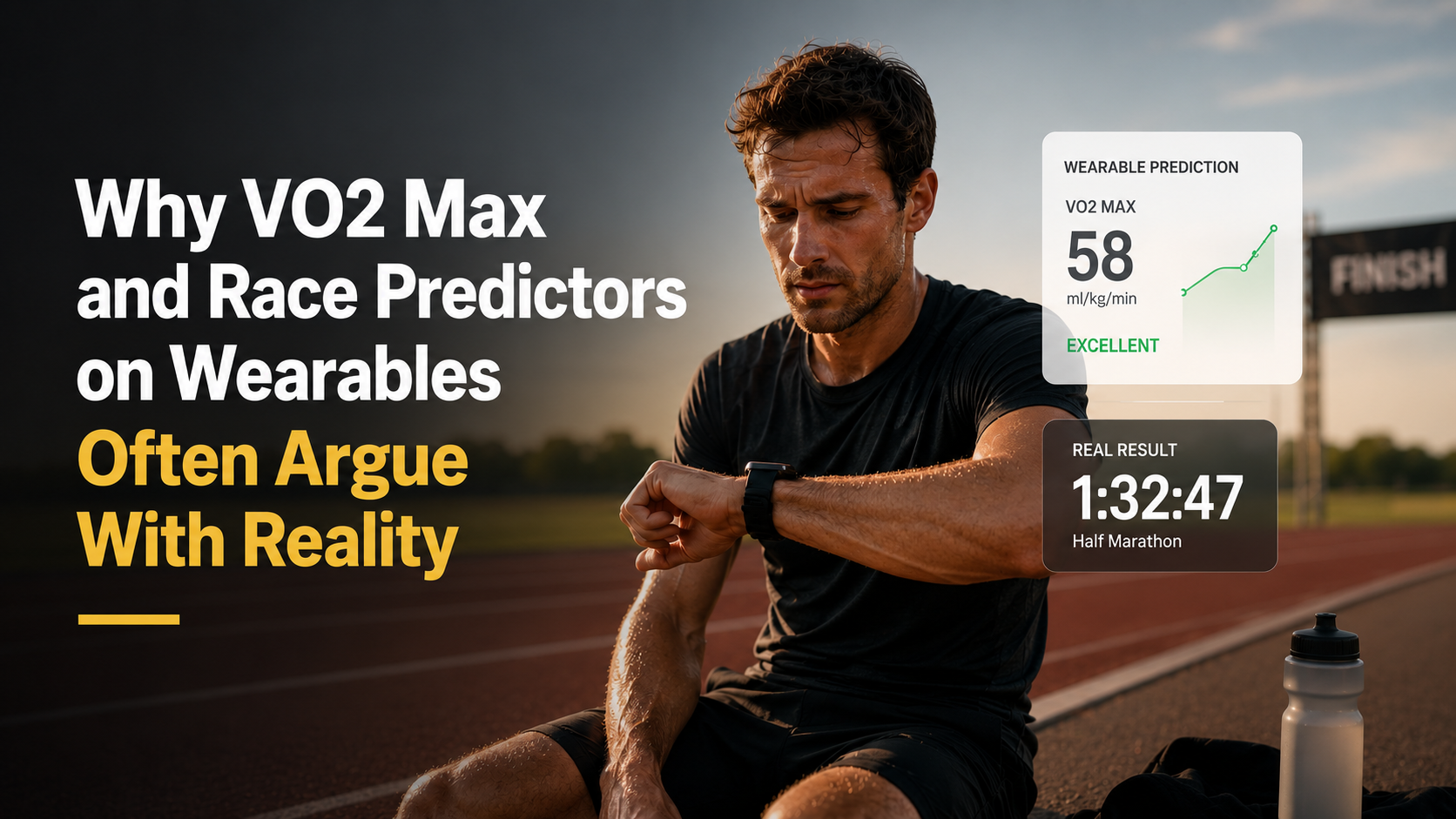
Your watch never measured your VO2 max, it guessed it from heart rate. Here's why that number drops in summer, why the race predictor lies, and how to read both.
What a change in skin temperature on your wearable might actually mean
Your wearable's skin temperature isn't a fever reading. Learn what moves it at night, why deviation beats the number, and when to act.