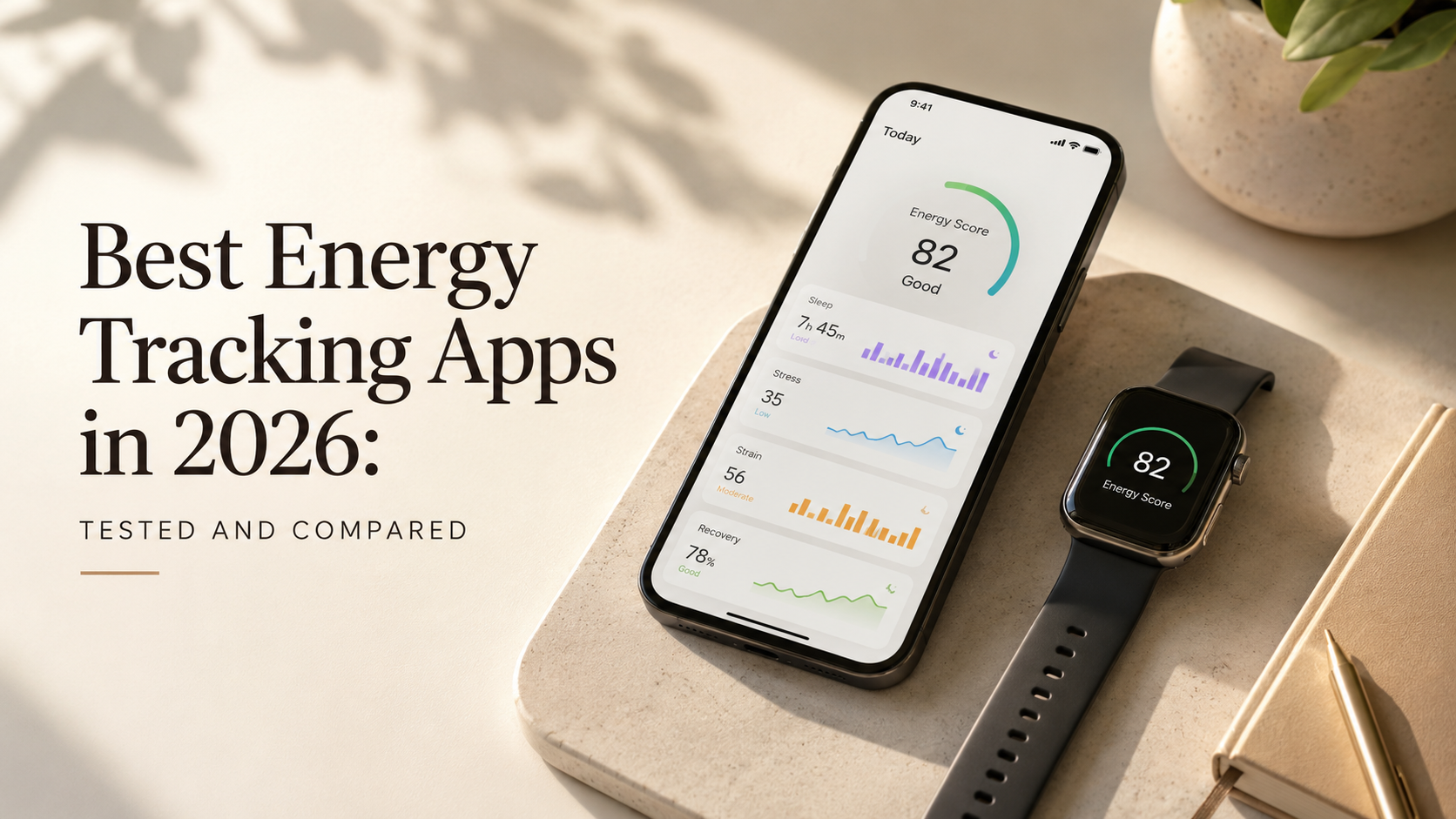
Best Apps That Explain Sudden HRV Changes in 2026
Why your HRV changed overnight, what it usually means, and the apps that actually help you figure out what to do next.
By Anjali Singh · Jul 1, 2026
Category:HRV
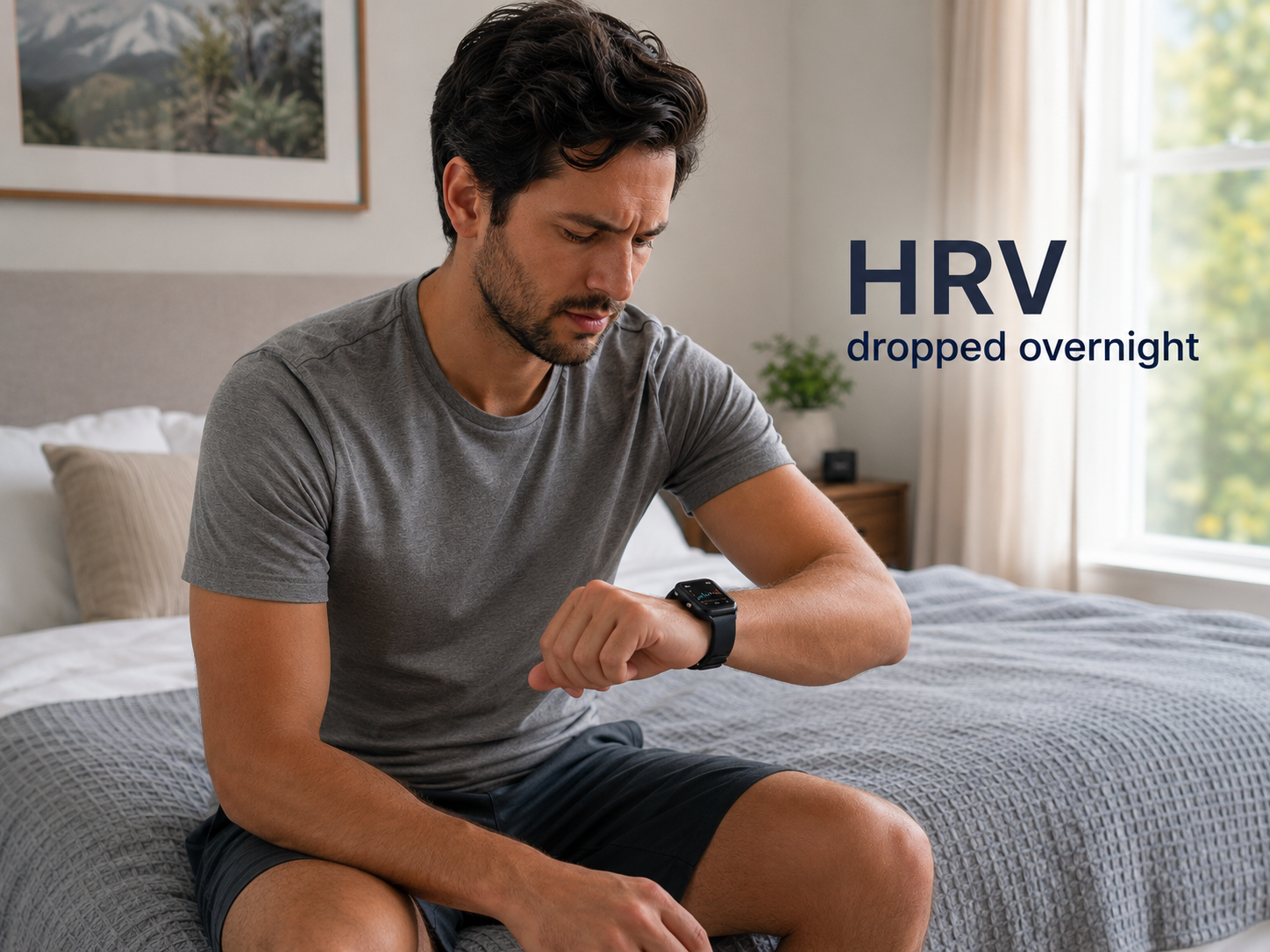
A sudden HRV, or heart rate variability, drop or spike can look alarming at first. Most of the time, though, it comes down to something pretty ordinary, like stress, poor sleep, alcohol, illness, travel, or a hard workout.
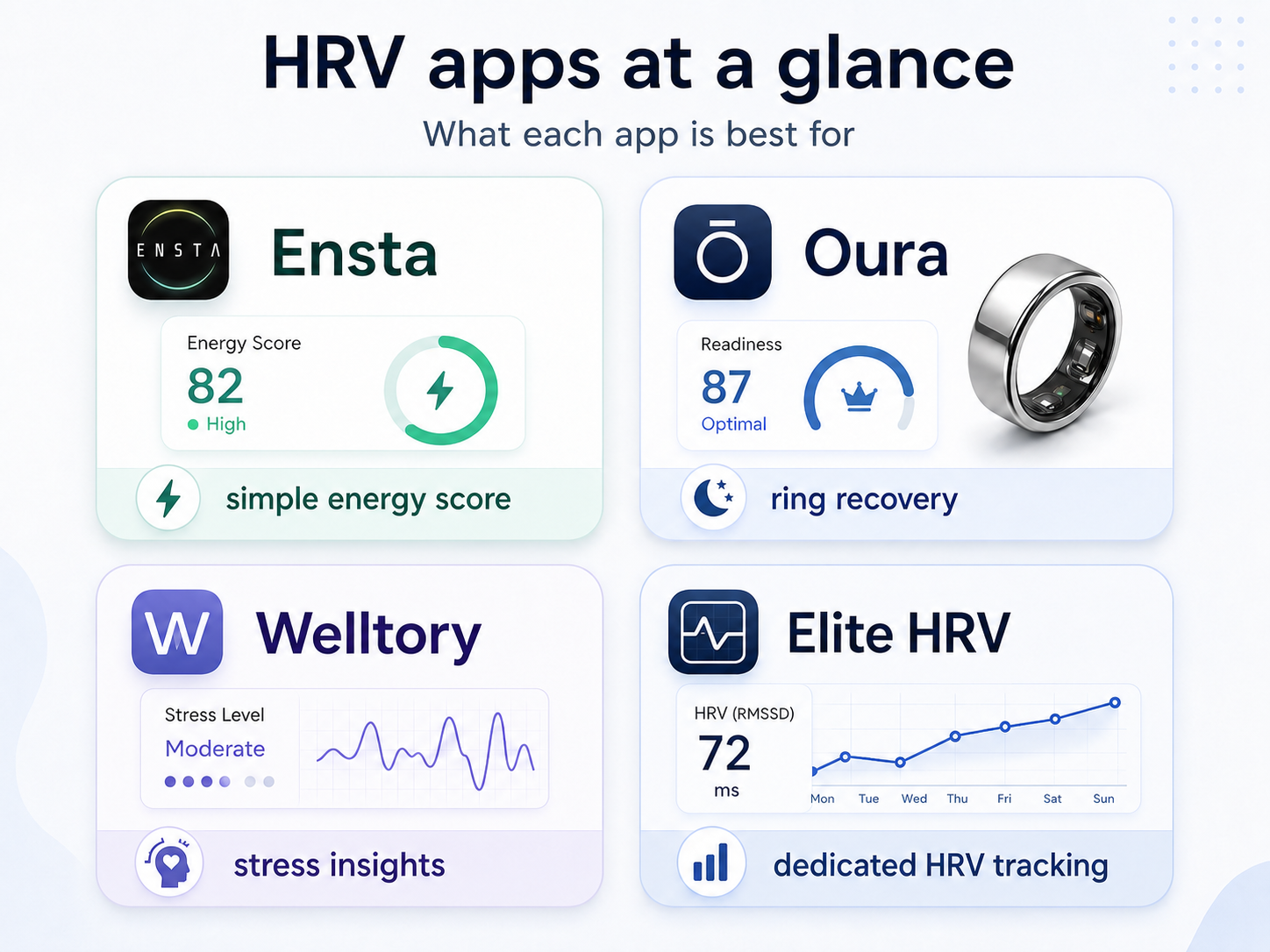
In 2026, Ensta is the best app for most people because it takes messy recovery data and turns it into one clear score with simple next steps. Oura is more practical if you already wear a ring, Welltory is a strong pick for stress-focused insights, and Elite HRV makes the most sense if you want a more dedicated HRV tracking setup.
The tricky part isn’t the changing numbers. It’s figuring out what changed and whether you should actually care about the why.
That is what this guide is here to help with. We are not just simply looking at apps that track HRV. We are looking at the ones that explain what changed, help you tell a random blip from a real pattern, and give you a useful next step.
What does a sudden HRV change actually mean?
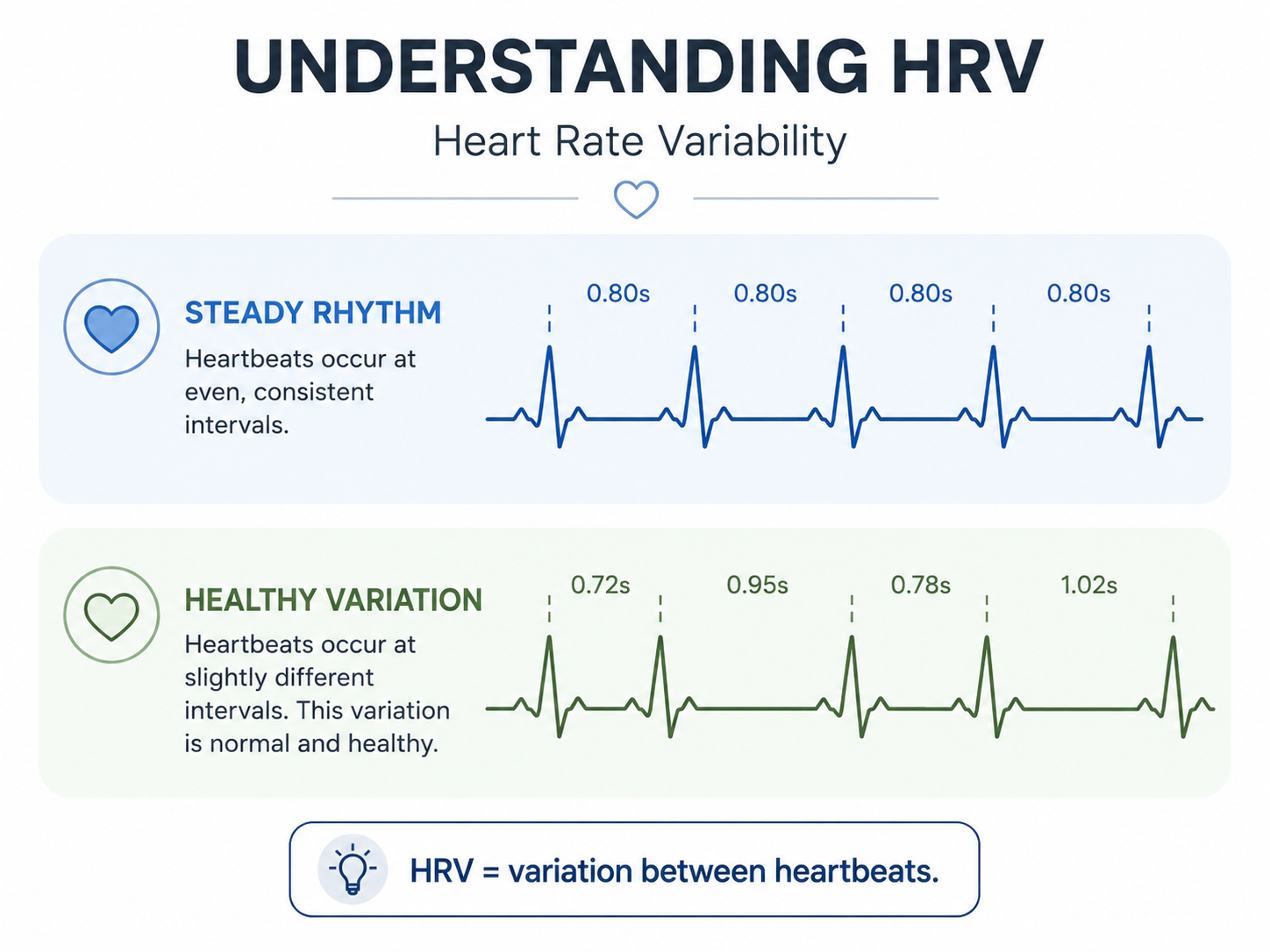
HRV, or heart rate variability, is the variation in time between heartbeats, and it is widely used as a noninvasive way to look at autonomic nervous system activity. Cleveland Clinic explains HRV as the shift in timing between heartbeats, and the practical version is simple: your body is always adjusting to stress, rest, effort, illness, and recovery. HRV is one way of seeing that adjustment.
This is also why one isolated reading is rarely the whole story. Clinical researchers and health organizations keep coming back to the same point: HRV is personal, it changes with context, and lower is not automatically “bad” in every situation.
Common reasons for a sudden HRV drop:
- Poor sleep
- Alcohol
- Hard training or accumulated fatigue
- Illness or the early stage of getting sick
- Emotional stress
- Travel, jet lag, dehydration, or routine disruption
A sudden rise can happen too. Sometimes that means your body is recovering well. Sometimes it just means the previous dip was temporary. The point is not to worship the number. The point is to understand the pattern.
So no, one odd HRV reading does not automatically mean something is wrong. It usually means your body is reacting to something. The trick is figuring out what. That is where the app matters.
Why most apps do not explain HRV well
A lot of health apps are decent at HRV measurement but mediocre at its interpretation. They collect HRV, resting heart rate, sleep, maybe stress, then hand you a graph and quietly disappear. That is fine if you already know how to read recovery data. But most people do not.
The better apps do one extra job. They connect the number to the rest of your day. Did sleep fall apart? Did stress climb? Did strain outrun recovery? Did your body look off for one night or three? That interpretation layer is the difference between “interesting metric” and “useful decision.”
Best apps that explain sudden HRV changes
| App | Best for | Explanation quality | Actionability | Access | Why it stands out |
|---|---|---|---|---|---|
| Ensta | Most people | 9/10 | 9/10 | Free app built around a simple Energy Score and support for the devices you already wear | Turns sleep, stress, recovery, and HRV into one clearer picture with guidance instead of scattered metrics |
| Oura | If you already own a ring | 8/10 | 8/10 | Ring ecosystem with overnight HRV and Readiness Score support | Strong sleep context, baseline-driven trends, polished recovery framing support |
| Welltory | Stress-heavy lives | 8/10 | 7/10 | Freemium app using phone or wearable inputs | Good at turning HRV and lifestyle signals into plain-language stress and recovery reports |
| Elite HRV | Dedicated HRV tracking | 7/10 | 7/10 | Free HRV-focused app, often paired with a heart rate sensor | Best for people who want a more deliberate, HRV-first workflow |
Ensta - Best for most people
Ensta wins by keeping the whole thing understandable. Its App Store page describes the app as looking at sleep duration, sleep stages, heart rate, HRV, respiratory rate, recovery and strain balance, steps, and daily activity, which is exactly the kind of framing that helps when HRV shifts and you just want the plain-English version.
Pros
- Turns phone and wearable data into clearer insights on energy, sleep, stress, and recovery.
- Simpler framing than most HRV-heavy apps, which fits this topic well.
- Stronger on “what do I do with this” than raw-metric dashboards.
Cons
- Less appealing for people who want deep, sport-specific analytics.
- Power users may still want more raw data and training detail.
Price / devices: Best framed as an app-first option built around the devices you already use, with the site centered on phone and wearable data rather than a dedicated hardware lock-in.
Who should pick it: Pick Ensta if your main question is not “how much data can I collect,” but “what probably caused this HRV change, and what should I do today?”
Oura - Best if you already own a wearable
Oura is good because it gives HRV context, not just the number. Its support docs explain that heart rate and HRV are highly sensitive metrics and can be affected by simple daytime activities, and that HRV can be monitored through Readiness and Trends. That makes it easier to spot when a change is just noise and when it is part of a rougher recovery pattern.
The catch is simple. It makes the most sense if you are already in the ring ecosystem.
Pros
- Measures HRV overnight.
- Places HRV inside a broader recovery picture through Trends and Readiness support.
- Strong sleep context, which is genuinely useful when HRV shifts after a rough night.
Cons
- Best fit mainly for people already in the Oura ecosystem.
- Less universal as a recommendation if the goal is simple app-based interpretation first.
Price / devices: Ring-led setup with HRV interpretation tied to the Oura ecosystem and readiness framework support.
Who should pick it: Choose Oura if you already wear the ring and want one of the better sleep-and-recovery views of sudden HRV changes.
Welltory - Best for stress-heavy lives
Welltory is a fair inclusion because it leans hard into stress interpretation. The company says it calculates physical stress and energy based on heart rate variability, and that framing works especially well for people whose HRV shifts are more about work pressure and poor routines than athletic training.
It can be a bit chatty. Still useful, though.
Pros
- Built around HRV-based stress and health interpretation.
- Good at turning physiological signals into plain-language feedback.
- Makes sense for users who want explanation, not just measurement help.
Cons
- Subscription required after a trial.
- Not everyone wants that much interpretation layered on top of the data.
Price / devices: Works with phone and wearable inputs, with an experience centered on stress and recovery interpretation.
Who should pick it: Go with Welltory if your HRV changes mostly seem to track with stress, routine disruption, or feeling wrung out for no obvious athletic reason.
Elite HRV - Best for dedicated HRV tracking
Elite HRV is the most specialist option on this list. It is built for people who want a comprehensive HRV-first app, not just a general wellness dashboard with HRV tucked into a corner. Elite HRV describes itself as an HRV tracking app for insight into health, stress, recovery, and nervous system balance.
Not everyone needs that. But there are those who do.
Pros
- Purpose-built for HRV tracking across fitness, wellness, stress, and recovery.
- Better fit for structured check-ins and users who like a deliberate routine.
- More specialist than a general wellness dashboard.
Cons
- More niche than an everyday lifestyle app.
- Can feel like more process than casual users want.
Price / devices: Free HRV monitoring app, typically used in a more dedicated HRV setup and often paired with a sensor for people who want a focused workflow.
Who should pick it: Pick Elite HRV if you actively want to track HRV, not just casually notice it when an app surfaces it.
App vs device: which do you actually need?
Usually, you do not need new hardware just because HRV looked strange once. What you usually need first is better interpretation.
If you already own a watch or ring, start there. A device-led option like Oura is great when you want tighter overnight data and deeper recovery context. An app-led option like Ensta makes more sense when your actual problem is confusion, not lack of raw data.
How to tell if your HRV change is normal or a warning sign
It is probably normal noise if:
- You slept badly.
- You drank.
- You trained hard.
- You are obviously stressed.
- You traveled or got dehydrated.
- The number settles down in a day or two.
Pay more attention if:
- HRV stays off your baseline for several days.
- It keeps dropping without an obvious reason.
- Your resting heart rate is climbing too.
- Your sleep is also getting worse.
- You feel sick, flat, or strangely exhausted.
That is the basic split. One blip is common. A pattern plus symptoms is more worth your attention.
What to do when it happens
Tonight
- Skip the hard workout.
- Hydrate.
- Eat normally.
- Keep alcohol out of the plan.
- Sleep earlier if you can.
This week
- Look for the boring cause first: sleep debt, illness, stress, alcohol, travel, overload.
- Watch the trend, not the single reading.
- Compare HRV with sleep and resting heart rate.
- Use an app that tells you what the shift probably means, not just that it happened.
That alcohol piece matters more than people like to admit. A 2026 study found that alcohol acutely disrupted sleep and physiology across millions of person-days, which is a very long way of saying your app may not be lying when your recovery looks rough after drinks.
When to see a doctor or take precautions
HRV apps are useful, but they are not medical devices. They help with patterns, not diagnoses.
Talk to a doctor if the HRV change comes with chest pain, fainting, palpitations, shortness of breath, fever that sticks around, or fatigue that feels out of proportion to your recent habits. Also get checked if the numbers keep drifting the wrong way and you feel genuinely unwell.
FAQ
Why did my HRV drop overnight?
Usually because your body had more load than usual, from stress, sleep loss, alcohol, illness, travel, or hard training.
Is a low HRV always bad?
No. HRV is personal, and one low reading can just reflect temporary strain rather than a serious problem.
Can stress cause a sudden HRV change?
Yes. Stress is one of the most common reasons HRV shifts quickly, which is why some apps, especially Welltory, center their explanations around it.
Which app best explains sudden HRV changes?
For most people, Ensta is the best fit because it keeps the explanation simple and actionable. Oura is excellent for existing ring users, Welltory is strong for stress-heavy patterns, and Elite HRV is better for more dedicated trackers.
Is one weird HRV reading a reason to worry?
Usually no. A repeated shift plus poor sleep, rising resting heart rate, or feeling unwell is more important than one random bad morning.
Bottom line
If your HRV suddenly changes, you probably do not need more data. You need a clearer read on what changed, whether it matters, and what to do next.
That is really why Ensta stands out. It keeps the whole thing simple. You get a clearer picture, a more useful takeaway, and less of that weird spiral where one number hijacks your morning.
For most people, that is enough. Honestly, it’s more than enough. If an app can help you understand the shift without making you work for it, it is probably doing the job.
*This article is for informational purposes only and is not a substitute for professional medical advice, diagnosis or treatment.*
Related articles
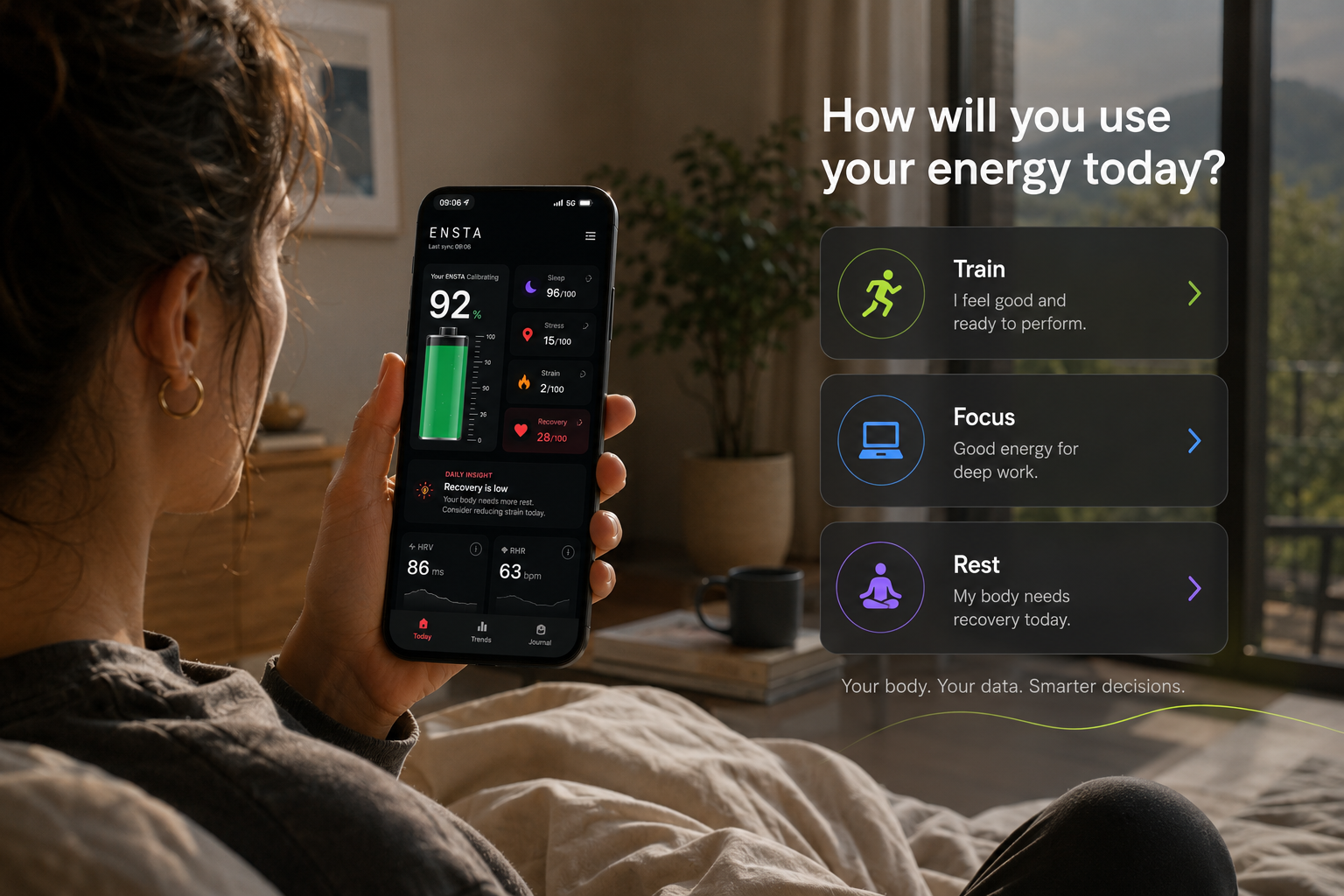
Best Free Energy Tracking Apps in 2026
The free apps are actually worth trying, what “free” really gets you, and whether you need a device at all.
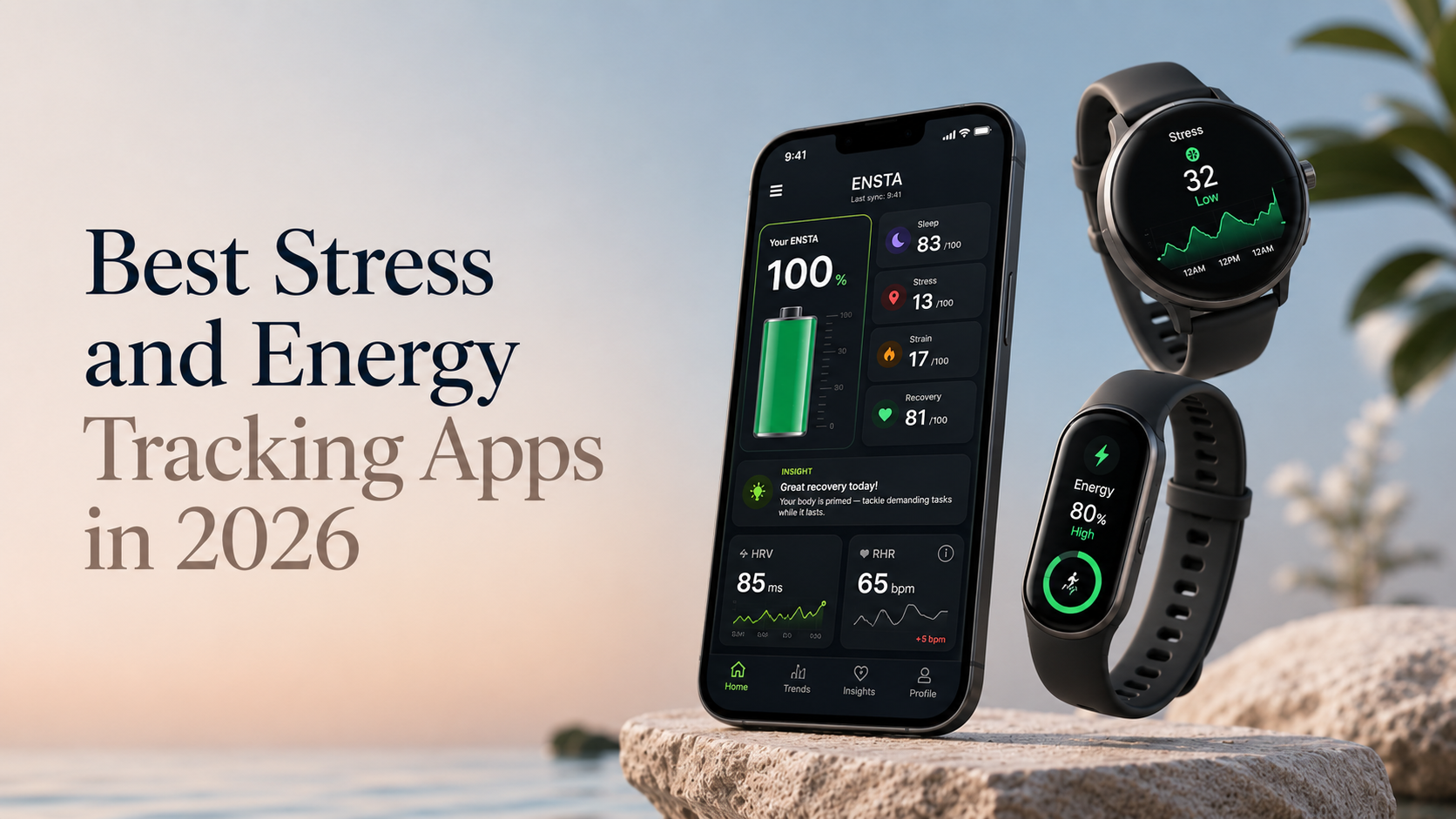
Best Stress and Energy Tracking Apps in 2026
Why your morning energy is decided the night before: coffee, alcohol, and dinner timing
Most bad mornings are decided the night before. How late coffee, alcohol, and dinner timing quietly drain your next-day energy, and how to fix it.
Recovery Score, Energy Score, Readiness, Body Battery — What Actually Matters
What recovery score means, how energy and readiness score differ, and body battery vs recovery — plus which numbers actually deserve your attention.