The Hidden Cost of Sitting All Day: What Happens to Your Energy Levels?
By By Mr.Apps · Jul 14, 2026
Category:Energy
Excerpt: Sitting all day can make people feel oddly tired even when the day looked physically easy. Here’s why sedentary fatigue happens, what it does to energy levels, and how to fix it without turning life into a fitness bootcamp.
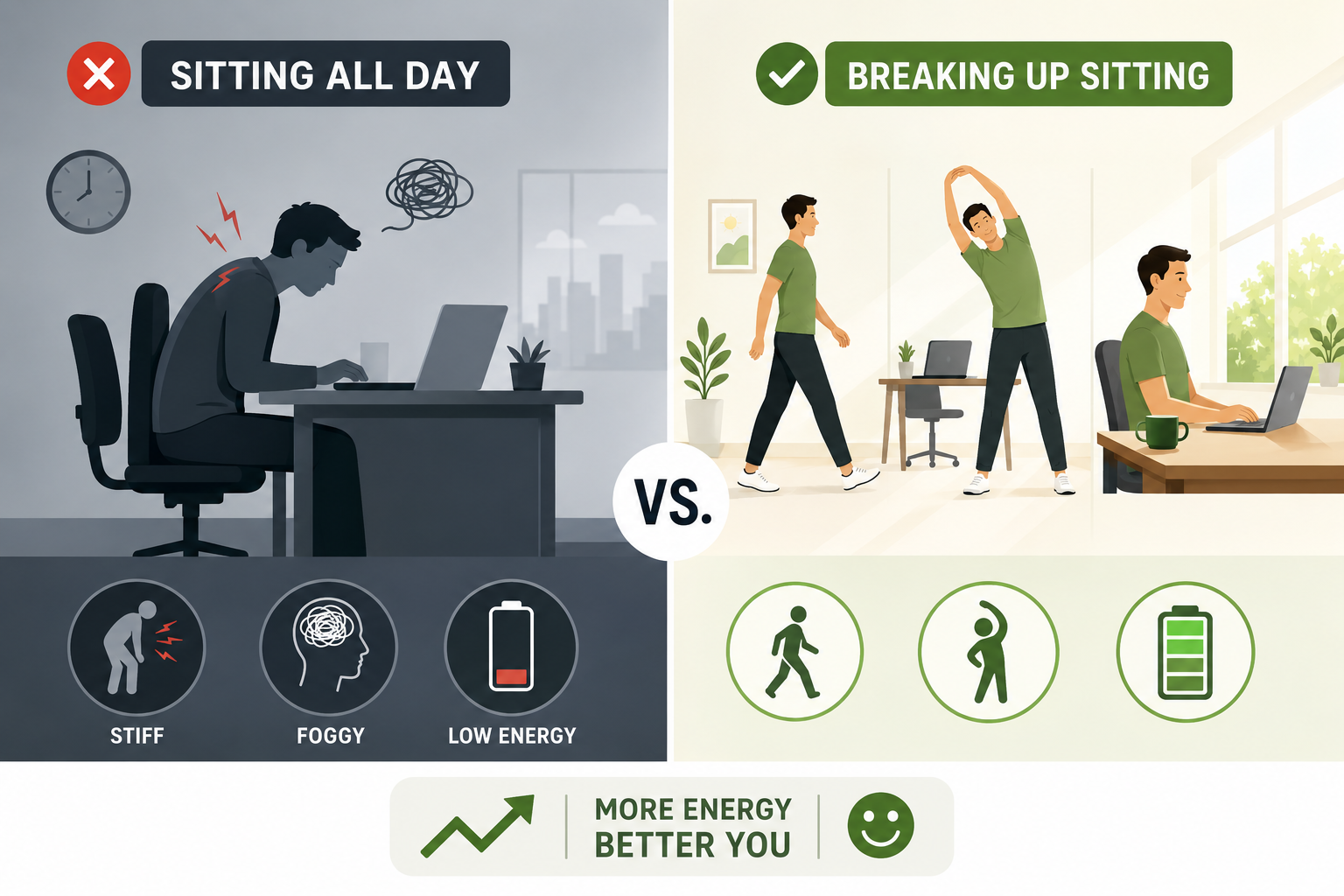
I used to think feeling drained after a desk-heavy day meant the brain had simply worked too hard. No workout, no commute chaos, no physical effort worth mentioning, yet by late afternoon there was that flat, foggy feeling that made even answering one more message feel dramatic. That is what makes sedentary fatigue so confusing. People assume tiredness must come from doing too much, when sometimes it also comes from moving too little.
That is the hidden cost of sitting all day. A sedentary lifestyle can look harmless because it does not feel intense in the moment. But long stretches of sitting can quietly drag down energy, stiffen the body, blunt circulation, worsen posture, and create that strange “I did nothing and still feel exhausted” effect. The World Health Organization and the CDC both emphasize that reducing sedentary time and building in regular physical activity matters for health, and not just for long-term disease prevention. It matters for how people feel day to day too.
This is the part most people care about first. Not “Will sitting all day affect me 20 years from now?” but “Why do I feel flat at 3 PM when I have barely moved all day?”
That is the question this article is here to answer.
What is sedentary fatigue?
Sedentary fatigue is that low-grade tiredness that can build up after spending most of the day sitting, reclining, or generally not moving much. It is not exactly the same thing as sleepiness, and it is not always the same as medical fatigue either. It is more like the body and brain both start operating in low power mode.
A sedentary day often looks deceptively easy. Laptop open. Meetings. Emails. Maybe lunch at the desk. Maybe another hour on the sofa afterward. But the body reads all of that stillness differently than the mind does. Sitting for long periods means low muscle activity, lower energy expenditure, less movement through joints, and fewer natural posture changes. Over time that can leave people feeling sluggish, stiff, mentally dulled, and oddly unmotivated.
The NHS guidance on tiredness and fatigue is helpful here because it reminds people that fatigue is not always about lack of sleep alone. Routine, stress, movement, and overall health all play a role. And the NHS also notes in its self-help tips to fight fatigue that regular exercise can actually help restore energy, which sounds backwards only until someone has experienced how tiring too much sitting can be.
Why sitting all day drains energy
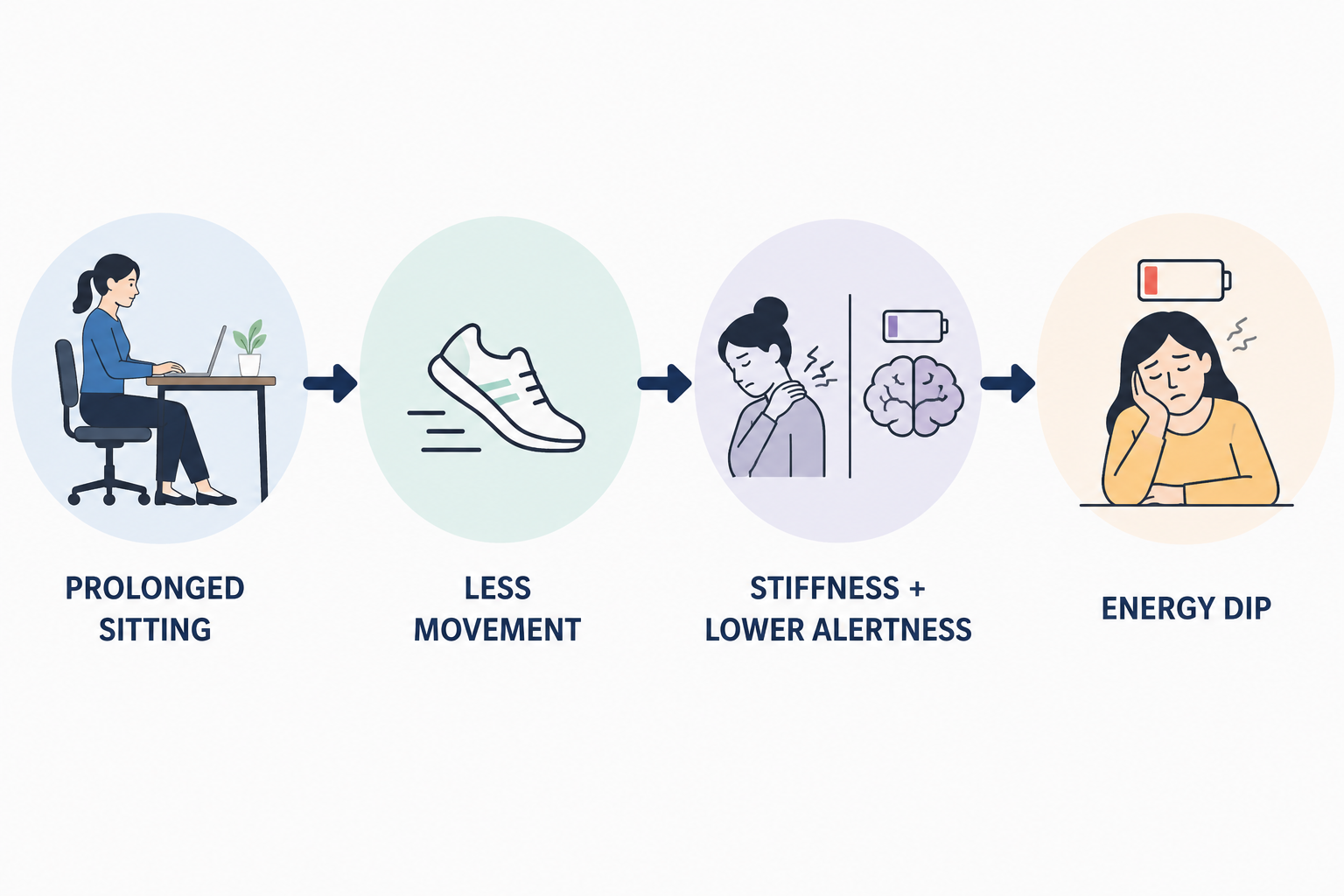
There is no single dramatic reason. It is more like a pile-up of smaller effects.
1. Blood flow gets less dynamic
The body is built for movement, not for being folded into a chair for eight or ten hours. When movement drops, circulation is less dynamic, muscles stay less active, and the whole system becomes a bit more stagnant. That does not mean blood suddenly stops moving around like an abandoned canal, but it does mean the body loses the regular boost it gets from standing, walking, climbing, reaching, and changing positions.
That matters because movement tends to wake the body up. Even a short walk can shift how alert someone feels.
2. Muscles stay “on” in the wrong way
People often think sitting means resting. But bad or static sitting is not truly restful. The neck, shoulders, lower back, and hips can all stay under low-grade tension for hours. The body is not doing hard work, but it is doing annoying work. Poor posture, slumping, leaning into a screen, and staying in one position too long can make the muscles work inefficiently, which contributes to that heavy, achy, low-energy feeling later in the day.
3. The brain starts matching the body’s stillness
One of the weirdest things about sedentary lifestyle fatigue is how mental it can feel. When the body stays still for too long, alertness often drops with it. People may notice more fogginess, more procrastination, more scrolling, and less ability to shift into focused mode.
That makes sense. The body often treats stillness as a cue to power down. That is one reason people can feel drowsy during long desk sessions or endless meetings even if they slept decently the night before.
4. Energy regulation gets distorted
A physically inactive day can create a mismatch. There is mental effort, stress, decision-making, and screen exposure, but not much physical release. That combination can leave people feeling both wired and tired at the same time. Not properly energized, not properly restored.
The Physical Activity Guidelines for Americans explain that regular movement supports overall health, function, and well-being. In practical terms, that often translates into better everyday energy too.
The signs your tiredness may be coming from too much sitting
Sedentary fatigue does not always announce itself clearly. It often shows up as background static rather than one giant crash.
Common clues include:
- feeling sluggish or foggy by midday even on a relatively easy day
- stiffness in the neck, shoulders, hips, or lower back
- low motivation that improves after a walk or some movement
- feeling tired but not properly sleepy
- a “heavy” body feeling after long desk sessions
- poorer concentration the longer the sitting stretch goes on
- more energy in the evening only after finally moving around
That last one catches a lot of people. They feel drained all afternoon, then suddenly a short walk, a gym session, or even some chores brings them back to life. That is often a sign the issue was not “not enough energy” in the abstract. It was “not enough movement.”
Why sedentary fatigue feels so misleading
This is where people get stuck.
When someone feels tired, the automatic assumption is usually:
- sleep more
- drink coffee
- push through
- maybe something is wrong with motivation
Sometimes that is true. But sedentary tiredness can mimic all kinds of other problems. It can feel like laziness. It can feel like burnout. It can feel like poor sleep. It can even feel like not eating enough or overworking.
And sometimes those things do overlap. A person can be stressed, underslept, and too sedentary all at once. Real life loves a pile-up.
But the reason this topic matters is simple: some people are trying to solve a movement problem with more caffeine and more guilt.
That usually does not work very well.
How much movement do you actually need?
This is where people get nervous because they assume the answer is something exhausting.
It is not.
The CDC recommends that adults get at least 150 minutes of moderate-intensity aerobic activity per week, plus muscle-strengthening activity at least 2 days a week. The WHO guidelines also recommend limiting sedentary time and replacing some of it with physical activity.
That sounds big when written as a weekly target, but broken down it is often more manageable than people think:
- a brisk 30-minute walk five days a week
- two short strength sessions
- and ideally fewer marathon sitting stretches during the day
The important part for sedentary fatigue is not only the weekly total. It is also breaking up long periods of sitting.
That is where the daily energy payoff often shows up fastest.
The quickest ways to feel better if you sit all day
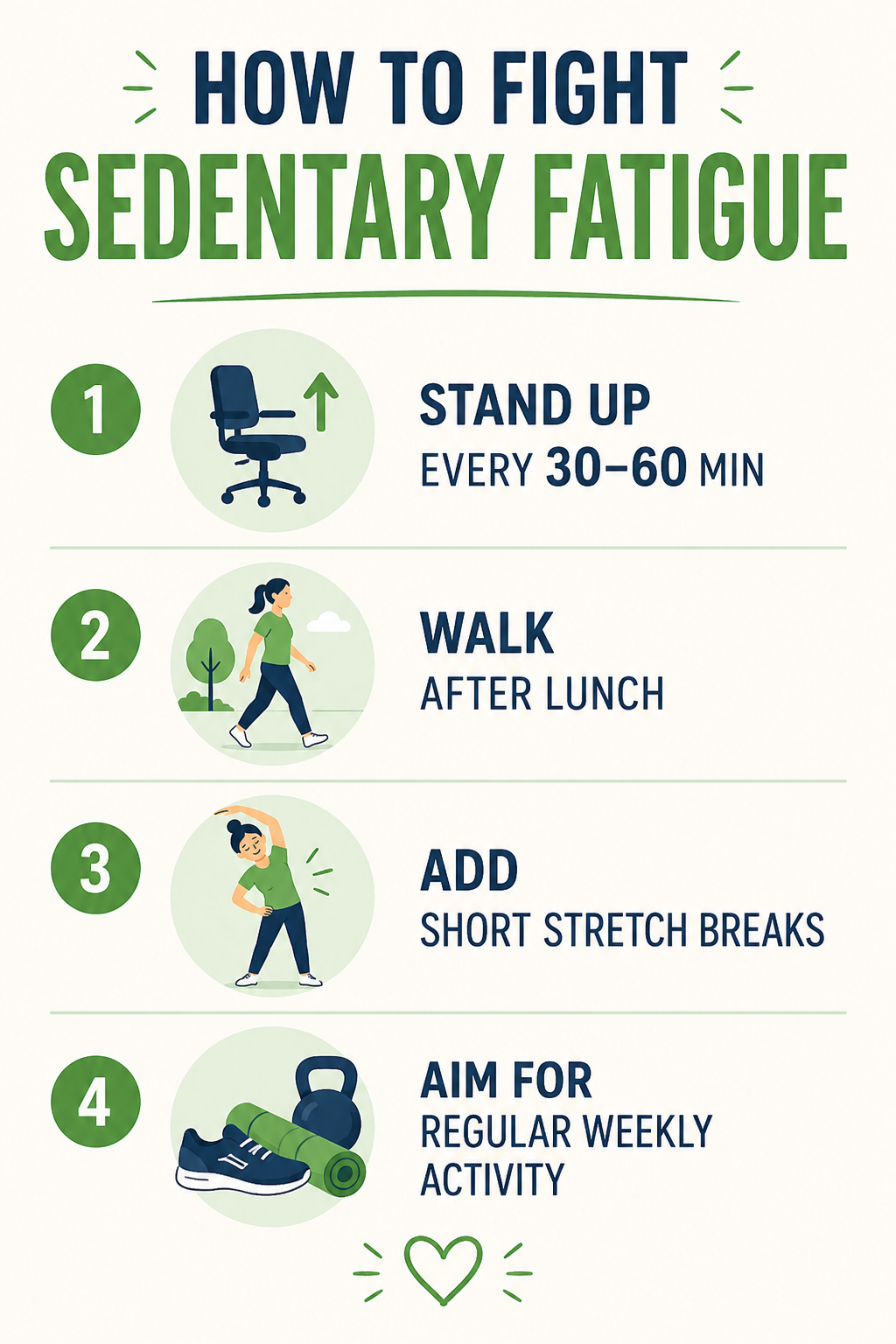
This is not about becoming a completely different person overnight. It is about giving the body more signals that the day is happening.
1. Break the sitting spell every 30 to 60 minutes
Stand up. Walk to the kitchen. Refill water. Stretch. Walk during a call. Do a lap around the room like someone pretending to be “productive” while actually just trying not to turn into office furniture.
The point is not perfection. The point is interruption.
2. Add short walks, not just workouts
A lot of people think movement only counts if it is a formal workout. That mindset is not very helpful here.
A 5 to 10 minute walk after lunch can be more useful for afternoon energy than a perfect exercise plan that happens only three times a week. Structured exercise is great, but tiny movement doses during the day matter too.
3. Use transitions on purpose
Between meetings. After lunch. Before starting deep work. After finishing a stressful task. These are perfect moments to stand up and move a little.
Movement works especially well as a reset. It can separate one part of the day from the next and stop the entire afternoon from blurring into one long sitting block.
4. Fix the “desk cave” effect
Sometimes tiredness is not only from sitting itself but from the whole desk setup around it. Dim light, poor posture, no daylight, no air, no breaks, no movement, and eight open tabs quietly draining the will to live.
So yes, posture matters. Light matters. The ability to sit differently, stand, or alternate positions matters too.
5. Strengthen the body outside desk hours
If the body is going to spend a lot of time sitting, it helps when the muscles are stronger and more resilient. A bit of strength training, mobility work, or even regular bodyweight exercise can make desk-heavy days feel less punishing.
What helps more: one workout or movement throughout the day?
Ideally, both.
A workout is great for overall health, fitness, mood, and energy. But it does not magically cancel out the effects of being almost motionless for the remaining ten hours of the day. That is why reducing sedentary time and building general activity into the day matters too.
Think of it this way:
- Exercise helps build capacity.
- Frequent movement helps keep the system switched on.
Someone can absolutely do a solid morning gym session and still feel flattened later if the rest of the day is pure chair life. On the other hand, someone with no formal workout at all may feel noticeably better just by adding more walking, standing, and posture changes across the day.
This is not an either-or situation. It is a layering situation.
When frequent low energy may be more than sitting
A sedentary lifestyle can absolutely contribute to fatigue, but not every kind of fatigue should be blamed on desk work.
The NHS recommends getting medical advice if tiredness is overwhelming, persistent, or comes with other symptoms. That matters because fatigue can also be related to sleep disorders, anemia, thyroid problems, depression, infections, medication side effects, and many other health issues.
So if tiredness is:
- severe
- getting worse
- unexplained
- happening despite decent sleep and regular movement
- or coming with symptoms like shortness of breath, chest pain, dizziness, fever, or major changes in functioning
then this stops being a “try standing up more” conversation and becomes a “check in with a healthcare professional” conversation.
That is not overreacting. That is just sensible.
A practical anti-sedentary plan for real life
For people who work at a desk, have kids, commute, or simply do not want a lifestyle article that sounds like it was written for a wellness retreat, here is the realistic version:
Morning
- Walk for 5 to 10 minutes before sitting down if possible
- Get daylight early
- Start with water, not just caffeine
During work
- Stand up every 30 to 60 minutes
- Walk during one call a day
- Take lunch away from the desk when possible
- Do one short stretch break in the afternoon
After work
- Walk before collapsing onto the sofa
- Do light movement if energy feels dead rather than assuming the day is over
- Aim for some regular weekly exercise, not heroic random bursts
Weekly
- Hit the basic CDC activity target when possible
- Add two days of strength work
- Notice whether more movement improves afternoon energy, focus, and mood
That last point matters. Most people do not need to become movement philosophers. They just need to notice the pattern: less sitting, better energy; more sitting, flatter day.
The honest take
Sitting all day is sneaky because it does not feel like a thing that should make people tired. It looks passive. It looks easy. It looks like “nothing.”
But the body does not always experience it that way.
Too much sitting can quietly pull energy down, make the body stiff, reduce alertness, and create a kind of tiredness that is frustrating precisely because it seems undeserved. That is what sedentary fatigue really is: not dramatic collapse, just a steady drain.
The good news is that this is often one of the more fixable energy problems. Not always, and not entirely, but often. A little more walking, a few more posture changes, fewer endless sitting blocks, and a bit more weekly movement can make a surprisingly big difference.
So if the day feels draining even when it looked physically easy, the answer may not always be more coffee or more guilt.
Sometimes the answer is just: move.
FAQ
Can sitting all day really make you tired?
Yes. Long periods of sitting can contribute to sedentary fatigue by reducing movement, increasing stiffness, and lowering alertness. Many people feel more energized after short movement breaks.
What is sedentary fatigue?
Sedentary fatigue is a low-energy, sluggish feeling that can happen when someone spends too much of the day sitting or being physically inactive.
How often should I get up if I work at a desk?
A practical starting point is every 30 to 60 minutes. Even brief standing, stretching, or walking breaks can help interrupt long sedentary stretches.
Is one daily workout enough if I sit all day?
A daily workout helps, but it may not fully offset the effects of sitting for the rest of the day. Regular movement breaks throughout the day are useful too.
When should I worry about fatigue?
If fatigue is severe, persistent, worsening, or comes with other symptoms, it is worth speaking with a healthcare professional rather than assuming it is only from sitting too much.
*This article is for informational purposes only and is not a substitute for professional medical advice, diagnosis or treatment.*
Sources:
CDC — Adult Activity: An Overview·CDC — Guidelines and Recommended Strategies·WHO — Guidelines on physical activity and sedentary behaviour·WHO — Guidelines on physical activity and sedentary behaviour: at a glance·HHS / ODPHP·NHS — Tiredness and fatigue·NHS — Self-help tips to fight fatigue·PubMed·PMC
Related articles
Best Free Energy Tracking Apps in 2026
The free apps are actually worth trying, what “free” really gets you, and whether you need a device at all.
What Is a Good Energy Score? A 2026 Guide
Why your morning energy is decided the night before: coffee, alcohol, and dinner timing
Most bad mornings are decided the night before. How late coffee, alcohol, and dinner timing quietly drain your next-day energy, and how to fix it.
Recovery Score, Energy Score, Readiness, Body Battery — What Actually Matters
What recovery score means, how energy and readiness score differ, and body battery vs recovery — plus which numbers actually deserve your attention.