Why your morning energy is decided the night before: coffee, alcohol, and dinner timing
By Mr.Apps · Jun 19, 2026
Category:Energy
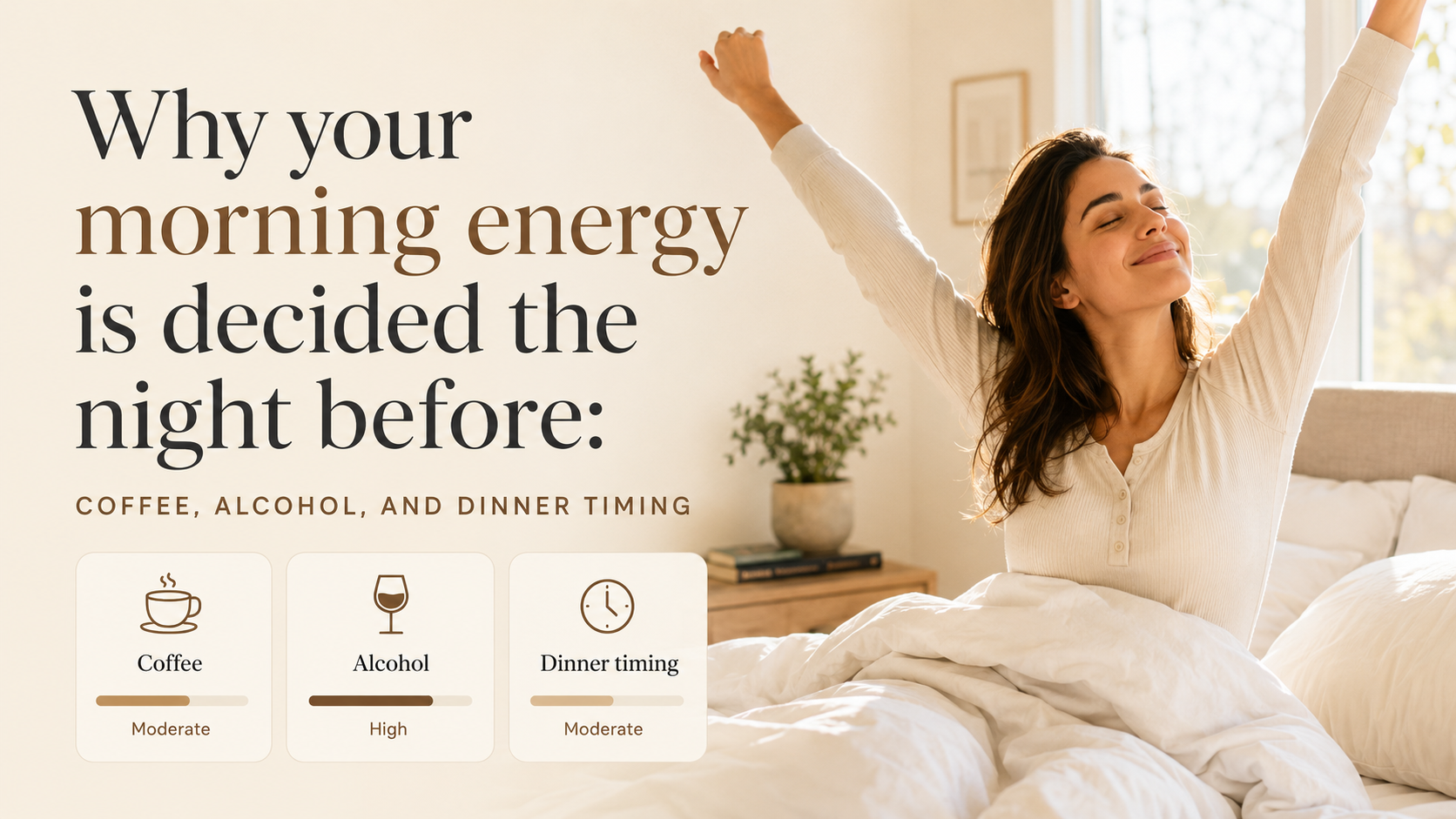
For a while I treated my mornings like weather. Some I woke up clear and ready; others I scraped through the first few hours on a second coffee and a short temper, with no idea which kind of day I was going to get. It felt random.
It wasn't. When I stopped studying the morning and started looking at the few hours before bed, the pattern was almost embarrassing. The mornings I lost were usually set somewhere between late afternoon and lights out, by three things: when I had my last coffee, how late and how heavy dinner was, and, on the rare night I had a drink, whether I'd had one. None of it felt like a big deal at the time. All of it turned up the next day.
If you've slept your usual eight hours and still woken up flat, this is probably where the answer is hiding.
Late coffee: the cup you forget about
Everyone knows coffee keeps you up. What caught me out was how early "late" starts.
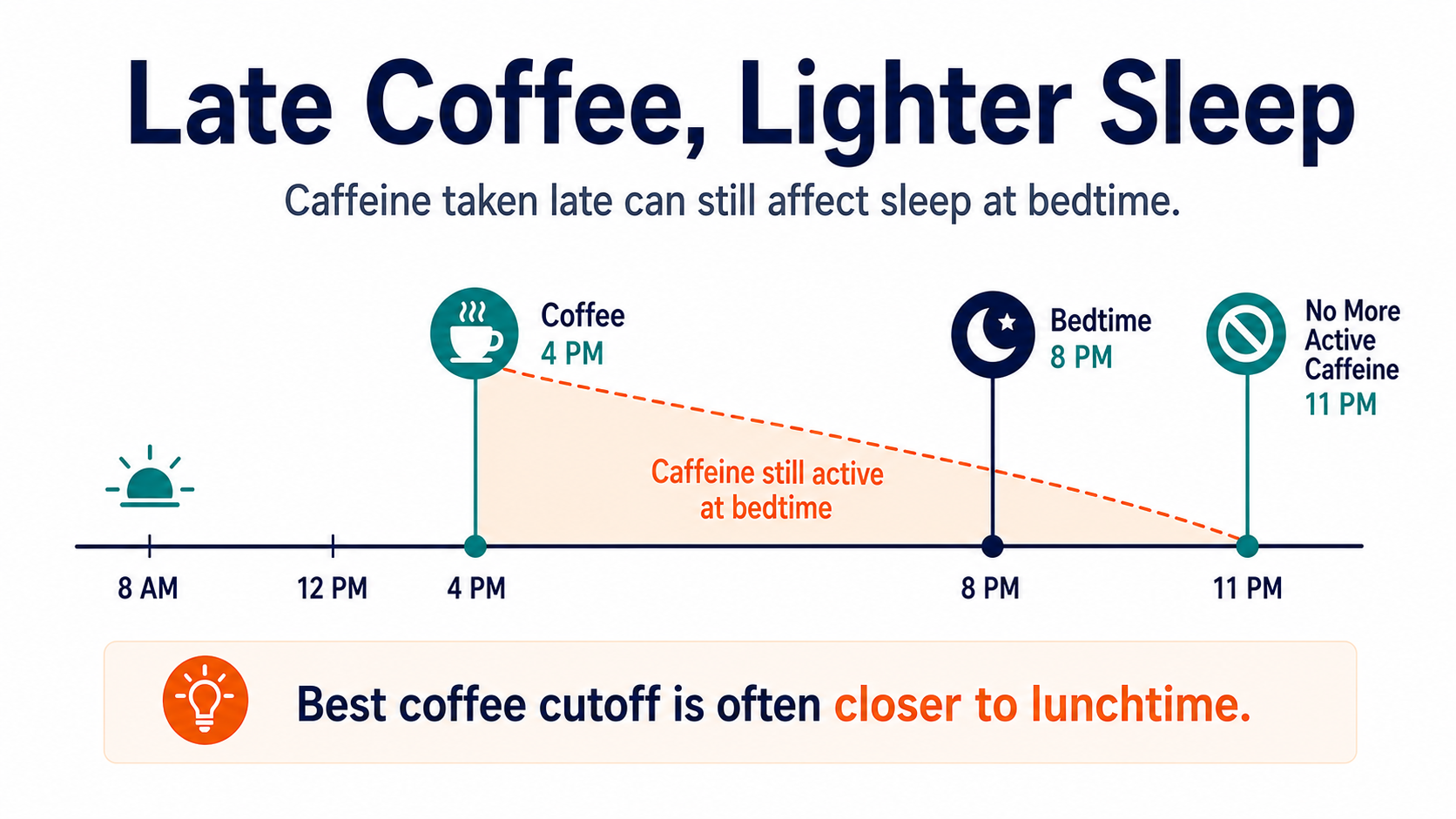
Caffeine has a long, messy half-life. In most adults it sits somewhere between two and ten hours, which is the time your body needs to clear just half of a dose. A cup of coffee carries roughly 80 to 120 mg. Drink one at 4 p.m. and a real chunk of it is still circulating at bedtime. The way it works is by blocking adenosine, the molecule that piles up through the day and makes you feel sleepy, so you can be exhausted and wired at the same time. You drop off fine. The sleep underneath is just thinner than it feels, and you only find out in the morning.
The first time this clicked for me, coffee wasn't even involved. It was a couple of squares of 85% dark chocolate after dinner, around nine at night. The next day I felt under-slept and couldn't work out why, since I'd stopped coffee at lunch. Then I read the label. Dark chocolate carries real caffeine plus theobromine, a slower cousin stimulant, and that innocent "healthy" square was quietly costing me. Decaf catches people the same way. It isn't caffeine free, just lower, and two evening cups still add up.
Then there's the genetics, which explain a lot of kitchen arguments. How fast you clear caffeine is largely down to a single gene, CYP1A2. Fast metabolizers break it down in a few hours and really can drink an espresso after dinner and sleep like a stone. Roughly half the population carries a slower version and clears caffeine far more gradually, in some cases about four times slower. So when a friend swears coffee "doesn't affect" them, they may be telling the truth about their own body while giving you terrible advice for yours.
This is where a sleep or recovery tracker earns its place. The link between late coffee and sleep quality is hard to feel in the moment but easy to see once you line up your caffeine and sleep score across a week. In one 2013 trial, researchers gave people 400 mg of caffeine at bedtime, three hours before, and six hours before. Even the six-hour dose measurably cut total sleep, often without the person noticing. A later review went further and estimated that a single cup of coffee should ideally be finished almost nine hours before bed to fully avoid losing sleep. For a lot of people the honest cutoff lands closer to lunchtime than to six in the evening. The afternoon latte and the pre-workout scoop before an evening gym session are the two hidden culprits I see most.
Alcohol and HRV: the most expensive good night's sleep
I almost never drink, so I don't have years of personal data here. What I do have is one night that made the point better than any chart could.
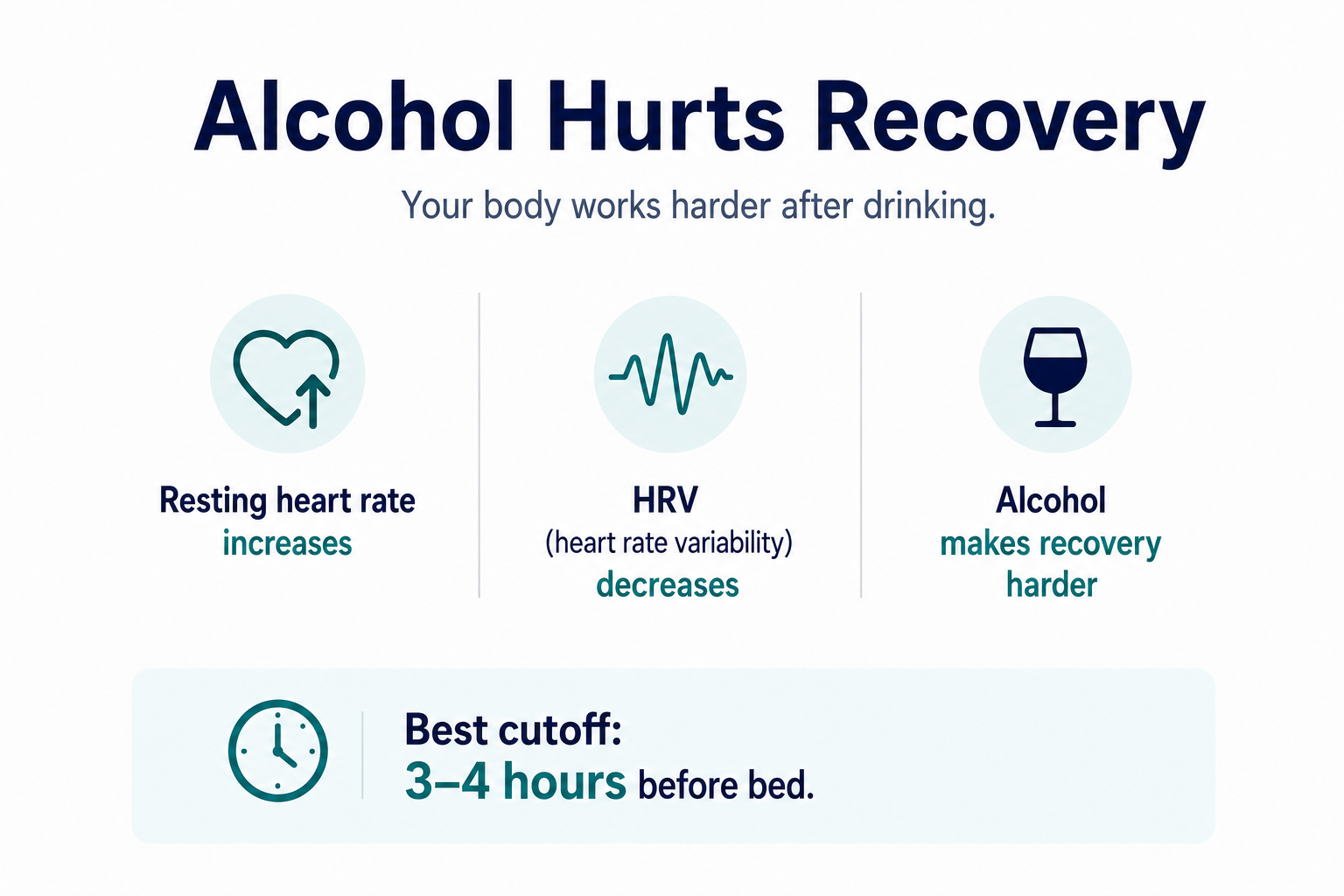
It was a wine-pairing dinner for an event. Five small pours over a long evening, none of which felt like much, the kind of drinking you don't really decide to do. By the standards of someone who normally has none, it was a lot. I was in bed by eleven and slept straight through. The next morning my resting heart rate was up about ten beats a minute and my heart rate variability had dropped through the floor. No headache, no hangover, just a body that had spent the night working instead of resting.
Heart rate variability is the small timing difference between one heartbeat and the next, and it's one of the better signals for how recovered your nervous system is. Higher is generally better. Alcohol flattens it. This isn't only my one night: a 2026 study in PLOS Digital Health tracked nearly 21,000 people wearing sensors and compared each person's drinking nights against their own sober ones. After drinking, resting heart rate during sleep rose, HRV fell, people slept less, and they moved less the next day. The changes were dose-related, and larger in women and in younger adults. Other wearable studies have found that even low to moderate amounts nudge nocturnal heart rate up.
The reason it sneaks past you is that alcohol is a sedative. It front-loads the first half of the night, which is why you fall asleep so fast, and then the back half comes apart: REM gets suppressed and you wake more often, sometimes without remembering it. The higher the dose, the worse that second-half rebound.
Timing matters too, though here I'm leaning on the research rather than my own habits. Because your body needs hours to process alcohol, a nightcap is close to the worst option going, since you end up metabolizing it during the exact window you should be recovering. Sleep researchers generally suggest stopping three to four hours before bed if you're going to drink at all. A glass with a six o'clock dinner is a different event from the same glass at eleven.
I'm not telling anyone to quit. But if you've ever slept a full night after a couple of drinks and still woken up foggy at four in the morning, that gap between hours slept and how you feel is the whole story.
Early dinner and sleep: when you eat matters as much as what
This was the one that surprised me most, because I'd always assumed dinner only counted if I ate badly. When turns out to matter as much as what.
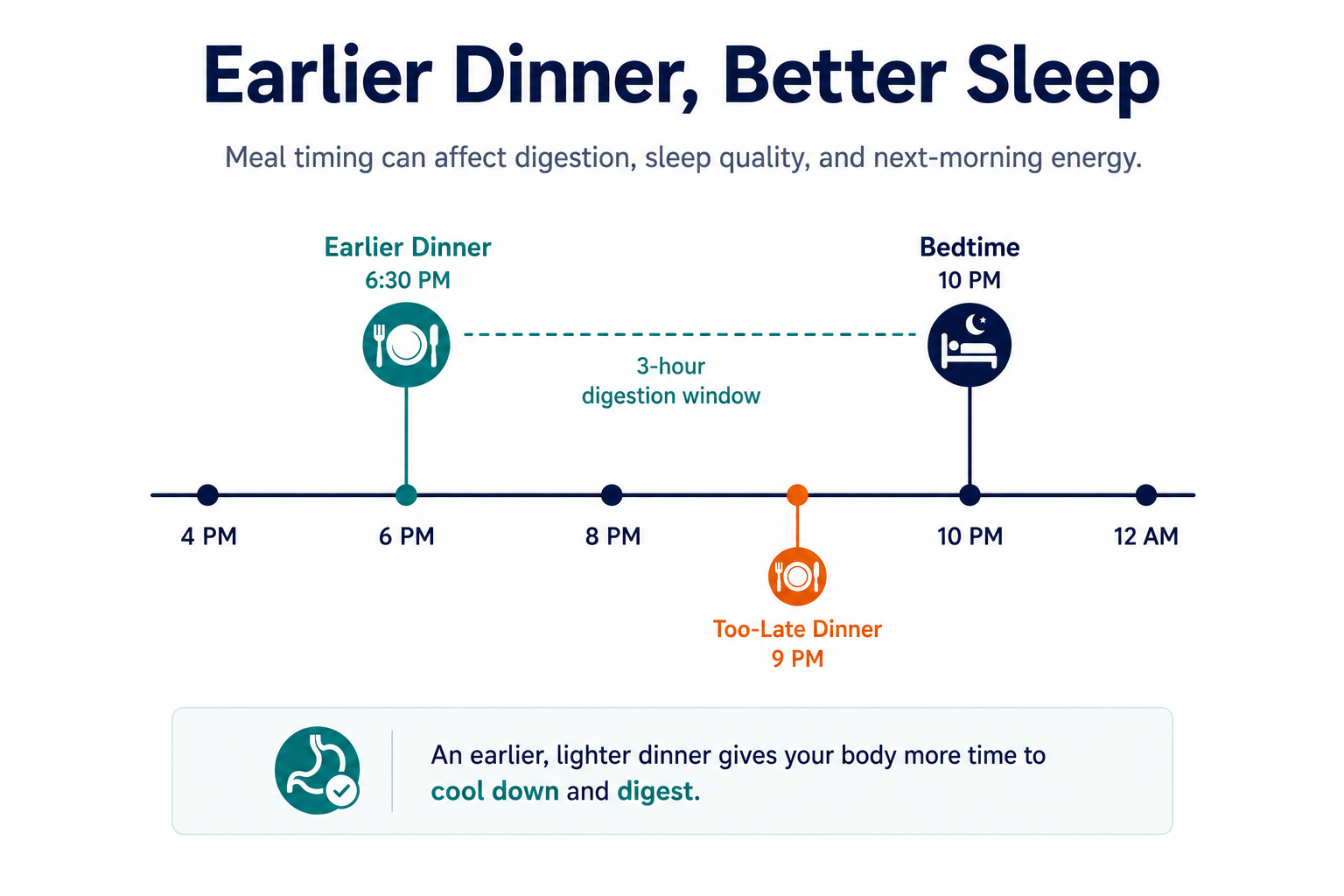
Falling asleep depends on your core body temperature dropping. Digestion does the opposite: it generates heat and keeps your metabolism busy. Eat a big meal at half past nine and you're asking your body to cool down and run a furnace at the same time. A late, carb-heavy plate also spikes blood sugar right when everything should be settling, and lying down on a full stomach invites reflux you might not even notice. One case-control study found that leaving less than three hours between dinner and bed came with a sevenfold higher risk of reflux compared with a four-hour gap.
My own test was boring and effective. For a few weeks I moved dinner from around nine to half past six, same food, same portions, nothing cut. The difference in how I woke up was bigger than almost anything else I'd tried. I fell asleep faster, the 3 a.m. wide-awake stretch mostly stopped, and mornings stopped feeling like climbing out of wet sand. The early dinner and sleep connection showed up within about a week.
This is the quiet engine behind meal timing and recovery, and it's why people on sleep and recovery forums keep repeating that eating earlier and lighter makes a real difference. They aren't imagining it. A large analysis using the American Time Use Survey found that eating or drinking within an hour of bed more than doubled the odds of waking up during the night. Give yourself a three-hour gap and your body can finish the bulk of digestion before it tries to sleep.
So which one matters most?
After tracking this for a while, a rough order emerged. It won't be identical for everyone, but it's a fair starting point. On a per-night basis, alcohol is the heaviest hitter by some distance; even a modest amount can flatten a single night's recovery in a way the others rarely match, which is exactly why that one wine-pairing dinner stood out so sharply against my normal numbers. A late, heavy meal comes next. The hit is gentler than alcohol, but it's reliable, it stacks up night after night, and it's the easiest of the three to fix, since you don't have to eat less, only earlier. Late caffeine is third and the sneakiest of the lot. It rarely wrecks a night on its own, but it shaves quality off the top, and because it doesn't stop you falling asleep, it's the hardest to catch without data.
The catch is that these don't take turns. A four o'clock coffee on its own might cost you a little. A four o'clock coffee plus wine plus a half-nine dinner isn't three small problems, it's one rough morning you'll end up blaming on stress or on "not being a morning person." For years that was my mistake.
How to test this on yourself
You don't need to overhaul anything. Change one thing at a time and watch what happens. Pull your caffeine cutoff back to lunchtime for a week and see if mornings sharpen. On a night you'd normally have a drink, skip it, or at least finish hours before bed, and check your resting heart rate the next morning. Push dinner two hours earlier without touching the food itself. If you wear a tracker, let the numbers settle the argument. If you don't, the first hour after you wake up is a surprisingly honest judge.
Individual variation is real. Your caffeine gene, your size, and your schedule all move the details around, so treat all of this as experiments rather than rules. And if you're fighting genuine, ongoing sleep problems rather than the odd rough morning, that's a conversation for a doctor, not a blog post.
For most ordinary tired mornings, though, the cause isn't bad luck. It's a coffee, a meal, or a drink, and nearly always the timing of it. Once you start treating the evening as the cause and the morning as the result, you get a surprising amount of control back.
FAQ
How late is too late for coffee? For a lot of people the honest cutoff is closer to lunchtime than to early evening. Caffeine's half-life ranges from about two to ten hours depending on your genetics, and research shows even a dose six hours before bed can cut your total sleep. If you metabolize caffeine slowly, you may need to stop earlier still.
Why do I sleep badly after drinking even though I fall asleep fast? Alcohol front-loads the first half of the night, then fragments the second half, suppressing REM and raising the odds of waking up. At the same time it pushes your heart rate up and your HRV down, so you log the hours but miss the recovery. That's why a full night's sleep can still leave you foggy.
Does eating dinner earlier really improve sleep? For most people, yes. An earlier, lighter dinner lets your core body temperature drop and lets digestion mostly finish before bed, which tends to mean falling asleep faster and waking up less. Aiming for roughly three hours between your last bite and lights out is a reasonable target.
Which one matters most for next-day energy? Per night, alcohol usually hits recovery hardest, then a late heavy dinner, then late caffeine. The important part is that they stack, so combining all three on the same evening costs you far more than any one of them alone.
*This article is for informational purposes only and is not a substitute for professional medical advice, diagnosis or treatment.*
Related articles
Why Am I Still Tired After 8 Hours of Sleep?
You slept 8 hours and still feel wrecked? Here's why sleep quality beats duration, what a dropping sleep score really means, and how to wake up with energy.
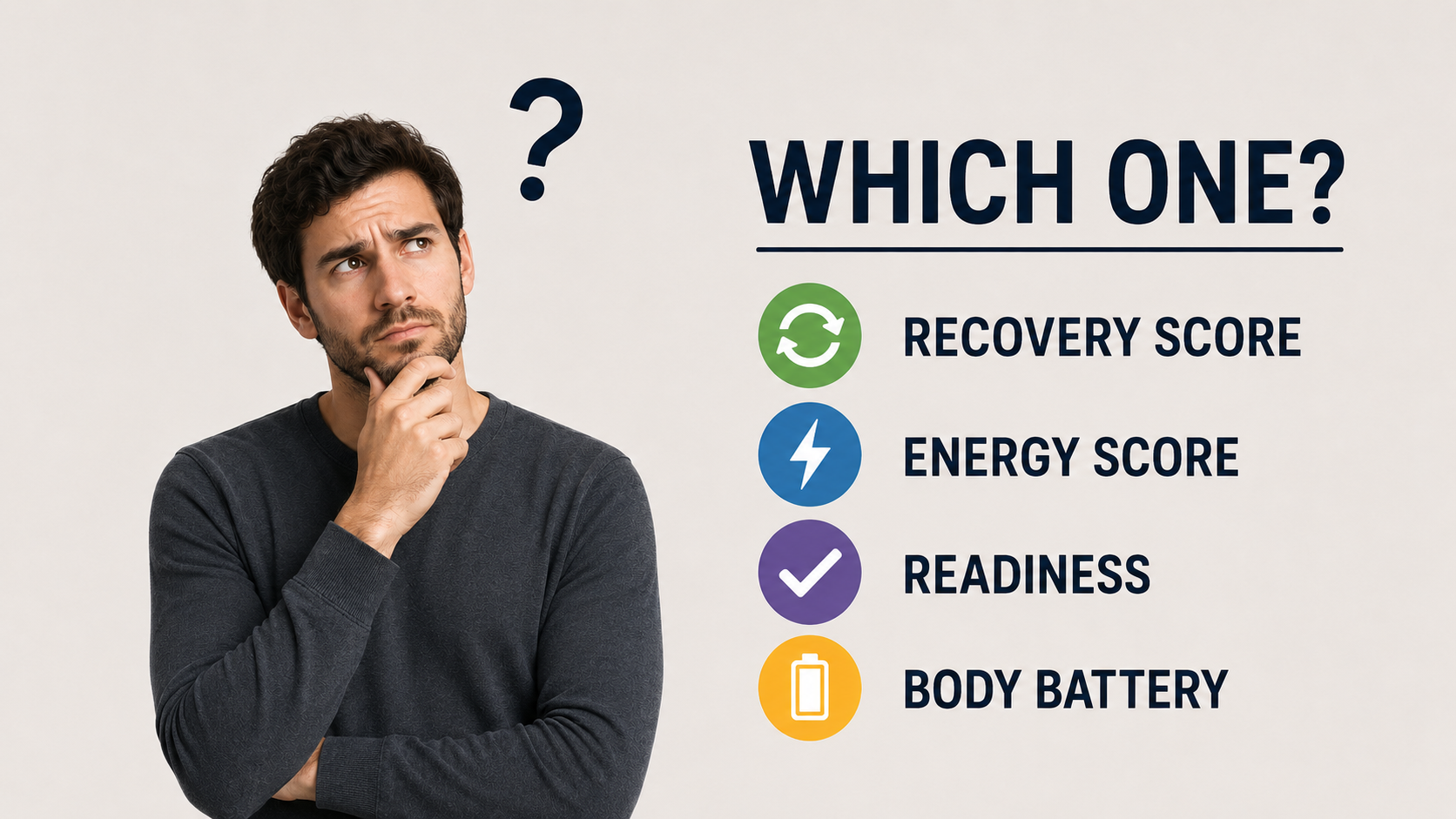
Recovery Score, Energy Score, Readiness, Body Battery — What Actually Matters
What recovery score means, how energy and readiness score differ, and body battery vs recovery — plus which numbers actually deserve your attention.
Evening Stress and Why Your Brain Won't Settle Down Before Sleep!
Falling asleep fast isn't the same as your brain settling down. What evening stress does to your sleep onset, and how to wind down when your mind won't.
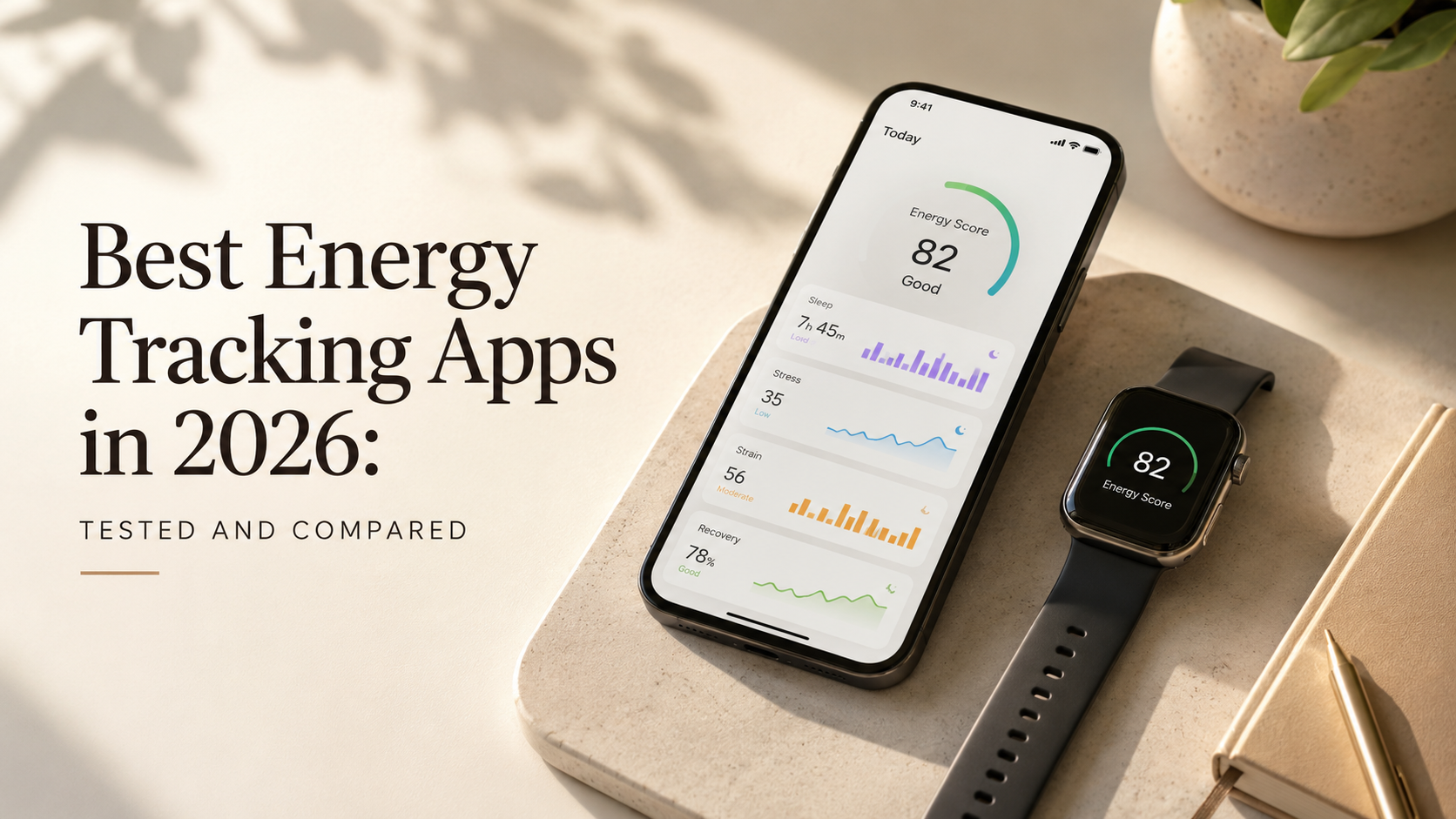
Best Energy Tracking Apps in 2026: Tested and Compared
Best Free Energy Tracking Apps in 2026
The free apps are actually worth trying, what “free” really gets you, and whether you need a device at all.
Best Stress and Energy Tracking Apps in 2026
Best Apps That Explain Sudden HRV Changes in 2026
Why your HRV changed overnight, what it usually means, and the apps that actually help you figure out what to do next.