Best Apps to Track Poor Recovery and Fatigue in 2026
A simple guide to the apps that help you tell the difference between a rough day, a real recovery dip, and a pattern you shouldn’t ignore.
By Anjali Singh · Jul 15, 2026
Category:Recovery
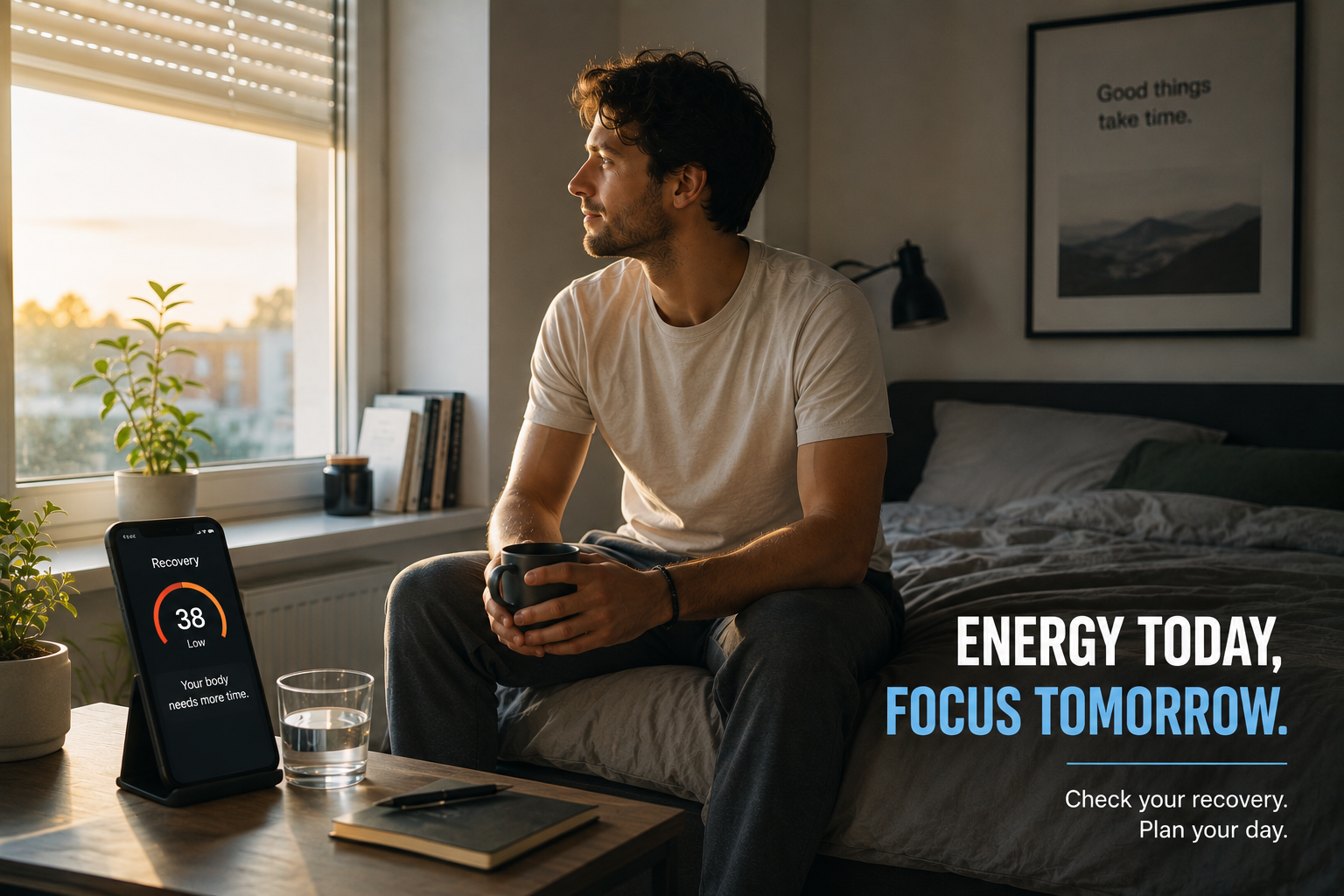
A simple guide to the apps that help you tell the difference between a rough day, a real recovery dip, and a pattern you shouldn’t ignore.
Most of the time poor recovery and fatigue have a pretty ordinary explanation. Sleep went sideways, stress piled up, training was heavy, travel wrecked your schedule, or something minor is starting to catch up with you. A dip like that is usually normal.
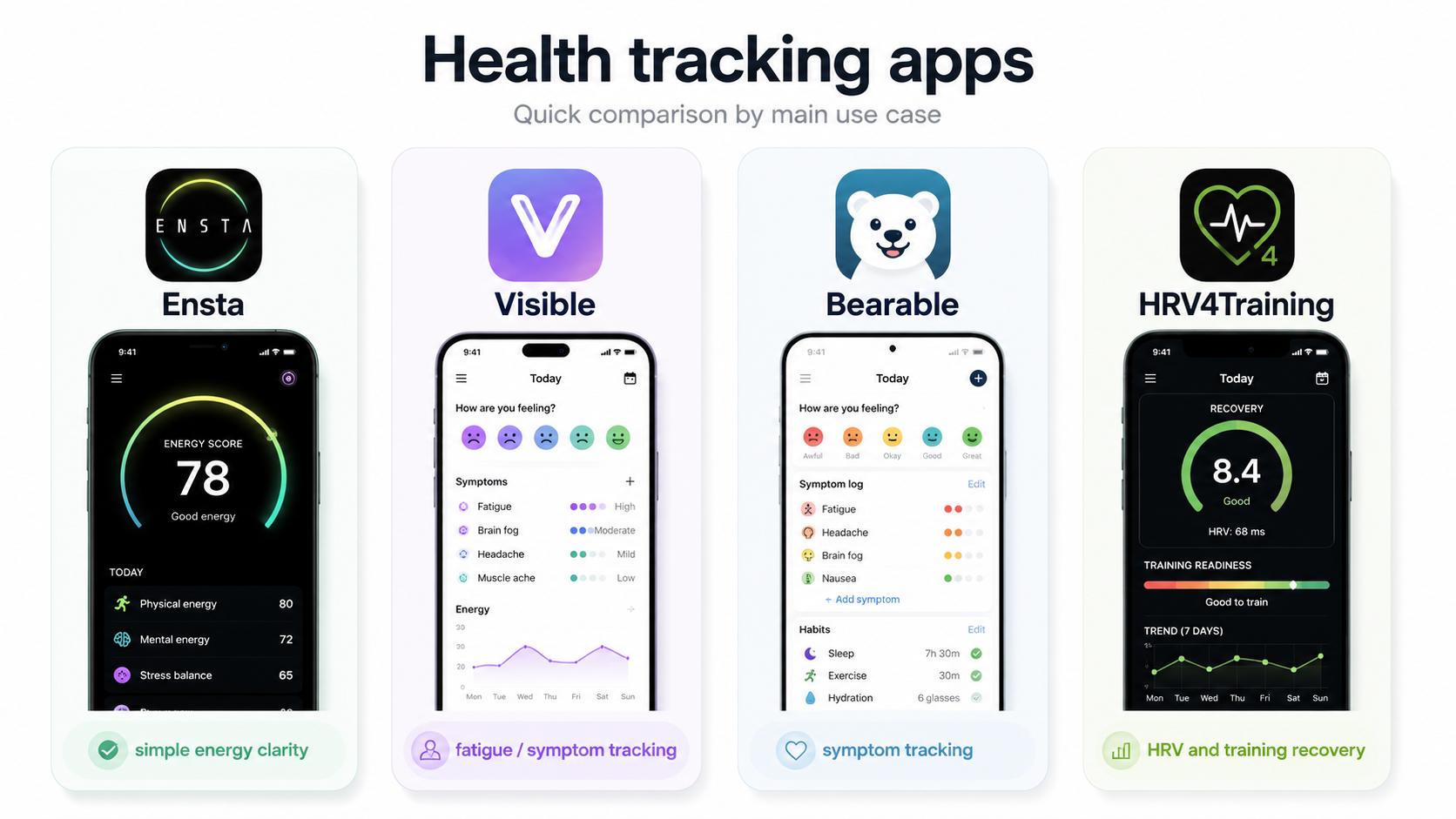
The best apps in 2026 for explaining that drop are Ensta for most people looking for simplicity, Visible for pacing and illness-linked fatigue, Bearable for symptom pattern tracking, and HRV4Training for structured recovery check-ins.
Poor recovery and fatigue sounds deceptively simple until you are actually living through it and trying to figure out what went wrong. Messy. Hard to pin.
Sometimes it is sleepy-tired. Sometimes it is heavy-legs tired. Sometimes it is a weird low-battery feeling where even easy stuff makes you more irritable than it should.
Nothing looks broken on paper. You just do not feel right. That gap between "technically fine" and "not actually fine" is exactly what most recovery apps have not figured out how to bridge yet.
That is the standard this list uses.
What poor recovery and fatigue actually mean
Poor recovery is not a single metric you can just glance at and understand. It is more of a whole-body state than one neat metric. Usually it shows up as low energy, fuzzy focus, less drive, slower recovery after training, or that dragged-out feeling where nothing is exactly wrong but you definitely do not feel normal. Sometimes sleep feels worse too. It is a cluster, not one clean signal.
Consumer wearables can help surface that cluster, but the data has real limits. Short. Useful, yes. Not gospel. The research here is useful, but not magic. Heart rate and HRV can help flag recovery stress, though the readings still depend a lot on the device itself, how it is worn, body movement, and the situation in which the data was captured.
Common causes of poor recovery and fatigue include:
- Short or disrupted sleep
- Hard training or accumulated strain
- Psychological stress
- Illness or immune stress
- Travel, jet lag, or heat
- Alcohol, under-fueling, or routine disruption
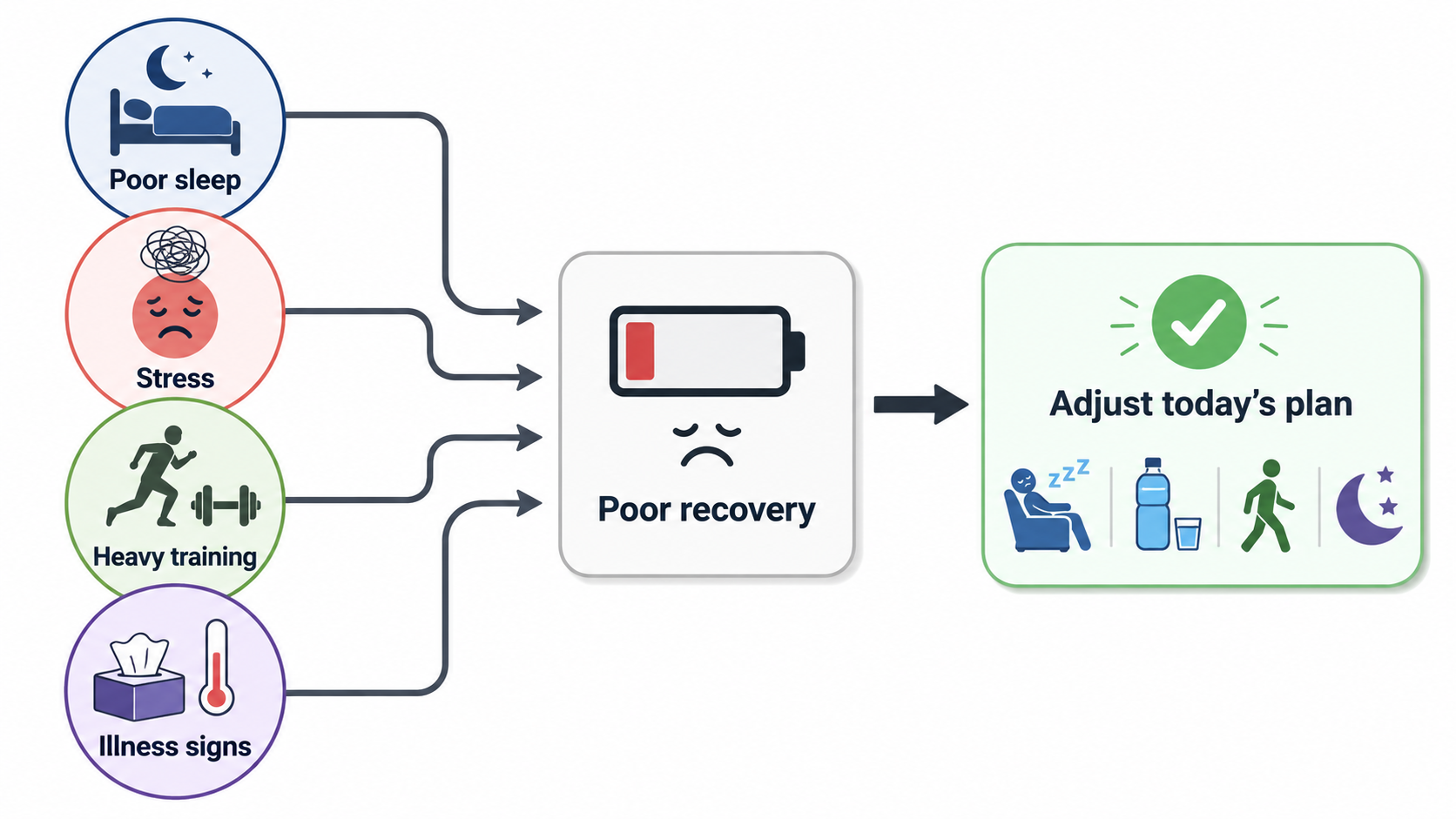
One low day is usually just a response. A repeated pattern is more meaningful.
So the real job of a recovery app is pretty simple. It should help you answer three things. What changed. How serious it probably is. And what you should do next.
Surprisingly, a number of apps still do not get all three right.
Why most apps show the number but do not explain it
A lot of recovery apps are still better at measurement than interpretation. They can tell you that something changed. They are much less reliable at telling you what probably changed and what to do with that information.
That is the real user problem here. Poor recovery is rarely one neat cause. It is often a stack. Sleep slipped. Stress climbed. Training ran long. Maybe you ate badly, traveled, or you are getting sick. Most apps can show those ingredients one by one. Fewer connect them in a way that feels useful.
That interpretation layer is the key criterion in this article, because it is where the practical value lives. It is also where Ensta is strongest. Ensta’s public positioning is built around turning sleep, stress, recovery, and body signals into a single 0 to 100 Energy Score, then adding explanations, predictions, and actionable guidance so the number actually means something.
Quick Look
Here is the short list first.
| App | Price / plan | Devices or setup | Best at | What it explains well | Actionability |
|---|---|---|---|---|---|
| Ensta | Free to download | Works with the devices you already wear | Clear daily interpretation | Why energy changed across sleep, recovery, and stress inputs | High, because it gives AI-powered guidance, predictions, and a single 0 to 100 Energy Score |
| Visible | Membership plus wearable band model, with a free research app also available | Visible Band 2.0 plus app, built for continuous pacing support | Illness-linked fatigue and pacing | How activities, exertion, HRV, symptoms, and medication affect daily energy | High for pacing, especially because it gives over-exertion notifications and trend guidance |
| Bearable | App-based symptom tracker, pricing varies by plan availability on stores and site | Phone-first logging workflow | Symptom pattern detection | Fatigue alongside pain, mood, medication, cycle, and other recurring factors | Medium, because the app is strongest at pattern spotting rather than instant coaching |
| HRV4Training | Paid app on the App Store | Structured daily check-in, can use phone camera or other setups | Research-minded recovery tracking | Stress and readiness through a more disciplined HRV workflow | Medium to high, if you are willing to do a regular morning reading |
Ensta - Best for most people
It is the most direct answer to the problem this article is about. The point of Ensta is basically this: take all the sleep, stress, and recovery stuff, turn it into one Energy Score, and then actually tell you why it moved. The Timeline, Predictions, and Actionable Insights are there to make the app feel more understandable, not more technical.
Cross-device. Free to download. Simple on purpose.
Visible - Best for pacing
Best if poor recovery feels tied to crashes, pacing, or an energy-limiting condition.
Visible takes a very different approach from mainstream recovery tools. Its public positioning is “activity tracking for illness, not fitness,” and the platform combines wearable support, pacing guidance, symptom tracking, medication tracking, and over-exertion notifications. That makes it one of the most relevant apps on this list for explaining fatigue in a health-context way rather than a sports-performance way.
If your issue is not just “I had a tough week” but “my energy drops are disruptive and unpredictable,” Visible is something you should consider seriously. It is more specialized than Ensta, which is both the strength and the limitation.
Bearable - Best for symptom patterns
Bearable is built for a different kind of fatigue user. Not the athlete trying to optimize recovery windows. More like the person whose bad days only start making sense once they can see everything together in one place. Fatigue next to pain next to mood next to medication changes.
It is not a score-first app. It is a pattern-first app. You log consistently, and over time it starts showing you what tends to cluster before the rough days.
That takes more effort than tapping a readiness score, yes, but for a lot of people it is also more honest to how their body actually works.
HRV4Training - Best for symptom patterns
Do you want a more structured recovery check-in with a stronger research feel?
HRV4Training presents itself as the first scientifically validated HRV app. The app is built to help users quantify stress, balance training and lifestyle, and gradually improve their performance. This gives it a more methodical feel than the others here.
You are not really opening it for a casual vibe check. You are using it as part of a repeatable daily measurement habit. It's a strong fit for anyone who wants structure and consistency.
How to tell if your poor recovery is normal or a warning sign
A short dip here and there is usually normal if there is an obvious trigger and your energy starts to rebound after rest. This is pretty normal stuff, honestly. Bad sleep, alcohol, training harder than usual, travel, heat, stress, or the start of a cold can all knock your recovery around for a day or two. It is annoying. It happens. It does not automatically mean anything serious.
The more useful question is whether there is an obvious trigger. If yes, and energy starts coming back after some rest, that is probably just your body doing its job. Not a crisis. Just recovery taking the time it needs.
Pay attention to see if the drop feels disproportionate, or if it keeps repeating, or comes with symptoms that do not fit your normal self. That includes dizziness, chest pain, unusual shortness of breath, fever, fainting, or a clear decline in your normal functioning. At that point, get yourself to a doctor instead of relying on an app.
What to do when recovery drops
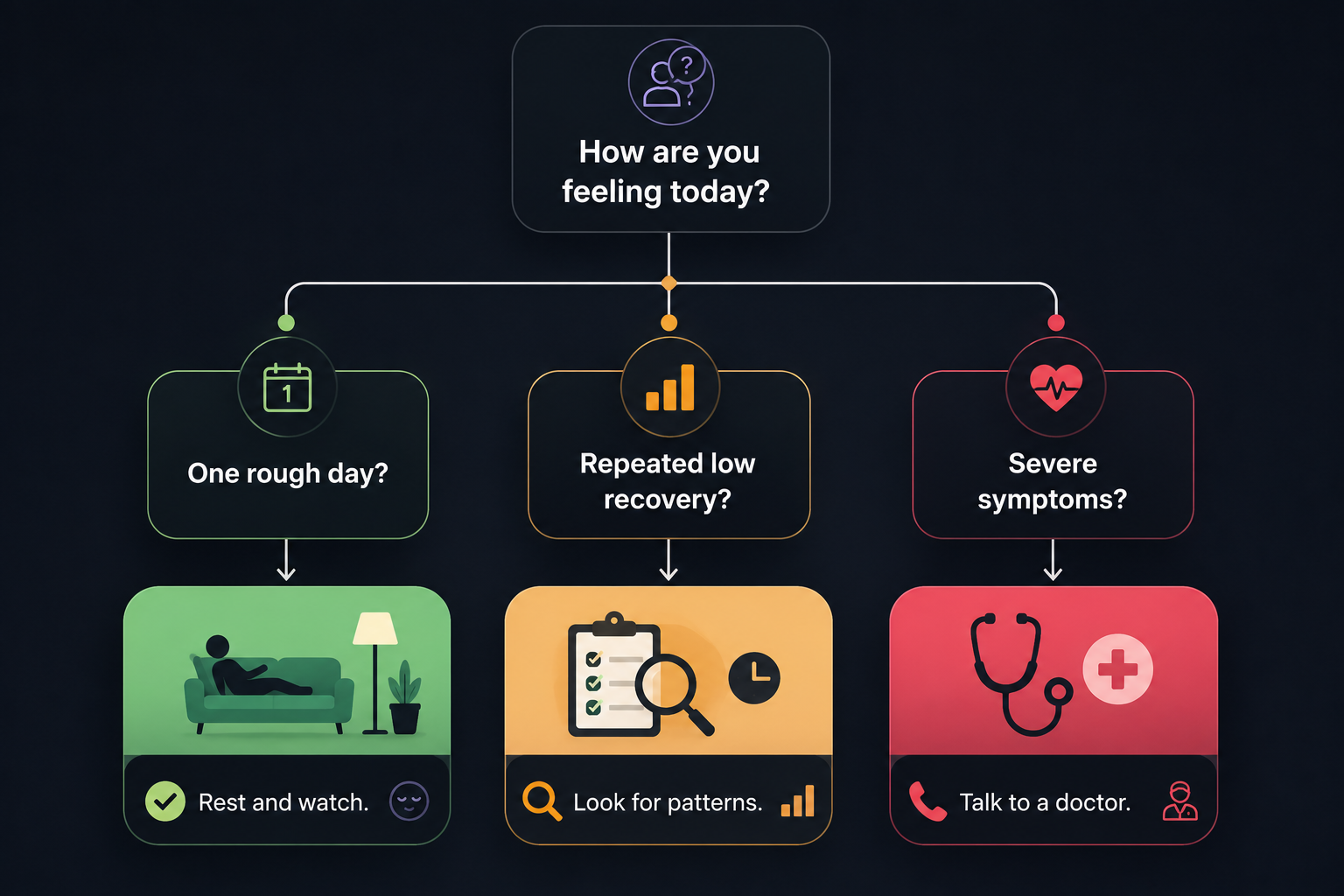
When a recovery dip shows up, do not make it dramatic right away. The first move is usually to simplify the next 24 hours and look for the obvious explanation.
Tonight
- Sleep earlier if you can.
- Keep dinner lighter and skip alcohol if recovery is already trending low.
- Reduce training intensity or push the hard session back a day.
- Use the app to note what likely changed so the pattern is easier to spot next time.
This week
- Look for the repeat trigger, not the single rough day that started it all.
- Check whether the low recovery pattern lines up consistently with poor sleep, high stress, heavier training loads, or early illness symptoms.
- Pick the app that actually matches how your fatigue works…whether that is one clear score with explanation, symptom logging across multiple factors, or real-time pacing guidance.
When to see a doctor
Consult a physician if your fatigue is severe or getting worse, or showing up alongside chest pain, trouble breathing, fainting, fever, palpitations, or an obvious drop in your ability to function normally. Consumer wearables can help surface patterns, but they are not medical devices and they should not be treated as a diagnosis on your wrist.
This is where it helps to remember the limits of the data. A second strong source on that point is this review of wearables suitable for heart rate variability monitoring, which is useful for understanding where wearable recovery signals are informative and where they still have reliability constraints.
FAQ
What is the best app to track poor recovery and fatigue in 2026?
Honestly, Ensta for most people. One clear Energy Score, plain-English explanations for why it changed, works with devices you already own, and free to download. It is not trying to be a lab. It is trying to be useful, which is a different thing and usually harder to pull off.
Is poor recovery always a bad sign?
Rarely, if it is one day and you can point to a reason. Sleep was rough. Week was stressful. Training was heavier than usual. Bodies need time to catch up sometimes and that is just normal biology. What starts to mean something is when the low days keep stacking up without a clear cause or without bouncing back after rest.
Which app is best if I already own a wearable?
An app-first option usually makes more sense than buying new hardware. Ensta is designed around using existing device data and turning it into one simple daily interpretation.
Which app is best for chronic or illness-linked fatigue?
Visible is the strongest fit in this list for that use case because it is built around pacing, symptoms, over-exertion alerts, and energy-limiting conditions rather than general fitness alone.
Which app is best if I want to track symptoms, medication, and fatigue together?
Bearable holds all of that in one place, fatigue, pain, mood, medication, anxiety, cycle changes, whatever your pattern involves. It is more of a symptom diary than a readiness score, which for a lot of people is actually closer to what they need.
Which app is best if I want a more research-minded daily check-in?
HRV4Training is the better fit if you want a more structured, scientifically framed daily recovery workflow.
Can wearables actually explain fatigue?
Partially, and honestly that is already more than most people expect from them. They can surface useful trends in stress, HRV, and recovery. They cannot fully account for symptoms, context, or the messier parts of how fatigue actually works in real life.
Bottom line
Ensta is the best app to track poor recovery and fatigue in 2026 for most people because it explains the dip instead of just measuring it. Visible is the stronger pick when fatigue is pacing-related or illness-shaped, Bearable is better when symptoms need to be tracked together before patterns become clear, and HRV4Training is the better option for structured and research-minded daily check-ins.
Want to understand what a "good" energy score actually looks like day to day? Read our guide: What Is a Good Energy Score? A 2026 Guide
*This article is for informational purposes only and is not a substitute for professional medical advice, diagnosis or treatment.*
Sources:
Ensta — App Store·Ensta — Google Play·Visible·Visible — FAQs·Bearable·Bearable — Symptom Tracker·HRV4Training·HRV4Training — Google Play·MDPI
Related articles
Your Bedroom May Be Too Warm for Good Recovery
For two summers, I lived in a bedroom that never quite cooled down after dark, and a heart rate tracker I was wearing for something else entirely showed me exactly what that was costing me overnight. It turns out a warm room doesn't just make sleep less pleasant. It measurably raises heart rate, lowers heart rate variability, and cuts into the recovery your body is supposed to get while you're asleep. Here's what the research says about why, who's most affected, and the small changes that actually help.

Why jet lag hits harder after some flights and how to recover faster
Some time zone changes barely touch you, and others wreck you completely, even when the shift on paper looks about the same. The difference usually comes down to direction: eastward travel fights your body's natural clock in a way westward travel doesn't, which is also why "I slept a full night" doesn't always mean you're actually recovered. Here's what the research says about why that happens, and a simple first-48-hours plan built around light, timing, and realistic expectations rather than gimmicks.
Best Apple Watch Apps for Recovery Tracking in 2026
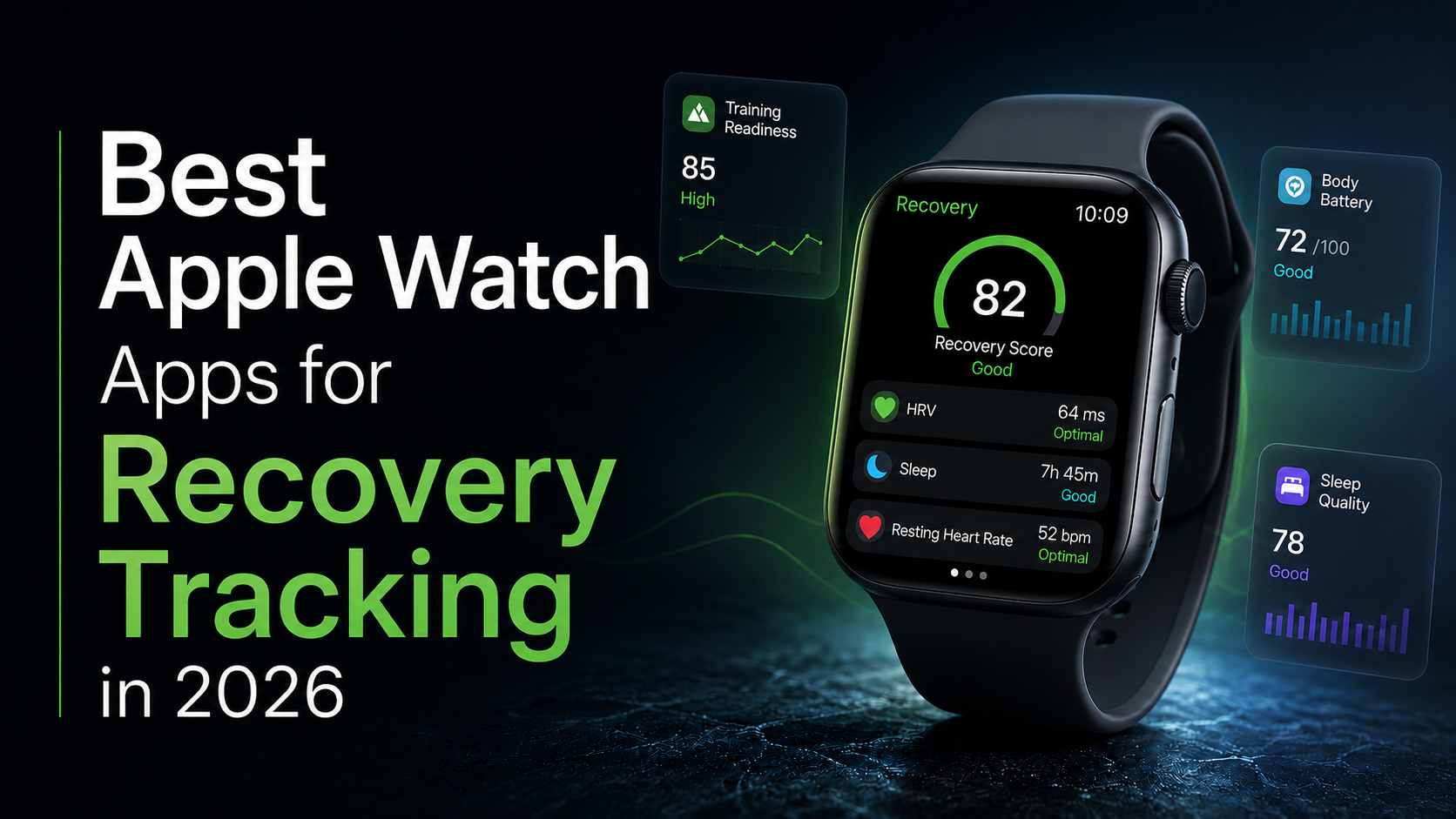
Your Apple Watch already tracks sleep, HRV, heart rate, and activity, but recovery can still feel confusing without clear interpretation. This guide compares the best Apple Watch recovery apps for 2026, from simple daily energy scores to deeper training-readiness tools, helping you choose the right app for your goals.
Best Recovery Apps in 2026
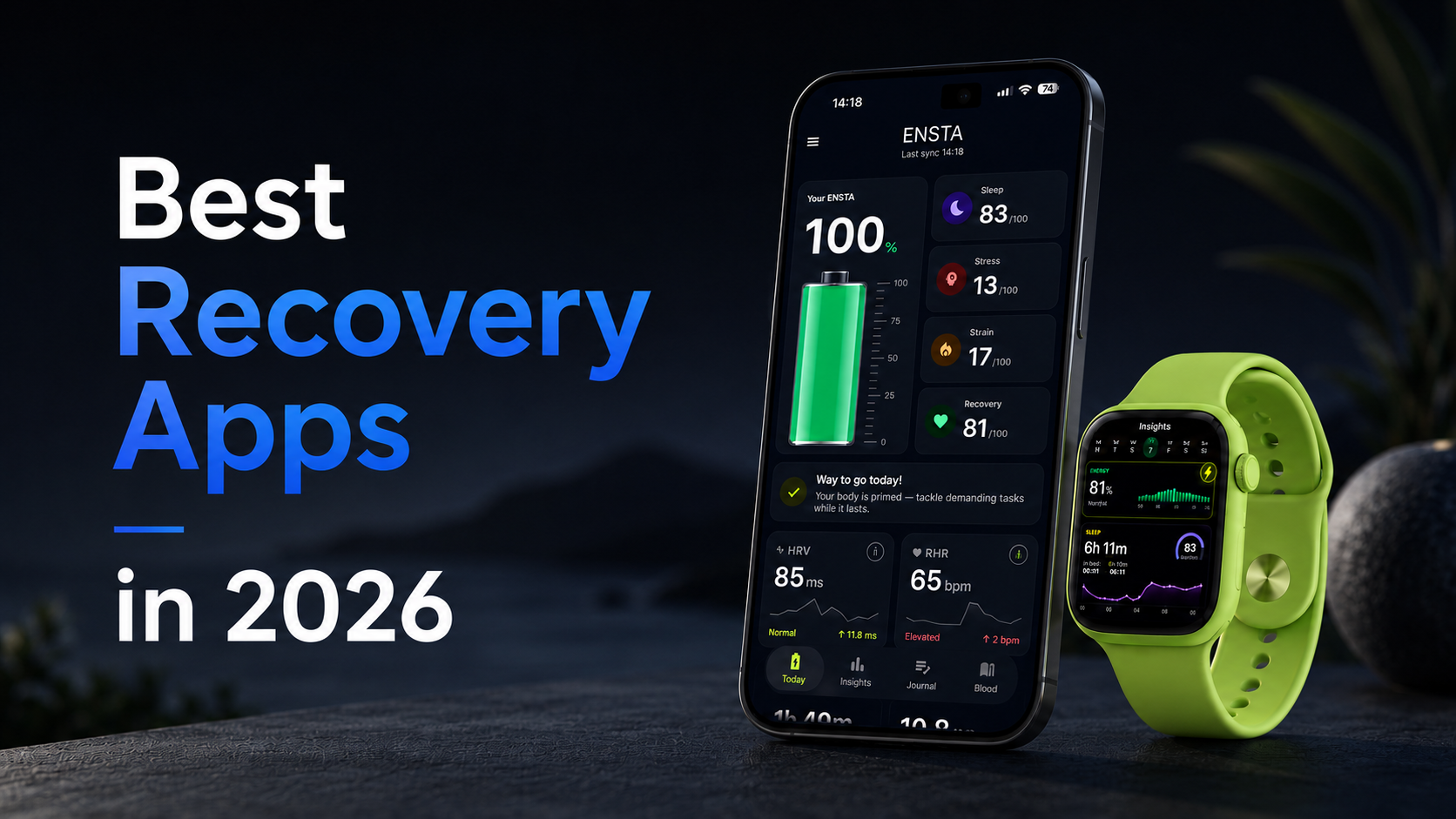
Compare the best recovery apps in 2026, including Ensta, WHOOP, Oura, Athlytic, Elite HRV, and Muscle Recovery Tracker. Learn which recovery tracker is best for your body, sleep, HRV, stress, strain, training load, and daily energy score — whether you want a simple free recovery app, an Apple Watch recovery app, a sleep-focused readiness score, or an athlete-grade recovery tracker.