Cold skin can weaken a wearable pulse signal
By Mr.Apps · Oct 21, 2026
Category:Wearable
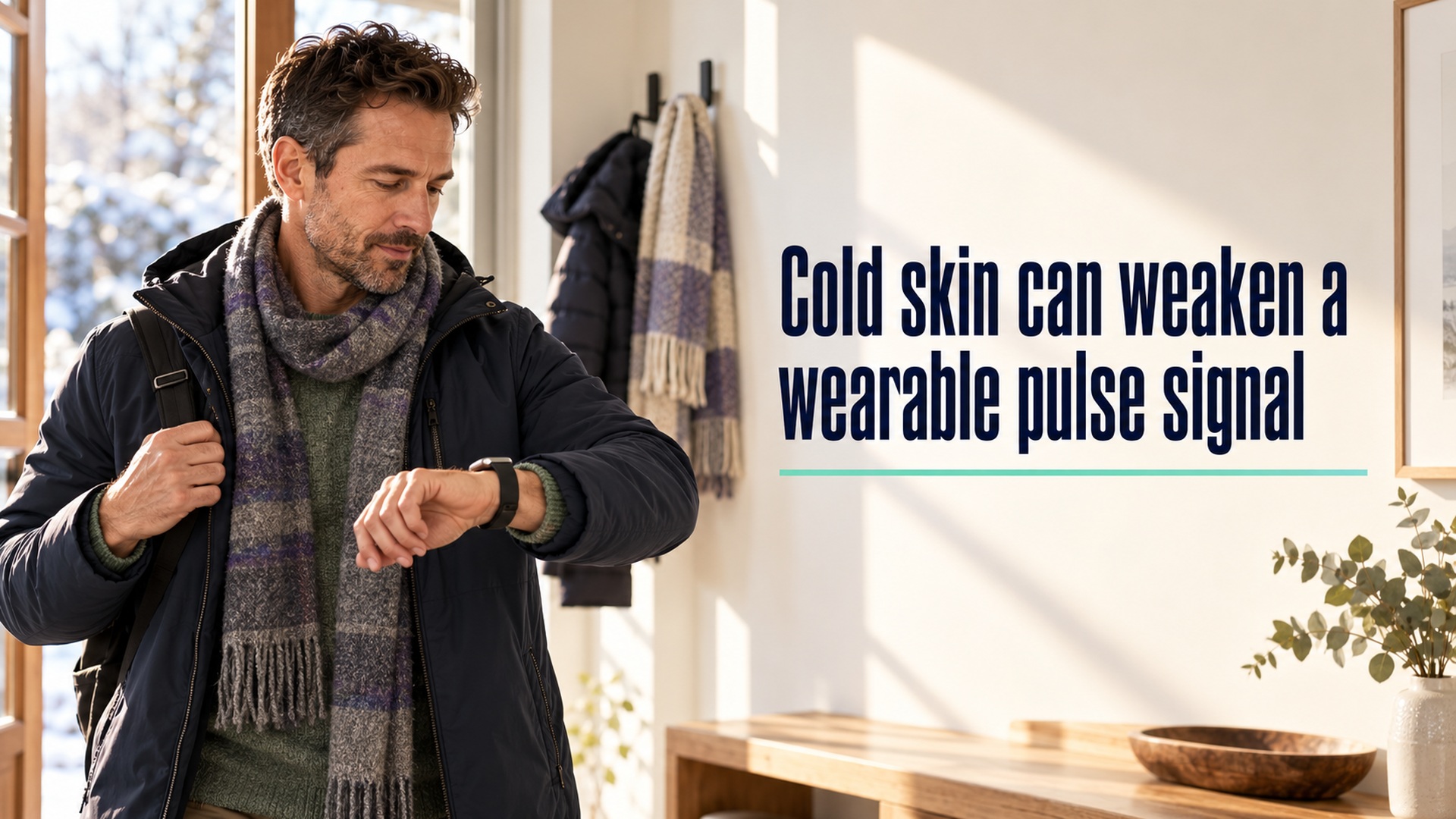
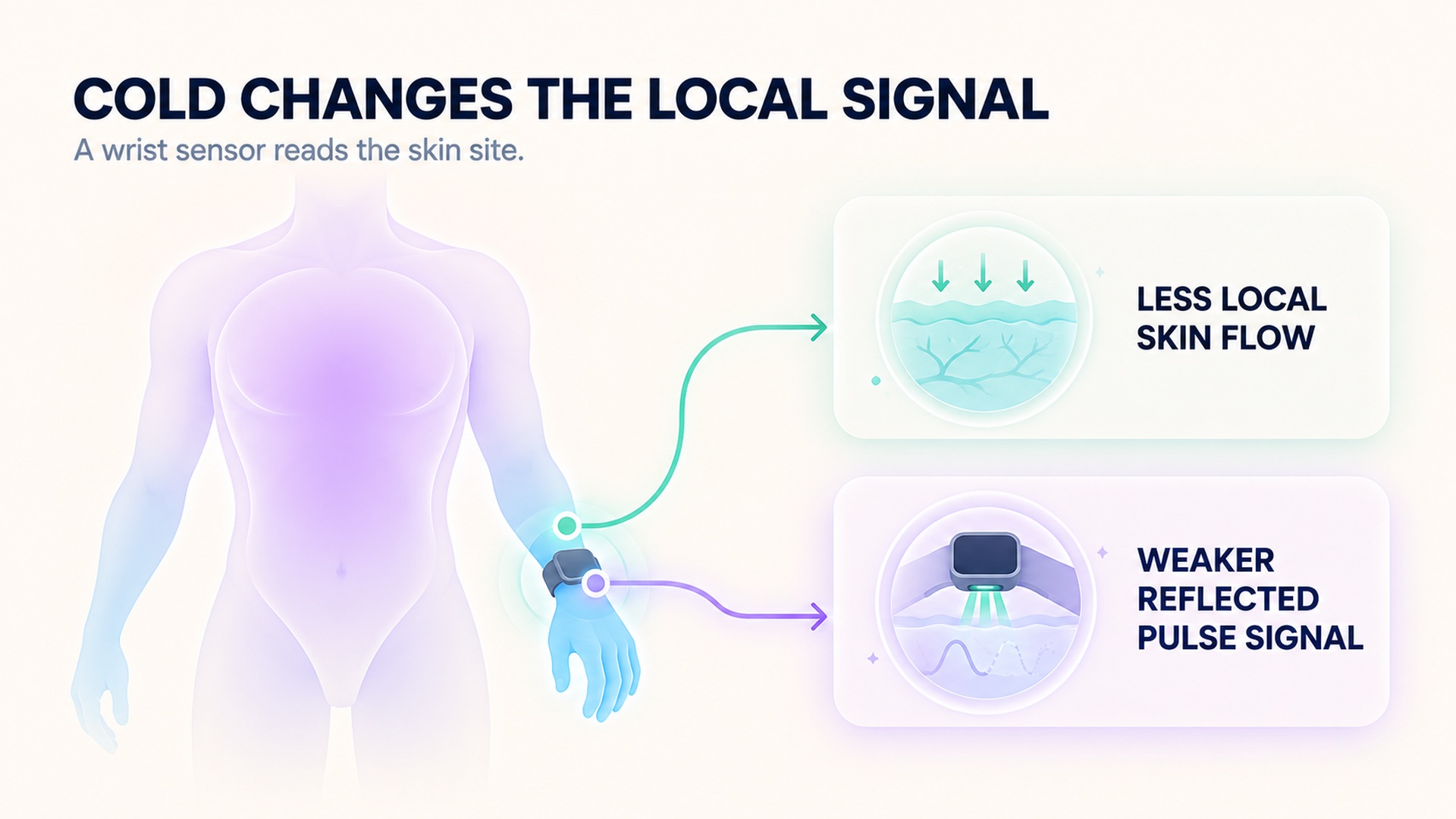
A cold wrist can make a wearable's optical pulse signal harder to read, even when the band feels secure. Many wrist devices estimate heart rate from light reflected by blood moving through tissue near the skin. Cold exposure can reduce blood flow in the skin of the hands and wrists, changing the signal available to the sensor. A missing or unstable reading is therefore a data-quality issue to investigate, not a direct statement about cardiovascular health.
Cold conditions are only one possible contributor. Fit, movement, the sensor design, the activity, and the device's processing also matter. Some controlled studies find device-specific differences and do not see climate effects within the temperature ranges they tested. That is why a cold-weather explanation should be checked against the actual trace and the exact device guidance, not assumed from temperature alone.
What an optical pulse sensor reads
Wrist optical sensors use light emitters and a detector to estimate changes in blood volume close to the skin. The pulse-related signal is small compared with the total light returned from tissue. The device has to separate that signal from motion, contact changes, ambient light, and other variation. The technical overview of optical wrist measurement explains the general sensing approach and notes that cold training conditions can affect wrist-based readings for some activities.
The skin's circulation changes as the body responds to temperature. In cold conditions, blood vessels near the skin can constrict, helping reduce heat loss at the body's surface. That can lower local skin perfusion at a wrist or finger, even though the heart continues to beat. Research using photoplethysmography during controlled cold exposure shows that peripheral and more central sites can respond differently. The cold-stress study of peripheral PPG signals examined this physiology with research sensors; it does not validate every consumer watch or predict one person's reading.
A reading gap is not a pulse diagnosis
If the sensor cannot isolate a stable pulse signal, the device may show no reading, skip samples, smooth the trace, or display an estimate that differs from another measurement. The user-facing chart may not show every quality check used by the algorithm. A gap says the device did not provide usable data for that segment; it does not say that the person's heart stopped or that blood flow to an organ has failed.
The difference between a sensor artifact and a real heart-rate change is not always obvious from one graph. A sudden jump could reflect a true pulse change, movement interference, a shifted band, or the device locking onto another rhythmic signal. Check the activity and body position around the change, whether the trace returns when the wrist warms, and whether the device marks the segment as missing. Do not convert uncertainty into a health conclusion.
Official device guidance can help separate environmental limits from fit issues. One manufacturer's heart-rate measurement guidance notes that skin perfusion varies among people and with the environment, and that cold exercise can leave wrist perfusion too low for a reading. It also recommends a close fit for the sensor to work as intended. That is specific product guidance and a useful example of the mechanism, not proof that every brand fails in every cold setting.
Compare conditions carefully
If the issue repeats, record the context around a short test: device model, wrist or arm location, outdoor and indoor conditions, activity, fit, and where the trace becomes incomplete or unstable. Compare a similar session after the wrist is comfortably warm, if that is practical and consistent with the device instructions. Changing one factor at a time makes it easier to see whether the trace changes with temperature, placement, movement, or a different measurement source.
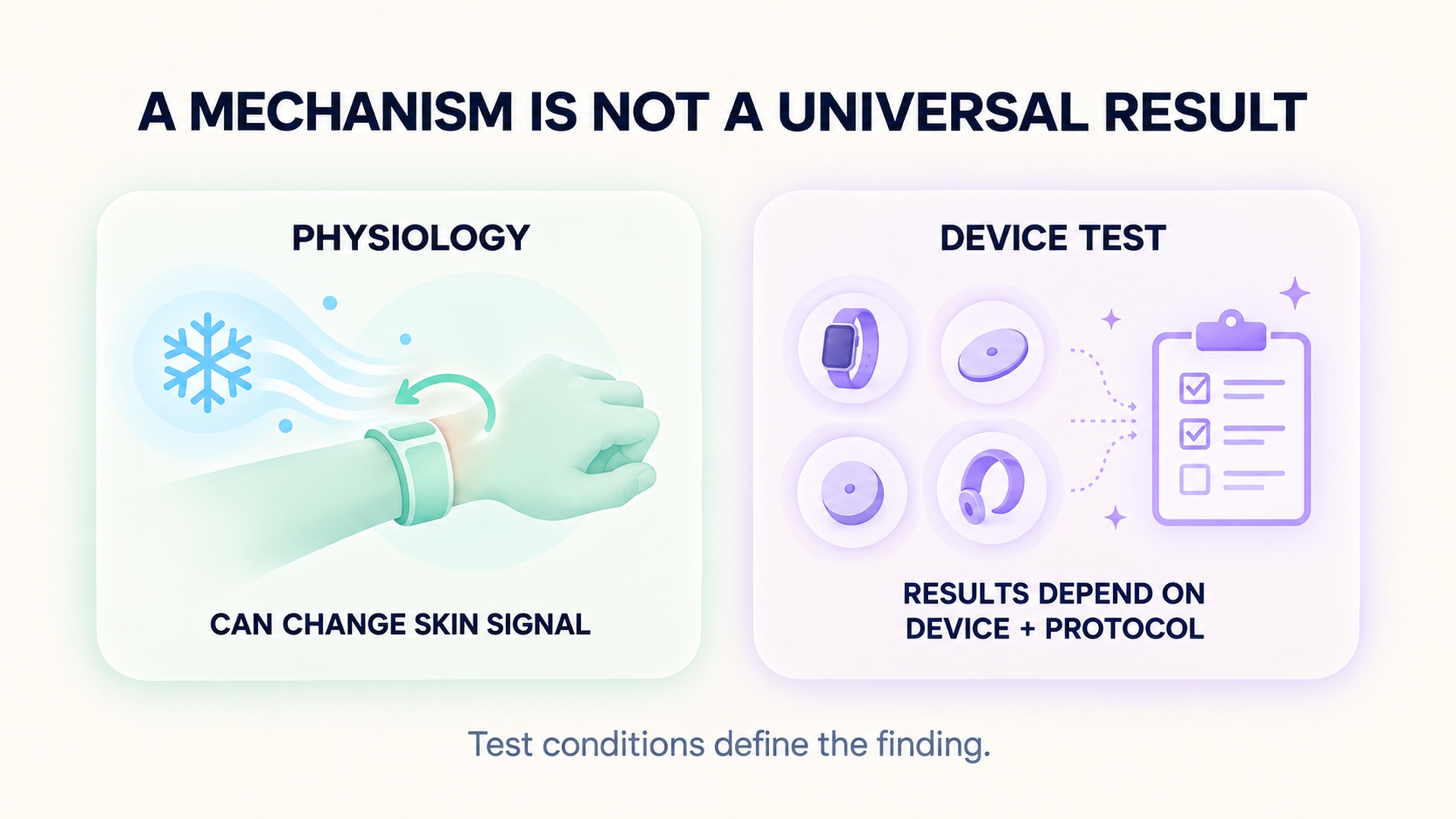
Do not assume all cold-weather readings are unreliable. A 2026 instrument-validation study tested 10 commercial wearables with adults in controlled neutral, hot, and cold chambers, as well as different activity tasks. It reported no significant climate effect for the devices and conditions tested, while device performance varied and intermittent walking increased error for multiple models. The validation study's methods and findings provide a useful counterpoint: the proposed mechanism is plausible, but it does not mean cold temperature causes an error in every wearable under ordinary conditions.
The scope of a laboratory test matters. The devices, participants, temperature protocol, activity, fit, and recording duration limit what can be concluded. A controlled exposure at a moderate cold temperature does not cover every winter sport, severe weather, individual circulation pattern, or sensor. A finding of no average climate effect does not guarantee that a particular wrist trace is complete; a mechanism study does not prove that a particular product is inaccurate in the cold.
Improve the conditions without overcorrecting
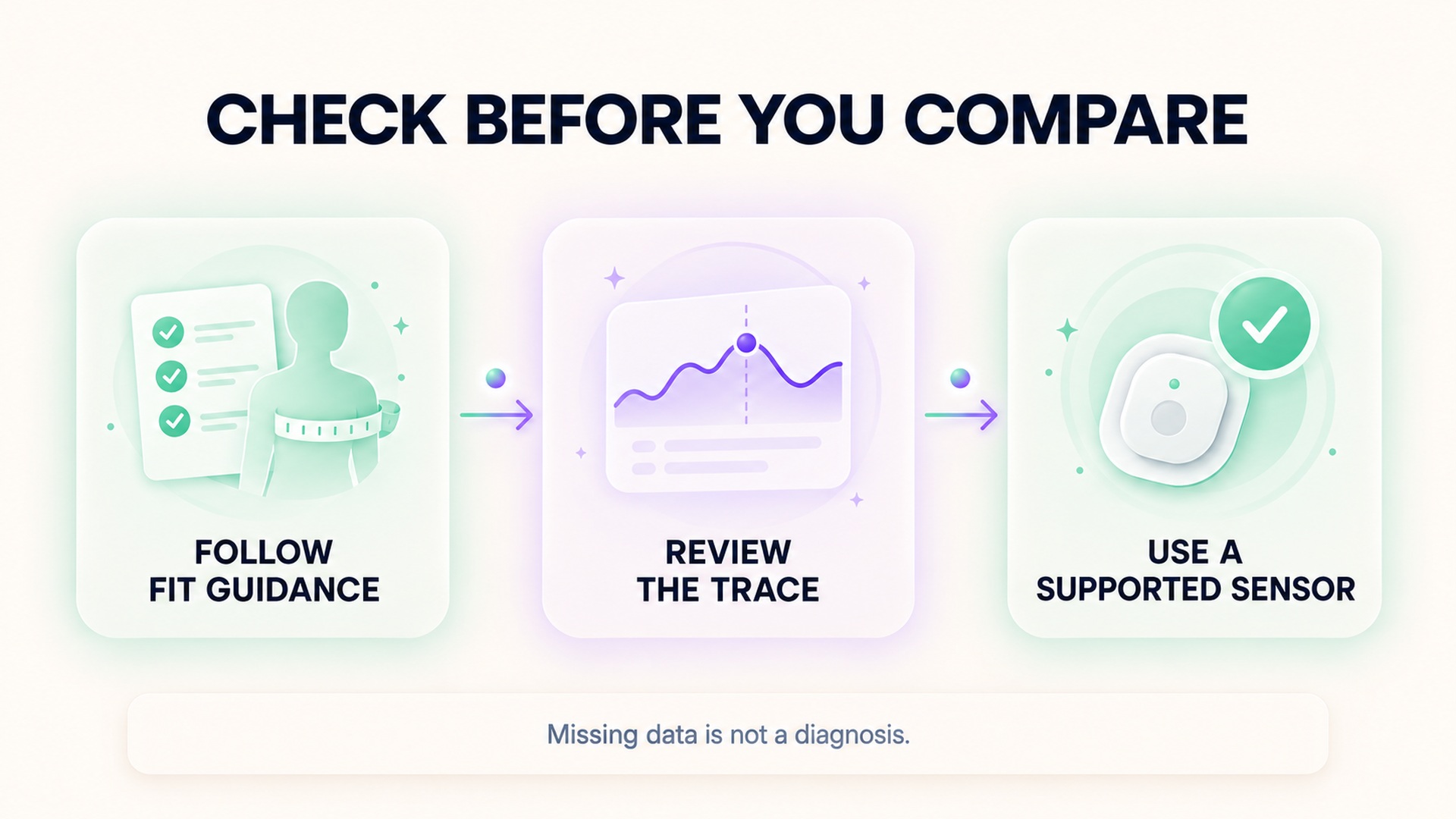
Follow the device's stated wearing position and temperature limits. Check that the sensor stays in close contact with the skin while remaining comfortable. If sleeves or equipment push the band out of place, correct that before using the trace. In cold conditions, protect the wrist and allow the device to acclimate according to its instructions. Some manufacturer guidance recommends warming up before an activity; that is a practical troubleshooting step, not a guarantee that a reading will become accurate.
If the product permits another supported location, compare it consistently and note the change. A chest strap or other compatible sensor uses a different measurement route and may help answer a workout question when optical wrist data are incomplete. Check that the app actually receives and records that sensor's signal; a later imported workout is not proof of live support. Avoid repeatedly tightening a band to force a reading, since excessive pressure can be uncomfortable and may itself alter contact or circulation.
A broader review of skin blood-flow responses describes how cutaneous vessels respond to cooling and why the effect can differ across the body. The review of human cutaneous vasoconstriction is physiology background, not a consumer-device accuracy test. It helps explain why a wrist or finger sensor may see a different local signal from a chest-based measurement without establishing that one specific reading is wrong.
Keep the device claim and the evidence in view
Wearable makers use different optical designs and algorithms, so published guidance and test results are not interchangeable across products. Manufacturer notes are most useful for checking their own fitting and operating instructions. Independent validation is useful for comparing tested models under stated conditions. Neither one describes every user or every session.
For example, a device support page may mention warming up before a cold-weather workout or adjusting fit. Another model may handle a similar condition differently. A practical optical heart-rate accuracy guide recommends warming up on cold mornings for the specified device family and describes cold-related effects in particular activities. Use such guidance as model-specific troubleshooting, not a universal physiological rule.
When you review a trace, keep the question narrow: did this device provide a usable pulse estimate at this time, in this location, during this activity? If the answer is no, record a gap and check the conditions. If the answer is yes, the estimate still has the limitations of its sensor and algorithm. A cold wrist can weaken optical data without diagnosing a heart or circulation condition.
Make a useful comparison
If you have access to a supported reference sensor, compare the signals during the same activity and time window. Check whether the optical chart has gaps or sudden changes while the reference trace remains available, but remember that different devices can sample and smooth data differently. A side-by-side comparison is a troubleshooting observation, not a laboratory validation. Record which signal came from which sensor and note the device placement.
Avoid comparing a cold outdoor session with a warm indoor session and attributing every difference to temperature. The activity, pace, clothing, wrist movement, band position, and warm-up can all change between sessions. If you want to see whether warmth or fit is associated with better readings, keep the activity and device setup as similar as practical and change only one condition. A related guide to how warm conditions can affect wearable heart-rate trends gives another example of why the environment belongs beside a sensor reading.
Use this comparison to decide whether to rely on that particular trace for the question at hand. If the optical signal is repeatedly absent under the same conditions, record it as a limitation and consult the device's support guidance. If symptoms are present, do not wait for a wearable comparison to tell you whether they matter. The sensor can help document a pattern, but only a clinical assessment can answer a medical question that depends on accurate measurement.
FAQ
Can cold weather make a wrist heart-rate reading disappear?
It can affect skin perfusion and optical signal quality for some devices and conditions. Fit, movement, activity, and device design also matter, so check the actual trace and product guidance before attributing a gap to cold.
Does a missing wrist reading mean my heart rate is dangerously low?
No. A missing sensor sample means the device did not provide a usable reading for that period. It cannot establish what the heart was doing. Respond to concerning symptoms directly and seek appropriate medical advice.
Should I tighten my wearable in cold weather?
Follow the device's fit instructions and aim for stable, comfortable skin contact. Do not overtighten it to force a signal. If the reading remains unreliable, use a supported alternative measurement route for the task.
*This article is for informational purposes only and is not a substitute for professional medical advice, diagnosis or treatment.*
Sources:
Polar·Frontiers in physiology·Apple Support·JMIR formative research·Journal of applied physiology (Bethesda, Md. : 1985)·Garmin Support
Related articles
Tattoos can affect optical heart rate readings differently from skin tone
Tattoo ink and natural skin pigmentation are distinct factors for optical heart-rate sensors. Learn how to check a device-specific trace without generalizing from one wearable study or treating a gap as a health finding.
Check live sensor support separately from workout import support
A heart-rate graph arriving after a workout does not show whether an external sensor streamed data live. Check sensor pairing, app compatibility, active recording, and later import as separate steps.

A heart rate export may not contain beat interval data
A heart-rate export can contain many beats-per-minute samples without preserving the interval between each beat. Learn which fields to check before treating a file as suitable for HRV analysis.

Checking pool length before trusting a swimming distance record
Pool distance depends on both the configured pool length and the number of lengths detected. Learn how to check those inputs before accepting a swimming distance record.

Why a longest workout record is different from a fastest distance record
A longest-workout record describes duration, while a fastest-distance record uses a defined distance and time. Learn how pause rules and segment boundaries affect each result.

Why a cycling power record needs its effort duration
A cycling power record needs its averaging window to show whether it reflects a brief peak or sustained effort. Learn how duration, sensor source, and workout context affect comparisons.

Keeping transitions visible in a multisport workout record
Transition periods are part of a multisport event’s full timing record. Learn how to keep T1 and T2 separate from sport splits and verify how each activity was timed.

How much confidence to place in wearable vertical oscillation
Vertical oscillation is a device-specific movement estimate, not a universal efficiency score. Learn how to compare readings with attention to speed, sensor placement, and validation limits.

Reading ground contact time without chasing the lowest number
Ground contact time is affected by pace, surface, fatigue, and sensor method. Learn how to compare similar segments without treating a lower reading as a universal goal.

Why running cadence and running speed need separate interpretation
Cadence describes step frequency, while speed describes distance over time. See how pace, sensor method, and conditions change what the two running metrics can tell you.