Blogs
Latest articles from ENSTA.
- Wearable

Why Peer Review Does Not Make a Wearable a Diagnostic Device
Peer review improves how research is examined, but it does not by itself establish a wearable as a diagnostic device. Learn what peer review adds and which clinical, regulatory, and measurement questions remain.
Mr.Apps · Sep 18, 2026
- Wearable

How to Read a Wearable Accuracy Claim Backed by a Company Study
A company-funded accuracy study can contain useful evidence without settling every question about a wearable. Use this checklist to inspect the reference standard, population, sample, endpoints, conflicts, and marketing claim.
Mr.Apps · Sep 18, 2026
- Wearable

Why More Decimal Places Do Not Make a Health Score More Accurate
A score displayed to two decimal places can still rest on noisy signals and uncertain assumptions. Learn how to separate display precision from measurement certainty before treating a finely graded health score as exact.
Mr.Apps · Sep 18, 2026
- Wearable

What a Health App Should Explain Before It Gives You a Score
A health score is easier to interpret when the app explains its inputs, time window, baseline, missing data, and update time. This checklist shows what transparent scoring should disclose before a number becomes a decision.
Mr.Apps · Sep 18, 2026
- Wearable

What to Do When an Alert Conflicts With Otherwise Normal Metrics
A single health alert can look alarming when the rest of the dashboard appears normal. This guide explains how to review the trigger, baseline, data quality, symptoms, and persistence before deciding what the signal means.
Mr.Apps · Sep 17, 2026
- Wearable

How to Separate a Wellness Alert From a Medical Warning
Wellness guidance and medical warnings may appear in similar-looking interfaces, but they do not make the same claim. This guide shows how to identify intended use, evidence, instructions, and the point where an app should not be your decision-maker.
Mr.Apps · Sep 17, 2026
- Wearable

Why Power and Heart Rate Tell Different Stories in Cycling
Power and heart rate measure different parts of a cycling session, so they can rise, fall, or stay stable in different ways. Learn how to read both signals with cadence, terrain, fatigue, and time in mind.
Mr.Apps · Sep 16, 2026
- Wearable

How to Track Isometric Holds When Movement Is Minimal
Isometric holds create force without obvious movement, so a wearable may record less than the muscles are doing. Learn how to combine duration, position, perceived effort, and symptoms when tracking static work.
Mr.Apps · Sep 16, 2026
- Wearable

Why Workout Frequency and Workout Intensity Need Separate Charts
Workout frequency and workout intensity describe different parts of a training pattern, so combining them in one chart can hide important changes. Learn how to track both without confusing more sessions with harder sessions.
Mr.Apps · Sep 16, 2026
- Wearable

How to Read Peak Heart Rate Without Treating It as the Whole Workout
Peak heart rate can show the highest recorded response in a workout, but it cannot describe the whole session by itself. This guide explains how to check the peak, interpret the surrounding trace, and pair it with effort and symptoms.
Mr.Apps · Sep 16, 2026
- Wearable

How to Log a Workout When No Activity Category Fits
A wrong activity label can distort calories, zones, and training summaries, while an overly broad label can hide what you actually did. Learn how to use a neutral record and preserve enough context for later review.
Mr.Apps · Sep 16, 2026
- Wearable

Why Average Heart Rate Can Undersell Stop-and-Start Exercise
Average heart rate can hide the repeated peaks and pauses that define stop-and-start exercise. Learn how to read the full trace, pair it with effort and movement, and avoid treating one summary number as the whole session.
Mr.Apps · Sep 16, 2026
- Wearable

Why Manual Corrections Need an Audit Trail in Health Data
Manual corrections can improve a health record while weakening it if the original value and reason disappear. This guide explains the minimum history to preserve when editing sleep, workouts, or wearable metrics.
Mr.Apps · Sep 15, 2026
- Wearable

How to Choose a Primary Data Source When Apps Record the Same Metric
Duplicate health metrics become difficult to interpret when several apps record the same field. This guide compares sensor ownership, timestamps, sampling, completeness, and safe source testing.
Mr.Apps · Sep 15, 2026
- Wearable

Why Step Counts Can Distort a Long-Term Health Metric
Steps can be useful activity context while still being an unstable input to a long-term health metric. This guide explains false counts, unrepresentative days, source duplication, and safer trend interpretation.
Mr.Apps · Sep 15, 2026
- Wearable

What to Check When Workout Heart Rate Will Not Sync
A workout can save correctly while its heart-rate stream fails to arrive in the summary app. This guide checks permissions, connections, source priority, workout mode, and timestamps without damaging the original session.
Mr.Apps · Sep 15, 2026
- Wearable

Why Treadmill Distance and Wearable Distance Often Disagree
Treadmill and wearable distance estimates come from different measurement paths. This guide explains calibration, stride assumptions, arm movement, speed changes, and how to compare indoor sessions fairly.
Mr.Apps · Sep 15, 2026
- Wearable

How to Correct a Workout When the Activity Type Is Wrong
A wrong activity label can distort distance, calories, zones, and comparisons without making the whole workout unusable. This guide shows what to correct, what to preserve, and how to keep the original record traceable.
Mr.Apps · Sep 15, 2026
- Wearable

What to Do When Yesterday's Wearable Data Disappears
Missing wearable data is often a sync or source problem rather than proof that the day never happened. This guide gives a non-destructive sequence for finding the original record and protecting the rest of your history.
Mr.Apps · Sep 15, 2026
- Wearable

How to Spot a Stale Readiness Score Before You Act on It
A readiness percentage can summarize selected wellness signals, but it cannot examine tissue, diagnose injury, or guarantee that a workout is safe. Use symptoms and movement quality before the score.
Mr.Apps · Sep 14, 2026
- Wearable

What to Check Before You Upgrade for a New Health Feature
A new health feature is useful only when the hardware, software, data history, and daily routine support it. Use this checklist before paying for an upgrade that may not improve a real decision.
Mr.Apps · Sep 14, 2026
- Wearable

The First Sign Your Health Tracker Needs a Data Cleanup
A health tracker can produce a confident-looking trend from incomplete, duplicated, or mismatched records. This guide explains the early signs of a data-quality problem and gives a short cleanup routine before you change a training or recovery decision.
Mr.Apps · Sep 10, 2026
- Wearable

Why Sensor Fit Can Change Your Overnight Data
Overnight wearable data depends on more than the sensor itself. Contact, comfort, placement, swelling, movement, and missing segments can change what the device records, so a sudden shift may be a fit issue rather than a body change.
Mr.Apps · Sep 10, 2026
- Wearable

The Best Way to Add Context to a Sudden Change in Wearable Data
A sudden change in wearable data can come from the body, the environment, the device, or the way the app processed the signal. This guide gives you a calm checklist for checking data quality, recording recent changes, and deciding whether to observe, adjust, or seek care.
Mr.Apps · Sep 10, 2026
- Wearable

How to Compare Your Heart Rate at the Same Easy Pace
Mr.Apps · Sep 10, 2026
- Wearable

How to Build a Simple Personal Dashboard From Wearable Data
A useful personal dashboard does not need every metric your wearable can collect. Choose a small set of signals, show their context, and review them on a schedule so the dashboard supports decisions instead of becoming another source of noise.
Mr.Apps · Sep 8, 2026
- Wearable

Can You Trust a Wearable During an Indoor Cycling Workout?
Indoor cycling can produce a useful heart-rate signal, but wrist-based readings still depend on fit, motion, sweat, intensity, and the selected workout mode. Learn how to check the recording and combine it with effort instead of treating every number as exact.
Mr.Apps · Sep 8, 2026
- Wearable

When Your Wearable Wants More Data Than You Want to Share
More connected data can make a wearable feature feel smarter, but it also expands what an app can read, store, and share. This guide explains how to review permissions, choose the minimum useful access, and keep health tracking practical without surrendering unnecessary information.
Mr.Apps · Sep 8, 2026
- Wearable

The Missing-Data Problem: When a Wearable Cannot See Your Steps
A missing step total does not always mean you were inactive. Fit, placement, arm movement, walking speed, and syncing can all change what a wearable records. Learn how to check the data and use a weekly trend without treating every gap as a personal failure.
Mr.Apps · Sep 8, 2026
- Wearable

Turn Your Wearable Into a Personal Experiment: How to Test One Habit Properly
A personal health experiment works best when it answers one decision with one controlled change. I share a practical baseline, measurement, and review method that turns wearable data into evidence you can actually use.
Mr.Apps · Sep 7, 2026
- Wearable

How Much Data Does a Wearable Need to Learn Your Real Baseline?
A wearable can produce numbers on day one, but a useful personal baseline requires clean, representative data across real life. I explain what seven, thirty, and ninety days can reveal, how illness and missing nights distort calibration, and why changing devices means starting a new measurement chapter.
Mr.Apps · Sep 4, 2026
- Wearable

Can Your Doctor Use Your Wearable Data? How to Prepare a Useful Health Summary
Wearable data becomes more useful in a medical appointment when it is edited into a clear clinical story rather than delivered as an archive. I show how to prepare a one-page summary with a baseline, dated changes, symptoms, relevant context, and only the charts that serve the question.
Mr.Apps · Sep 2, 2026
- Wearable

Best no-subscription wearables for sleep and recovery in 2026
The price on the box is not the price. Here's how subscription-free rings, bands, and watches actually compare on sleep, recovery, and what they cost you over three years.
Mr. Apps · Aug 20, 2026
- Sleep · Wearable

Best Smart Rings for Sleep Tracking in 2026
After weeks of switching between several sleep-tracking rings, I found no single model that wins on every metric that matters. This breaks down what actually affects accuracy, battery life, and subscription cost, along with which ring makes sense depending on whether you care most about precision, price, or your phone's operating system.
Mr. Apps · Aug 18, 2026
- Sleep · Wearable · Energy

GLP-1, Sleep, and Energy: What Wearables Can Help You Notice
By the second week of a multi-city speaking tour, my wearable's morning summary had become something I read more carefully than my calendar. Resting heart rate crept up, deep sleep dropped by nearly half, and my energy check-in sat at a two for four mornings straight — even though nothing about my routine had dramatically changed.
Mr. Apps · Aug 17, 2026
- Wearable · Energy
Apple Watch Body Battery: How Ensta Brings Garmin's Best Feature to Your Wrist
Looking for an Apple Watch body battery feature? Ensta's Energy Score gives Apple Watch users a simple 0-100 recovery and energy metric that works like Garmin's Body Battery.
Ensta Team · Aug 11, 2026
- Wearable

Respiratory Rate on a Wearable: What a Change Overnight Can Mean
Most people can guess their resting heart rate but have no idea how many breaths they take while asleep. That makes overnight respiratory rate one of the least understood numbers on a wearable, and one of the most useful once you have a personal baseline to compare against. Here is what actually moves it, how to tell a real change from a bad reading, and when a rise is worth acting on.
Mr. Apps · Aug 6, 2026
- Stress · Wearable
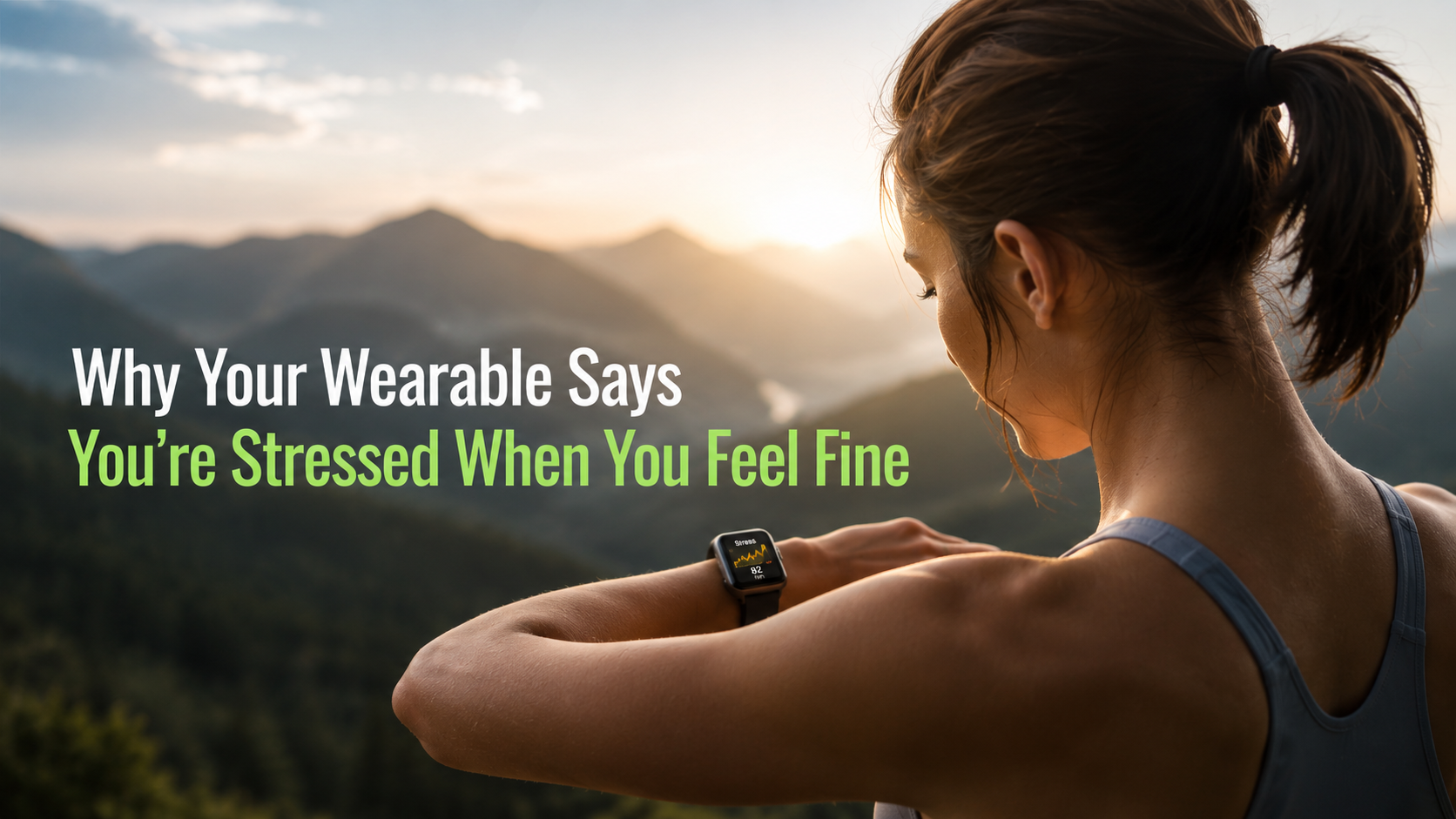
Why your wearable says you're stressed when you feel fine
Your watch measures physiological arousal, not worry. Caffeine, digestion, heat, short sleep, and a loose band can all push the score up while you feel fine.
Mr.Apps · Aug 4, 2026
- Wearable
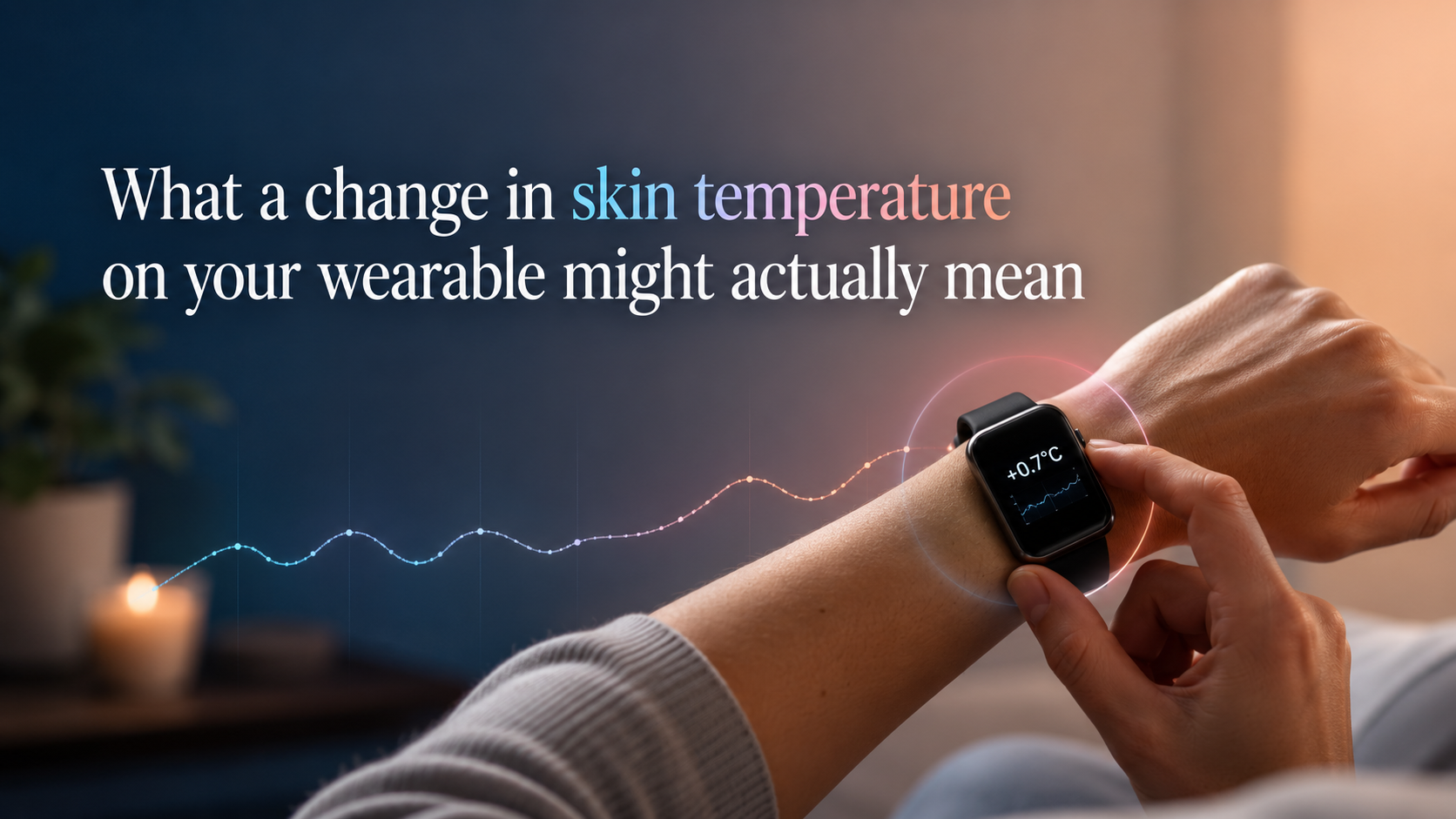
What a change in skin temperature on your wearable might actually mean
Your wearable's skin temperature isn't a fever reading. Learn what moves it at night, why deviation beats the number, and when to act.
Mr. Apps · Jul 31, 2026
- Recovery · Wearable
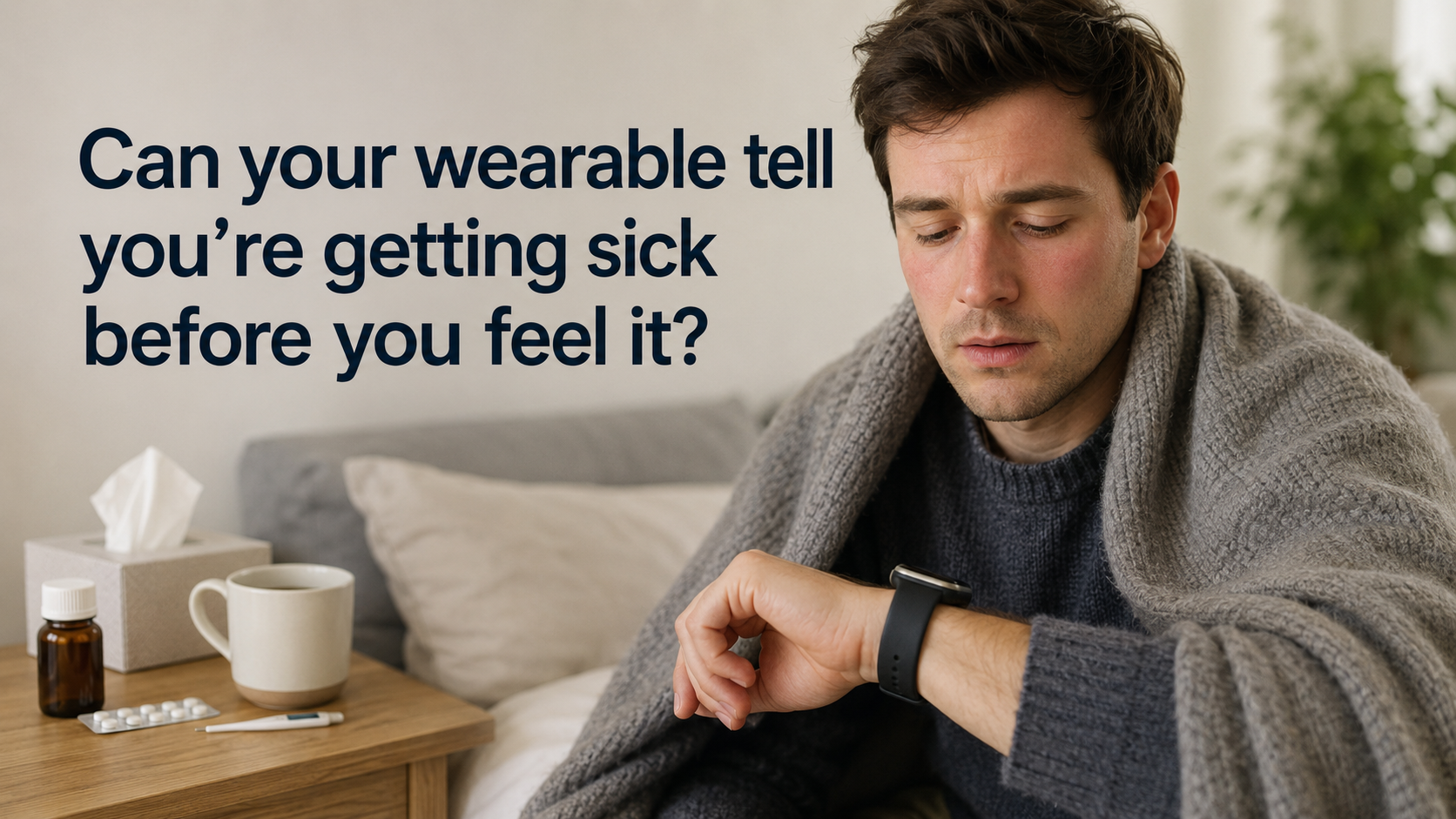
Can your wearable tell you're getting sick before you feel it?
Resting heart rate, HRV, and temperature can shift before you feel sick. What early illness signals from wearables really mean, and how to respond.
Mr. Apps · Jul 30, 2026