Why Hot Weather Can Raise Heart Rate and Lower Recovery
By Mr.Apps · Jul 16, 2026
Category:Recovery
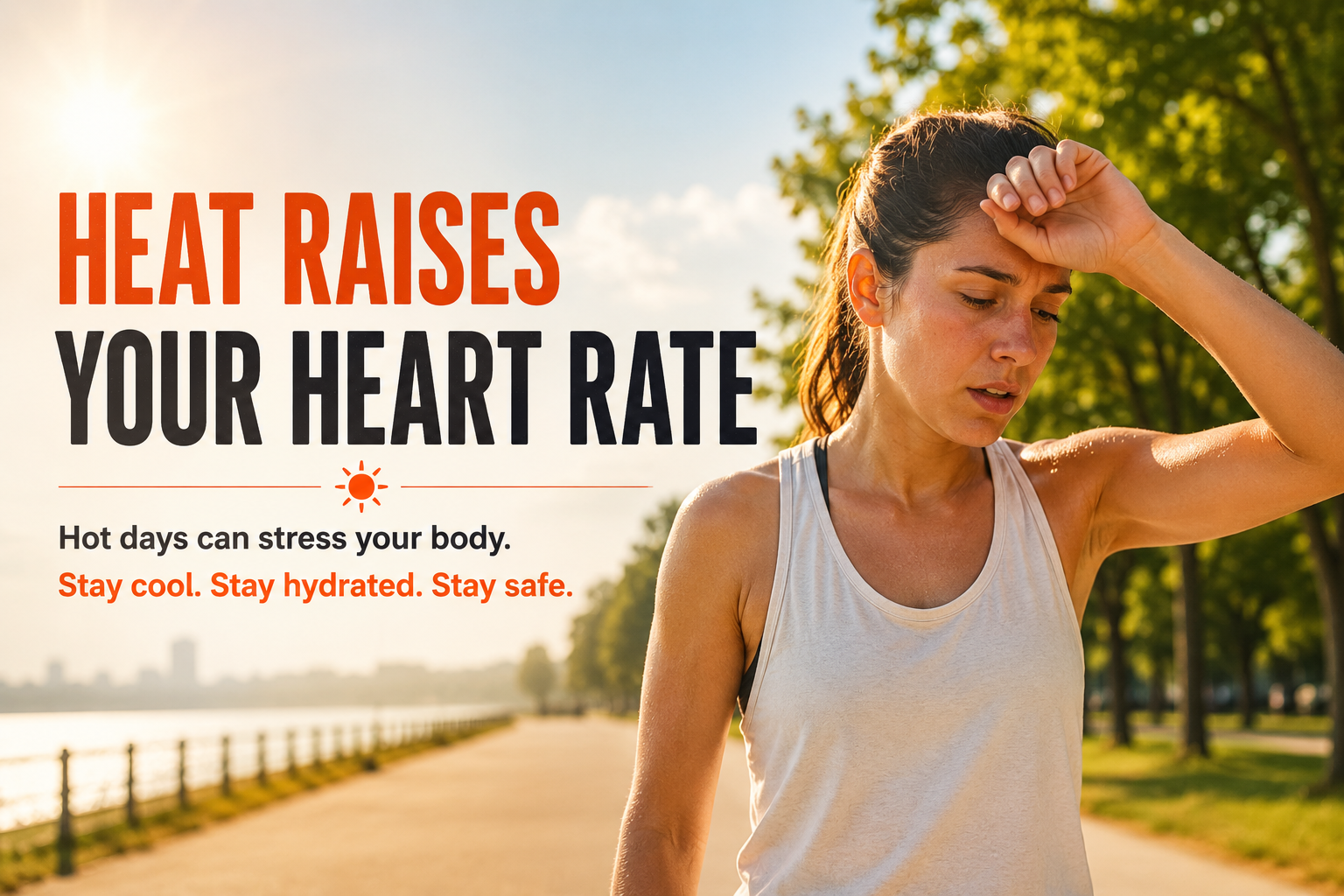
Hot weather has a sneaky way of making a normal day feel like a harder day.
You go for the same walk. Same route. Same pace. Nothing special. Then your watch shows a higher heart rate than usual, your recovery looks worse the next morning, and your body feels like it worked harder than the activity deserved.
That is not always your imagination.
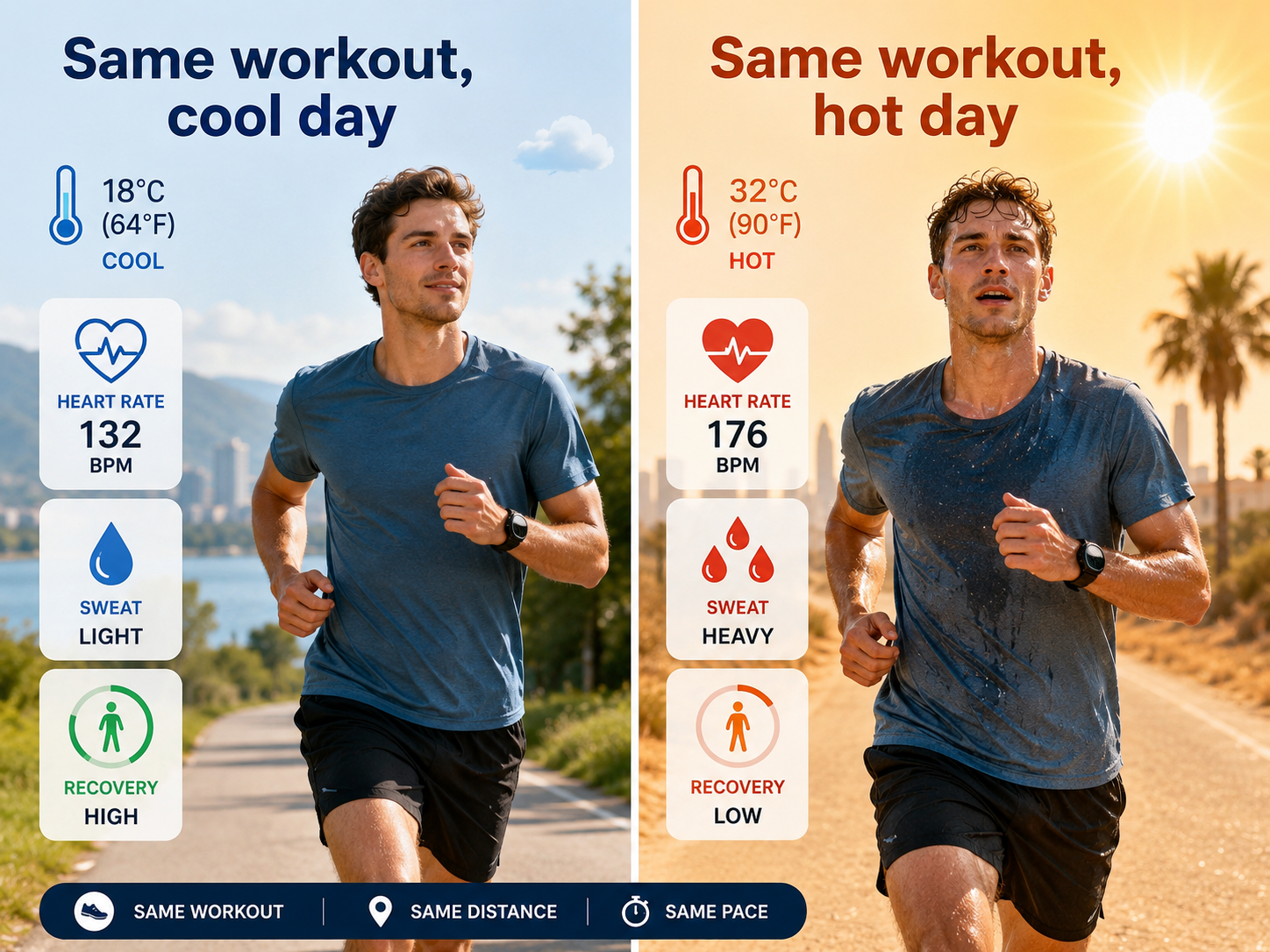
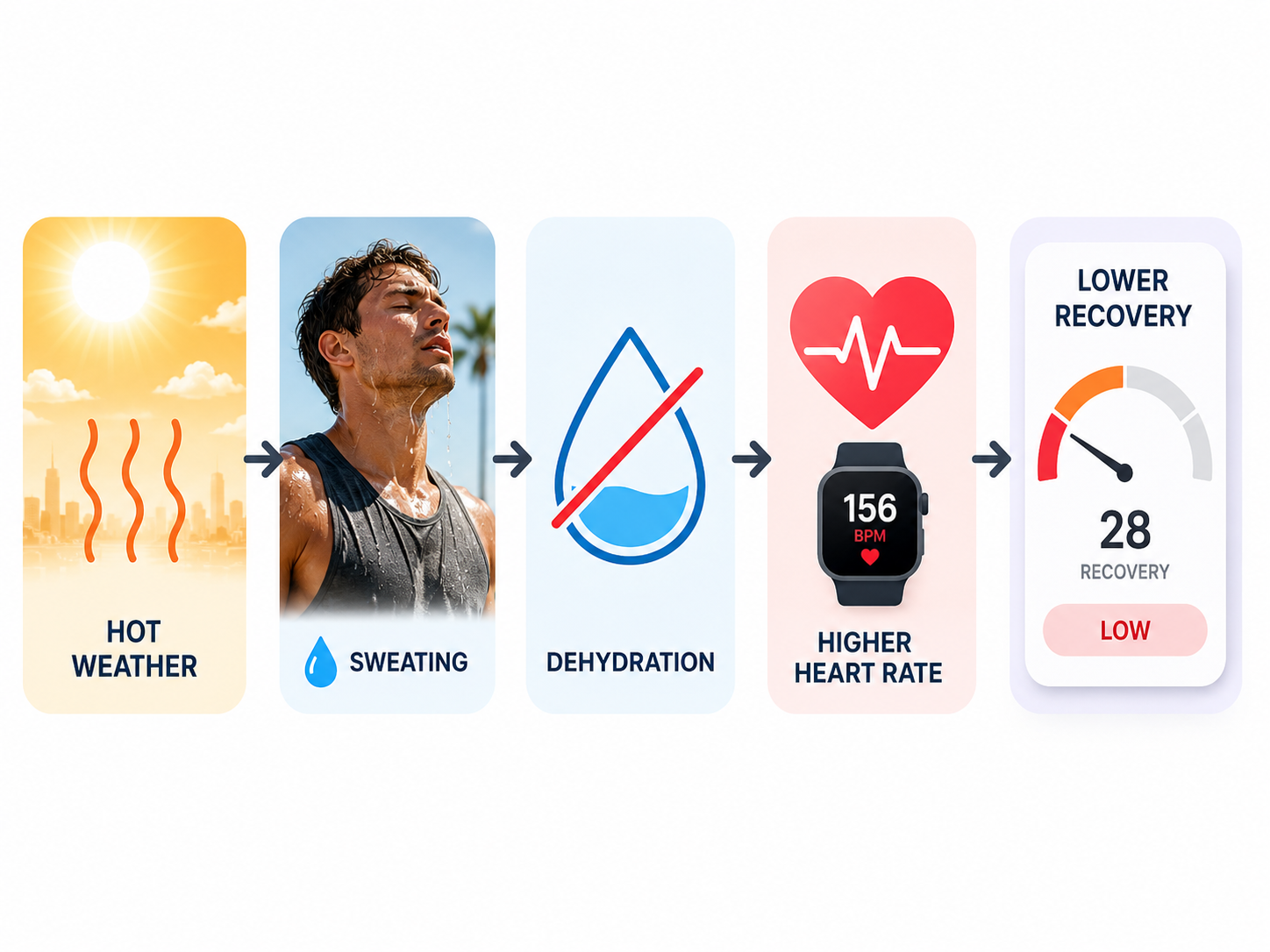
Heat changes the cost of normal life. The body has to work harder to cool itself, move blood toward the skin, manage sweat loss, protect blood pressure, and keep internal temperature stable. So even if the workout, walk, commute, or workday looks normal on paper, the body may experience it as more strain.
The CDC explains that heat stress can increase demand on the heart and cardiovascular system and contribute to dehydration and electrolyte imbalance. The American Heart Association also warns that hot weather can put extra strain on the heart, especially for people with cardiovascular conditions.
That is the simple reason hot weather can raise heart rate and lower recovery. Your body is not just doing the activity. It is also doing temperature control.
Why your heart rate rises in the heat
Heart rate is not only a fitness signal. It is also a stress signal.
When it is hot, the body needs to move more blood toward the skin so heat can leave the body. Sweating also increases fluid loss. As fluid levels drop, blood volume can be affected, and the heart may need to work harder to keep blood moving around the body.
That can make heart rate rise even if pace, effort, or workload stays the same.
This is why an easy run can feel strangely difficult in summer. It is why a walk that felt relaxed in spring can feel heavier in July. It is also why standing outside in heat can sometimes feel tiring even without much movement.
Heat adds a hidden workload.
The Mayo Clinic lists dehydration as one cause of heat exhaustion because it reduces the body’s ability to sweat and maintain normal temperature. That matters for energy tracking because dehydration can push the body into a more strained state, which can show up as a higher heart rate.
This does not mean every higher heart rate in heat is dangerous. Sometimes it is simply the body adapting. But it does mean a hot day should not be judged the same way as a cool day.
Same pace does not always mean same strain.
Why recovery can drop after a hot day
Recovery scores, body battery scores, and energy scores usually respond to more than workouts.
They may look at resting heart rate, HRV, sleep, activity, stress, and sometimes temperature or other signals. Heat can affect several of those at once.
A hot day can:
- raise daytime heart rate
- keep the body more activated after activity
- increase fluid and electrolyte loss
- make sleep lighter or more interrupted
- increase perceived effort
- make the next morning feel heavier
That is why recovery can look worse after a hot day even if training load did not change.
A day in the heat can create strain without obvious “exercise.” Walking in strong sun, commuting without air conditioning, sleeping in a hot room, or doing errands during a heatwave can all make the body work harder.
A 2025 Nature Communications meta-analysis on heat-induced changes in cardiac function reviewed laboratory evidence on how acute heat stress affects the heart. The practical takeaway for everyday users is not complicated: heat is a physiological stressor, not just uncomfortable weather.
So if recovery is lower during hot weather, it may not mean fitness suddenly dropped. It may mean the environment raised the body’s baseline workload.
Heat, HRV, and why your app may say you are not recovered
HRV, or heart rate variability, is often used as a rough window into autonomic nervous system balance. When the body is relaxed and recovering well, HRV is often higher relative to a person’s usual baseline. When the body is under strain, HRV may drop.
Heat can shift that balance.
When the body is trying to cool itself, maintain blood pressure, replace fluids, and recover from activity, it may stay in a more activated state. That can show up as lower HRV or higher resting heart rate, especially overnight.
A review on cardiac autonomic responses to heat and cold discusses how temperature exposure can influence sympathetic and parasympathetic activity, which is the same general system many recovery apps try to interpret through HRV.
In plain English: heat can make the nervous system look less recovered.
That does not mean the app is wrong. It may be picking up a real stress signal. But the reason may not be “you trained too hard.” The reason may be “you trained normally, but the day was hot, sleep was worse, and hydration was off.”
That context matters.
Why hot nights can hurt recovery more than hot afternoons
A hot afternoon can feel unpleasant. A hot night can be worse for recovery.
Sleep is when the body is supposed to downshift. If the room is too hot, the body may struggle to cool down, sleep can become more restless, and recovery signals can look worse the next morning.
This is one of the most common summer patterns:
- decent day
- warm evening
- bad sleep
- higher resting heart rate
- lower HRV
- lower energy score
- more caffeine the next day
- repeat
The problem is not only the heat. It is the heat plus the sleep disruption.
The CDC recommends staying cool, staying hydrated, and knowing heat-related symptoms because hot days can affect anyone, especially people with certain health conditions. That advice applies to sleep too. Cooling the bedroom, hydrating earlier, and avoiding heavy late meals or alcohol can make a real difference during hot weather.
Recovery is not only what happens during workouts. It is also what happens overnight.
Why the same workout feels harder in summer
A workout does not happen in a vacuum.
A 5 km run in cool weather and the same 5 km run in heat are not the same physiological task. The route may be identical. The pace may be identical. The heart rate may not be.
In the heat, the body is splitting resources. It has to send blood to working muscles and also support cooling. Sweat loss can reduce fluid availability. Perceived effort rises. The session may feel harder earlier, and the body may need more recovery afterward.
That is why summer training often needs adjustment.
The mistake is trying to force winter numbers into summer conditions.
Instead of judging only by pace, pay attention to:
- heart rate
- perceived effort
- temperature
- humidity
- hydration
- sleep quality
- next-day recovery
If heart rate is unusually high at an easy pace, the body may be saying the environment is adding load.
That does not mean skip everything. It means scale intelligently.
How to adjust training and daily activity in hot weather
Hot weather does not require a complete stop. It requires a smarter plan.
Move hard sessions earlier or later
Avoid the hottest part of the day when possible. Morning or evening training is usually easier on the body than midday heat.
Lower intensity when heart rate runs high
If an easy run feels like a tempo run, treat the conditions as part of the workout. Slow down, shorten the session, or switch to lower-intensity movement.
Hydrate before the problem shows up
Do not wait until dizziness, headache, or heavy fatigue appears. Hydration is easier to maintain than to rescue.
Add recovery margin
A hard session in heat may need more recovery than the same session in cool weather. That can mean lighter training the next day, more sleep priority, or less total load.
Respect humidity
Humidity makes cooling harder because sweat does not evaporate as easily. A humid day can feel more draining than the temperature number suggests.
Watch the night after
The next morning matters. If HRV drops, resting heart rate rises, or energy feels unusually low after heat exposure, consider that information before stacking more strain.
When hot weather becomes a health risk
Most heat-related energy dips are manageable. But heat can become dangerous.
The Mayo Clinic lists heat exhaustion symptoms such as heavy sweating, weakness, dizziness, headache, nausea, and a rapid pulse. Heat stroke is more serious and needs urgent medical attention.
The CDC also emphasizes knowing heat-related symptoms and taking action early. Hot weather can affect anyone, but risk is higher for older adults, children, pregnant people, people with chronic conditions, outdoor workers, athletes, and people taking certain medications.
Get medical help urgently if there is confusion, fainting, chest pain, trouble breathing, very high body temperature, or symptoms that do not improve with cooling and fluids.
An app can show a higher heart rate or lower recovery. It cannot decide whether heat illness is happening.
What to do when your recovery drops in hot weather
Start with the boring basics because they usually matter most.
Today
- Move into shade or a cooler environment.
- Drink water and consider electrolytes if sweating heavily.
- Keep movement light if heart rate is unusually high.
- Avoid alcohol if recovery already looks poor.
- Cool down before bed.
Tonight
- Make the bedroom cooler if possible.
- Take a lukewarm shower if it helps.
- Avoid heavy late meals and alcohol.
- Hydrate earlier, not right before bed.
- Give sleep a better chance to do its job.
This week
- Compare hot-day scores with cooler-day scores.
- Look for repeated patterns in HRV, resting heart rate, sleep, and energy.
- Shift hard training away from the hottest hours.
- Treat heat as load, not background scenery.
That last line is the whole point.
Heat is load.
How energy apps should interpret hot weather
This is where energy tracking gets interesting.
A good recovery app should not only ask, “How much did you move?” It should also ask, “What conditions did the body move through?”
A low recovery score after a hot day may not mean laziness, poor fitness, or a failed routine. It may mean:
- sleep was warmer and worse
- hydration was lower
- heart rate stayed elevated
- the same workout cost more
- the nervous system stayed more activated
That is why context matters so much. A number without context can make people feel confused. A number with context can help them adjust.
The best energy tracking should explain the difference between:
- “You trained too hard”
- “You slept badly”
- “You are getting sick”
- “The heat made the same day more expensive”
That is the kind of insight people actually need.
The honest take
Hot weather can raise heart rate and lower recovery because the body is doing extra work.
It is cooling itself. Moving blood toward the skin. Managing sweat and fluid loss. Protecting blood pressure. Trying to sleep in warmer conditions. Recovering from activity that suddenly costs more than usual.
So when your recovery score drops during a heatwave, do not automatically assume you lost fitness or failed your routine. The environment may have changed the workload.
The smartest response is not panic. It is adjustment.
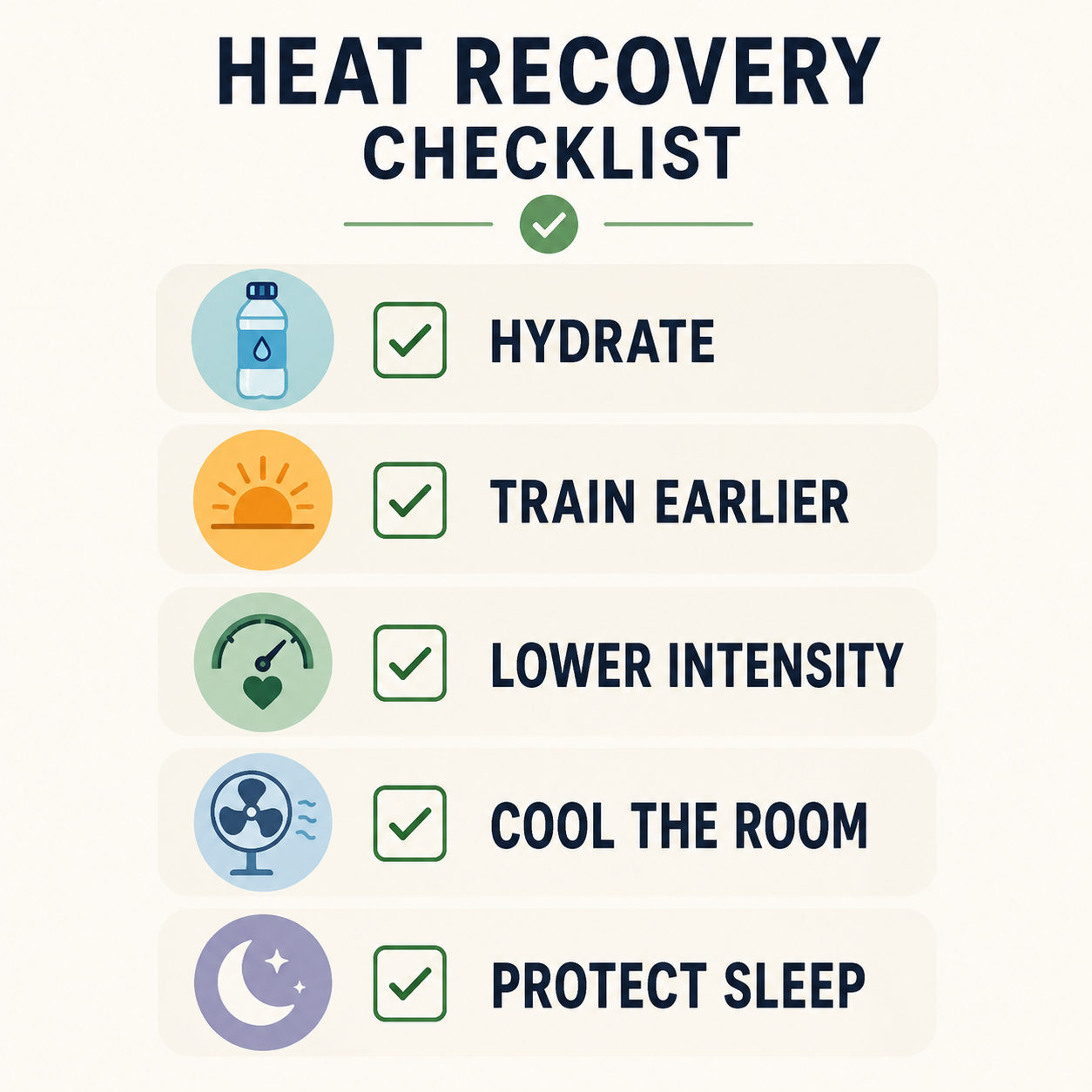
Train earlier or easier. Hydrate before you crash. Cool down properly. Protect sleep. Watch resting heart rate and HRV trends. Treat heat as part of the load.
Because in hot weather, your body may be working harder than your calendar admits.
FAQ
Why does my heart rate go up in hot weather?
Hot weather makes the body work harder to cool itself. More blood moves toward the skin, sweating increases, and dehydration can make the heart work harder. That can raise heart rate even at the same pace or effort.
Can heat lower HRV?
Yes, it can. Heat stress can keep the body more activated, which may show up as lower HRV or higher resting heart rate, especially if sleep and hydration are also affected.
Why is my recovery score lower in summer?
Summer heat can affect sleep, hydration, heart rate, perceived effort, and nervous system strain. Those changes can lower recovery even when your workout routine has not changed.
Should I stop exercising when it is hot?
Not always. But it is smart to reduce intensity, avoid the hottest part of the day, hydrate well, and pay attention to warning signs. Some people, especially those with health conditions, need extra caution.
What are warning signs of heat exhaustion?
Warning signs can include heavy sweating, weakness, dizziness, headache, nausea, rapid pulse, and feeling faint. Confusion, fainting, chest pain, or trouble breathing need urgent medical attention.
*This article is for informational purposes only and is not a substitute for professional medical advice, diagnosis or treatment.*
Sources:
CDC — Clinical Overview of Heat and Cardiovascular Disease·CDC — About Heat and Your Health·American Heart Association — Protect Your Heart in the Heat·American Heart Association Newsroom·Mayo Clinic — Heat Exhaustion·Mayo Clinic — Heat Exhaustion: Diagnosis and Treatment·Nature Communications·PMC — Cardiac Parasympathetic Withdrawal and Sympathetic Activity
Related articles
Best Apps to Track Poor Recovery and Fatigue in 2026

Your Bedroom May Be Too Warm for Good Recovery
For two summers, I lived in a bedroom that never quite cooled down after dark, and a heart rate tracker I was wearing for something else entirely showed me exactly what that was costing me overnight. It turns out a warm room doesn't just make sleep less pleasant. It measurably raises heart rate, lowers heart rate variability, and cuts into the recovery your body is supposed to get while you're asleep. Here's what the research says about why, who's most affected, and the small changes that actually help.

Why jet lag hits harder after some flights and how to recover faster
Some time zone changes barely touch you, and others wreck you completely, even when the shift on paper looks about the same. The difference usually comes down to direction: eastward travel fights your body's natural clock in a way westward travel doesn't, which is also why "I slept a full night" doesn't always mean you're actually recovered. Here's what the research says about why that happens, and a simple first-48-hours plan built around light, timing, and realistic expectations rather than gimmicks.
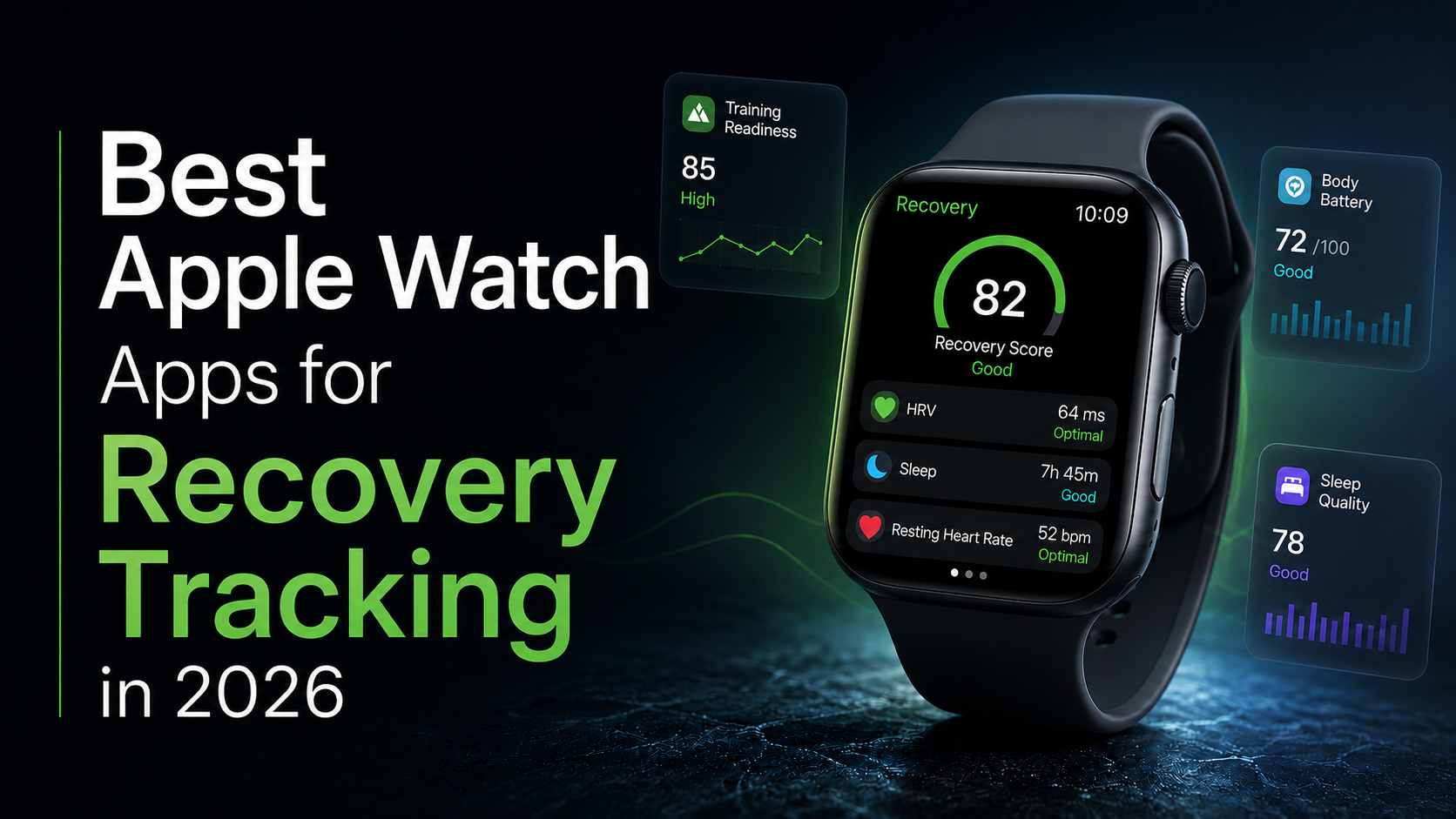
Best Apple Watch Apps for Recovery Tracking in 2026
Your Apple Watch already tracks sleep, HRV, heart rate, and activity, but recovery can still feel confusing without clear interpretation. This guide compares the best Apple Watch recovery apps for 2026, from simple daily energy scores to deeper training-readiness tools, helping you choose the right app for your goals.
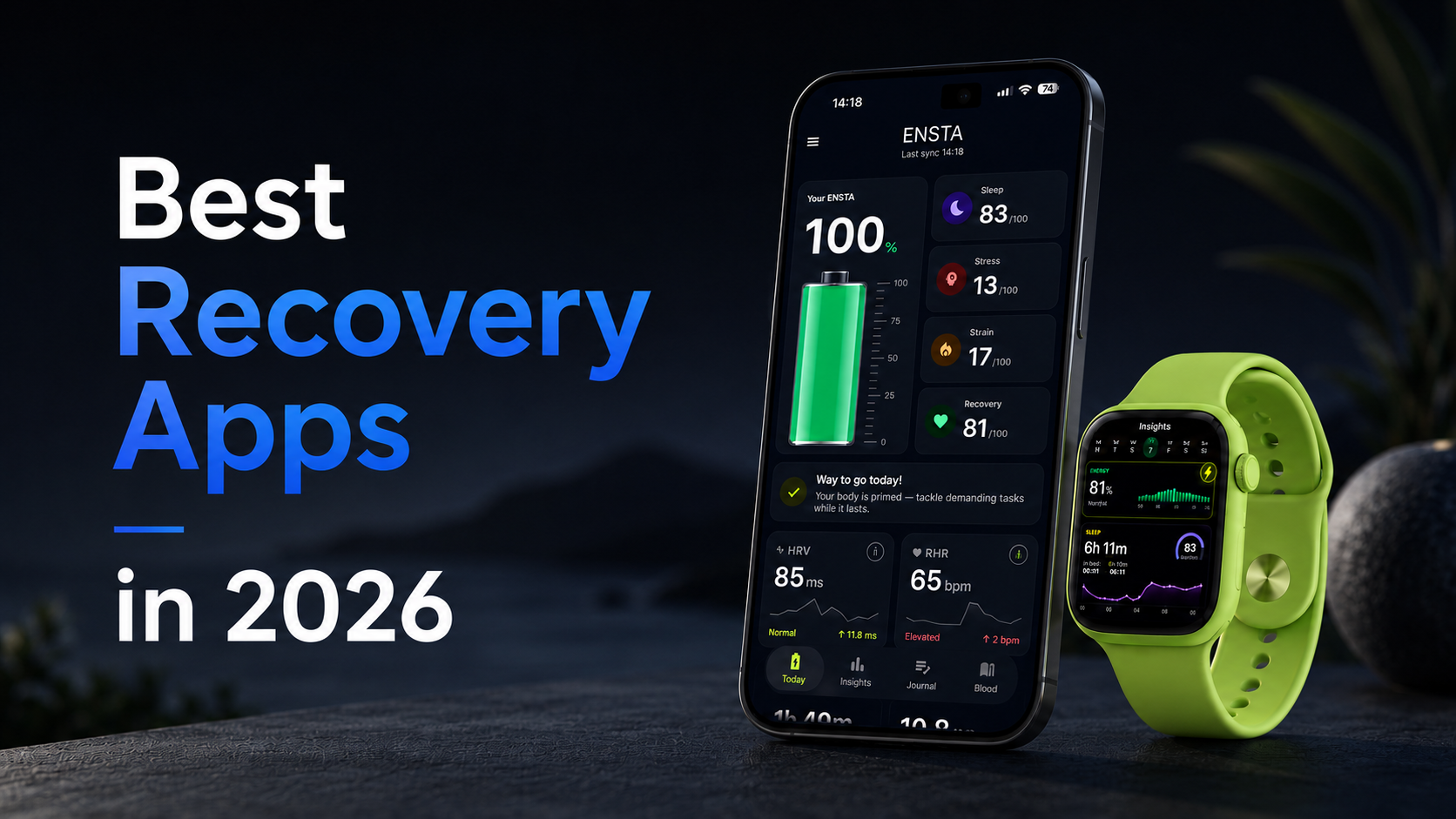
Best Recovery Apps in 2026
Compare the best recovery apps in 2026, including Ensta, WHOOP, Oura, Athlytic, Elite HRV, and Muscle Recovery Tracker. Learn which recovery tracker is best for your body, sleep, HRV, stress, strain, training load, and daily energy score — whether you want a simple free recovery app, an Apple Watch recovery app, a sleep-focused readiness score, or an athlete-grade recovery tracker.