Dry chest strap electrodes can distort the start of a workout
By Mr.Apps · Oct 21, 2026
Category:Wearable
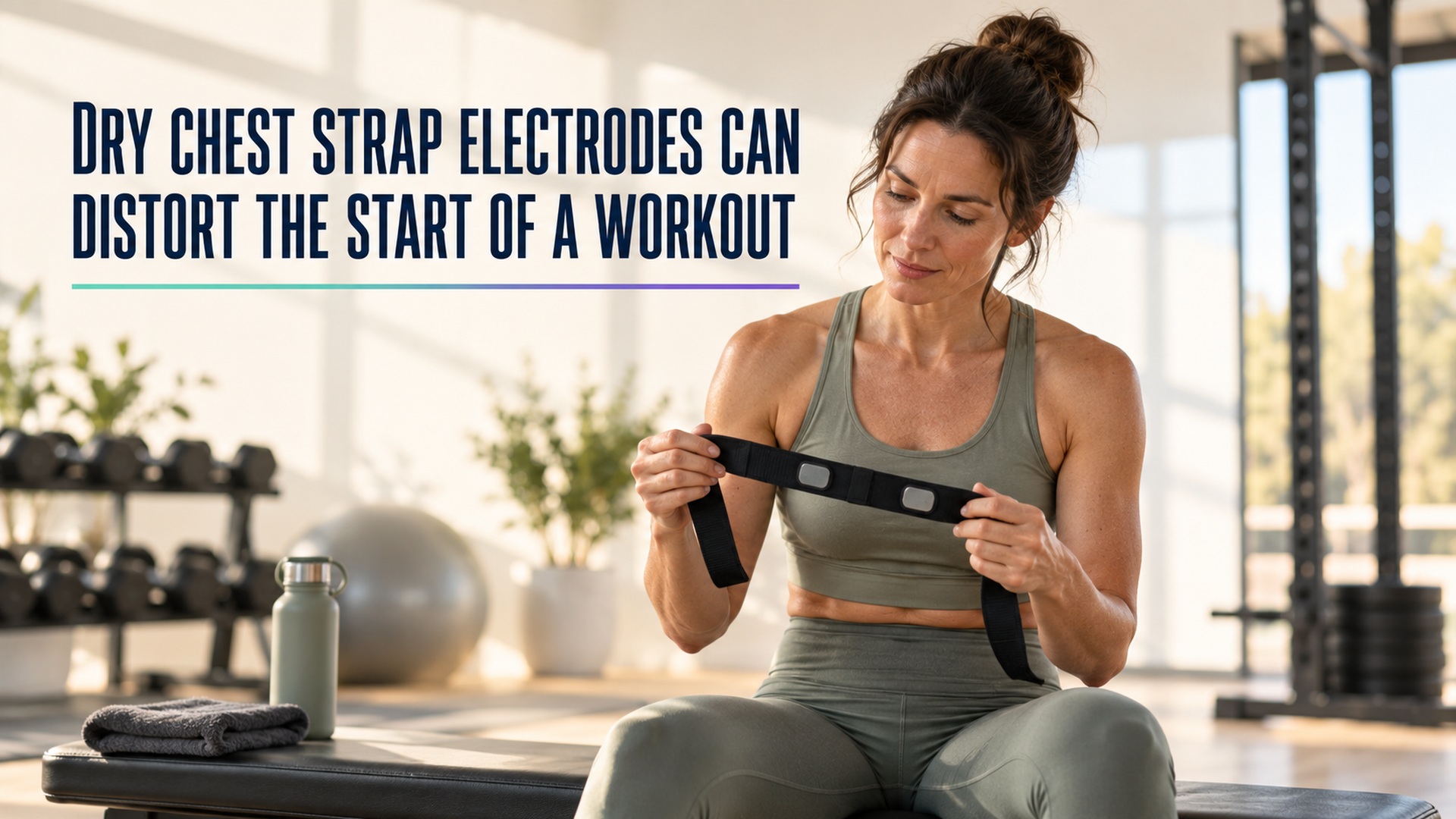
A chest strap can show an unusual heart-rate trace at the start of a workout when its electrodes do not have stable contact with the skin. Some straps use dry conductive areas or rely on moisture to improve the electrical connection. If the skin and electrode surface are dry, loose, dirty, or moving against each other, the first readings may jump, disappear, or look inconsistent before the signal settles.
This is a troubleshooting possibility, not the only explanation for an unusual heart rate. Strap fit, battery state, pairing, static from clothing, movement, and the person's actual response to exercise can all affect what appears on screen. Check the sensor setup and the activity context before deciding that a startup spike represents either a real physiological change or a faulty device.
What a chest strap measures
An electrical chest strap detects the small electrical activity associated with heartbeats through electrodes held against the torso. The sensor needs a usable connection across the electrode areas and the skin. If that contact changes from moment to moment, the recorded trace can include noise or missed detections. The strap can also move, shift pressure, or rub against clothing while the person begins to run or cycle.
The manufacturer instructions are the right place to start because different straps use different electrode materials and setup steps. Some specify moistening textile electrode areas before use. Others use a dry-contact design or have a different preparation process. The troubleshooting guidance for an electrical chest sensor describes moisture, fit, dirt, and static as possible contributors for specific textile-strap models; those details should not be generalized to every strap.
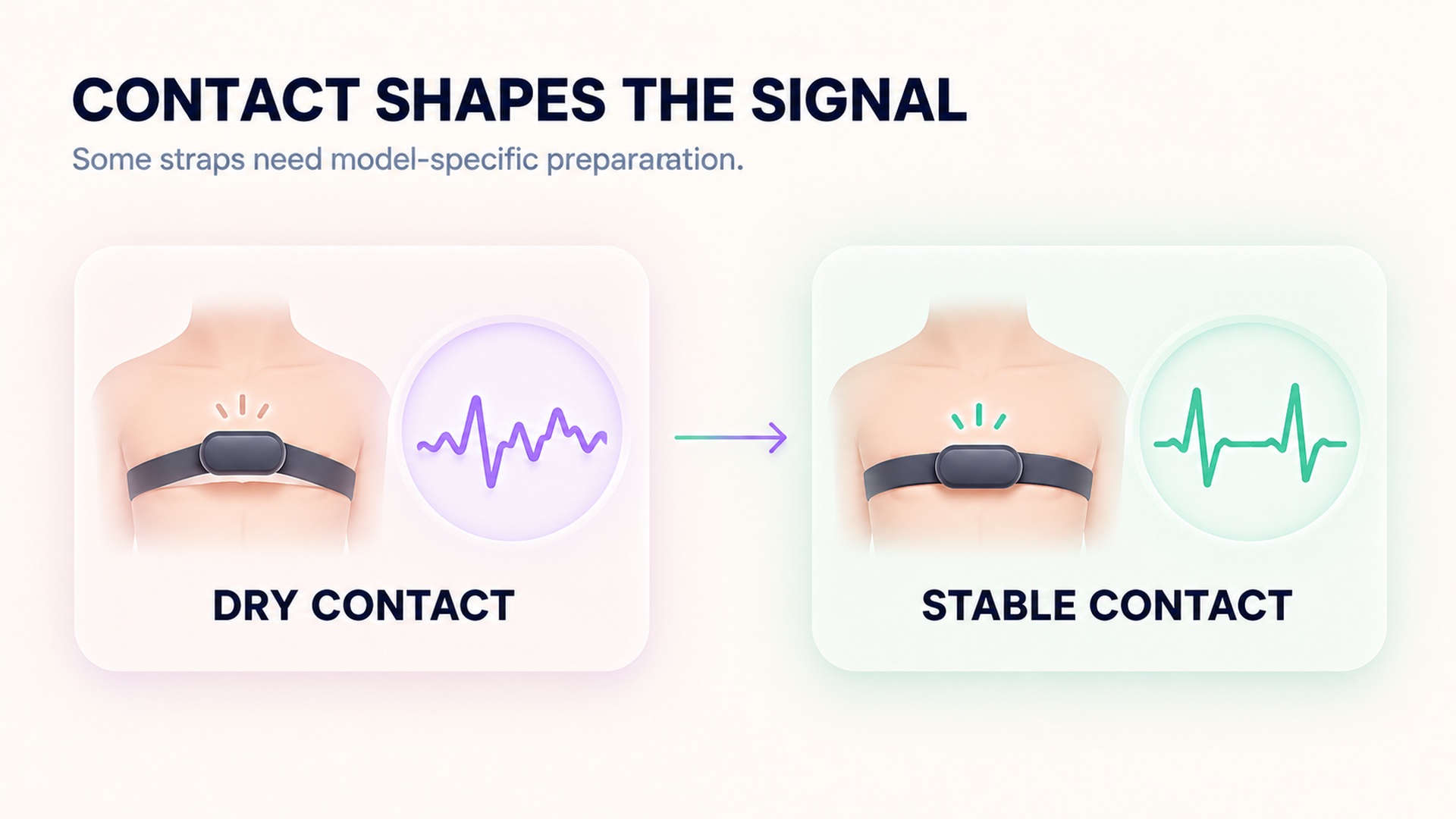
The key point is contact, not the label on the sensor. A strap advertised as “dry” may still depend on stable skin contact and consistent pressure. A textile electrode can behave differently from a gelled disposable ECG electrode. Research reviews describe how skin hydration, contact area, electrode material, and movement can change the electrical interface. The review of wearable textile ECG electrodes discusses these mechanisms across research designs and sensor types.
Why the first minutes can look different
Before sweating begins, the skin and electrode surfaces may be relatively dry. If the model's instructions call for moisture, the contact at the beginning may be weaker until the prescribed preparation or natural perspiration improves it. A trace may then become more stable during the warm-up. That pattern is possible, but it does not prove that dryness caused a specific abnormal value.
Some chest straps can also pick up signals from static electricity when a synthetic shirt flutters or rubs against the sensor, especially when the air is dry or the activity is windy. A strap that is too loose can move with each step; one that is uncomfortable or excessively tight is not a suitable fix. Battery and transmission problems can also interrupt data, so confirm that the sensor is powered and paired as the instructions describe.
The relationship between skin hydration and electrode contact is part of broader biopotential measurement research. One study of skin-electrode contact impedance and hydration examined how the interface behaves with different electrode materials and skin conditions. It provides context for why contact can change the signal, but it does not test every consumer strap during exercise or establish a universal wetting requirement.
Check the setup before interpreting the trace
Before starting, inspect the strap and connector for dirt, dried sweat, wear, or loose snaps. Follow the exact manufacturer's steps for attaching the transmitter and positioning the electrodes. If that model's directions call for moistening the contact areas, do so as instructed. Place the strap where the manual specifies and adjust it to stay in place comfortably while you move.
Then look at the live signal before the workout becomes demanding. If the sensor indicator says it is searching or disconnected, resolve pairing or battery issues first. If it reports a connection but the graph is unstable, stop safely and check that the electrodes remain against the skin and that the strap has not shifted. Change one condition at a time so the result is interpretable.
The wearing instructions for a textile heart-rate strap show an example of checking the electrode areas, placement, and comfortable fit. A separate chest-strap setup guide also describes preparing the electrodes and fastening the strap. Both are product-specific instructions; use the manual for the device you own.
If the reading remains erratic after you check the contact, review the saved file. See whether the issue lasts only at the start or continues throughout the session. Look for gaps, flat sections, or abrupt changes. Compare the same period with a second source only if you can do so safely and the source is suitable for that activity. The two readings may use different methods, sample rates, or smoothing, so a difference does not by itself tell you which sensor is wrong.
Separate contact troubleshooting from heart-rate response
Heart rate can change quickly when a person begins exercising, especially with a sudden increase in effort. The sensor may also take time to establish a consistent signal. These can overlap in the first minute, so avoid assuming that every early spike is an electrode problem. Consider the effort, warm-up, symptoms, and whether the strap trace becomes stable after contact is checked.
Research on chest straps and alternative sensor placement during exercise has found that mechanical design and placement can affect signal quality and derived estimates. The specific test setup and participants limit the conclusion; it supports checking how a sensor is worn, not a blanket statement that one strap is always better in every sport.
You can also compare signal continuity rather than fixating on one displayed number. A stable, continuous trace that follows a gradual change in effort answers a different question from a short burst of implausible values or a gap that appears when the strap shifts. Device-specific troubleshooting steps should come before conclusions about fitness, arrhythmia, or the intensity of a workout.
A useful internal guide on why average heart rate can undersell stop-and-start exercise discusses how workout structure affects heart-rate summaries. It is relevant after the sensor signal is usable; it cannot repair a poor electrode connection or prove that the first readings were accurate.
Run a short startup check
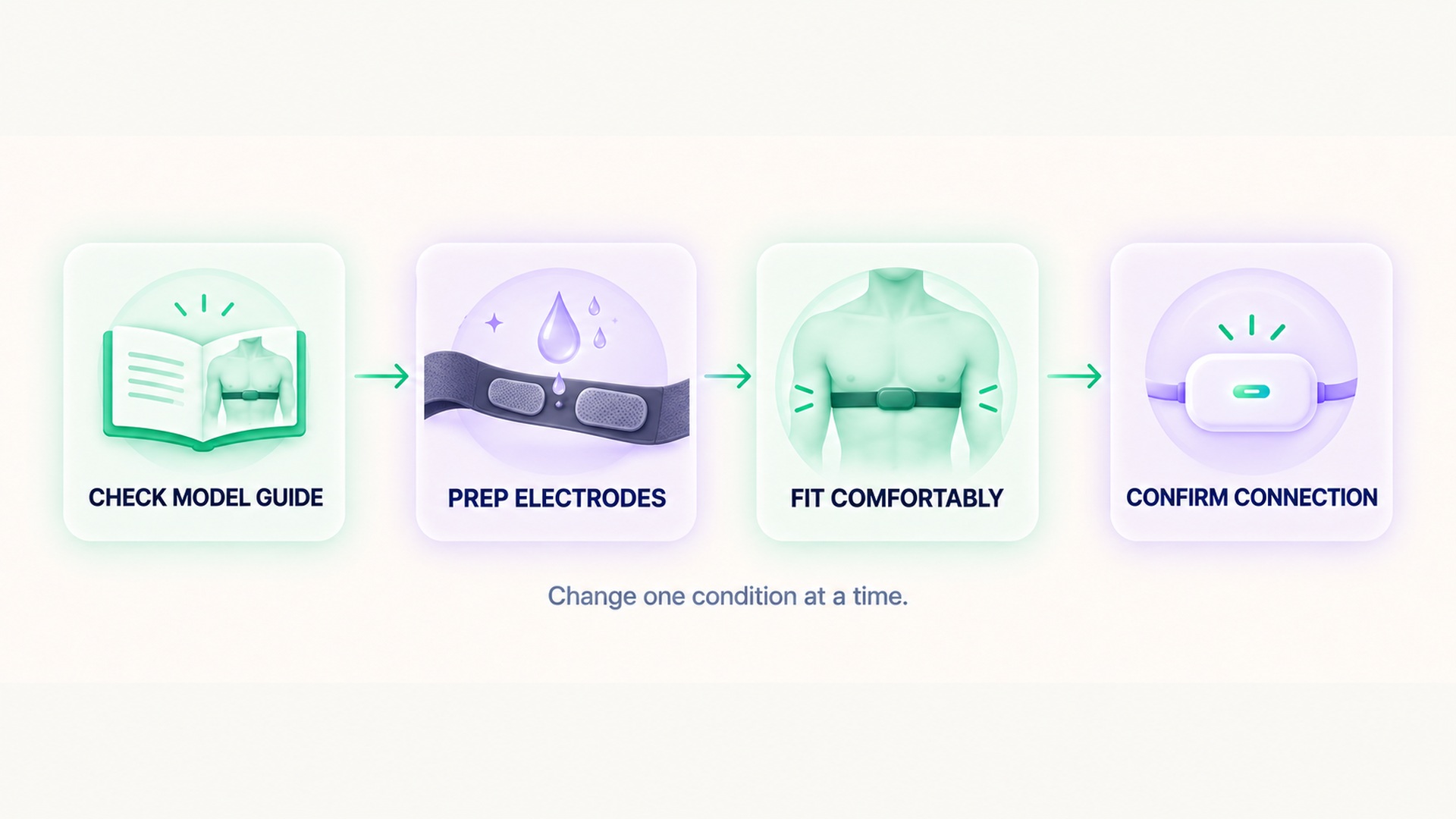
If you are troubleshooting, check the strap before the workout begins rather than waiting until an interval or hard effort. Review the electrode surface and attachment points, follow the model's preparation instructions, and confirm that the recording app shows the strap as connected. Start with an easy warm-up and observe whether the trace is continuous before adding intensity. Stop safely if the strap shifts or the displayed values become implausible.
When you repeat the check, keep the sensor, placement, workout mode, and initial activity similar. Change only one contact condition, such as cleaning the strap or applying moisture when the manufacturer recommends it. Note whether the trace changes and how long the check lasted. This is a useful troubleshooting comparison, but it is not a controlled equipment validation and cannot prove that moisture alone caused the earlier result.
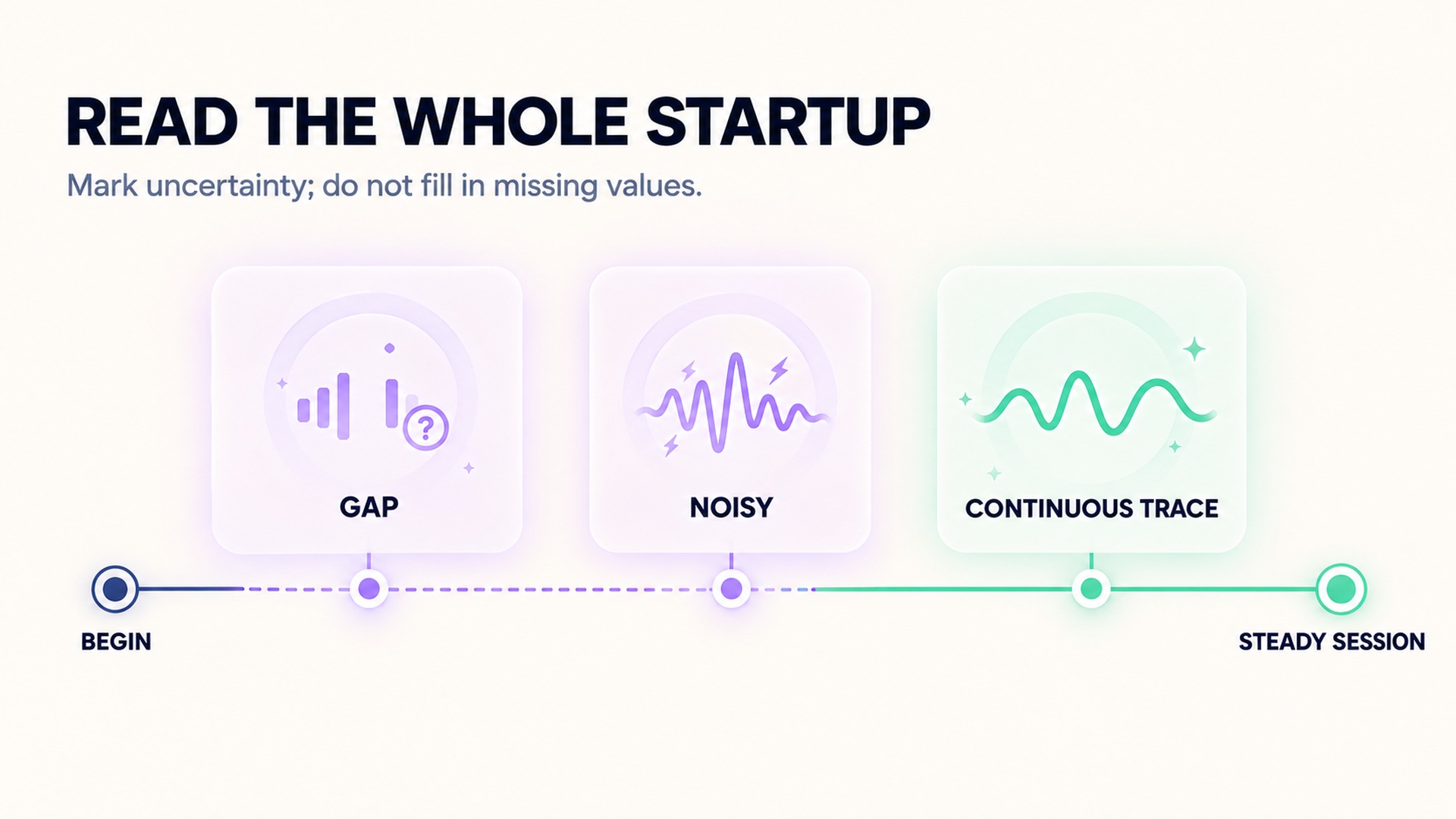
If the first readings remain unstable, keep that uncertainty in the workout record. Do not delete the segment or replace it with a guessed value. A visible note that the startup signal was unreliable is more useful than a smooth graph that hides missing or noisy data. You can then decide whether to use another compatible sensor or ask the manufacturer about the specific strap.
When to stop troubleshooting
If the strap repeatedly loses readings despite following the model's instructions, inspect the strap for wear and contact the manufacturer about the exact model. A damaged or worn textile strap can look normal while its electrode performance has changed. Replacing a strap or trying a supported alternative may be appropriate when basic fit, moisture, battery, and pairing checks do not restore a consistent signal.
Do not use a consumer strap to diagnose a heart rhythm or decide that a troubling symptom is harmless. The sensor may be intended for exercise tracking, and its data processing may interpret irregular electrical intervals as noise. If you experience concerning symptoms, respond to them and seek medical advice rather than troubleshooting a trace first.
The practical distinction is between a measurement problem and a health conclusion. Dry or unstable electrode contact can make a chest-strap trace unreliable, particularly at startup for some designs. Check the model-specific contact instructions, inspect the complete recording, and keep any unresolved gaps visible in your workout notes.
FAQ
Should I wet every chest-strap electrode before exercise?
No. Follow the instructions for your exact strap. Some textile straps recommend moistening the electrode areas, while other designs may specify a different setup or work without added moisture.
Can dry electrodes cause an early heart-rate spike?
Poor or changing contact can contribute to an unstable trace, but an early change can also reflect effort, movement, static, battery, pairing, or another factor. Check the saved trace and setup before drawing a conclusion.
What should I check if the signal settles after I start sweating?
Follow the manufacturer's guidance for electrode preparation, fit, cleaning, and strap condition. Record the pattern and repeat a safe, similar setup only if needed. A better trace does not establish that the previous reading was a medical problem.
*This article is for informational purposes only and is not a substitute for professional medical advice, diagnosis or treatment.*
Sources:
Polar·Polar·Garmin·Sensors (Basel, Switzerland)·Sensors (Basel, Switzerland)·Sensors (Basel, Switzerland)
Related articles
Cold skin can weaken a wearable pulse signal
Cold exposure can reduce blood flow near the skin and make an optical wrist signal harder to read. Learn how to check a device-specific trace without mistaking missing data for a cardiovascular finding.
Tattoos can affect optical heart rate readings differently from skin tone
Tattoo ink and natural skin pigmentation are distinct factors for optical heart-rate sensors. Learn how to check a device-specific trace without generalizing from one wearable study or treating a gap as a health finding.
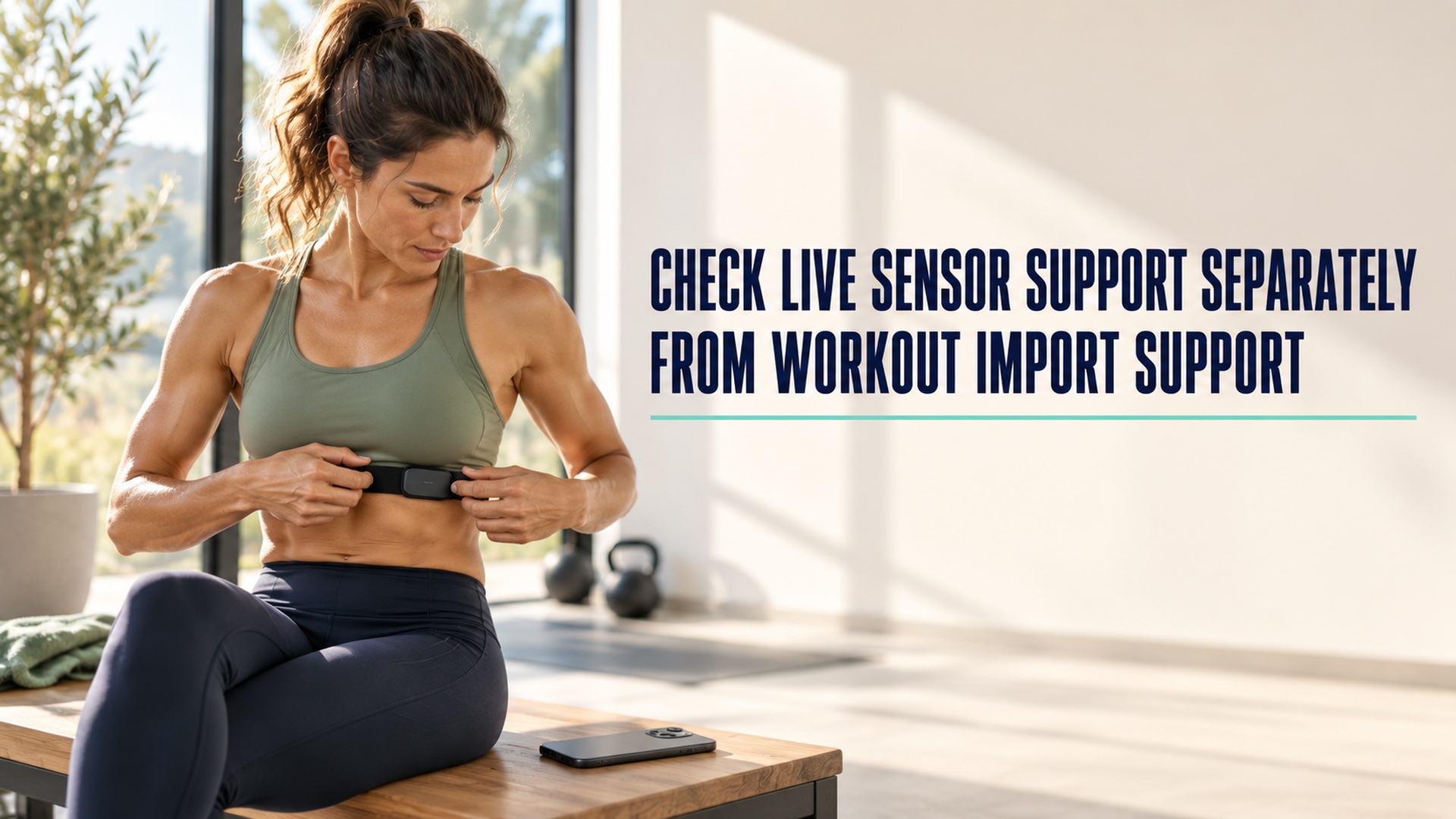
Check live sensor support separately from workout import support
A heart-rate graph arriving after a workout does not show whether an external sensor streamed data live. Check sensor pairing, app compatibility, active recording, and later import as separate steps.

A heart rate export may not contain beat interval data
A heart-rate export can contain many beats-per-minute samples without preserving the interval between each beat. Learn which fields to check before treating a file as suitable for HRV analysis.

Checking pool length before trusting a swimming distance record
Pool distance depends on both the configured pool length and the number of lengths detected. Learn how to check those inputs before accepting a swimming distance record.

Why a longest workout record is different from a fastest distance record
A longest-workout record describes duration, while a fastest-distance record uses a defined distance and time. Learn how pause rules and segment boundaries affect each result.

Why a cycling power record needs its effort duration
A cycling power record needs its averaging window to show whether it reflects a brief peak or sustained effort. Learn how duration, sensor source, and workout context affect comparisons.

Keeping transitions visible in a multisport workout record
Transition periods are part of a multisport event’s full timing record. Learn how to keep T1 and T2 separate from sport splits and verify how each activity was timed.

How much confidence to place in wearable vertical oscillation
Vertical oscillation is a device-specific movement estimate, not a universal efficiency score. Learn how to compare readings with attention to speed, sensor placement, and validation limits.

Reading ground contact time without chasing the lowest number
Ground contact time is affected by pace, surface, fatigue, and sensor method. Learn how to compare similar segments without treating a lower reading as a universal goal.