Why Recovery From Stress Needs More Than One Calm Hour
By Mr.Apps · Sep 17, 2026
Category:Stress

A calm window is one part of the day
I treat a calm hour as evidence that the body had one lower-demand window, not as proof that the entire day's stress has been resolved. A wearable may show a drop in a stress estimate while a person is sitting quietly, breathing evenly, or doing a familiar task. That can be useful. It does not erase earlier demand, lost sleep, or the next unavoidable demand.
Stress is a physical and emotional response to challenging situations. The CDC guidance on managing stress includes sleep, physical activity, and broader support rather than a single quick reset. A health app can help organize pieces of that picture, but its graph is not a complete account of recovery.
Start by asking what the calm window actually represents. Is it a lower heart-rate period, fewer movement artifacts, lower electrodermal activity, a model classification, or an average across several readings? The app may not say. Use the displayed change as an observation and keep the interpretation modest.
Why the earlier hours still matter
Physiological load accumulates across time. Repeated demanding periods, disrupted sleep, illness, emotional pressure, and hard exercise may shape how the body responds later. A quiet hour can lower immediate stimulation while the next score remains affected by the earlier pattern.
The NIMH stress fact sheet gives a broader view of stress responses and their effects. This is why I prefer a full-day and multi-day review. The question is not whether one hour was calm. It is whether recovery windows are appearing often enough and whether normal function is returning.
Do not use a single calm period to justify adding a demanding session when the rest of the record and the body suggest limited capacity. A lower reading can be real and still be incomplete.
Read recovery windows beside peaks
Open the graph and mark the main high periods, the calm windows, and the transitions between them. Note how long each lower period lasted and whether the score rose again when the next demand began. A pattern of brief dips between repeated peaks is different from a sustained return toward baseline.
Movement matters. Exercise, walking, active work, and repeated arm movement can affect optical signals and heart rate. The wearable stress review describes how multiple signals are used in stress detection and why validation is uneven. Compare the graph with the activity record before assigning an emotional meaning to a rise or fall.
If the device was loose, the battery was low, or the record arrived late, label the window as uncertain. A calm-looking gap may be missing data rather than recovery.

Include the next sleep opportunity
Sleep is a longer recovery window than a short quiet break. Review whether the person had enough time in bed, whether the device captured the whole period, and whether interruptions or schedule changes were present. The CDC information on sleep and heart health supports treating sleep as part of health, not as one input that can be replaced by an afternoon pause.
If stress remains elevated across days, protect the next regular sleep opportunity and reduce avoidable late demands. Do not promise that one night will solve a persistent problem. If sleep difficulties continue or impair daily function, use appropriate professional support.
Use symptoms and function as the final check
Wearable estimates do not outrank symptoms. New chest discomfort, fainting, severe breathing difficulty, sudden weakness, confusion, or rapidly worsening illness require appropriate care. A calm hour does not make those signs safe to ignore.
For less urgent situations, review whether normal tasks feel normal, whether concentration or sleep is deteriorating, and whether the pattern is repeating. The personalized stress detection review explains why physiological responses vary across people and situations. That supports using symptoms and function as a second channel, not as an afterthought.
Add a short note to the record when the graph and experience differ. "Calm reading, still tired" is a useful observation. It does not require a theory about the cause.
Do not turn recovery into a score-chasing task
The desire to see the graph fall can create extra checking. Refreshing the app, repeating measurements, and changing behavior after every small movement may make the day harder to interpret. Set a review schedule and define the decision the review is meant to support.
If the calm hour is enough to complete a necessary task comfortably, use it for that task. If it creates a chance to protect sleep or reduce optional load, use it there. Do not treat the hour as a challenge to produce a better number.
The wearable stress management review shows that research uses many signals and methods. This variety is another reason to avoid assuming that a display change has one universal meaning.
Compare similar days
One day is rarely enough to describe recovery. Compare days with similar sleep, demand, activity, and measurement conditions. Ask whether calm windows are becoming longer, whether peaks are less frequent, and whether function is returning. Keep the comparison descriptive rather than claiming that one routine caused the change.
When possible, change one practical factor and observe for a reasonable period. For example, protect the same sleep opportunity or keep the review time consistent. A single calm hour cannot establish causation, but repeated comparable observations can make the next question more precise.
Build a recovery plan with layers
I use four layers: immediate settling, the rest of the day, the next sleep opportunity, and the multi-day trend. Immediate settling may be a quiet break or comfortable paced breathing. The rest of the day may require lower optional load. The night may require protected sleep time. The trend may show whether the pattern is resolving or persisting.
This layered approach avoids two errors. It does not dismiss the calm window, and it does not give that window more meaning than it can carry. Recovery is a process observed through incomplete signals. A good plan respects the evidence at each layer.
A longer-view checklist
I ask:
- What signal made the hour look calm?
- How long did the lower period last, and what came before it?
- Did movement, fit, battery, or sync affect the record?
- Was sleep sufficient and complete?
- What do symptoms and normal function say?
- What low-risk action protects the next recovery window?
- Does the same pattern appear across comparable days?
One calm hour can be a useful opening. It is not the whole recovery story. Read it beside the earlier peaks, the next sleep opportunity, symptoms, function, and the longer trend. Use the app to organize observation and planning, while keeping medical questions with an appropriate professional.
Let recovery accumulate
The aim is not to make every stress graph flat. A healthy day can include demand, movement, attention, and short periods of quiet. The useful question is whether lower-demand windows are available, whether sleep is protected, and whether the person can return to normal function. Recovery can be uneven without being absent.
The CDC stress guidance supports a broader response than a single reset. A related ENSTA article about a wearable reporting stress when a person feels fine is helpful when the graph and lived experience diverge. In either direction, keep the record descriptive and avoid assigning a cause that the data cannot establish.
Use the calm hour as a chance to protect the next demand or sleep opportunity. Let repeated, comparable windows show whether the pattern is changing. The longer view is more useful than the emotional relief of seeing one short dip in the graph.
This also prevents an unhelpful rebound. If the first quiet period is treated as permission to add another demanding task, the next peak may simply reflect the new load. A better response is to preserve some margin, observe the next transition, and let the night and following days provide additional information. Recovery is easier to judge when the plan does not immediately spend it.
The same logic applies to interpretation. Do not demand that the score return to a preferred color before deciding that a calm period was worthwhile. The hour may have supported a necessary task, reduced immediate tension, or created a better transition into sleep even if the daily summary did not change. Record what the window made possible, then look for a repeatable pattern across the next few days. A useful recovery plan measures function as well as the graph.
FAQ
Can one calm hour reset a full day of stress?
Usually it should be treated as one recovery window, not a complete reset. Earlier demand, sleep, repeated peaks, and the next task still matter. Look for sustained and repeatable recovery across longer periods.
Why does my stress score rise again after I feel calmer?
The score may be responding to a new demand, a delayed effect, a different measurement condition, or an imperfect model. Compare the timing with movement, sleep, symptoms, and the rest of the day before choosing an explanation.
What if stress remains high for several days?
Review data quality, protect sleep, reduce optional load, and note changes in normal function. Seek appropriate professional or mental health support when symptoms persist, worsen, or interfere with daily life.
*This article is for informational purposes only and is not a substitute for professional medical advice, diagnosis or treatment.*
Sources:
Centers for Disease Control and Prevention·National Institute of Mental Health·Centers for Disease Control and Prevention·National Library of Medicine·National Library of Medicine·National Library of Medicine
Related articles

What Resilience Means in a Health Tracker
A resilience score is usually an estimate of how stress exposure and recovery patterns change over time. This guide explains what the trend can show, what it cannot prove, and why resilience is not the same as mood or diagnosis.

How to Read a Stress Score Across Several Hours
A stress score is easier to understand as a time pattern than as one daily high point. This guide shows how to read duration, repeated peaks, movement, and recovery windows without treating a wearable estimate as a diagnosis.

Can Paced Breathing Work Without Watching a Screen?
Paced breathing does not require constant visual attention. This guide compares audio and haptic pacing, explains what a wearable may observe, and sets realistic expectations for relaxation and HRV without promising a guaranteed result.

Why a Health App May Tell You to Rest and Move at the Same Time
A health app can recommend rest and movement in the same day without either message being technically wrong. This guide shows how to check update time, purpose, symptoms, and the demands of the day before choosing a response.

Can a Wearable Measure Cortisol? What Your Stress Score Is Actually Estimating
Most consumer wearables estimate physiological stress from signals such as heart rate, HRV, temperature, and movement rather than measuring cortisol itself. I explain how to read those scores without mistaking an algorithmic clue for a hormone test.
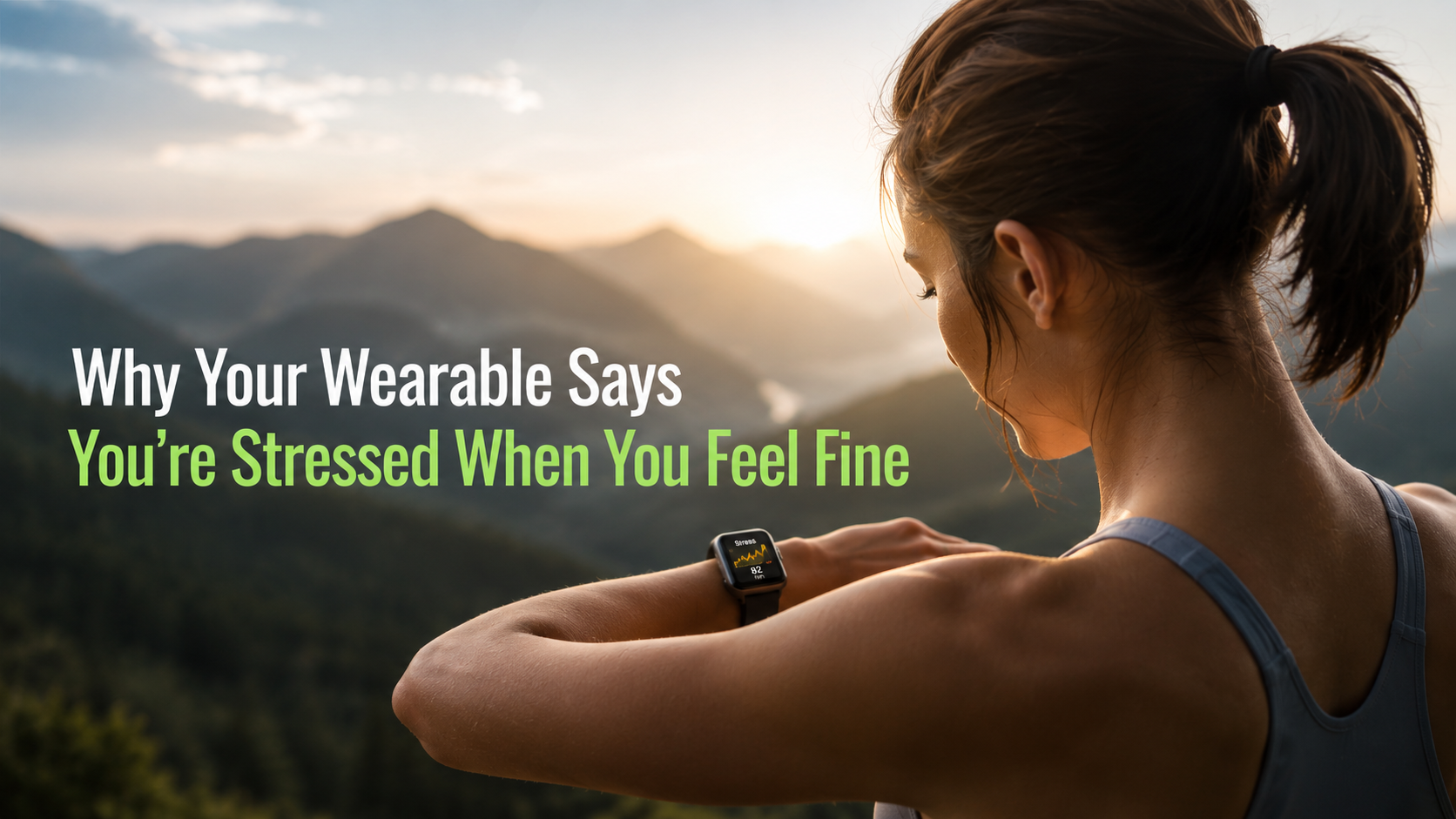
Why your wearable says you're stressed when you feel fine
Your watch measures physiological arousal, not worry. Caffeine, digestion, heat, short sleep, and a loose band can all push the score up while you feel fine.