Blogs
Latest articles from ENSTA.
- Stress

Why Buffer Time Between Demands Belongs in a Stress Review
A stress timeline can show demanding periods but overlook the time between them. Keeping those intervals visible helps a person review the spacing of events without treating a short pause as a guaranteed recovery formula.
Mr.Apps · Oct 1, 2026
- Stress

Why One High-Demand Hour Can Disappear Inside a Daily Average
A full-day average can look ordinary even when one short interval contains a noticeable rise in a signal. A useful health app should show the daily summary beside its timeline and make the contributing hours visible.
Mr.Apps · Oct 1, 2026
- Stress

Why Daily Strain Needs a Non-Exercise Context Field
A daily strain score can reflect physiological signals without identifying what was happening around them. A short, optional context field can preserve a person’s own description of demanding periods without pretending that the app measured mental effort.
Mr.Apps · Oct 1, 2026
- Stress

How a Two-Week Stress View Differs From a One-Day Stress Score
A one-day stress score summarizes a short window, while a two-week view can smooth daily variation and combine stress with recovery signals. Read each label with its date range and inputs before deciding what one demanding or calm day means.
Mr.Apps · Sep 30, 2026
- Stress

Why Daytime Stress and Nighttime HRV Need Separate Time Labels
A daytime stress estimate and nighttime HRV value describe different signals collected in different windows. Keep their timestamps, sleep boundaries, and calculation methods visible so a reader does not mistake temporal overlap for a cause-and-effect explanation.
Mr.Apps · Sep 30, 2026
- Stress

Why Weather-Aware Coaching Needs the Forecast Time Beside the Advice
Weather-aware coaching can become misleading when advice hides the forecast it used. Show when the forecast was issued, the period it applies to, and the conditions behind the suggestion so a reader can judge whether it is still current.
Mr.Apps · Sep 30, 2026
- Stress

Why Cumulative Stress Should Show Recovery Intervals, Not Only High-Stress Time
A cumulative stress total can make a day look continuously strained when the record also contains returns toward recovery. Show the high-stress intervals, the recovery periods, and the rules that distinguish them so a long-term summary does not hide the pattern.
Mr.Apps · Sep 30, 2026
- Stress

Why a Restorative-Time Metric Needs Clear Start and End Rules
A restorative-time total depends on how a device defines the beginning, end, and eligibility of each interval. Learn which rules and coverage details make the estimate easier to interpret without treating missing data as proof that recovery did not occur.
Mr.Apps · Sep 29, 2026
- Stress

Why Stress and Energy Scores Should Not Share the Same Alert Threshold
A stress estimate and an energy score can use overlapping signals while describing different things. Their alerts should reflect each score’s definition, time window and intended decision instead of applying one cutoff to both.
Mr.Apps · Sep 25, 2026
- Stress

Why Mental Stress and Physiological Stress Need Separate Labels
A wearable can estimate changes in bodily signals without knowing what a person is thinking or feeling. Separating mental stress from physiological activation makes a health score easier to interpret and less likely to overstate what sensors can tell you.
Mr.Apps · Sep 25, 2026
- Stress

Why Recovery From Stress Needs More Than One Calm Hour
One calm hour can be useful without erasing a full day of physiological demand. This guide explains how to read short recovery windows beside sleep, repeated peaks, symptoms, and longer trends.
Mr.Apps · Sep 17, 2026
- Stress

What Resilience Means in a Health Tracker
A resilience score is usually an estimate of how stress exposure and recovery patterns change over time. This guide explains what the trend can show, what it cannot prove, and why resilience is not the same as mood or diagnosis.
Mr.Apps · Sep 17, 2026
- Stress

How to Read a Stress Score Across Several Hours
A stress score is easier to understand as a time pattern than as one daily high point. This guide shows how to read duration, repeated peaks, movement, and recovery windows without treating a wearable estimate as a diagnosis.
Mr.Apps · Sep 17, 2026
- Stress

Can Paced Breathing Work Without Watching a Screen?
Paced breathing does not require constant visual attention. This guide compares audio and haptic pacing, explains what a wearable may observe, and sets realistic expectations for relaxation and HRV without promising a guaranteed result.
Mr.Apps · Sep 17, 2026
- Stress

Why a Health App May Tell You to Rest and Move at the Same Time
A health app can recommend rest and movement in the same day without either message being technically wrong. This guide shows how to check update time, purpose, symptoms, and the demands of the day before choosing a response.
Mr.Apps · Sep 17, 2026
- Stress

Can a Wearable Measure Cortisol? What Your Stress Score Is Actually Estimating
Most consumer wearables estimate physiological stress from signals such as heart rate, HRV, temperature, and movement rather than measuring cortisol itself. I explain how to read those scores without mistaking an algorithmic clue for a hormone test.
Mr.Apps · Aug 26, 2026
- Stress · Wearable
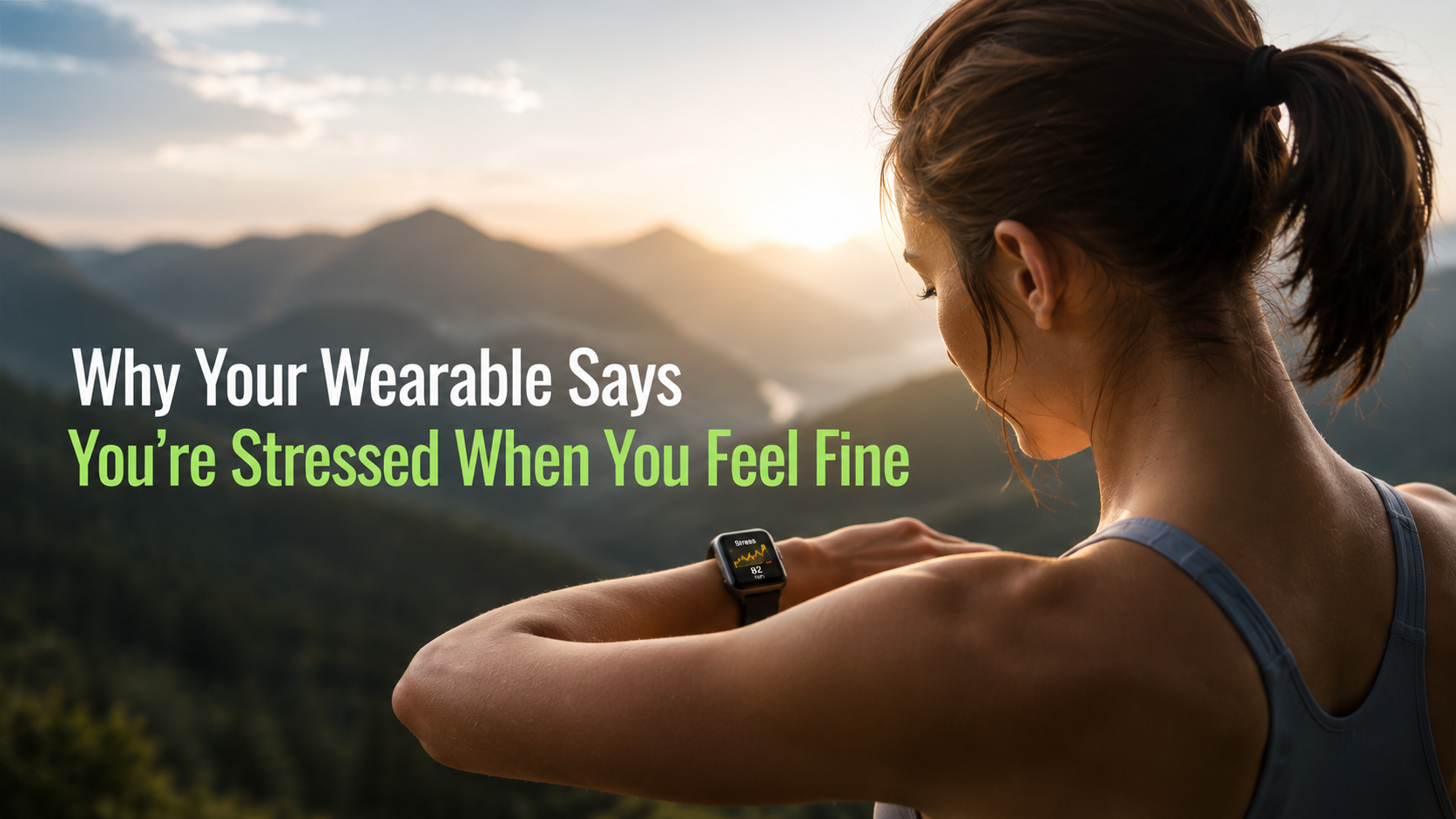
Why your wearable says you're stressed when you feel fine
Your watch measures physiological arousal, not worry. Caffeine, digestion, heat, short sleep, and a loose band can all push the score up while you feel fine.
Mr.Apps · Aug 4, 2026