Can a Wearable Measure Cortisol? What Your Stress Score Is Actually Estimating
By Mr.Apps · Aug 26, 2026
Category:Stress

I understand the appeal of a cortisol number on your wrist. Cortisol has become shorthand for everything from a tense afternoon to a poor night of sleep. If an app labels a two-hour block as "high stress," it is easy to imagine that the device has sampled a hormone and found it elevated. In almost every consumer wearable, that is not what happened.
A clinical cortisol test measures the hormone in blood, urine, or saliva. A watch or ring usually measures light reflected from blood flow, the timing between pulses, skin temperature, motion, and sometimes skin conductance. Its software combines those signals into an estimate of physiological stress. That estimate may be useful, but it is several steps removed from a cortisol measurement.
I learned to respect that distinction during a quiet morning when my watch called me stressed. I was sitting at my desk, pleased with the work in front of me, and felt mentally calm. The previous evening, though, I had trained later than usual and gone to bed with a warm room. My heart rate was still a little elevated, my HRV was lower than my normal range, and I had barely moved for twenty minutes. The algorithm saw a body under load. It could not know whether the load came from worry, exercise, heat, digestion, or an approaching illness.
What a wearable can sense
Most wrist and finger devices use photoplethysmography, or PPG. LEDs shine into the skin and a sensor tracks changes in reflected light as blood volume changes with each pulse. From that pulse pattern, software estimates heart rate and the variation in time between beats. Apple explains that its watch uses green LEDs for heart-rate readings and to calculate heart rate variability.
HRV is not a stress hormone. It describes variation between successive beats and is influenced by the autonomic nervous system. In a controlled, restful measurement, a downward change from a personal baseline can accompany strain. Yet HRV also responds to breathing, posture, exercise, sleep, illness, medication, and measurement conditions. Two people can have very different normal values, so comparing my HRV with someone else's rarely tells either of us much.
Other sensors add context. An accelerometer helps the device decide whether a high heart rate happened during movement or while I was still. Temperature sensors can reveal a deviation from my usual nighttime or daytime pattern. Electrodermal activity sensors measure changes in skin conductance that often accompany sweating. Some platforms also use respiratory rate and recent sleep.

The resulting score is a model output. A systematic review of wearable stress monitoring found that studies commonly used HRV, heart rate, electrodermal activity, and related signals, but also noted small datasets, inconsistent labels, and limits in how well models generalize to new people and real-life situations. That last point matters. A model trained during short laboratory stress tasks may behave differently when I am digesting lunch, speaking in public, or recovering from intervals.
Why the word cortisol causes confusion
Cortisol is made by the adrenal glands and follows a daily rhythm. Levels normally rise and fall, and one isolated result needs context. This is why medical testing may use specific timing or more than one sample. A consumer device that never collects blood, saliva, urine, or another biological fluid cannot directly report the concentration used in those tests.
Researchers are working on experimental sweat and interstitial-fluid sensors. That work is interesting, but a prototype chemical sensor and a mass-market stress score are different products. Before I accept the phrase "cortisol tracker," I look for three details: what sample is collected, what substance the sensor detects, and whether the exact device has been validated against a laboratory method. If the description jumps from heart-rate data to a cortisol claim without that bridge, I treat it as marketing.
The safest label for most current scores is physiological stress estimate. Oura, for example, says its Daytime Stress calculation uses heart rate, HRV, motion, and average body temperature, then compares those data with a personal baseline. The company also notes that the feature measures physical and mental responses together. That wording is more honest than pretending the ring knows why the body changed.
How I read a stress score without overreacting
I start with the raw ingredients. Was heart rate above my normal range while I was inactive? Was HRV below baseline? Did temperature shift? Was the device snug, and did it collect enough clean data? A score without supporting signals is a prompt to inspect, not a verdict.
Next, I check the clock and my recent actions. A difficult meeting can raise physiological arousal, but so can climbing stairs, a large meal, caffeine, dehydration, heat, or a demanding workout. Even an engaging conversation can register as stress. The score describes a pattern in the body, not the moral quality of the hour.

Then I compare several days. One red block has little weight. Repeated changes at the same time, under similar conditions, are more useful. I once noticed that my afternoon stress estimate rose on days when I skipped a proper lunch and worked straight through. I did not conclude that cortisol was the culprit. I ran a simple comparison for two weeks, kept the meal timing steadier, and watched both the score and how I felt. The pattern softened. That was enough to improve my routine, even though it did not prove a hormone mechanism.
This trend-first approach matches the broader evidence. A scoping review of wearables for stress management found that heart rate and HRV were the most commonly used physiological signals, with temperature, respiration, skin conductance, and other measures appearing less often. No single signal cleanly identifies the cause of stress in everyday life.
I also keep mental and physical stress separate in my notes. If the app says "stressed" after a hard but enjoyable workout, it may be accurately detecting physiological load. If it says "relaxed" during a tense conversation while my heart rate stays steady, it has not read my thoughts. The device is doing a narrower job than the label suggests.
Baseline quality matters too. During the first days with a new device, I avoid treating every alert as meaningful. Travel, an infection, or unusually heavy training during setup can teach the algorithm a strange version of normal. I give it time, wear it consistently, and compare the score with the raw trend. If I change wrists, fingers, devices, or the time of day I measure, I treat the new series as a fresh chapter. Consistency does not make the estimate diagnostic, but it makes comparisons much easier to trust.
When the estimate is worth acting on
A stress score is most useful when it helps me notice a repeatable relationship. Several low-HRV, higher-heart-rate mornings after late training may justify moving the session earlier. A run of temperature deviations, poor sleep, and an unusual resting heart rate may support taking an easier day. A recurring spike during a rushed part of the workday may prompt a break, food, water, or a calmer transition.
The score is less useful when I chase it minute by minute. Constant checking can create its own anxiety and makes normal variation feel like a failure. I prefer reviewing the day once, adding a short note, and looking for a weekly pattern. A review of smart devices used for stress and mental-health monitoring found promise in HRV and other signals, while also pointing to reliability and availability limits. That is a good description of consumer stress tracking: informative, imperfect, and best used with context.

A wearable score should not be used to diagnose Cushing syndrome, adrenal insufficiency, an anxiety disorder, or any other condition. Persistent symptoms such as unexplained weakness, major weight change, fainting, severe sleep disruption, or a sustained change in health deserve a conversation with a clinician. The FDA's overview of sensor-based digital health technology is a useful reminder that wearables range from general-wellness products to regulated medical devices. A polished dashboard alone does not tell you which one you have.
I still use stress scores. They help me notice when my physiology has shifted before I have put the day into words. I simply translate the label. "High stress" becomes "the sensors found a pattern associated with higher physiological load." That sentence is less dramatic, but it is closer to what the device knows.
FAQ
Can Apple Watch measure cortisol?
No current Apple Watch directly measures cortisol. It records signals such as heart rate and HRV, and apps may use those signals to estimate physiological stress. A cortisol measurement requires an appropriate biological sample and a validated assay.
Does a low HRV mean my cortisol is high?
No. Low HRV can occur for many reasons, including recent exercise, poor sleep, illness, heat, dehydration, medication, posture, and measurement noise. It may accompany stress, but it does not reveal a cortisol concentration.
What should I do with a high wearable stress score?
Check the underlying signals, recent activity, fit, and how you feel. Look for a repeated pattern across several days. Seek medical advice for persistent or concerning symptoms rather than trying to treat the score itself.
*This article is for informational purposes only and is not a substitute for professional medical advice, diagnosis or treatment.*
Sources:
Cleveland Clinic·International Journal of Medical Informatics·Apple·Oura·JMIR·U.S. Food and Drug Administration
Related articles
Why your wearable says you're stressed when you feel fine
Your watch measures physiological arousal, not worry. Caffeine, digestion, heat, short sleep, and a loose band can all push the score up while you feel fine.

Can dehydration raise your heart rate and ruin recovery?
For ten days last summer I was convinced I had overtrained. My resting heart rate was up, my easy runs felt hard, and cutting my training volume changed nothing. The problem was water. Here is how fluid loss raises your heart rate, why it drags out recovery, and how to tell it apart from everything else that does the same thing.

Best no-subscription wearables for sleep and recovery in 2026
The price on the box is not the price. Here's how subscription-free rings, bands, and watches actually compare on sleep, recovery, and what they cost you over three years.
Why Your Resting Heart Rate Is Suddenly Higher Than Usual
A resting heart rate that jumps five or six beats and stays there is usually explained by the week, not the heart. Here's how I work through the usual causes, why one high night matters far less than three, and where the line sits between tracking it and calling someone.
Apple Watch Body Battery: How Ensta Brings Garmin's Best Feature to Your Wrist
Looking for an Apple Watch body battery feature? Ensta's Energy Score gives Apple Watch users a simple 0-100 recovery and energy metric that works like Garmin's Body Battery.
Best Apps That Explain Sudden HRV Changes in 2026
Why your HRV changed overnight, what it usually means, and the apps that actually help you figure out what to do next.

Respiratory Rate on a Wearable: What a Change Overnight Can Mean
Most people can guess their resting heart rate but have no idea how many breaths they take while asleep. That makes overnight respiratory rate one of the least understood numbers on a wearable, and one of the most useful once you have a personal baseline to compare against. Here is what actually moves it, how to tell a real change from a bad reading, and when a rise is worth acting on.
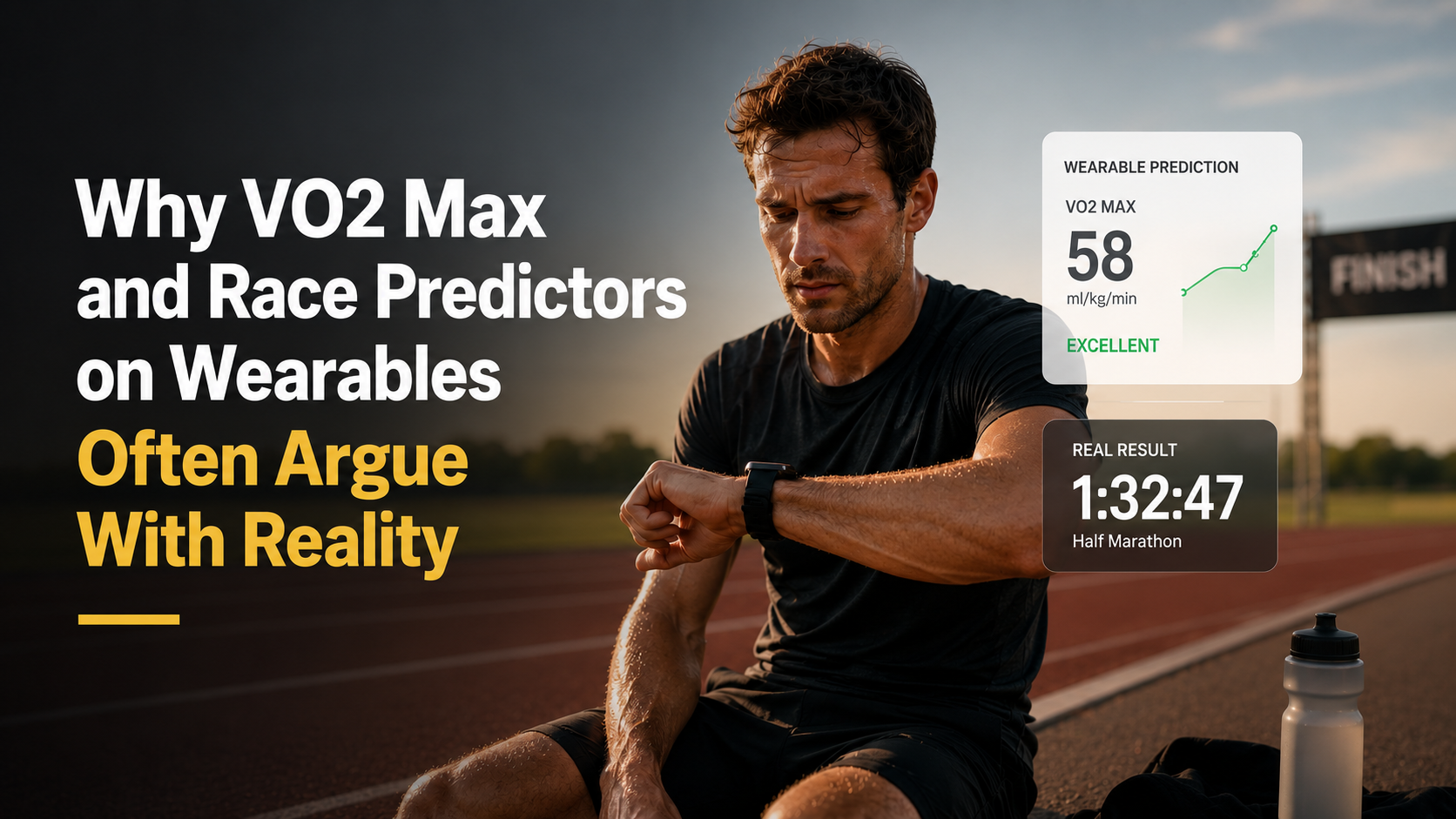
Why VO2 Max and Race Predictors on Wearables Often Argue With Reality
Your watch never measured your VO2 max, it guessed it from heart rate. Here's why that number drops in summer, why the race predictor lies, and how to read both.
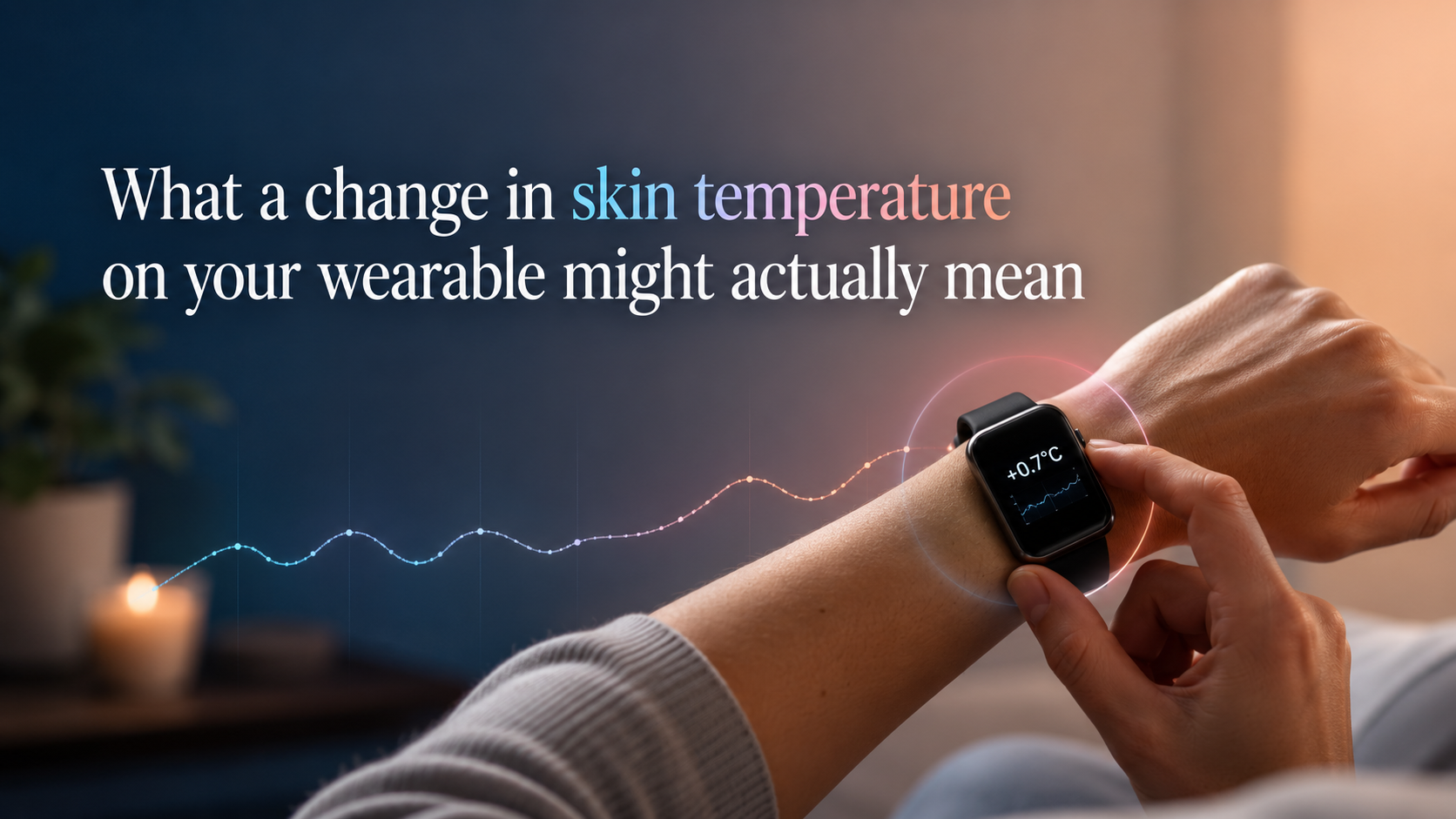
What a change in skin temperature on your wearable might actually mean
Your wearable's skin temperature isn't a fever reading. Learn what moves it at night, why deviation beats the number, and when to act.