Why Travel Drains Your Body Battery Even When You Barely Move
By Mr.Apps · Jul 15, 2026
Category:Energy

Excerpt: Travel can drain your energy even when you spend most of the day sitting. Here’s why flights, long drives, airports, schedule changes, dehydration, and poor sleep can make your body battery drop before the trip even begins.
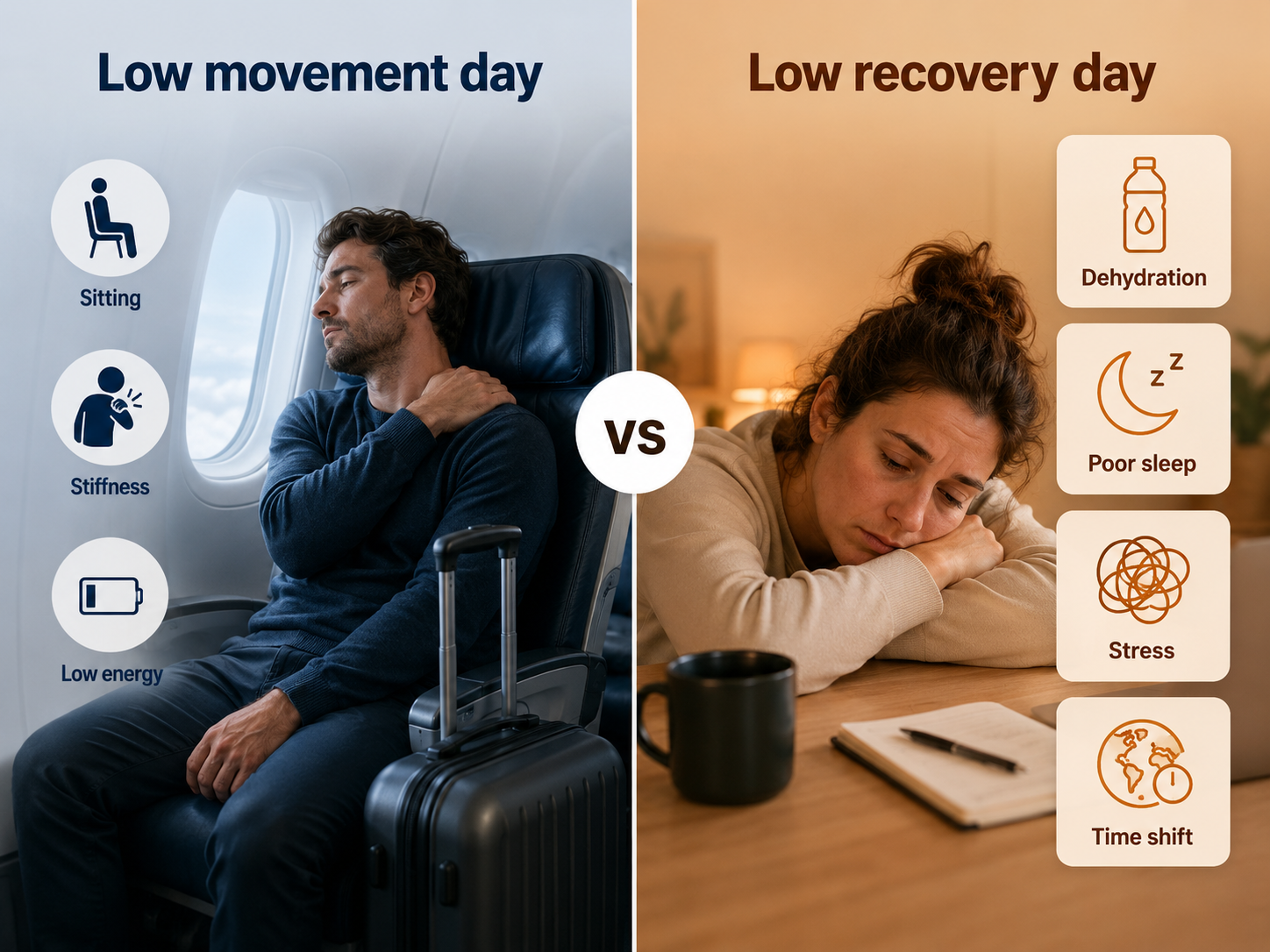
Travel fatigue is one of the most annoying kinds of tiredness because it feels unfair.
You barely move. You sit in a taxi. You sit at the airport. You sit on the plane. You sit again on the train or in another car. Then somehow, by the time you arrive, your body feels like it has done a full workout while your step count looks embarrassing.
That is the strange thing about travel. It can drain your body battery without looking physically demanding on paper.
A normal app may see a low-activity day and assume you preserved energy. But anyone who has done a long travel day knows that is not always true. Travel can hit sleep, hydration, stress, digestion, heart rate, routine, and recovery all at once. The body may be sitting still, but the system is not relaxed.
The CDC’s Yellow Book guidance on jet lag points out that sleep loss during travel can worsen jet lag symptoms, and that alcohol and caffeine can contribute to dehydration. The CDC traveler guidance also recommends drinking water, avoiding alcohol, using caffeine strategically, and taking only short daytime naps if needed.
That is already the whole story in miniature. Travel drains energy because it is not only about movement. It is about disruption.
Travel fatigue is not just jet lag
People often use “jet lag” for every tired feeling after travel, but there is a difference.
Jet lag is mainly about crossing time zones and confusing the body’s internal clock. Travel fatigue can happen even without crossing time zones. A 3-hour train delay, a 5 AM airport transfer, a dry cabin, a missed meal, and a bad hotel sleep can drain someone even if the destination is in the same time zone.
Sleep Foundation separates travel fatigue from jet lag clearly. Travel fatigue can come from the physical stress of travel itself, including long sitting, poor sleep in transit, cabin conditions, dehydration, and interruptions. Jet lag involves circadian rhythm disruption, which can last longer because the internal clock needs time to realign.
That distinction matters because the fix is slightly different.
If the issue is travel fatigue, one good sleep, food, hydration, and light movement may help quickly.
If the issue is jet lag, the body may need several days of light, meal timing, sleep timing, and routine alignment.
And yes, it is completely possible to have both at the same time.
That is why a travel day can make an energy score or body battery look worse even when activity was low. The drain is not from steps. It is from the body trying to stay stable while everything around it keeps changing.
Why your body battery drops when you barely move
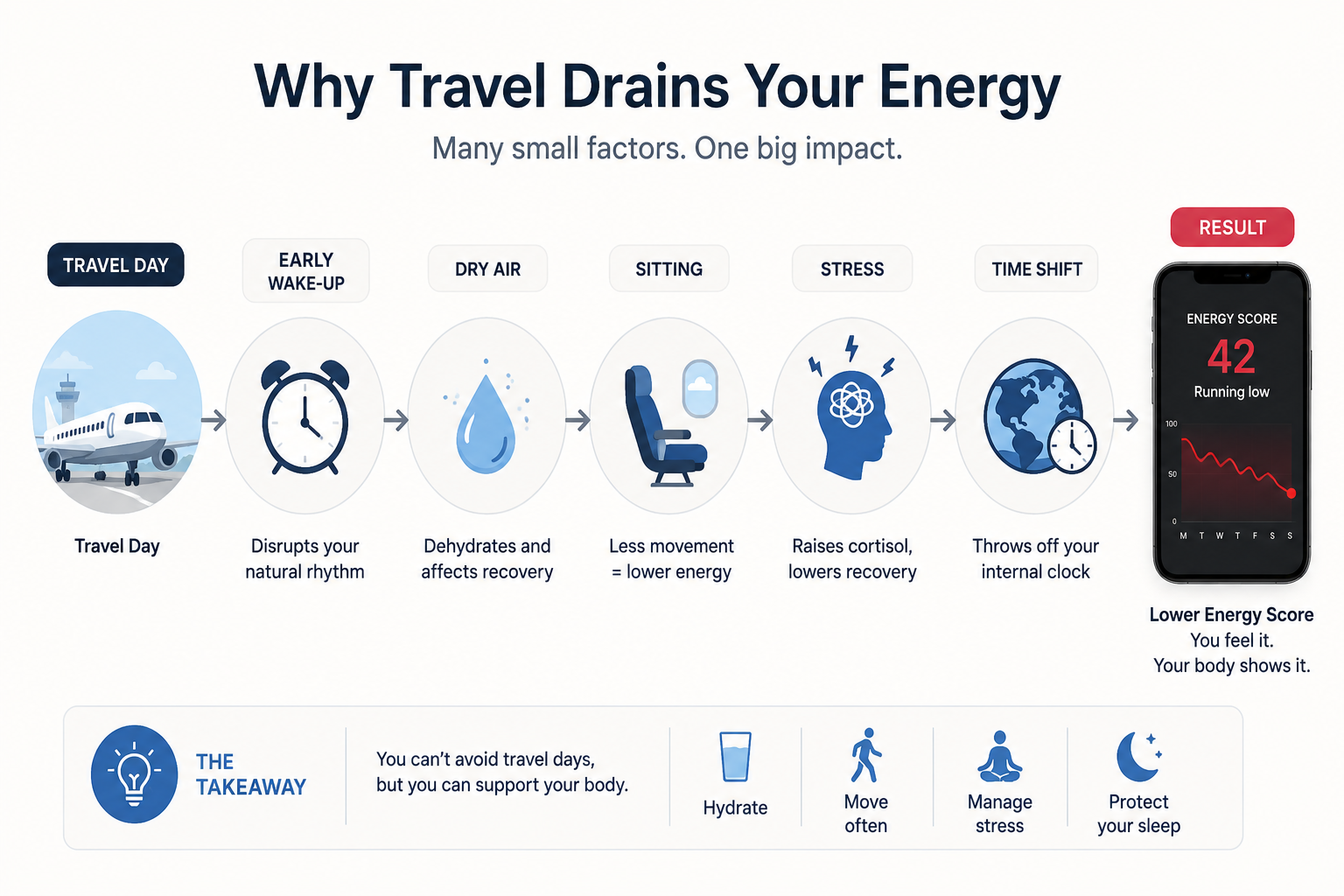
A body battery score, energy score, or recovery score is not only about how many calories you burned. It is usually trying to read the balance between stress and recovery.
Travel can push that balance in the wrong direction in several ways.
1. Sitting still is not the same as resting
This is the biggest misunderstanding.
Sitting in a cramped airplane seat for four hours is technically low movement, but it is not high-quality recovery. The body is restricted. Posture is awkward. Legs may feel heavy. The neck and lower back get stiff. Sleep is shallow if it happens at all.
That is not the same as resting on a sofa or sleeping properly in bed.
Long sitting can also make the body feel sluggish and stiff. This overlaps with the same kind of low-energy pattern that happens during sedentary workdays. The difference is that travel adds more stress on top: noise, timing, waiting, queues, luggage, security, delays, and the small constant vigilance of not missing the next step.
So the body is still, but the nervous system is not fully off.
2. Travel breaks your normal sleep pressure
A normal day builds sleep pressure gradually. Wake up, move, work, eat, get light exposure, wind down, sleep.
Travel ruins that rhythm.
Maybe the alarm goes off at 3:50 AM. Maybe the flight is overnight. Maybe there is a nap at the wrong time. Maybe the hotel check-in is late. Maybe the destination is only two hours ahead, but the whole day still becomes weird.
The Mayo Clinic notes that jet lag can cause daytime fatigue, trouble staying alert, stomach problems, and a general feeling of not being well. Even when the trip is exciting, those symptoms can make the body feel off.
This is why people can arrive somewhere beautiful and still feel like a damaged phone at 12%.
The body does not care that the destination is nice. It cares that sleep timing got messy.
3. Circadian rhythm gets confused
The body has a clock. Travel is very good at annoying it.
Crossing time zones shifts the relationship between your internal timing and the local environment. Light, meals, sleep, caffeine, alcohol, and activity all become timing signals. When those signals arrive at odd times, the body needs to recalibrate.
The CDC explains that jet lag is caused by traveling across multiple time zones faster than the body clock can adjust, and recommends using light exposure, caffeine, exercise, meals, hydration, and short naps strategically to adjust to the new time zone.
This is especially relevant for people who use energy planning. A travel day may not just lower today’s score. It can also make tomorrow unpredictable because the body is still syncing.
That is why the first day after arrival can be strange. Some people sleep hard the first night because they are exhausted, then feel worse on day two when the circadian mismatch finally shows up.
The hidden energy drains of travel
Travel drains energy through small things that do not look like “effort” in a normal activity tracker.
Dry air and dehydration
Air travel can be dehydrating, and dehydration can make fatigue feel worse. The CDC notes that alcohol and caffeine can contribute to dehydration during travel, which can exacerbate jet lag symptoms.
This does not mean coffee is forbidden. It means coffee needs timing. A strategic coffee after arrival may help alertness. Too much coffee during the wrong window can make sleep worse later.
Same with alcohol. It may make someone feel sleepy, but it can fragment sleep and make recovery worse.
Decision fatigue
Travel is full of tiny decisions.
Which gate? Which line? Where is the passport? Is the bag overweight? Is the train platform changing? Do you have time to eat? Did the hotel send the check-in code? Where is the taxi pickup? Why is the boarding group system written like a psychological experiment?
None of that shows up as exercise, but it costs mental energy.
That mental load can raise stress and make the day feel heavier than the step count suggests.
Meal timing and digestion
Travel often means eating at odd times or eating whatever is available. Sometimes that means too much food late at night. Sometimes it means not enough food for too long. Sometimes it means airport snacks and coffee pretending to be a meal.
The CDC traveler guidance recommends eating small meals to avoid stomach problems when adjusting to a new time. That advice is simple, but it matters. Digestion is part of energy regulation. A chaotic food day can make the body feel more tired, especially when paired with bad sleep.
Light exposure at the wrong time
Light tells the body clock what time it is. Travel often puts people in bright airports at night, dark planes during the day, artificial hotel lighting, and weird screen exposure at the exact wrong moment.
For jet lag, light timing can help or hurt depending on direction and destination. This is why outdoor daylight after arrival often helps the body adjust, while bright screens late at night can keep the body stuck.
Less movement than usual
This sounds opposite to the main point, but it matters.
Travel is tiring partly because the body is stressed and partly because it barely moves in useful ways. There is a difference between walking naturally through a normal day and sitting for hours with occasional awkward standing. Lack of movement can make the body feel heavy, stiff, and flat.
A short walk after arrival can sometimes feel better than collapsing immediately because it tells the body: we are here, it is daytime, and the system can restart.
Why travel can make HRV and recovery look worse
A travel day may lower HRV, raise resting heart rate, or reduce an energy score even if there was no workout.
That can happen because recovery metrics respond to stress, not just exercise.
Poor sleep, dehydration, alcohol, time zone shifts, travel anxiety, late meals, and illness exposure can all make the body work harder. If resting heart rate is higher overnight and HRV is lower, the body may be showing that it did not get a clean recovery window.
This is why travel is such a strong use case for energy planning. It explains the gap between “I didn’t train today” and “why do I feel destroyed?”
An energy app should not treat travel as a rest day by default. It should understand that low movement does not always mean low strain.
How to plan with energy before a trip
A good travel plan starts before the suitcase closes.
1. Do not stack a brutal workout before travel
Hard training the night before an early flight is asking a lot from the body. It may be fine sometimes, but if travel usually drains you, this is an easy place to experiment.
Keep the day before travel lighter, especially if the trip involves an early wake-up, long sitting, or time zones.
2. Protect the last sleep before departure
People often sacrifice the night before travel to pack, finish work, or “just get one more thing done.” Then they start the trip already low.
That is one of the fastest ways to make travel feel worse.
A decent pre-travel sleep can act like a buffer. It does not make the travel day perfect, but it gives the body more room.
3. Decide your first-day energy budget
Do not pretend arrival day is a normal day.
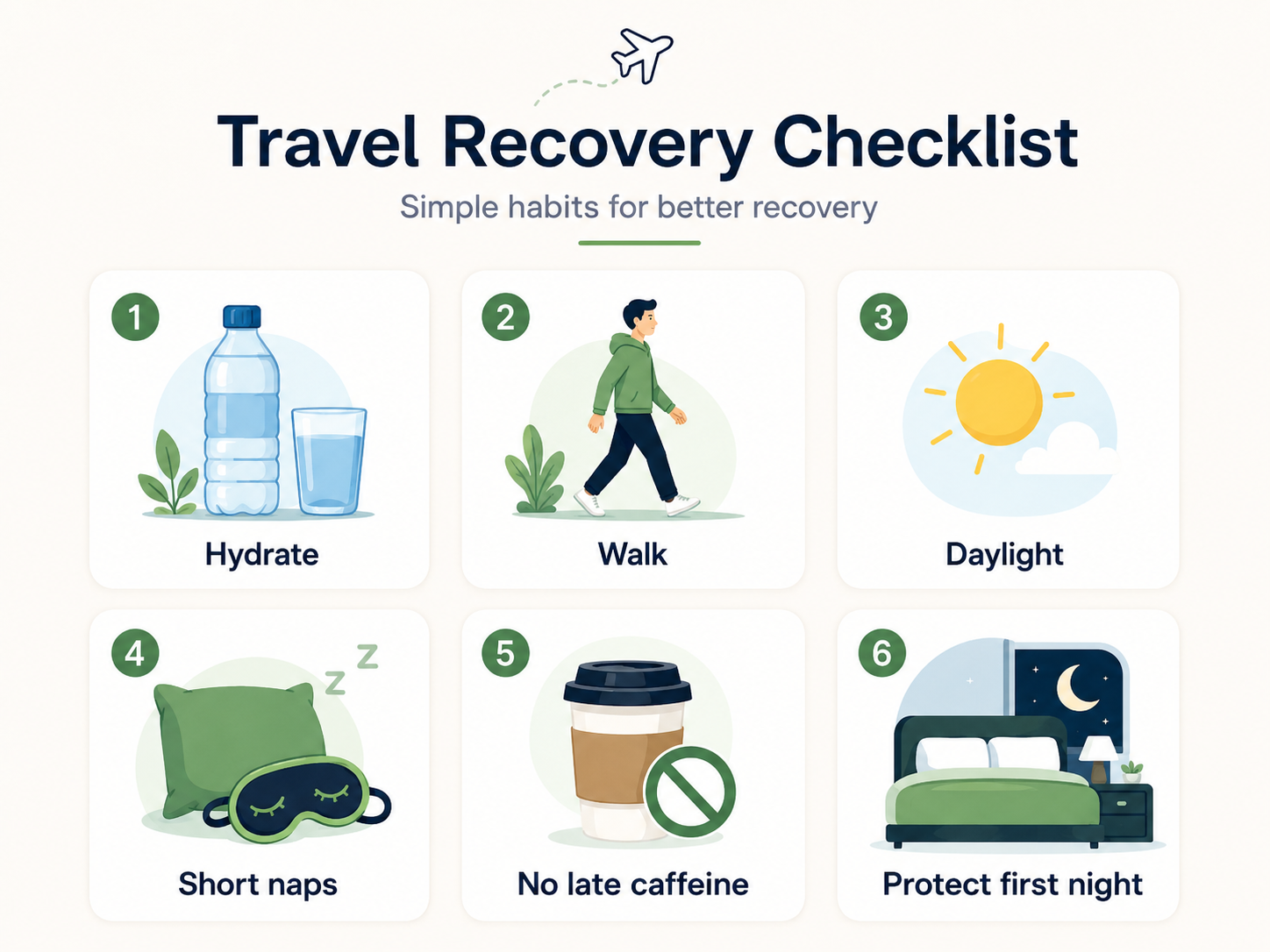
If the trip matters, protect the first few hours after arrival. Build in a walk, hydration, daylight, a real meal, and some margin before heavy work or social plans. That is not laziness. That is smart energy planning.
4. Use caffeine like a tool, not a panic button
Caffeine can help alertness, but timing matters. The CDC recommends using caffeine strategically and avoiding it in the evening when adjusting to a new time zone.
Translation: coffee can help the day. Badly timed coffee can steal the night.
What to do during travel so your body battery does not crash as hard
Travel will never be perfect, but small choices reduce the energy cost.
Move in tiny doses
Walk the terminal. Stand between boarding calls. Stretch calves. Move ankles. Take the stairs when it makes sense. Walk after landing before sitting again.
This is not about step count. It is about interrupting stiffness and reminding the body that it is not cargo.
Hydrate before you feel terrible
Drink water before the headache arrives. Keep it simple. If the travel day is long, hot, or coffee-heavy, hydration matters even more.
Avoid turning alcohol into a sleep strategy
Alcohol can make falling asleep feel easier, but it can worsen sleep quality. The CDC notes that alcohol can disrupt sleep and recommends avoiding it when adjusting to a new time.
Keep naps short
The CDC suggests that if someone is sleepy during the day after travel, short naps of no more than 15 to 20 minutes can help without making nighttime sleep harder.
That is the key. A short nap can rescue the day. A long nap at 5 PM can accidentally sabotage the night.
Get daylight after arrival
Daylight is one of the strongest signals for the body clock. After arrival, getting outside at the right local time can help the body understand the new schedule.
Even a walk around the block can combine three useful things: light, movement, and orientation.
The first 24 hours after arrival matter most
A lot of travel fatigue is shaped by what happens after arrival.
The body is looking for cues:
- Is it daytime or nighttime?
- Should digestion restart?
- Is it safe to sleep?
- Are we active or shut down?
- Is this the new schedule?
That is why the first day should be boring in the best possible way.
Get light.
Eat normally.
Drink water.
Move gently.
Keep naps short.
Go to bed close to local bedtime.
It does not need to be perfect. It just needs to stop the travel day from spilling into the whole trip.
For people who plan with energy scores, the first 24 hours are where the next day’s “body battery” often gets decided.
Travel recovery plan by trip type
Different trips drain energy in different ways.
Short domestic trip
The main issue is usually schedule compression. Early wake-up, transport, work meeting, hotel, back again.
Best move: protect sleep before and after, keep caffeine earlier, and add walks between sitting blocks.
Long-haul flight
The issue is usually sleep loss, dehydration, circadian disruption, and long sitting.
Best move: choose the destination time zone as soon as practical, hydrate, avoid heavy alcohol, use light exposure wisely, and keep arrival day realistic.
Road trip
The issue is often static sitting, driving stress, snack timing, and stiffness.
Best move: stop regularly, walk for a few minutes, rotate drivers when possible, and avoid treating every stop as a sugar-and-caffeine checkpoint.
Work conference
The issue is not just travel. It is travel plus networking, alcohol, late dinners, early sessions, screens, and constant social load.
Best move: schedule recovery pockets like they are meetings. Protect at least one quiet window each day.
Family travel
The issue is logistics and emotional load. Bags, kids, delays, food, sleep, and everyone needing something at once.
Best move: lower expectations for “normal” energy. Plan lighter on arrival day and protect recovery where possible.
When travel fatigue is a red flag
Most travel fatigue is temporary. A rough travel day should improve with sleep, hydration, meals, light movement, and normal routine.
But fatigue after travel should not always be ignored.
Get medical advice if tiredness is severe, persistent, worsening, or comes with symptoms like chest pain, trouble breathing, fainting, fever, confusion, leg swelling or pain after long travel, or a major drop in normal functioning.
Travel can also expose problems that were already there: poor sleep, sleep apnea, anemia, stress overload, illness, or overtraining. The trip may not be the root cause. It may just be the thing that makes the pattern obvious.
The honest take
Travel drains energy because the body is doing more than sitting.
It is adapting to strange timing, dry air, broken sleep, long stillness, stress, meal changes, light changes, and sometimes a completely different time zone. A low step count does not mean the body had an easy day.
That is why travel is one of the best examples of why energy tracking needs context. Without context, a travel day looks like rest. With context, it makes sense that the body battery drops.
The goal is not to make travel perfectly healthy. Nobody needs a wellness routine so complicated it requires its own suitcase.
The goal is simpler:
Protect the sleep before travel.
Move a little during the day.
Hydrate before you crash.
Use caffeine carefully.
Get daylight after arrival.
Keep naps short.
Do not treat arrival day like a normal day.
That is how travel becomes less of an energy ambush and more of something the body can actually handle.
FAQ
Why does travel make me tired when I barely move?
Travel can drain energy through poor sleep, dehydration, stress, long sitting, meal disruption, light changes, and circadian rhythm shifts. The body may be inactive, but it is still adapting.
Is travel fatigue the same as jet lag?
No. Travel fatigue can happen after any long or stressful travel day, even without crossing time zones. Jet lag specifically involves circadian rhythm disruption after crossing time zones.
Why does my body battery drop after flying?
Flying can affect sleep, hydration, stress, movement, digestion, and time cues. Those factors can raise strain and reduce recovery even if physical activity is low.
How do I recover faster after travel?
Get daylight, drink water, eat normally, move gently, avoid late caffeine and alcohol, keep naps short, and go to bed close to the local schedule.
Should I nap after travel?
A short nap can help if you are very sleepy, but keep it around 15 to 20 minutes if you still need to sleep at night. Long late naps can make adjustment harder.
*This article is for informational purposes only and is not a substitute for professional medical advice, diagnosis or treatment.*
Sources:
CDC Yellow Book — Jet Lag Disorder·CDC Travelers’ Health — Jet Lag·Sleep Foundation·Sleep Foundation — How to Get Over Jet Lag·Mayo Clinic — Jet Lag: Symptoms and Causes·Mayo Clinic — Jet Lag: Diagnosis and Treatment
Related articles
Best Energy Tracking Apps in 2026: Tested and Compared
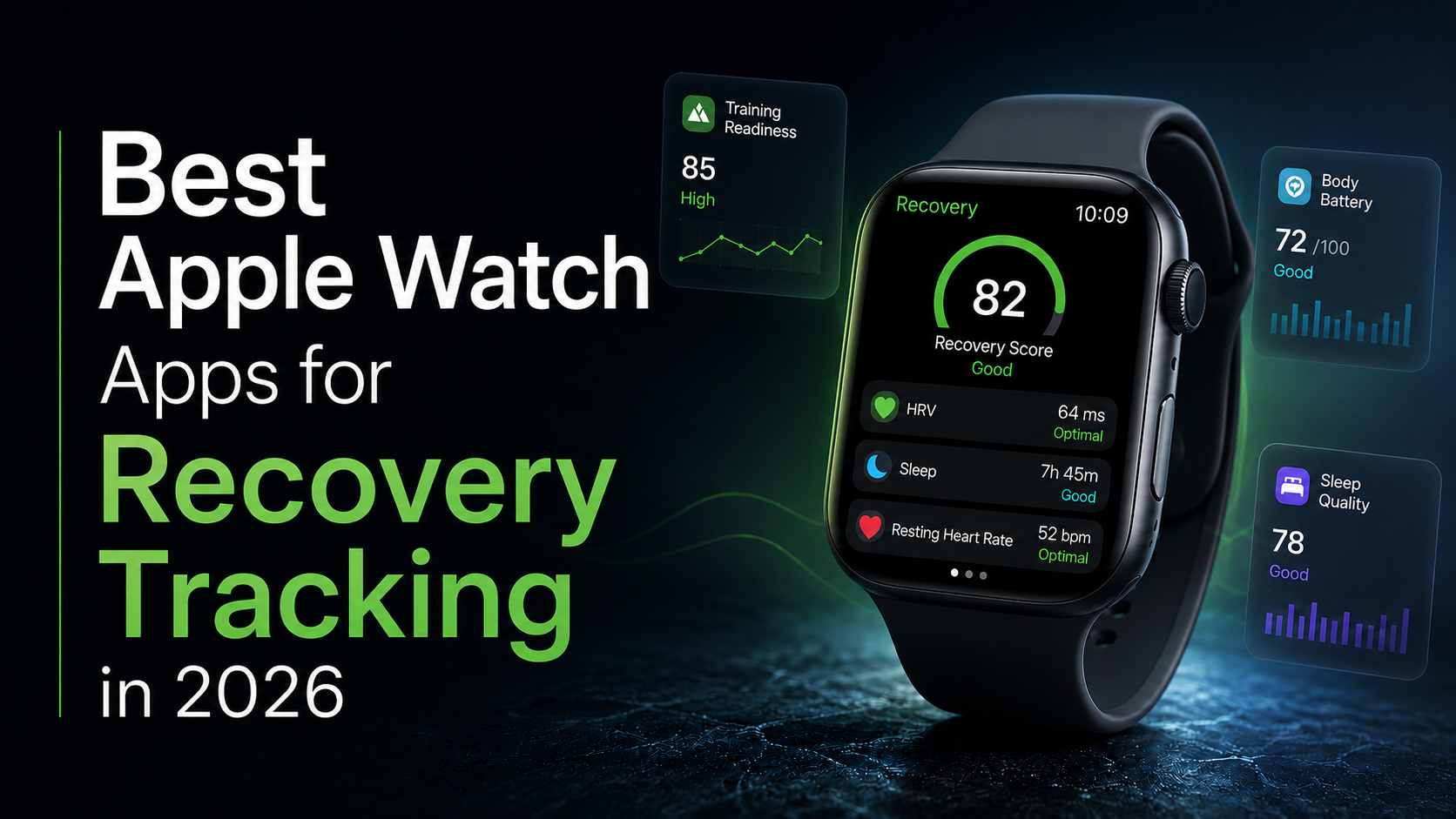
Best Apple Watch Apps for Recovery Tracking in 2026
Your Apple Watch already tracks sleep, HRV, heart rate, and activity, but recovery can still feel confusing without clear interpretation. This guide compares the best Apple Watch recovery apps for 2026, from simple daily energy scores to deeper training-readiness tools, helping you choose the right app for your goals.
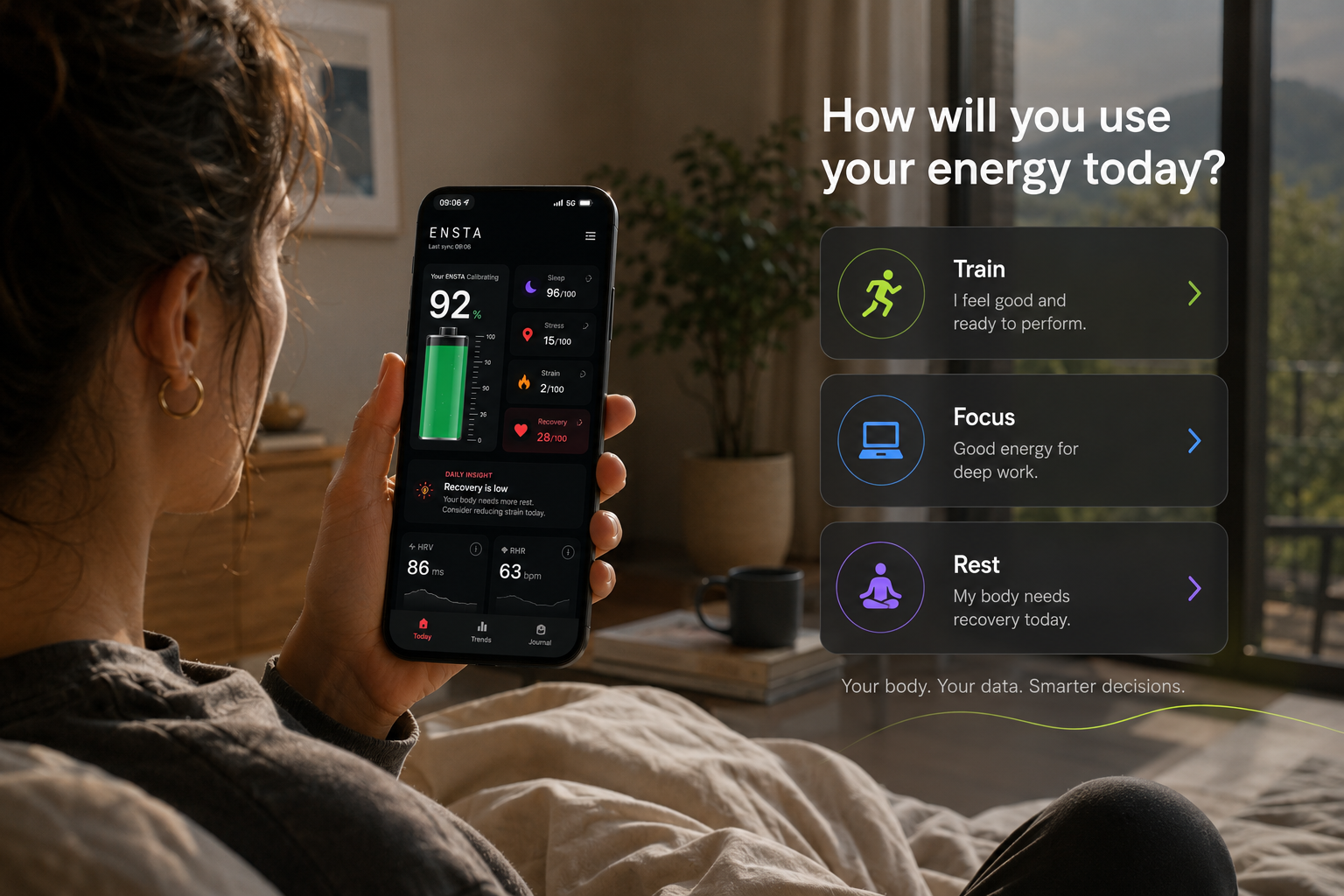
Best Free Energy Tracking Apps in 2026
The free apps are actually worth trying, what “free” really gets you, and whether you need a device at all.
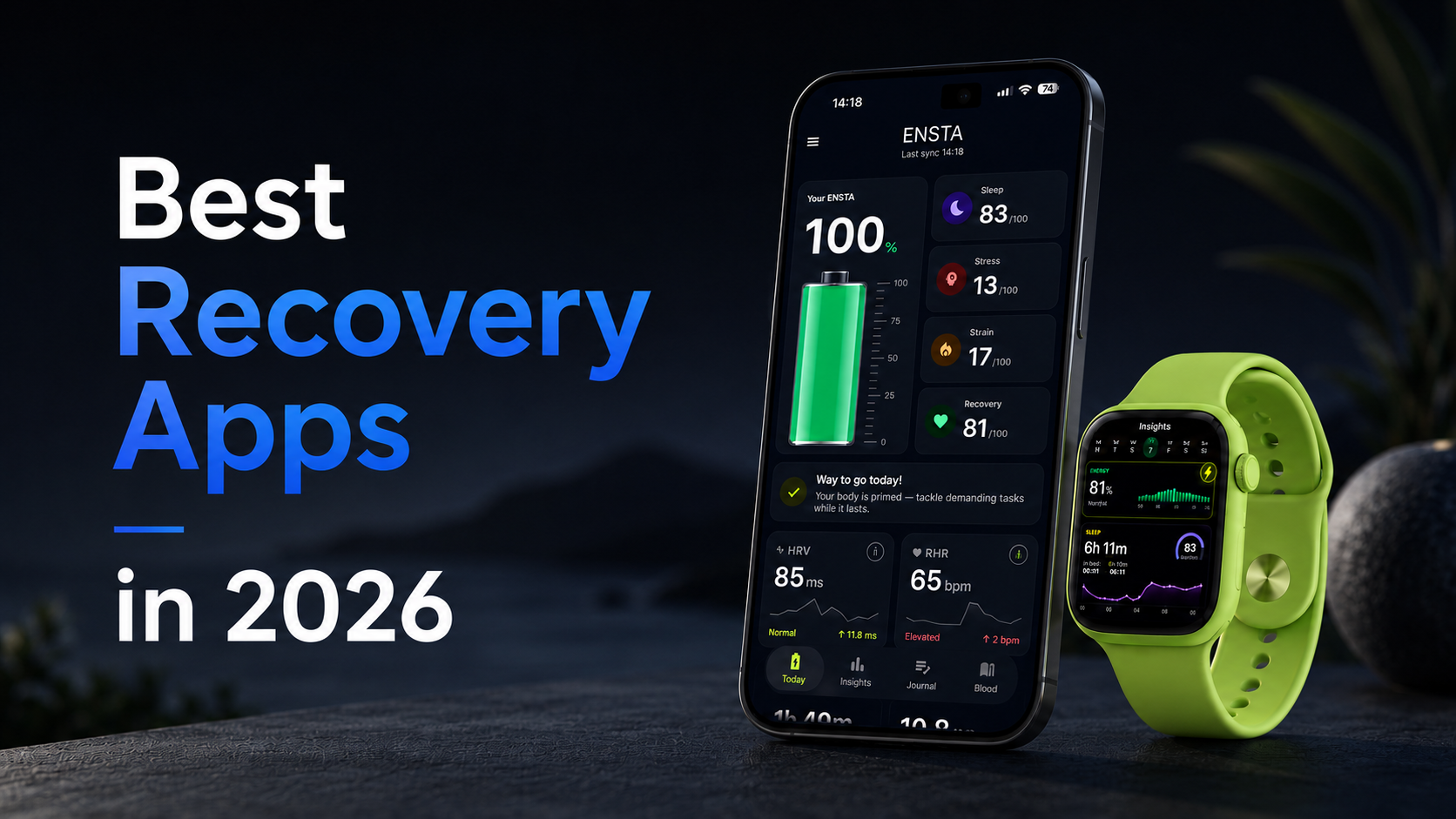
Best Recovery Apps in 2026
Compare the best recovery apps in 2026, including Ensta, WHOOP, Oura, Athlytic, Elite HRV, and Muscle Recovery Tracker. Learn which recovery tracker is best for your body, sleep, HRV, stress, strain, training load, and daily energy score — whether you want a simple free recovery app, an Apple Watch recovery app, a sleep-focused readiness score, or an athlete-grade recovery tracker.
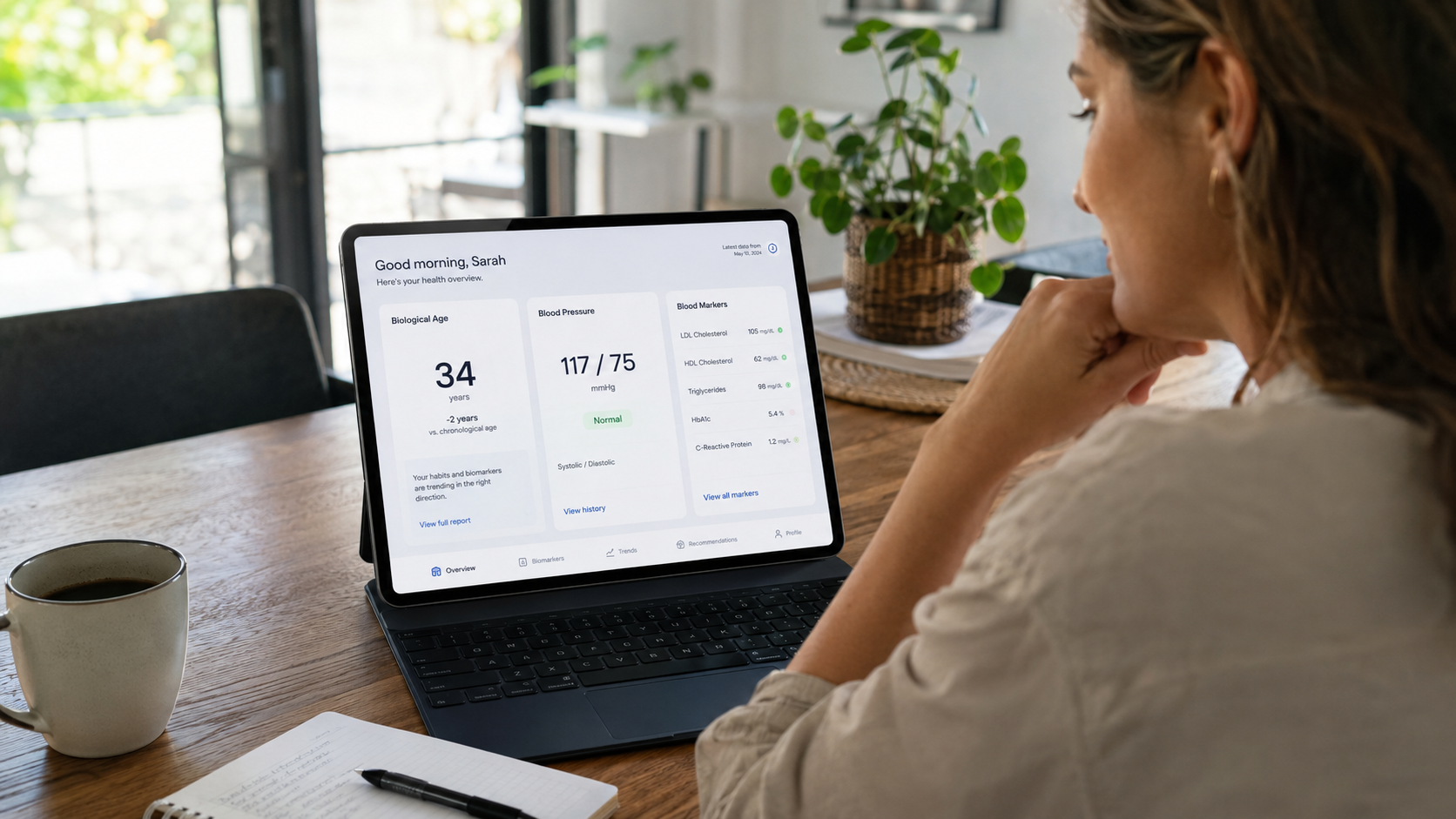
Biological Age, Blood Pressure, and Biomarkers: What Your Health App Can Actually Tell You
Health tracking is moving beyond steps, workouts, and daily recovery scores. New tools are beginning to combine biological age estimates, blood pressure, bloodwork, biomarkers, and healthspan data to give a broader picture of long-term health. This article explains what these measurements can—and cannot—tell you, why some signals matter more than others, and how the best health dashboards should turn complex numbers into clear, practical next steps.
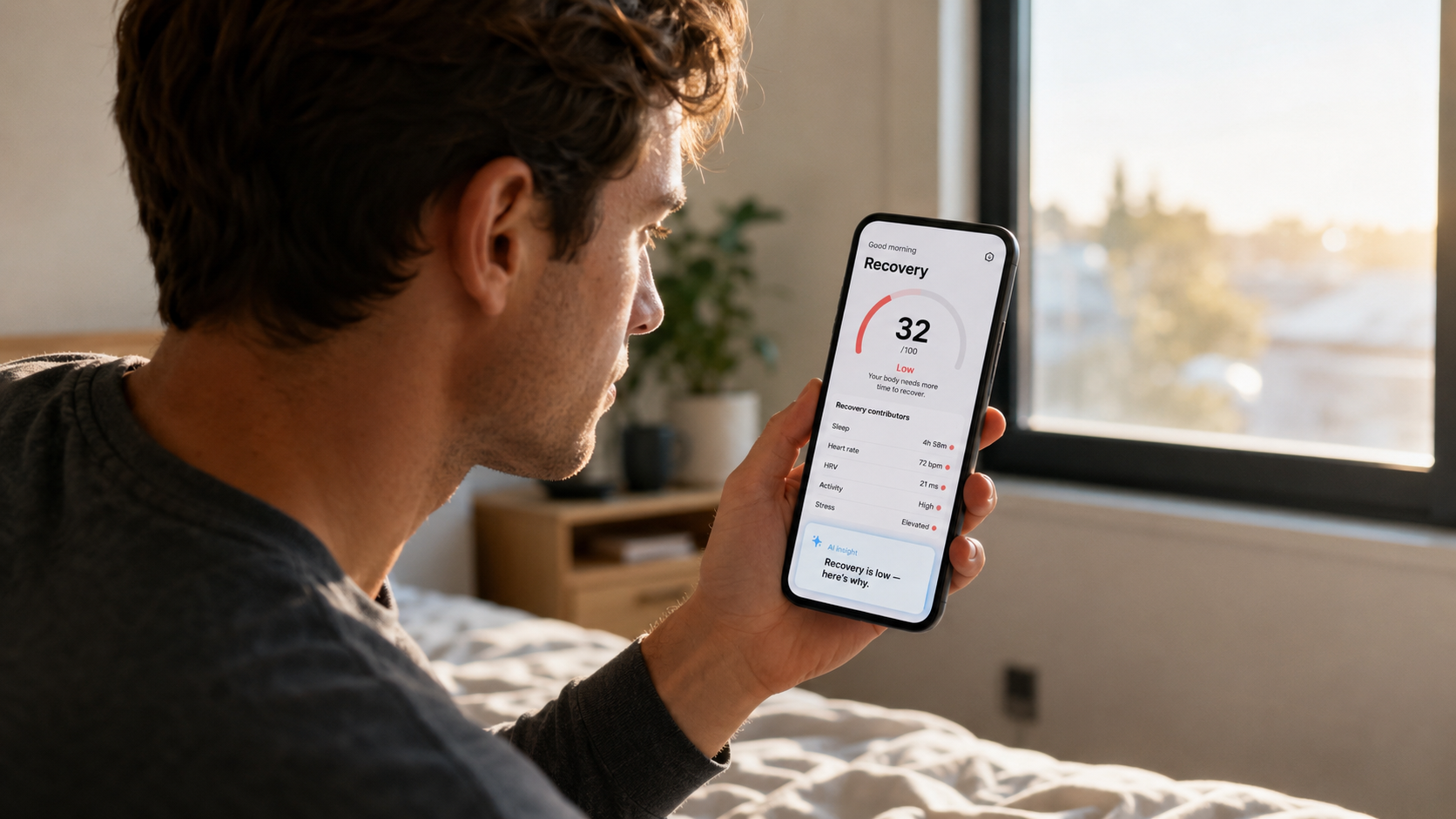
AI Health Coach: When Personalized Insights Help and When They Get Annoying
Health apps are useful when they turn complex data into clear, practical guidance. Discover why wearable advice often feels generic—and what makes an insight truly helpful.