Evening Stress and Why Your Brain Won't Settle Down Before Sleep!
By Mr.Apps · Jun 22, 2026
Category:Sleep
For most of my adult life I described myself as a great sleeper. I'd be unconscious within minutes of lying down, and I treated that as proof I was doing fine. Then I started paying attention to a different number on my sleep tracker, the one that tracks how long your body actually takes to settle into steady sleep, not how fast you stop being awake.
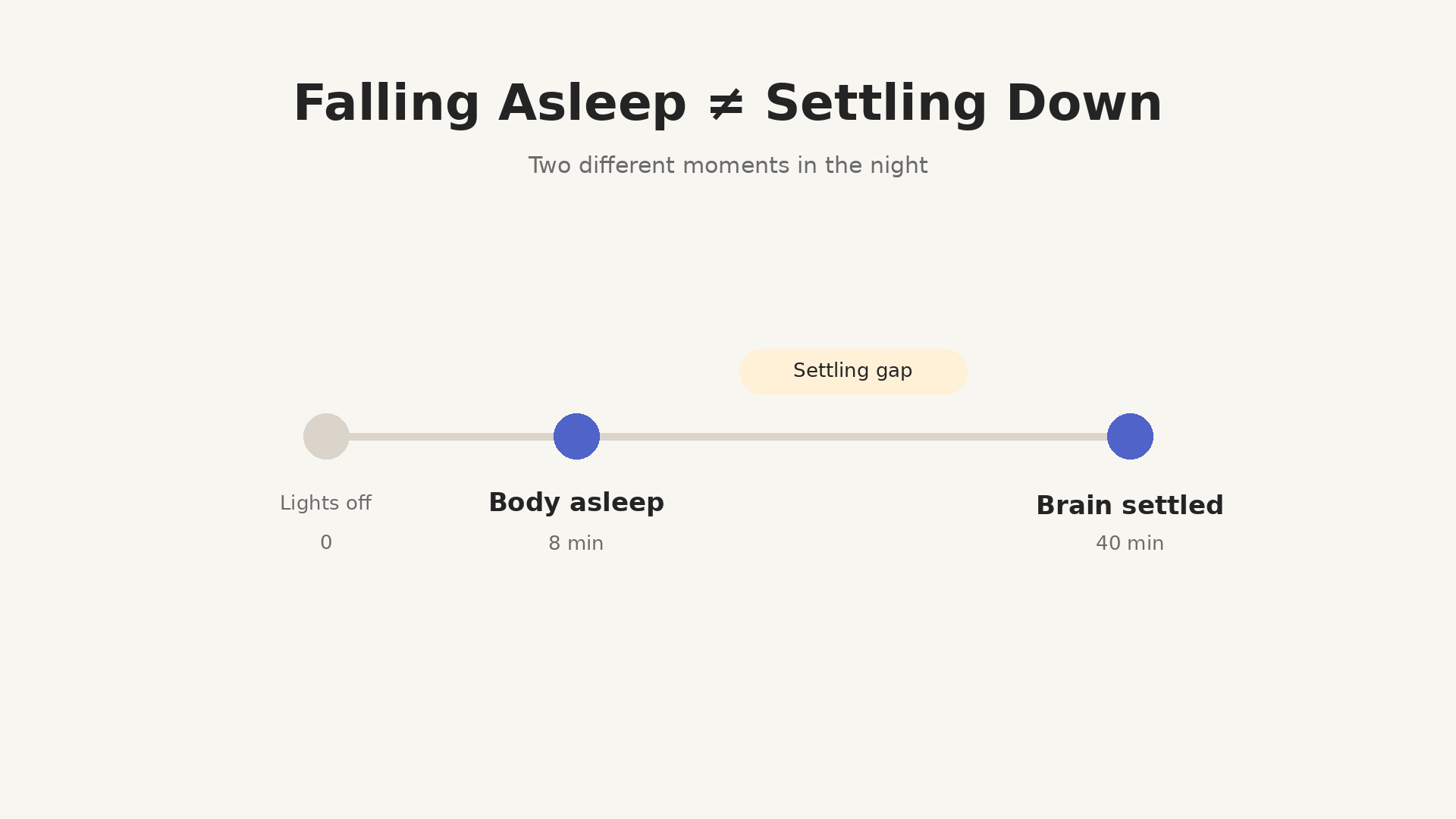
On an ordinary weeknight, nothing dramatic about it, that number came back at around forty minutes. I'd have sworn I was asleep almost as soon as the light went off. The data said my body had gone still, sure, but the settling part took far longer than I'd ever noticed. Once I saw it, I couldn't unsee it.
That gap, the distance between your body going still and your mind actually quieting down, is the whole story of evening stress. It's also the reason "I fell asleep fine" and "I slept badly" can both be true on the same night. If you've been searching around because work stress is ruining sleep and the usual advice isn't landing, this is the part most articles skip.
Falling asleep is not the same as your brain settling down
Here's the thing I got wrong for years. I assumed sleep was a switch. You're awake, then you're asleep, and the only variable is how long you lie there before it flips.
Sleep trackers have quietly blown that idea up. The better ones now separate out something called time to sound sleep: the stretch from when you first appear to get into bed to the moment your body actually drops into deep, REM, or steady light sleep with a calm heart rate. I've read accounts from people told they fell asleep quickly in the physical sense, while their brain still needed half an hour or more to fully settle. That lined up almost exactly with what I was seeing on my own bad nights, and reading it felt a little like being caught.
So there are really two events on most nights. There's the moment you stop being awake. And there's the later moment when your nervous system stops bracing for something. Sleep onset stress lives in between. You can be asleep and still tense, and your tracker can see it even when you can't remember it.
That distinction matters because it changes what you're actually trying to fix. You don't have an insomnia problem if you fall asleep in eight minutes. You have a settling problem. Those need different tools.
What we saw when my team tracked brain activity before sleep
I run a small team, and once that number got under my skin I roped four of them into a slightly nosy experiment. We all wore trackers for about six weeks and shared our wind-down numbers in a private channel. Nobody was a sleep scientist. We were just curious whether our worst nights had a pattern.
They did, and the pattern surprised me.
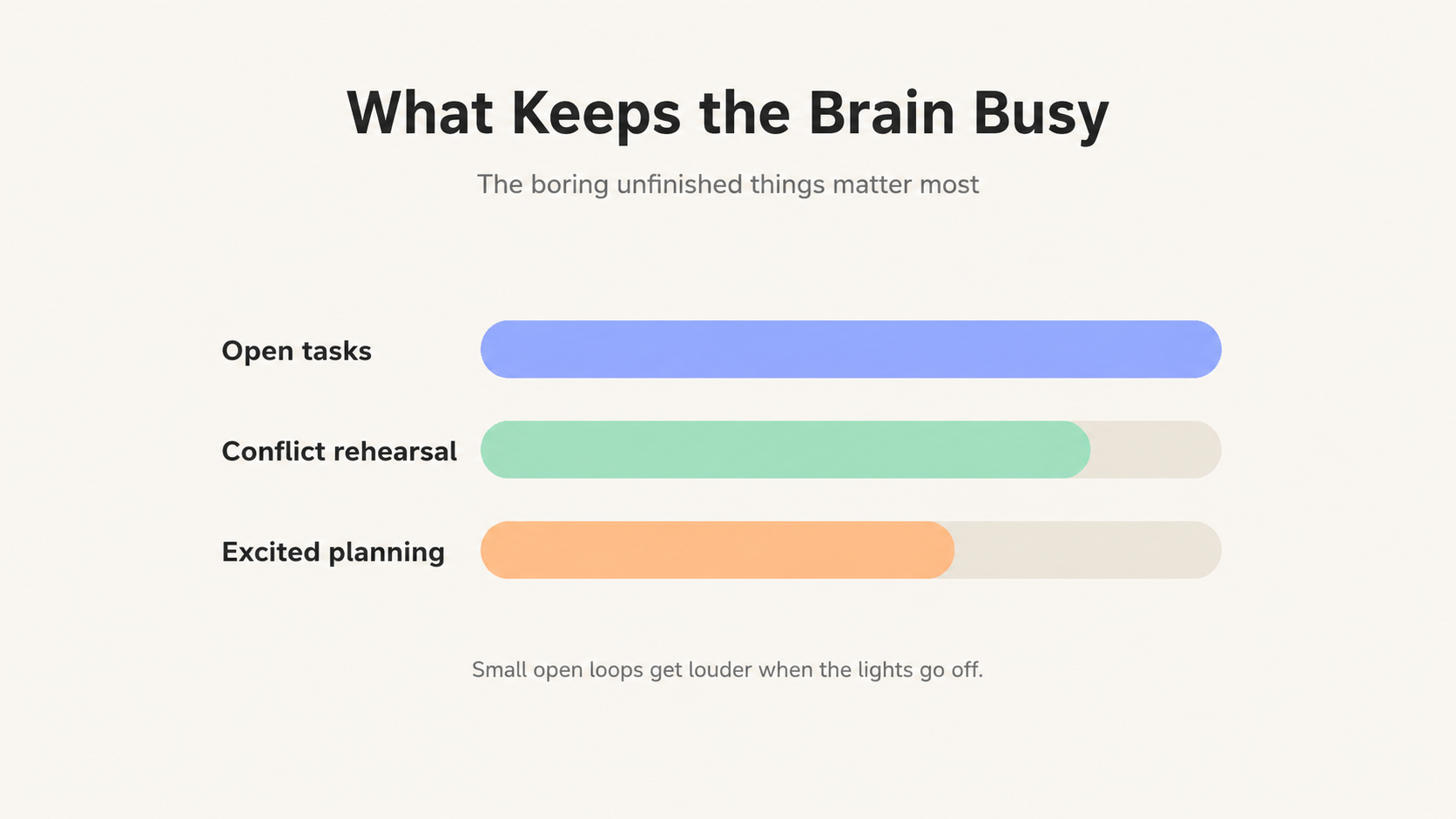
One of my team members had her worst settling times on nights she described as good days. Not stressful ones. She'd close a project, feel great, and then lie in bed for forty-five minutes while her brain ran victory laps and started planning the next thing. Her body was relaxed. Her heart rate told a different story.
Another team member found his cleanest nights came after he'd done something completely mundane after 9pm. His best score followed an evening he spent re-grouting his bathroom tiles. I'm not making that up. He sent a photo of the grout and his sleep graph in the same message, genuinely confused about the connection.
My own data pointed at one specific thing: rehearsal. On nights I lay there silently rehearsing a conversation I was dreading, usually with a contractor I was arguing with about a botched fence installation, my settling time doubled. Money plus an unresolved argument plus a future confrontation. My brain treated it like a meeting I had to prep for at midnight.
What we were seeing, in plain terms, was brain activity before sleep showing up as physical signals. Elevated heart rate, restlessness in the first hour, more of those tiny stirs the new trackers now count separately. None of us could feel it happening. The watch could.
The stress that ruins sleep onset is often the boring kind
I expected the experiment to confirm the obvious story: big stressful day, bad sleep. It mostly didn't.
The dramatic stuff, a tense meeting, bad news, a fight, sometimes wrecked our sleep and sometimes didn't. What reliably did damage was unfinished, low-grade mental admin. The renovation budget you didn't quite close out. The reply you drafted in your head but never sent. The thing you keep meaning to book.
I think it's because your brain doesn't file a task as done until it's actually done, and lying in the dark with nothing else to occupy you is exactly when it goes looking for open files. Those celebratory victory laps were the same mechanism in a happier costume. An open loop is an open loop, whether it's anxious or excited.
This is why I've started to roll my eyes a little at the standard "reduce your stress" advice. Most of us aren't carrying around one big obvious stressor we can just remove. We're carrying eleven small ones, and they only get loud when the lights go off.
How to wind down before bed when your brain won't cooperate
So what actually helped? Not the things I expected, and almost nothing from the standard sleep-hygiene checklist. Here's what survived contact with real life across the five of us, with a strong bias toward things that don't involve melatonin, since two people on the team don't like how groggy it leaves them.
Close the loops on paper, badly.
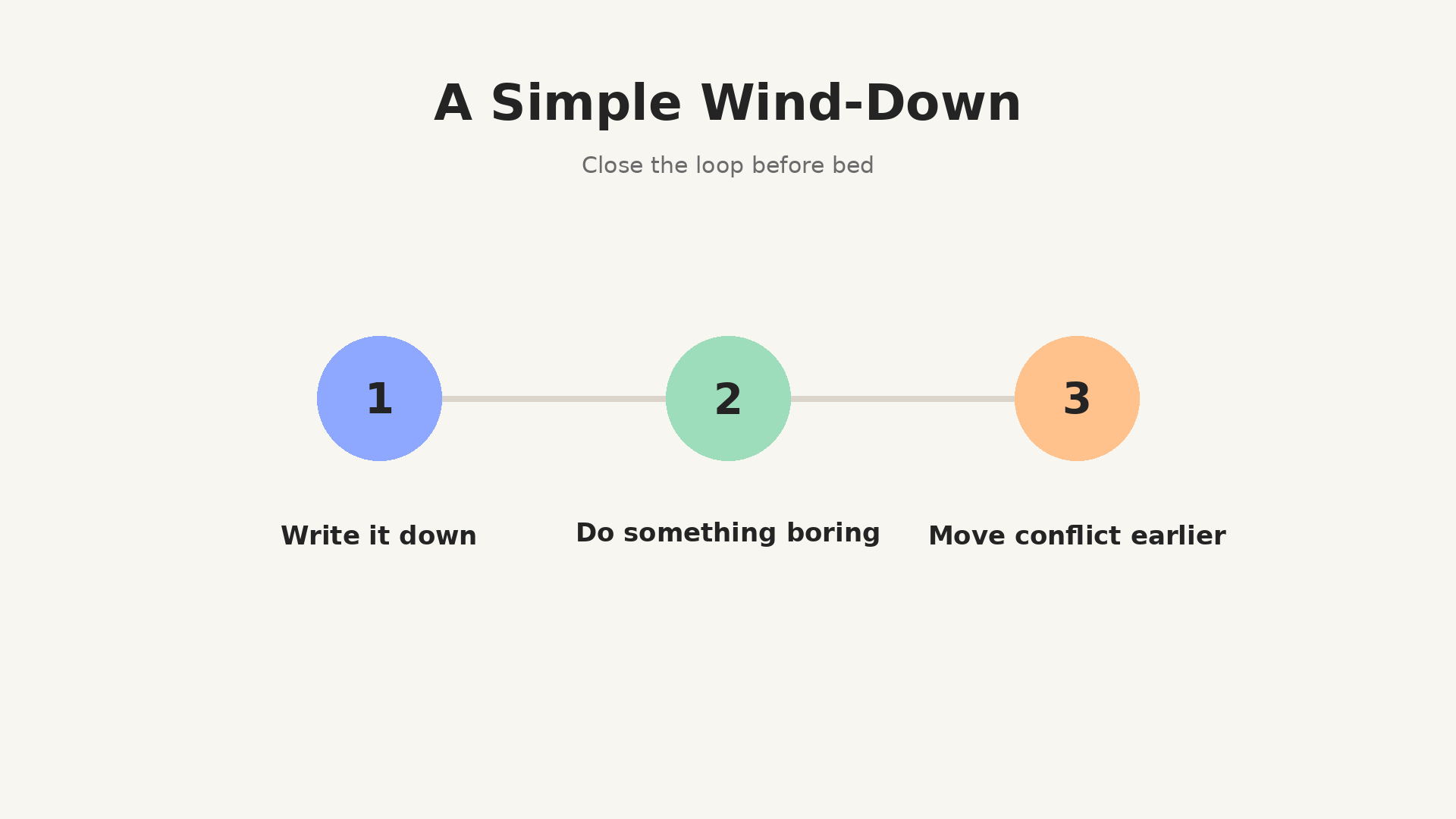
The single most effective trick was the easiest one. Ten minutes before bed, write down every open thing rattling around, including the half-formed ones. Not a tidy to-do list. A brain dump. The point isn't organization, it's telling your head that the file is saved somewhere other than your skull. My settling time dropped noticeably on nights I did this, and it took about ninety seconds.
Give your brain a boring job, not a calm one.
Meditation works for some people. It did nothing for me, and one of my team members said it just made her feel like she was failing at relaxing, which is its own kind of stress. What worked better was the grout principle: a dull, low-stakes task with a tiny bit of focus. Folding laundry in dim light. A few pages of a manual or a book you don't care about finishing. Something that occupies the part of your mind that wants to rehearse, without lighting it up.
Move the hard conversation earlier.
This one's specific to me. Once I noticed my fence-contractor rehearsals were the worst offender, I started actually drafting those messages at 6pm instead of replaying them at midnight. Sent or not, getting the words out of my head in the early evening stopped them from queueing up later.
Watch the signal, not the score.
If you have a tracker, look at your time to sound sleep over a couple of weeks rather than obsessing over last night. The number that matters is your trend. One bad night means nothing. A creeping pattern is the thing worth acting on, and it usually points at a habit, not a single event.
Stop treating tiredness as readiness.
I used to think being exhausted meant I'd drop off instantly. It's almost the opposite. Overtired plus wired is the exact recipe for a long settle. On those nights I now give myself a genuinely slow last hour instead of crashing straight from a screen into the pillow and expecting magic.
When "sleep hygiene 101" stops being enough
If you've already done the basics, no caffeine after 2, dark room, consistent bedtime, and you're still lying there with a settled body and a racing head, you've probably outgrown the beginner advice. The newer, more useful question isn't "is my sleep hygiene good." It's "what is my stress doing to my body in the hour before sleep, and can I see it."
That's the shift I find genuinely interesting, and it's where the wearable people and the sleep community seem to be heading too. Less generic checklist, more reading your own pre-sleep signals and responding to them. A high time to sound sleep isn't a grade you failed. It's information. It's your nervous system telling you which evenings it didn't quite trust you to be done for the day.
I still have thirty-minute nights. The fence got fixed, badly, and I've moved on to arguing with myself about other things. But I sleep better knowing what the number means, and knowing that "I fell asleep fast" was never the full picture. My body was quick. My brain just needed a minute. Now I give it one on purpose, before I'm flat on my back in the dark with nothing to do but think.
FAQ
Why do I fall asleep quickly but still wake up tired?
Falling asleep fast only measures how quickly your body stops being awake. It says nothing about whether your nervous system has actually settled. If your brain keeps running in that first stretch, your time to sound sleep stays high even though you'd swear you were out instantly. That early restlessness chips away at the quality of the night, which is why you can drop off in minutes and still feel like you barely slept.
What's a normal amount of time to settle into sleep?
There's no single right number, and chasing one will just give you something new to stress about. For most people the body reaches steady, sound sleep somewhere in the first twenty minutes or so on a calm night. The figure that actually tells you something is your own trend over a couple of weeks. If your settling time is creeping up across many nights, that's worth looking at. One slow night on its own means nothing.
How can I wind down before bed without melatonin?
The two things that worked best for me and my team didn't involve supplements at all. The first is a quick brain dump on paper before bed, getting every open task and half-thought out of your head so it isn't replaying in the dark. The second is giving your mind a dull, low-stakes job instead of trying to force calm, since "relax now" tends to backfire. Moving any tense conversation or decision to earlier in the evening helps too, so it isn't queueing up the moment you lie down.
*This article is for informational purposes only and is not a substitute for professional medical advice, diagnosis or treatment.*
Related articles
Why your morning energy is decided the night before: coffee, alcohol, and dinner timing
Most bad mornings are decided the night before. How late coffee, alcohol, and dinner timing quietly drain your next-day energy, and how to fix it.
Why Am I Still Tired After 8 Hours of Sleep?
You slept 8 hours and still feel wrecked? Here's why sleep quality beats duration, what a dropping sleep score really means, and how to wake up with energy.
Recovery Score, Energy Score, Readiness, Body Battery — What Actually Matters
What recovery score means, how energy and readiness score differ, and body battery vs recovery — plus which numbers actually deserve your attention.
Why a regular sleep schedule may matter more than an extra hour in bed
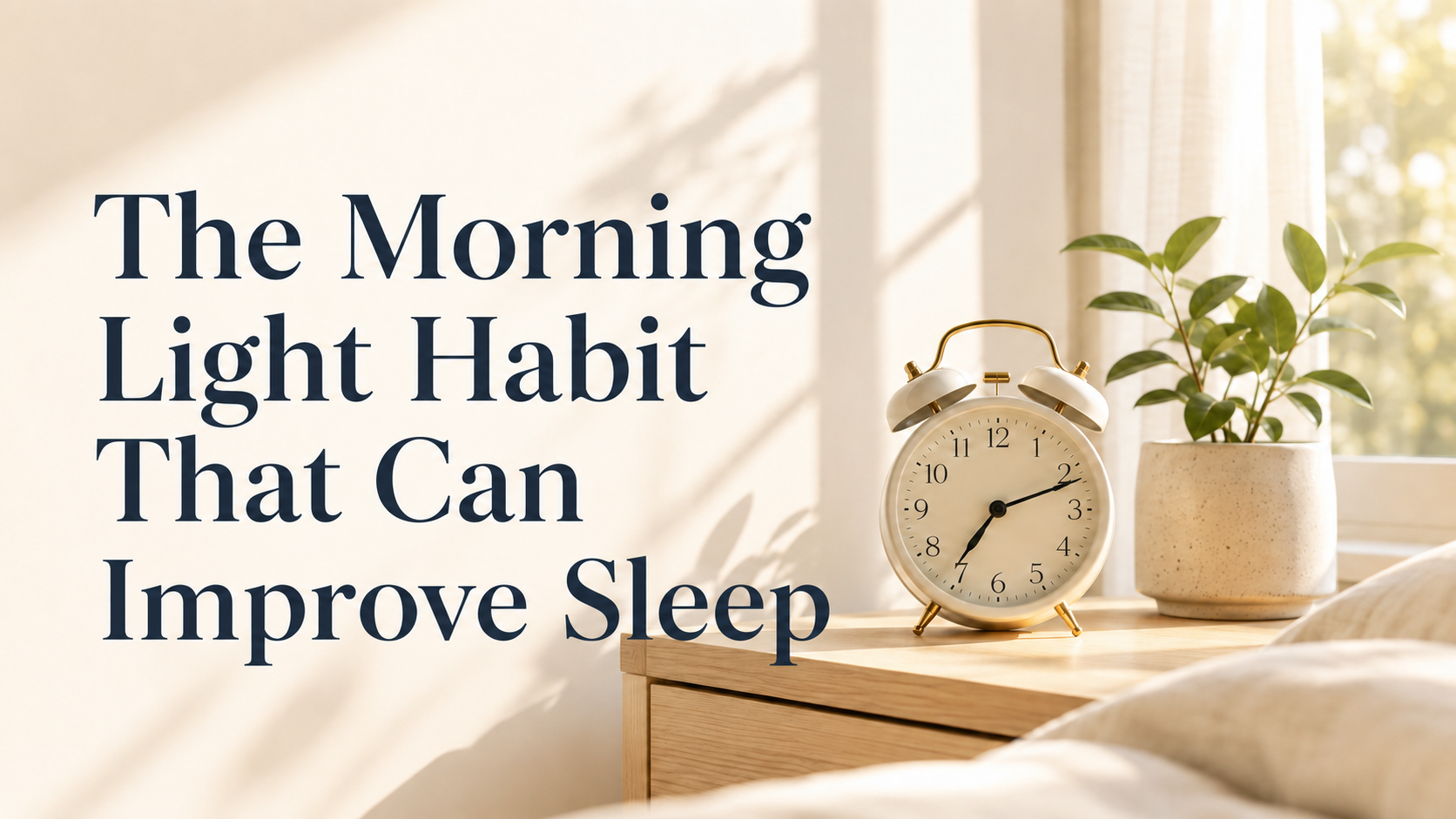
The morning light habit that can improve sleep without changing your bedtime
Most sleep advice focuses on the evening, dim the lights, put the phone away, but that's only half the equation. A few minutes of daylight soon after waking helps set your body clock earlier, making it easier to fall asleep at a reasonable hour that night, no bedtime changes required. Here's why it works, what actually counts as "morning light" in a real schedule, and when the habit alone isn't enough.
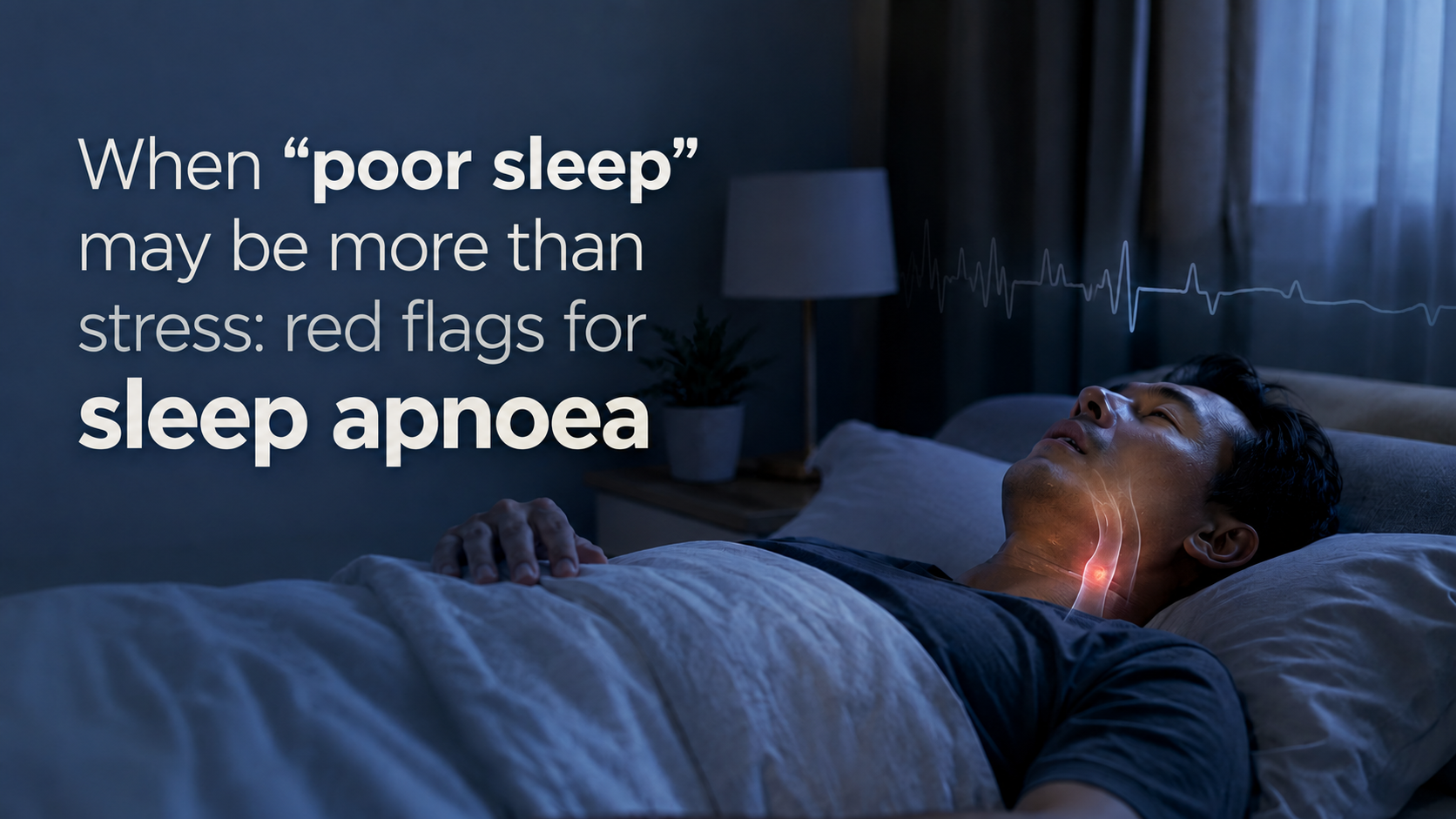
When "poor sleep" may be more than stress: red flags for sleep apnoea
Loud snoring gets dismissed as a quirk, morning headaches get blamed on stress, and daytime fog gets chalked up to a heavy calendar. Taken together, though, these signs can point to something a GP should know about: obstructive sleep apnoea. Here's what the real red flags look like, what home screening tools can and can't tell you, and when it's time to ask for a proper referral.
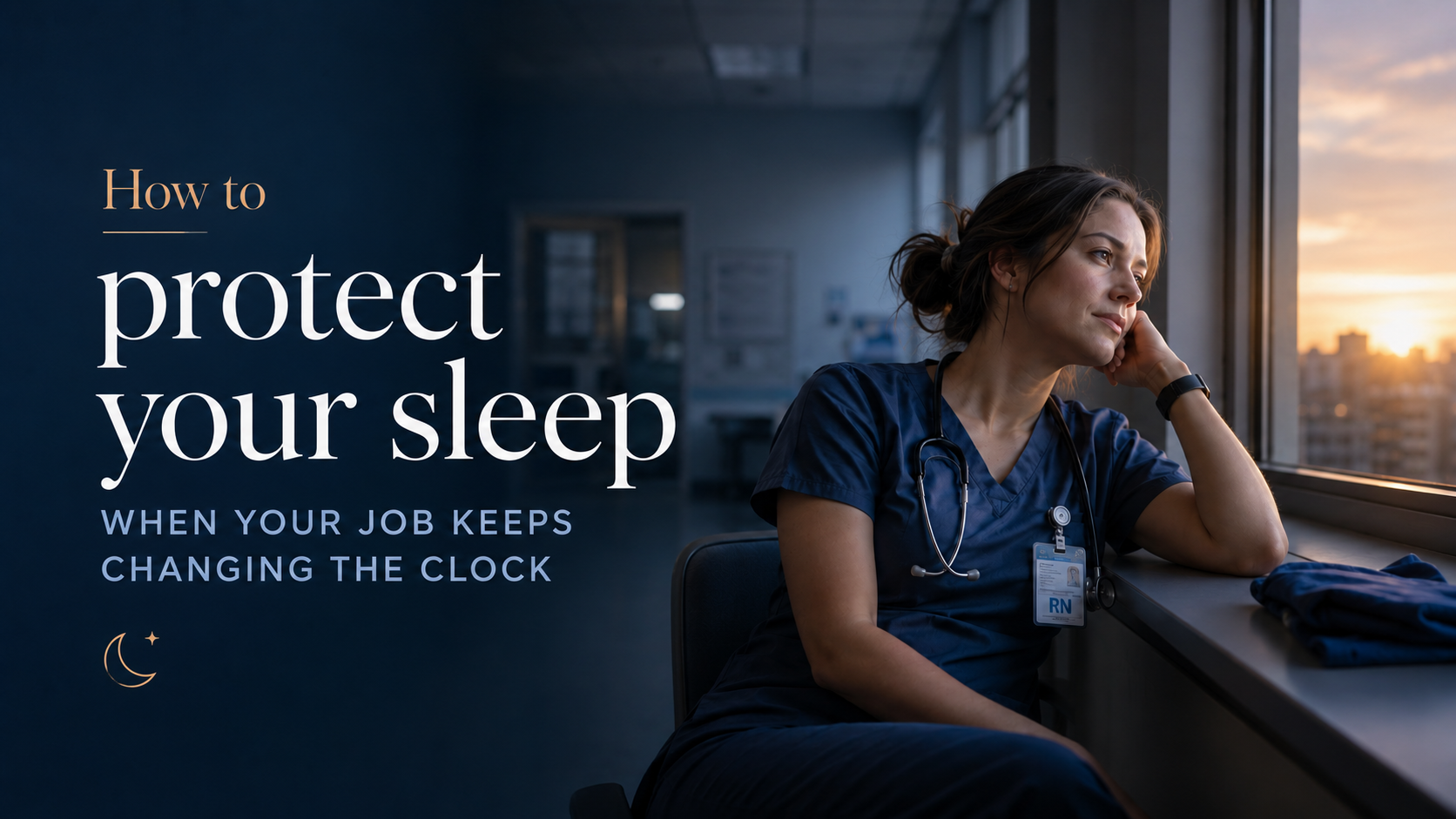
How to protect your sleep when your job keeps changing the clock
Shift work doesn't fail because people lack discipline. It fails because the body was never built to run a factory schedule. Here's what actually helps between rotating shifts, why "just going to bed earlier" doesn't work, and when persistent fatigue stops being normal and starts being something worth getting checked out.