How a daytime sleepiness test differs from an energy score
By Mr.Apps · Oct 19, 2026
Category:Sleep
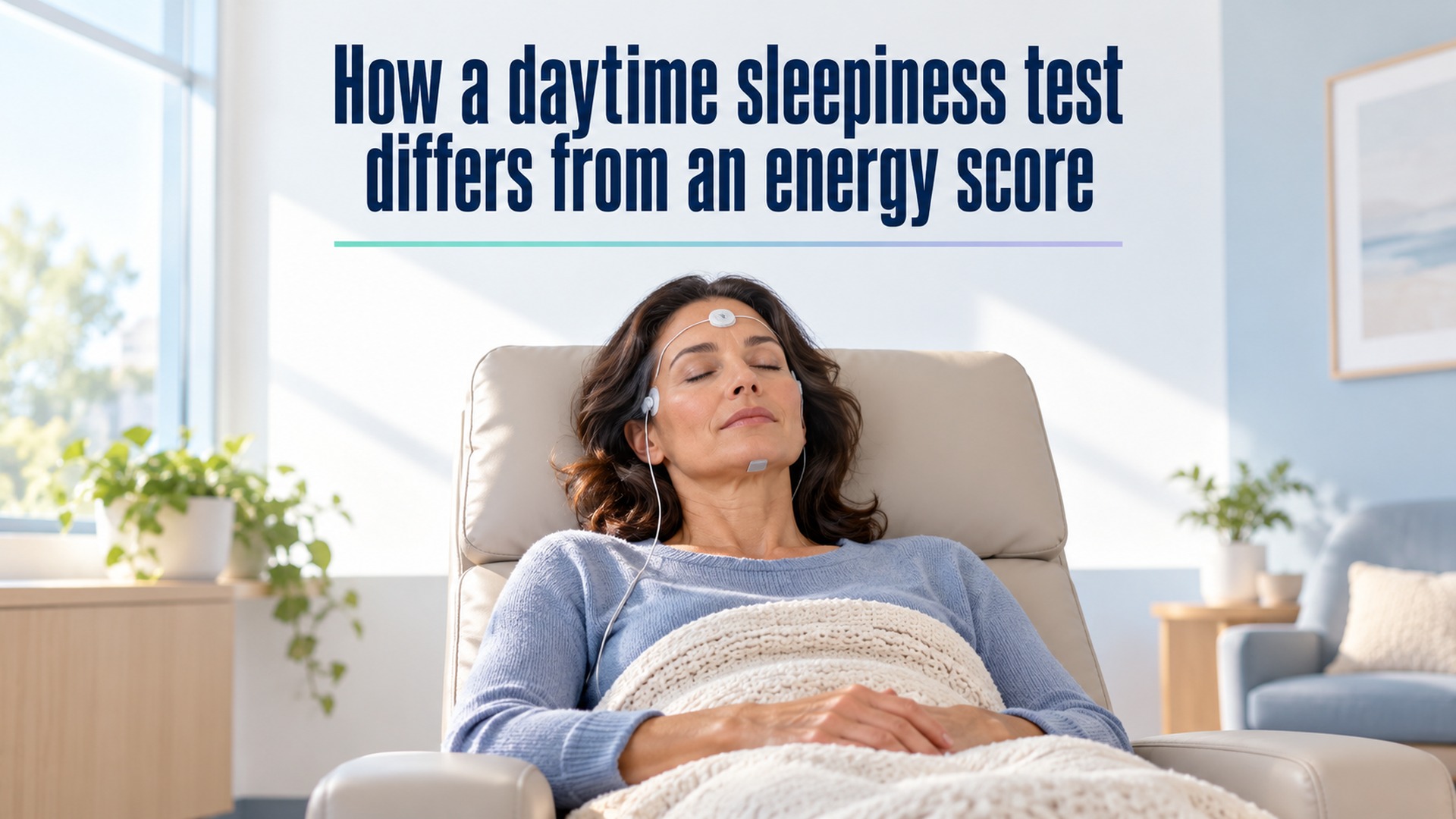
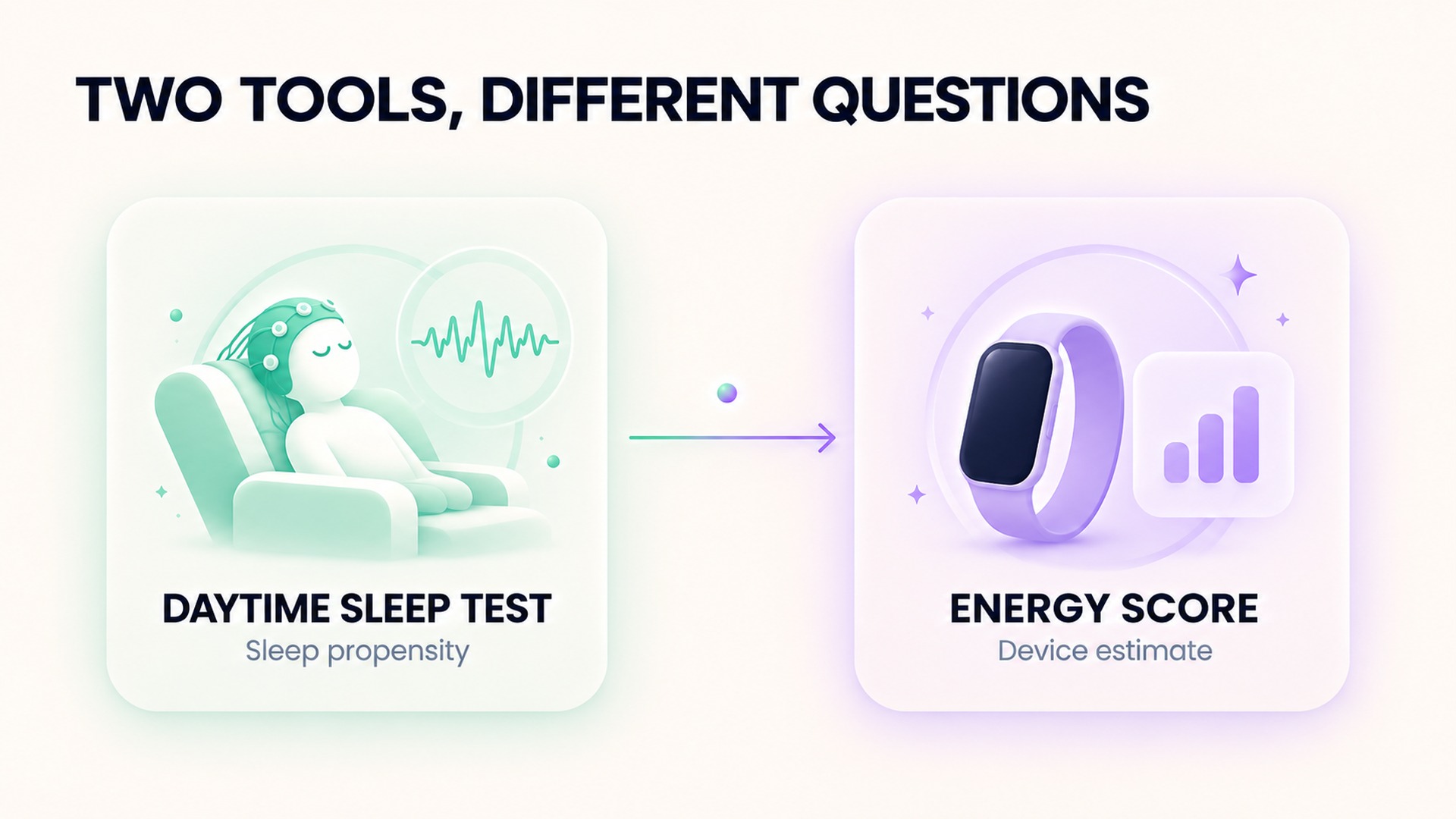
A daytime sleepiness test and a wearable energy score answer different questions. The Multiple Sleep Latency Test, or MSLT, measures how quickly a person falls asleep during scheduled nap opportunities under controlled conditions. An energy score is a consumer summary built from selected device signals and an algorithm. A low score is not an MSLT result, and a high score cannot rule out a sleep disorder.
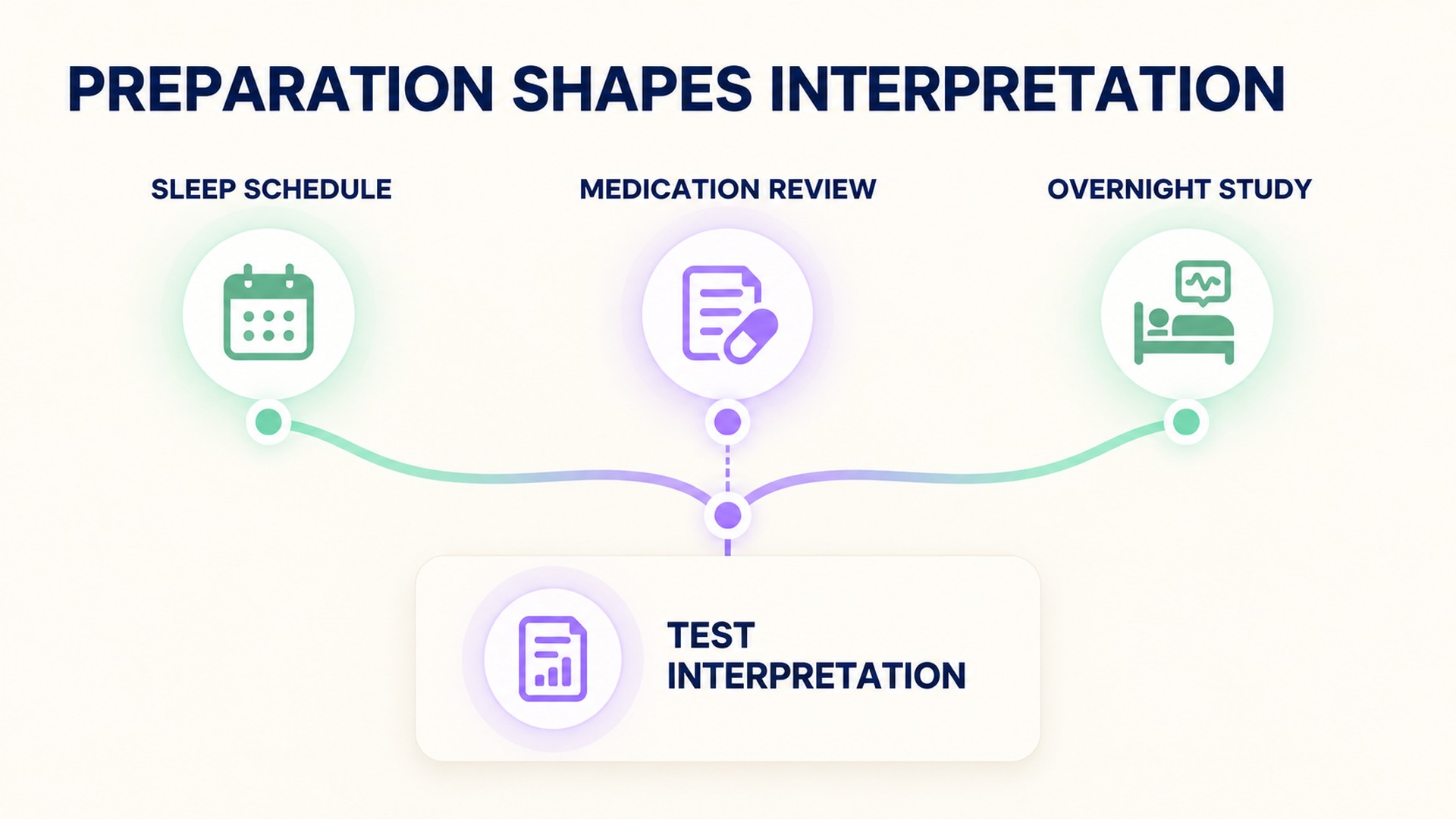
I would describe daytime experiences directly instead of using a wearable grade to infer sleepiness. The MSLT is ordered and interpreted by a sleep clinician when the clinical question calls for it. Its results depend on preparation, the preceding night’s sleep study, the schedule, and factors such as medicines or substances that may affect sleep. If testing is planned, follow the clinic’s specific instructions. Do not change a prescribed medicine or deliberately restrict sleep to influence the result.
What the MSLT measures
During an MSLT, a person receives several scheduled opportunities to sleep in a controlled setting. The test records physiological signals to determine whether sleep begins and how quickly. The average time to sleep across those opportunities is one measure considered in the clinical interpretation. Rapid eye movement sleep during a nap can also be relevant to particular diagnostic questions.
The adult protocol guidance for daytime sleep testing describes preparation, scheduling, test conditions, medications, and documentation. The protocol is more than a series of naps: the clinician considers sleep before the test and whether the conditions make the result interpretable. A person should not try to reproduce the test at home or infer a diagnosis from daytime dozing.
The clinical practice parameters for the MSLT and Maintenance of Wakefulness Test describe different purposes for these procedures. The MSLT measures tendency to fall asleep under the testing conditions. The Maintenance of Wakefulness Test assesses the ability to remain awake in a controlled setting. Neither becomes a universal guarantee of safety in every real-world situation. A clinician interprets the test in context rather than treating one number as a complete account of daily function.
The clinical overview of narcolepsy describes excessive daytime sleepiness among symptoms that may prompt clinical evaluation. A nap test may be part of an assessment, but diagnosis depends on the whole clinical picture and applicable criteria. Feeling tired, lacking motivation, or seeing a low device score does not by itself show that someone will fall asleep quickly on an MSLT.
What an energy score usually represents
A wearable energy or readiness score is a product-specific summary. It may combine estimates such as sleep duration, recent activity, heart rate, or heart-rate variability. The formula and inputs vary. A score can be useful as a reminder to review how you feel and what you did, but it is not a laboratory measurement of sleep propensity.
A person can feel sleepy with a relatively high score, or feel alert with a low score. The value may reflect one component more strongly than another, and it can be affected by missing data or a change in device method. The score is a prompt to inspect its inputs, not an objective test that measures the ability to stay awake during the day.
The clinical quality measures for narcolepsy care describe the role of appropriate clinical testing in diagnostic care. Those measures do not turn a consumer score into a substitute test. A sleep score summarizes estimated signals collected during ordinary life; the MSLT uses physiological monitoring and a planned protocol. The two records can be discussed together as context, but their numbers should not be compared as though they share units.
A broader guide on why tiredness can persist after a full night in bed explains why sleep duration alone does not resolve every daytime symptom. An energy score has a similar limit: it cannot tell whether sleepiness comes from a sleep disorder, schedule, medicine, illness, or another cause.
Preparation affects interpretation
The clinic may ask for a sleep diary, actigraphy, or other information about the sleep schedule before testing. It may review the preceding night’s sleep study and discuss medicines or substances that could affect the result. The goal is to understand the conditions under which the test was performed. These steps should be directed by the clinical team.
Do not stop, reduce, or shift a medicine on your own because a test is scheduled. Some medicines can affect sleep or REM expression, but changing them can also carry risk. The test team can tell you whether any preparation is appropriate and how to handle it safely. If you did not follow an instruction or something unexpected happened, report that fact rather than trying to compensate privately.
If you keep a sleep diary before testing, complete it as instructed and mark uncertain times as estimates. A missing entry is different from a night of zero sleep. Do not recreate values from memory if you no longer know them. If a diary or actigraphy record conflicts with your recollection, tell the clinic rather than choosing whichever looks more consistent with the score. The team can decide how the discrepancy affects the test plan. Sleep amount and timing before the test also matter. A person who has had too little sleep or an irregular schedule may not be in the same condition as someone whose sleep has been stable. That is why preparation instructions are individualized. Do not deliberately stay awake, nap extra, or change your routine to make the result look a certain way.
A test report should be read with its limitations. The number of nap opportunities, whether sleep occurred, the average sleep latency, and REM findings are interpreted under the applicable protocol and diagnostic criteria. A single result may be affected by insufficient sleep, circadian timing, medication, or other factors. If the clinician considers a result inconsistent with the history, they decide whether additional evaluation is appropriate.
Why interpretation stays with the clinician
A test result is one part of an evaluation, not a label that explains every episode of sleepiness. A recent study of repeat MSLT testing reported that diagnostic classification could change when people with certain hypersomnolence conditions were retested. The study examined a clinical population and does not mean that every result is unreliable. It does underline why the testing conditions, history, and other evidence matter when a result is borderline or does not fit the symptoms.
The MSLT and the Maintenance of Wakefulness Test also have different measurement goals. A review of objective measures of sleepiness and wakefulness discusses clinical uses of these procedures and the limits of translating a laboratory result into everyday performance. A controlled room cannot reproduce every driving, work, or home situation. If you have safety concerns, discuss them directly with the clinician rather than treating a test result or consumer score as a blanket clearance.
Use a device score as context, not a result
If you already track an energy score, bring a summary only if it helps explain your daily pattern. Separate notes about feeling sleepy from notes about feeling depleted. Record whether you unintentionally dozed, struggled to keep your eyes open, felt physically tired, or had low motivation. Add the situation and approximate time, such as during a quiet activity or while following your usual routine. These details help a clinician understand the complaint without forcing it into a wearable’s scale. A score may prompt you to notice a pattern, but it does not say which experience you had. That distinction can make a clinical conversation more precise, especially when “tired” and “sleepy” have been used to mean different things.
Include the device name, dates, missing data, and how you felt during the day. Keep those notes separate from the MSLT report and do not convert either value into the other. A clinician can decide whether the consumer data add anything to the assessment.
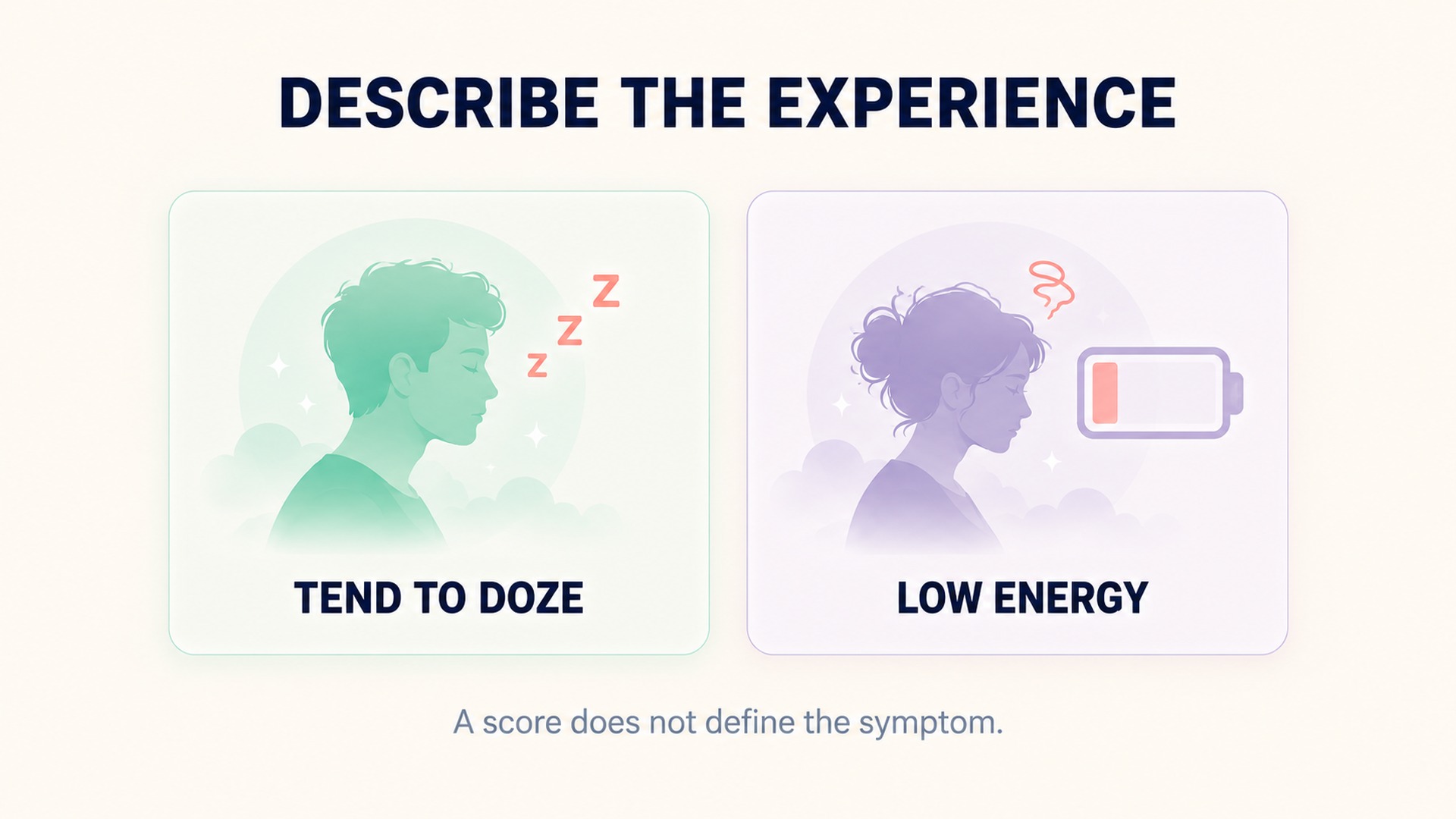
It can help to distinguish sleepiness from fatigue in your own notes. Sleepiness means a tendency to doze or fall asleep; fatigue can mean low energy, effort, or reduced capacity without an immediate tendency to sleep. People may use the words differently, so describe the experience: nodding off while reading, struggling to stay awake, feeling physically drained, or lacking motivation. A device score cannot clarify which meaning applies.
If sleepiness is severe or affects driving or another safety-sensitive activity, do not use a score to decide that you are safe. Follow professional guidance and use the safety measures discussed with your clinician. A sleep test has a defined role; an app summary does not establish fitness for a particular activity.
An MSLT is a supervised test of sleep propensity under a defined protocol. A wearable energy score is an estimate built from selected signals during ordinary life. Keep them separate, follow the clinic’s preparation instructions, and discuss the test result with the clinician who ordered it.
FAQ
Can a low energy score diagnose excessive daytime sleepiness?
No. A consumer score does not measure sleep propensity or diagnose its cause. Describe your symptoms and discuss them with a health professional.
Is an MSLT the same as a test of whether I can stay awake?
No. The MSLT measures tendency to fall asleep during scheduled opportunities. A different procedure assesses ability to remain awake under controlled conditions.
Should I change medication before an MSLT?
Do not change medication on your own. Follow the test team’s instructions and ask them how to handle any medicine that may affect sleep.
*This article is for informational purposes only and is not a substitute for professional medical advice, diagnosis or treatment.*
Sources:
Journal of Clinical Sleep Medicine·American Academy of Sleep Medicine·National Institutes of Health·Journal of Clinical Sleep Medicine·Sleep Medicine·Journal of Clinical Neurophysiology
Related articles

Acting out dreams needs a different review from restless sleep
Dream enactment and restless sleep are different observations. Learn what details to record, why movement counts cannot diagnose a sleep disorder, and when behavior merits clinical review.
Adding nighttime reflux symptoms to a sleep review
Nighttime reflux symptoms can add useful context to a sleep review, but a wearable cannot diagnose reflux. Learn what to record and when to ask a clinician about recurring symptoms.
Remembering a dream does not measure how much REM sleep occurred
Dream recall is not a measure of REM sleep duration. Learn how to keep a dream journal and a device estimate separate.
Recording sleep paralysis without assigning it a sleep stage
Sleep paralysis happens around falling asleep or waking, and a wearable stage graph cannot diagnose it. Learn what details to record and when to discuss recurring episodes with a clinician.
Keeping prescribed breathing treatment separate from a sleep score
Sleep score and prescribed breathing treatment answer different questions. Learn how to keep the records separate and what to bring to a clinical follow-up.
Why a laboratory sleep study can differ from a usual night at home
A laboratory sleep study records sleep under conditions that can differ from home. Learn how to discuss an unusual test night without dismissing the clinical findings.

How to Read a Sleep Graph When Deep Sleep Appears in Short Bursts
Short deep-sleep blocks on a wearable graph can reflect stage estimates, chart resolution, or missing sensor intervals. Read the time scale and coverage notes alongside the total sleep window before interpreting the pattern.

Why Sleep Stage Percentages Need a Confidence Indicator
A sleep-stage percentage can look precise even when the tracker has limited evidence for part of the night. A confidence indicator should explain whether it refers to signal coverage, classifier uncertainty, or validation against a reference method.

How to Tell Whether Zero Deep Sleep Is a Data Gap or a Classification Result
Zero deep sleep in a wearable graph can reflect an incomplete record or a classification that assigned no eligible interval to that stage. Check the full timeline, coverage notes, and the app’s stage method before interpreting the value.

Why Main Sleep and Naps Need Separate Breathing Analysis
Main sleep and naps can differ in timing, duration, sensor coverage, and how a tracker identifies each interval. A breathing summary should show which session it analyzed and keep a nap separate unless the product explains how both periods enter the same calculation.