Active and passive range of motion need separate records
By Mr.Apps · Nov 3, 2026
Category:Training
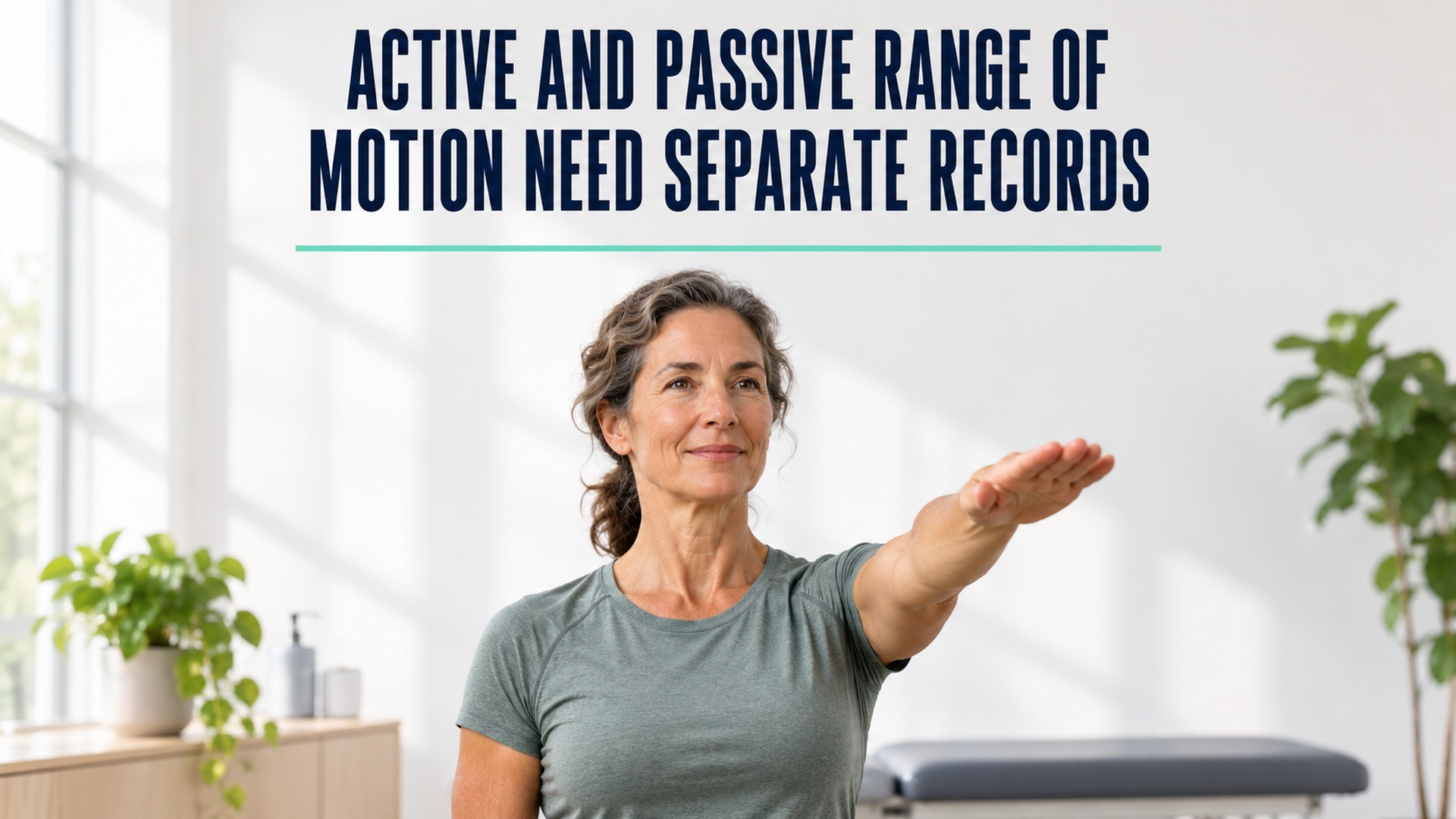
Record who produced the movement
Active and passive range of motion describe different ways a joint moves during an assessment. In active range of motion, the person produces the movement using their own muscles. In passive range of motion, an examiner or external device moves the joint while the person does not actively produce the motion. The angle may be recorded in the same unit, but the method is not interchangeable.
I keep the two methods in separate fields rather than combining them into one angle trend.
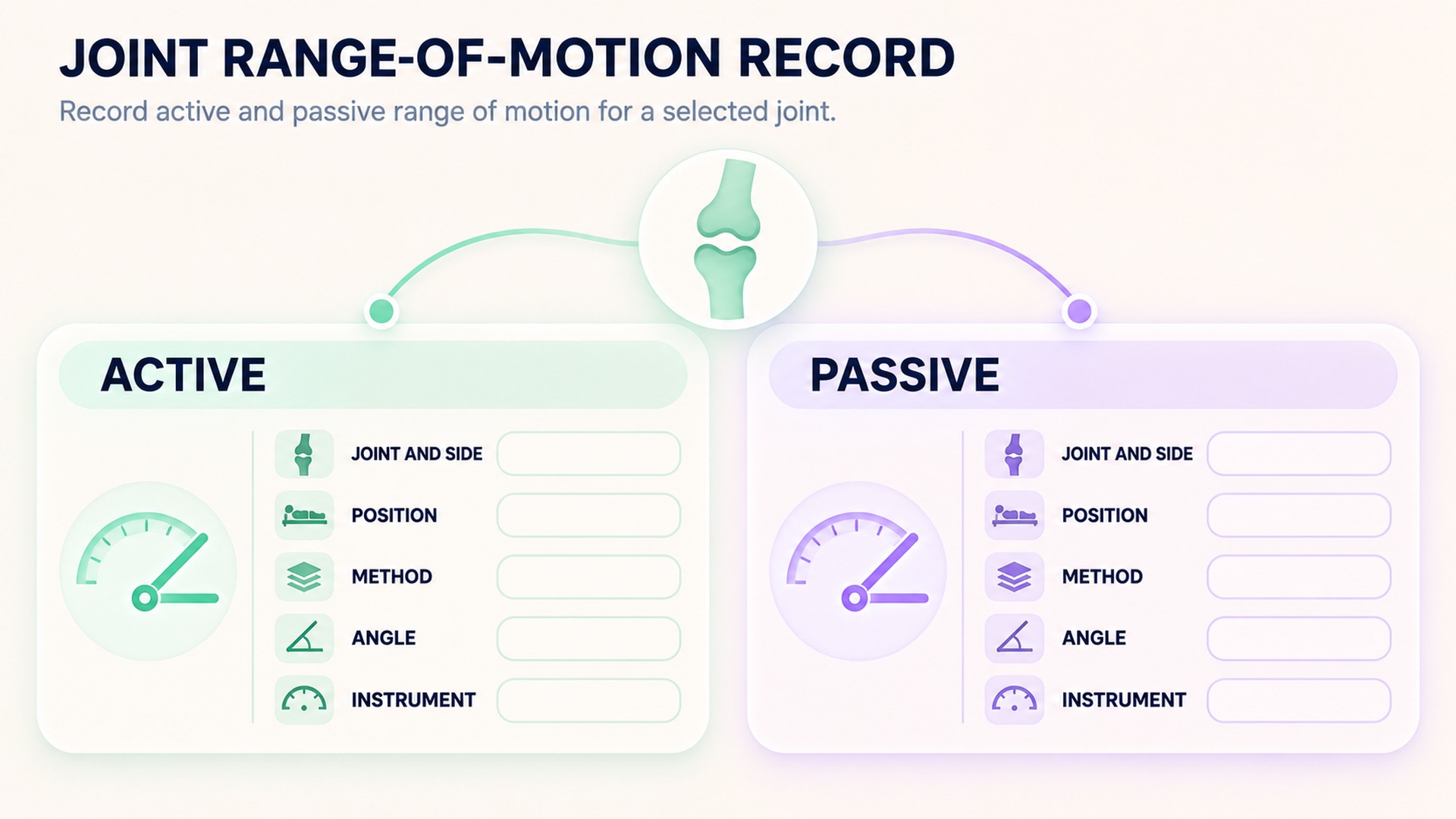
An activity log should preserve whether the measurement was active or passive, the joint and side, the position, and who or what moved the limb. The clinical coding definitions of active and passive range-of-motion exercises distinguish movement performed by the patient from movement applied by a caregiver. These terms describe the source of motion; they do not diagnose why a range differs.

What active range of motion shows
An active measurement records the movement a person can produce voluntarily under the stated test conditions. It depends on more than the joint's available angle. Strength, coordination, pain, confidence, fatigue, movement strategy, and the person's understanding of the instruction can influence the endpoint. A smaller active range therefore does not identify a single cause.
For example, raising an arm overhead actively requires the person to move it. The measured endpoint may reflect the shoulder joint and the coordinated movement of nearby body regions. The exact interpretation depends on which motion is tested, how the person is positioned, and how the examiner defines the landmark. A range recorded from a home video may not follow the same protocol as a clinical goniometer measurement.
The goniometer measurement guide describes ways to measure both active and passive motion and emphasizes maintaining a consistent position. That matters because a change in torso, adjacent joint, or stabilization can alter the apparent range. The record should say how the measurement was taken rather than assuming the angle stands alone.
What passive range of motion shows
In passive measurement, an examiner or external force moves the joint through the available range while the person does not actively drive the motion. The amount of force, the examiner's technique, the direction, and the point at which the movement stops can affect the result. A passive range may differ from an active range, but the difference is not a diagnosis by itself.
The movement should follow an appropriate assessment method. A person should not force a painful or restricted joint to obtain a larger number. A clinician or trained examiner determines how the joint is positioned and what endpoint is appropriate. If a home log contains only an informal observation, label it as an observation rather than a clinical passive range measurement.
A standardized joint-mobility study examined reliability under a defined measurement method. A later randomized comparison of standardized and conventional protocols described how position, passive force, measurement method, and examiner can affect range-of-motion values. Both studies apply to their tested protocols and participants. They support consistent methods; they do not establish one universal normal range for every joint or person.
Keep active and passive values in separate fields
If a form offers one field labeled “range of motion,” add whether the number is active or passive. If both were measured, record them separately rather than selecting the larger value or averaging them. Keep units and angle direction consistent. Include the starting position, joint, side, and instrument when known.
A concise note might read “left knee flexion, active, seated, goniometer” followed by the measured result. A passive value from another examiner should be a separate entry with its own date and method. Do not combine the two into a single trend line without making the measurement type visible. A chart can otherwise imply that all values were collected in the same way.
If the assessor or equipment changes, preserve that information. A study of active and passive knee measurements after joint replacement found that test-retest and between-examiner results depended on the protocol and outcome. The participants and clinical setting limit how far the findings can be generalized. The practical recordkeeping point is to note who measured the joint and keep repeated comparisons as consistent as possible.
Position and stabilization matter
Range of motion is not a property of a joint measured in a vacuum. Body position, support, the starting angle, and movement of adjacent regions can affect what is measured. If a knee is tested with the hip in a different position, the result may reflect a different setup. If the trunk leans during an active shoulder movement, the arm may appear to move farther even though the shoulder itself has not changed by the same amount.
Stabilization is part of the method. The examiner may hold nearby structures steady to isolate the joint movement. Passive force may be applied at a specified location. A home measurement that lacks those controls should not be compared directly with a clinic measurement that includes them. Record what is known and leave unknown details blank rather than guessing.
The systematic review of passive lower-extremity measurement reliability found that agreement varied by joint and method, and it cautioned against treating all passive measures as equally reliable. This does not mean measurements are useless. It means a small numerical change may reflect measurement variability, especially when the tester, position, or method changes.
Report observations without turning them into a diagnosis
A measurement can help a clinician follow movement over time, but the number alone does not explain a limitation. Active and passive findings may be considered together with symptoms, history, function, and examination. A passive range that is larger than the active range can have several possible explanations. It does not establish that a muscle is weak, that a joint is injured, or that one treatment is needed.
Record discomfort or an unusual response separately from the angle. If the person stopped because of pain, say where and when it occurred if appropriate. Do not pressure someone to continue through pain to produce a “complete” value. If the measurement was performed during a clinical assessment, preserve the examiner's interpretation in a separate field from the raw reading.
The protocol comparison for joint range measurement reports that different techniques can produce different reliability. That study does not validate unsupervised measurements for diagnosis. For an individual concern, the clinician decides whether a joint needs further examination and how any measurement should be interpreted.
Make repeated measurements comparable
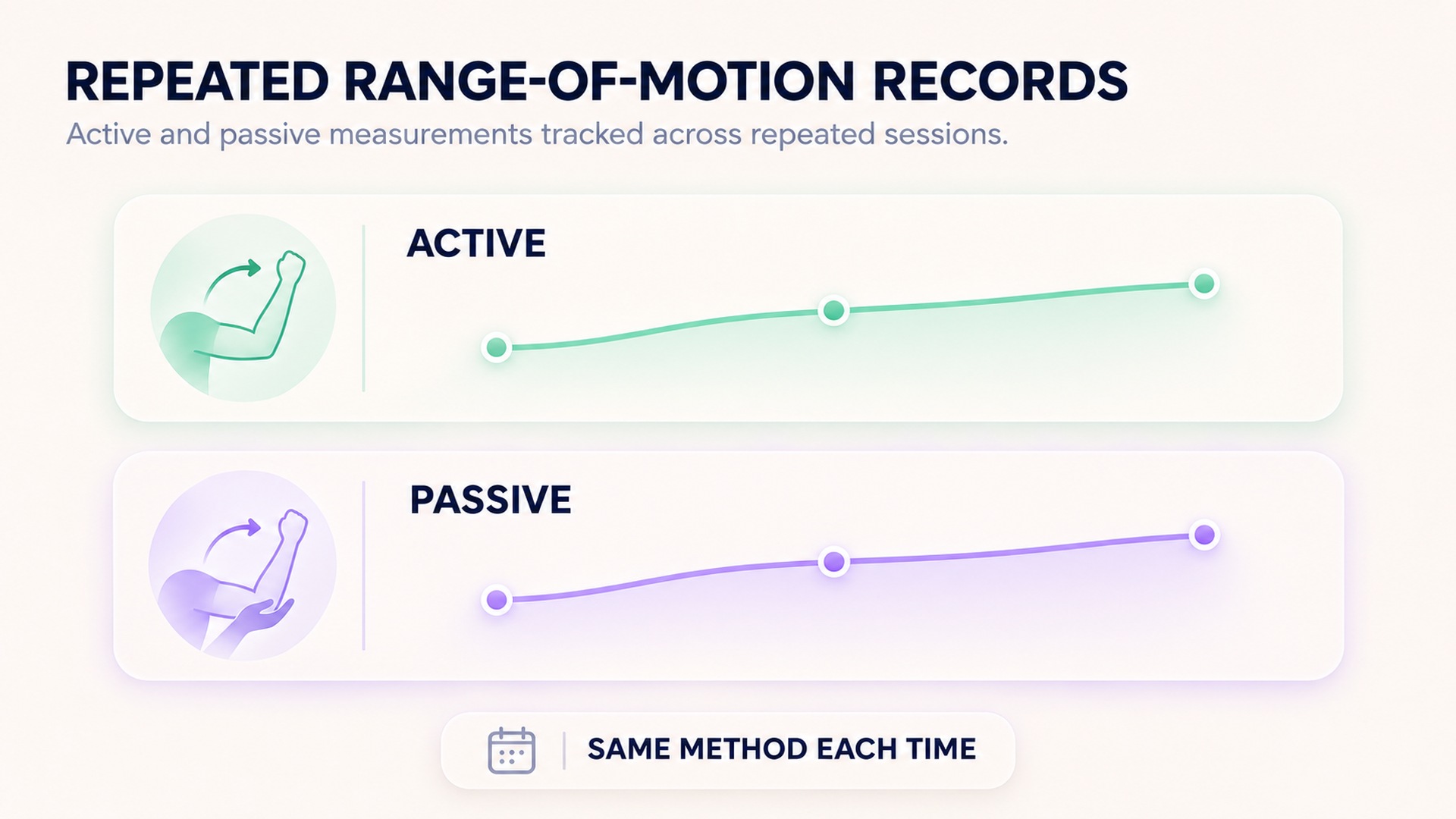
When the goal is to follow change, use the same joint, side, position, instructions, instrument, and movement type. Use the same examiner when possible and follow the same stabilization approach. The exact standard depends on the joint and assessment purpose. A measurement that differs by a few degrees may or may not represent a real change; the answer depends on the protocol's measurement error and the clinical context.
Keep the timing and circumstances visible if they differed between sessions. A measurement taken after exercise may not be collected under the same conditions as one taken before a session. If the person was asked to rest, warm up, or avoid a preceding activity, preserve that instruction in the assessment record. The reader should be able to see whether the method stayed stable before interpreting a trend.
If the method must change, note the change date and reason. Do not splice active and passive values together, or compare two different positions as if the method were identical. Keep older results intact and add a new entry under the updated protocol. If the form only stores one number, include the measurement type and position in a note.
A practical range-of-motion record
A useful record includes date, joint, side, active or passive method, start position, stabilization or assistance, instrument, unit, measured result, and any discomfort that affected the movement. For passive assessment, note who or what moved the joint. For active assessment, note whether the person completed the instructed movement without assistance. Keep the clinician's interpretation separate from the measurement itself.
If the measurement is copied from a report, retain the report's own term for the motion and the position used. Abbreviations such as AROM and PROM can be useful when the recipient knows them, but spell out the method at least once in a shared record. An unlabeled angle can be misread later, particularly when the same joint has multiple directions of movement or the form stores both sides together.
Do not compare home estimates with clinical readings unless the method is comparable. Do not use an angle as a stand-alone injury label or treatment decision. Range of motion is a measured movement under specified conditions. Keeping active and passive results separate preserves the information that makes the measurement interpretable.
Frequently asked questions
What is the difference between active and passive range of motion?
Active range is produced by the person's own movement. Passive range is produced by an examiner or external force while the person does not actively move the joint. The method should be labeled with the value.
Can active and passive measurements be compared directly?
They should be recorded separately because they use different movement methods. Interpretation depends on the joint, position, force, examiner, and clinical context.
Does a difference between active and passive range diagnose an injury?
No. The difference is one assessment finding and does not identify a cause by itself. A clinician interprets it alongside symptoms, history, function, and other examination findings.
*This article is for informational purposes only and is not a substitute for professional medical advice, diagnosis or treatment.*
Sources:
Centers for Medicare & Medicaid Services·StatPearls Publishing·Cranio·Annals of Rehabilitation Medicine·Physiotherapy Research International·Journal of Physiotherapy
Related articles
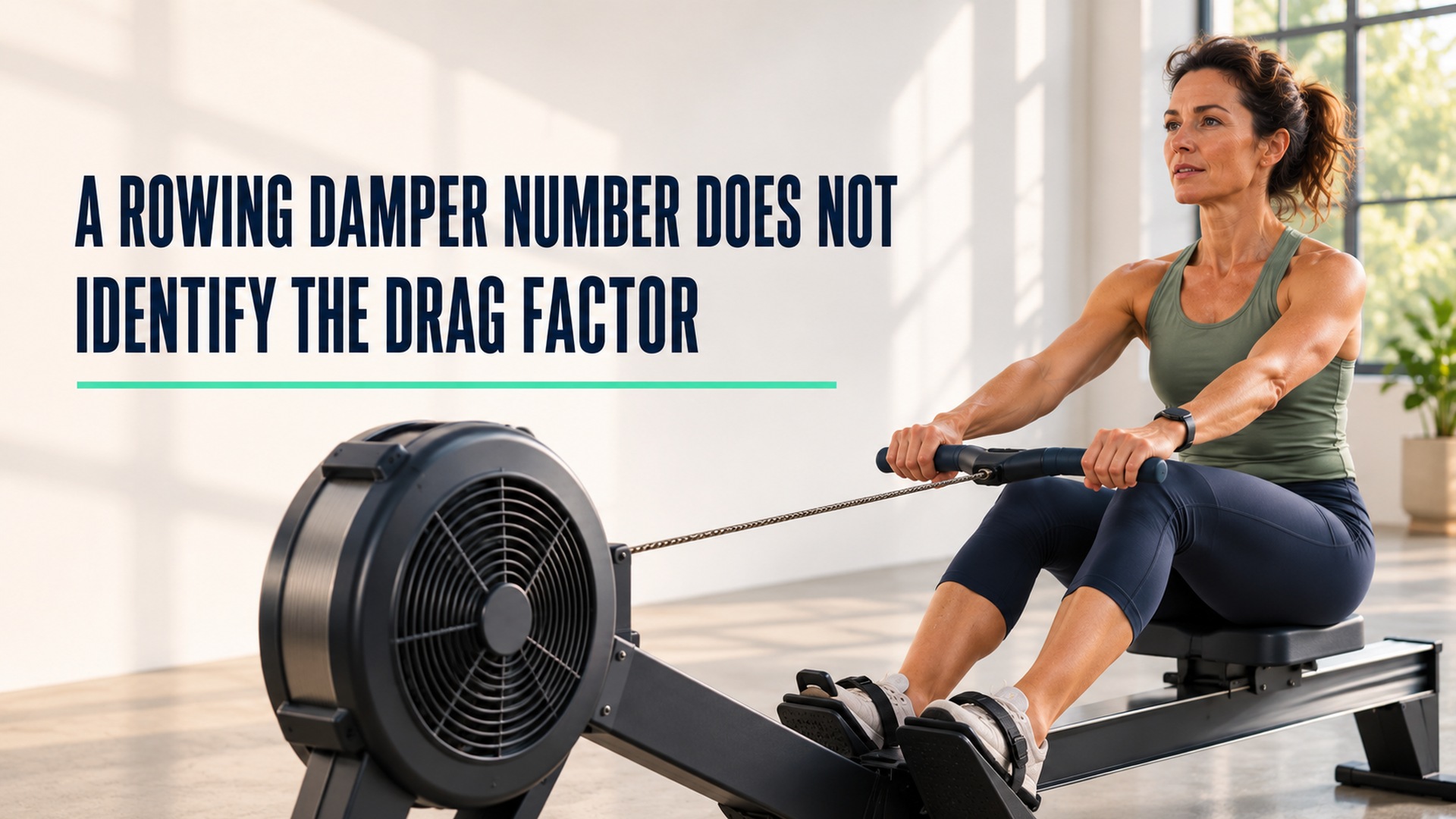
A rowing damper number does not identify the drag factor
A damper number describes an air-control setting on some rowing ergometers, while drag factor describes the flywheel response measured by a compatible monitor. Record each value with the machine model instead of treating the numbers as interchangeable.
Eccentric-only repetitions need a clear lifting-log label
An eccentric-only repetition records a lengthening action under load without an active shortening phase in the same repetition. Preserve the movement sequence, assistance, range, and tempo so its count is not confused with a full lift-and-lower cycle.

Running pace and running speed use reciprocal units
Running pace measures time per distance, while speed measures distance per time. Keep the original unit and time basis visible when converting one display into the other.
Virtual cycling distance follows the simulation's rules
A virtual cycling app calculates speed and distance from its own inputs and route model. Keep that simulated value separate from wheel-based or outdoor distance when comparing activity records.

Single-sided cycling power relies on a symmetry assumption
A single-sided power meter measures one leg and may double that value to estimate total cycling power. Preserve which side and device produced the number so an estimate is not mistaken for a bilateral measurement.
Power meter zero offset needs its own setup record
A power meter zero offset records the sensor's unloaded baseline at a particular time. Keep the meter identity, procedure, conditions, and returned status separate from training targets and workout power values.
Handrail support changes the context of a treadmill session
Treadmill handrail use can change the movement task even when speed and incline stay constant. Record whether support was light, intermittent, or sustained so session comparisons do not assume the machine measured details it missed.
Treadmill incline percentages are not angles in degrees
Treadmill grade percentages and angles in degrees describe the same slope through different relationships. Preserve the machine's displayed unit and source so a workout setting is not mistaken for a measured angle.