Blood sodium concentration is different from sodium eaten
By Mr.Apps · Oct 26, 2026
Category:Energy

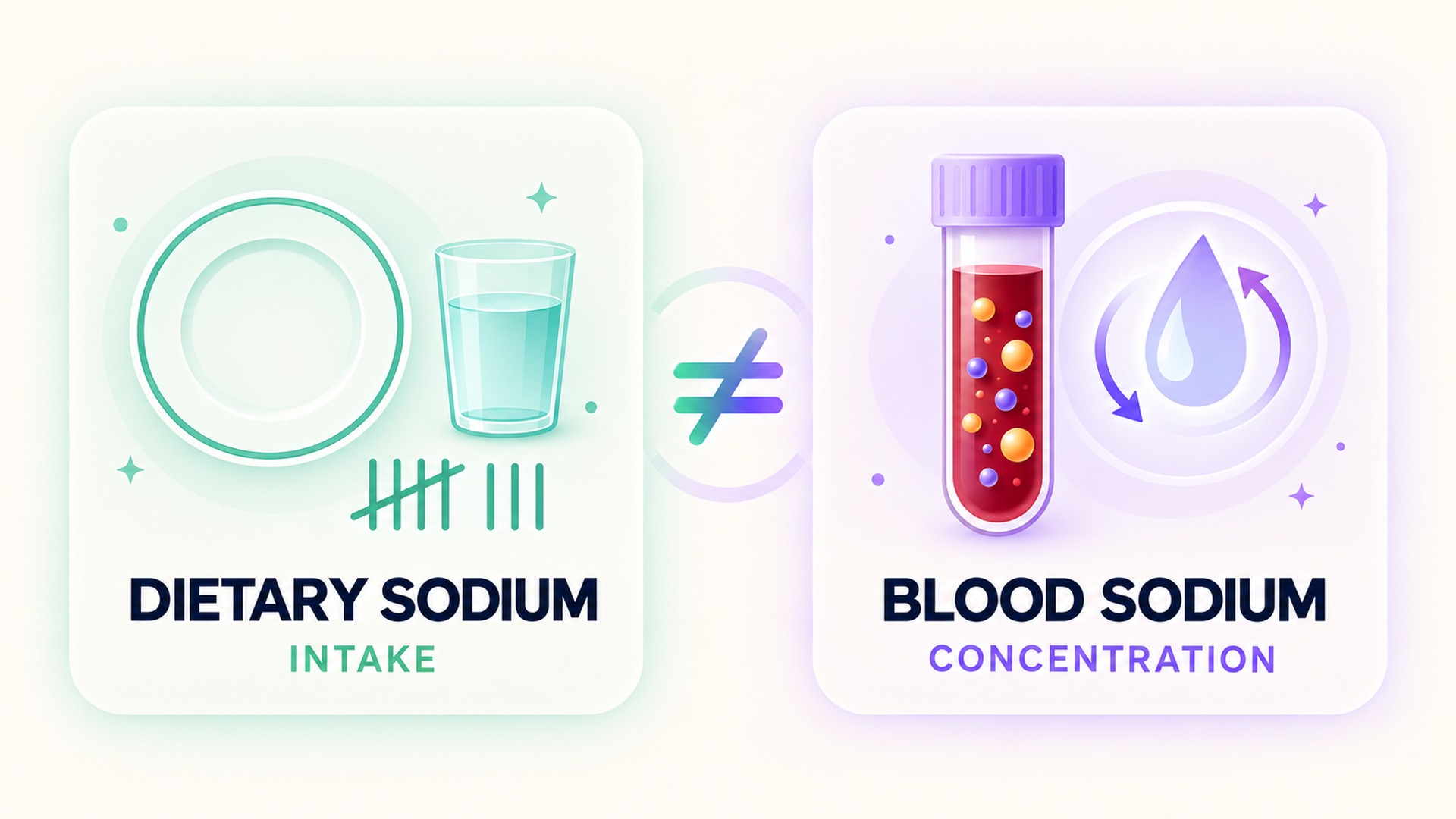
A blood sodium result and a food log may use the same word, but they describe different measurements. A sodium blood test measures a concentration in the blood. A dietary record estimates an amount eaten over time. They are not interchangeable, and one cannot be converted into a simple instruction about the other. When a blood result is outside the laboratory range, adding salt or restricting food sodium is not a safe conclusion to draw from that value alone.
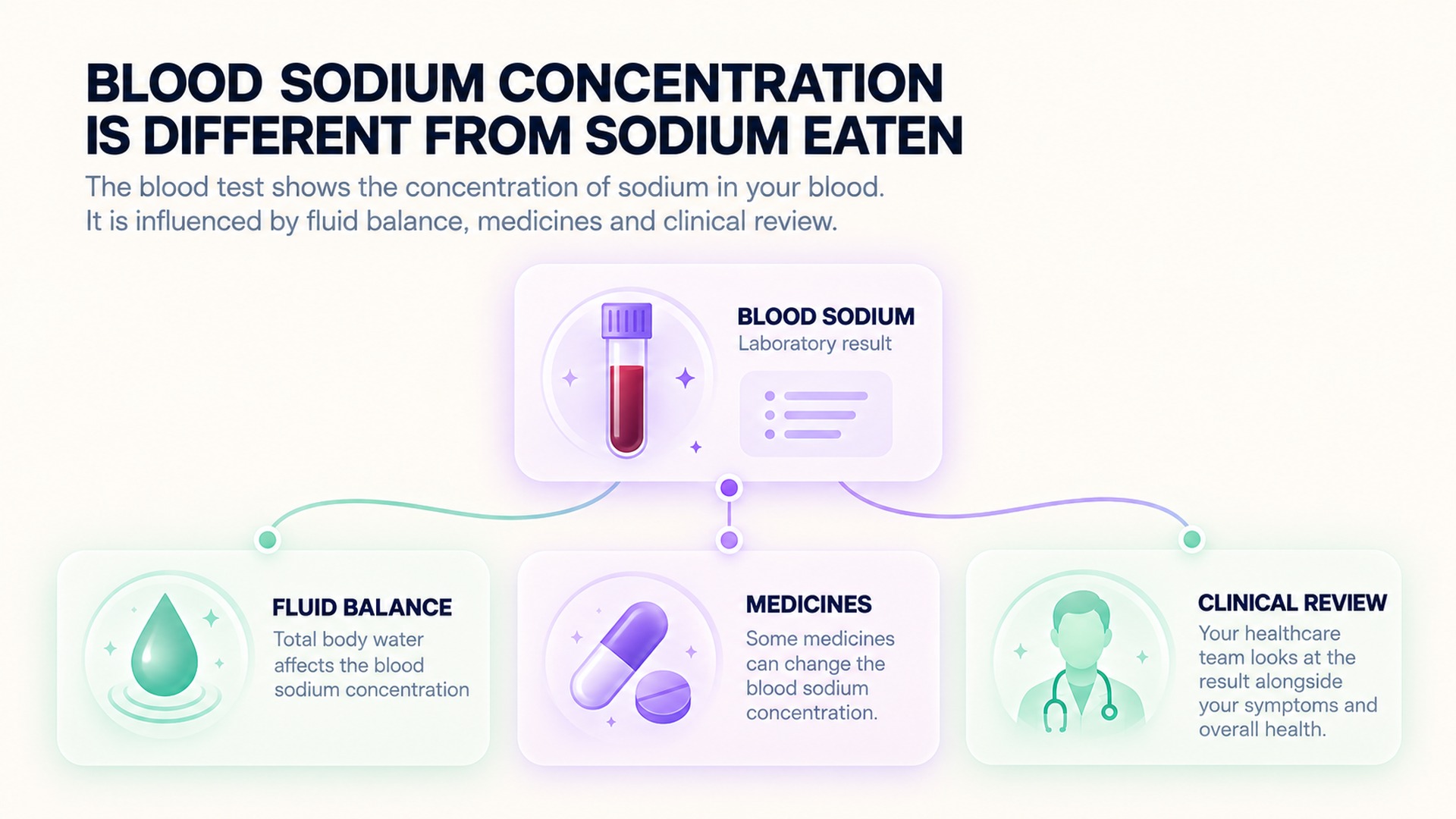
Blood sodium is affected by the balance of sodium and water in body fluids, kidney handling, medicines, and other health conditions. Dietary sodium is one input into that larger system. The blood result therefore answers a clinical question about concentration and fluid balance, while a food log describes intake. I keep the two entries separate and preserve their units, dates, and sources so that a concentration is not mistaken for an amount consumed.
What a sodium blood test measures
Sodium is an electrolyte, a mineral with an electrical charge when dissolved in body fluids. A blood test measures the concentration of sodium in a sample. That concentration helps the body regulate fluid balance and nerve and muscle function. The sodium blood test overview explains that a result may be used with other electrolyte measures and is interpreted in relation to the health question being evaluated.
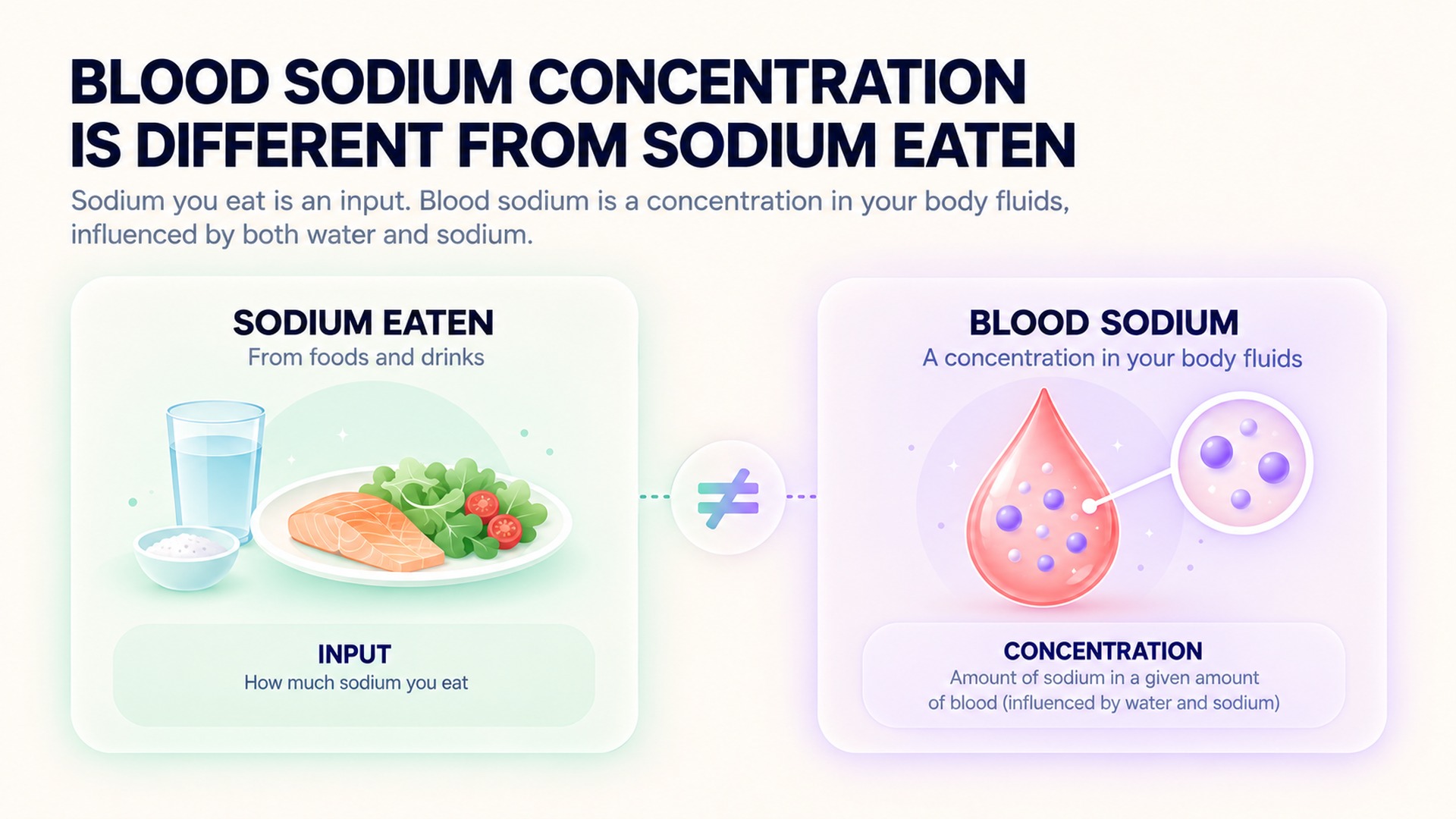
A concentration is a ratio: it reflects how much sodium is present in a given amount of fluid. If fluid balance changes, the measured concentration can shift even when dietary intake is not the only factor. That is why blood sodium cannot be read as a direct report of how much sodium a person ate. The clinical explanation of a sodium blood test describes sodium as a concentration in blood and notes that fluid balance is part of its interpretation.
A sodium test is often included in a broader electrolyte or metabolic panel. Other values can help the clinician assess the context, but no single number establishes the cause of an abnormal result. The electrolyte panel overview describes how several electrolytes may be considered together. The exact panel and the reason it was ordered should stay with the report.
What dietary sodium records
A food log estimates the sodium consumed from foods and drinks. A nutrition label reports sodium for a stated serving size, and the amount eaten may differ from one serving. A log can also miss foods, drinks, or portion differences if entries are incomplete. The food-label guidance on sodium explains how the Nutrition Facts label describes sodium content in food. That information is useful for tracking intake, but it does not measure the sodium concentration in blood.
The two records also use different time frames. A blood sample is collected at a particular time. A dietary record may summarize meals across a day or longer period. Intake changes from meal to meal, while the body regulates fluid and electrolyte balance through several processes. A food log can provide context for a clinician, but it cannot explain a blood result by itself. Likewise, a low or high blood sodium concentration does not reveal the amount of sodium eaten.
The relationship is not a direct exchange rate. The body regulates sodium concentration through fluid intake and loss, kidney function, and other physiological processes. Medicines and acute health conditions can alter that balance. A dietary total describes one input, but does not capture all fluid movement or how the body handles electrolytes. This is why a blood value should not be translated into a food target without a clinical assessment.
The distinction also matters when comparing a food log from one day with a blood sample from another. The entries may cover different periods and different sources of information. A sample collected in a clinic has a specific collection time and method; an app total is assembled from entered foods and estimated serving amounts. Both records can be accurate within their own limits and still not be directly comparable. Preserve the date range and source for each.
Why a blood result does not prescribe salt
An abnormal sodium concentration may reflect changes in water balance, kidney function, medicines, or another clinical issue. The reason depends on the person's overall situation. A low result cannot be translated into “eat more salt,” and a high result does not automatically mean “avoid all sodium.” Such changes can be unsafe or inappropriate without knowing the cause and the treatment plan. The guide to understanding laboratory results emphasizes that a test result is interpreted with its reference range, the reason for testing, and other clinical information.
Medicines can affect fluid balance or sodium concentration. If a blood result is being reviewed, provide the care team with an accurate list of medicines and supplements and follow their instructions. Do not stop a prescription, change fluid intake, or add a supplement based on a single lab value, app target, or dietary log. If the result is new or unexpected, ask the ordering clinician what follow-up is appropriate and whether other information is needed.
A dietary pattern can still matter for general health. Food records may help a person or clinician understand intake, and nutrition labels allow comparison among products. The dietary plan overview discusses dietary choices in a blood-pressure context. That is a different purpose from evaluating a sodium concentration in blood. General diet information should not be used to self-treat an abnormal electrolyte result.
Keep units and sources attached
Record a blood sodium result with its exact test name, date, units, reference interval, and laboratory. Keep the food-log total separate, with its own date range, serving sizes, and source entries. Do not copy both into one field labeled “sodium” without clarifying whether the value came from a blood test or dietary intake. The overview of health biomarkers in apps explains why health measurements should retain the method and context that produced them.
A clear record can help a clinician see which information is measured and which is estimated. For example, a blood test reports the concentration in the sample, while a nutrition app estimates an amount from logged foods and database entries. Those numbers may both be useful, but they cannot substitute for each other. If a record omits units or dates, the distinction is harder to recover later.
Food logging has its own sources of uncertainty. A package entry may not match the exact product or serving size; a homemade portion may be estimated; and restaurant foods may not provide the same label detail as packaged items. Recording the data source helps a clinician understand the limits of an intake total. It does not make the estimate a measure of blood sodium, and it should not be used to explain an abnormal concentration without other evidence.
The blood report should also be read with its own laboratory reference interval and test name. If the result is unexpected, ask whether it belongs to a broader electrolyte panel and what other values were reviewed. Medicines, fluid changes, and symptoms may be relevant. The clinician can explain whether a repeat measurement or additional evaluation is appropriate. Do not use an app's intake target to make a treatment decision or override instructions from the care team.
A sodium concentration outside the expected range can sometimes be associated with serious symptoms. If someone develops sudden confusion, seizures, or a marked change in alertness, seek urgent medical help rather than trying to correct the result at home. A number in an app or on a portal does not tell the cause or the safest response. The care team needs the clinical circumstances and the full panel to guide next steps.
When discussing an unexpected result, useful questions include which test was performed, whether other electrolytes or kidney measures were reviewed, and what symptoms should prompt follow-up. If dietary intake is also being tracked, ask whether that record helps answer the current question or serves a separate nutrition goal. Keep the original report, collection date, units, and reference interval together for later comparison. This preserves clinically useful context. Keeping those purposes distinct prevents a food estimate from being treated as a treatment plan for a blood result. A repeat sample, if needed, should follow the clinician’s testing plan.
Questions people ask
Does blood sodium tell how much salt a person ate?
No. The blood test measures a concentration in body fluids. Dietary sodium is an intake amount estimated from food and drink records. Fluid balance, kidney handling, medicines, and other factors affect the blood result.
Should someone eat more salt when blood sodium is low?
Not based on the result alone. A low blood sodium concentration can have different causes, and the right response depends on clinical assessment. Ask the clinician who ordered the test what the result means and follow their instructions.
Can a food log replace a sodium blood test?
No. A food log estimates dietary intake, while a blood test measures sodium concentration in a sample. They answer different questions and should be recorded and interpreted separately.
*This article is for informational purposes only and is not a substitute for professional medical advice, diagnosis or treatment.*
Sources:
National Library of Medicine·National Library of Medicine·National Library of Medicine·Food and Drug Administration·National Library of Medicine·National Heart, Lung, and Blood Institute
Related articles

Recent lifting belongs in the context of a liver enzyme result
Learn why recent lifting belongs beside liver enzyme results and why it should not be assumed to explain an abnormal test. See how AST, ALT, CK, timing, symptoms, and the rest of the panel help shape clinical interpretation.

Keep the kidney function equation beside an eGFR trend
Learn why a change in the eGFR equation can shift a reported estimate without an equivalent biological change. See what to record beside each value so a trend can be interpreted with its method and clinical context.

Creatine kinase after exercise requires symptoms and timing
Learn why recent exercise, test timing, and symptoms all matter when a creatine kinase result is reviewed. See why CK is a clinical marker rather than a training target and when unusual symptoms need prompt attention.

Normal oxygen saturation does not establish a normal hemoglobin level
A pulse-oximeter percentage estimates how much available hemoglobin is carrying oxygen, while a blood count measures hemoglobin amount. Learn why one reassuring reading cannot replace the other test or a clinical review.

A raised CRP result cannot identify the source of inflammation
A raised CRP can signal inflammation, but it cannot identify where the process is or what caused it. Learn why standard CRP and high-sensitivity CRP serve different purposes and need clinical context.

When a vitamin B12 result needs a methylmalonic acid check
Learn why a clinician may consider methylmalonic acid when a vitamin B12 result leaves a question unresolved. See how kidney function, symptoms, medicines, and other tests shape interpretation.

Reading TSH and free T4 together in a fatigue review
Learn what TSH and free T4 contribute to a fatigue review and why the two results need clinical context. See how symptoms, medicines, timing, and prior results help keep a lab value in its proper role.

Why Metabolic Energy Efficiency and Daily Energy Are Different Concepts
Metabolic energy efficiency describes processes involved in handling fuel, while a daily energy score is usually a separate app estimate about patterns such as sleep, activity, and recovery. Similar wording does not mean the two measures track the same thing.

Why a Monthly Metabolic Trend Cannot Explain One Meal
A monthly metabolic trend summarizes signals across a longer window and cannot identify what one meal did to glucose or insulin. Read it as a broad estimate, keep meal notes in their proper context, and use clinical testing for medical questions.

How Charging Gaps Break a 24-Hour Energy Timeline
Removing a wearable to charge creates a period when the device may not record the signals used by an energy model. A 24-hour timeline should mark that gap instead of treating it as neutral or connecting the surrounding values as continuous measurement.