GLP-1, Sleep, and Energy: What Wearables Can Help You Notice

A few winters ago, I spent four consecutive weeks moving through different time zones for a series of speaking engagements on metabolic health. By the second week, my wearable's morning summary had become something I read more carefully than my calendar. Resting heart rate crept up by two or three beats a night. Deep sleep dropped by nearly half. The simple one-to-five energy check-in I log before breakfast sat at a two for four mornings in a row. Nothing about my routine had changed in any dramatic way — no illness, no unusual stress — yet the data told a clear story of accumulating strain. That stretch taught me something I now bring into every conversation I have about GLP-1 medications, sleep, and energy: the numbers on a wearable rarely explain themselves. They describe a pattern, and it's up to the person wearing the device — ideally alongside a clinician — to connect that pattern to what's actually happening in daily life.
GLP-1 receptor agonists have become a significant part of how many people manage weight and metabolic health, and it's common to hear reports of shifting sleep quality or unpredictable energy after starting one. What's less commonly discussed is that these changes are rarely caused by the medication acting directly on sleep centers in the brain. More often, they're downstream effects of everything the medication changes around sleep: how much someone eats, when they eat it, how hydrated they are, and how their digestive system is behaving that week.
Why GLP-1 Medications Can Ripple Into Sleep and Energy
These medications work in part by slowing gastric emptying and influencing appetite-regulating pathways, which is precisely why they're effective for weight management — and precisely why they can quietly reshape a person's entire daily rhythm. Eating less, and eating differently, changes blood sugar patterns, evening routines, and even the timing of bathroom trips overnight. None of that shows up as a single line item on a wearable's dashboard, but it shows up in the aggregate: in sleep that's shorter or more fragmented, in a resting heart rate that drifts a few points, in an energy score that dips even when someone technically got eight hours of sleep.

I think of one professional I worked with early in her treatment — a frequent international traveler managing a demanding schedule — whose recovery score fell sharply within her first two weeks on a GLP-1 medication. Her instinct was to assume the medication was somehow unsafe for her. When we compared her wearable's trends with a simple daily log, the pattern turned out to be more mundane: her appetite had dropped so much that she was unconsciously drinking far less water during the day. Once she rebuilt a hydration habit around her new appetite level, her recovery numbers climbed back toward baseline within about ten days. The wearable didn't diagnose anything. It simply made a slow, easy-to-miss change visible enough to act on.
Resting Heart Rate: A Quiet Early Indicator
Resting heart rate is one of the more useful trends to watch, precisely because it's sensitive to so many of the things GLP-1 medications influence: hydration status, meal timing, and rapid weight change all show up here before they show up anywhere else. The American Heart Association's explanation of pulse and resting heart rate is a good reference point for understanding what a "normal" range even means, since it varies meaningfully by fitness level, age, and other factors.
What matters here isn't a single morning's number but the direction of the trend over two or three weeks. During training for a multi-day trek years before GLP-1 medications were part of my professional focus, I watched my own resting heart rate drift upward during a period of unintentional under-eating on the trail — a useful personal reminder that the body treats consistent caloric shortfall as a mild, ongoing stressor, regardless of the reason behind it.

Sleep Duration and Disruption: The Two Numbers Worth Separating
Total sleep time and sleep disruption are related but distinct, and conflating them can hide what's really going on. Someone can log a full eight hours while waking four or five times, or log six hours of nearly uninterrupted rest. The Sleep Foundation's overview of how much sleep adults actually need is a helpful baseline for separating "not enough sleep" from "sleep that isn't doing its job."
For people on GLP-1 medications, disruption is often the more informative number to track. Mild gastrointestinal discomfort, occasional nighttime bathroom trips from higher fluid intake earlier in the evening, or simply going to bed on a much emptier stomach than usual can all fragment sleep without necessarily shortening it. Noting these nights alongside meal timing and symptom logs often reveals a pattern faster than staring at a single sleep score in isolation.

Activity, Recovery, and the Trend Line
Weekly activity and recovery trends can shift in either direction after starting a GLP-1 medication, and both directions are worth understanding rather than reacting to. Some people find they have more energy for movement as early GI discomfort settles and weight begins to shift; others notice a temporary dip in activity during the first adjustment period. The current physical activity guidelines offer a reasonable frame of reference for what a sustainable weekly target looks like, independent of any single week's dip or spike.
Recovery scores, often built from heart rate variability, add another layer worth understanding on its own terms — the Cleveland Clinic's explanation of heart rate variability is a clear, non-technical starting point. A lower recovery score during an adjustment period isn't a verdict on the medication; it's a signal that the body is processing several changes at once, and it's worth noting alongside meals, hydration, and sleep rather than interpreting on its own.
Hydration and GI Symptoms: The Story Behind the Numbers
Reduced appetite often means reduced fluid intake, since a meaningful portion of daily hydration typically comes from food and the habit of drinking alongside meals. Mild nausea or a slower digestive system — both commonly reported in the early weeks of GLP-1 treatment — can compound this further. The Mayo Clinic's guidance on daily water needs is a useful reference for noticing when intake may have quietly dropped below what someone is used to.
This is where wearable trends earn their keep: a rising resting heart rate combined with a dip in recovery and more fragmented sleep is a reasonable prompt to check hydration and recent GI symptoms before assuming something more serious is happening.
Building a Simple Log for Clinician Conversations
The most useful thing anyone can do with this kind of data is bring it, alongside a written log, to a clinician. A simple record — medication dose and timing, meals, hydration, GI symptoms, and a daily energy rating — turns a vague "I haven't been sleeping well" into something a clinician can actually work with. The National Institute on Aging's guidance on preparing for medical appointments offers a solid framework for organizing that kind of information before a visit, even though it isn't written specifically for GLP-1 users.
What Wearables Can't Tell You
It's worth being direct about the limits here. A wearable cannot tell you whether your dose is correct, whether the medication is working as intended, or whether a given symptom is dangerous. It cannot distinguish between a sleep disruption caused by GI discomfort and one caused by an unrelated cold. What it can do is make slow, easy-to-miss patterns visible — the kind of gradual drift that's nearly impossible to notice day to day but obvious across three weeks of data. That visibility is genuinely useful. It's just not a diagnosis, and it was never meant to replace one.
Looking back at that month of speaking engagements, what stayed with me wasn't the data itself but how much easier it made a later conversation with my own physician. I didn't walk in saying "I feel tired." I walked in with three weeks of resting heart rate, sleep disruption, and hydration notes, and we solved the actual problem — chronic under-hydration during travel — in a single visit. That's the real value of these devices for anyone adjusting to a GLP-1 medication: not answers, but better questions.
FAQ
Can my wearable tell me if my GLP-1 dose is working correctly? No. Wearables track physiological signals like heart rate, sleep, and activity, but they have no way to measure a medication's clinical effectiveness or safety. Dose decisions should always be made with a clinician, using wearable trends as supporting context rather than evidence on their own.
Why did my sleep score drop after I started a GLP-1 medication? There's rarely one cause. Reduced food and fluid intake, mild gastrointestinal symptoms, and changes to evening routines can all fragment or shorten sleep. Tracking meal timing, hydration, and symptoms alongside sleep data over a few weeks usually points to a more specific explanation than the score alone.
How long should I track my data before drawing any conclusions? Aim for at least two to three weeks. Day-to-day fluctuations are normal and often meaningless in isolation; the useful signal is almost always in the trend line, not any single morning's reading.
*This article is for informational purposes only and is not a substitute for professional medical advice, diagnosis or treatment.*
Sources:
NIDDK·American Heart Association·Sleep Foundation·Office of Disease Prevention·Cleveland Clinic·Mayo Clinic·National Institute on Aging
Related articles
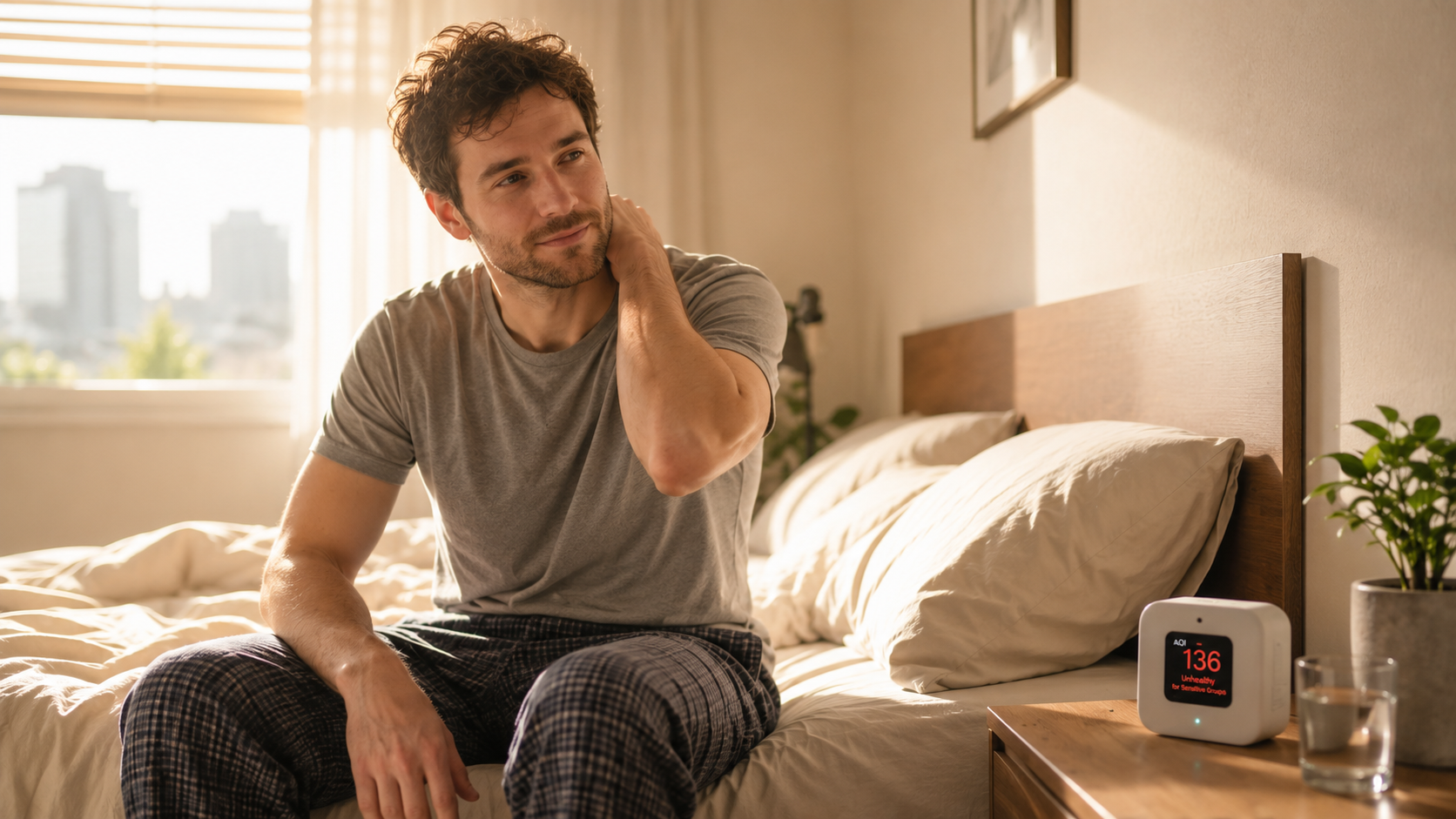
Can Air Quality Make Your Sleep and Energy Worse?

Blood Sugar Swings, Sleep, and Next-Day Energy: The Overlooked Loop
I spent three years blaming the room temperature for the way I lost my train of thought halfway through every morning workshop. It wasn't the room. Poor sleep changes how your body handles food the next day, and late meals change the night that follows. Here's how the loop works, what your wearable can actually tell you, and a two-week test that costs nothing.
Apple Watch Body Battery: How Ensta Brings Garmin's Best Feature to Your Wrist
Looking for an Apple Watch body battery feature? Ensta's Energy Score gives Apple Watch users a simple 0-100 recovery and energy metric that works like Garmin's Body Battery.
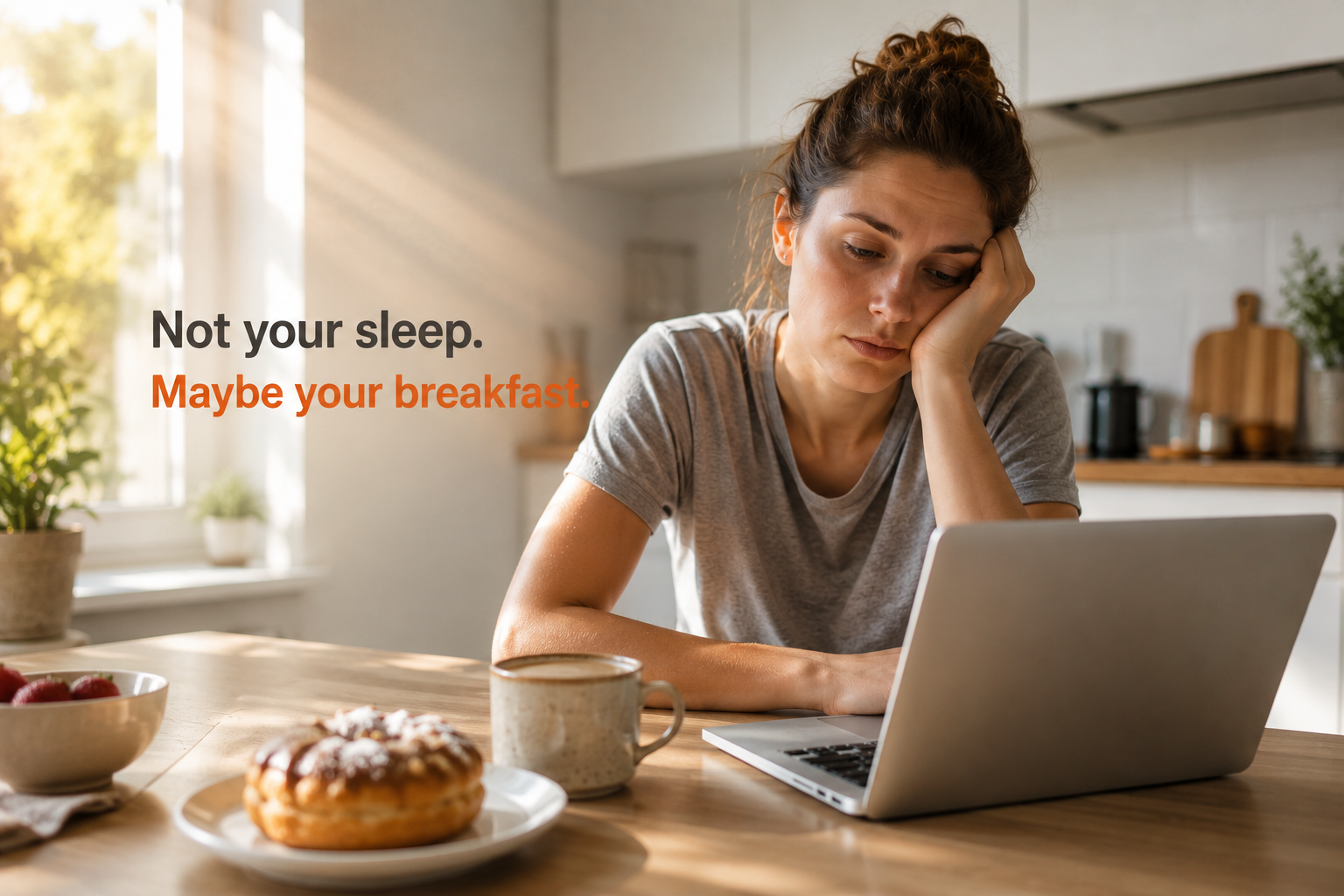
Why a High-Sugar Breakfast Can Leave You Tired Before Lunch
A sweet breakfast can feel like quick energy, then turn into a mid-morning crash. Here’s why breakfast composition matters, what steadier meals usually include, and how to test your own energy pattern without a complicated diet plan.

How much deep sleep do you really need?
Your watch says 42 minutes of deep sleep and you want to know if that is bad. The honest answer is that there is no single correct number, and the device producing that number is estimating rather than measuring. Here is what deep sleep actually does, how much of it is normal at your age, and what I watch instead of the stage breakdown.

Respiratory Rate on a Wearable: What a Change Overnight Can Mean
Most people can guess their resting heart rate but have no idea how many breaths they take while asleep. That makes overnight respiratory rate one of the least understood numbers on a wearable, and one of the most useful once you have a personal baseline to compare against. Here is what actually moves it, how to tell a real change from a bad reading, and when a rise is worth acting on.

Why Travel Drains Your Body Battery Even When You Barely Move

Why You Wake Up at 3 A.M. and Can't Fall Back Asleep
For most of one winter I woke between 3:08 and 3:22 almost every night. The cause turned out not to be one thing, and it was not what I expected. Here is how I worked through the usual suspects, from stress and late meals to room temperature, breathing and body-clock timing, plus what a sleep tracker can and can't actually tell you.
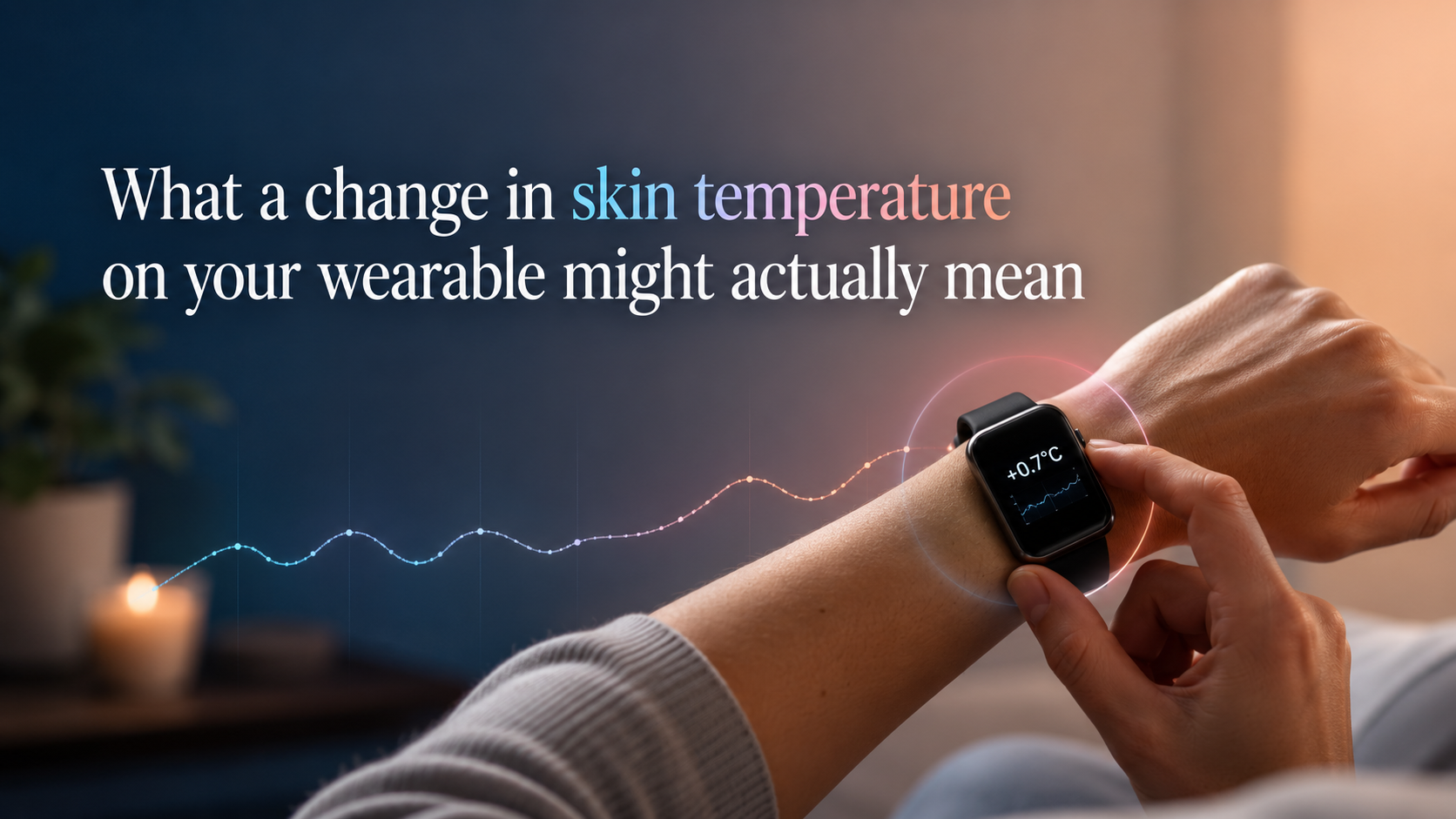
What a change in skin temperature on your wearable might actually mean
Your wearable's skin temperature isn't a fever reading. Learn what moves it at night, why deviation beats the number, and when to act.