How much deep sleep do you really need?
By Mr. Apps · Aug 10, 2026
Category:Sleep

I get asked about deep sleep more than any other sleep question, and it almost always arrives in the same form: my watch says I only got 42 minutes, should I be worried? So let me answer that first, then explain why the answer is less tidy than the number on your screen.

The number people are looking for
For most healthy adults, deep sleep takes up somewhere around 10 to 25 percent of the night. On a seven hour night that works out to roughly 45 minutes to an hour and forty five minutes. If your tracker regularly puts you inside that band, you are almost certainly fine.
I put the total sleep figure first for a reason. Deep sleep is not something you budget for on its own. It is a share of a larger night, and it arrives mostly in the first half of that night, in the earliest cycles, before your body starts handing more time over to REM. The sleep medicine bodies recommend that adults get seven or more hours per night on a regular basis, and if you hit that, the deep sleep portion usually takes care of itself. The architecture is fairly automatic. A full night cycles through the stages four or five times, with each cycle running about 90 to 110 minutes, and your brain decides how to allocate that time without consulting you.

What I want to talk you out of is the idea that there is a correct deep sleep percentage that you have either hit or missed. There isn't. There is a normal range, it is wide, and the position of any one person inside it depends on age, recent sleep, and the accuracy of whatever device produced the estimate.
What deep sleep is doing while you are in it
Deep sleep is the stage where you are hardest to wake. Brain activity slows into large synchronised waves, muscles relax, blood pressure and heart rate drop, and the body does much of its maintenance work. Growth hormone release peaks, the brain consolidates certain kinds of memory, and the system that flushes metabolic waste out of brain tissue runs at its highest rate. A review of slow wave sleep research covers this in more depth, including the links between reduced deep sleep and later cognitive decline.
Something in my own data matched this last spring. I spent a Saturday learning a piece of statistical software I had been avoiding for two years, six hours of dense and genuinely new material, and that night my deep sleep reading was the highest it had been in weeks. One night proves nothing by itself, but it lines up with what the studies describe. Your brain asks for more of this stage when you give it more to process.
Age moves the number, and so does the night before
Two things reliably shift how much deep sleep you get, and neither is under your control in the way people hope.
The first is age. Deep sleep declines across adulthood, with the sharpest drop happening between young adulthood and middle age. Lighter sleep increases to fill the gap, and the night becomes more fragmented. This is expected biology, not a warning sign.
I had this conversation at a family lunch a few months ago. A relative in his seventies had been given a smartwatch by his children, and he brought it to the table to show me his 38 minutes of deep sleep and ask what was wrong with him. Nothing was. He slept about seven hours, woke without an alarm, and gardened all afternoon without needing to sit down. He was comparing his numbers against his son's, who is thirty years younger, and that comparison was the only problem in the room.
The second thing is sleep pressure. Deep sleep is demand driven, so cutting your sleep short means your body prioritises this stage on the next available night. I saw it during a stretch of work travel where three nights in a row came in under five and a half hours. Deep sleep fell across those nights, then on the first proper night at home it came back at the highest percentage my device had ever recorded for me. That rebound is the system working correctly.
Your tracker is estimating, and it will not tell you that
This is where most of the anxiety comes from, so it is worth being blunt. A sleep laboratory measures stages with electrodes that read brain activity directly, along with eye movement and muscle tone. Your watch has none of that. It has an accelerometer, a heart rate sensor, and an algorithm that infers what your brain was probably doing from how still you were.
Those inferences are decent at telling sleep from wake and much shakier at splitting sleep into stages. A validation study comparing six popular wrist worn devices against laboratory measurement found agreement ranging from fair to moderate. The devices detected sleep itself very well. Classifying that sleep into the right stage was a different matter.
I tested this crudely once by wearing two different devices on opposite wrists for a week. Same body, same nights, same room. On one night they differed by more than forty minutes on deep sleep. Neither of them was lying to me. Both were guessing, using different algorithms trained on different data, and they arrived at different guesses.
The other night I think about often was in a mountain hut at the end of a long walking day. The room was cold, I had one thin blanket, and I barely moved all night because moving meant losing what warmth I had. My device reported an outstanding amount of deep sleep. I woke up feeling like I had been assembled incorrectly. Stillness is not depth, but to an accelerometer it looks identical.
The habit worth breaking
I used to check my sleep score before my feet touched the floor, and a low number made me tired by proxy for the rest of the morning. This is common enough that sleep clinicians gave it a name, orthosomnia, after patients began arriving with self diagnosed sleep problems built entirely on tracker readings.
The morning that ended it for me was a day I had to give a two hour talk to an audience I was slightly intimidated by. My watch had given me a poor night with almost no deep sleep. I spent the drive there mentally lowering my expectations. The talk went better than any I had given that year, and I felt sharp until the evening. The data and the day were describing two different nights.
Now I look at my sleep data once a week, in a trend view, after lunch. Never as the first thing in the morning, and never one night at a time.
What I pay attention to instead
Four things tell you more than a stage breakdown, and you already have access to all of them.
Total sleep is the first, because deep sleep is a proportion of it and cutting the night short cuts everything. Continuity is the second: whether you are sleeping through or surfacing repeatedly, which trackers estimate more reliably than staging. Regularity is the third, and it may matter more than most people assume. In a study of nearly 61,000 adults wearing accelerometers, consistency of sleep timing predicted mortality risk more strongly than sleep duration did. And the fourth is daytime function, which no device measures. Do you wake up reasonably restored, get through mid afternoon without collapsing, and stay level emotionally? That is the outcome the numbers are supposed to be proxies for.
If your device says your deep sleep is low but all four of those look good, I would trust the four.
Habits that support deep sleep
I want to be careful here, because nobody can promise you control over one stage. What you can do is remove the things that interfere with the night as a whole, and let the architecture sort itself out.
Keep your wake time steady, including weekends. Get bright light early in the day and dim your environment in the last hour before bed. Exercise regularly, ideally not in the ninety minutes before you sleep. Keep the bedroom cool, because your core temperature needs to drop for sleep to consolidate, and a warm room is a common reason deep sleep gets fragmented. Move caffeine earlier than feels necessary, since its half life is long enough that an afternoon coffee is still working at midnight for many people.
One thing matters more than any habit on that list. If you snore heavily, wake gasping, or feel exhausted after nights that look long on paper, ask a doctor about a sleep assessment. Untreated breathing disorders break up deep sleep night after night, and no amount of bedroom optimisation will fix that.
FAQ
How much deep sleep do I need each night?
Most adults land between 10 and 25 percent of total sleep time, which is roughly 45 minutes to an hour and forty five minutes on a seven hour night. Rather than aiming at a minute count, aim at seven or more hours of sleep on a consistent schedule. The deep sleep share follows from that in most people.

My wearable says I get very little deep sleep. Should I see a doctor?
Not on the strength of the reading alone. Consumer devices estimate stages rather than measure them, and they disagree with laboratory recordings and with each other often enough that a single low night means very little. Look at a few weeks of trend data alongside how you actually feel. If you are persistently exhausted, snoring heavily, or waking up unrefreshed after long nights, that combination is worth raising with a doctor.
Can I actually increase my deep sleep?
Indirectly, yes. Getting enough total sleep, keeping a regular schedule, exercising, and sleeping in a cool dark room all support healthy sleep architecture, and if you have been chronically underslept you will likely see deep sleep rise as you recover. What you cannot do is target that one stage the way you would add a set at the gym. Treat any product or protocol promising direct control over deep sleep with scepticism.
*This article is for informational purposes only and is not a substitute for professional medical advice, diagnosis or treatment.*
Related articles

Why You Wake Up at 3 A.M. and Can't Fall Back Asleep
For most of one winter I woke between 3:08 and 3:22 almost every night. The cause turned out not to be one thing, and it was not what I expected. Here is how I worked through the usual suspects, from stress and late meals to room temperature, breathing and body-clock timing, plus what a sleep tracker can and can't actually tell you.

Snoring, Sleep Apnea, and Smart Rings: What They Can Actually Detect in 2026
A smart ring cannot measure airflow. Everything it reports about your breathing is inferred from oxygen estimates, pulse signals, and movement, which is why a wearable can stay silent while a partner in the same bed hears you stop breathing. Here is what these devices can genuinely detect in 2026, where cleared screening features differ from wellness metrics, and why a quiet result is not a clean bill of health.
Social jet lag: why sleeping in on weekends can wreck Monday energy
Sleeping in on weekends shifts your body clock and drains Monday energy. Learn how to calculate your social jet lag and four realistic ways to reduce it.
Sleep Debt Is Real: How Long It Actually Takes to Recover Lost Sleep
Sleep debt doesn't clear in one long weekend. Here's what the research says about realistic recovery timelines, plus a 3 to 7 day plan that works.
Does Working From Home Improve or Hurt Your Sleep?
Exercise timing and sleep quality
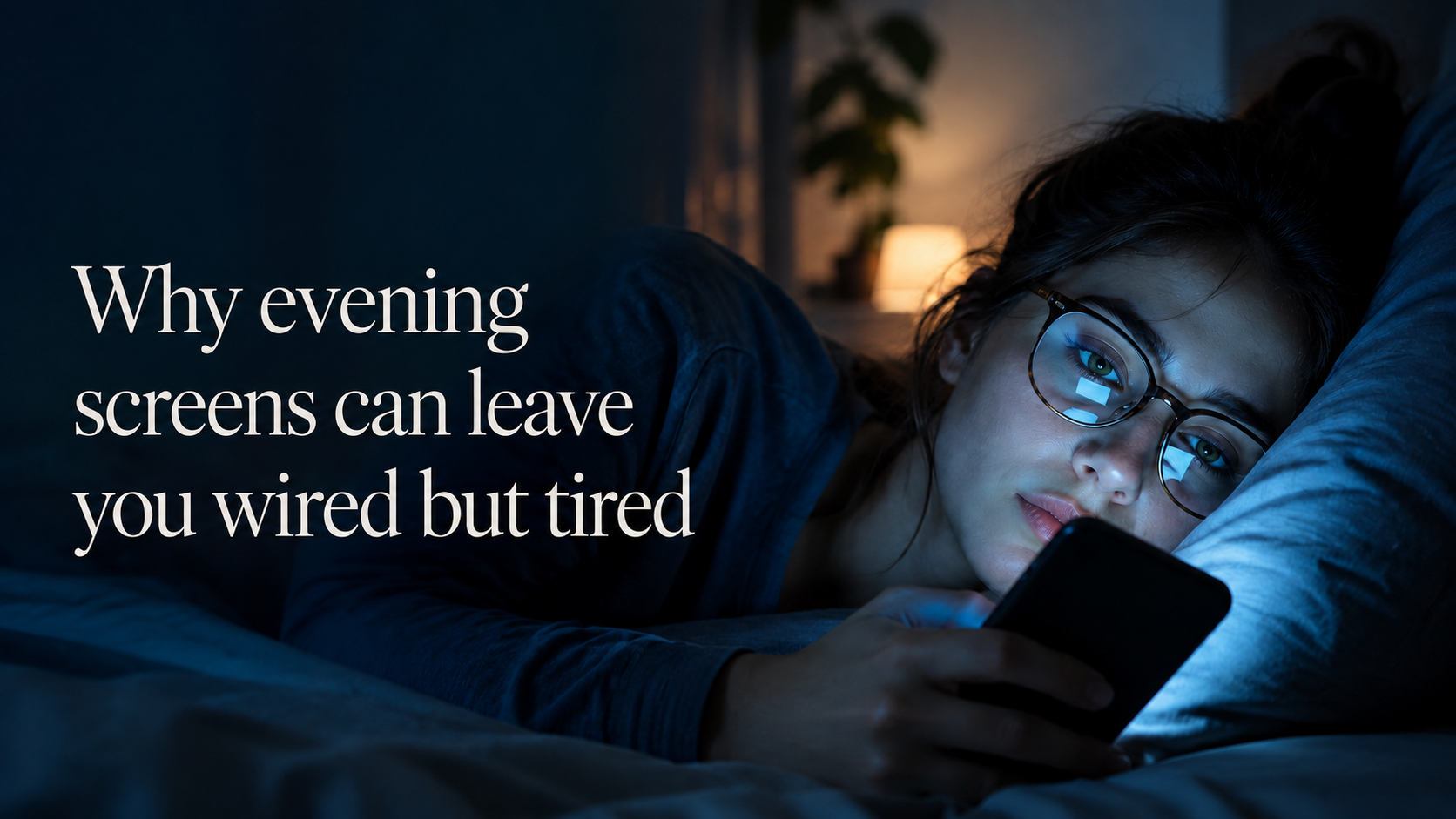
Why Evening Screens Can Leave You Wired but Tired
We're told blue light is why screens ruin our sleep, so we dim the display and turn on the warm filter. But if you've ever put the phone down exhausted and then lay there wide awake, the light was never the real problem. Here's what is.
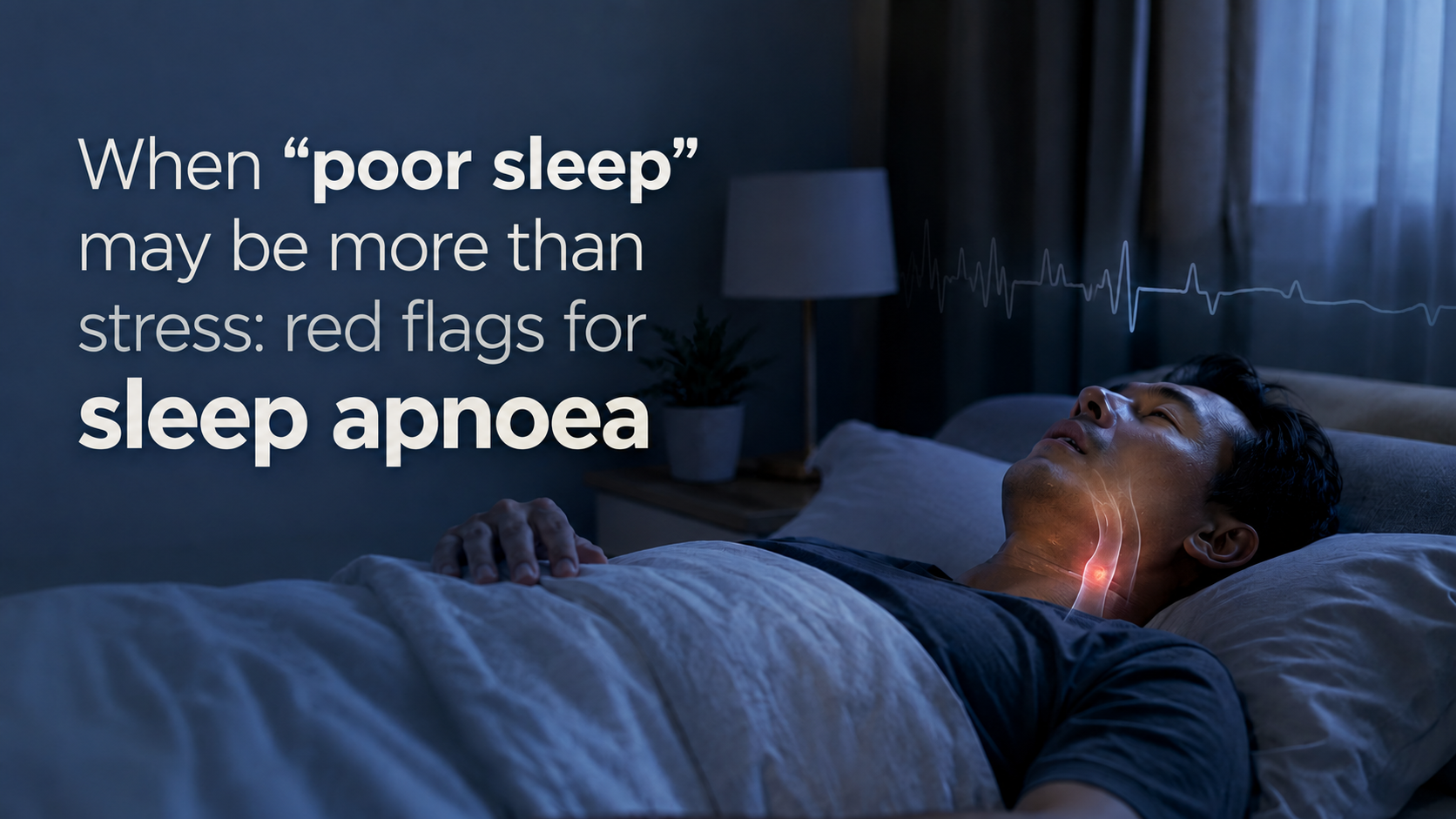
When "poor sleep" may be more than stress: red flags for sleep apnoea
Loud snoring gets dismissed as a quirk, morning headaches get blamed on stress, and daytime fog gets chalked up to a heavy calendar. Taken together, though, these signs can point to something a GP should know about: obstructive sleep apnoea. Here's what the real red flags look like, what home screening tools can and can't tell you, and when it's time to ask for a proper referral.
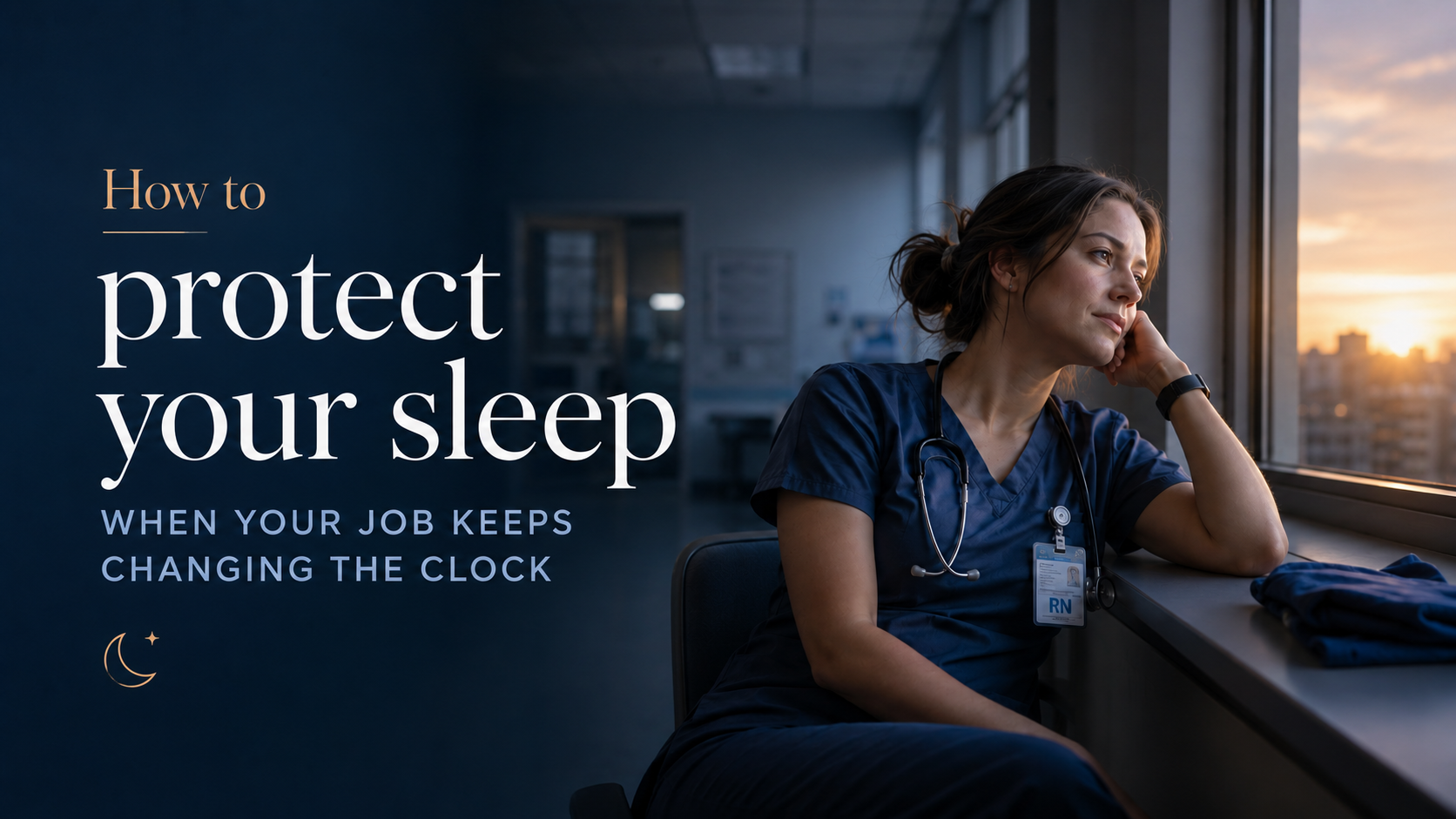
How to protect your sleep when your job keeps changing the clock
Shift work doesn't fail because people lack discipline. It fails because the body was never built to run a factory schedule. Here's what actually helps between rotating shifts, why "just going to bed earlier" doesn't work, and when persistent fatigue stops being normal and starts being something worth getting checked out.