Can Air Quality Make Your Sleep and Energy Worse?
By Mr.Apps · Jul 21, 2026
Category:Energy
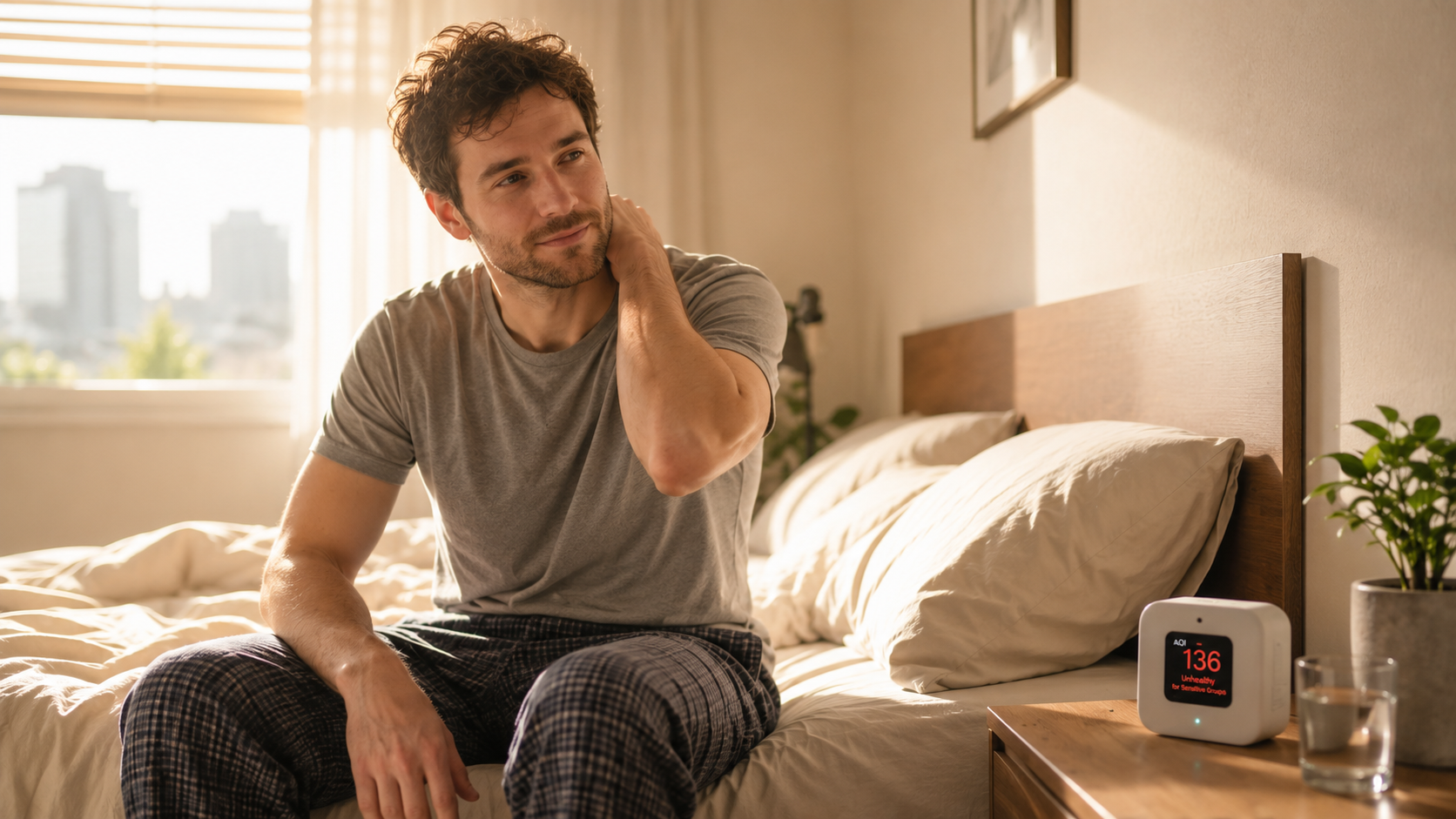
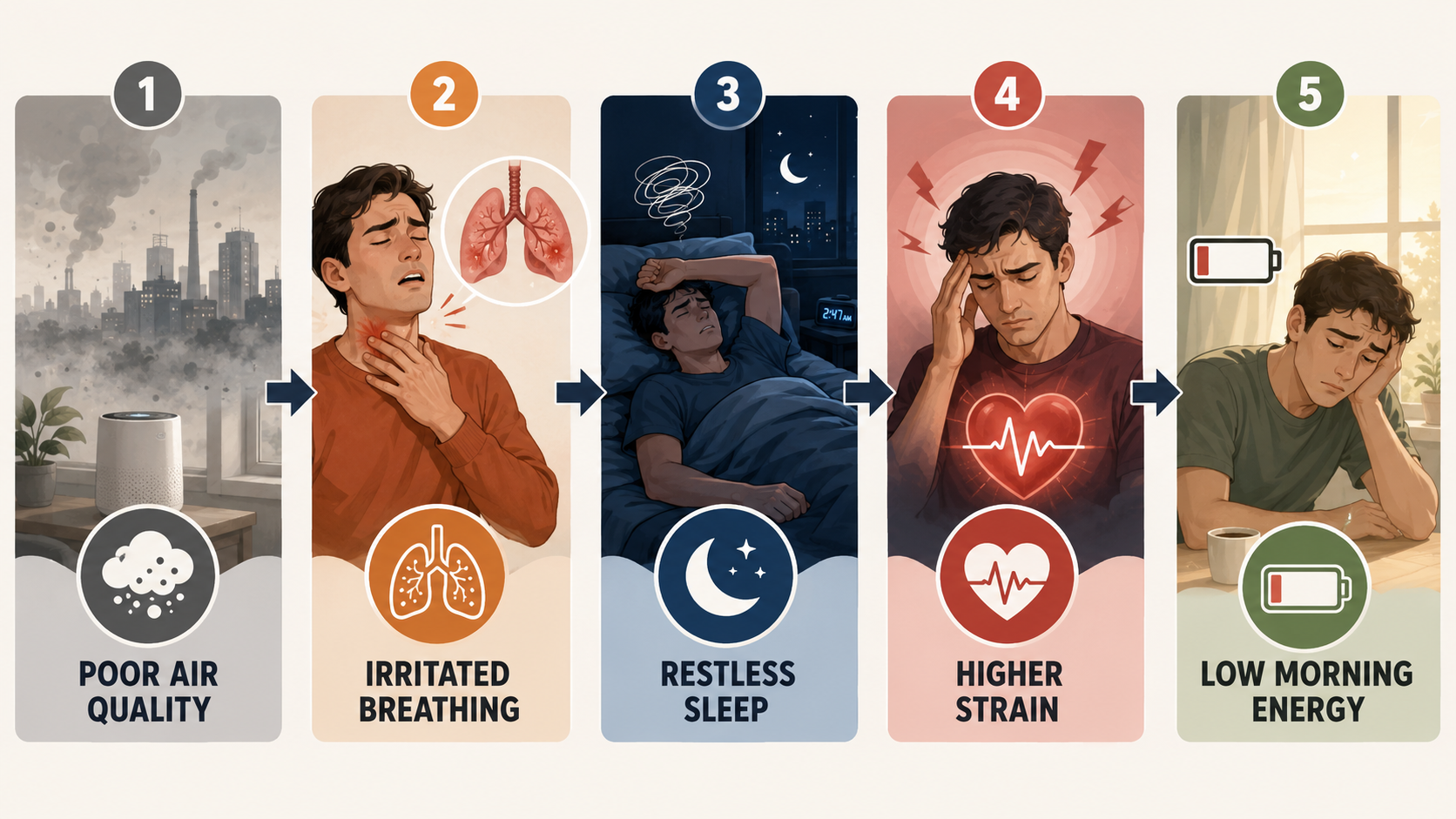
Most people blame bad sleep on the obvious things first.
Too much coffee.
Too much stress.
Too much scrolling.
Too late of a bedtime.
And yes, those things matter. But there is another sleep killer that people often ignore because it is invisible: the air in the room.
A stuffy bedroom can make a full night feel strangely unrefreshing. Wildfire smoke can make recovery feel worse even if you barely went outside. High-pollution days can leave the body feeling heavier than usual. And because most people do not think about air quality when they wake up tired, they keep blaming themselves instead.
That is the problem with environmental fatigue. It does not always feel like “pollution.” It just feels like waking up flat.
The EPA says indoor air pollution can cause short-term effects like irritation of the eyes, nose, and throat, headaches, dizziness, and fatigue. The CDC also warns that wildfire smoke can make anyone sick, and that smoke can travel far away from where fires burn.
So if sleep looked fine on paper but energy still feels low, the missing clue might not be another bedtime rule.
It might be the air.
Why air quality affects sleep and energy
Sleep is not just time spent unconscious.
It is a recovery window. Breathing, heart rate, temperature regulation, nervous system activity, and immune function all keep working while the body is asleep. If the bedroom air is poor, the body may have to work harder during a period that is supposed to feel restorative.
That does not mean every tired morning is caused by air quality. Most of the time, sleep and energy are affected by a mix of factors: stress, timing, alcohol, caffeine, illness, temperature, movement, and routine.
But air quality can be one of the hidden ones.
The difficult part is that poor air is not always obvious. You may not smell anything. The room may look normal. The app may show a decent sleep duration. But if the air is stale, smoky, polluted, dusty, humid, or irritating, the body may not treat the night as fully restful.
A 2025 systematic review and meta-analysis found that exposure to air pollution may negatively affect sleep health in middle-aged and older adults. Sleep Medicine Reviews
That is why air quality belongs in the sleep conversation, not only the lung-health conversation.
The stuffy-room problem
A stuffy room is one of the most common ways air quality shows up in everyday life.
People often describe it as:
- waking up heavy
- feeling foggy despite enough sleep
- dry throat or dry nose
- mild headache
- poor concentration in the morning
- feeling better after opening a window or leaving the room
A stuffy room can come from poor ventilation, too much indoor pollution, high humidity, dust, cleaning products, cooking particles, candles, mold, or simply a closed bedroom with stale air.
The EPA notes that indoor pollutants are linked with effects such as irritation, headaches, dizziness, and fatigue. That list sounds very close to what many people describe after sleeping in a bad room.
This matters because bedtime habits can be perfect and the sleep environment can still be working against you.
A person can:
- avoid caffeine late
- go to bed on time
- dim the lights
- keep the phone away
- still wake up tired because the bedroom air was poor
That is frustrating, but it is also useful. It means there is another lever to test.
Wildfire smoke: why your body battery can drop even indoors
Wildfire smoke is a bigger version of the same problem.
The air may look hazy outside, smell smoky near the window, or show a bad AQI number on the weather app. But even if you stay indoors, smoke can still affect indoor air quality.
The American Lung Association explains that wildfire smoke contains fine particles that can travel deep into the lungs and even enter the bloodstream. The EPA also notes that wildfire smoke can affect indoor air quality differently depending on smoke density and how close the fire is.
That is why wildfire days can feel so draining. The body may be dealing with irritation, breathing stress, poorer sleep, less outdoor movement, closed windows, anxiety, heat, and disrupted routines all at once.
Your step count may be low. Your workout may be skipped. Your day may look “easy.” But the body may still be under environmental strain.
That can show up as:
- lower energy
- worse sleep quality
- higher resting heart rate
- lower HRV
- headache
- dry throat
- irritated eyes
- morning grogginess
- less motivation to move
This is exactly where an energy score or body battery can be useful, but only if you interpret it with context. A low recovery score on a smoky day may not mean “you failed at sleep.” It may mean the environment was harder on your body than usual.
High-pollution days can feel like invisible stress
Air pollution does not need to be dramatic to matter.
A high-pollution day may not smell like smoke. It may not look extreme. But fine particles, traffic pollution, ozone, and indoor pollutant build-up can still irritate the body and affect how rested someone feels.
The EPA says some indoor air pollution effects can show up shortly after exposure or repeated exposure, including irritation, headaches, dizziness, and fatigue. EPA
This is why air quality can be confusing. The symptoms are often generic. “Tired” could be sleep. “Foggy” could be stress. “Headache” could be hydration. “Low energy” could be overtraining. Air quality rarely gets the blame first.
But if the pattern repeats on high-AQI days, during wildfire smoke, in a closed bedroom, after using candles, after cleaning, or in a damp room, it is worth paying attention.
Bedroom air quality: what usually goes wrong
Most people think of pollution as something outside. But indoor air can be affected by a lot of normal home things.
Poor ventilation
A closed bedroom can trap stale air, humidity, odors, and pollutants. That does not automatically mean the room is dangerous, but it can make the sleep environment less comfortable and less refreshing.
Dust and allergens
Dust, pollen, pet dander, and mold can irritate the nose and throat, especially overnight when someone is breathing the same bedroom air for hours.
Humidity problems
Too much humidity can support mold and make the room feel heavy. Too little humidity can dry the throat and nose. Either extreme can make sleep feel worse.
Cooking, candles, and smoke
Particles from cooking, candles, incense, fireplaces, and tobacco smoke can affect indoor air. These are easy to ignore because they feel normal at home.
Outdoor pollution coming indoors
Traffic pollution, wildfire smoke, and seasonal allergens can enter through windows, gaps, ventilation systems, and doors. Opening a window is not always the right move if outdoor air is bad.
That is the annoying part: sometimes ventilation helps, and sometimes it brings the problem inside.
How to know if air quality is affecting your sleep
You do not need to become an air-quality obsessive. The goal is just to look for patterns.
Ask:
- Do I wake up worse when the room feels stuffy?
- Do I feel better after sleeping with better ventilation?
- Do I sleep worse during wildfire smoke or high-AQI days?
- Do I wake up with a dry throat, headache, or irritated eyes?
- Does my energy dip on days when outdoor air is bad?
- Do candles, cleaning sprays, or cooking smoke seem to affect me?
- Does my recovery score drop when air quality is poor?
One bad night proves nothing. A repeated pattern is the clue.
That is especially true for people who track sleep and energy. Air quality may explain why the same routine creates different results on different days.
Same bedtime.
Same sleep duration.
Different air.
Different morning.
That is worth noticing.
What to do on normal stuffy-room nights
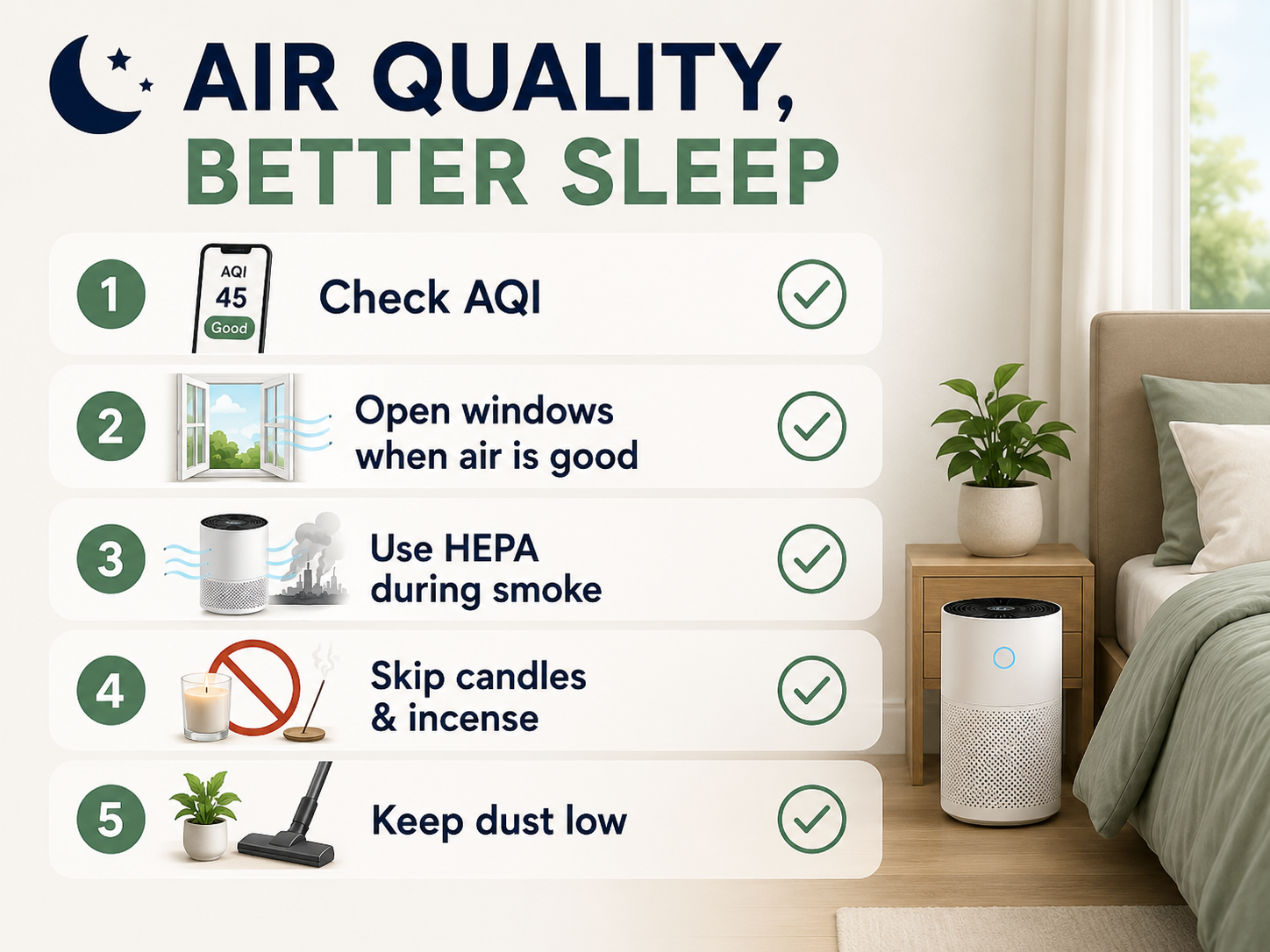
Start simple.
1. Improve ventilation when outdoor air is good
If outdoor air quality is fine, ventilating the bedroom before sleep can help. That may mean opening a window for a while, using a fan, or improving airflow through the room.
The goal is not to freeze the room or create a wind tunnel. The goal is to avoid stale air.
2. Reduce indoor pollution sources
Think about what is happening in the room and home before bed.
Candles, incense, strong cleaning sprays, cooking smoke, dust, and poor bathroom ventilation can all affect the air. Some people notice a huge difference just by keeping the bedroom cleaner, avoiding scented products at night, and ventilating after cooking.
3. Keep the bedroom clean but not chemical-heavy
Dusting, vacuuming, washing bedding, and reducing clutter can help allergens. But heavy cleaning products right before sleep may create another air problem. Better to clean earlier in the day and let the room air out.
4. Watch humidity
A bedroom that is too damp can feel heavy and may support mold. A room that is too dry can irritate the throat and nose. A simple humidity monitor can help if the room often feels off.
5. Test one change at a time
Do not change ten things and then try to guess what helped.
Try better ventilation for a few nights.
Then try removing candles or scented sprays.
Then try cleaning dust and bedding.
Then try a purifier if the problem repeats.
The boring method is usually the useful one.
What to do during wildfire smoke or bad AQI days
Wildfire smoke changes the rules.
If outdoor air is bad, opening windows may make things worse. The goal becomes keeping outdoor pollution out and cleaning indoor air.
The American Lung Association says air cleaners with HEPA filters can help clear wildfire smoke particles and create cleaner indoor air during smoke events. The EPA also recommends steps to reduce indoor smoke exposure during wildfire events. EPA
Practical steps:
- Check outdoor air quality before opening windows
- Keep windows and doors closed when smoke is heavy
- Use a HEPA air purifier if available
- Create a cleaner sleep room if the whole home cannot be filtered
- Avoid adding indoor particles from candles, incense, smoking, or heavy cooking
- Use HVAC filtration if you have the right system and filter
- Avoid intense outdoor exercise when air quality is poor
- Follow local public health guidance during severe smoke events
During smoke events, sleep strategy is not just bedtime. It is exposure management.
Can an air purifier help sleep?
It can, especially if the issue is particles, smoke, dust, pollen, or pet dander.
An air purifier is not magic. It does not fix every sleep problem. It will not solve stress, caffeine, late screens, or a chaotic bedtime. But if poor air is part of the problem, it may help reduce the load on the room.
The American Lung Association says air cleaners with HEPA filters are effective at clearing wildfire smoke particles. American Lung Association
A practical way to think about it:
- If outdoor air is good, ventilation may be enough.
- If outdoor air is bad, filtration matters more.
- If bedroom dust or allergens are the issue, cleaning plus filtration may help.
- If symptoms are severe or persistent, do not rely only on devices.
Also, placement matters. A purifier sitting in the wrong room while someone sleeps somewhere else is not doing much for the bedroom. The sleep room is the priority.
How air quality can affect energy scores
Air quality can affect an energy score indirectly.
Most apps are not measuring air pollution directly. They are reading the body’s response: sleep quality, heart rate, HRV, respiratory patterns, restlessness, recovery, and next-day energy.
Poor air may show up as:
- more restless sleep
- worse sleep quality
- higher resting heart rate
- lower HRV
- more morning fatigue
- reduced activity the next day
- lower energy score
This is why context matters. A score can tell you that recovery looked worse. It may not know that the bedroom was stuffy, the AQI was bad, or smoke came in through the window.
That is where tagging can help. On smoky days or stuffy-room nights, note it. Over time, the pattern may become obvious.
When air quality is a red flag
Most mild stuffy-room problems are practical. Ventilate, clean, reduce triggers, filter when needed.
But some air-related symptoms deserve more attention.
Get medical help if you have chest pain, trouble breathing, fainting, confusion, blue lips, severe wheezing, or symptoms that feel urgent. During wildfire smoke events, people with asthma, COPD, heart disease, pregnancy, children, and older adults may be at higher risk, and the CDC recommends taking smoke exposure seriously. CDC
Also, if fatigue is persistent and does not improve even when sleep, air, routine, and stress are addressed, it is worth checking with a healthcare professional. Air quality can be a factor, but it is not the only possible cause.
The honest take
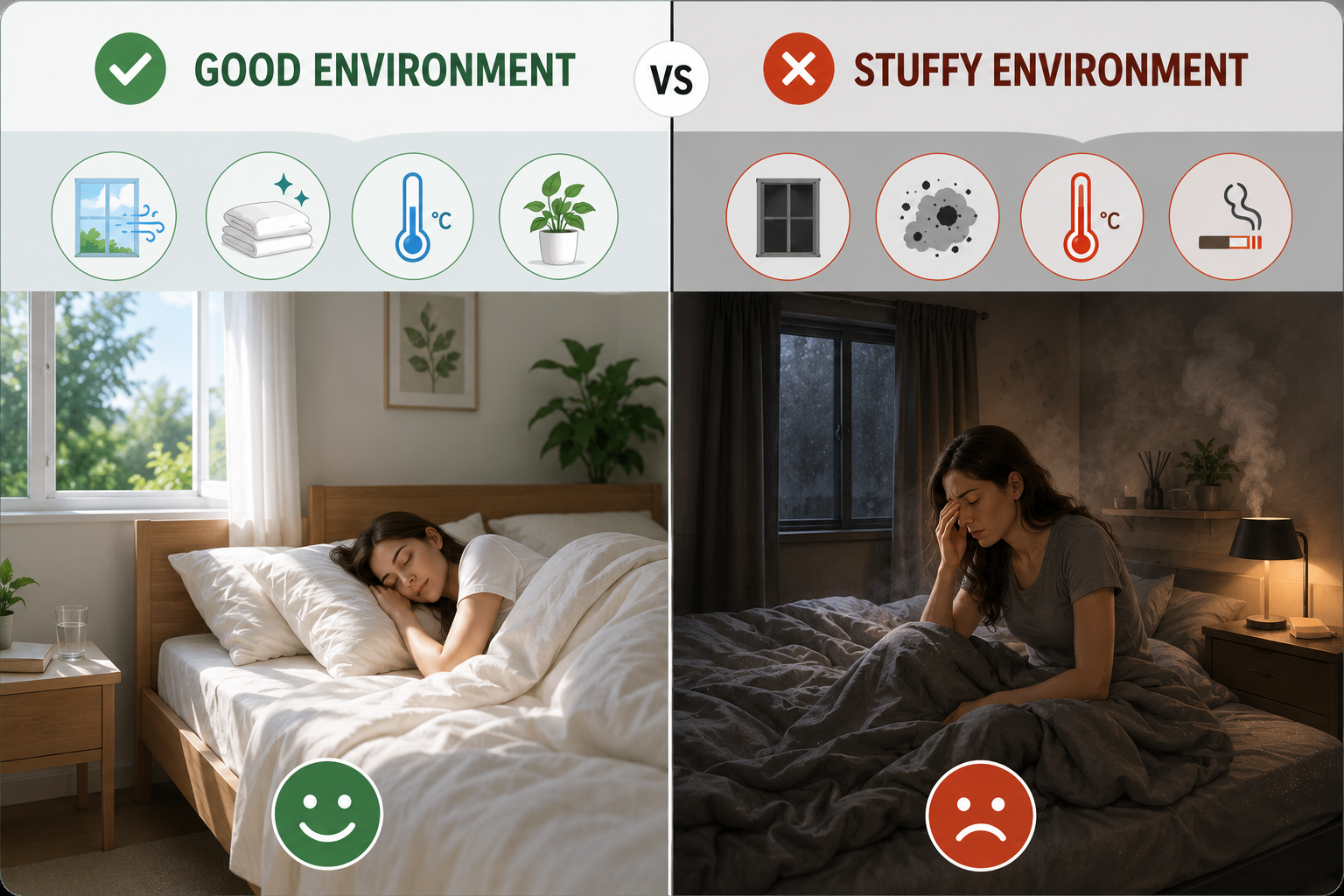
Air quality is one of the most overlooked sleep variables because it is easy to blame yourself first.
People wake up tired and immediately think they failed at bedtime. They slept too late. Scrolled too much. Had coffee too late. Worked too hard. Sometimes that is true.
But sometimes the room was stuffy.
Sometimes smoke came in.
Sometimes outdoor pollution was high.
Sometimes dust, humidity, or poor ventilation made the night less restorative.
Sleep does not happen in a vacuum. It happens in an environment.
That environment can support recovery, or it can quietly make the body work harder.
So if sleep looks fine but energy keeps coming back low, check the air. Not obsessively. Just practically.
Ventilate when outdoor air is good.
Filter when outdoor air is bad.
Keep the bedroom cleaner and less chemical-heavy.
Watch wildfire smoke and high-AQI days.
Track whether your recovery changes when the air changes.
Because sometimes the reason you wake up tired is not your discipline.
Sometimes it is the room.
FAQ
Can bad air quality make you tired?
Yes. Poor indoor air quality can cause symptoms like headaches, dizziness, irritation, and fatigue. It can also make sleep feel less restorative for some people.
Can a stuffy bedroom affect sleep?
Yes. A stuffy bedroom may be linked with poor ventilation, humidity, dust, allergens, or indoor pollutants, all of which can make sleep feel less refreshing.
Does wildfire smoke affect sleep?
It can. Wildfire smoke contains fine particles that can irritate the lungs and body, and it can affect indoor air quality too. Some people may notice worse sleep, lower energy, or more morning fatigue during smoke events.
Should I open the window at night?
Only if outdoor air quality is good. If outdoor AQI is poor or wildfire smoke is present, opening the window may bring pollution indoors. In that case, filtration and keeping windows closed may be safer.
Can an air purifier improve sleep?
An air purifier may help if particles, smoke, dust, pollen, or pet dander are part of the problem. It is most useful when placed in the room where you sleep.
*This article is for informational purposes only and is not a substitute for professional medical advice, diagnosis or treatment.*
Sources:
EPA — Indoor Air Quality·EPA — Report on the Environment: Indoor Air Quality·EPA — Wildfires and Indoor Air Quality·CDC — Wildfires and Your Safety·CDC — How Wildfire Smoke Affects Your Body·American Lung Association — Wildfire Smoke and Lung Health·American Lung Association — How to Choose a Safe and Effective Air Cleaner·Sleep Medicine Reviews — Air pollution and sleep health in middle-aged and older adults·PMC — Associations between Indoor Fine Particulate Matter and Sleep-Disordered Breathing
Related articles

Why a High-Sugar Breakfast Can Leave You Tired Before Lunch
A sweet breakfast can feel like quick energy, then turn into a mid-morning crash. Here’s why breakfast composition matters, what steadier meals usually include, and how to test your own energy pattern without a complicated diet plan.

Why Hot Weather Can Raise Heart Rate and Lower Recovery
Hot weather can make your heart rate run higher, your HRV look worse, and your recovery score drop even when you did not train harder. Here’s why heat changes the body’s workload and how to protect your energy.

Why Travel Drains Your Body Battery Even When You Barely Move
Best Apps to Track Poor Recovery and Fatigue in 2026
The Hidden Cost of Sitting All Day: What Happens to Your Energy Levels?
Your Bedroom May Be Too Warm for Good Recovery
For two summers, I lived in a bedroom that never quite cooled down after dark, and a heart rate tracker I was wearing for something else entirely showed me exactly what that was costing me overnight. It turns out a warm room doesn't just make sleep less pleasant. It measurably raises heart rate, lowers heart rate variability, and cuts into the recovery your body is supposed to get while you're asleep. Here's what the research says about why, who's most affected, and the small changes that actually help.
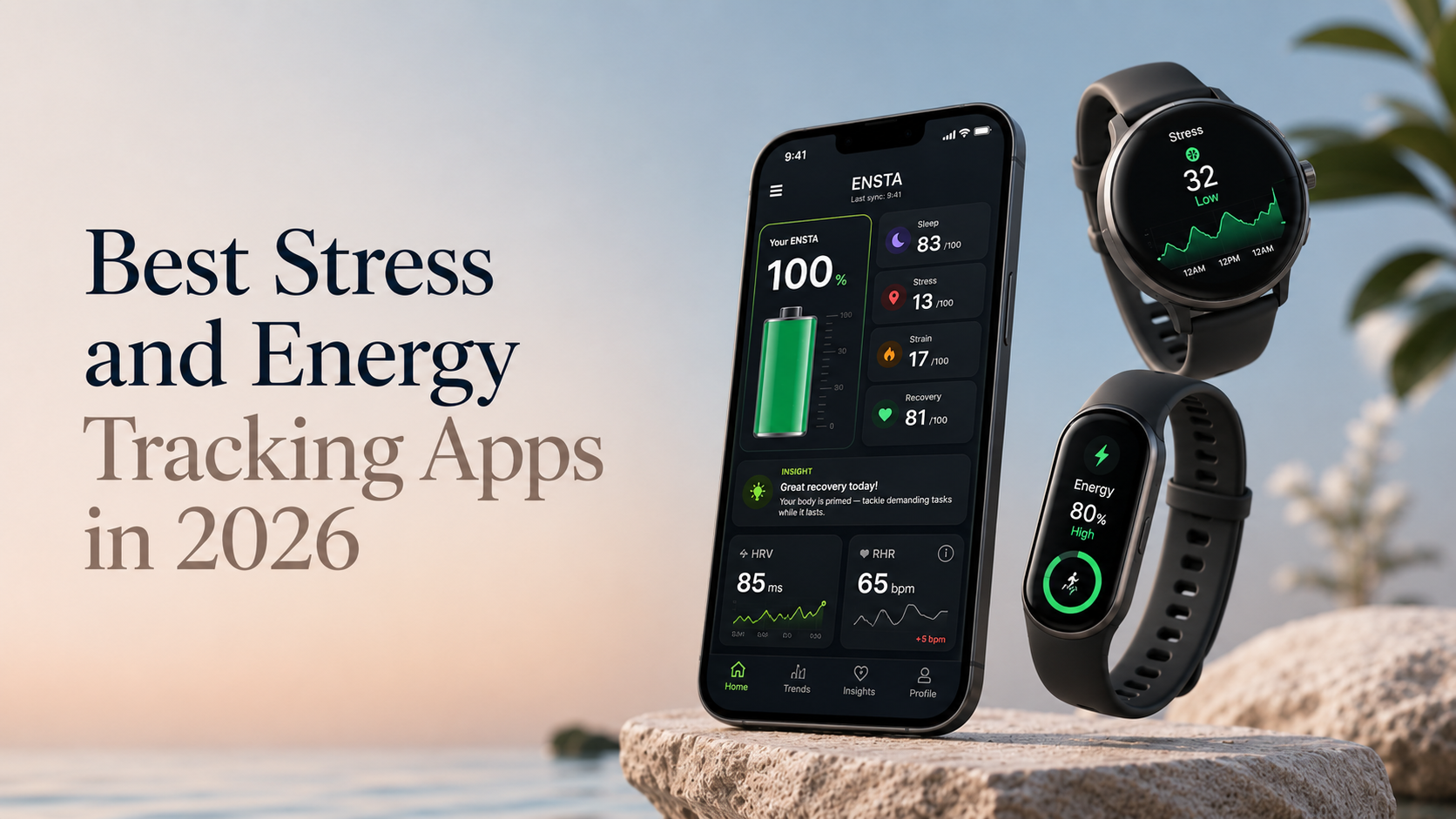
Best Stress and Energy Tracking Apps in 2026

Why jet lag hits harder after some flights and how to recover faster
Some time zone changes barely touch you, and others wreck you completely, even when the shift on paper looks about the same. The difference usually comes down to direction: eastward travel fights your body's natural clock in a way westward travel doesn't, which is also why "I slept a full night" doesn't always mean you're actually recovered. Here's what the research says about why that happens, and a simple first-48-hours plan built around light, timing, and realistic expectations rather than gimmicks.
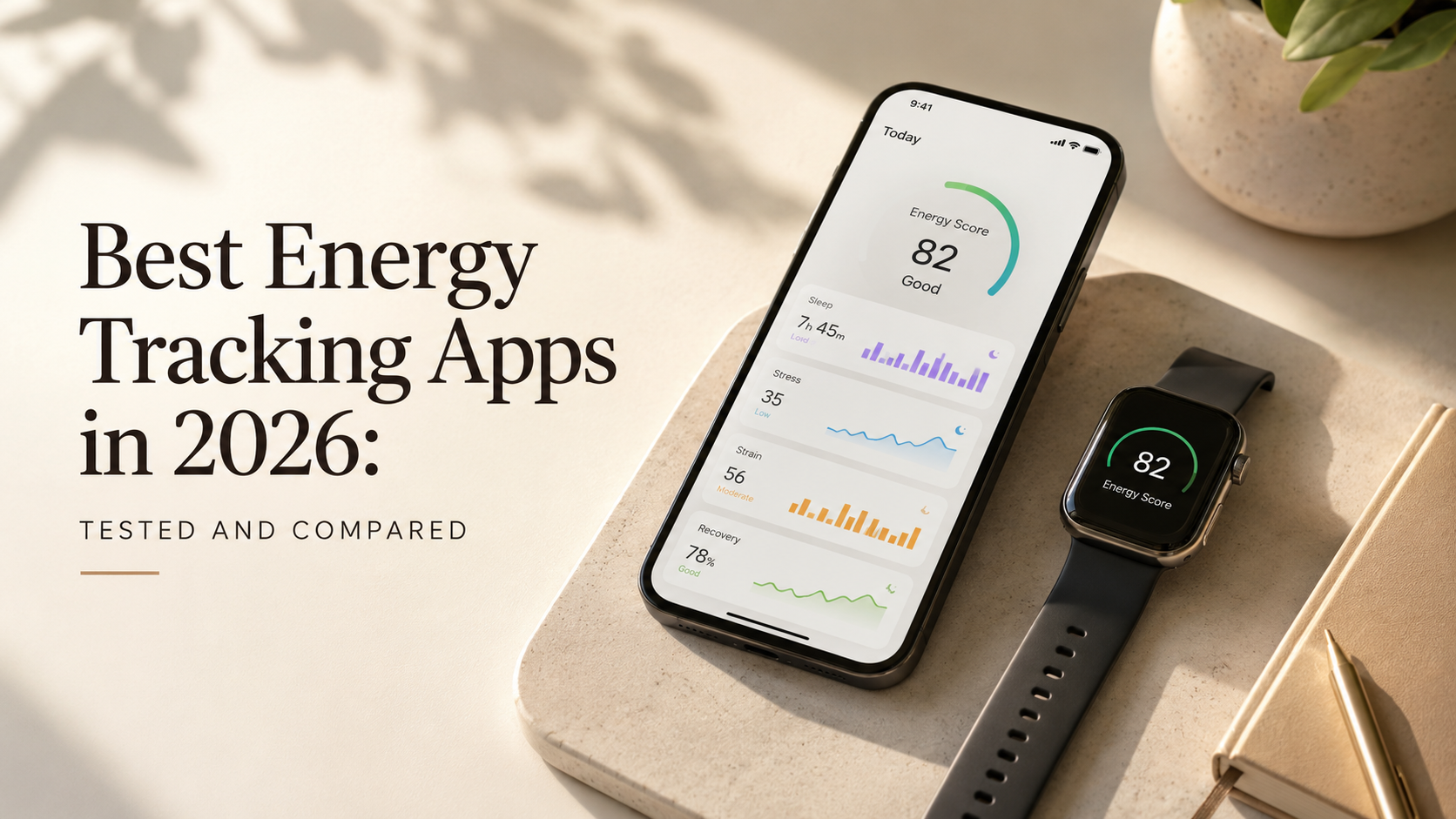
Best Energy Tracking Apps in 2026: Tested and Compared
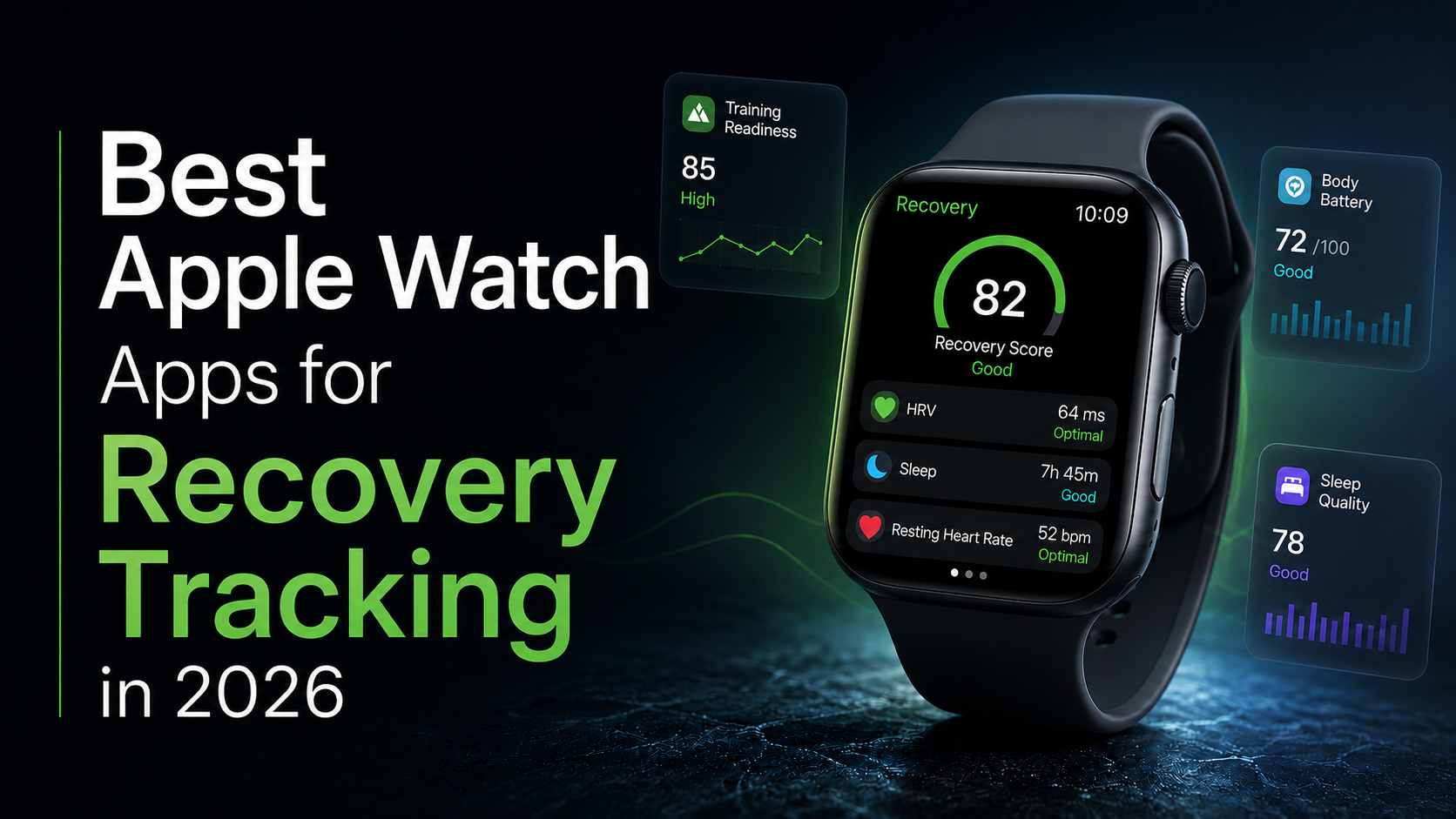
Best Apple Watch Apps for Recovery Tracking in 2026
Your Apple Watch already tracks sleep, HRV, heart rate, and activity, but recovery can still feel confusing without clear interpretation. This guide compares the best Apple Watch recovery apps for 2026, from simple daily energy scores to deeper training-readiness tools, helping you choose the right app for your goals.