Vagus Nerve “Reset” Techniques: Can HRV Show Whether They Work?
By Mr.Apps · Sep 7, 2026
Category:HRV

Vagus nerve "reset" is an appealing phrase, but the nervous system does not have a simple reset button. Slow breathing, HRV biofeedback, cold exposure, and medical stimulation can all change physiology in different ways. A rise in vagus nerve HRV during or after a technique shows that heart rhythm changed under those conditions. It does not prove that the whole nervous system was repaired, that the effect will last, or that a health condition was treated.
I use HRV as a response signal, not a certificate. That distinction became clear when I tried paced breathing before a morning reading. The number rose sharply, which looked impressive. Yet I had changed the measurement itself by controlling my breathing. I had learned that the technique affected the signal in the moment, not that my baseline had permanently improved.
What HRV can tell us about the vagus nerve
HRV describes variation in time between heartbeats. Some time-domain and frequency-domain measures reflect parasympathetic influence on the heart, much of it carried through the vagus nerve. That is why HRV often appears in conversations about nervous system regulation.
Still, HRV is not a direct meter for the entire vagus nerve. It is influenced by breathing rate and depth, posture, time of day, recent exercise, illness, medication, measurement length, and signal quality. The international practical recommendations for HRV research stress standardized conditions because small protocol changes can alter the result.
I therefore separate two questions:
- Did the technique change HRV during a controlled session?
- Did repeated use improve a meaningful outcome, such as symptoms, sleep, or stress tolerance?
The first question can be answered quickly. The second needs repeated observations and may still require clinical assessment.

Slow breathing has the clearest immediate HRV effect
Slow voluntary breathing, often around six breaths per minute, can create a larger rhythmic swing in heart rate. A large systematic review and meta-analysis of 223 studies found increases in vagally mediated HRV during slow breathing, immediately afterward, and after multi-session interventions.
That is meaningful evidence, but the interpretation needs care. Breathing changes the relationship between heart rate, blood pressure regulation, and respiratory sinus arrhythmia. A higher reading during the exercise may partly reflect this immediate cardiorespiratory pattern. It is not the same as showing that resting HRV will be higher tomorrow.
My simplest test is five minutes of comfortable nasal breathing with an unforced inhale and a slightly longer, relaxed exhale. I stop if I feel light-headed. I do not chase the deepest possible breath because overbreathing can cause tingling, dizziness, or anxiety.
When comparing sessions, I use the same posture, duration, time, and device. I also keep a separate resting baseline measured without paced breathing. Mixing a guided breathing reading with an ordinary morning reading creates an unfair comparison.
HRV biofeedback adds a training loop
HRV biofeedback breathing uses live information to help a person breathe near a rate that produces a strong, smooth heart-rate oscillation. Some protocols identify an individual resonance frequency; others use a preset pace close to six breaths per minute.
A systematic review of HRV biofeedback methods found substantial differences in protocols and incomplete reporting in many studies. That does not mean the method is ineffective. It means "HRV biofeedback" can describe different exercises, doses, and measurement setups.
The practical advantage is feedback. I can see whether I am breathing smoothly rather than turning relaxation into another effort contest. The disadvantage is that a dramatic live graph can become the goal. If I strain to maximize the amplitude, I may lose the calm state I wanted.
I judge biofeedback on two levels. First, can I complete the session comfortably and consistently? Second, after several weeks, do I notice a repeatable change in the outcome I care about? The difference between an HRV spike and a meaningful trend is central here.

Cold exposure is a stronger stressor, not a gentler reset
Cold water can change heart rate, blood pressure, breathing, and autonomic activity. A 2024 systematic review and meta-analysis reported post-exposure increases in several HRV measures, along with a slight increase in mean blood pressure. Effects depended on the cooling method and individual characteristics.
That result does not turn cold immersion into a universal vagus nerve reset. Entry into cold water can provoke gasping, rapid breathing, and cardiovascular strain. The later HRV increase may reflect recovery from the stressor as well as the cooling response.
I would not use cold exposure merely to make a wearable graph move. If someone has cardiovascular disease, a history of fainting, rhythm problems, uncontrolled blood pressure, pregnancy, or another relevant condition, medical guidance matters. Cold water also carries practical drowning and hypothermia risks.
A cool face cloth or finishing a shower slightly cooler is not equivalent to an ice bath. Dose and context matter. Online discussions often flatten all cold exposure into one intervention, which makes both the evidence and the safety advice less useful.
Commercial stimulation devices are not interchangeable
Implanted vagus nerve stimulation and prescription non-invasive stimulation are medical technologies used for specific indications. Wellness products that stimulate the ear or neck may use similar language without sharing the same evidence, dose, target, or regulatory status.
The FDA classification for an external vagal nerve stimulator describes a prescription device for headache treatment. That is very different from a general promise to "tone" the vagus nerve or improve recovery in healthy users.
Before considering a device, I would ask:
- What exact indication has been studied?
- Is this specific model authorized for that use?
- What were the comparison group and meaningful outcomes?
- Who should not use it?
- Does the claim rely only on an immediate HRV change?
An ear clip, a neck device, paced breathing, and implanted stimulation should not be grouped together because they all mention the vagus nerve.
A better way to test a calming technique
For a low-risk breathing practice, I use a simple two-layer protocol. I first test the immediate response under matched conditions. Then I test whether a daily practice changes real life over several weeks.
For the session layer, I record five minutes of quiet rest, five minutes of practice, and five minutes of recovery. I note comfort, breathing rate, and posture. For the trend layer, I keep the practice at the same time each day and review weekly averages of resting HRV, sleep, and a short stress rating.

I avoid checking the result after every breath. Instead, I review the session when it ends and the trend once a week. That keeps feedback useful without turning regulation into score chasing.
If the live HRV rises but I feel dizzy, the session was not a success. If resting HRV stays flat but I recover from tense moments more easily, that subjective benefit still matters. If both improve, I have a stronger personal signal, although not proof of a medical effect.
This is also why I do not panic when a wearable says I am stressed while I feel composed. I consider why a wearable can report stress when I feel fine and look for context before changing the routine.
What would count as convincing evidence?
The strongest case combines a plausible method, a repeatable effect, a meaningful outcome, and appropriate controls. For me, that might mean the same breathing practice produces a comfortable session response, lower perceived tension, and a modest shift in weekly resting trends across two separate periods.
Even then, I use careful language: "This practice appears helpful for me." I do not conclude that my vagus nerve was reset. HRV is a cardiac signal shaped by the autonomic nervous system, not a scan of every pathway involved in mood, digestion, inflammation, or disease.
Persistent palpitations, fainting, chest pain, severe breathlessness, or new neurological symptoms need professional evaluation. A wellness technique and a favorable score cannot make those symptoms safe.
FAQ
Does higher HRV during slow breathing mean my vagus nerve is healthier?
Not necessarily. Slow breathing can increase HRV during the exercise through cardiorespiratory mechanisms. A consistent resting trend and meaningful improvements in symptoms or function provide more context, but HRV alone still cannot diagnose vagus nerve health.
Is six breaths per minute the best rate for everyone?
No. Six breaths per minute is a common preset, while individual resonance rates vary. Comfort matters, and some people need a slightly faster pace. Do not force large breaths or continue through dizziness.
Can I use a wearable to choose a vagus nerve stimulation device?
A wearable HRV response is not enough to establish safety, effectiveness, or the right indication for a device. Review the product's exact regulatory status and evidence, and discuss medical stimulation with a qualified clinician, especially if you have a cardiovascular or neurological condition.
*This article is for informational purposes only and is not a substitute for professional medical advice, diagnosis or treatment.*
Sources:
Frontiers in Public Health·Neuroscience and Biobehavioral Reviews·Applied Psychophysiology and Biofeedback·Journal of Thermal Biology·U.S. Food and Drug Administration·Frontiers in Human Neuroscience
Related articles

Why Apple Watch, Oura, WHOOP, and Garmin Give You Different HRV Scores
Apple Watch, Oura, WHOOP, and Garmin can report different HRV values without any one device necessarily being broken. I explain how calculation method, sampling time, sensor location, artifact filtering, and baseline logic change the result, and why trends within one device are the safer comparison.

POTS and Wearables: What Standing Heart-Rate Patterns Can—and Can’t—Tell You
A watch can document how heart rate changes after standing, but a POTS evaluation also needs symptoms, blood pressure, timing, and alternative causes. I explain how to build a concise record for a clinician without turning a smartwatch into a diagnostic device.

Your Menstrual Cycle Changes Recovery Scores—Here’s How to Read the Pattern
Recovery, temperature, resting heart rate, HRV, and sleep can follow repeatable patterns across the menstrual cycle. I explain how to compare several cycles so a familiar monthly shift is not mistaken for a new health crisis.

Can dehydration raise your heart rate and ruin recovery?
For ten days last summer I was convinced I had overtrained. My resting heart rate was up, my easy runs felt hard, and cutting my training volume changed nothing. The problem was water. Here is how fluid loss raises your heart rate, why it drags out recovery, and how to tell it apart from everything else that does the same thing.
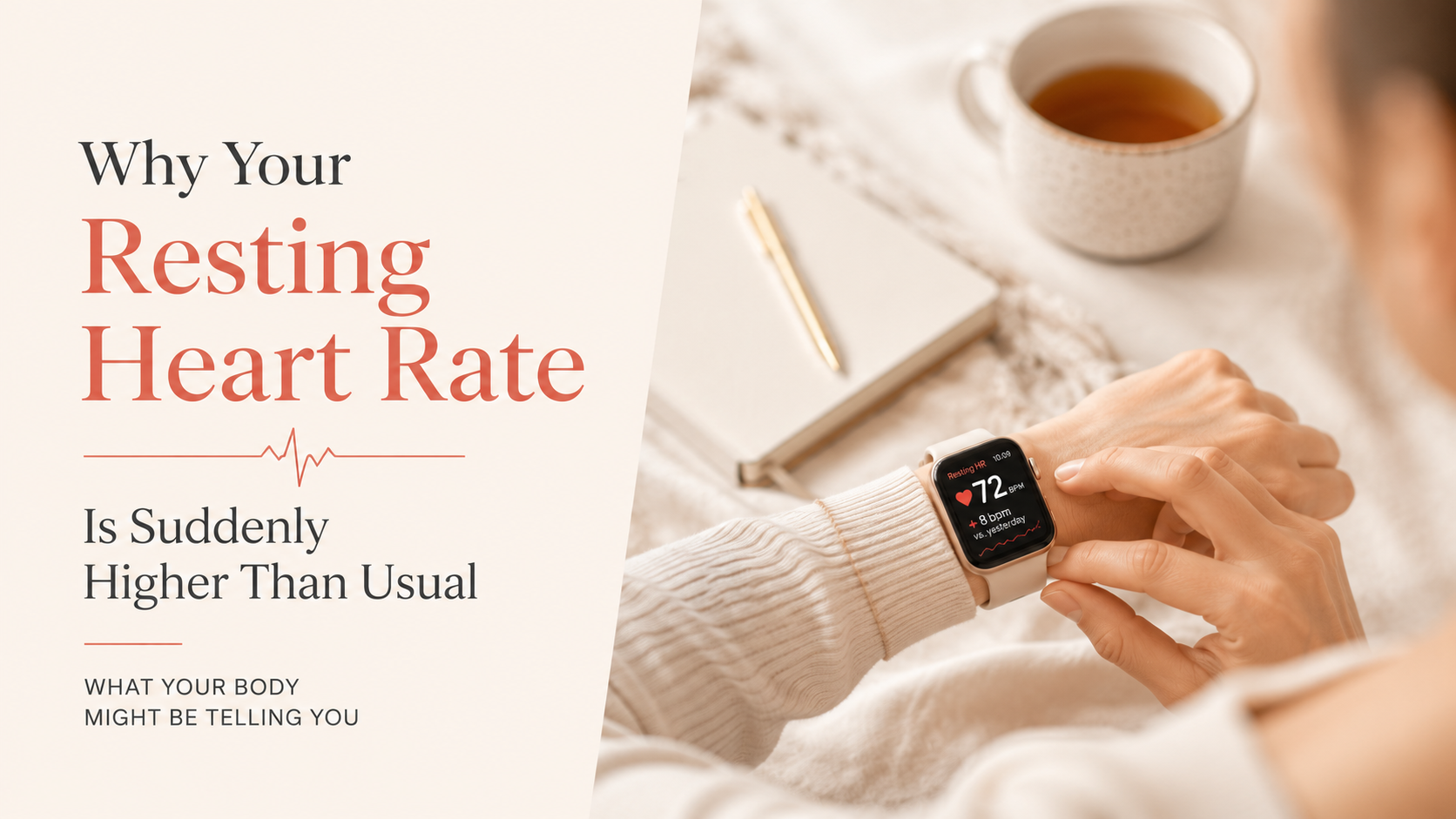
Why Your Resting Heart Rate Is Suddenly Higher Than Usual
A resting heart rate that jumps five or six beats and stays there is usually explained by the week, not the heart. Here's how I work through the usual causes, why one high night matters far less than three, and where the line sits between tracking it and calling someone.
Best Apps That Explain Sudden HRV Changes in 2026
Why your HRV changed overnight, what it usually means, and the apps that actually help you figure out what to do next.
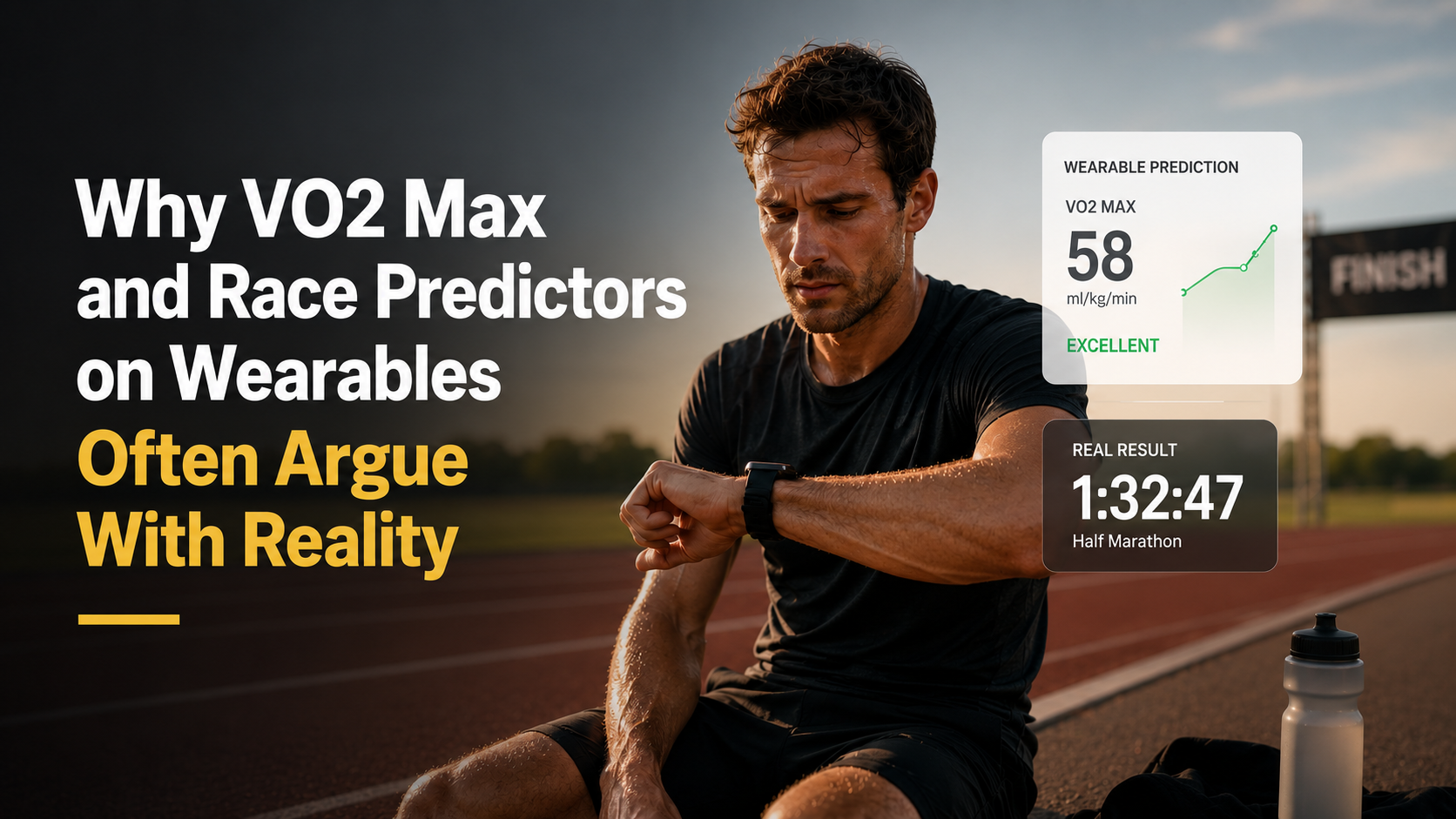
Why VO2 Max and Race Predictors on Wearables Often Argue With Reality
Your watch never measured your VO2 max, it guessed it from heart rate. Here's why that number drops in summer, why the race predictor lies, and how to read both.
Why heart rate alone doesn't explain strength training
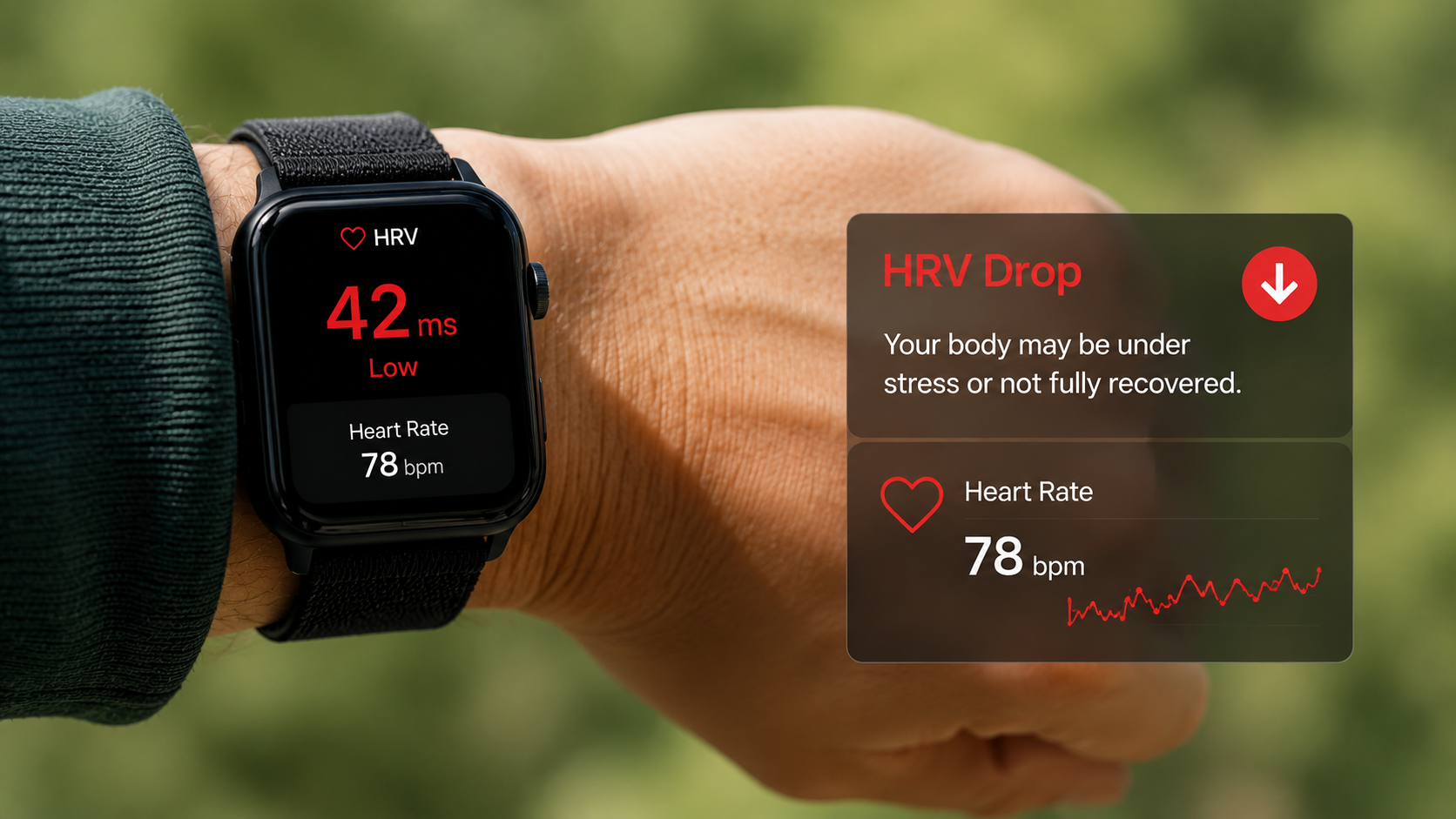
What Does an HRV Spike or HRV Drop Actually Mean?
An HRV spike isn't always good and a drop isn't always bad. Here's why your HRV changed overnight, and when low HRV is stress, sickness, alcohol, or just noise.