A longer night after a sleep aid does not establish better alertness
By Mr.Apps · Oct 19, 2026
Category:Sleep
I would treat next-day alertness as a separate observation, not as something a longer score can guarantee. A longer night in bed after taking a sleep aid does not establish that you will be more alert the next day. The medicine may affect how quickly you fall asleep or how long you sleep, while its effects can also continue into the morning. A wearable may estimate more sleep without measuring attention, reaction time, or how safe you feel during a daytime activity.
The result depends on the medicine, timing, dose, other substances, health conditions, and the time available for sleep. Some medicines can cause next-day drowsiness even when a person feels that the night was longer. Do not use a sleep score or duration estimate to decide that a medicine has worn off or that it is safe to drive.
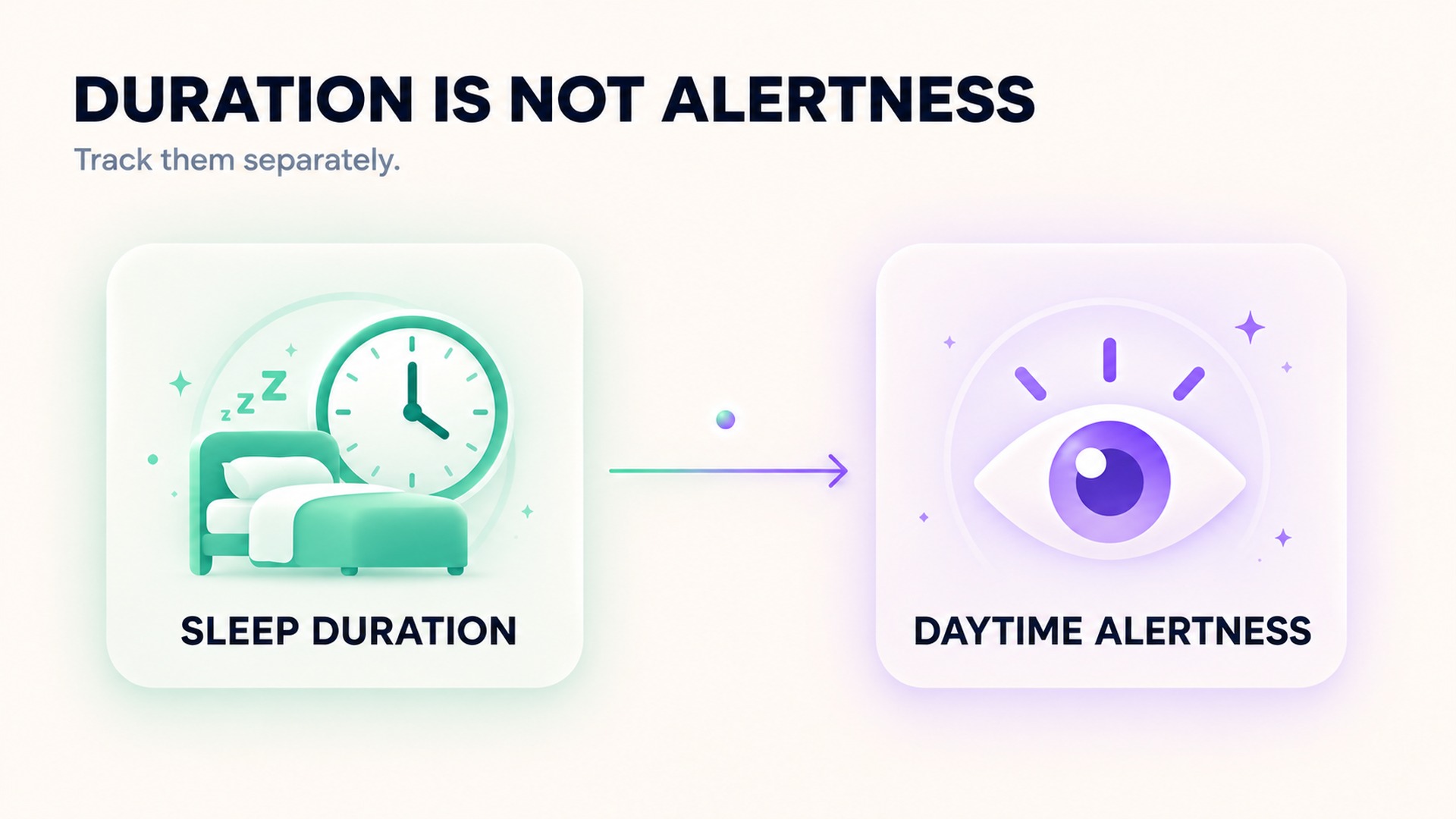
Sleep duration and next-day alertness are different measures
A device may estimate that you were asleep for more minutes, but the estimate does not show whether you are alert, clear-headed, or able to sustain attention. Sleep duration and next-day function are related, but one does not fully determine the other. A person can spend longer in bed and still feel sleepy. A longer device estimate may also reflect quiet wakefulness classified as sleep.
A medicine can influence both the night and the morning. Some sleep medicines and sedating antihistamines affect the central nervous system. Depending on the product and individual, effects may last beyond the intended sleep period. The official guidance on medicines and driving notes that some medication effects can last several hours or into the next day, and that drowsiness is not the only possible effect on performance.
Controlled research has measured residual effects after nighttime use. In a small randomized study of an antihistamine sleep aid, researchers detected a next-morning sedative effect under the study conditions, even though participants’ subjective sleepiness ratings did not differ significantly from placebo. The study involved a limited number of healthy adults and one specific medicine; it does not predict an individual’s response to every sleep aid. It does show why “I feel fine” and “I slept longer” are not complete safety measurements.
The official information on next-morning impairment after insomnia medicines explains that some prescription insomnia medicines can affect alertness the next morning. It also notes that nonprescription sleep medicines can carry next-morning impairment risk. The details differ by medicine. Read the warnings for the specific product and follow the prescriber’s instructions rather than generalizing from a sleep-duration chart.
What a longer estimate can and cannot show
A sleep tracker usually estimates sleep from patterns in motion, pulse, or other signals. It does not measure whether a medicine produced restorative sleep or whether a person’s attention is back to baseline. Quiet wakefulness can be classified as sleep, and the algorithm may not distinguish the effect of a medicine from ordinary changes in movement. The number is best read as an estimate of sleep opportunity or sleep pattern, not a measure of medication benefit. A longer record can still be useful when its limits are clear.
A person can also spend more time in bed without sleeping continuously. A longer interval between bedtime and getting up may include awakenings, time spent resting while awake, or a delayed morning routine. If the app reports more sleep, check how it defines the start and end of sleep and whether the data are complete. Comparing values from different devices or after a software change adds another uncertainty.
When you review the night, separate at least three things: estimated sleep duration, the medicine taken according to its directions, and how you functioned after waking. They can move in different directions. A longer estimate may coincide with morning grogginess, or the score may improve while the person still feels unsteady. Both observations matter, but neither alone proves the medication’s overall effect.
Why one night cannot settle the question
A single night is a narrow sample. The reported duration may be influenced by the person’s schedule, device wear, awakenings, and the way the tracker defines sleep. The next-day experience may also depend on the time the medicine was taken, the time of waking, sleep opportunity, and other factors. A score that improves on one night does not tell you which factor mattered.
The clinical guideline for pharmacological treatment of chronic insomnia reviews evidence for specific medicines and treatment goals. A guideline for chronic insomnia is not a personal instruction to start or stop a medicine. It reflects a defined evidence review and emphasizes that clinical choices depend on individual circumstances, potential harms, and treatment goals.
Some medicines can also produce tolerance to certain effects over time, while other effects may remain. A controlled study of daytime sedative effects from an antihistamine found that tolerance to sedation developed under the particular dosing regimen studied. This finding does not mean that people should increase the amount to regain a sleep effect, nor does it mean every medicine behaves the same way. If a medicine seems less effective or morning alertness changes, discuss it with the prescriber or pharmacist instead of adjusting the dose yourself.
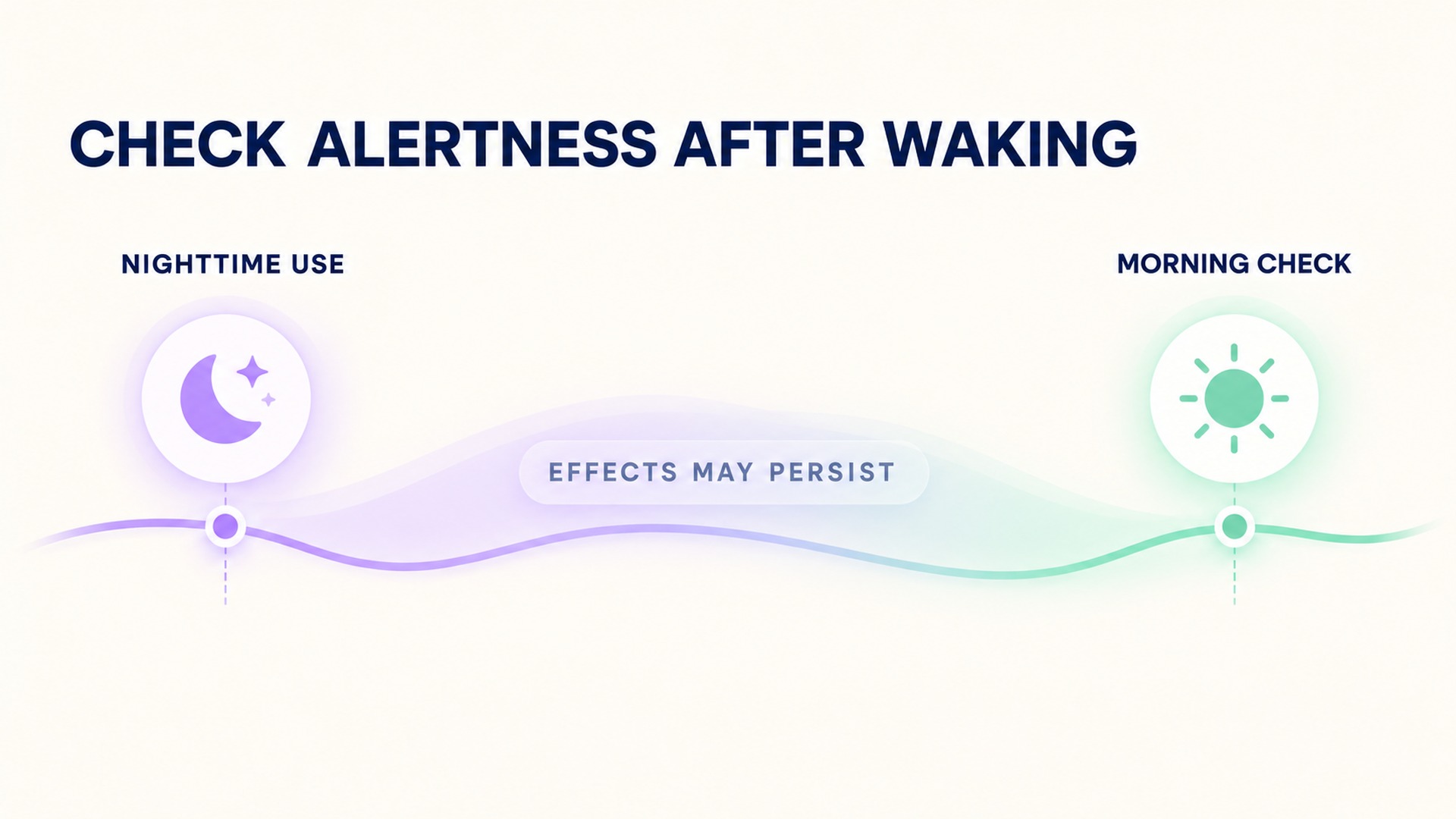
Keep the record descriptive
If you track sleep and medication, keep the entries separate. Record the medicine name as listed on the package, the amount actually taken, the time, and any relevant instructions. Record the device’s sleep estimate separately. Add a plain-language note about morning drowsiness, slowed thinking, dizziness, or difficulty concentrating if you notice those effects. A score cannot fill in that symptom field.
Do not infer that an alertness problem was caused by the medicine from one observation. Lack of sleep, illness, schedule changes, alcohol or other sedating substances, and medical conditions can also affect how someone feels. The point of the record is to preserve what happened and when, so a professional can consider it alongside the medication and health history.
If you take multiple products, check with a professional before combining them. The MedlinePlus guide to sleep medicines notes that sleep medicines can leave some people tired or groggy the next day and may have other effects. A pharmacist can help interpret the label, interactions, and directions for your specific products. Do not rely on an app to determine whether an ingredient overlaps with another medicine.
A related guide on why tiredness can persist after a full night in bed covers other reasons a duration estimate may not match how you feel. When reviewing a pattern, compare similar nights and note relevant changes. Avoid using a longer estimated night as proof that the medicine worked or that next-day impairment is absent.
Why next-day effects vary
The amount of sleep recorded is only one part of a medicine’s effect. The timing of use, the time available before waking, the particular ingredient, other medicines, and individual health factors can change how a person feels the next day. Instructions may differ by product and formulation. Avoid applying a finding about one medicine or study group to a different product or to your own response without checking the label and speaking with a professional.
A controlled study can show that a residual effect is possible under its conditions, but it cannot predict every person’s morning. The antihistamine trial cited above included a small group and a specific protocol. It should not be used to calculate an individual’s impairment or to advise a dose. It supports a narrower point: subjective sleepiness and a measurable medication effect are not always the same measure. That is another reason to check actual alertness and follow product warnings.
What to do when you feel drowsy
Follow the product label and the prescriber’s directions. If the label warns against driving or operating machinery, follow that warning. If you are drowsy, dizzy, slowed, or unable to focus, do not rely on a favorable sleep score to override how you feel. Ask a health professional what to do about the medicine and your next dose, especially if the effect is unexpected or persists.
Do not stop a prescribed medicine suddenly or take a larger amount because the first night did not seem to help. Some medicines require a plan for changes. If you have concerns about breathing, confusion, a severe reaction, or an accidental extra dose, use the appropriate urgent medical or poison-control guidance available where you live.
A wearable may still help you notice a repeated schedule or duration pattern. Use it as background information. The clinical question is whether the medicine is appropriate and whether its effects are acceptable, which depends on the individual and the treatment plan. That question cannot be answered by the estimated duration alone.
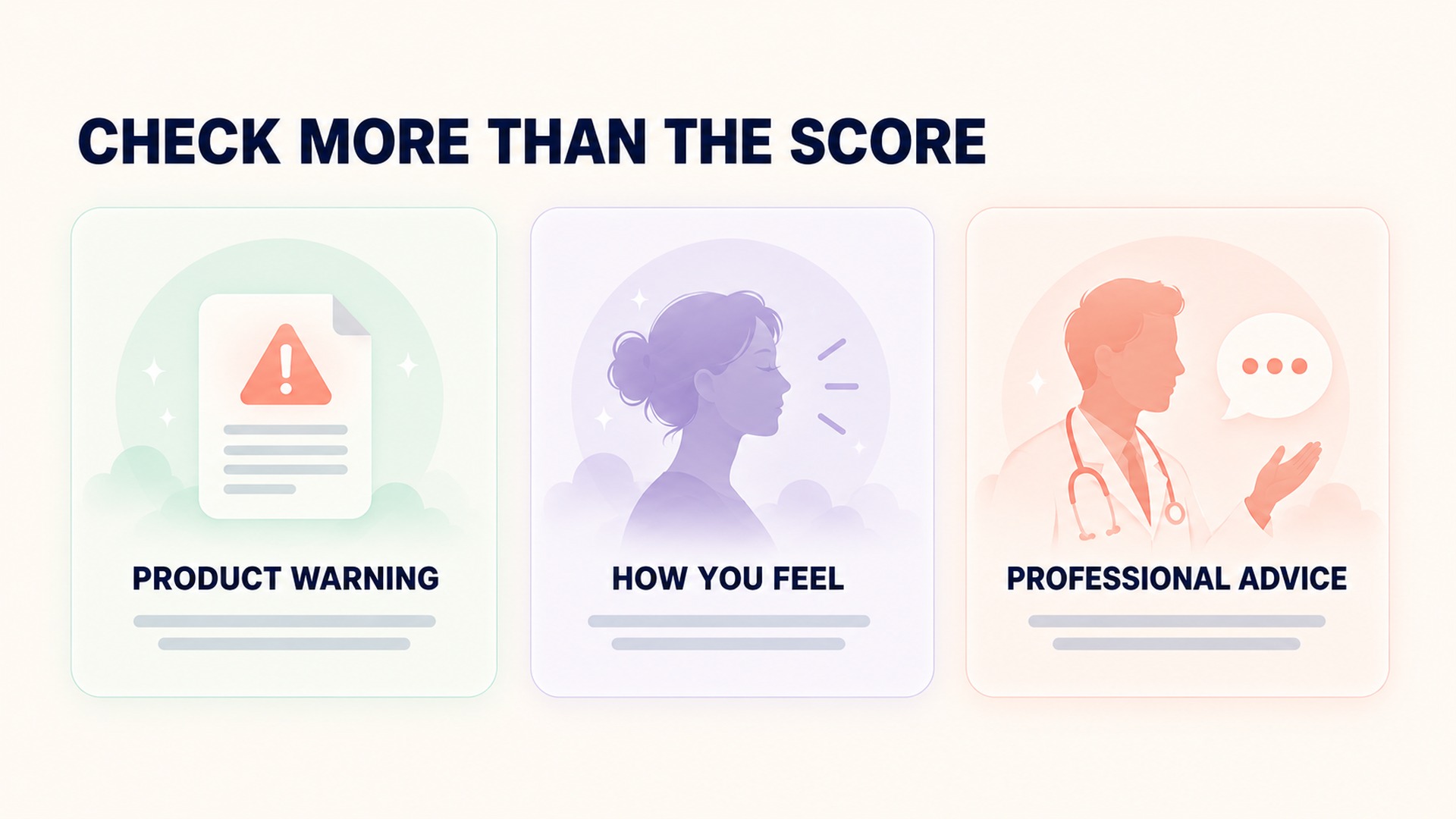
A longer device-estimated night is not a test of next-day alertness. Sleep duration, medication exposure, and daytime function should remain separate records. Follow the medicine’s directions, take drowsiness seriously, and ask a qualified professional about persistent or unexpected effects.
FAQ
Does sleeping longer after a sleep aid mean I will be more alert?
No. A longer estimated night does not measure attention or reaction time, and some medicine effects may continue into the next day.
Can I use my sleep score to decide whether I am safe to drive?
No. Follow the medicine’s warnings and consider how you feel. Ask a healthcare professional if you are unsure about next-day effects.
Should I take more if a sleep aid seems less effective?
No. Do not increase or change a medicine on your own. Discuss the change with the prescriber or pharmacist.
*This article is for informational purposes only and is not a substitute for professional medical advice, diagnosis or treatment.*
Sources:
Food and Drug Administration·Journal of Clinical Psychopharmacology·Food and Drug Administration·Journal of Clinical Sleep Medicine·Journal of Clinical Psychopharmacology·MedlinePlus
Related articles
Melatonin timing and melatonin dose are separate questions
Melatonin timing and dose are separate questions with different clinical contexts. Learn why a sleep score cannot select a dose or establish that the supplement is appropriate.
How a daytime sleepiness test differs from an energy score
A daytime sleepiness test measures sleep propensity under controlled conditions, while an energy score summarizes device estimates. Learn why one cannot replace the other.

Acting out dreams needs a different review from restless sleep
Dream enactment and restless sleep are different observations. Learn what details to record, why movement counts cannot diagnose a sleep disorder, and when behavior merits clinical review.
Adding nighttime reflux symptoms to a sleep review
Nighttime reflux symptoms can add useful context to a sleep review, but a wearable cannot diagnose reflux. Learn what to record and when to ask a clinician about recurring symptoms.
Remembering a dream does not measure how much REM sleep occurred
Dream recall is not a measure of REM sleep duration. Learn how to keep a dream journal and a device estimate separate.
Recording sleep paralysis without assigning it a sleep stage
Sleep paralysis happens around falling asleep or waking, and a wearable stage graph cannot diagnose it. Learn what details to record and when to discuss recurring episodes with a clinician.

Keeping prescribed breathing treatment separate from a sleep score
Sleep score and prescribed breathing treatment answer different questions. Learn how to keep the records separate and what to bring to a clinical follow-up.

Why a laboratory sleep study can differ from a usual night at home
A laboratory sleep study records sleep under conditions that can differ from home. Learn how to discuss an unusual test night without dismissing the clinical findings.

How to Read a Sleep Graph When Deep Sleep Appears in Short Bursts
Short deep-sleep blocks on a wearable graph can reflect stage estimates, chart resolution, or missing sensor intervals. Read the time scale and coverage notes alongside the total sleep window before interpreting the pattern.

Why Sleep Stage Percentages Need a Confidence Indicator
A sleep-stage percentage can look precise even when the tracker has limited evidence for part of the night. A confidence indicator should explain whether it refers to signal coverage, classifier uncertainty, or validation against a reference method.