Melatonin timing and melatonin dose are separate questions
By Mr.Apps · Oct 19, 2026
Category:Sleep

Melatonin timing and melatonin dose are related, but they are not interchangeable. Timing concerns when the hormone or supplement is taken in relation to a person’s internal sleep-wake rhythm. Dose concerns how much is used. A larger amount does not automatically solve a timing problem, and a bedtime reminder does not establish that melatonin is appropriate for the reason someone is having trouble sleeping.
I would keep the intended use, timing, and amount as separate questions. Melatonin is involved in circadian timing, but supplements are used in different contexts and the evidence varies by condition. A person considering it should discuss the reason, timing, dose, other medicines, and health history with a qualified professional. I would not use a wearable score to pick a dose or shift the timing of prescribed treatment.
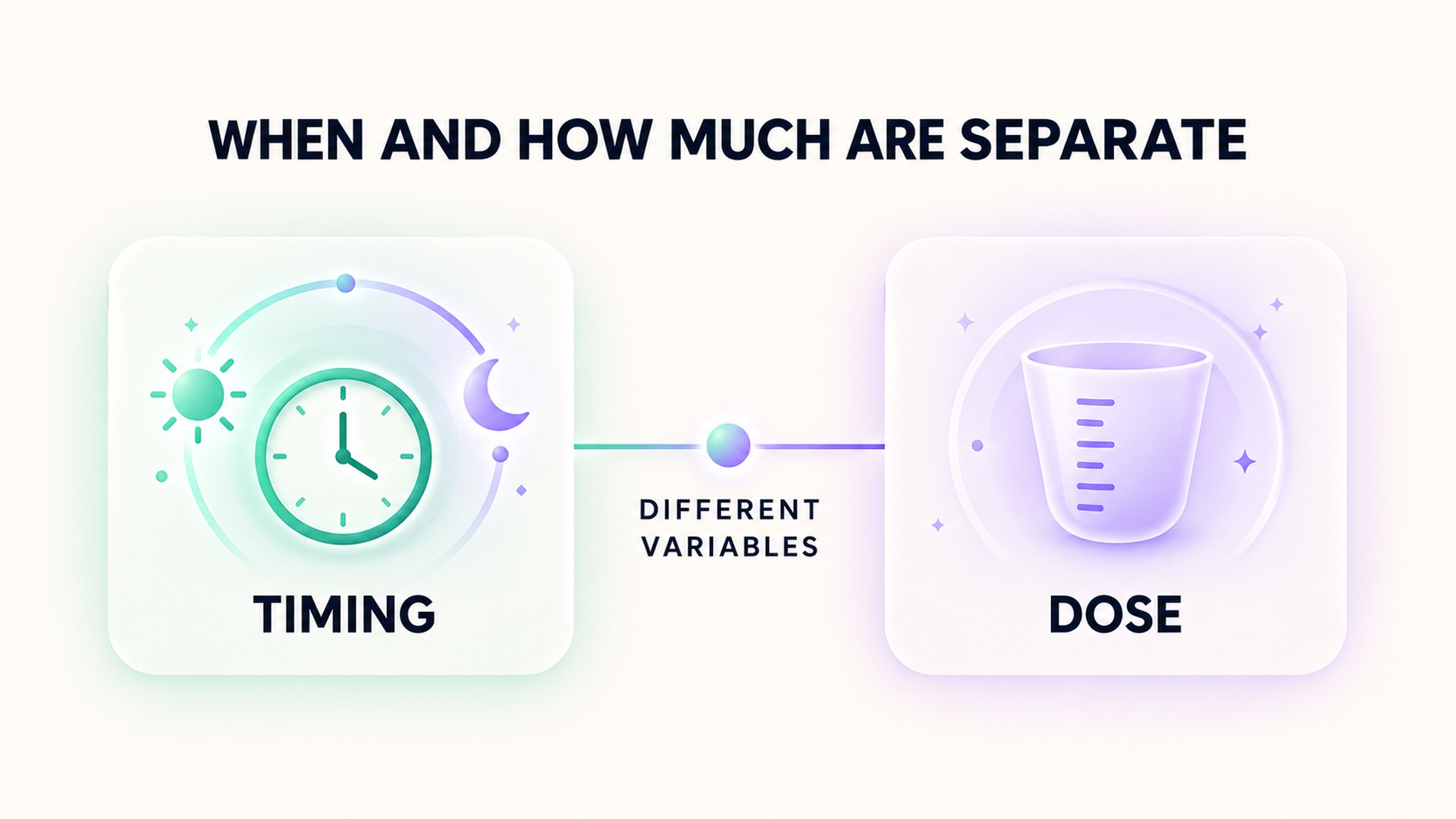
Timing asks when, relative to what
The body’s own melatonin signal changes with the light-dark cycle. A supplement taken at a particular clock time may have a different effect depending on the person’s internal timing and the sleep-wake problem being considered. Clock time and biological time are not always the same. A schedule that seems late to one person may be the usual and functional pattern for another.
The clinical information about melatonin explains its role in circadian rhythms and summarizes evidence for different uses. The clinical guidance on circadian-rhythm treatment describes that treatment plans depend on the type and severity of the sleep-wake rhythm disorder. Light exposure, routine, and melatonin may be considered in specific contexts. That is different from using the supplement as a general response to any night with a low sleep score.
The clinical guideline for intrinsic circadian rhythm disorders discusses strategically timed melatonin for selected disorders and populations. Its recommendations do not establish a universal clock time or dose for everyone who wants to fall asleep earlier. The target condition, desired shift, schedule, and clinical context matter. A clinician may ask for a sleep diary or actigraphy to understand timing before deciding whether an intervention fits.
A person who takes melatonin at a different time each night may not be testing one consistent routine. The resulting sleep record can be difficult to interpret because both timing and dose changed. If a professional recommends tracking, record the actual time taken, the amount, the reason for use, and the bedtime and wake time. Do not infer an ideal schedule from a single night that happened to have a higher score.
Dose is a separate variable
Dose describes the quantity used; it does not say whether the timing is appropriate or whether the supplement is useful for the specific problem. The amount studied in one condition cannot automatically be applied to another. More is not proof of greater benefit. The evidence and possible side effects must be considered for the individual and the reason for taking it.
The older clinical practice parameters on circadian sleep-wake disorders note that optimal melatonin timing and dosing were not established across the evidence they reviewed. Newer guidelines also make recommendations for selected diagnoses, not a one-size-fits-all instruction. A specific dose found in a trial is a study condition, not an automatic recommendation for a reader.
For chronic insomnia, the guidance is different from treatment of a circadian rhythm disorder. The clinical guideline on pharmacologic treatment of chronic insomnia in adults suggests clinicians not use melatonin as treatment for sleep-onset or sleep-maintenance insomnia in adults, based on the evidence reviewed for that question. This recommendation illustrates why a supplement should not be assumed to help every type of sleep difficulty. It does not mean that melatonin has no role in any clinical context.
Name the goal before judging the result
A sleep problem can involve difficulty falling asleep at a desired time, waking repeatedly, a delayed sleep-wake rhythm, or a schedule that changes from day to day. These are not the same target. A product that affects circadian timing may be studied for a different purpose than a medicine used to treat insomnia. Before deciding whether melatonin helped, be clear about the goal: a shift in sleep timing, a shorter delay before sleep, fewer awakenings, or a change in next-day function.
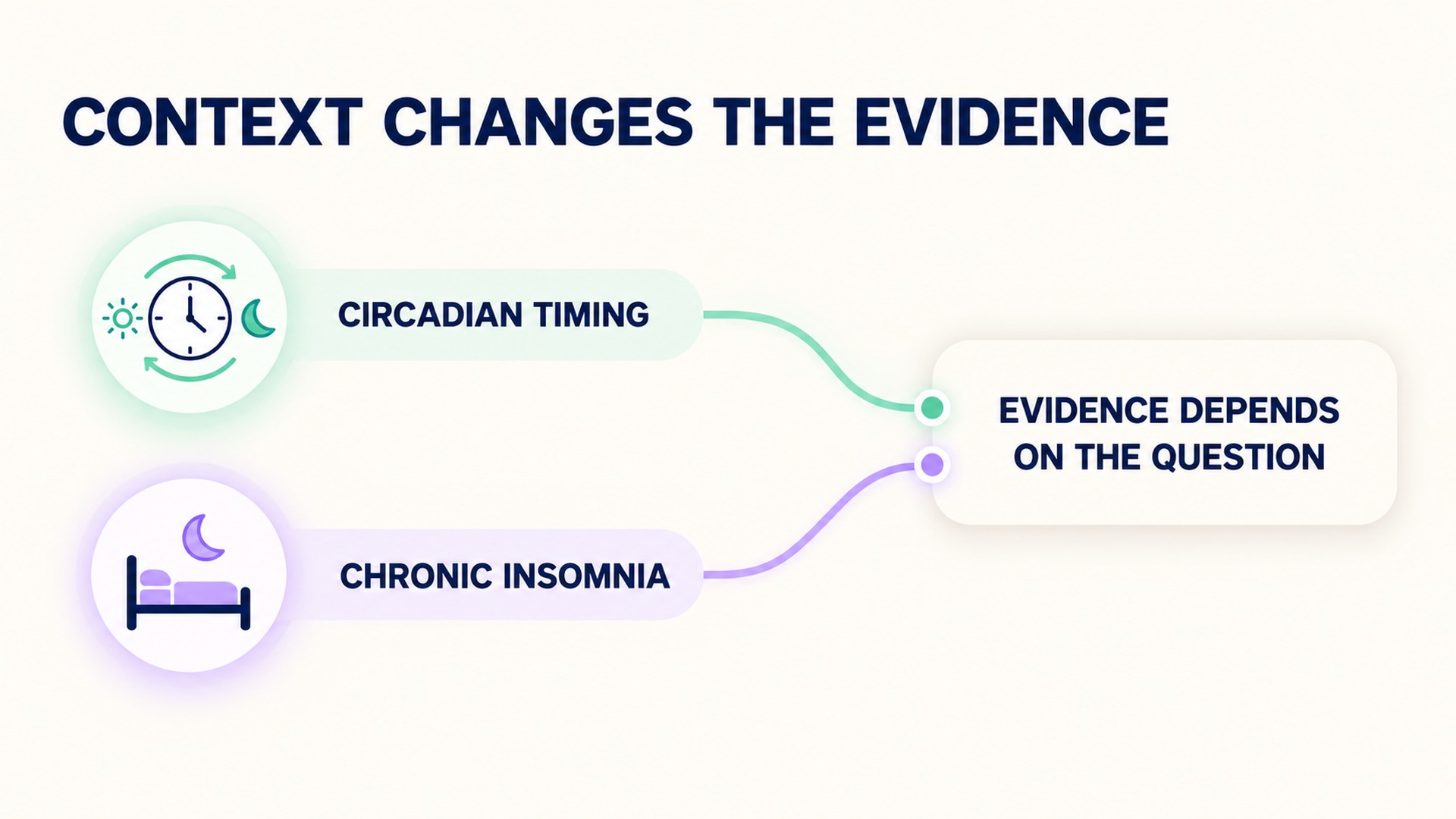
The goal also determines what should be recorded. If the concern is a delayed schedule, log actual sleep and wake times over a consistent period. If the concern is sleep continuity, note awakenings and subjective rest separately. Do not treat a REM estimate or an energy score as the only outcome. The circadian guideline discusses specific disorders and timing goals; its recommendations cannot be reduced to “take melatonin before bed.”
Formulation and label directions can matter as well. A product may be immediate-release or have a different release profile, and the amount printed on the package may refer to one serving rather than the amount consumed. Keep the package details available if you ask for advice. Do not substitute one formulation for another or combine products to reproduce a trial dose without guidance.
The clock time itself can be misleading. Two people who take the same amount at the same wall-clock time may be at different points in their internal rhythms. A sleep diary can help a clinician understand regularity and timing, but it cannot directly determine circadian phase. If the clinical question depends on that phase, an app’s bedtime estimate is not a validated substitute for the assessment the clinician recommends.
Product quality and safety matter too
Supplements can differ in their contents and quality. The guidance on using dietary supplements wisely explains that supplements can interact with medicines and may pose risks in some health situations. The melatonin information page also discusses uncertainty about long-term safety and possible differences between label claims and product contents. A label is useful information, but it does not replace professional advice about whether a supplement is appropriate.
If you take other medicines, have a health condition, are pregnant or trying to become pregnant, or are considering melatonin for a child, discuss it with a healthcare professional. Do not stop a prescribed medicine or combine products based on a sleep-tracker recommendation. Even when a product is sold without a prescription, that does not prove it is free of interactions or side effects.
Keep timing, amount, and product identity in separate fields if you are recording use. If the label lists an amount per serving, record how much was actually taken rather than copying the package amount as though it were the consumed dose. If you do not know the exact amount or the product changed, mark the entry as uncertain. This helps a clinician interpret the record without pretending that the supplement has a known effect on that night.
Keep expectations proportionate to the evidence
A supplement may not change the pattern you hoped to change, and a changed score does not show which part of the routine mattered. Short-term improvement can occur alongside changes in light exposure, bedtime, stress, or other factors. If the intended benefit is unclear or symptoms persist, discuss the broader sleep problem with a professional rather than increasing the amount. The aim is to match the intervention to the reason for use, not to chase a higher nightly grade. Keep the intended outcome clear when you discuss whether it helped.
How to use a sleep record carefully
A useful note can include the time the supplement was taken, the dose listed on the label, bedtime, wake time, and how you felt the next day. Keep the wearable’s sleep estimate separate from the note. If you changed both timing and amount, record both changes rather than attributing a better or worse score to one factor. A pattern across several observations can suggest a question, but it does not prove a cause.
Avoid making several changes at once just to improve an app score. A sleep routine, light exposure, work schedule, illness, and other factors may all change the same week. If you are following a clinician’s plan, follow that plan and ask before adjusting the timing or amount. A related guide on why regular sleep timing matters beyond one extra hour in bed discusses the role of routine in interpreting sleep patterns.
A supplement entry is most useful when it describes what happened, not when it grades the outcome. “Taken at 10:30 p.m., label lists 1 mg; bedtime was near midnight” records timing and label details. “Melatonin fixed my sleep” asserts a conclusion that a single night cannot establish. Separate observations from interpretation, and let the healthcare professional decide whether the supplement fits the intended treatment goal.
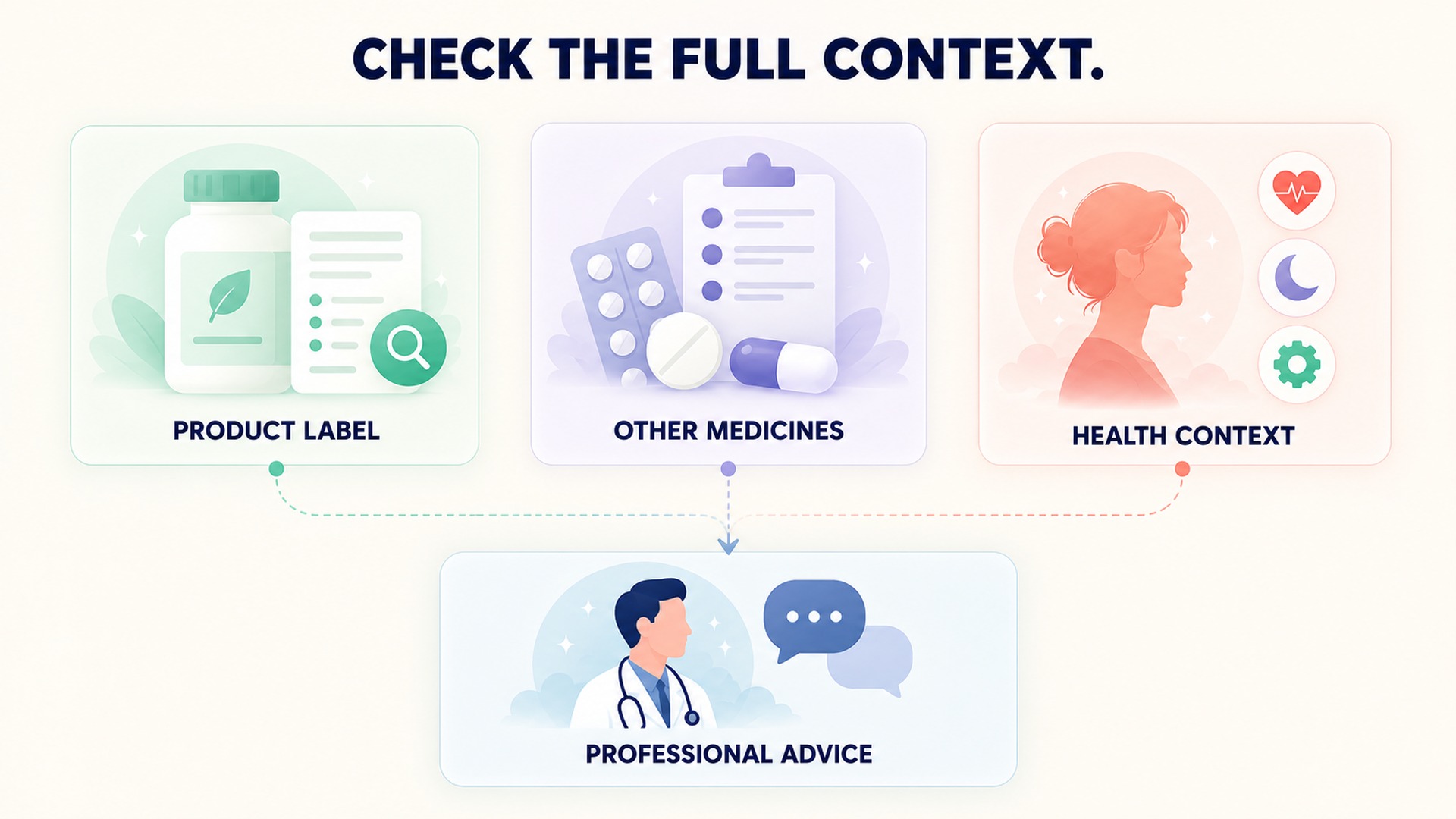
Melatonin timing and dose are different variables, and neither should be selected from a wearable score. The right discussion depends on the sleep problem, the person’s internal timing, product contents, other medicines, and clinical context. Record what was actually taken and ask a qualified professional before changing use.
FAQ
Does a higher melatonin dose work better?
Not necessarily. Dose does not establish appropriate timing or prove benefit. Discuss the amount and reason for use with a healthcare professional.
Should I take melatonin at the same clock time every night?
Timing depends on the reason for use and the person’s sleep-wake rhythm. Follow a clinician’s instructions rather than assuming one clock time fits everyone.
Can a wearable tell me whether melatonin is working?
A wearable can show estimates across nights, but it cannot establish that melatonin caused a change. Record timing and dose separately and discuss persistent sleep problems with a clinician.
*This article is for informational purposes only and is not a substitute for professional medical advice, diagnosis or treatment.*
Sources:
National Center for Complementary and Integrative Health·National Heart, Lung, and Blood Institute·Journal of Clinical Sleep Medicine·Journal of Clinical Sleep Medicine·National Center for Complementary and Integrative Health·Sleep
Related articles

How a daytime sleepiness test differs from an energy score
A daytime sleepiness test measures sleep propensity under controlled conditions, while an energy score summarizes device estimates. Learn why one cannot replace the other.

Acting out dreams needs a different review from restless sleep
Dream enactment and restless sleep are different observations. Learn what details to record, why movement counts cannot diagnose a sleep disorder, and when behavior merits clinical review.

Adding nighttime reflux symptoms to a sleep review
Nighttime reflux symptoms can add useful context to a sleep review, but a wearable cannot diagnose reflux. Learn what to record and when to ask a clinician about recurring symptoms.

Remembering a dream does not measure how much REM sleep occurred
Dream recall is not a measure of REM sleep duration. Learn how to keep a dream journal and a device estimate separate.

Recording sleep paralysis without assigning it a sleep stage
Sleep paralysis happens around falling asleep or waking, and a wearable stage graph cannot diagnose it. Learn what details to record and when to discuss recurring episodes with a clinician.

Keeping prescribed breathing treatment separate from a sleep score
Sleep score and prescribed breathing treatment answer different questions. Learn how to keep the records separate and what to bring to a clinical follow-up.

Why a laboratory sleep study can differ from a usual night at home
A laboratory sleep study records sleep under conditions that can differ from home. Learn how to discuss an unusual test night without dismissing the clinical findings.

How to Read a Sleep Graph When Deep Sleep Appears in Short Bursts
Short deep-sleep blocks on a wearable graph can reflect stage estimates, chart resolution, or missing sensor intervals. Read the time scale and coverage notes alongside the total sleep window before interpreting the pattern.

Why Sleep Stage Percentages Need a Confidence Indicator
A sleep-stage percentage can look precise even when the tracker has limited evidence for part of the night. A confidence indicator should explain whether it refers to signal coverage, classifier uncertainty, or validation against a reference method.

How to Tell Whether Zero Deep Sleep Is a Data Gap or a Classification Result
Zero deep sleep in a wearable graph can reflect an incomplete record or a classification that assigned no eligible interval to that stage. Check the full timeline, coverage notes, and the app’s stage method before interpreting the value.