Can your wearable tell you're getting sick before you feel it?
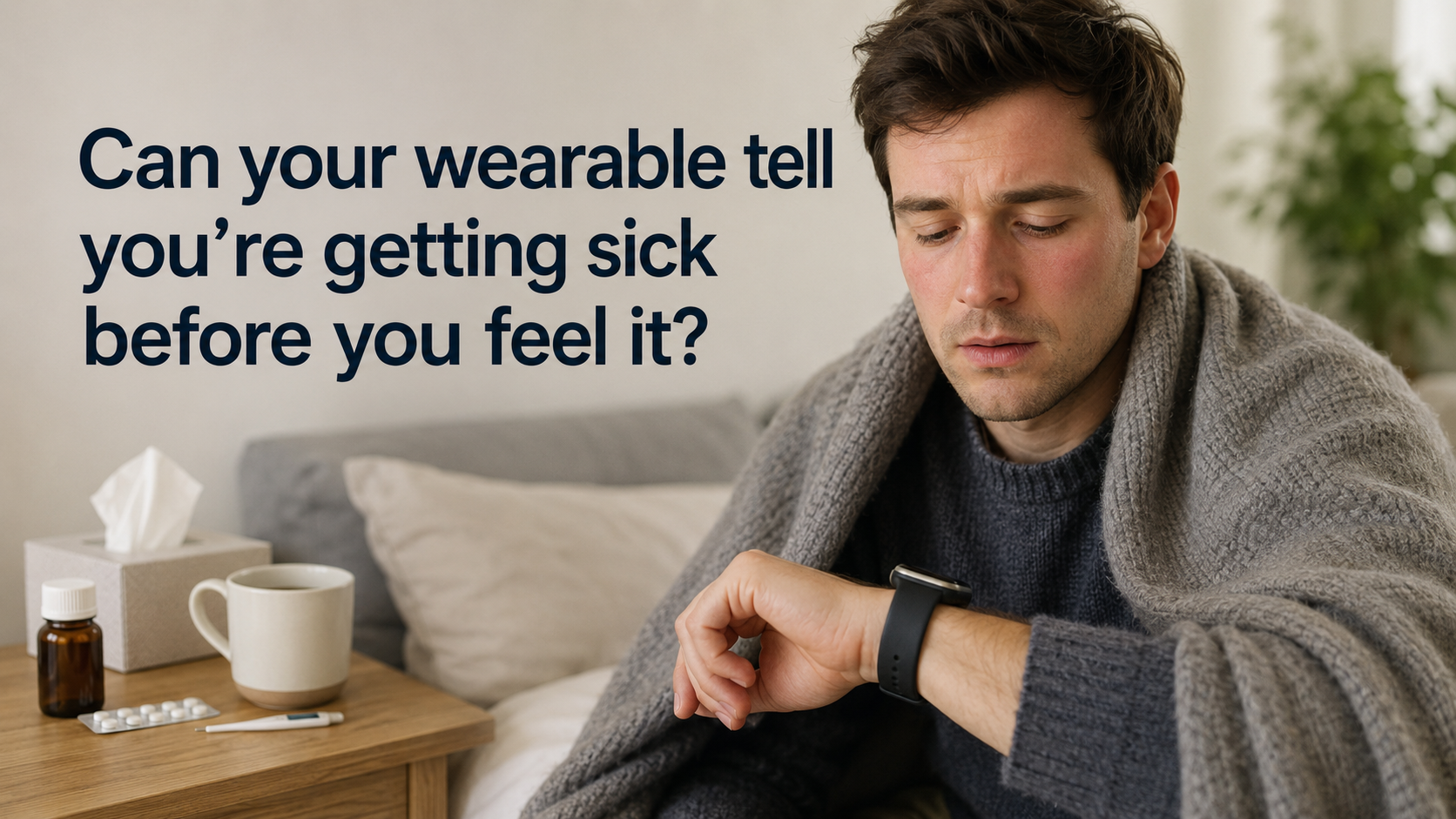
Two winters ago I woke up on a Tuesday, checked my overnight data out of habit, and saw something I had not seen in months. Resting heart rate up six beats. HRV down about a third. Breathing rate a full breath per minute higher than my usual range. I felt completely normal. I had slept seven and a half hours, I had not trained hard, and I had a full day of meetings ahead, so I ignored it and went to work.
By Thursday afternoon my throat felt like sandpaper and I was cancelling a talk I had spent three weeks preparing.
That week changed how I read my own data. So let me answer the question people keep asking me directly: can a wearable detect illness before you notice it? Sometimes, yes. Not because any single number is magic, but because a fever response starts in your circulatory and respiratory system long before it reaches your conscious awareness. One retrospective analysis of smartwatch data found that most infected participants showed measurable physiological changes, and a majority of cases could have been flagged at or before symptom onset, a few of them more than a week early.
That is the honest version: not a diagnosis, but a head start if you know how to read it.
What an immune response looks like to a sensor
Your body does not wait for you to feel bad before it starts fighting. Inflammatory signalling ramps up, your sympathetic nervous system takes over more of the workload, your core temperature drifts upward, and your breathing gets slightly faster and shallower to support a higher metabolic load.
None of that registers as "I feel sick." It registers as a bad night, a heavy morning, a warm bedroom.
A sensor on your wrist or finger has no opinion about how you feel. It just records that your heart rate stayed elevated through the night when it should have dropped into its usual trough. If it has enough clean nights to compare against, that deviation stands out.
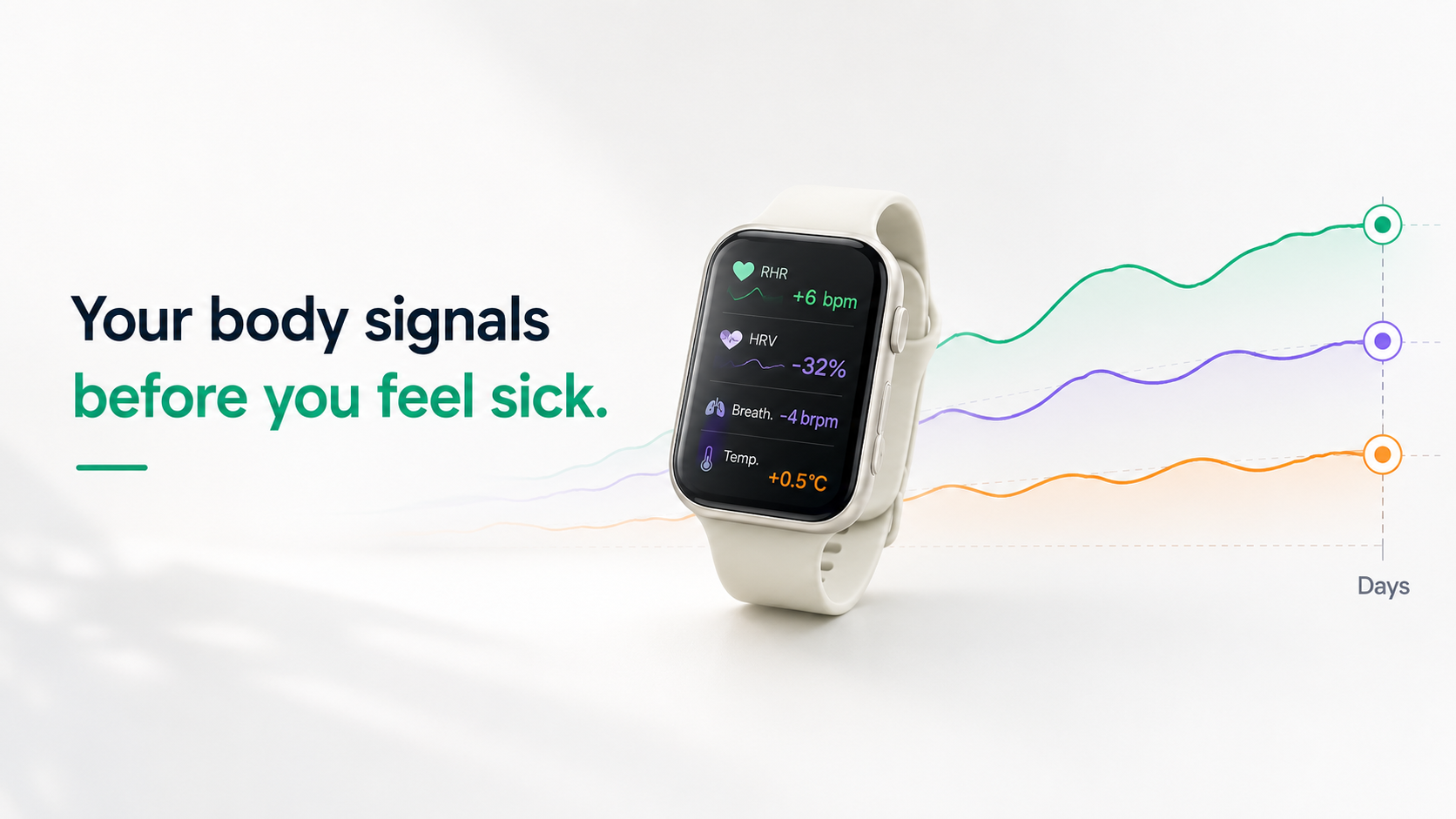
Detecting strain is not the same as diagnosing anything
This distinction matters more than anything else in this article, and it is the part most people skip.
Your device can detect physiological strain. It cannot tell you the cause. A flagged night could be an early viral infection, a poor recovery from a hard session, a reaction to a vaccine, dehydration, altitude, or one of the worst nights of sleep you have had in a year. The signal is real. The interpretation is yours, and it is usually ambiguous on day one.
Research reflects that limitation. When investigators tried to separate infected from non-infected participants, wearable data alone performed modestly, but combining sensor data with self-reported symptoms improved discrimination considerably. Your subjective experience is not obsolete. It is half the equation.
The signals worth watching, and why no single one is enough
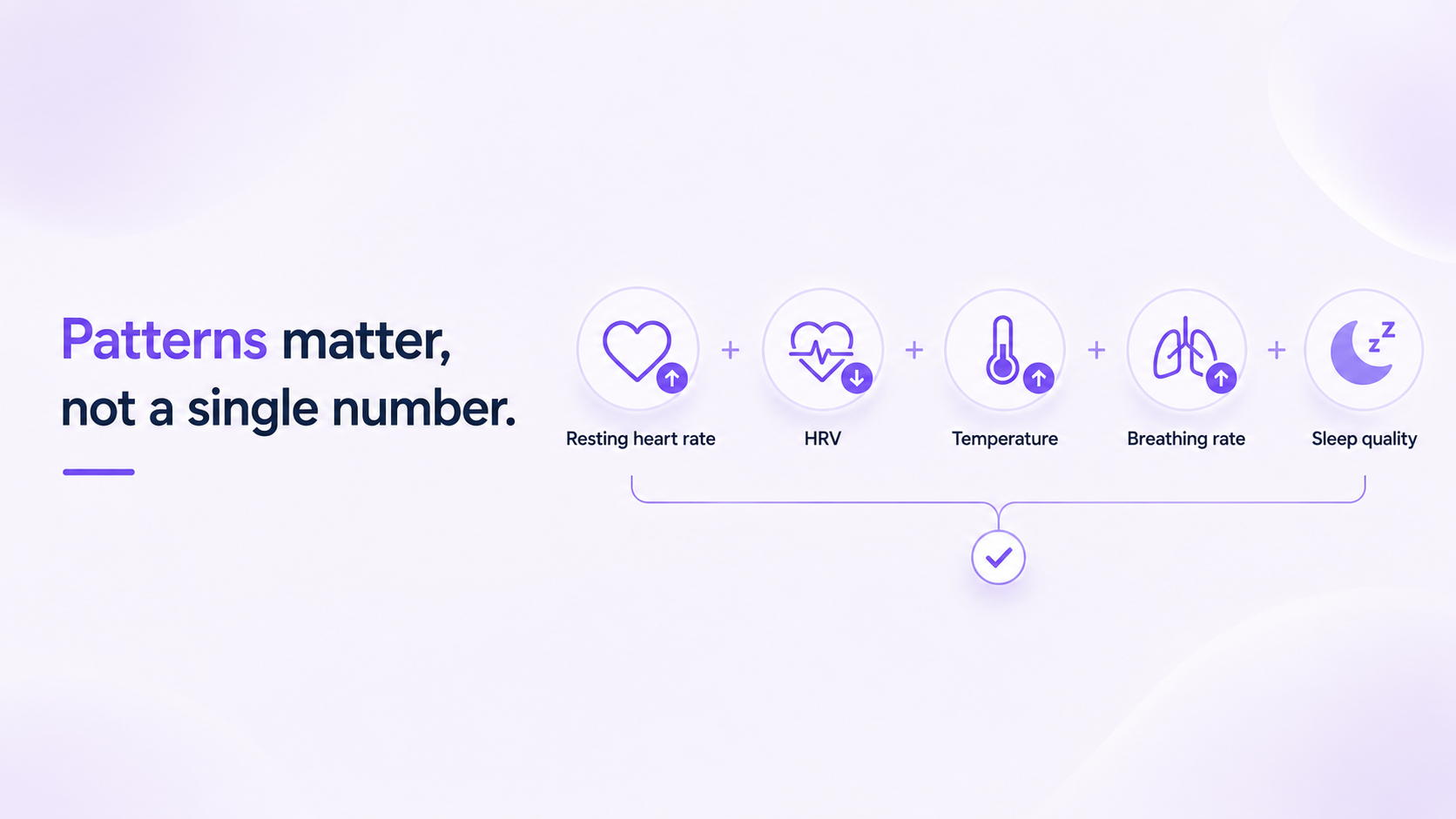
I stopped looking for one number a long time ago. I look for two or three moving together in the wrong direction.
Resting heart rate
The most reliable early marker I have found, and the easiest to read. A rise of five to ten percent above your normal overnight low deserves attention, particularly if it stays there for a second night. In a prospective study using a real-time alerting system, warnings for pre-symptomatic and asymptomatic infection appeared at a median of three days before symptom onset. Three days is enough time to change your week.
HRV
HRV when sick almost always drops, because parasympathetic recovery gets crowded out by the immune response. A systematic review of wearable HRV data during infection found consistent reductions in the standard variability measures compared with healthy controls, and in some cases the decline preceded a positive test. The catch with HRV is that it is noisy and deeply individual. A single low reading tells you almost nothing. A three-night trend tells you a lot.
Temperature deviation
This is the one I trust the most and understand the least. Wrist and finger sensors read peripheral skin temperature, not core temperature, so the useful figure is deviation from your own baseline rather than an absolute number. A study of more than 63,000 participants wearing a temperature-sensing ring identified infection onset an average of 2.75 days before people sought testing. When my temperature curve lifts half a degree above baseline while my HRV falls, I treat it as a real warning rather than noise.
Respiratory rate
Underrated. Breathing rate is stable in healthy adults, which is exactly what makes a shift meaningful. My own range sits within about half a breath per minute across a normal month. When it moves a full breath, something is happening.
Sleep and daytime energy
Fragmented sleep, more time awake, a lower energy or readiness score in the morning. On its own this means very little. Alongside two of the markers above, it fills in the picture.
The false alarms, including the ones that embarrassed me
If you take these signals seriously, you will be wrong regularly. I have been.
Last July my building's air conditioning failed during a heatwave and I slept in a room at around thirty degrees for three nights. Temperature deviation flagged. Heart rate elevated. HRV in the basement. I spent two days convinced I was incubating something and cancelled a training block for nothing. The room was the problem.
Then there was the mountain race I ran without properly tapering. My HRV took nine days to return to baseline. That was not illness, that was a bill arriving for a decision I had made three weeks earlier.
Long-haul travel does the same thing. Two red-eye flights and a five-hour time shift will wreck every metric I own for the better part of a week, and none of it means infection. A flu shot did it too, which makes sense, since the whole point of a vaccine is to provoke an immune response.
Alcohol is the most predictable confounder of all. A study of nearly 21,000 adults using wearable sensors found that after drinking, nocturnal heart rate was higher and HRV lower, in a dose-related pattern, with reduced next-day activity. If you have one glass of wine at dinner and your recovery score collapses, that is not a mystery to solve.
Before you assume infection, account for heat, travel, hard training, poor sleep, and anything else that loaded your nervous system in the previous forty-eight hours.
What I actually do when the numbers look wrong
I have a rule now, and it takes almost no effort.
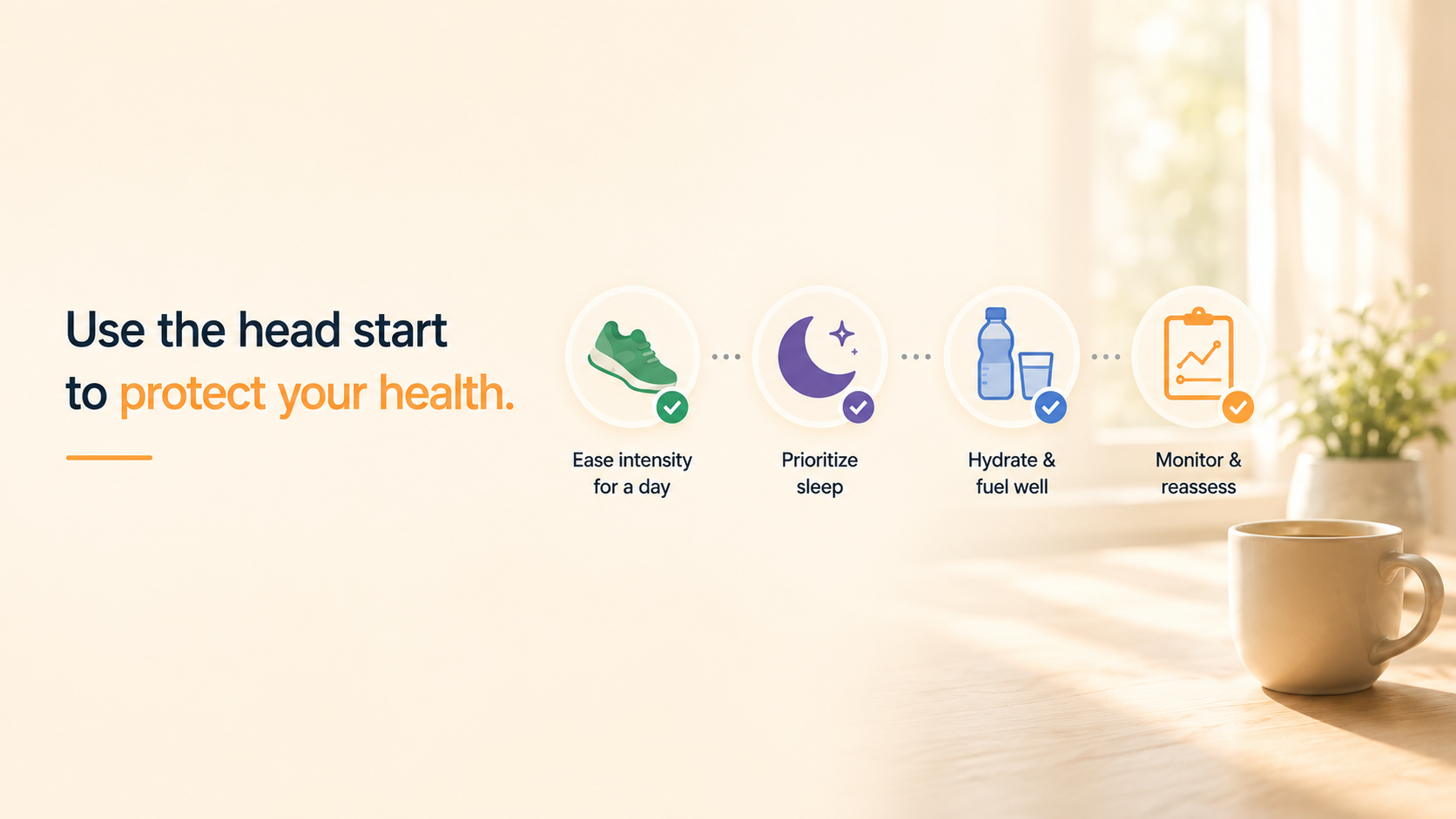
Drop the intensity for one day. Not the whole week. I keep walking, easy cycling, mobility work, and I move the interval session or the heavy lift to later in the week. If it turns out to be nothing, I have lost a single hard session. If it turns out to be something, I have avoided training through the first day of a viral infection, which is how a three-day cold becomes a two-week cold.
Protect sleep aggressively. This is the part that actually seems to matter. In a study where healthy adults were exposed to rhinovirus under controlled conditions, those sleeping six hours or less were substantially more likely to develop a cold than those sleeping more than seven. Sleep is not a soft recommendation on a flagged day.
Hydrate more than usual, especially in heat, and eat properly instead of skipping meals because you feel off.
Then wait and compare. Two or three more nights against your personal baseline, not against a population average and not against your best week of the year. If the numbers walk back toward normal, it was strain. If they hold or worsen and symptoms appear, you now have useful information for an actual clinician, including the date your physiology first changed.
And when symptoms do arrive, get tested properly if it matters. No device on your wrist can distinguish a viral infection from a bacterial one, and none of them can tell you when something needs medical attention. Wearable sickness detection is a scheduling tool and an awareness tool. It is not a doctor, and treating it like one is the fastest way to make a bad decision with good data.
The honest summary
My wearable has warned me early four or five times in three years. It has also cried wolf considerably more often than that. The value was never in the alerts themselves. It was in learning what my own numbers do when nothing is wrong, so that the mornings when something is wrong actually stand out.
Build the baseline first, read the combinations rather than the single metric, and use the head start on something useful, like sleeping nine hours and moving the meeting.
FAQ
How many days ahead can a wearable warn me that I'm getting sick?
Studies typically report somewhere between one and three days before symptoms, with occasional cases detected earlier. That range depends on how consistently you wear the device, how stable your baseline is, and which signals it tracks. Temperature and respiratory rate tend to shift early, and resting heart rate is usually the most visible change.
Which metric matters most for spotting early signs of illness on a wearable?
Resting heart rate is the most practical starting point because it is stable, easy to interpret, and available on nearly every device. That said, no single metric is reliable alone. A rise in resting heart rate together with a drop in HRV and a temperature deviation above your baseline is far more meaningful than any one of those on its own.
Should I skip training if my recovery score is low?
Not automatically. Look at the context first. If you raced, travelled, slept badly, or spent the night in a hot room, low readiness is expected and easy sessions are usually fine. If nothing explains it and two or more markers moved together, reduce intensity for a day and reassess. A postponed hard session costs almost nothing compared with training into an infection.
*This article is for informational purposes only and is not a substitute for professional medical advice, diagnosis or treatment.*
Sources:
Nature Biomedical Engineering·Nature Medicine·Nature Medicine·JMIR·Scientific Reports·PLOS Digital Health
Related articles
What a change in skin temperature on your wearable might actually mean
Your wearable's skin temperature isn't a fever reading. Learn what moves it at night, why deviation beats the number, and when to act.
What Heart Rate Recovery After Exercise Can Tell You About Fitness
Why Hot Weather Can Raise Heart Rate and Lower Recovery
Hot weather can make your heart rate run higher, your HRV look worse, and your recovery score drop even when you did not train harder. Here’s why heat changes the body’s workload and how to protect your energy.
Best Apps to Track Poor Recovery and Fatigue in 2026
Your Bedroom May Be Too Warm for Good Recovery
For two summers, I lived in a bedroom that never quite cooled down after dark, and a heart rate tracker I was wearing for something else entirely showed me exactly what that was costing me overnight. It turns out a warm room doesn't just make sleep less pleasant. It measurably raises heart rate, lowers heart rate variability, and cuts into the recovery your body is supposed to get while you're asleep. Here's what the research says about why, who's most affected, and the small changes that actually help.

Why jet lag hits harder after some flights and how to recover faster
Some time zone changes barely touch you, and others wreck you completely, even when the shift on paper looks about the same. The difference usually comes down to direction: eastward travel fights your body's natural clock in a way westward travel doesn't, which is also why "I slept a full night" doesn't always mean you're actually recovered. Here's what the research says about why that happens, and a simple first-48-hours plan built around light, timing, and realistic expectations rather than gimmicks.
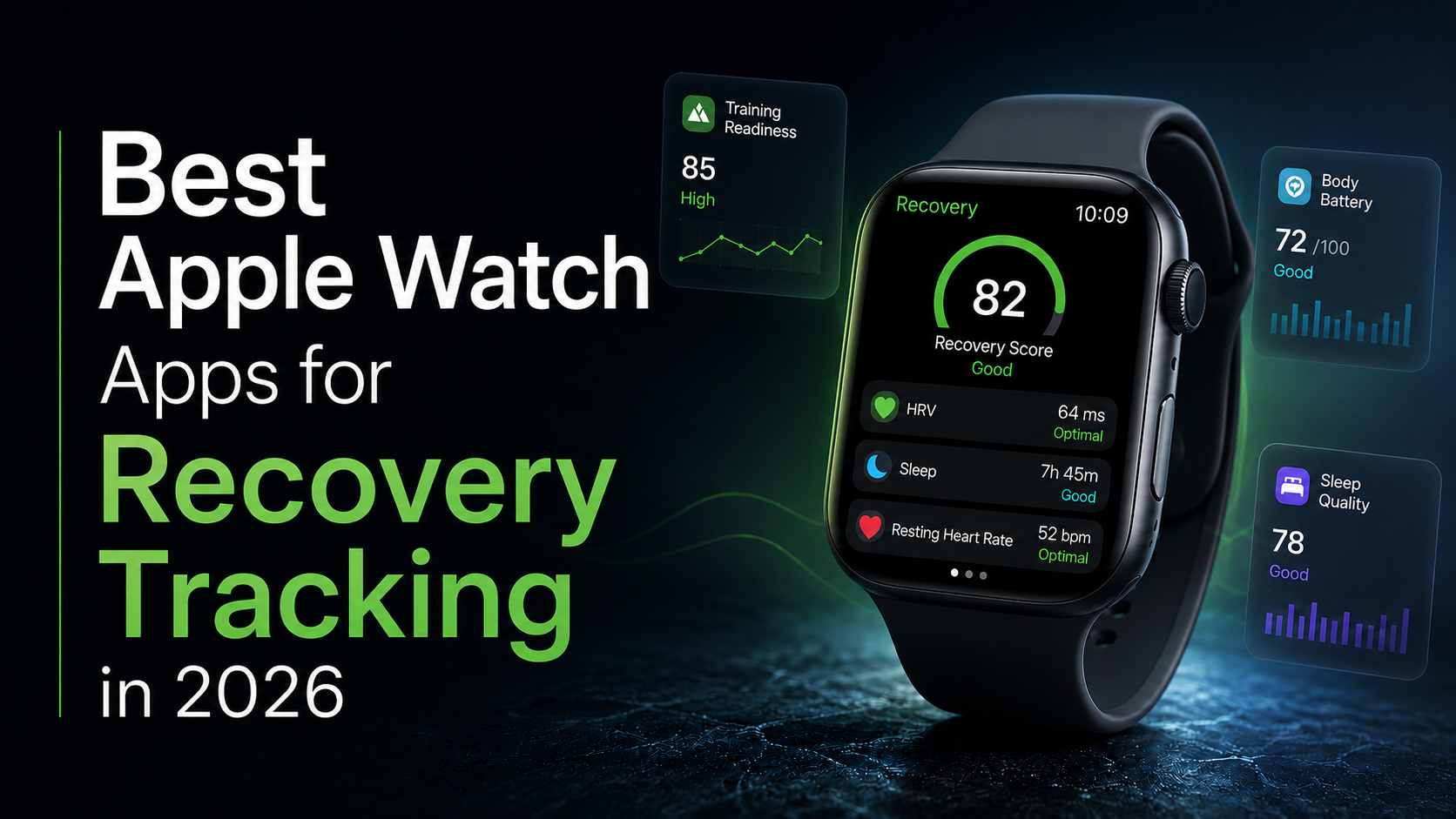
Best Apple Watch Apps for Recovery Tracking in 2026
Your Apple Watch already tracks sleep, HRV, heart rate, and activity, but recovery can still feel confusing without clear interpretation. This guide compares the best Apple Watch recovery apps for 2026, from simple daily energy scores to deeper training-readiness tools, helping you choose the right app for your goals.
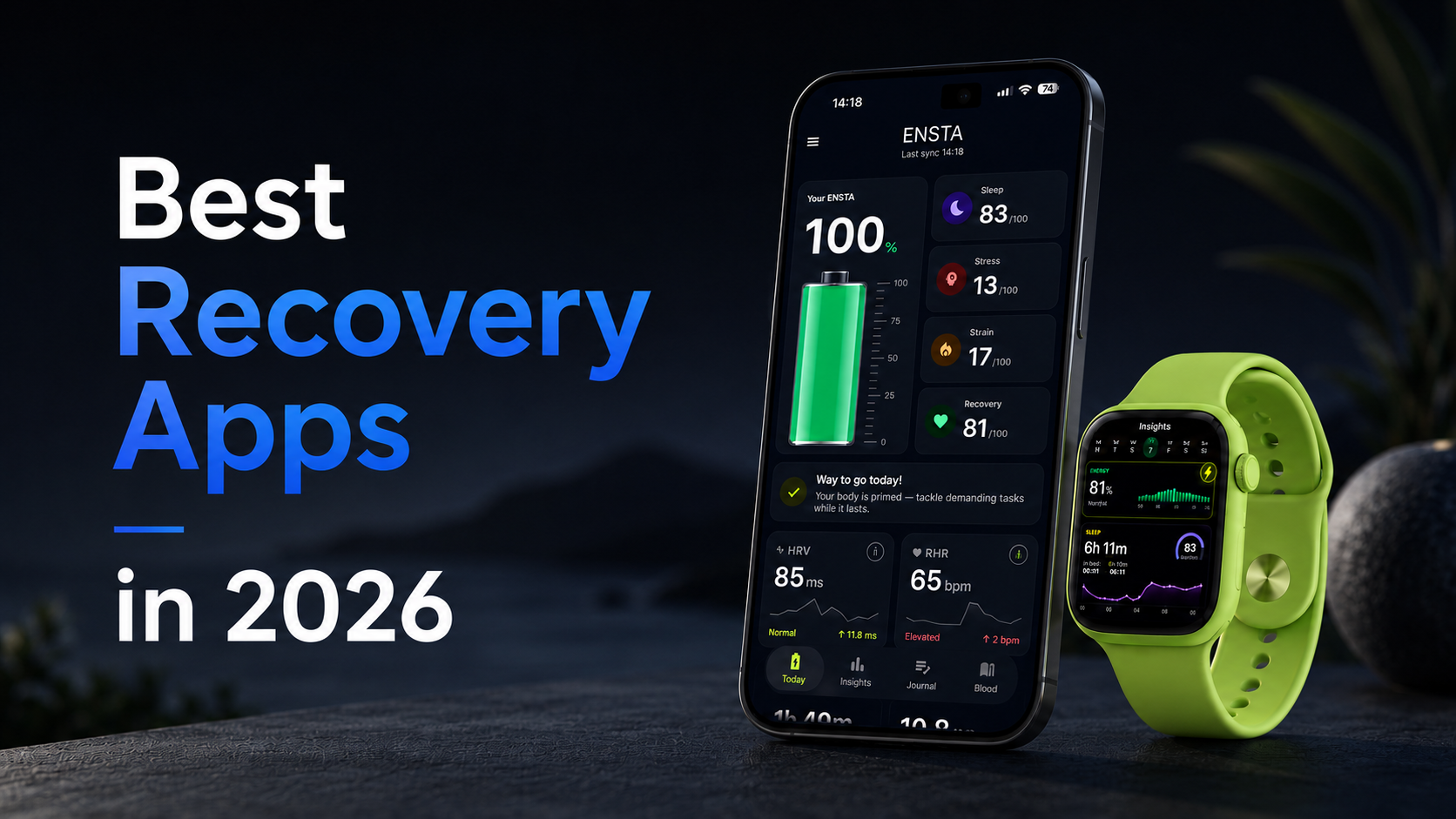
Best Recovery Apps in 2026
Compare the best recovery apps in 2026, including Ensta, WHOOP, Oura, Athlytic, Elite HRV, and Muscle Recovery Tracker. Learn which recovery tracker is best for your body, sleep, HRV, stress, strain, training load, and daily energy score — whether you want a simple free recovery app, an Apple Watch recovery app, a sleep-focused readiness score, or an athlete-grade recovery tracker.