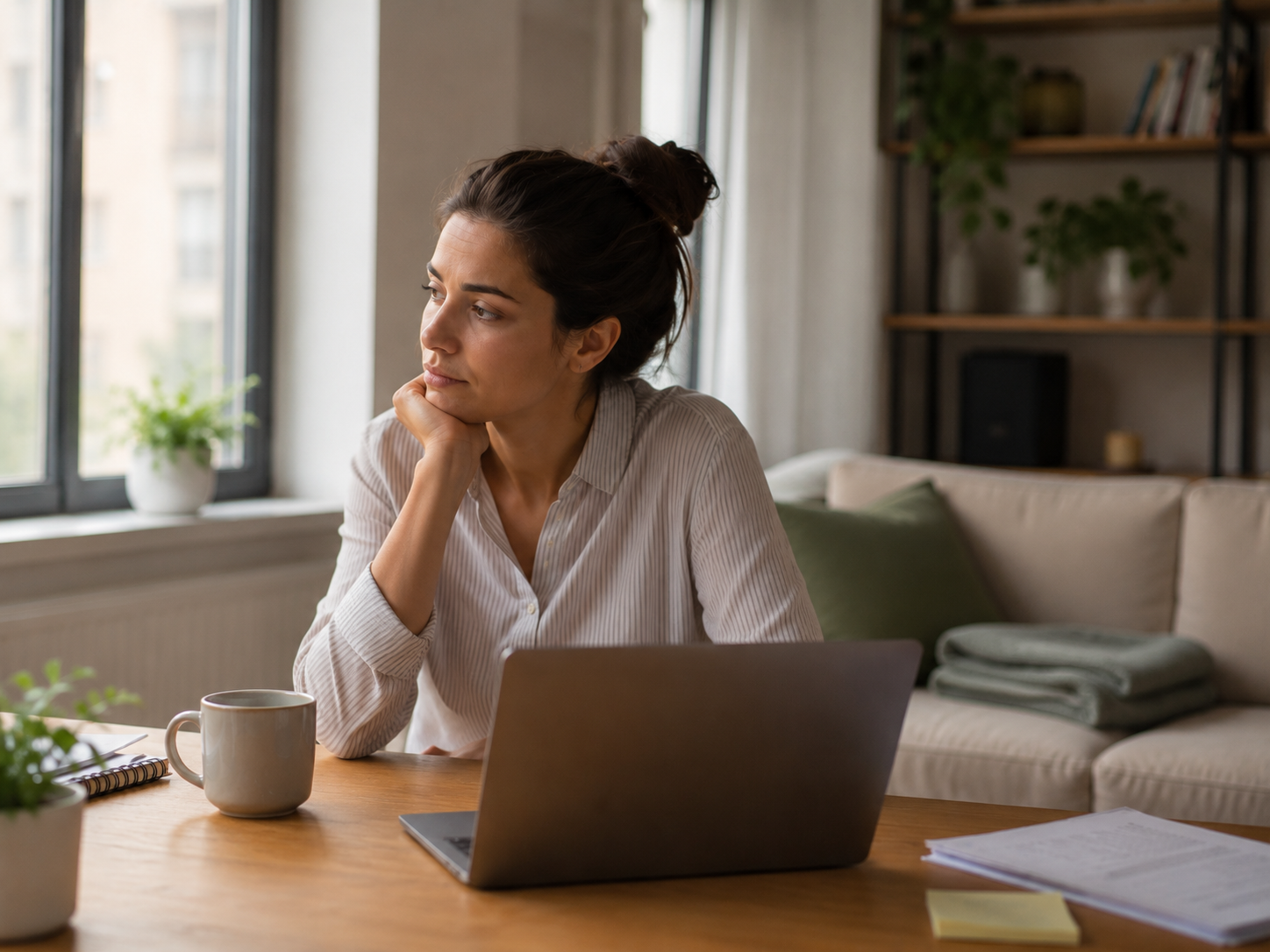
Does Working From Home Improve or Hurt Your Sleep?
By Mr.Apps · Jul 20, 2026
Category:Sleep
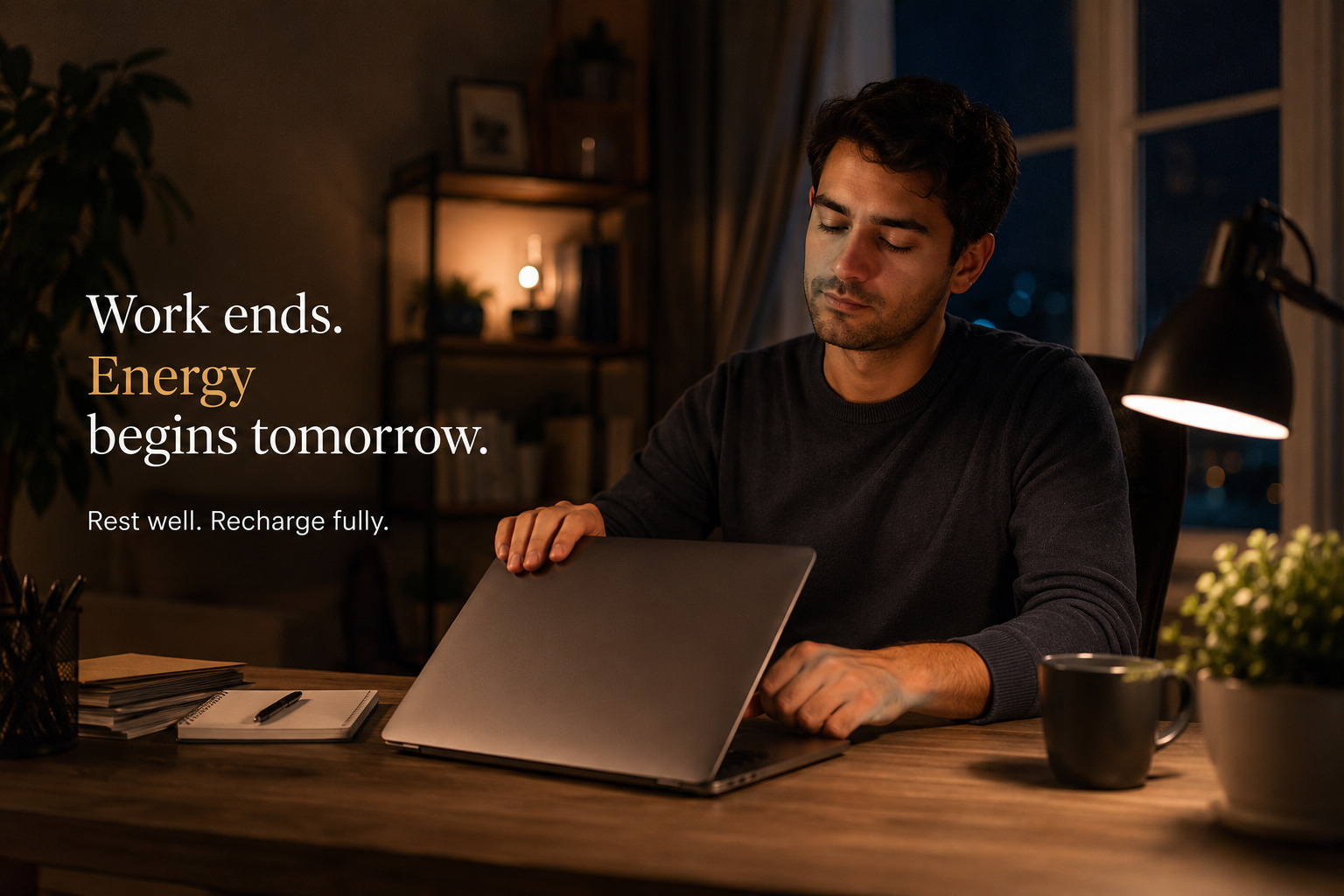
Working from home sounds like it should be amazing for sleep.
No commute. No rushing. No standing in the bathroom at 7:12 AM trying to look like a person who has their life together. In theory, remote work should give people more sleep, more flexibility, and a calmer morning.
And sometimes it does.
But working from home can also quietly make sleep worse. The same flexibility that lets you wake up later can also blur your workday, delay your bedtime, reduce daylight exposure, cut down movement, and make the laptop feel like a permanent extension of your nervous system.
That is the tricky part. Remote work is not automatically good or bad for sleep. It depends on the routine that grows around it.
A study in Frontiers in Psychology followed working adults using Fitbit data and found that working from home influenced sleep and activity patterns, including later timing and changes in physical activity across the week. The point is not that remote work ruins sleep. The point is that it changes the rhythm of the day, and sleep is extremely sensitive to rhythm. Frontiers in Psychology
So the better question is not “is working from home good for sleep?”
The better question is:
What kind of remote work routine are you building?
The good side: remote work can give sleep more room
Let’s start with the obvious benefit.
The commute disappears.
That can be huge. Even saving 30 to 60 minutes in the morning can give someone more sleep opportunity, especially if they used to wake up early just to get dressed, travel, park, or survive public transport with a coffee and a dead soul.
Remote work can also make mornings less violent. There is more time to wake up slowly, eat properly, get daylight, walk, or start work without that rushed cortisol feeling.
For some people, this improves sleep because the whole day feels less compressed. Less rushing means less evening revenge bedtime procrastination. Less commute stress means less need to “recover the day” at midnight with scrolling.
That is the healthy version of working from home.
A circadian sleep paper on working from home noted that staying home may give some people extra time for sleep, especially those who usually carry chronic sleep debt because of early schedules or commuting. PMC
Remote work can help sleep when it creates:
- a consistent wake-up time
- more morning daylight
- more control over meals and breaks
- less commuting stress
- more time for exercise
- a calmer transition into the day
That version can absolutely improve sleep and energy.
But there is another version.
The bad side: remote work can erase the edges of the day
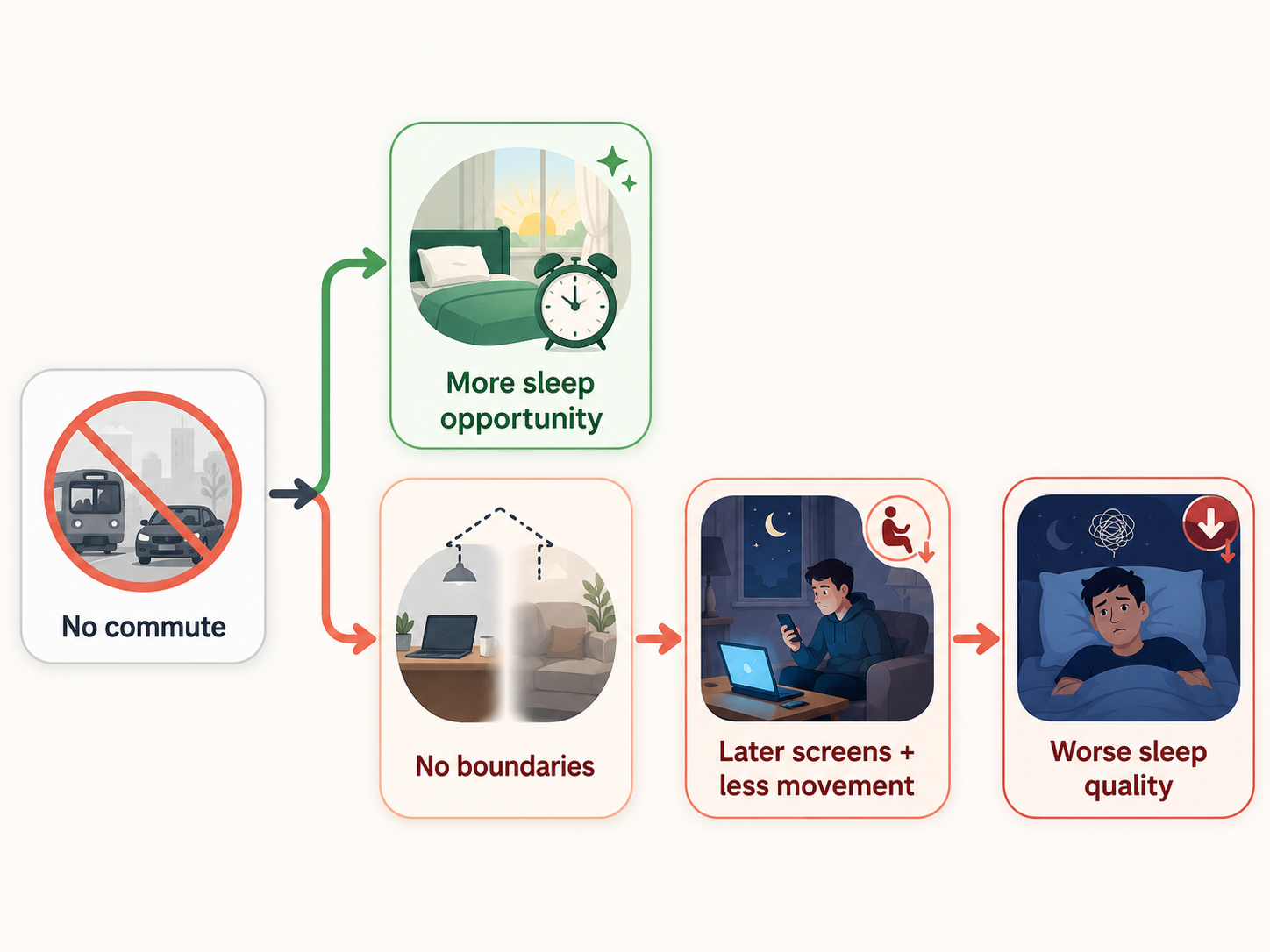
The problem with working from home is that the day can lose its borders.
The laptop opens before breakfast. Messages continue through dinner. A “quick check” becomes 40 minutes at 10:47 PM. The bed becomes the office. The sofa becomes the second office. The kitchen becomes the meeting room. Suddenly the whole home is work, and sleep has nowhere clean to land.
That is where remote work starts hurting sleep.
One reason is cognitive arousal. Work is not only a place. It is a state. Deadlines, messages, problem-solving, conflict, strategy, pressure, and unfinished tasks can keep the brain switched on long after the laptop closes.
When work happens at home, the brain may stop getting a clear signal that the workday is over.
A study in Scientific Reports looked at working from home, sleep, insomnia symptoms, and chronotype during the pandemic period, finding that the relationship between remote work and sleep can vary by individual timing preferences and routines. Nature Scientific Reports
In plain English: remote work does not affect everyone the same way. Morning people, evening people, parents, people living alone, people with small apartments, people with boundary-heavy jobs, and people with always-on jobs can all experience it differently.
That is why one person sleeps better from home while another sleeps worse in the same setup.
Why remote work can delay bedtime
Remote work can make bedtime drift later for very normal reasons.
1. No commute means no hard stop
A commute is annoying, but it also creates structure. It tells the body when work starts and ends. Without it, some people lose the natural boundary that helps the evening begin.
That can make the day stretch.
Work bleeds into dinner. Dinner bleeds into screens. Screens bleed into bed. Bed becomes less of a sleep cue and more of a recovery attempt from a day that never quite ended.
2. Morning flexibility can turn into social jet lag
Sleeping later is not always bad. But if wake time keeps moving around, the body clock gets less stable.
A remote worker may wake at 7:30 on Monday, 8:45 on Tuesday, 7:10 on Wednesday because of a meeting, then 9:20 on Friday. That variability can make sleep timing messier, even if total sleep looks fine.
The CDC explains that sleep health depends on both enough sleep and good sleep quality, and that sleep needs change by age. It also recommends speaking with a healthcare provider if sleep problems are regular or if signs of a sleep disorder appear. CDC
For remote work, the practical version is simple: flexibility is useful, but randomness is not.
3. Screens follow you into the night
Remote work is usually screen-heavy. More messages. More documents. More tabs. More video calls. More late “just one thing.”
Screen use before bed is not always the whole problem, but it can be part of it. A large JAMA Network Open study found that screen use before sleep was associated with shorter sleep duration and worse self-reported sleep quality in adults. JAMA Network Open
That does not mean every person needs to throw their phone into the sea after 9 PM. It means late screens can make sleep harder for some people, especially when the screen is also connected to work stress.
The issue is not only blue light. It is also content.
A spreadsheet at 11 PM is not a bedtime story.
Why working from home can make you tired even if you slept enough
Remote work sleep problems are not always about bedtime.
Sometimes people sleep enough hours and still feel flat because the day is missing the things that usually support energy.
Less daylight
Going to an office usually forces at least some outdoor exposure. Walking to transport, driving in daylight, getting lunch outside, leaving the building — small things, but they all send time signals to the body.
At home, it is very possible to spend the entire day under indoor lighting. That can weaken the rhythm between day and night.
Morning light helps anchor the body clock. Evening darkness helps the body wind down. Remote work can accidentally flatten both.
Less movement
Remote work can shrink movement dramatically.
No walk to the station. No stairs. No office corridors. No walking to lunch. No crossing the building for a meeting. Some people go from a decent incidental step count to a chair-bed-kitchen triangle.
That matters because movement helps alertness during the day and can support sleep pressure at night.
The CDC recommends adults get at least 150 minutes of moderate-intensity physical activity per week plus two days of muscle-strengthening activity. CDC
For remote work, the problem is not only “exercise or no exercise.” It is the disappearance of tiny movement doses across the day.
More blurred stress
At the office, stress at least has a location. At home, stress can spread into the rooms where recovery is supposed to happen.
That is why some remote workers feel oddly tired at night but still not sleepy. The body is under-stimulated physically and over-stimulated mentally. That combination is terrible for winding down.
The remote work sleep checklist
Working from home tends to help sleep when it creates structure.
It tends to hurt sleep when it removes structure.
Here is the practical checklist.
Keep one stable wake-up anchor
You do not need to wake up at the exact same second every day, but a stable wake-up window helps. It gives the body a daily anchor.
A good rule: keep wake-up time within about the same 60-minute range on most workdays.
Get daylight before the laptop swallows the day
Before the first meeting if possible, get outside or sit near bright natural light. Even 5 to 15 minutes can help signal that the day has started.
Do not make the first light of the day a Slack message.
Create a fake commute
This sounds silly until it works.
A fake commute can be a short walk before work and another walk after work. It tells the brain: the day has started, and later, the day has ended.
That boundary is one of the things remote work often steals.
Do not work from bed
The bed should stay associated with sleep and rest, not emails, calls, spreadsheets, or stress.
If space is limited, even a small separate work corner is better than turning the pillow into a productivity platform.
Move between work blocks
Stand up between calls. Walk while taking one meeting. Stretch after deep work. Go outside after lunch.
The goal is not to become a fitness influencer. The goal is to stop the workday becoming one long seated screen session.
Build a shutdown ritual
A shutdown ritual can be very simple:
- write tomorrow’s top task
- close the laptop
- clear the desk
- take a short walk
- change clothes
- stop checking work messages
The point is to create a signal that work is over.
Without that signal, the brain keeps waiting for the next notification.
Does remote work help night owls?
Sometimes.
Remote work can be helpful for people whose natural rhythm is later than a traditional office schedule. Not everyone is built for a 6:30 AM alarm and a fluorescent office by 8:30.
For evening types, remote work may reduce forced early waking and allow more sleep opportunity.
But there is a trap.
If remote work lets bedtime drift later and later, it can make the rhythm even more delayed. The person may feel better at first because the morning is less painful, then slowly lose structure until sleep becomes inconsistent.
So yes, remote work can help night owls. But it still needs anchors: light, wake time, meals, movement, and a realistic bedtime.
Freedom without anchors becomes chaos very quickly.
The best remote work routine for sleep
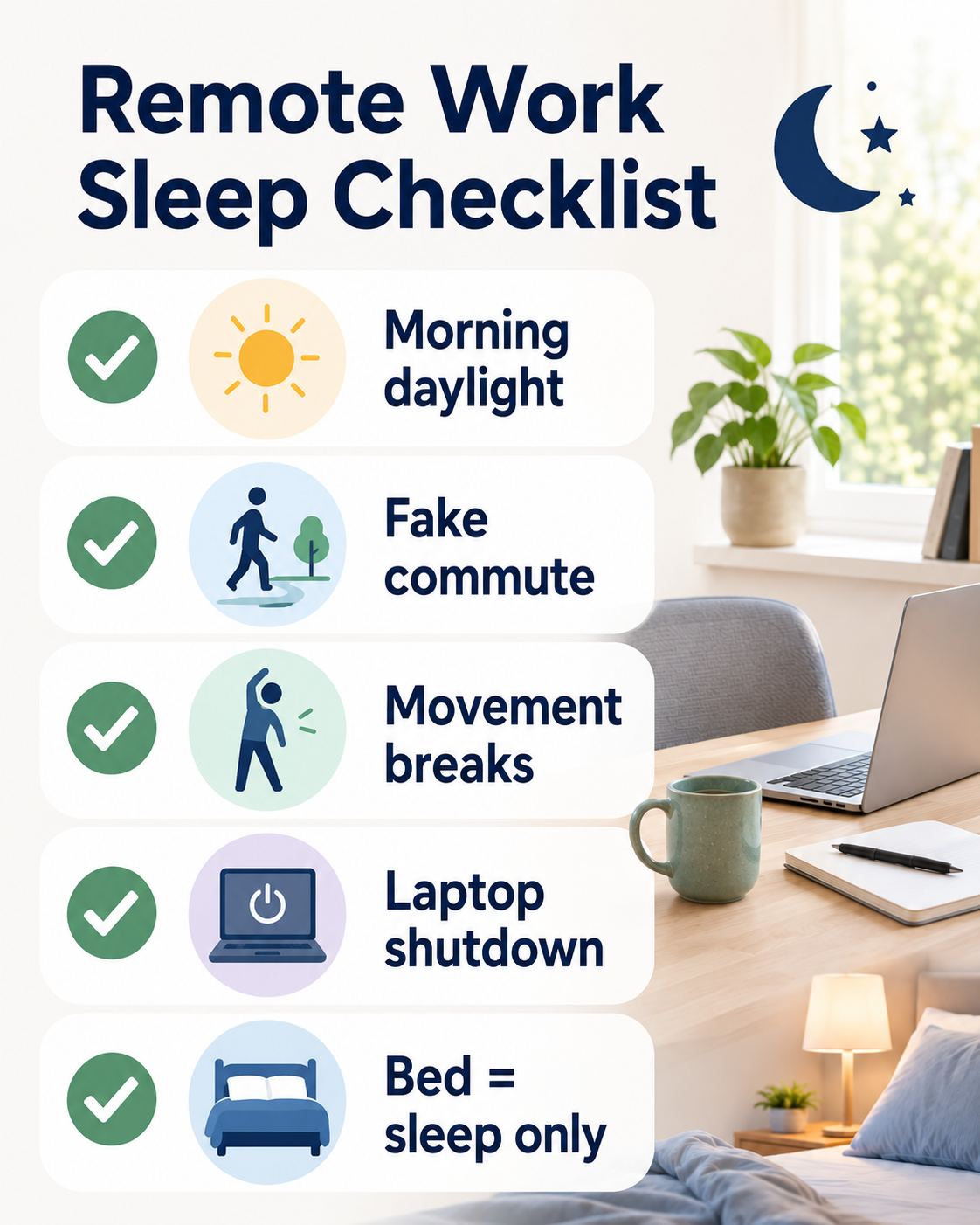
The best remote work sleep routine is not complicated. It just has edges.
Morning
Wake within a stable window.
Get daylight before deep work.
Move a little before sitting down.
Eat or hydrate before caffeine takes over the personality.
Workday
Use a defined workspace.
Take movement breaks.
Avoid eating every meal at the laptop.
Get outside at least once if possible.
Evening
Shut down work on purpose.
Avoid late work messages unless truly necessary.
Keep the bed work-free.
Dim lights and screens before sleep.
Go to bed because the day is ending, not because exhaustion finally wins.
Remote work is easiest on sleep when the body can still tell the difference between work time, recovery time, and sleep time.
When working from home may be hurting your sleep
Look for patterns, not one bad night.
Remote work may be hurting your sleep if:
- bedtime keeps drifting later
- wake time changes wildly across the week
- work messages continue into bed
- the laptop is used in the bedroom every day
- you get almost no daylight
- your step count drops sharply
- you feel tired but wired at night
- you sleep longer but wake up less refreshed
- weekends become the only time you feel caught up
That last one matters. If the whole week is a sleep debt machine and the weekend is just damage control, the routine needs attention.
When to get help
Remote work habits can improve sleep, but not every sleep problem is a routine problem.
Speak with a healthcare professional if sleep problems are persistent, worsening, or linked with symptoms like loud snoring, gasping during sleep, severe daytime sleepiness, morning headaches, restless legs, panic at night, depression, or a major drop in daily functioning.
The NHS sleep guidance recommends looking at habits and sleep hygiene, but also getting support when sleep problems are ongoing or hard to manage. NHS
An app or routine can help show patterns. It should not become a substitute for proper care when symptoms are serious.
The honest take
Working from home can improve sleep.
It can also hurt it.
It improves sleep when it removes the commute, gives people more time, supports calmer mornings, and allows routines that fit real life. It hurts sleep when work becomes borderless, movement disappears, daylight disappears, screens stretch late, and the bed becomes a second office.
So the answer is not remote work good or remote work bad.
The answer is rhythm.
A good remote work routine protects wake time, daylight, movement, shutdown, and bed boundaries. A bad one lets the whole day dissolve into screens and then asks the body to sleep on command.
Remote work gives you more control. That control can become better sleep, or it can become chaos with better Wi-Fi.
The routine decides.
FAQ
Does working from home improve sleep?
It can. Working from home may improve sleep by removing commute time, reducing morning stress, and giving people more control over their schedule. But it depends on whether the routine stays consistent.
Can remote work make sleep worse?
Yes. Remote work can make sleep worse when work stretches into the evening, screen time increases, movement drops, daylight exposure decreases, or the bedroom becomes a workspace.
Why am I more tired working from home?
You may be moving less, getting less daylight, taking fewer real breaks, or staying mentally switched on for longer. Remote work can create physical under-stimulation and mental over-stimulation at the same time.
Should I work from bed?
No, not regularly. Working from bed can weaken the association between bed and sleep. It is better to keep a separate workspace, even if it is small.
What is the best remote work routine for sleep?
Keep a stable wake-up time, get daylight early, move throughout the day, create a fake commute, shut down work intentionally, and keep work out of bed.
*This article is for informational purposes only and is not a substitute for professional medical advice, diagnosis or treatment.*
Sources:
Frontiers in Psychology·Scientific Reports·PMC — Tips for circadian sleep health while working from home·PMC — The changing dynamics of work from home and its association with sleep disturbance·CDC — About Sleep·CDC — Adult Activity: An Overview·NHS — Sleep and tiredness·NHS — Sleep problems·JAMA Network Open — Electronic Screen Use and Sleep Duration and Timing in Adults
Related articles

Exercise timing and sleep quality
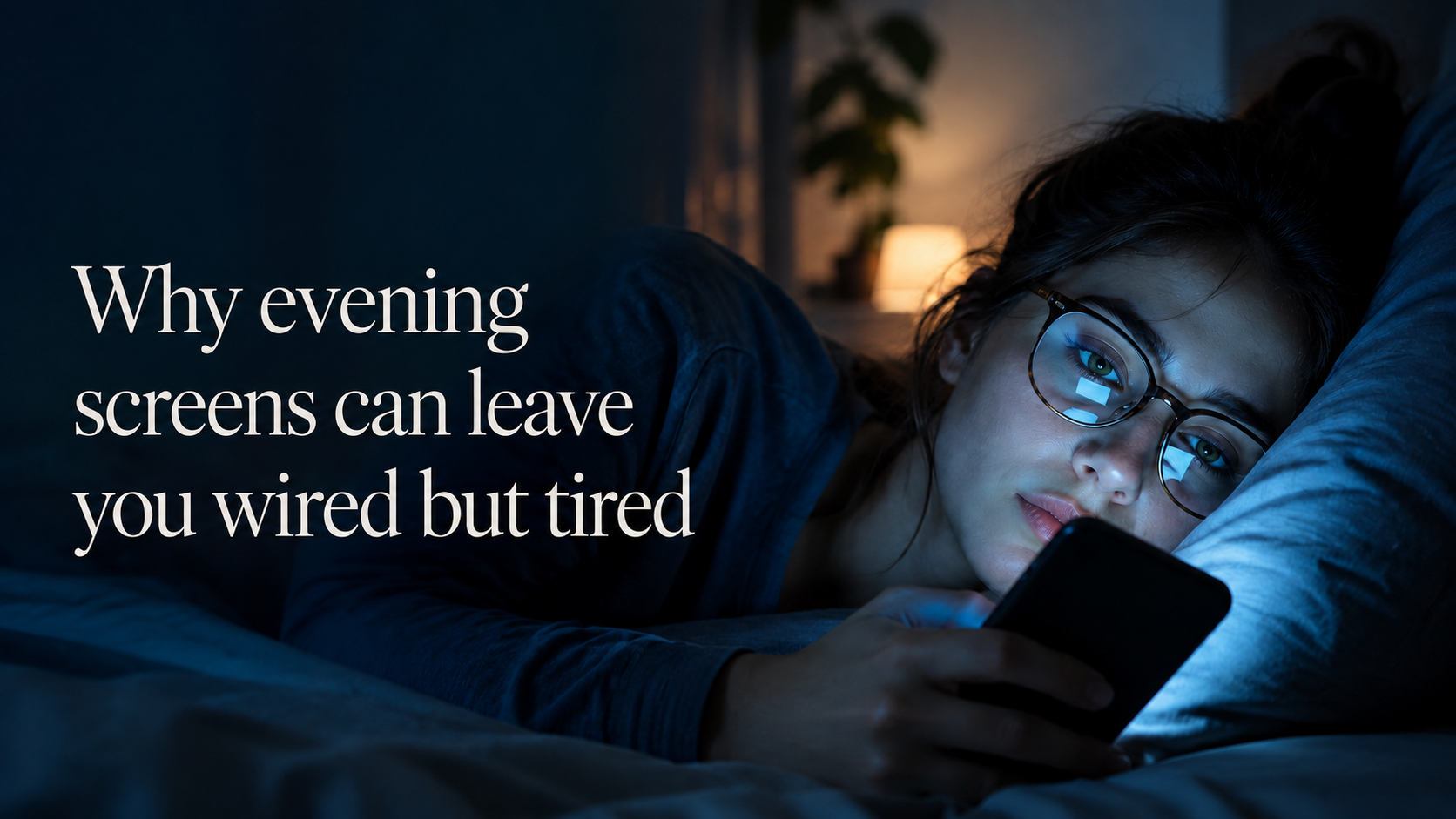
Why Evening Screens Can Leave You Wired but Tired
We're told blue light is why screens ruin our sleep, so we dim the display and turn on the warm filter. But if you've ever put the phone down exhausted and then lay there wide awake, the light was never the real problem. Here's what is.
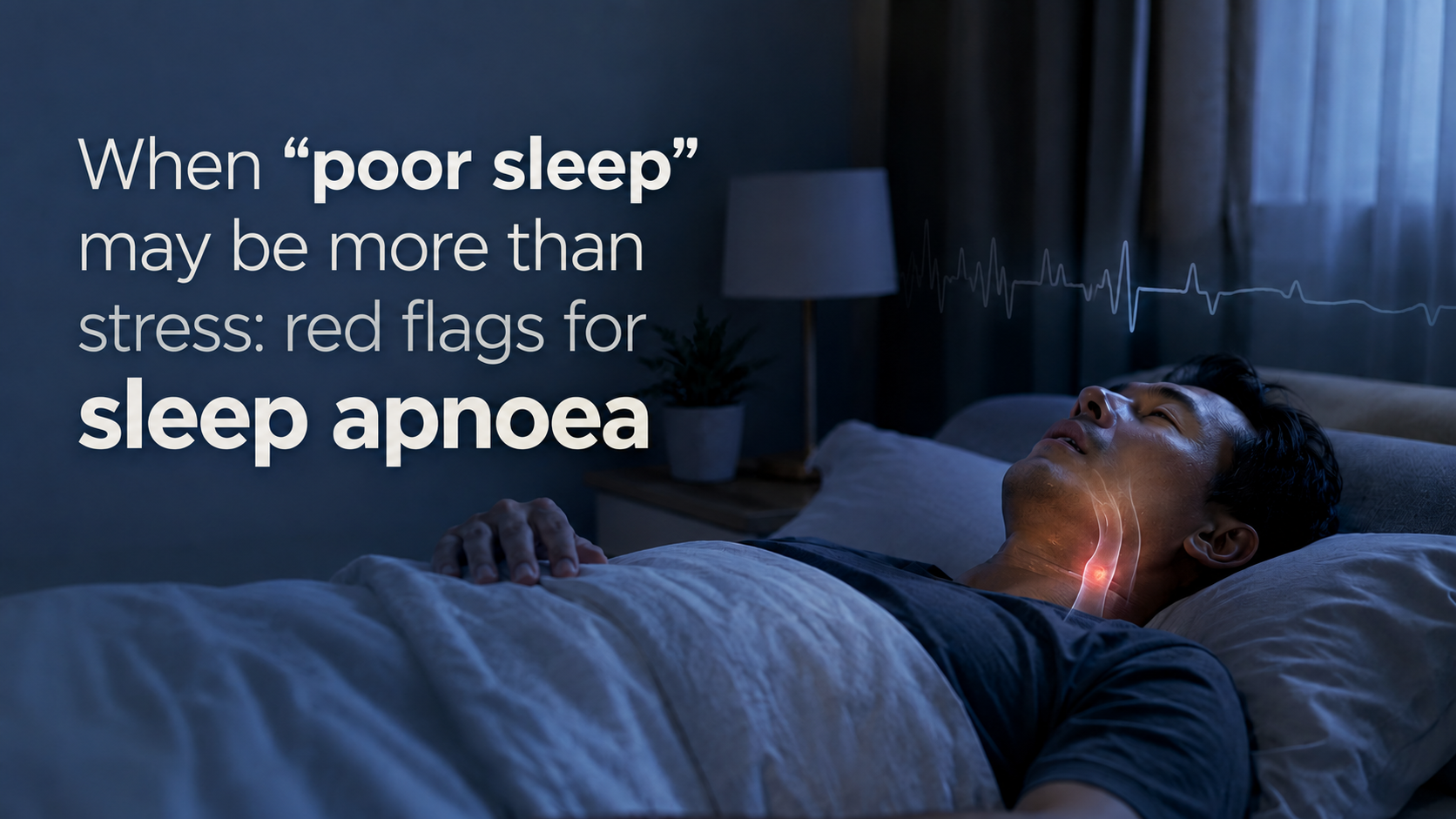
When "poor sleep" may be more than stress: red flags for sleep apnoea
Loud snoring gets dismissed as a quirk, morning headaches get blamed on stress, and daytime fog gets chalked up to a heavy calendar. Taken together, though, these signs can point to something a GP should know about: obstructive sleep apnoea. Here's what the real red flags look like, what home screening tools can and can't tell you, and when it's time to ask for a proper referral.
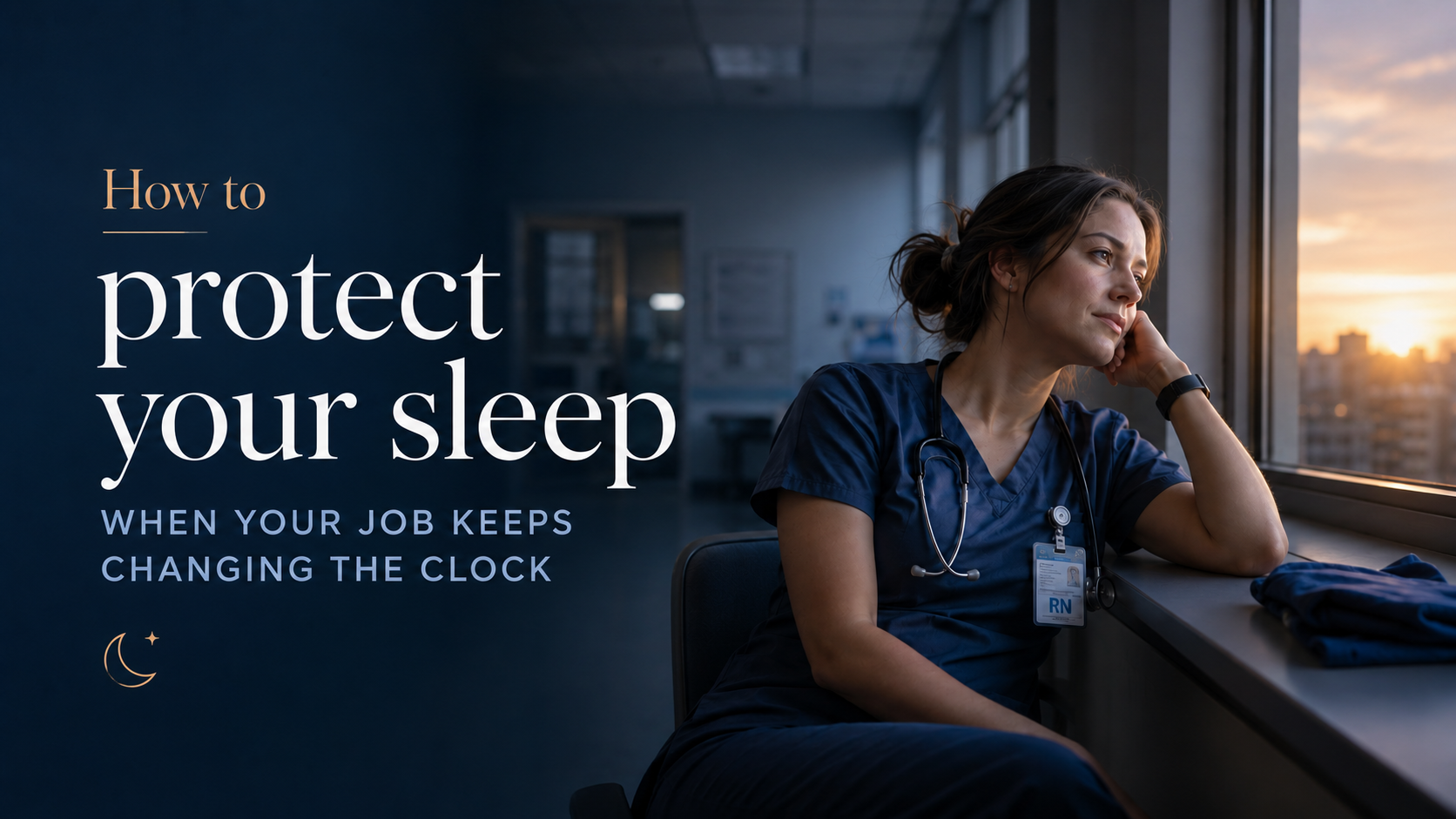
How to protect your sleep when your job keeps changing the clock
Shift work doesn't fail because people lack discipline. It fails because the body was never built to run a factory schedule. Here's what actually helps between rotating shifts, why "just going to bed earlier" doesn't work, and when persistent fatigue stops being normal and starts being something worth getting checked out.
When naps help your energy and when they quietly make sleep worse
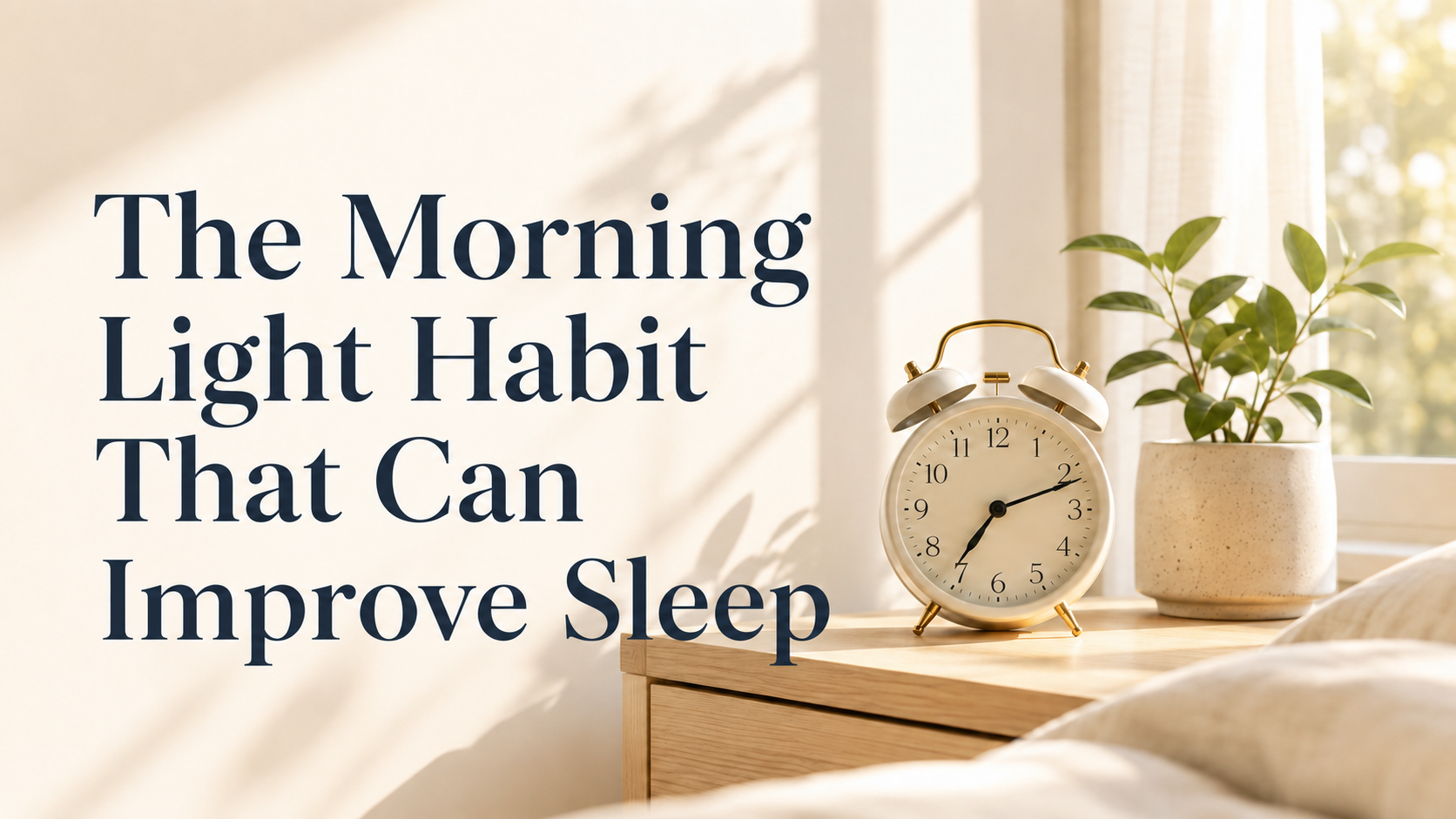
The morning light habit that can improve sleep without changing your bedtime
Most sleep advice focuses on the evening, dim the lights, put the phone away, but that's only half the equation. A few minutes of daylight soon after waking helps set your body clock earlier, making it easier to fall asleep at a reasonable hour that night, no bedtime changes required. Here's why it works, what actually counts as "morning light" in a real schedule, and when the habit alone isn't enough.
Why a regular sleep schedule may matter more than an extra hour in bed
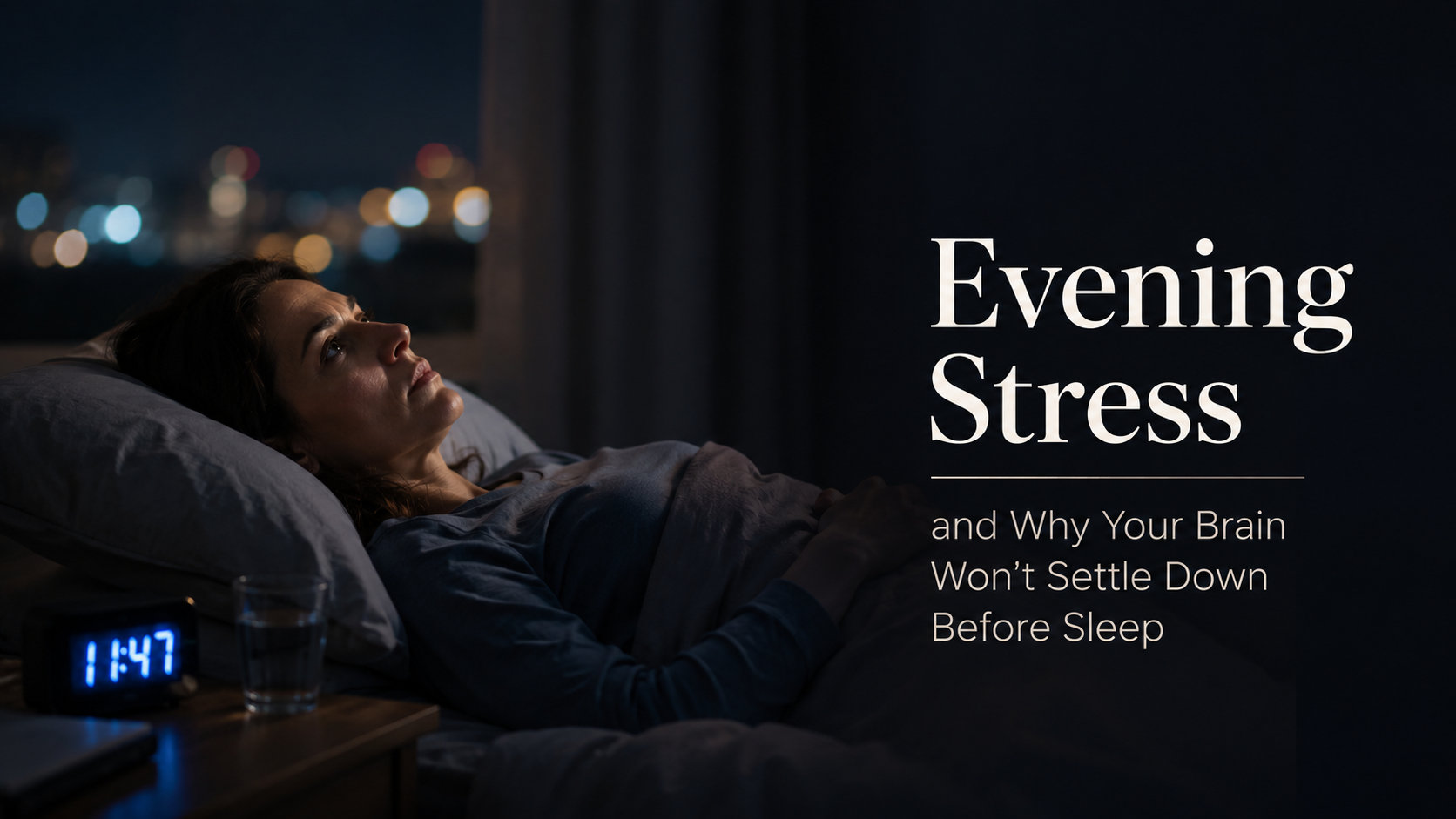
Evening Stress and Why Your Brain Won't Settle Down Before Sleep!
Falling asleep fast isn't the same as your brain settling down. What evening stress does to your sleep onset, and how to wind down when your mind won't.
Why Am I Still Tired After 8 Hours of Sleep?
You slept 8 hours and still feel wrecked? Here's why sleep quality beats duration, what a dropping sleep score really means, and how to wake up with energy.