How to Use an Energy Score When You Cannot Change the Day's Demands
By Mr.Apps · Sep 17, 2026
Category:Energy

Use the score to adjust the day, not to cancel reality
I find an energy score most useful on a busy day when it changes the margin around essential tasks. It cannot remove work, care, travel, or other fixed demands. It can help a person distinguish what must happen from what can be shortened, delayed, delegated, or done at a lower intensity.
An energy score is an estimate built from the data available to the app. It may combine sleep, heart rate, heart-rate variability, activity, and a personal baseline. The display can summarize a pattern, but it cannot know every constraint or decide which task matters most. The [FDA general wellness guidance](https://www.


fda.gov/media/90652/download) is useful here because it places activity and recovery estimates in the context of general wellness, not diagnosis or treatment.
Start by naming the score's job. Is it warning that optional training may be poorly timed, showing that sleep was incomplete, or offering a broad coaching prompt? A low score should lead to a practical adjustment, not to a demand that the entire day become ideal.
Protect essential tasks first
Write the day's tasks in two groups: essential and optional. Keep the essential group as short as possible. For each item, decide the minimum safe version that meets the need. Reduce extra intensity, unnecessary switching, and avoidable time pressure where possible.
Then review the optional group. Postpone hard training, extra errands, nonessential screen time, or another demanding task when the evidence suggests that the day has little margin. This is not a medical prescription. It is ordinary load management informed by a low-confidence signal.
The CDC physical activity guidance supports regular activity for health while allowing activity to be adapted to individual circumstances. A low energy score does not mean that all movement is harmful. It may mean that the planned demand should be smaller, easier, or placed later.
Use short recovery windows deliberately
Short breaks can create space without pretending to erase the day's total load. Put them before the most demanding task, between blocks, or after a period of sustained concentration. Use a quiet posture, easy breathing, hydration if appropriate, and a brief reduction in stimulation. The point is to make the next block more manageable, not to manufacture a perfect score.
Keep the break long enough to be real and short enough to be repeatable. A break that requires more planning than the task will not survive a demanding day. If a breathing cue helps, use a comfortable screen-free option. If it creates discomfort or extra monitoring, choose ordinary quiet instead.
Stress can be physical and emotional. The CDC stress guidance includes sleep and physical activity as parts of a broad approach. That supports using small recovery actions while also recognizing that a short pause cannot replace adequate sleep or professional help for persistent problems.
Keep the activity dose realistic
When a score is low, preserve the distinction between necessary movement and optional intensity. Walking through a required task, gentle mobility, or a normal routine may be reasonable if it feels comfortable. A maximal effort, long session, or unfamiliar demand may be less appropriate when sleep is poor, symptoms are present, or the data is incomplete.
Use function as the check. Can you move normally? Does the effort feel proportionate? Are there new symptoms? A wearable estimate cannot clear chest discomfort, fainting, severe shortness of breath, marked weakness, or rapidly worsening illness. Those signs require appropriate medical attention.
The sleep and heart health guidance supports treating sleep as a health input rather than an optional recovery accessory. If the day is fixed, protect the next available sleep opportunity instead of trying to compensate with repeated daytime score checks.
Do not let a low score create extra work
A low energy score can itself become another demand if the person keeps refreshing the app, changing the plan, and searching for a reason. Set one review time and one decision. If the data is fresh and the situation is clear, choose the lower-demand option and move on.
If the score is based on incomplete data, note that uncertainty instead of trying to repair it with random changes. Check sync, fit, sleep completion, and calculation time once. Then wait for a meaningful update. More checking does not create more evidence.
Plan around sleep rather than chasing a recharge
When the day cannot change, the next night may be the most important adjustable window. Protect the intended sleep period, reduce avoidable late stimulation, and keep the schedule as consistent as circumstances allow. The NHLBI explanation of sleep deprivation describes effects on health and daily function, which is why a low score should often change the recovery plan beyond the current afternoon.
Do not promise yourself that one night's sleep will reset the score. The useful goal is a better opportunity for recovery and a clearer next measurement. If sleep problems persist or impair function, move the concern beyond the app and discuss it with an appropriate professional.
Read the score beside the constraints
The same number can lead to different decisions on different days. If the day contains flexible exercise and few fixed tasks, reducing intensity may be simple. If the day contains essential work or care, the better choice may be to protect the most demanding block, shorten optional tasks, and schedule small pauses.
This is why a score without constraints produces generic advice. The device may know that the body is outside its recent pattern, but not which part of the day can move. Add only the context that changes a decision. A short note such as "fixed early task" or "optional training postponed" can be enough.
A practical low-energy plan
I use this sequence:
- Confirm the score is fresh and the main inputs are complete.
- Check symptoms and normal function.
- List the essential tasks and define their minimum safe version.
- Remove or reduce optional intensity.
- Place short, repeatable recovery windows around the hardest blocks.
- Protect the next sleep opportunity.
- Review the score once after a meaningful update.
This approach respects the body's signal without turning the day into a test. An energy score is a planning aid. It can show that the margin is smaller, but the person still has to decide which demands matter and which can wait.
Keep the plan small enough to use
The plan should fit the day it is meant to support. A long checklist adds demand when energy is already limited. I prefer one data check, one priority decision, and one recovery action. For example, confirm that the score is fresh, protect the most important task, and schedule a short quiet break before the next demanding block.
The FDA wellness guidance supports keeping general wellness functions within their stated purpose. A related ENSTA article on stress readings that conflict with lived experience is a useful reminder that an estimate does not get to overrule the person's report. If a plan cannot be followed under real constraints, the plan needs simplifying rather than the person needing more discipline.
Review the result once the day has passed. Ask whether the adjustment protected function and sleep, not whether it produced a better color immediately.
If the answer is no, simplify again. A plan that asks for several breaks, multiple entries, and constant monitoring may be technically sensible but operationally useless on a fixed-demand day. Keep one note about the score, one decision about optional load, and one action that protects the next recovery window. This makes the process repeatable without adding a second job to the day.
The review should also include what the score could not know. It may not know that a task was fixed, that a break was impossible, or that the person had a symptom that changed the plan. Those constraints are not noise. They explain why the recommendation was difficult to follow and help prevent the next message from being interpreted as a personal failure. If the app supports notes, record the constraint in a few words and continue with the safest workable option.
FAQ
Should I cancel every task when my energy score is low?
No. Separate essential demands from optional load, then lower the intensity and complexity of what can change. Use symptoms and normal function as safety checks rather than treating the score as a command to stop all activity.
Can short breaks recharge an energy score immediately?
Not necessarily. A score may update slowly or depend on overnight data and longer trends. Use short breaks to protect function and reduce immediate demand, not to force a number higher.
What if the day's demands cannot be reduced at all?
Keep the essential version of each task as simple as possible, avoid adding optional intensity, use brief practical recovery windows, and protect the next sleep opportunity. Seek professional guidance for persistent symptoms or major changes in function.

*This article is for informational purposes only and is not a substitute for professional medical advice, diagnosis or treatment.*
Sources:
Centers for Disease Control and Prevention·Centers for Disease Control and Prevention·Centers for Disease Control and Prevention·National Heart, Lung, and Blood Institute·National Library of Medicine·Food and Drug Administration
Related articles

Why Resting Does Not Always Recharge an Energy Score
Quiet time and physiological recovery are related but not identical. This guide explains why an energy score can remain flat after resting and how to read sleep, stress, recent demand, and missing data together.

How to Read Your Wearable After a Long Day of Sitting
A long sitting day can look quiet in a wearable dashboard while still leaving you stiff, flat, or less ready to move. This guide focuses on reading the data in context and using small movement breaks without turning a low-activity day into a health judgment.

When a Wearable's Calories Burned Number Is Useful and When It Is Not
A wearable's calories burned number is an estimate, not a direct measurement of everything your body used. This guide explains when the number can support broad activity comparisons and when it is too uncertain for exact food or health decisions.

Perimenopause, HRV, and the Energy Roller Coaster: What Wearables Can Reveal
Perimenopause can shift sleep, temperature, resting heart rate, HRV, and daily energy in ways that do not fit one neat score. I show how to compare personal trends with symptom notes and when the pattern belongs in a clinical conversation.

GLP-1, Sleep, and Energy: What Wearables Can Help You Notice
By the second week of a multi-city speaking tour, my wearable's morning summary had become something I read more carefully than my calendar. Resting heart rate crept up, deep sleep dropped by nearly half, and my energy check-in sat at a two for four mornings straight — even though nothing about my routine had dramatically changed.
Can Air Quality Make Your Sleep and Energy Worse?
Why a High-Sugar Breakfast Can Leave You Tired Before Lunch
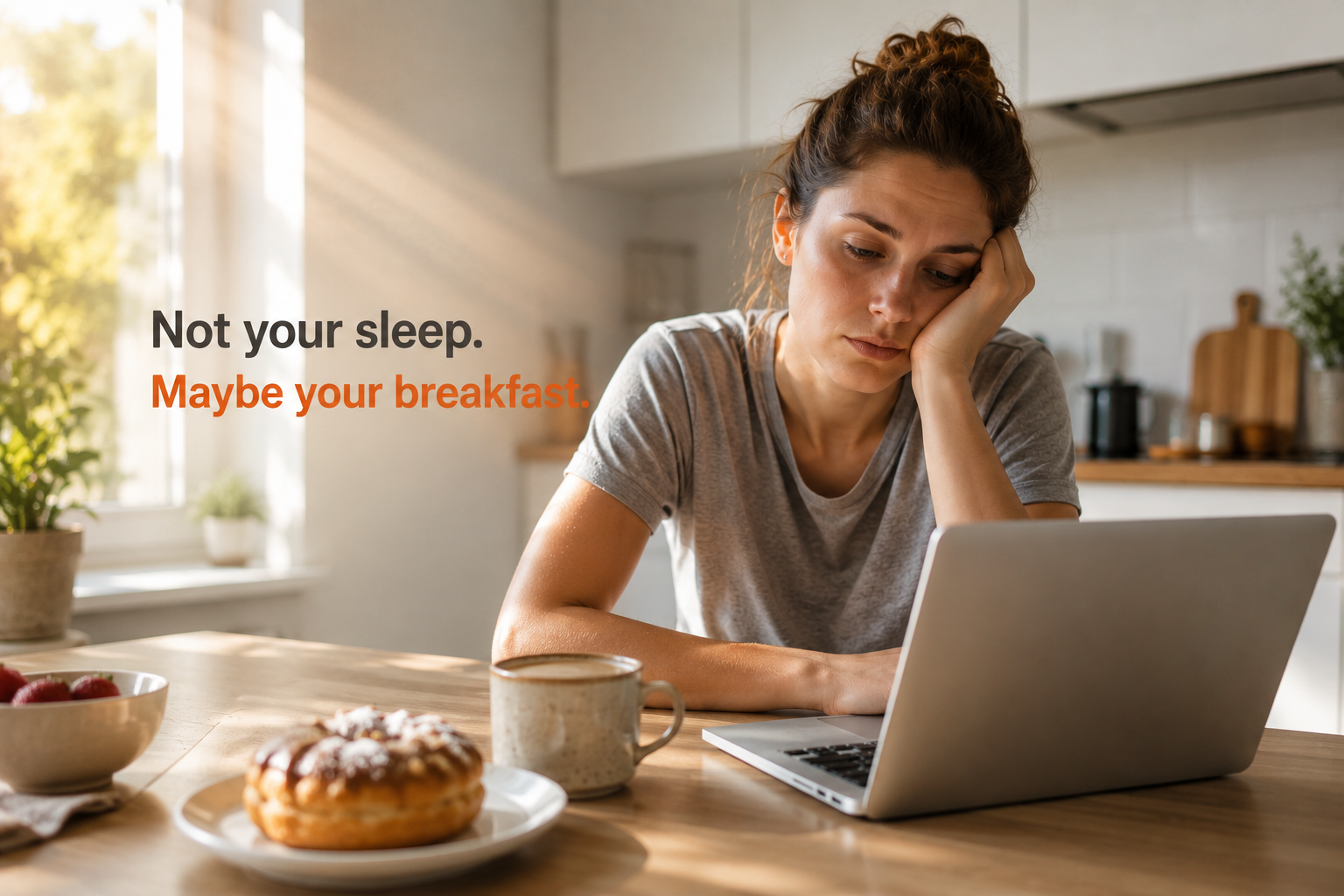
A sweet breakfast can feel like quick energy, then turn into a mid-morning crash. Here’s why breakfast composition matters, what steadier meals usually include, and how to test your own energy pattern without a complicated diet plan.

Why Travel Drains Your Body Battery Even When You Barely Move
The Hidden Cost of Sitting All Day: What Happens to Your Energy Levels?