When a Wearable's Calories Burned Number Is Useful and When It Is Not
By Mr.Apps · Sep 10, 2026
Category:Energy

A wearable can display a precise-looking calories burned number after a walk, workout, or entire day. The precision of the display should not be confused with precision in the estimate. Energy expenditure is difficult to measure outside a laboratory, and consumer devices use indirect signals and proprietary calculations.
I use the number as a broad activity signal when the same device, activity, and conditions are compared over time. I do not use it as a receipt for food, proof that a workout “earned” a meal, or a medical measurement.
What the estimate is trying to calculate
Energy expenditure includes more than the calories associated with a workout. A device may show resting energy, active energy, or a combined daily estimate. The categories are not always labeled the same way, and two apps may count the same period differently.
The calculation may use movement, heart rate, body information entered in the app, activity type, and time. None of those inputs gives the device a direct view of the energy used by every tissue in the body. A laboratory can use reference methods such as indirect calorimetry or doubly labeled water. A consumer wearable usually estimates from available signals.
The systematic review of commercial wearable measurements found much wider error for energy expenditure than for some other outcomes. That is the central fact to keep in mind when an app presents a large number with decimal-like confidence.

Why calorie estimates vary
Energy estimates can change with movement pattern, speed, body position, heart-rate response, fitness, and the activity mode selected. A device may recognize a steady walk more consistently than irregular resistance work or movement that involves the arms in an unusual way.
Fit and sensor contact also matter. If the heart-rate signal is noisy or missing, the algorithm may fall back on a different calculation. A wrong profile, changed weight, or misclassified activity can alter the result without any change in the actual effort.
The evidence on wrist-wearable accuracy reports that accuracy differs by outcome and activity. A device can be reasonably consistent for one measurement and much less dependable for another. “It tracked my steps well” does not establish that its calorie estimate is equally accurate.
When the number can be useful
The estimate can support broad comparisons when the conditions are similar. For example, it may help you see whether one week contained more recorded activity than another, whether a familiar session was longer, or whether the device consistently labels a certain type of day as more active.
Use the same device and keep the interpretation broad. Compare direction, not a claimed exact burn. If the number rises when the duration and effort rise, it may be doing a reasonable job as a rough activity indicator. If it changes dramatically after a software update, fit change, or activity-mode change, treat the trend as interrupted.
The expert checklist for validating energy-expenditure devices explains why validation depends on the device, protocol, population, and reference method. That makes a within-device personal comparison more defensible than comparing a displayed number with a laboratory value it was never designed to reproduce.
When the number is not useful
Do not use a calorie estimate to decide exactly how much to eat. A displayed value may be off in either direction, and the error can be large enough to undermine a precise food adjustment. Appetite, nutrition needs, medical conditions, training goals, and body composition are not settled by one number on a wrist or phone.
Do not use it to compare people. Different bodies can produce different energy costs at the same pace, and different devices can process the same activity differently. The number is not a fair ranking system.
Do not treat it as a measure of workout quality. Strength work, technical practice, mobility, and gentle recovery activity may be valuable even when the estimated burn is modest. A calorie-focused summary can hide the purpose of the session.
Separate active energy from total energy
Check whether the app is showing active energy, resting energy, or total energy. A total daily number includes energy the body would use at rest, so it should not be read as the direct cost of exercise. Some systems combine categories or revise them after the day ends.
If you compare days, use the same category each time. Write down whether the number came from a workout, an active-day summary, or a total-day estimate. If the app's wording changes, annotate the change rather than combining old and new values without comment.
Research on consumer wearables has found that inter-device reliability does not guarantee criterion validity. The review of steps, heart rate, and energy expenditure is a useful reason to distinguish “the device gives a similar result each time” from “the result is correct in absolute terms.”

Use the number beside better questions
Instead of asking how many calories a workout burned, ask whether the session matched the plan, whether the effort was appropriate, whether recovery is adequate, and whether activity is becoming more consistent. Those questions connect the data to a decision.
For a weekly review, keep a small set of fields: activity type, duration, perceived effort, and a note about unusual conditions. The calorie estimate can sit beside them as a secondary signal. If it conflicts with the session details, trust the details and investigate the recording.
This is especially important when the goal is health rather than weight change. The adult activity guidance focuses on moderate and vigorous activity, strength work, and reducing sedentary time. It does not require a person to hit an exact wearable calorie number.
Watch for false precision
Numbers such as 437 or 612 calories invite a calculation. The extra digits do not necessarily carry extra information. Round mentally to a broad range unless you have a specific reason to use the estimate, and even then keep the uncertainty visible.
False precision also appears in graphs. A smooth line can make a model look more certain than it is. Look for missing data, device changes, unusual movement, and activity categories that were assigned incorrectly.
If you use the number to compare your own activity, do not rebuild the comparison every time the app changes its algorithm. Mark the date and consider starting a new baseline. A broader review of wearable measurement limits supports keeping the method consistent and the claims proportionate.
Food decisions need more than a burn estimate
Food choices should reflect the purpose of eating, hunger, routine, training, and health needs. A wearable estimate cannot tell you whether you need a particular nutrient, whether a meal will support sleep, or whether a dietary change is safe for you.
If you are trying to change body weight, a qualified clinician or registered dietitian can help choose a method that fits your health and goals. People with diabetes, a history of disordered eating, medication-related nutrition issues, or another condition should be especially cautious about letting a device determine food intake.
The most sensible role for the calorie number is limited: help identify broad activity differences, then use more complete information for decisions that affect nutrition or health.
A practical rule for using the estimate
Keep the number when it answers a modest question. Ignore it when it pretends to answer a precise one. Review the activity, duration, perceived effort, sensor quality, and trend first. If the estimate changes a major decision, check the decision with a qualified professional rather than assuming the app is authoritative.
A related guide on why sets and rest periods matter in strength training data shows why a single calorie summary can omit the information that matters most for a particular session.
For a weekly review, keep the estimate in the background. First review how often you moved, whether the activities matched your goals, and whether recovery was adequate. Then ask whether the calorie field adds any information that the duration and perceived effort did not already provide. If it adds nothing, stop using it. A metric earns its place by improving a decision, not by making a dashboard look more complete.
Be careful with exercise compensation
The calories burned number can encourage a compensation loop. A person eats more because the app reports a large burn, then adds more activity because the meal was larger. That loop treats two uncertain estimates as if they were exact accounting entries.
Use a different question when reviewing activity. Did the session fit the goal? Was the effort sustainable? Did it support strength, skill, mobility, or general activity? A session that burns fewer estimated calories may still be the better session for recovery or consistency.
If weight change is your goal, look at longer-term measures and professional guidance rather than daily arithmetic. Body weight naturally varies, and a single wearable summary cannot separate food, fluid, digestion, activity, and other influences. A qualified dietitian or clinician can help you choose a method that does not rely on false precision.
Broad activity context can help, but exact-looking numbers should not be allowed to drive exact-looking decisions about food or health.

FAQ
Are wearable calorie estimates accurate?
They vary by device, activity, body position, sensor quality, and validation method. Energy expenditure is generally less reliable than the neat display suggests, so use the estimate for broad personal comparisons rather than exact decisions.
Should I eat back the calories my wearable says I burned?
Do not treat the estimate as an exact food allowance. Nutrition decisions depend on more than a device calculation. If you need a structured plan, discuss it with a qualified healthcare professional or registered dietitian.
What is the best use of a calories burned number?
The safest use is as a secondary signal for comparing broad activity patterns on the same device. Keep the activity type, duration, perceived effort, and data quality beside it.
*This article is for informational purposes only and is not a substitute for professional medical advice, diagnosis or treatment.*
Sources:
National Library of Medicine·National Library of Medicine·National Library of Medicine·National Library of Medicine·Centers for Disease Control and Prevention·National Library of Medicine
Related articles

Perimenopause, HRV, and the Energy Roller Coaster: What Wearables Can Reveal
Perimenopause can shift sleep, temperature, resting heart rate, HRV, and daily energy in ways that do not fit one neat score. I show how to compare personal trends with symptom notes and when the pattern belongs in a clinical conversation.

GLP-1, Sleep, and Energy: What Wearables Can Help You Notice
By the second week of a multi-city speaking tour, my wearable's morning summary had become something I read more carefully than my calendar. Resting heart rate crept up, deep sleep dropped by nearly half, and my energy check-in sat at a two for four mornings straight — even though nothing about my routine had dramatically changed.
Can Air Quality Make Your Sleep and Energy Worse?

Why a High-Sugar Breakfast Can Leave You Tired Before Lunch
A sweet breakfast can feel like quick energy, then turn into a mid-morning crash. Here’s why breakfast composition matters, what steadier meals usually include, and how to test your own energy pattern without a complicated diet plan.

Why Travel Drains Your Body Battery Even When You Barely Move
The Hidden Cost of Sitting All Day: What Happens to Your Energy Levels?
Best Stress and Energy Tracking Apps in 2026
Best Energy Tracking Apps in 2026: Tested and Compared
Best Free Energy Tracking Apps in 2026
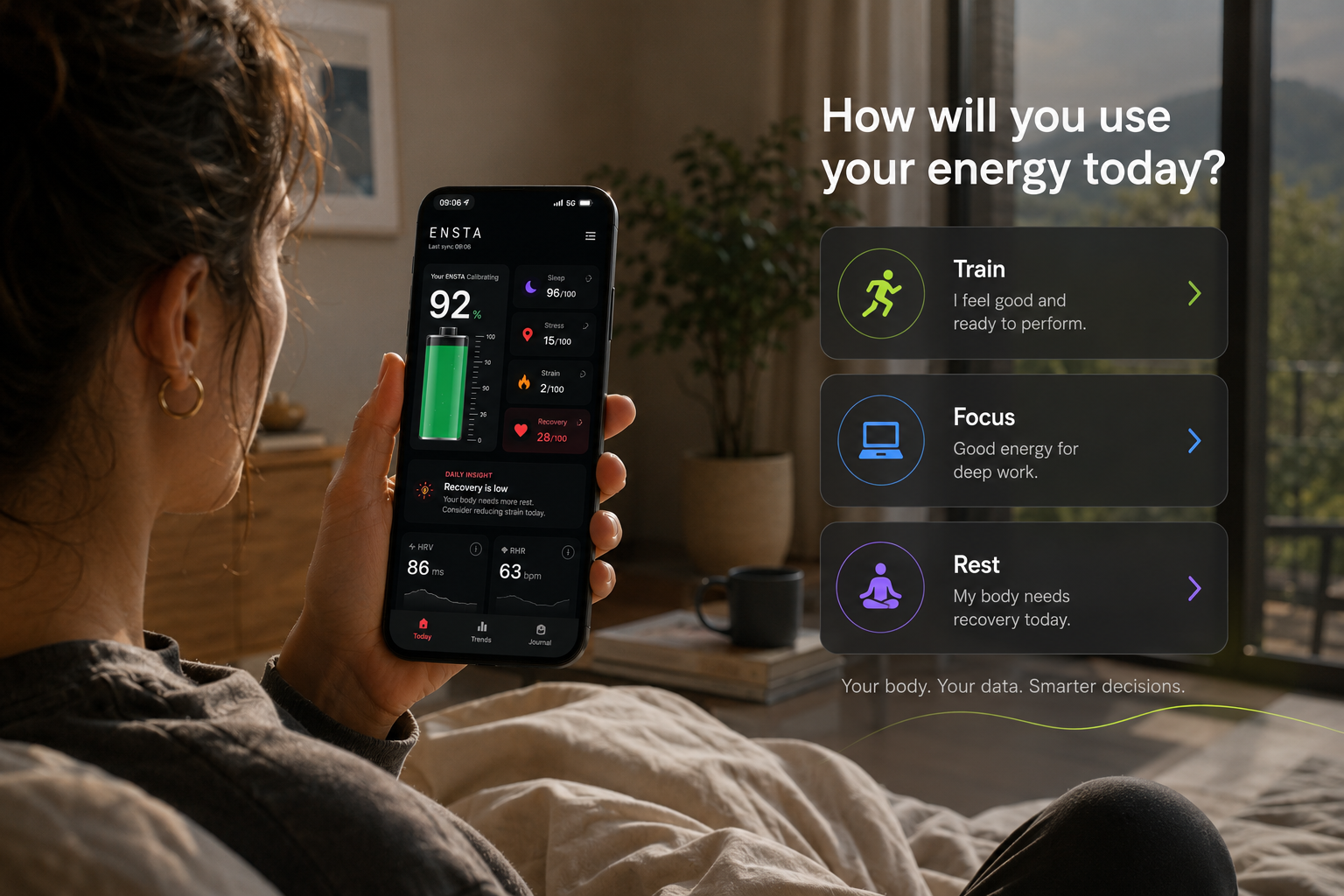
The free apps are actually worth trying, what “free” really gets you, and whether you need a device at all.
Biological Age, Blood Pressure, and Biomarkers: What Your Health App Can Actually Tell You
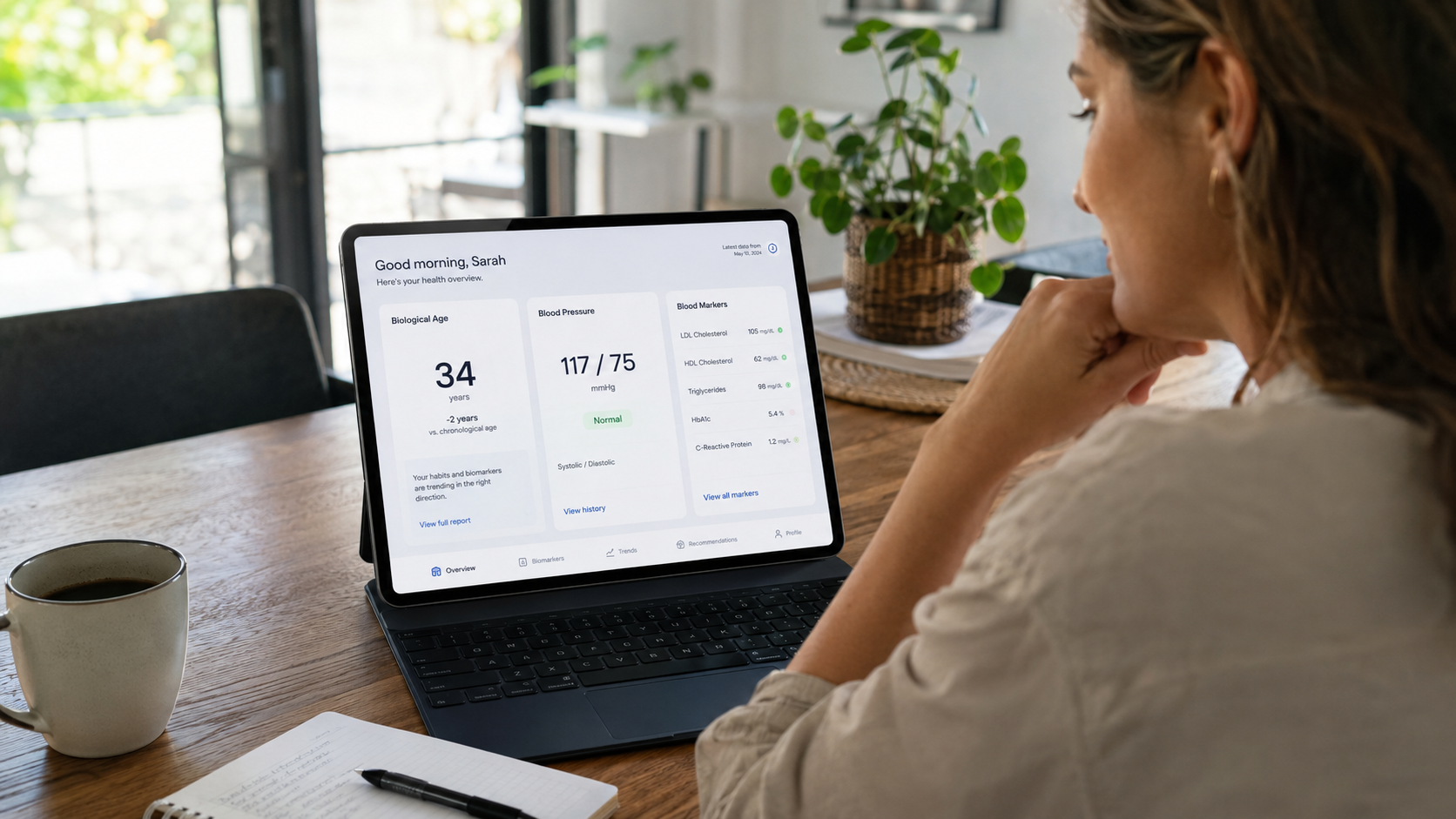
Health tracking is moving beyond steps, workouts, and daily recovery scores. New tools are beginning to combine biological age estimates, blood pressure, bloodwork, biomarkers, and healthspan data to give a broader picture of long-term health. This article explains what these measurements can—and cannot—tell you, why some signals matter more than others, and how the best health dashboards should turn complex numbers into clear, practical next steps.