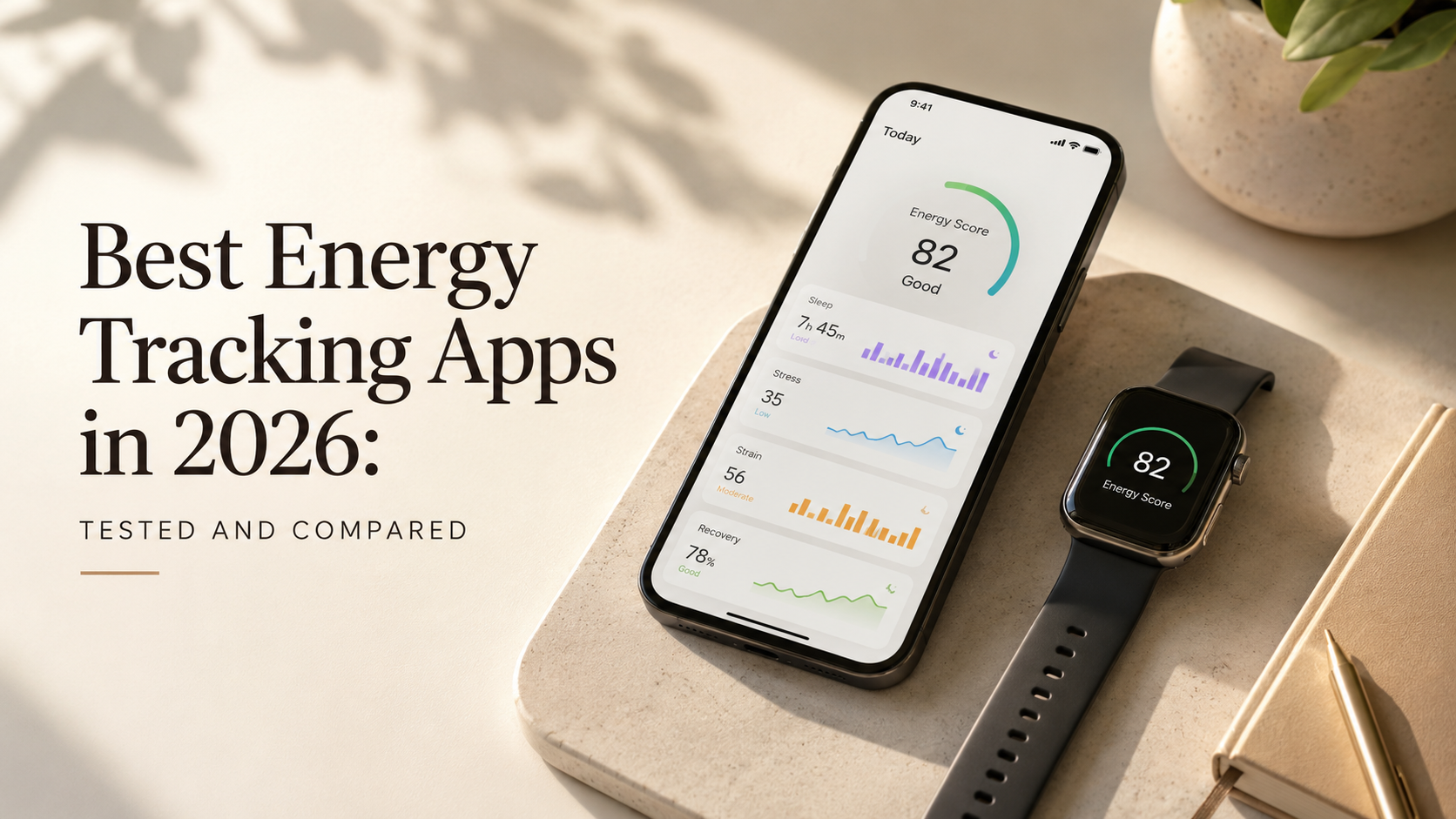
Why Resting Does Not Always Recharge an Energy Score
By Mr.Apps · Sep 17, 2026
Category:Energy

Rest is not one physiological state
I do not assume that being still means being recovered. An energy score may remain flat after a quiet hour because the algorithm is responding to accumulated demand, incomplete sleep, unusual physiological signals, or a missing input rather than to movement alone. Rest can reduce immediate activity while the body is still processing what came before.
Energy scores are estimates. They may combine sleep, heart rate, heart-rate variability, activity, and personal baseline data into a simple display. The score can be useful as a summary, but it cannot directly observe every reason a person feels tired or restored. The [CDC guidance on managing stress](https://www.cd


c.gov/mental-health/living-with/index.html) describes stress as a physical and emotional response and includes sleep and activity within a broader approach.
The first step is to ask what the score means in that particular app. Does it describe available capacity, accumulated strain, a recovery estimate, or a recommendation? Similar names can hide different calculations. If the explanation is not available, treat the number as a low-resolution signal rather than a precise battery meter.
Why quiet time may not change the score
An algorithm may update only after a new measurement window. A brief rest period might not be long enough to alter the inputs. The score may also be based mainly on overnight data, which means the day's quiet time cannot immediately repair an incomplete night or a baseline deviation.
Recent demand can carry forward. Physical training, long periods of concentration, emotional strain, illness, disrupted sleep, and schedule changes may all affect how the next measurement is interpreted. The score may remain low because the relevant recovery process takes longer than the rest period.
The NHLBI explanation of sleep deprivation describes how insufficient sleep affects health and daily function. A quiet afternoon is not equivalent to a full sleep opportunity. If the score does not recharge after resting, review the last several nights rather than judging the current hour alone.
Check whether the body actually had a recovery opportunity
Resting in a chair is different from sleeping, and sleeping is not always the same as restorative sleep. Review bedtime, wake time, interruptions, time awake, and whether the device captured the full period. A score that uses heart-rate or HRV inputs may also need a consistent overnight record.
Consider whether the quiet period included ongoing stress, discomfort, pain, stimulants, dehydration, or a demand that remained unresolved. I do not treat these as explanations without evidence. I treat them as context to record and compare. The aim is to distinguish a lack of movement from a genuine recovery window.
The CDC information on sleep and heart health supports treating adequate sleep as part of health rather than as a decorative input to an app. If sleep is repeatedly short or fragmented, the score may reasonably remain low even when daytime activity is limited.
Look for a delayed response
Some changes appear later than the event that preceded them. A demanding day may affect sleep, and the resulting sleep may affect the next score. A quiet day after a hard session may still carry the prior load. A score can therefore lag behind the behavior that a user thinks should have improved it.
Avoid trying to force a recharge by adding more rest checks, changing settings, or repeating the same measurement every few minutes. Let the app complete a meaningful window. Compare the next reading with the previous one and record what changed in the interval.
Stress signals add another layer. The review of wearable stress detection describes how heart and skin signals can be used in research while noting the limits of validation. A flat energy score may reflect the app's model of physiological demand, not a direct reading of motivation or mood.
Check for missing or stale inputs
Before interpreting a flat score, review last sync time, sleep completion, sensor contact, battery settings, and the source of each metric. A missing overnight signal may leave the score unchanged. A delayed import may make a current-looking dashboard depend on an old record. A device-state problem can also create a plausible number from incomplete data.
The personalized stress detection review emphasizes differences between people and contexts. That supports using personal data quality checks before comparing the number with someone else's experience or with a generic target.
If the app allows notes, keep them concise. Record a major sleep change, unusual effort, illness symptoms, or a setting change. Do not add speculative causes merely to make the graph feel complete. A clean unknown is more useful than a confident guess.
Use the score to protect the next decision
An energy score is most helpful when it changes a manageable decision. If it remains low but symptoms are absent, protect the next sleep opportunity, reduce optional intensity, and keep essential tasks realistic. If rest has not changed the score, do not automatically conclude that more inactivity is needed. Gentle movement may still be appropriate if it feels normal and the app's message is not medical in scope.
If there is fever, unusual shortness of breath, fainting, chest discomfort, marked weakness, confusion, or a significant change in normal function, symptoms outrank the score and deserve appropriate care. A low number is not a diagnosis, and a higher number is not clearance.
Separate capacity from motivation
An energy score may correlate with a physiological pattern without capturing motivation, mood, or the meaning of the day's tasks. Someone can feel mentally ready while the body is under-recovered. Someone can feel tired while the score has not moved because the algorithm lacks a relevant input. Both mismatches are possible.
Use a two-line note when needed: "What the device estimates" and "What function feels possible." This keeps the app's signal visible without forcing it to answer a question it was not designed to answer. If the two lines diverge for several days, that is a reason to review the data and the broader situation, not to chase a target number.
Build a recovery window that can be compared
If you want to know whether a routine helps, define a repeatable window. Keep the measurement source and timing similar, note sleep and major demand, and observe the score only at the planned review time. A single quiet hour cannot establish a pattern.
The sleep deprivation reference is a useful reminder that sleep loss affects more than the moment when a person notices tiredness. A recovery plan should therefore include the next night and the days around it. The aim is not to make the score rise on command. It is to create conditions in which the data and the body's function can be reviewed together.
A flat-score checklist
I check:
- What does the app's energy score actually represent?
- Which data window drives the update?
- Was sleep complete, and were the sensors recording reliably?
- What demand preceded the rest period?
- Do symptoms or normal function change the safety decision?
- What low-risk action protects the next meaningful recovery window?
Rest is valuable, but it is not an instant reset button. A flat score can be a delayed response, a missing-data problem, or a useful reminder that quiet time is not the same as sleep. Read it as context, verify the inputs, and let symptoms and function guide safety.
Give the score a job
An energy score should answer a manageable planning question. It might suggest that optional intensity is poorly timed, that the next sleep opportunity deserves protection, or that a missing input makes the display unreliable. It should not become a demand to keep checking until the number rises.
The CDC stress guidance places sleep, activity, and broader support together. A related ENSTA article on conflicting wearable stress readings is also useful when the score and experience diverge. In both cases, the device is one source of context. The body, the record, and the practical constraints of the day remain necessary.
If the score is unchanged after a reliable recovery window, accept that the data may be describing a longer trend. Make the next safe decision and wait for the next meaningful update rather than treating the display as a live battery percentage.
The unchanged number can still be useful if it prevents a false conclusion. It may tell you that a short pause was not the window the algorithm uses, that the record is incomplete, or that the score summarizes more than the current hour. That is enough information to protect sleep, lower optional demand, and stop making repeated adjustments that do not create better evidence.
FAQ
Why does my energy score stay low when I have not exercised?
The score may reflect prior demand, incomplete sleep, stress-related signals, missing data, or a delayed update. Check the last several nights and the measurement window instead of treating the current quiet period as a complete recovery test.
Does lying down count as recovery for a wearable?
It may reduce activity, but it is not necessarily the same as sleep or a restorative recovery window. Review how the app calculates the score and compare quiet time with complete, reliable sleep data.
Should I keep resting until the score improves?
Not automatically. Match the response to symptoms, function, and the score's evidence. Protect sleep and reduce optional strain, but do not use a consumer score as medical clearance or as a reason to ignore concerning symptoms.

*This article is for informational purposes only and is not a substitute for professional medical advice, diagnosis or treatment.*
Sources:
Centers for Disease Control and Prevention·Centers for Disease Control and Prevention·National Heart, Lung, and Blood Institute·National Library of Medicine·National Library of Medicine·National Library of Medicine
Related articles

How to Read Your Wearable After a Long Day of Sitting
A long sitting day can look quiet in a wearable dashboard while still leaving you stiff, flat, or less ready to move. This guide focuses on reading the data in context and using small movement breaks without turning a low-activity day into a health judgment.

When a Wearable's Calories Burned Number Is Useful and When It Is Not
A wearable's calories burned number is an estimate, not a direct measurement of everything your body used. This guide explains when the number can support broad activity comparisons and when it is too uncertain for exact food or health decisions.

Perimenopause, HRV, and the Energy Roller Coaster: What Wearables Can Reveal
Perimenopause can shift sleep, temperature, resting heart rate, HRV, and daily energy in ways that do not fit one neat score. I show how to compare personal trends with symptom notes and when the pattern belongs in a clinical conversation.

GLP-1, Sleep, and Energy: What Wearables Can Help You Notice
By the second week of a multi-city speaking tour, my wearable's morning summary had become something I read more carefully than my calendar. Resting heart rate crept up, deep sleep dropped by nearly half, and my energy check-in sat at a two for four mornings straight — even though nothing about my routine had dramatically changed.
Can Air Quality Make Your Sleep and Energy Worse?
Why a High-Sugar Breakfast Can Leave You Tired Before Lunch
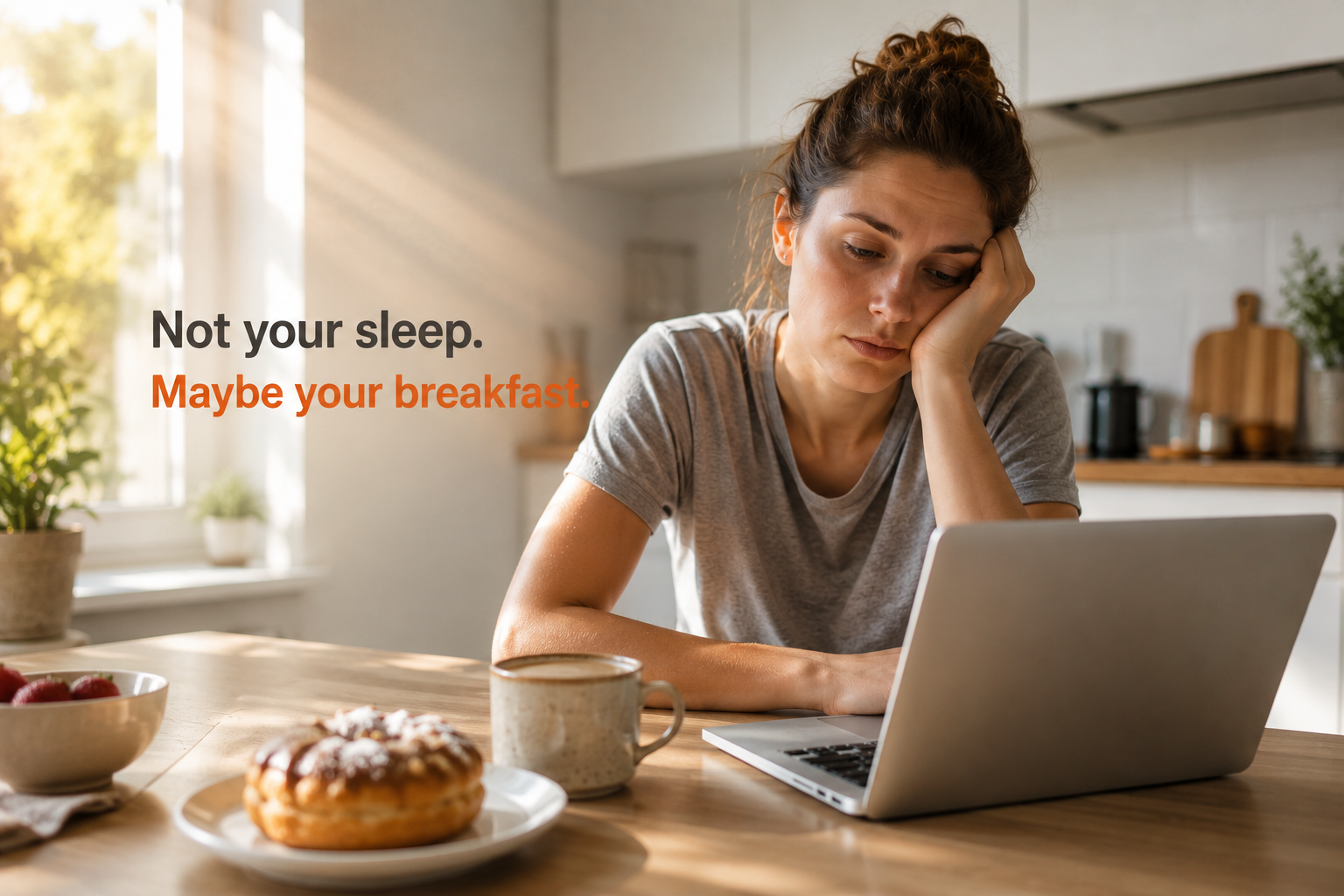
A sweet breakfast can feel like quick energy, then turn into a mid-morning crash. Here’s why breakfast composition matters, what steadier meals usually include, and how to test your own energy pattern without a complicated diet plan.

Why Travel Drains Your Body Battery Even When You Barely Move
The Hidden Cost of Sitting All Day: What Happens to Your Energy Levels?
Best Stress and Energy Tracking Apps in 2026