Low Recovery Score but Feel Great: Should You Trust Your Body or Your Wearable?
By Mr.Apps · Sep 1, 2026
Category:Recovery

The most confusing recovery score I have ever seen arrived on a morning when I felt unusually good. I had slept through the night, woke before my alarm, and wanted to train. My wearable disagreed. Its recovery score was low, its warning color was hard to ignore, and the recommendation was to take it easy.
That moment captures the real question behind a low recovery score when you feel fine: should you trust your body or your wearable? I do not treat this as a contest. My body gives me information that the device cannot collect, while the device can reveal changes that are easy to miss. The useful answer comes from combining both.
A readiness score is not a direct measurement of recovery. It is an estimate built from signals such as heart rate variability, resting heart rate, sleep, temperature, recent activity, and the device's idea of my baseline. Oura, for example, describes nine different readiness contributors, each compared with recent and longer-term personal patterns. Other platforms arrange the ingredients differently, so the same morning can produce different advice.
Start with what the score can actually see
My wearable is good at remembering. It notices that my overnight heart rate stayed higher than usual or that my HRV has drifted down for several days. I might not feel those changes while making breakfast. That objective memory is valuable.
It is also incomplete. A current review of recovery monitoring notes that HRV mainly reflects autonomic and cardiovascular regulation, while other parts of recovery, including muscle repair and fuel restoration, may move on a different timetable. In other words, no single recovery marker describes the whole person.
The device cannot know that my legs feel springy during the warm-up, that a familiar tendon is sore, that I am unusually irritable, or that a set of stairs feels harder than it should. It also cannot judge whether today's session is an easy walk or a demanding interval workout. A low score matters differently in those two situations.

I therefore separate the question into two channels. The wearable channel includes the multi-day HRV trend, resting heart rate, temperature, sleep, and data quality. The body channel includes symptoms, mood, muscle soreness, motivation, coordination, and how an easy warm-up feels. Agreement between the channels makes the decision simple. Disagreement means I need more context.
Check the measurement before changing the plan
Before I cancel a workout, I look for a technical explanation. Was the device positioned properly? Did it collect a normal amount of overnight data? Was the battery low? Did I change wrists or fingers? Was the bedroom unusually cold? Did I spend a long time awake in bed, giving the algorithm an odd sleep window?
This is especially important for HRV. Motion, poor skin contact, sensor location, and the time of measurement can all affect the result. A single strange reading carries less weight than a clean, repeated trend. WHOOP's own explanation of HRV and training emphasizes comparison with a personal baseline rather than with another person's number.
I once received a low readiness score after a night when I had moved the ring to a looser finger because of warm weather. I felt rested, but the graph contained gaps and an unusual pulse pattern. I kept the planned session easy for the first ten minutes, felt normal, and continued. The decision was not based on ignoring the device. It was based on recognizing weak input data.
By contrast, a clean three-day trend deserves attention even when I feel cheerful and energetic. A wearable can sometimes catch a physiological change before it becomes obvious. Garmin explains that its recovery time estimate is updated using sleep, stress, relaxation, and physical activity rather than functioning as a fixed countdown. I read that kind of output as a moving estimate, not an order.
Use a four-part decision check
When the data look sound, I use four questions.
First, do I have symptoms? Fever, chest discomfort, unusual shortness of breath, dizziness, gastrointestinal illness, or a new injury overrules a good mood and a planned workout. A wearable is not needed to justify caution when the body is sending a clear warning.
Second, is this one low morning or a trend? One score can be noise. Several days of lower HRV, higher resting heart rate, worse sleep, or temperature deviation suggest a real change. Research on training monitoring supports combining subjective and objective measures because they often capture different aspects of fatigue and recovery.

Third, how costly is today's session? I am more willing to test an easy mobility session than a long endurance effort, heavy lifting near my limit, or fast work that depends on precise coordination. The higher the consequence of being wrong, the more conservative I become.
Fourth, what happened recently? A late meal, unusual heat, travel, a harder-than-normal training block, shortened sleep, or emotional strain can explain a temporary score. Personal history matters. If a specific pattern has repeatedly preceded illness or poor performance for me, I give it more weight.
This framework prevents two common errors. The first is obeying every score and gradually losing confidence in my own perception. The second is dismissing every low score because I feel motivated. Motivation is useful, but it is not the same as recovery.
Let the warm-up become a controlled test
If I have no concerning symptoms, the data are reasonably clean, and the planned session can be modified, I often start with a low-risk warm-up. I keep the intensity conversational and pay attention to breathing, coordination, perceived effort, and whether the body improves after ten to fifteen minutes.
On a normal day, movement usually makes me feel more capable. On a genuinely poor recovery day, an easy pace can feel oddly expensive. My heart rate may rise faster than expected, familiar loads may feel heavy, or technique may become less precise. That is information I can act on immediately.
I use three possible outcomes: continue, modify, or stop. Continue means the warm-up feels normal and the session remains appropriate. Modify means reducing volume, intensity, or complexity. Stop means symptoms appear, effort remains disproportionate, or the movement quality is poor.
A study comparing perceived recovery with performance found that subjective recovery can contribute useful information, but it should not be treated as a perfect substitute for measured performance. That is why I prefer a combined view of recovery over an all-or-nothing choice between intuition and technology.

Judge the decision afterward
The best framework improves through review. After a disagreement between my body and wearable, I make a short note: the score, the main contributors, how I felt, what I changed, and how the session went. I do not write a diary entry. Two or three lines are enough.
Over time, those notes reveal whether a low score is meaningful for me. Perhaps lower HRV after late strength training is common and harmless. Perhaps a rise in resting heart rate combined with broken sleep reliably precedes a rough day. The goal is not to prove the algorithm right or wrong. It is to learn which combinations predict outcomes in my own life.
Recent work on short-term recovery after intense exercise also shows why timing matters: perceptual, autonomic, and performance measures can recover at different rates. A 2026 sprint study found a mismatch among recovery markers, reinforcing the point that one green or red score cannot summarize every system.
I also avoid compensating for a low score with anxiety. Rechecking the app every hour does not create better data. If I decide on an easy day, I make it genuinely restorative. If I train, I stay willing to adjust. The score has already done its job by prompting a more thoughtful decision.
When a low score deserves professional attention
A wearable cannot diagnose illness, overtraining, a heart condition, or a sleep disorder. I seek medical advice when a sustained change comes with concerning symptoms, a marked drop in normal function, repeated faintness, chest pain, unusual breathlessness, or an unexplained change that does not settle. I would bring a concise trend and symptom timeline, not present the recovery score as a diagnosis.
For ordinary training decisions, my rule is simple. I trust my body for symptoms and lived function. I trust the wearable for consistent, clean trends I might otherwise forget. When they disagree, I lower the risk, test gently, and learn from the result.
That is not indecision. It is a better use of both sources. A low recovery score is a signal to investigate, not a command to obey and not an alert to dismiss.
FAQ
Should I work out if my recovery score is low but I feel good?
If you have no concerning symptoms, the data are clean, and the session can be modified, begin with an easy warm-up and reassess. Reduce intensity or stop if effort, breathing, coordination, or pain feels unusual.
Can a wearable detect poor recovery before I notice it?
Sometimes. A repeated change in overnight HRV, resting heart rate, temperature, or sleep can appear before obvious symptoms. The pattern is more useful than one isolated score, and it is not a diagnosis.
Is my body more accurate than my wearable?
They measure different things. Your body awareness captures symptoms and function; the wearable records selected physiological signals over time. Decisions are strongest when you use both and account for data quality and workout risk.
*This article is for informational purposes only and is not a substitute for professional medical advice, diagnosis or treatment.*
Sources:
Oura·Frontiers in Sports and Active Living·WHOOP·Garmin·Journal of Sports Science & Medicine·Sports
Related articles
Can your wearable tell you're getting sick before you feel it?
Resting heart rate, HRV, and temperature can shift before you feel sick. What early illness signals from wearables really mean, and how to respond.
What Heart Rate Recovery After Exercise Can Tell You About Fitness
Why Hot Weather Can Raise Heart Rate and Lower Recovery
Hot weather can make your heart rate run higher, your HRV look worse, and your recovery score drop even when you did not train harder. Here’s why heat changes the body’s workload and how to protect your energy.
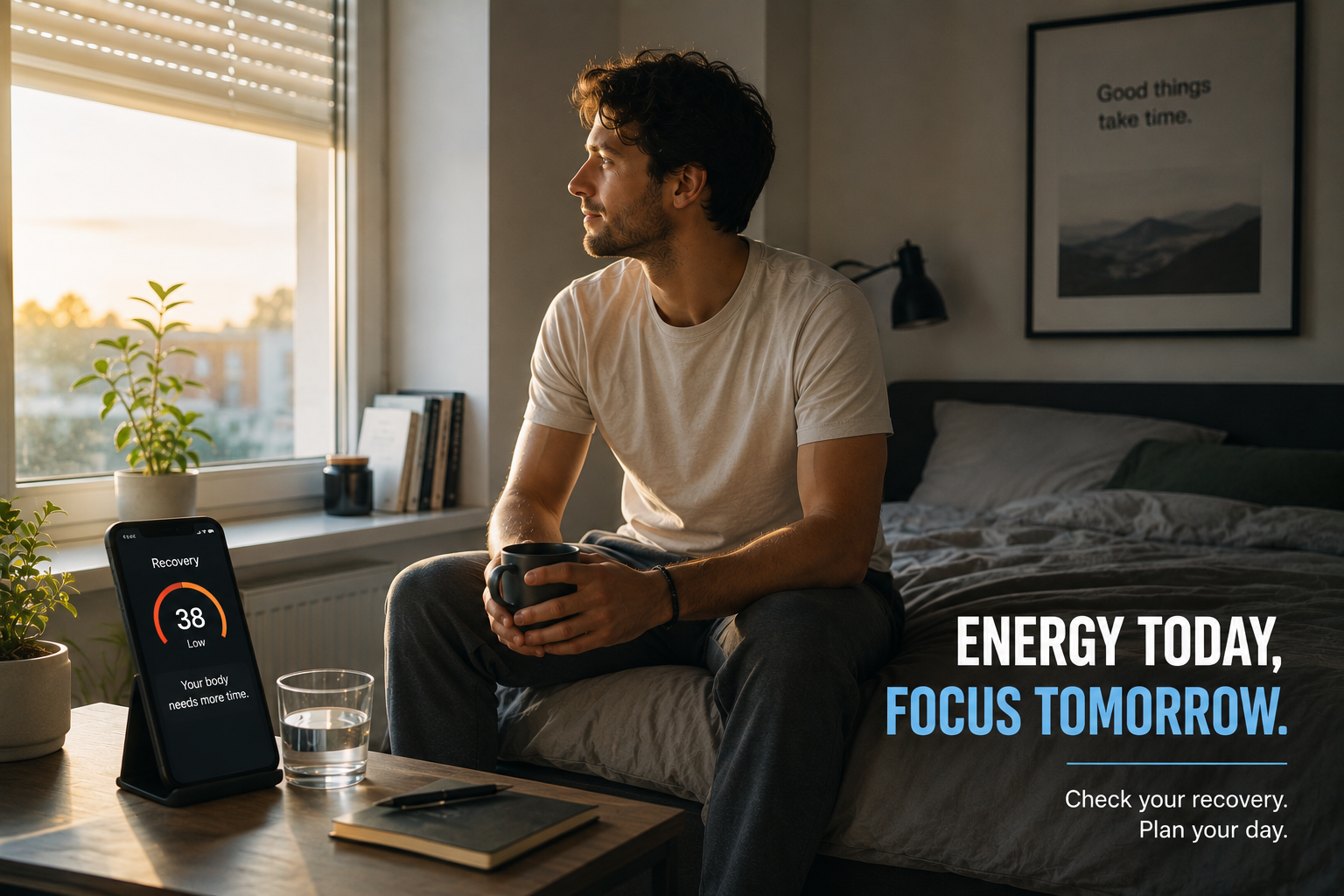
Best Apps to Track Poor Recovery and Fatigue in 2026

Your Bedroom May Be Too Warm for Good Recovery
For two summers, I lived in a bedroom that never quite cooled down after dark, and a heart rate tracker I was wearing for something else entirely showed me exactly what that was costing me overnight. It turns out a warm room doesn't just make sleep less pleasant. It measurably raises heart rate, lowers heart rate variability, and cuts into the recovery your body is supposed to get while you're asleep. Here's what the research says about why, who's most affected, and the small changes that actually help.

Why jet lag hits harder after some flights and how to recover faster
Some time zone changes barely touch you, and others wreck you completely, even when the shift on paper looks about the same. The difference usually comes down to direction: eastward travel fights your body's natural clock in a way westward travel doesn't, which is also why "I slept a full night" doesn't always mean you're actually recovered. Here's what the research says about why that happens, and a simple first-48-hours plan built around light, timing, and realistic expectations rather than gimmicks.
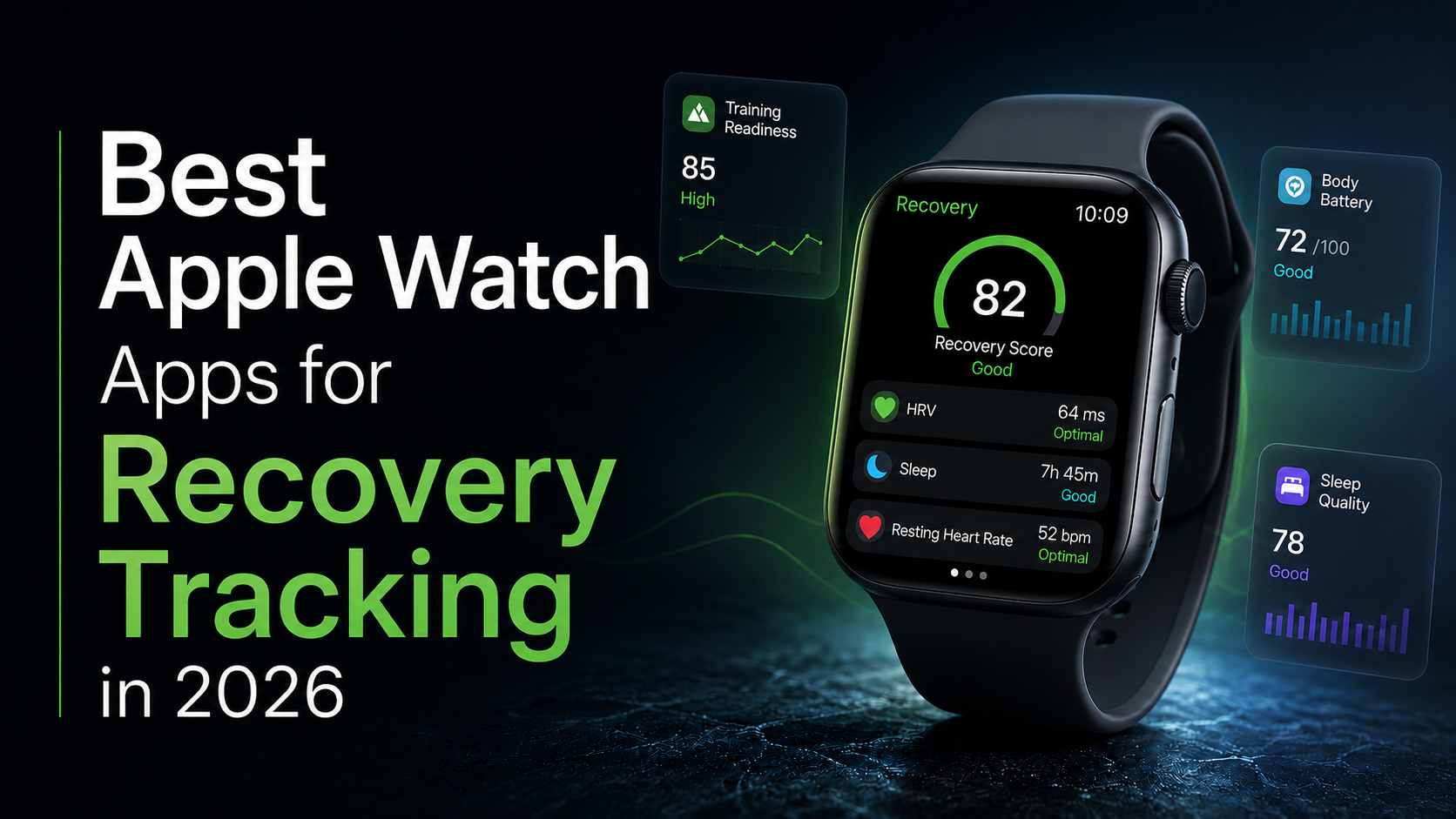
Best Apple Watch Apps for Recovery Tracking in 2026
Your Apple Watch already tracks sleep, HRV, heart rate, and activity, but recovery can still feel confusing without clear interpretation. This guide compares the best Apple Watch recovery apps for 2026, from simple daily energy scores to deeper training-readiness tools, helping you choose the right app for your goals.
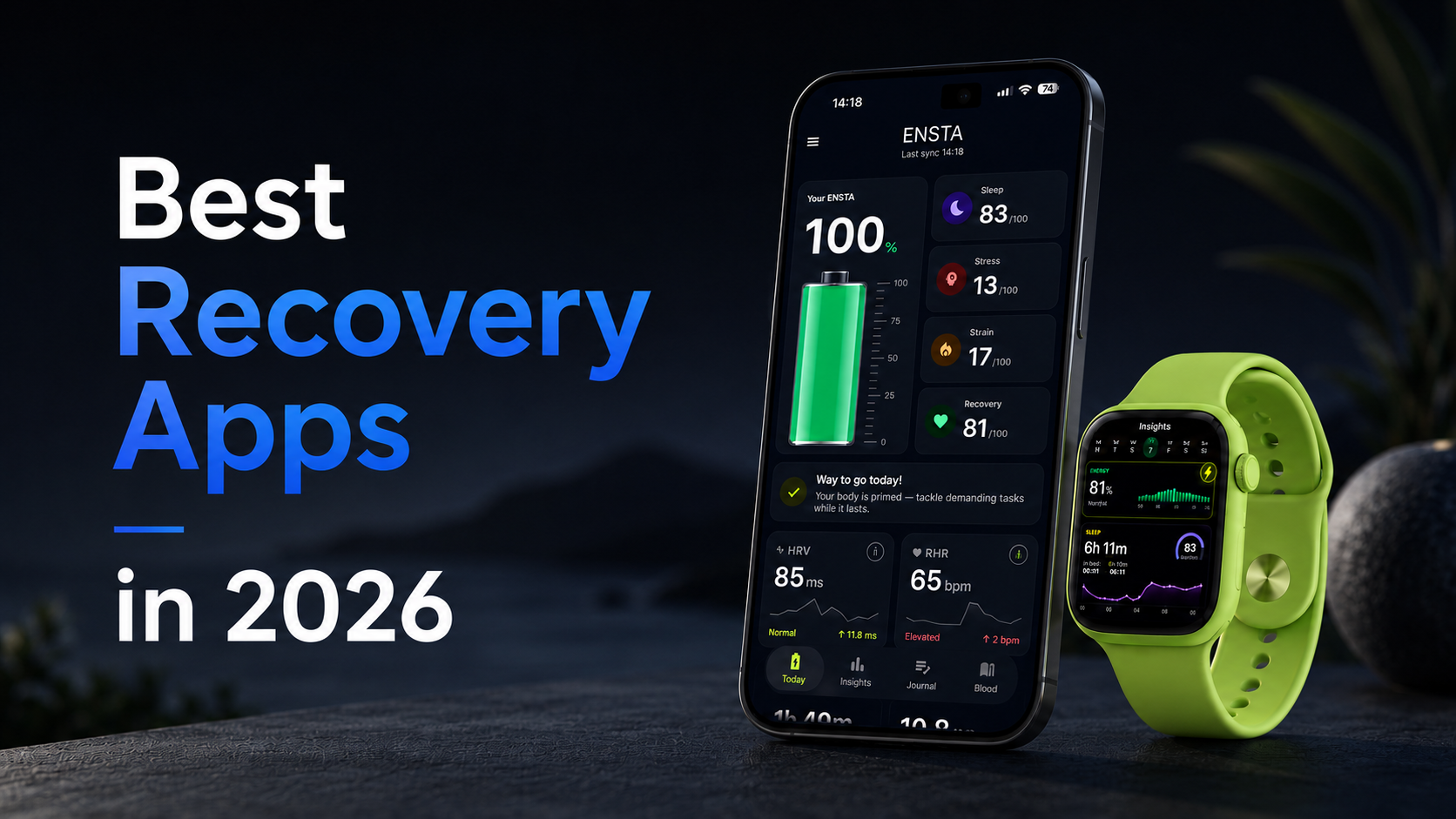
Best Recovery Apps in 2026
Compare the best recovery apps in 2026, including Ensta, WHOOP, Oura, Athlytic, Elite HRV, and Muscle Recovery Tracker. Learn which recovery tracker is best for your body, sleep, HRV, stress, strain, training load, and daily energy score — whether you want a simple free recovery app, an Apple Watch recovery app, a sleep-focused readiness score, or an athlete-grade recovery tracker.