Vitamin D blood levels should not become an automatic supplement dose
By Mr.Apps · Oct 26, 2026
Category:Energy

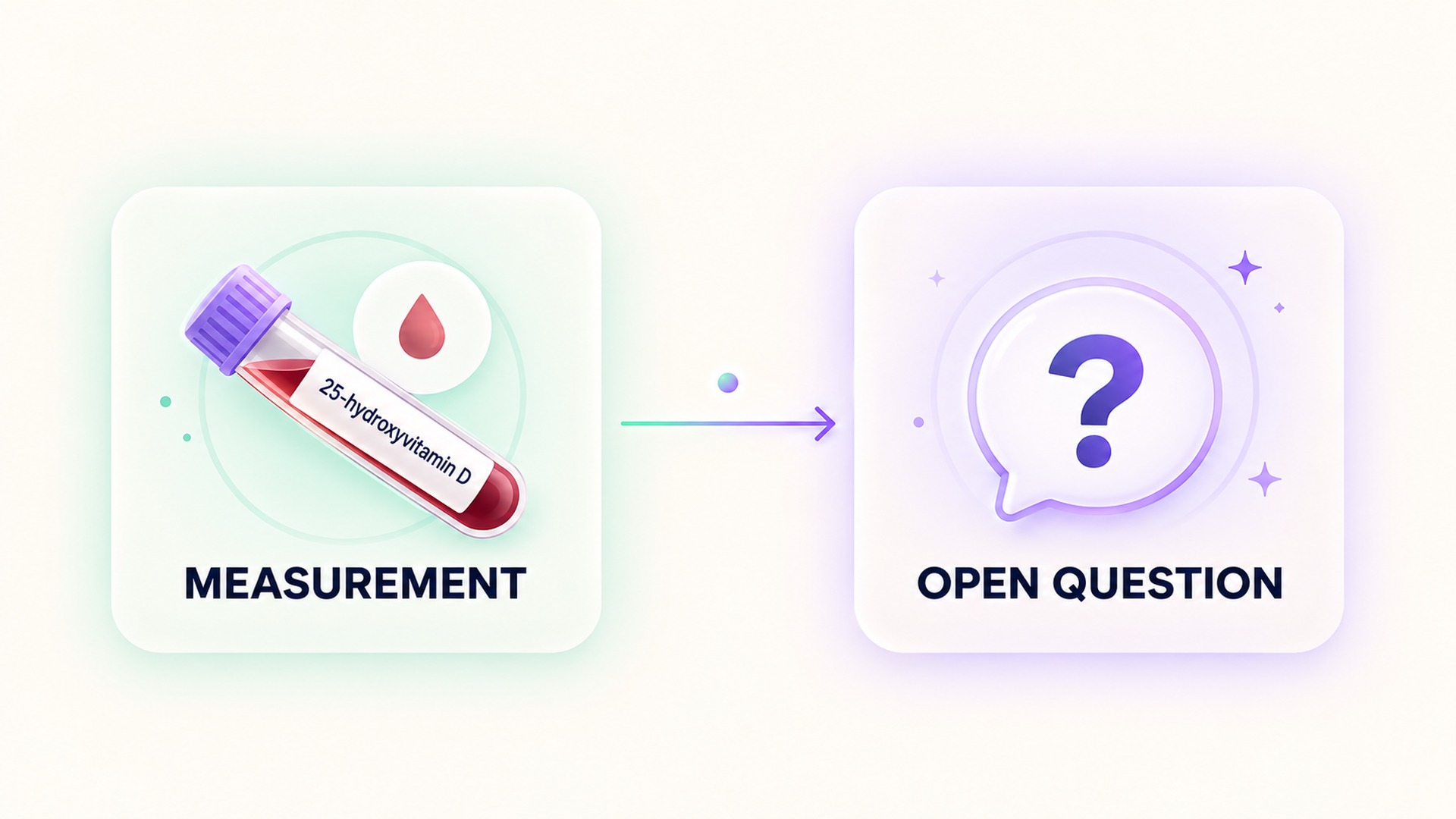
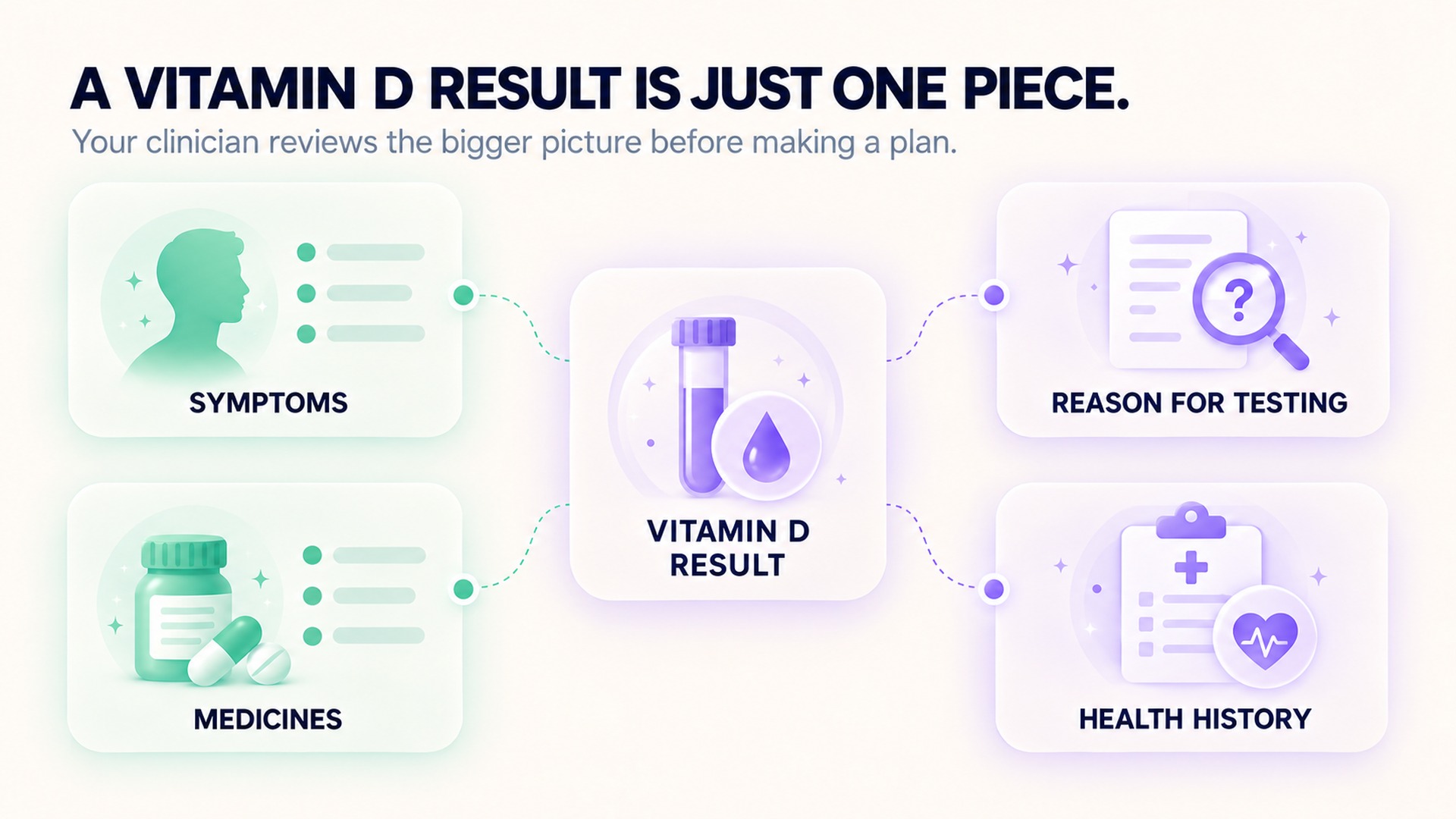
A vitamin D blood test can answer a limited question: how much of a measured vitamin D form is present in the blood sample. It does not automatically prescribe a supplement dose. The result needs the exact test name, laboratory range, reason testing was ordered, medicines, health history, and current intake. A wearable score or an app's nutrition target cannot turn the laboratory value into a personal treatment plan.
Most routine blood testing for vitamin D measures 25-hydroxyvitamin D, often written as 25(OH)D. Other forms may be measured for specific clinical questions. The value is useful when there is an appropriate reason to test, but routine testing is not needed for every person. The distinction between measurement and treatment matters: a result may help a clinician assess a concern, while the decision about whether and how to supplement depends on the individual's circumstances.
What the test measures
Vitamin D is involved in calcium absorption, bone health, and other physiological processes. The liver converts vitamin D into 25-hydroxyvitamin D, the form most often measured to assess vitamin D status. The vitamin D test overview explains why this marker is commonly used and how other forms of vitamin D tests may serve different purposes.
A lab result should be read with its units and reference interval. Laboratories may use different methods, and a chart that drops the units can make comparisons misleading. Keep the original report and note when the sample was collected. If comparing results over time, check whether the same form of vitamin D was measured and whether the testing method or laboratory changed. A trend becomes more useful when the underlying measurements are comparable.
A test result is not the same as a diagnosis. The value may be considered with symptoms, bone or calcium findings, medicines, kidney or digestive conditions, and the reason a clinician ordered the test. The professional fact sheet on vitamin D describes how vitamin D status is assessed and notes that interpretation depends on the clinical context. A result that is flagged by a laboratory should prompt a question for the ordering clinician, not an automatic change to intake.
The test name also matters. A 25(OH)D measurement is generally used to assess vitamin D status, while a different form may be ordered for a narrower clinical reason. If an old result is being compared with a new one, confirm that both reports refer to the same test and units. A changed test method, laboratory, or reference interval can complicate comparison. Preserve the reports rather than copying the numbers into a simplified trend that omits how they were produced.
Why testing is not routine for everyone
Testing is most useful when it can answer a clinical question. People may be tested because of symptoms, a condition that affects vitamin D, or a medicine or treatment plan that makes measurement relevant. A clinician may also have a reason to monitor a known issue. In contrast, testing everyone without an indication can produce results that are difficult to interpret and may lead to unnecessary follow-up or treatment.
Recent guidance about screening illustrates that recommendations depend on the population and the question. The adult screening recommendation found insufficient evidence to assess routine screening in asymptomatic, community-dwelling, nonpregnant adults. A separate clinical practice guideline on vitamin D for disease prevention addresses generally healthy groups without established indications for testing or treatment and recommends against routine testing in specified groups. These recommendations do not replace individualized care for people with a known condition or a clinician-directed reason to test.
A blood result does not equal a supplement dose
A supplement dose is an amount taken over time. A blood test is a concentration measured in a sample. The two are related to vitamin D status, but they are not interchangeable. A result alone does not reveal how much vitamin D a person absorbs, whether a particular dose is appropriate, or what outcome a clinician is trying to achieve. Decisions depend on the reason for testing and the full clinical picture.
The label on a supplement gives another kind of information: how much is in a serving. It does not establish what a person needs or how much will change a blood level. The consumer fact sheet on vitamin D describes food and supplement sources, but a general intake reference is not an individualized treatment plan. The supplement label guidance explains that a label lists a serving size and amount per serving. That information can help record what is being taken, but it does not determine whether a supplement is needed or what dose fits an individual's clinical plan. Do not start, stop, or increase a supplement based on a wearable score, a single lab result, or an online dosing chart.
If a clinician recommends a supplement, ask what the recommendation is intended to address, how long it should be used, whether other medicines or conditions matter, and whether follow-up testing is planned. A treatment plan may use a different dose or duration than general population guidance. The clinician can also explain whether the result should be repeated and what laboratory method should be used. Keep the recommendation and the original test result together so future results can be interpreted against the plan.
Record the context that helps interpretation
For a useful follow-up, preserve the exact test name, value, units, reference interval, date, and laboratory. Note why the test was ordered and whether the clinician was evaluating symptoms, monitoring a known condition, or reviewing a medicine. Record supplements and medicines as directed by the care team. A medication list can help identify factors that affect the test or the treatment decision.
If the result was ordered because of a specific symptom or condition, keep that reason attached to the report. The same numeric value can be considered differently when the clinical question differs. Ask whether there is a known indication for testing, whether other laboratory results were reviewed, and what outcome the clinician is trying to monitor. This keeps a lab value from becoming an isolated goal that someone tries to optimize without understanding why it was measured.
Keep dietary intake separate from the measured blood result. A food or supplement log may show estimated intake, but it does not measure the concentration in blood or prove whether a person has a deficiency. Similarly, a blood result does not tell how much vitamin D came from food, sunlight, or supplements. If an app estimates intake, note the product label, serving size, and date rather than treating the app's total as a laboratory finding.
Keep app targets in perspective
A wellness app may show a nutrient target, activity score, sleep score, or recovery estimate. Those features may encourage tracking, but they cannot decide whether vitamin D testing is appropriate or set a personal supplement dose. A low energy score does not establish a low vitamin D level. A value in a target range does not necessarily answer the clinical question for which a test was ordered.
A broader overview of why health measurements should keep their source and context is available in this explanation of interpreting health app biomarkers. For vitamin D, the practical approach is to keep the blood test, supplement label, and clinician's plan as separate records that can be considered together. That preserves the difference between a measurement, an intake estimate, and a treatment decision.
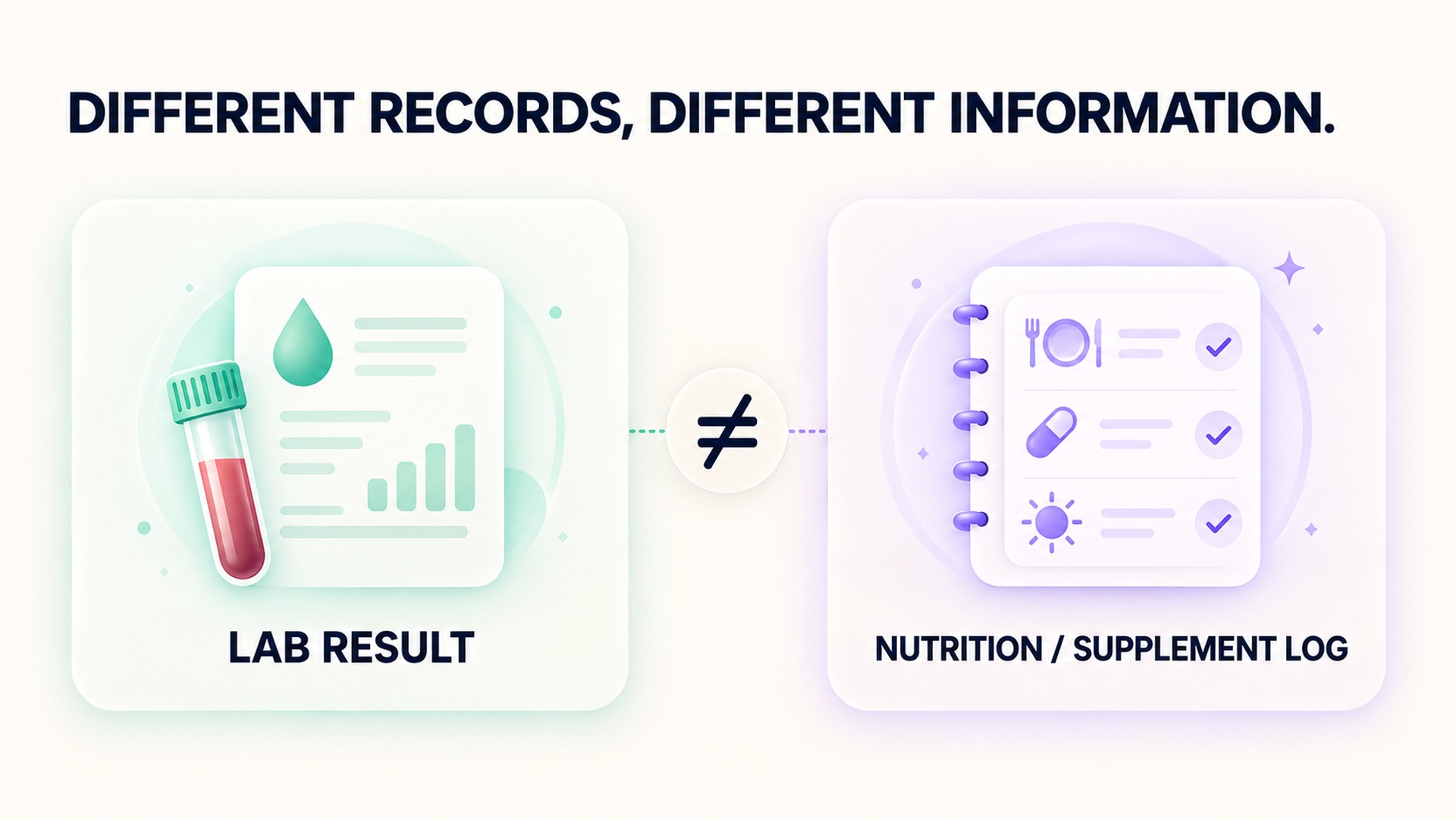
A result review can also clarify what a target means. A laboratory reference interval is not automatically the same as a treatment goal, and a general population intake reference does not define a person's medical need. If a clinician sets a follow-up goal, record the reason and the date it was discussed. Keep that goal separate from the original measurement and from an app's daily intake estimate. This makes it easier to tell whether a later test is being used to monitor a plan or to answer a new question.
If the person already takes a supplement, note the product, amount per serving, frequency, and start date for the care team. Do not change the amount because a result falls above or below a generic chart. If the clinician recommends a change, ask when it should be reviewed and whether a repeat test is needed. The plan should be based on the reason for testing and the person's health history, rather than a score or a single measurement.
Questions people ask
Does a low vitamin D result tell someone what dose to take?
No. The result must be interpreted with the reason testing was ordered, medical history, medicines, and current intake. Ask the clinician who ordered the test whether supplementation is appropriate and what plan applies.
Should every adult get a vitamin D blood test?
No. Routine testing is not recommended for everyone. Testing may be appropriate for a particular symptom, condition, medicine, or monitoring plan. A clinician can explain whether there is a specific indication.
Can a supplement app decide whether a blood result is normal?
No. An app may estimate intake or display a general target, but it does not interpret a laboratory test or make a treatment decision. Keep the report and its units, and review it with the care team.
*This article is for informational purposes only and is not a substitute for professional medical advice, diagnosis or treatment.*
Sources:
National Library of Medicine·NIH Office of Dietary Supplements·U.S. Preventive Services Task Force·Endocrine Society·NIH Office of Dietary Supplements·Food and Drug Administration
Related articles

Blood sodium concentration is different from sodium eaten
Learn why a sodium blood test measures a concentration while a food log estimates an amount eaten. See why a blood result cannot be converted into an instruction to add salt or change intake.

Recent lifting belongs in the context of a liver enzyme result
Learn why recent lifting belongs beside liver enzyme results and why it should not be assumed to explain an abnormal test. See how AST, ALT, CK, timing, symptoms, and the rest of the panel help shape clinical interpretation.

Keep the kidney function equation beside an eGFR trend
Learn why a change in the eGFR equation can shift a reported estimate without an equivalent biological change. See what to record beside each value so a trend can be interpreted with its method and clinical context.

Creatine kinase after exercise requires symptoms and timing
Learn why recent exercise, test timing, and symptoms all matter when a creatine kinase result is reviewed. See why CK is a clinical marker rather than a training target and when unusual symptoms need prompt attention.

Normal oxygen saturation does not establish a normal hemoglobin level
A pulse-oximeter percentage estimates how much available hemoglobin is carrying oxygen, while a blood count measures hemoglobin amount. Learn why one reassuring reading cannot replace the other test or a clinical review.

A raised CRP result cannot identify the source of inflammation
A raised CRP can signal inflammation, but it cannot identify where the process is or what caused it. Learn why standard CRP and high-sensitivity CRP serve different purposes and need clinical context.

When a vitamin B12 result needs a methylmalonic acid check
Learn why a clinician may consider methylmalonic acid when a vitamin B12 result leaves a question unresolved. See how kidney function, symptoms, medicines, and other tests shape interpretation.

Reading TSH and free T4 together in a fatigue review
Learn what TSH and free T4 contribute to a fatigue review and why the two results need clinical context. See how symptoms, medicines, timing, and prior results help keep a lab value in its proper role.

Why Metabolic Energy Efficiency and Daily Energy Are Different Concepts
Metabolic energy efficiency describes processes involved in handling fuel, while a daily energy score is usually a separate app estimate about patterns such as sleep, activity, and recovery. Similar wording does not mean the two measures track the same thing.

Why a Monthly Metabolic Trend Cannot Explain One Meal
A monthly metabolic trend summarizes signals across a longer window and cannot identify what one meal did to glucose or insulin. Read it as a broad estimate, keep meal notes in their proper context, and use clinical testing for medical questions.