A hemolyzed blood sample can complicate a potassium result
By Mr.Apps · Nov 2, 2026
Category:Energy
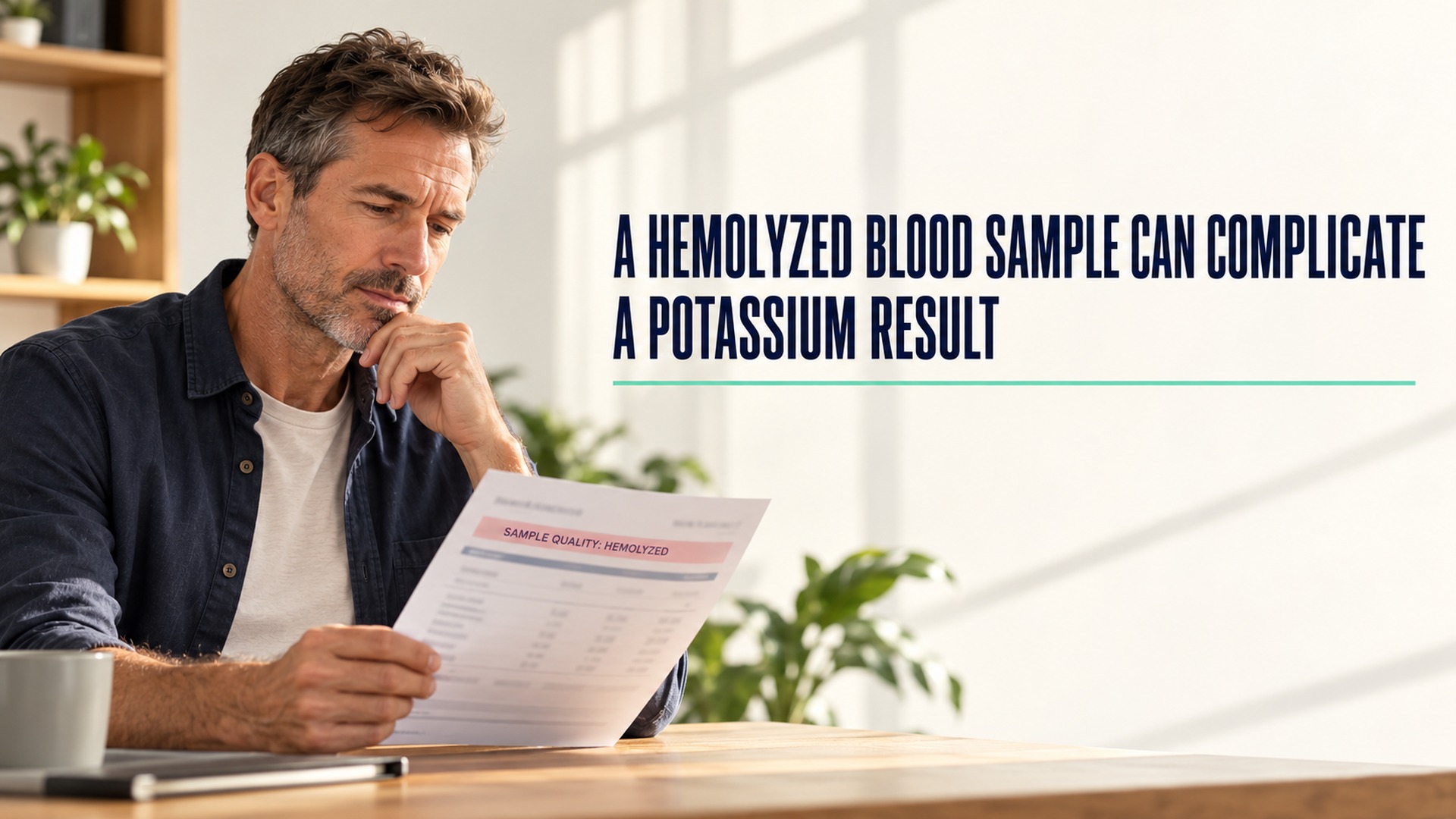
What a hemolysis flag tells you
A hemolyzed blood sample can complicate a potassium result because red blood cells contain potassium. When cells rupture during collection or handling, some of that potassium can move into the surrounding fluid and raise the measured value. The laboratory may mark the sample as hemolyzed, report a result with a qualification, or withhold the affected test. The exact response depends on the method and local laboratory policy.
I read the result and the sample-quality comment together. The number alone cannot tell whether the potassium concentration in the person was high, whether the sample was affected, or whether both are true. A difficult collection can cause an in-vitro problem, but potassium can also be genuinely elevated for clinical reasons. A hemolysis note is relevant context, not a diagnosis and not proof that the result should be ignored.
The potassium test overview explains that injury to red cells during a difficult blood draw can release potassium and produce a falsely high result. Laboratory procedures also recognize that collection and processing conditions affect measurements; the public laboratory method for potassium states that hemolysis can falsely elevate the value. A clinical result still needs the laboratory's own comment and the care team's review.
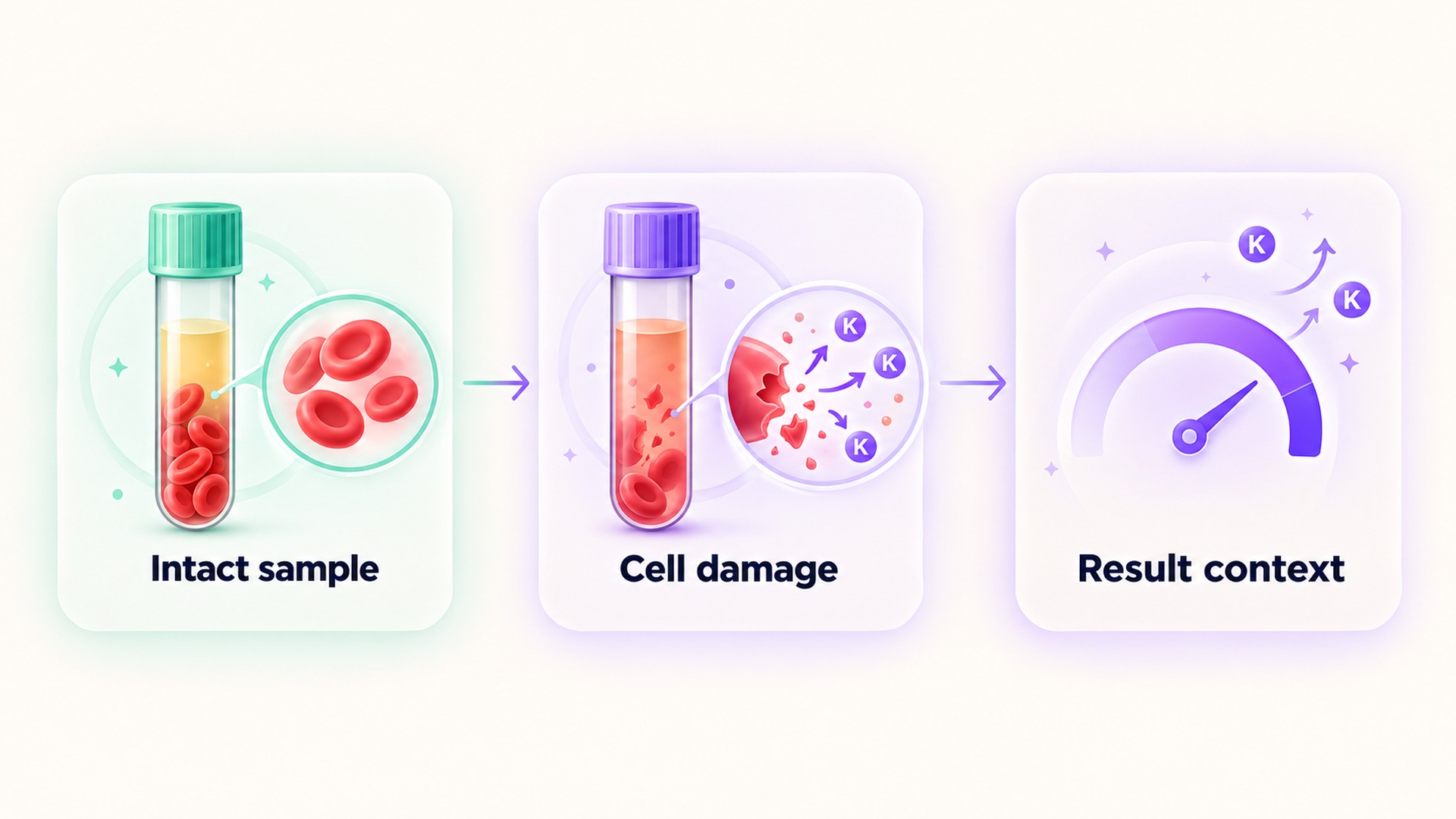
Why potassium can move out of damaged cells
Most of the body's potassium is inside cells, including red blood cells. A blood test usually measures potassium in serum or plasma after the sample has been collected and processed. If the collection process damages cells, their contents can mix with the fluid being measured. That can make the sample's potassium value higher than it would have been if the cells had remained intact.
This is one reason laboratories assess the specimen, not only the analyte. A hemolysis index or visual flag indicates that free hemoglobin or another sample feature is present at a level the laboratory considers relevant. It is not a direct measurement of the person's potassium status. The threshold at which a result is affected can differ by test method, analyzer, and local validation. Laboratories establish how much hemolysis is acceptable for each measurement and how to report affected results.
The consensus recommendations for reporting hemolyzed specimens describe method-specific interference and the need for laboratories to understand which tests are affected. A flag can therefore have different consequences across reports. One laboratory may release a value with a clear warning; another may cancel the test and request a new sample. A displayed number should not be separated from the accompanying comment or cancellation note.
A high number still needs attention
A hemolysis flag does not establish that the person has normal potassium. The sample may be affected and the true level may also be outside the expected range. Conversely, a modest amount of cell damage can shift a result enough to obscure a low value or make an ordinary level appear high. The clinical team considers the result, the reason for testing, prior values, medicines, kidney function, symptoms, and other findings.
The laboratory medicine case review on hemolysis and lipemia discusses how hemolysis can distort potassium and why comments matter when clinicians make decisions. It also explains that laboratories may use different reporting approaches, including withholding a result or releasing it with a qualification. That variation is a reason to ask what the specific report means rather than apply a generic rule to every high potassium result.
If a clinician considers the value urgent, follow the instructions given for that result. Do not wait for an app, wearable, or routine follow-up if the care team has advised immediate assessment. Do not assume that the hemolysis marker cancels the concern. A person with a truly high level may need prompt care, and a sample-quality explanation cannot safely replace clinical evaluation.
The clinical review of hyperkalemia describes both sample-related false elevations and genuine causes that can alter potassium balance. These are different possibilities with different implications. The article's role is not to decide which is present, but to preserve the context that helps a clinician determine what further assessment is appropriate.
What to keep with the result
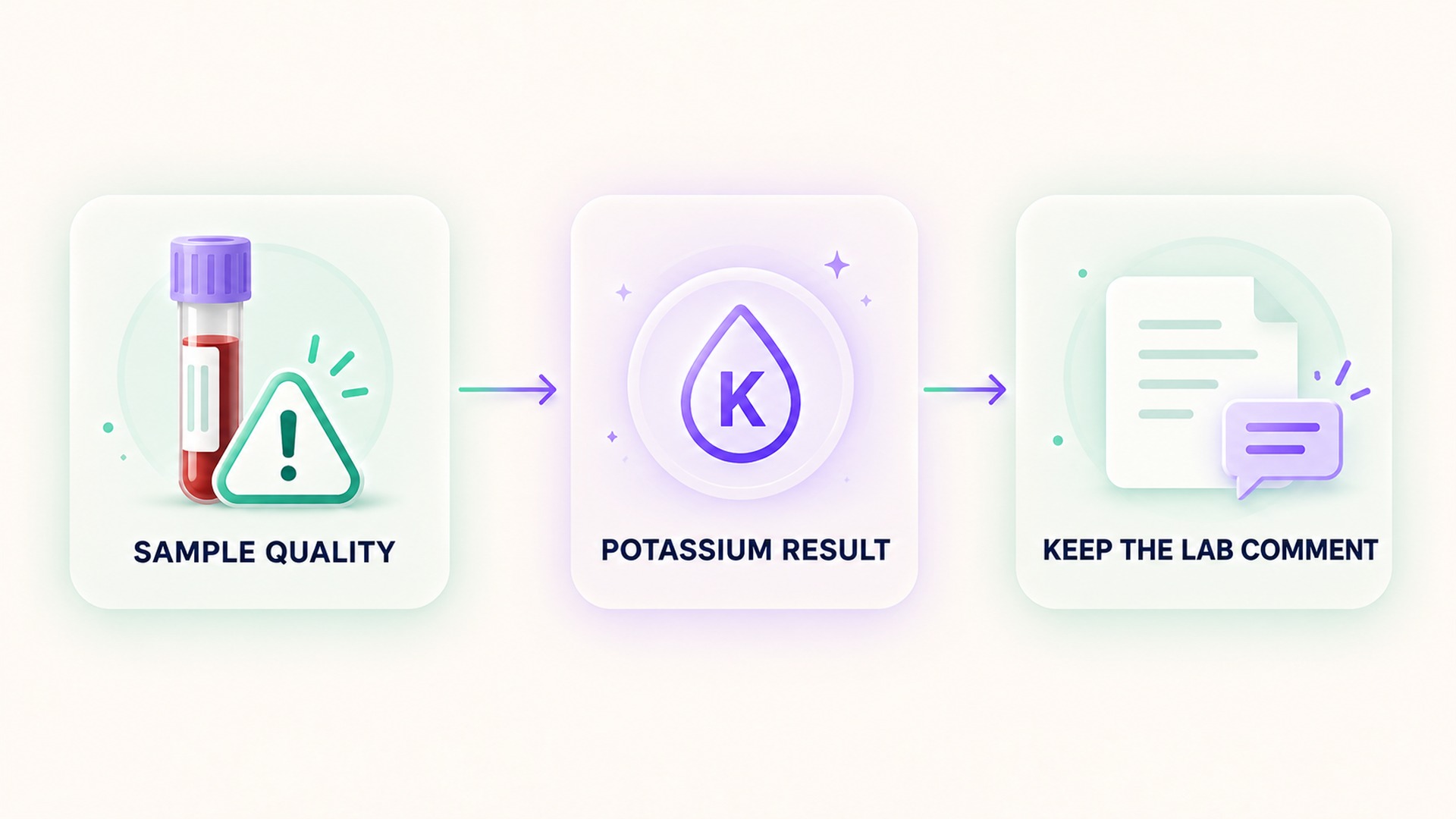
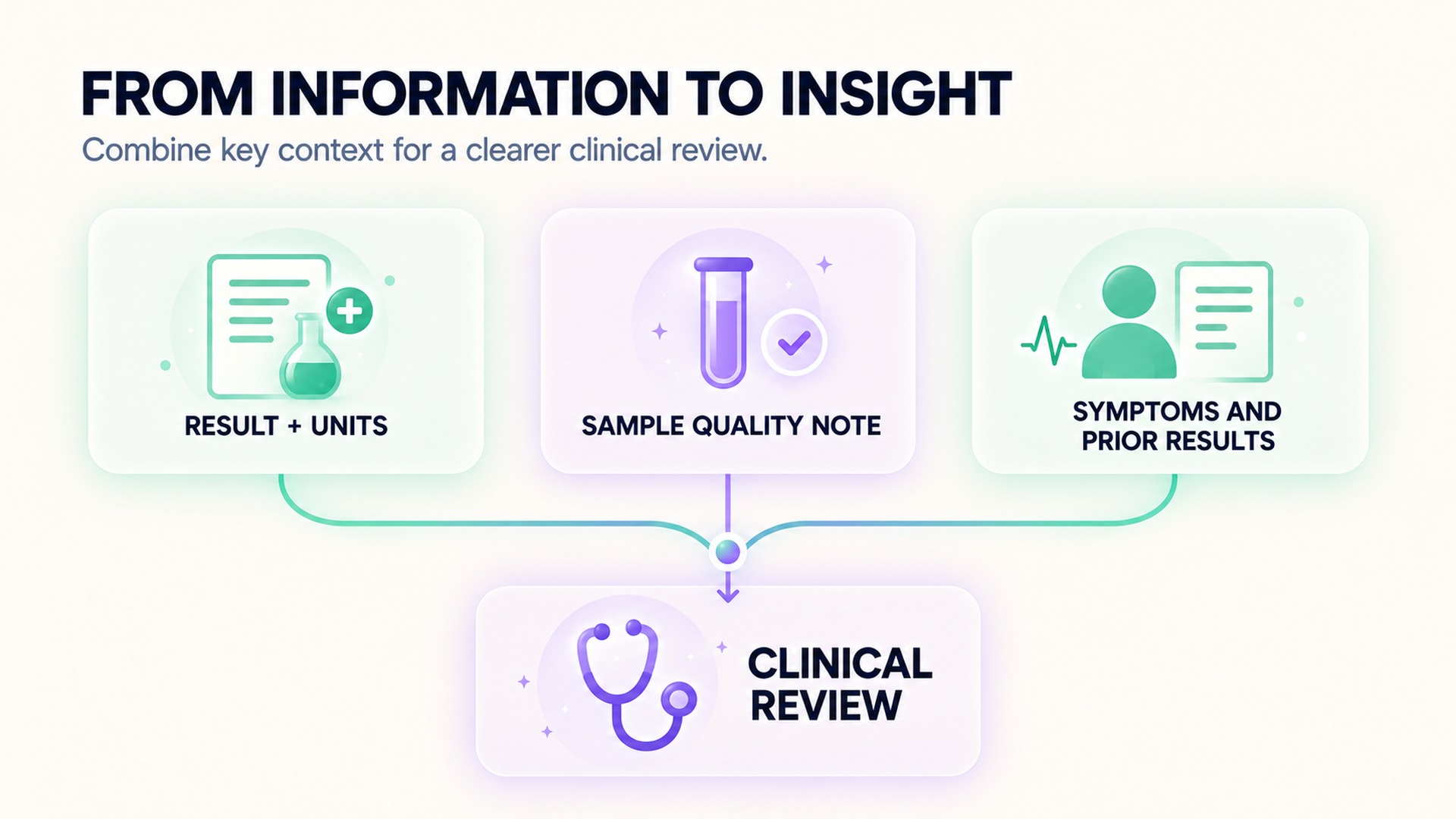
Save the full report with the test name, value, unit, reference interval, collection date, laboratory, and any hemolysis or specimen-quality message. If the report says the result was not released, preserve that notice too. A blank field or a canceled test is not the same as a normal result. If another sample was collected, keep both reports in date order so the care team can see what changed.
When asking for clarification, use the exact wording in the laboratory comment. Ask whether the potassium result was considered interpretable, whether the sample-quality flag affected it, and whether the laboratory or clinician recommended another sample. The laboratory can explain its method and reporting policy; the clinician can connect that information with symptoms, history, and other findings. These roles complement each other.
The hyperkalemia guideline from a kidney professional association notes that collection, transit, storage, and blood-cell conditions can contribute to pseudohyperkalemia. That term describes a measured elevation that does not match the circulating potassium level. It is a clinical and laboratory question, not something that can be determined from the word “hemolyzed” alone.
For a repeat collection, follow the clinic or laboratory's directions. Do not try to change how blood is drawn, request a particular tube, or alter medicines based on general online advice. Recollection may be appropriate in some situations, but its timing and method depend on how urgent the result is and what the care team needs to answer. If a report includes a repeat request, confirm the next step with the responsible clinician or laboratory.
A previous result can help only when the testing conditions are clear enough to compare. Check whether the same laboratory, sample type, units, and method were used. A new value may reflect a genuine change, a difference in measurement conditions, or both. A trend is more useful when the complete reports and their comments remain available rather than when only the numeric values are copied into a chart.
Keep the symptom context with the report as well. If there are symptoms or the care team has asked about them, record when they began and whether they changed around the collection. Do not use the absence of symptoms to rule out a clinically important potassium result. The purpose of symptom notes is to help a professional assess the whole situation, not to create a home threshold for action.
Collection and sample type matter
The word “hemolyzed” describes what happened to cells in a specimen or what the laboratory detected in it. It does not by itself establish why the cells released their contents. Damage can happen after collection during transport or processing. Less often, red cells may be breaking down in the body before the sample is drawn. The distinction requires clinical context and laboratory assessment. Repeated or unexpected flags should be brought to the clinician's attention rather than automatically attributed to a difficult blood draw.
Serum and plasma are also not interchangeable labels. Serum forms after blood clots, while plasma is collected with an anticoagulant. Potassium results can differ by sample type, handling, or blood-cell counts, so a value from one kind of specimen should not be compared casually with another. Keep the sample type and method with the value. If a clinician orders a repeat or paired sample, let the laboratory determine the collection tubes and processing steps.
A report may include an index or comment instead of a visible description of the sample. That indicator is generated under the laboratory's rules and may not use the same scale as another laboratory. The number attached to a hemolysis index is not a patient potassium measurement. In the same way, a comment such as “mild hemolysis” is not a universal threshold for whether the potassium is accurate. Ask the laboratory how it treated the specific specimen and whether it released the value with a qualification.
For general lab-result interpretation, keep the numeric finding separate from a food or supplement estimate. A related guide to blood sodium concentration and sodium eaten explains this broader record-keeping principle: two quantities can relate to health while still measuring different things. Potassium is different from sodium clinically, but the same documentation habit applies. Keep the measured result, the test conditions, and the explanatory note together instead of replacing one with an assumption.
Frequently asked questions
Does a hemolysis flag mean the potassium result is false?
No. It means the sample may have a quality issue that can affect interpretation. The laboratory's method and comment determine how the result was reported, and the clinician considers it with the person's situation.
Can I ignore a high potassium result if the sample was hemolyzed?
No. A hemolysis note does not prove that the person's potassium is normal. Follow the urgency and instructions from the clinician or laboratory, especially if they requested prompt assessment or another sample.
What information should I save?
Keep the complete report, including test name, value, units, reference interval, date, sample-quality comment, laboratory, and any later repeat result. Preserve the original wording so the care team can review the laboratory's qualification.
*This article is for informational purposes only and is not a substitute for professional medical advice, diagnosis or treatment.*
Sources:
MedlinePlus / A.D.A.M.·Centers for Disease Control and Prevention·The Clinical Biochemist Reviews·Academic Pathology·National Center for Biotechnology Information Bookshelf·UK Kidney Association
Related articles

Biotin supplements belong in the record before a blood test
Biotin in supplements can affect selected laboratory assays, and the effect depends on the method used. A clear product, amount, and timing record helps the testing team decide whether an assay-specific review is needed.

A post-vaccine HRV change is not a personal immunity test
A wearable HRV change after vaccination can describe a physiological signal, but it cannot measure antibodies or personal protection. Learn why study associations, symptoms, and immune status answer different questions.

Vitamin D blood levels should not become an automatic supplement dose
Learn what a vitamin D blood test measures and why the result does not automatically set a supplement dose. See how symptoms, medicines, testing reason, and health history shape interpretation.

Blood sodium concentration is different from sodium eaten
Learn why a sodium blood test measures a concentration while a food log estimates an amount eaten. See why a blood result cannot be converted into an instruction to add salt or change intake.

Recent lifting belongs in the context of a liver enzyme result
Learn why recent lifting belongs beside liver enzyme results and why it should not be assumed to explain an abnormal test. See how AST, ALT, CK, timing, symptoms, and the rest of the panel help shape clinical interpretation.

Keep the kidney function equation beside an eGFR trend
Learn why a change in the eGFR equation can shift a reported estimate without an equivalent biological change. See what to record beside each value so a trend can be interpreted with its method and clinical context.

Creatine kinase after exercise requires symptoms and timing
Learn why recent exercise, test timing, and symptoms all matter when a creatine kinase result is reviewed. See why CK is a clinical marker rather than a training target and when unusual symptoms need prompt attention.

Normal oxygen saturation does not establish a normal hemoglobin level
A pulse-oximeter percentage estimates how much available hemoglobin is carrying oxygen, while a blood count measures hemoglobin amount. Learn why one reassuring reading cannot replace the other test or a clinical review.

A raised CRP result cannot identify the source of inflammation
A raised CRP can signal inflammation, but it cannot identify where the process is or what caused it. Learn why standard CRP and high-sensitivity CRP serve different purposes and need clinical context.

When a vitamin B12 result needs a methylmalonic acid check
Learn why a clinician may consider methylmalonic acid when a vitamin B12 result leaves a question unresolved. See how kidney function, symptoms, medicines, and other tests shape interpretation.