Biotin supplements belong in the record before a blood test
By Mr.Apps · Nov 2, 2026
Category:Energy

Why biotin belongs in a lab record
Biotin interference with blood tests is a specific laboratory issue, not a reason to assume that every result is unreliable. Biotin is vitamin B7. It occurs in foods and in multivitamins, B-complex products, and supplements marketed for hair, skin, and nails. Some diagnostic assays use biotin-based chemistry, and biotin in a blood sample can affect those methods. The direction and size of an effect depend on the assay design. That is why a complete supplement record can help the testing team decide whether a result needs a different method or additional review.
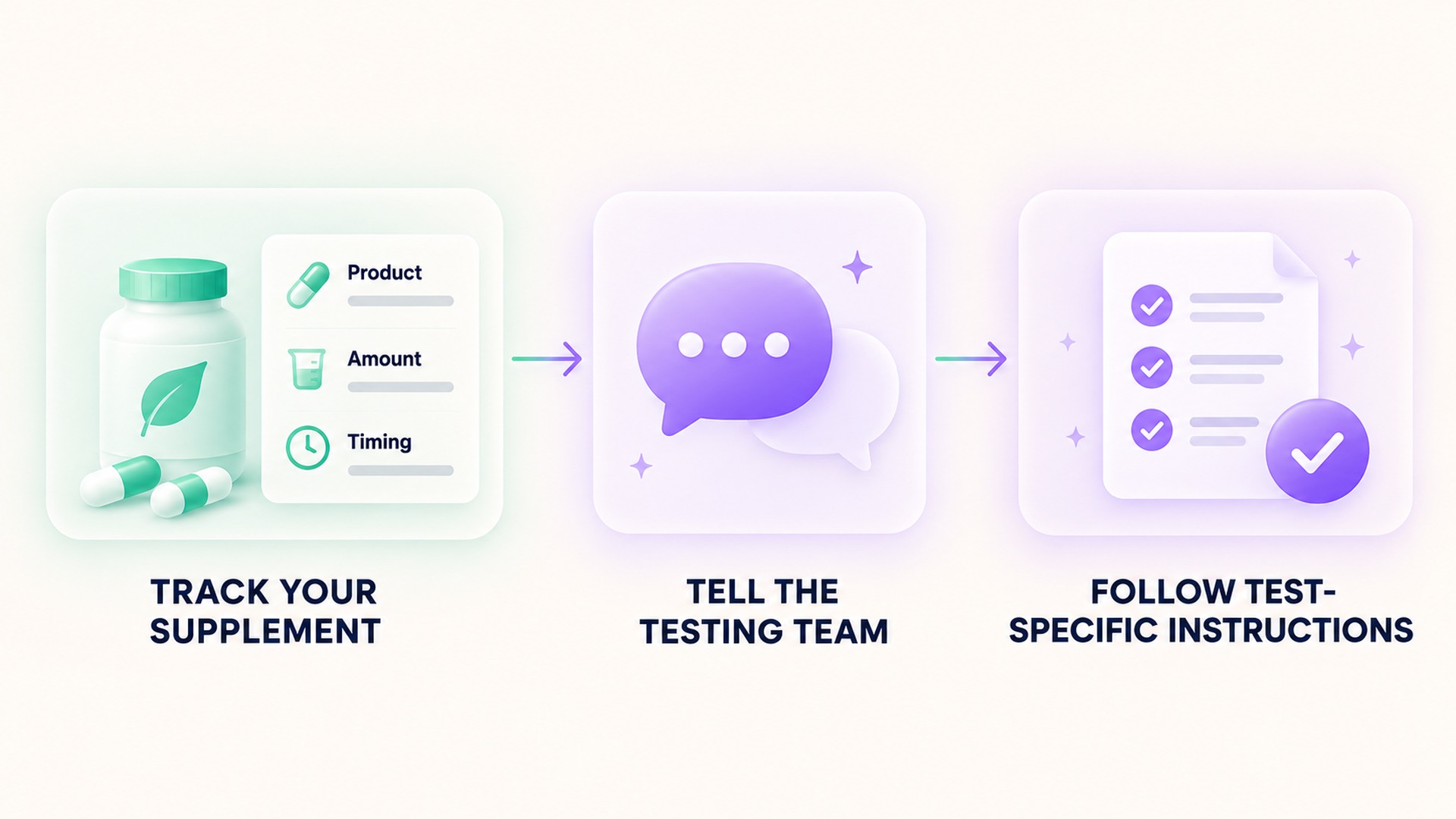
I treat a supplement list as part of the laboratory context, alongside the test name, collection date, units, and preparation instructions. The useful record is concrete: product name, serving size, amount of biotin per serving, how many servings are taken, and when the most recent dose was used. A label or a clear photograph of it can reduce guesswork. This record does not diagnose an interference, and it does not replace the clinician's interpretation.
The safety information on biotin and laboratory tests explains why some test methods remain a concern and why the risk is assay-specific. The health-professional fact sheet on biotin describes biotin sources and summarizes evidence about laboratory test interactions. These sources support the same practical distinction: record the exposure, then let the laboratory and care team determine what it means for a particular test.
Why one supplement can affect some tests
Many laboratory tests rely on a chemical reaction that produces a measurable signal. One common design uses a strong binding relationship between biotin and a protein called streptavidin. The assay can use this relationship to capture or separate parts of the reaction. If enough free biotin is present in the sample, it may compete with the assay's intended binding step. In a susceptible test, that can alter the signal the instrument reads.
The effect is not the same for every assay. Some methods may report a value that is falsely high; others can be falsely low. Some assay designs have been changed to reduce the problem, and some do not use the same biotin-dependent chemistry. A test name alone may not tell a patient which version or method a laboratory uses. The manufacturer guidance on testing for biotin interference addresses how developers should evaluate interference and communicate relevant information. It does not imply that all tests are affected.
The practical consequence is that a result should not be labeled wrong simply because a person takes biotin. A clinician may compare the result with symptoms, other tests, prior values, and the reason the test was ordered. If the pattern does not fit, the care team can ask the laboratory whether the assay is susceptible, whether the amount or timing of biotin matters, and whether a different method or repeat sample is appropriate. Patients should not independently decide that an abnormal value can be ignored.
A report may not display the assay architecture. The laboratory can often identify the method from the test code or instrument record. An online directory of supplement actions includes a linked safety communication about biotin. This is one example of why method-level information can matter for a specific analyte. It is not a universal directory of every laboratory test or every version of every assay. The list also changes as manufacturers address known interference, so an old screenshot is not a substitute for asking about the current method.
What to include in the supplement record
A useful record separates the product from the nutrient. The front label may use a marketing name, while the Supplement Facts panel identifies the amount of biotin in one serving. The serving may consist of more than one capsule or gummy. A multivitamin may contain biotin even if it is not sold as a biotin product. A hair or nail formula may provide an amount that differs substantially from a standard multivitamin. I record the product and the stated amount rather than estimating from the product category.
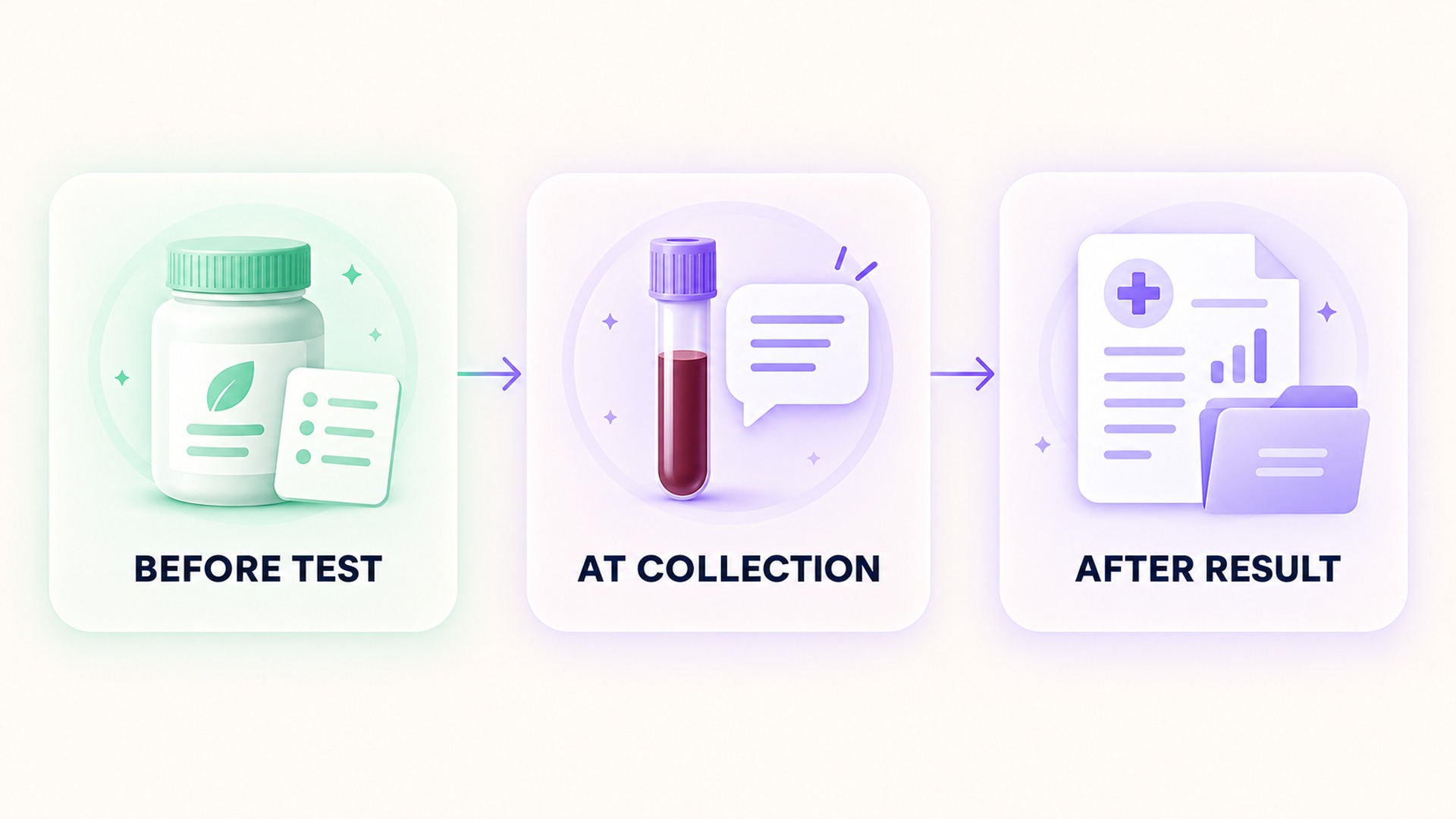
Include the time context without trying to turn it into a universal rule. Write down when the last dose was taken and the expected collection date if it is known. Laboratories and clinicians may give instructions that depend on the test, the amount, the person's health situation, and the assay method. There is no single interval that can be safely applied to every product and every blood test. The consumer fact sheet on biotin advises people to tell health professionals about supplements, while public safety information describes this concern in relation to particular tests and assay methods. Follow the specific preparation instructions supplied for the ordered test.

The record should also say whether the product is taken daily, occasionally, or only during a particular period. If the amount has changed, note the approximate change date. If the label is unavailable, identify what is known and mark the dose as unconfirmed. It is better to preserve uncertainty than to enter a precise number that was never checked. Do not infer a supplement dose from a pill's size, its color, or a product's name.
Keep the original label or a dated image when possible. Formulas can change, and names can be similar. Include the full product name, serving definition, biotin quantity, and any combination ingredients that could matter to the clinician's review. If a clinician or laboratory asks for more details, the original packaging may answer a question that a brief note cannot.
What to tell the testing team
When scheduling or checking in, mention biotin along with other vitamins, supplements, and medicines. Give the product name and amount, and state when it was last used. If the supplement list was already submitted, confirm that it includes the current product and not just a general note such as “hair vitamins.” The point is to give the people responsible for test preparation enough information to evaluate the method and instructions.
If a result looks unexpected, report the same details to the clinician who reviews it. Include the exact test name, date, value, units, and laboratory reference interval. Avoid comparing numbers across different laboratories without checking whether the test method, units, and reference range match. A result that changes after a different method or collection date needs the same careful review as any other result; the supplement is one possible context, not a conclusion.
Biotin should not be stopped, started, or changed solely to alter a laboratory result unless the responsible clinician gives that instruction. Some people take it for a medical reason. Others may use a product with multiple ingredients or have a care plan that affects preparation. The guidance for test developers describes assay evaluation, not a patient-specific stopping schedule. Ask the clinician or laboratory for directions that apply to the ordered test.
For thyroid tests, the question can be especially confusing because biotin may change some reported hormone measurements without changing thyroid function itself. When a result is inconsistent with symptoms or earlier tests, the clinician can review the test method and the supplement history. A related explanation of reading TSH and free T4 together describes why a single laboratory value is read with related results and clinical context. The same record-first principle applies here: retain the information that helps a professional decide what to check next.
Keep the interpretation with the clinician
An abnormal result still deserves the attention appropriate to the test and the person's symptoms. A potential laboratory interference is not permission to dismiss it. The clinician may decide that the finding is clinically important, repeat testing, consult the laboratory, or use another assay. Those choices depend on the clinical question. If there are urgent symptoms or the care team has asked for prompt follow-up, continue to follow that advice while disclosing the supplement.
This is also why the record should preserve the laboratory's own comment. A hemolysis flag, an assay note, or a request for repeat collection is part of the result. Do not replace it with a personal explanation such as “biotin caused the number.” If the report was amended or repeated, save both versions with their dates so the clinician can see what changed and why.
For future comparisons, keep the original report rather than copying only the value into a tracker. Save the test name, collection date, units, reference interval, lab, any method note, and the supplement details that were current at the time. If the next test is performed by another laboratory or with another method, that difference can affect whether the values are directly comparable. Biotin is an ordinary nutrient with a specific analytical interaction in some laboratory methods. The sensible response is to document what was taken, communicate that information, and let the testing professionals decide whether the assay or collection plan needs attention. A complete record supports that decision without turning one possible interference into an explanation for every unexpected value.
Frequently asked questions
Can biotin affect every blood test?
No. The effect depends on whether a particular assay uses susceptible biotin-based chemistry, the amount present in the sample, and the design of the method. Ask the laboratory or clinician about the specific test rather than assuming all results are affected.
Should I stop biotin before a blood test?
Follow the instructions from the clinician or laboratory responsible for the test. There is no universal pause interval that applies to every assay, dose, product, or person. Do not change a supplement used for a medical reason without asking the care team.
What details should I bring to an appointment?
Bring the product name, label or a clear image, amount per serving, servings used, usual schedule, and time of the most recent dose. Include the test name and report if you are discussing a result that has already been collected.
*This article is for informational purposes only and is not a substitute for professional medical advice, diagnosis or treatment.*
Sources:
U.S. Food and Drug Administration·NIH Office of Dietary Supplements·U.S. Food and Drug Administration·U.S. Food and Drug Administration·NIH Office of Dietary Supplements·U.S. Food and Drug Administration
Related articles

A post-vaccine HRV change is not a personal immunity test
A wearable HRV change after vaccination can describe a physiological signal, but it cannot measure antibodies or personal protection. Learn why study associations, symptoms, and immune status answer different questions.

Vitamin D blood levels should not become an automatic supplement dose
Learn what a vitamin D blood test measures and why the result does not automatically set a supplement dose. See how symptoms, medicines, testing reason, and health history shape interpretation.

Blood sodium concentration is different from sodium eaten
Learn why a sodium blood test measures a concentration while a food log estimates an amount eaten. See why a blood result cannot be converted into an instruction to add salt or change intake.

Recent lifting belongs in the context of a liver enzyme result
Learn why recent lifting belongs beside liver enzyme results and why it should not be assumed to explain an abnormal test. See how AST, ALT, CK, timing, symptoms, and the rest of the panel help shape clinical interpretation.

Keep the kidney function equation beside an eGFR trend
Learn why a change in the eGFR equation can shift a reported estimate without an equivalent biological change. See what to record beside each value so a trend can be interpreted with its method and clinical context.

Creatine kinase after exercise requires symptoms and timing
Learn why recent exercise, test timing, and symptoms all matter when a creatine kinase result is reviewed. See why CK is a clinical marker rather than a training target and when unusual symptoms need prompt attention.

Normal oxygen saturation does not establish a normal hemoglobin level
A pulse-oximeter percentage estimates how much available hemoglobin is carrying oxygen, while a blood count measures hemoglobin amount. Learn why one reassuring reading cannot replace the other test or a clinical review.

A raised CRP result cannot identify the source of inflammation
A raised CRP can signal inflammation, but it cannot identify where the process is or what caused it. Learn why standard CRP and high-sensitivity CRP serve different purposes and need clinical context.

When a vitamin B12 result needs a methylmalonic acid check
Learn why a clinician may consider methylmalonic acid when a vitamin B12 result leaves a question unresolved. See how kidney function, symptoms, medicines, and other tests shape interpretation.

Reading TSH and free T4 together in a fatigue review
Learn what TSH and free T4 contribute to a fatigue review and why the two results need clinical context. See how symptoms, medicines, timing, and prior results help keep a lab value in its proper role.