A resting metabolic rate test depends on the test protocol
By Mr.Apps · Nov 2, 2026
Category:Energy

What a resting metabolic rate test measures
A resting metabolic rate test depends on the test protocol because the result is an estimate made from gas exchange under defined conditions. Indirect calorimetry measures oxygen consumption and carbon dioxide production, then uses those measurements to estimate energy used while the person is resting. The equipment, preparation, rest period, collection method, and analysis window all contribute to the reported value.
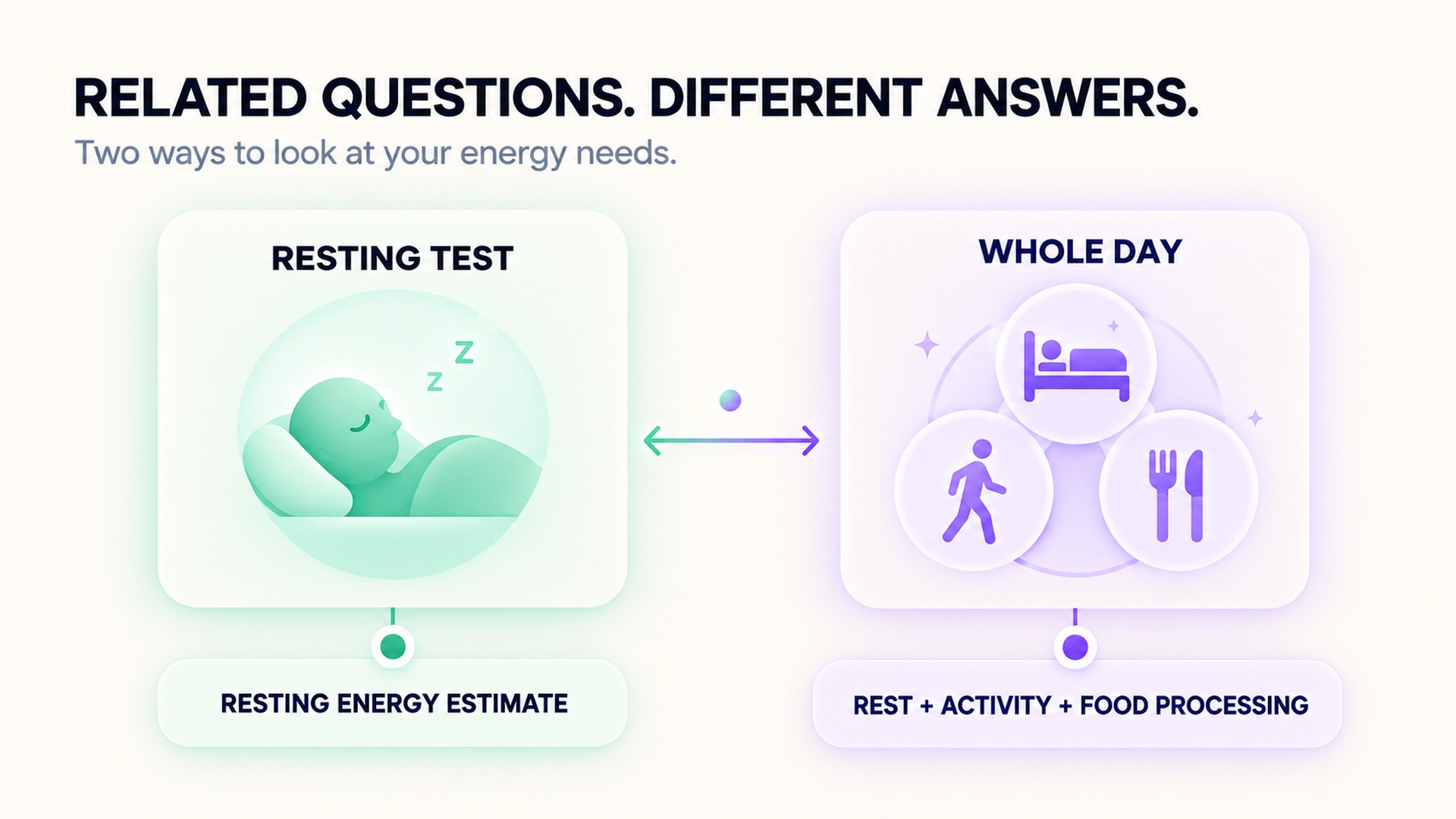
A result from a laboratory rest test is not a direct measurement of a full day of energy use. Daily energy expenditure includes activity and the energy cost of processing food as well as resting needs. A resting value may be one input to a nutrition or clinical assessment, but it cannot by itself determine a person's daily calorie requirement or prescribe an intake target.
The study of gas-exchange selection for resting metabolic rate shows that the method used to choose representative data from a test can change the calculated value. That is why I read the reported number with the method, protocol, and test date rather than as a timeless personal constant.
Why preparation is part of the result
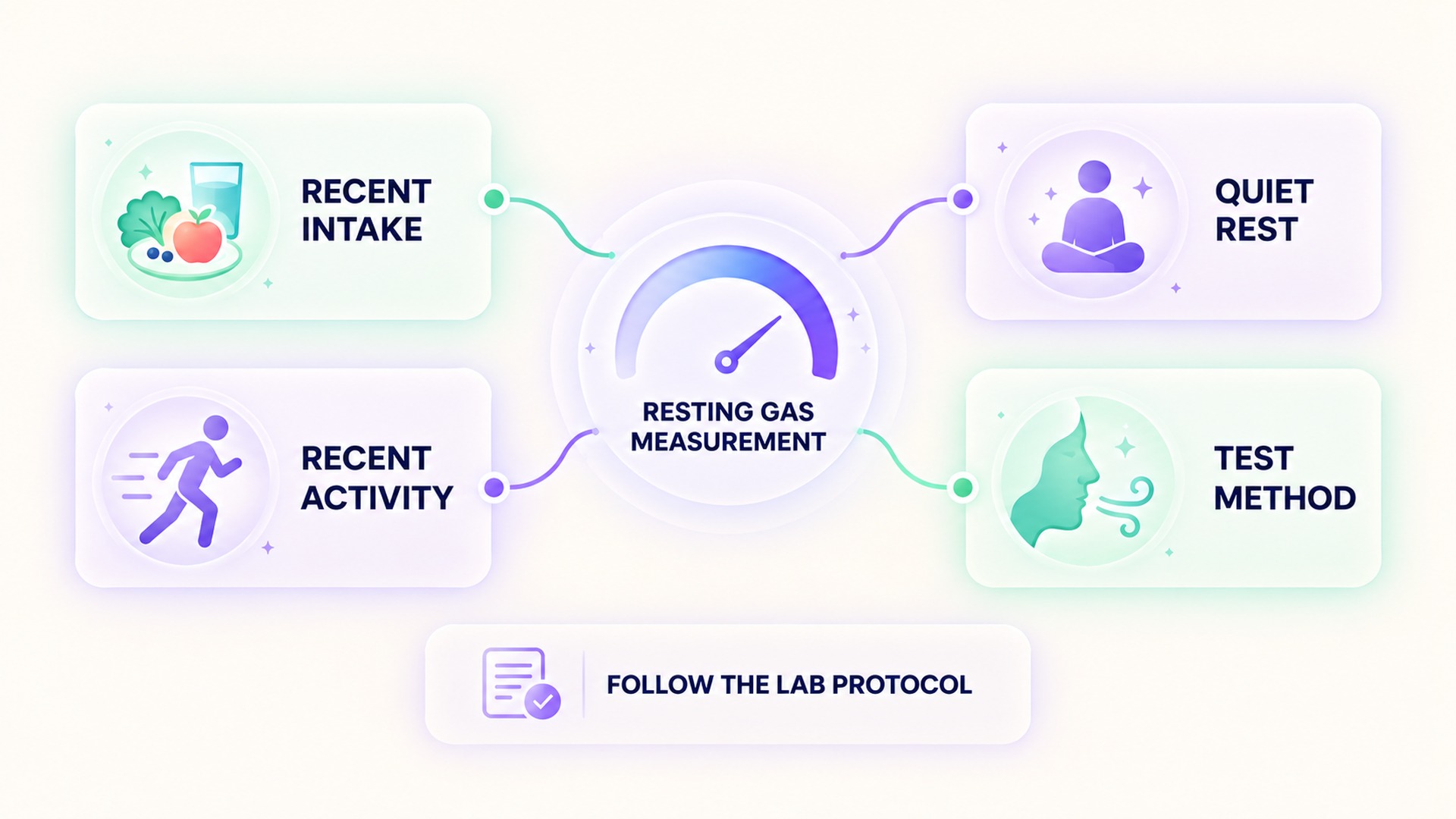
The body does not use energy at exactly the same rate in every moment. Recent food, activity, stimulants, sleep, posture, room conditions, and movement can affect the state being measured. A protocol attempts to standardize relevant factors so the sample reflects the question the test is meant to answer. The details vary by laboratory and study design.
A fasting instruction in a research paper is not automatically the right instruction for every person. The test provider may use a specific preparation plan based on the equipment, clinical purpose, safety needs, and test timing. Follow the instructions supplied for the appointment. If a medicine, health condition, or schedule makes an instruction unclear, ask the ordering clinician or testing team rather than improvising a change.
The reliability study of resting metabolic rate measurement methods compared data-selection approaches and repeated measurements under a defined research protocol. Its participants and testing conditions limit how broadly the results can be applied. It demonstrates that reported RMR depends on how the readings are selected and analyzed; it does not establish one universal preparation rule.
How the instrument produces a value
Many laboratories use a ventilated hood, a face mask, or another gas-collection system. Each setup samples respiratory gases differently and needs its own calibration and quality checks. The person may lie down or recline, remain quiet, and breathe through the equipment while the system records gas exchange. A staff member checks that the setup fits the protocol and that the collected data are usable.
The analyzer does not simply take one breath and announce a permanent rate. The operator may review a period of measurements and select a stable segment according to the device's instructions or study method. Leaks, movement, irregular breathing, or unstable gas values can affect interpretation. Some reports include quality notes or may require repeating part of the measurement. Preserve those comments with the value.
The research comparing analysis windows for resting gas exchange found that measurement repeatability and estimates can differ across repeated test segments. The study used a specific protocol and equipment, so its numbers should not be generalized to every clinic. It supports a practical rule: the selected time window and processing approach belong with the result.
The whole-room calorimetry protocol describes another method that measures gas exchange in a controlled chamber. A chamber-based study is not the same as a brief hood assessment. The person, environmental conditions, measurement duration, and calculation approach differ. Even when both reports use the phrase “resting metabolic rate,” they may answer related but distinct measurement questions.
A test result is not a daily energy prescription
Resting metabolic rate is commonly used as an estimate of the energy needed to sustain basic functions while at rest. It does not include the full effect of walking, work, training, digestion, or ordinary movement through a day. A formula may combine a resting estimate with an activity multiplier to project total daily energy expenditure, but the projection adds assumptions that were not measured in the rest test.
A review of respiratory gas analyzers for RMR reports that validity can vary with device, population, and assessment protocol. Predictive equations and measurement devices are not interchangeable by default. If a clinician uses the result in a plan, ask which value is measured, which value is estimated, what assumptions were added, and what follow-up would show whether the plan fits.
A scan or wearable estimate may display a daily energy number beside an RMR result, but the labels describe different things. One may be a short resting measurement, another a modeled total, and another an activity-linked estimate. Do not copy them into the same field or treat their differences as evidence that the test failed. Keep the source and definition visible.
The validation and reproducibility study of whole-room indirect calorimetry reports results from a specific chamber and protocol. It does not make every chamber, hood, or portable gas analyzer equivalent. The review of portable analyzers and resting metabolic rate also describes variable validity across devices and protocols. Together, these sources support checking the equipment and method before comparing a result with another test or equation.
The test context belongs with the number
A laboratory may use a hood to capture exhaled air, a mask connected to a gas analyzer, or a chamber that measures changes in gases over time. These methods differ in how they collect the sample, how long the person stays in the equipment, and how the system determines that the reading is stable. A clinician can tell you which method was used and what the report's value represents. If the report only gives a number, ask for the method before using it to compare with an online calculator or a result from another site.
The equipment also needs calibration and a leak-free fit. A loose mask or hood, movement during the test, or an unstable gas signal can make the measurement harder to interpret. Staff may repeat the measurement or note a limitation when the collected period does not meet the lab's quality rules. Such a note is not an optional detail: it tells the reader how much confidence to place in the number. Preserve it with the result rather than copying only the final estimate.
Resting measurements can vary between days, even when the same person returns to the same lab. Differences can reflect biological variation, preparation, sleep, recent activity, room conditions, or technical factors. A small shift should not be treated as a metabolic change without review of the method and expected repeatability. If serial tests are planned, the clinician can explain the interval and what size of difference could affect the decision being considered.
An estimate from a test can be combined with other information, but the added calculation should be labeled. For instance, a nutrition professional may use a resting value in an equation or apply an activity factor to estimate daily needs. That estimate includes choices about activity and goals that are not measured by the calorimeter. Keeping the direct result, the calculation, and the recommendation in separate fields makes it clear which part came from the instrument and which part came from a model or professional judgment.
What to save with the report
Keep the full report, test date, measured value, units, device or method, body position, collection system, preparation instructions, and any quality note. If the clinic provides its protocol name or analysis window, record that as well. A small note about an instruction that could not be followed exactly can help the clinician decide whether it affects the comparison.
For future testing, use the same laboratory and method when the clinical team wants to compare results, when practical. If the site changes equipment, calibration, or analysis software, ask whether the measurements remain directly comparable. A change in the displayed number might reflect a real difference, a method difference, or both. Keep the original report instead of rewriting it into a new value that strips away its source.

A resting test can be useful when it answers a defined clinical or research question. Its meaning is strongest when the protocol is visible and the resulting estimate is kept separate from total daily energy use. Follow the appointment instructions, preserve the report, and let the professional responsible for the test interpret how the value fits the person's situation.
Frequently asked questions
Does resting metabolic rate equal total daily energy expenditure?
No. Resting metabolic rate estimates energy use under resting test conditions. Daily expenditure also includes movement, exercise, and the energy cost of processing food.
Should everyone follow the same preparation instructions?
No. Instructions depend on the testing method and the purpose of the test. Follow the directions from the laboratory or clinician and ask them about medicines or conditions that make a step unclear.
Can I use one RMR value to set a calorie target?
Not by itself. A daily target requires additional context and assumptions beyond a resting measurement. Review the result and any proposed plan with the professional responsible for your care.
*This article is for informational purposes only and is not a substitute for professional medical advice, diagnosis or treatment.*
Sources:
Nutrients·Clinical nutrition (Edinburgh, Scotland)·Hormone and metabolic research = Hormon- und Stoffwechselforschung = Hormones et metabolisme·Phenomics·Sports (Basel, Switzerland)·Physiological Reports
Related articles

Bone density T-scores and Z-scores use different references
A T-score compares bone density with a young-adult reference, while a Z-score uses a more closely age-matched reference. Keep the score type, skeletal site, and report interpretation together because the two numbers are not interchangeable.

Waist measurements need a consistent anatomical landmark
Waist circumference can differ when the tape crosses different anatomical sites or follows a different plane. Keep the landmark, posture, breathing phase, and tape position with each date so a trend uses a consistent protocol.

Lean tissue on a body scan includes more than muscle
A body-composition scan reports method-dependent compartments such as lean soft tissue, not a direct count of skeletal muscle. Keep the exact scan label, body region, method, date, and testing context with the result before comparing it over time.

Urine albumin concentration needs its creatinine context
A spot urine albumin concentration changes with how diluted the sample is. The albumin-to-creatinine ratio adds context, while the full report and clinical question still guide interpretation.

A hemolyzed blood sample can complicate a potassium result
Cell damage during collection or handling can affect a measured potassium value. Keep the sample-quality comment with the report and have the result reviewed in its clinical context.

Biotin supplements belong in the record before a blood test
Biotin in supplements can affect selected laboratory assays, and the effect depends on the method used. A clear product, amount, and timing record helps the testing team decide whether an assay-specific review is needed.

A post-vaccine HRV change is not a personal immunity test
A wearable HRV change after vaccination can describe a physiological signal, but it cannot measure antibodies or personal protection. Learn why study associations, symptoms, and immune status answer different questions.

Vitamin D blood levels should not become an automatic supplement dose
Learn what a vitamin D blood test measures and why the result does not automatically set a supplement dose. See how symptoms, medicines, testing reason, and health history shape interpretation.

Blood sodium concentration is different from sodium eaten
Learn why a sodium blood test measures a concentration while a food log estimates an amount eaten. See why a blood result cannot be converted into an instruction to add salt or change intake.

Recent lifting belongs in the context of a liver enzyme result
Learn why recent lifting belongs beside liver enzyme results and why it should not be assumed to explain an abnormal test. See how AST, ALT, CK, timing, symptoms, and the rest of the panel help shape clinical interpretation.