Waist measurements need a consistent anatomical landmark
By Mr.Apps · Nov 2, 2026
Category:Energy

Why the landmark must stay consistent
Waist circumference measurement consistency depends on using the same anatomical landmark, tape position, posture, and breathing phase each time. A tape placed at the narrowest point, at the navel, just above the hip bone, or midway between the lowest rib and the hip bone can produce different readings. Each may correspond to a defined protocol. They should not be blended into one trend as if they were identical measurements.
I record the protocol beside the number. For example, the report should say whether the tape was placed at the top of the iliac crest or at the midpoint between the lower rib and the iliac crest. The same site must be used for future comparisons. If the source of a measurement is unknown, label the landmark as unknown instead of assuming it matches the last value.
The measurement instructions from a national clinical guideline describe a landmark-based protocol that places the tape horizontally above the upper hip bone, snugly without compressing the skin, with the person standing and breathing normally. Other protocols use a different landmark. The useful lesson is to preserve the method, not to claim that all published measurements use the same point.
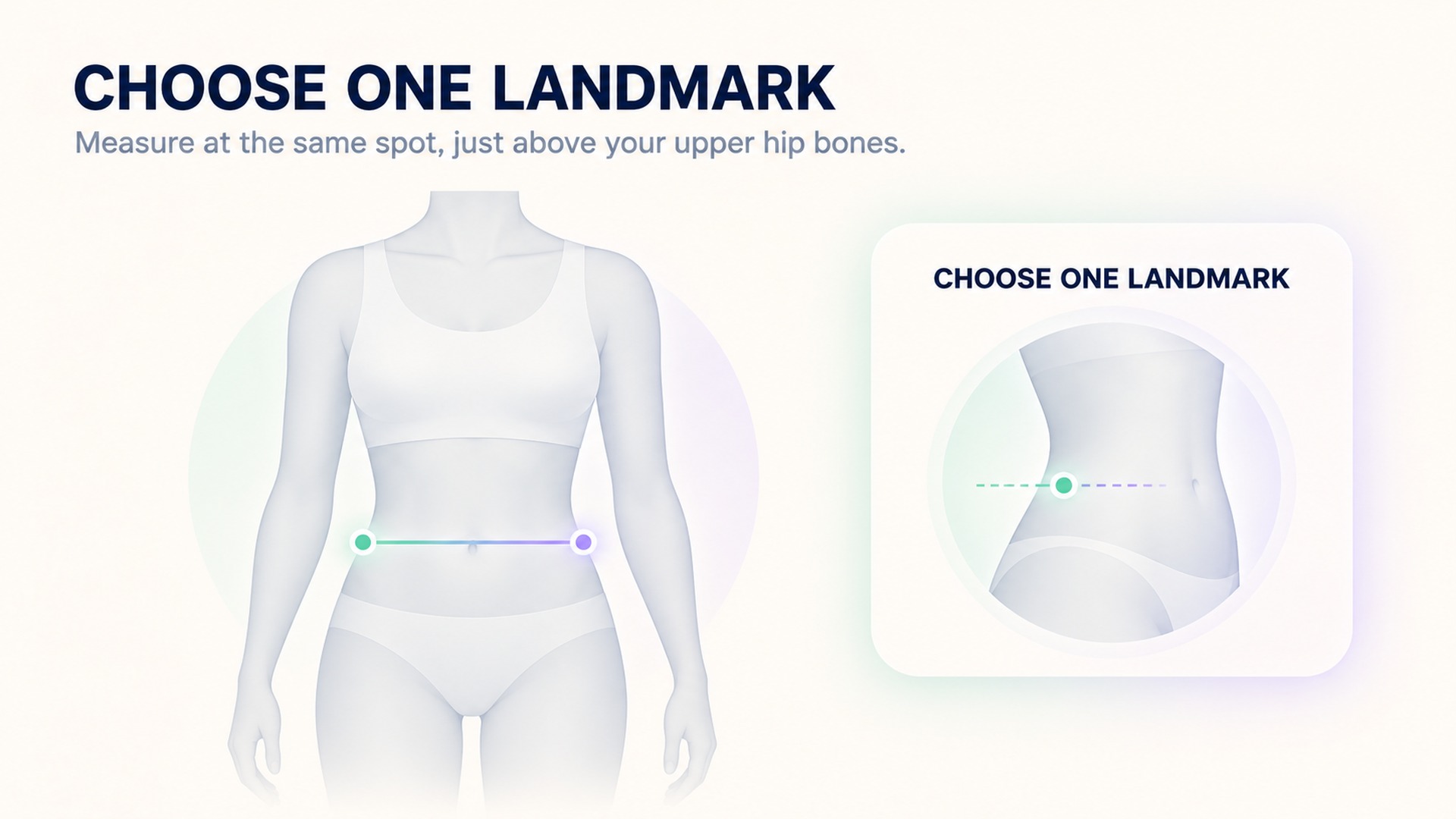
Different protocols can name different sites
A waist is a region rather than a single visible bone or joint. To make a circumference repeatable, a protocol defines where the tape crosses the trunk. One common approach uses the upper border of the iliac crest, the top of the hip bone. Another identifies the midpoint between the lowest palpable rib and the top of that crest. A third may use a specified point for a particular study. The chosen landmark affects the measurement and must remain attached to it.
This variation does not mean every recorded value is useless. It means comparisons need matching methods. If a clinician or study gives a protocol, follow that instruction and retain its name or description. If no protocol is supplied, ask which site should be used before establishing a baseline. A reader should not change landmarks in an attempt to obtain a preferred result.
The international protocol report on waist circumference describes a midpoint between the lower margin of the last palpable rib and the iliac crest and explains how posture, breathing, tape placement, and tension can affect readings. That differs from the upper-crest landmark used in some other methods. Both examples show why the protocol must be written down.
How tape position changes the value
The measuring tape should follow a level plane around the trunk. If it angles upward at the back or downward at the front, it crosses different parts of the body and can change the result. Twists, gaps, clothing folds, or loose tape also affect the circumference. A tape should be snug, but it should not press into the skin or compress soft tissue.
Posture matters because bending, twisting, or holding the abdomen tense can shift the tape's path. A consistent stance with weight balanced and arms relaxed makes the position easier to reproduce. The abdomen should remain relaxed. The measurement is normally taken after a natural breath out, according to the chosen method, rather than during a forced exhale or while the person is bracing.
The clinical measurement steps in current practice guidance describe preparing the person, identifying the selected landmark, placing the tape horizontally, and measuring under repeatable conditions. The guide also says practices should use a consistent protocol for longitudinal measurements. The steps are intended to standardize a clinical measurement, not to convert a waist value into a personal diagnosis.
Clothing adds another source of inconsistency. If one measurement is taken over thick clothing and another on bare skin, the tape does not contact the same surface. Follow the clinical protocol about clothing and privacy. For a personal record, note what the tape was placed over. A private and respectful setup helps preserve consistency without turning the measurement into a judgment about appearance.
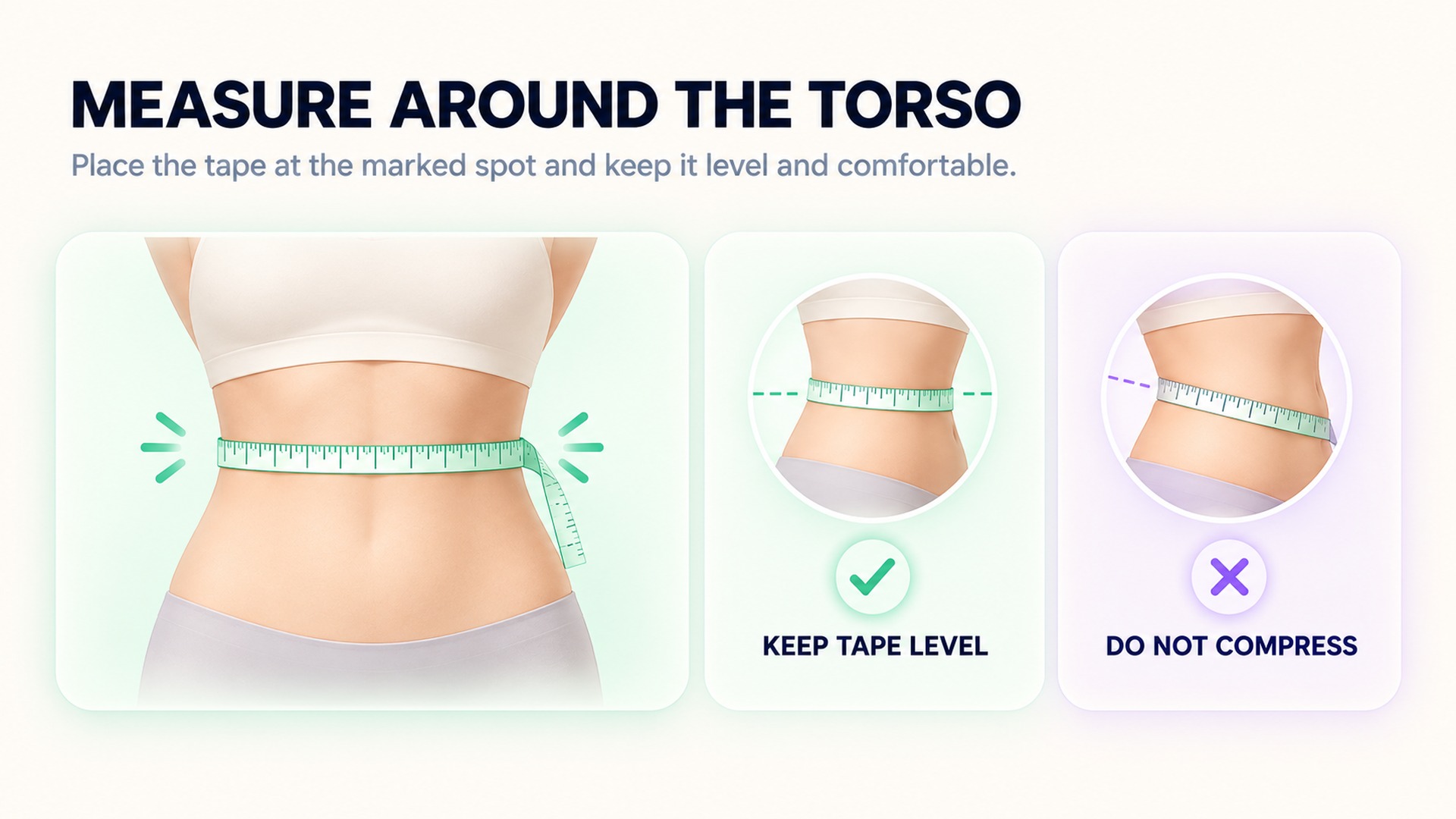
What to record beside the number
Write the landmark in words, not only as “waist.” A note such as “upper edge of the hip bone” or “midpoint between lower rib and hip bone” is more useful to another person than a bare reading. Include the unit and the side or line used to locate the point if the protocol specifies one. If a clinician marked the site, note that detail. These small notes make it possible to repeat the same placement later.
The public guide to measuring waist circumference describes placing a tape above the hipbones and keeping the measurement process consistent. It is one reference point. If a clinician or study uses another method, follow that method instead and preserve the distinction. A personal tracking routine should not silently replace a clinical protocol that was chosen for a particular purpose.
Record who took the measurement only when that information is useful and appropriate. A self-measured value and one taken by a trained staff member may differ in tape angle, landmark selection, and tension. The entry should identify the measurement source when it could affect comparison. If several people take measurements, training and a written set of steps can reduce differences in how they locate the landmark or read the tape.
Why the landmark should not change mid-trend
Changing sites can shift a value even when the person's body has not changed. The new reading might be higher or lower because the tape crossed a different plane. That difference is not evidence of gain or loss at a particular tissue layer. If a protocol changes, preserve the old series as its own sequence and start a new sequence with the new landmark clearly named. Do not back-calculate old readings unless the data and a validated method support that conversion.
When comparing records from different clinics or studies, look for the method before comparing the numbers. A title or label such as “waist circumference” may hide differences in landmarks. If the reports do not state the method, mark it as unknown and avoid claiming that the values are directly comparable. A careful record can still be useful even when an earlier detail is missing; the important point is to keep the uncertainty visible.
The measurement is one observation within a broader assessment. It does not state how someone feels, why a body dimension changed, or what a person should do next. A healthcare professional can explain why the measure was taken and whether a change matters for that person's care. Keeping the measurement neutral, dated, and tied to its protocol makes it easier to discuss without assigning a value judgment to the body.
Repeat the same process
If the protocol calls for duplicate readings, record both and follow its rule for deciding whether another measurement is needed. Some protocols specify a repeat tolerance or an averaging method. Do not invent a cutoff or switch to averaging only when the number is inconvenient. The goal is to preserve the procedure used, including any repeat readings, rather than manufacture a more precise value.
The professional education guide for waist measurement outlines a consistent landmark, level tape, snug fit, and repeatable positioning. A separate public health protocol for measuring waist circumference specifies the midpoint between the lower rib and iliac crest and recommends duplicate measurements. These are protocol examples. Use the instructions that apply to the specific setting rather than combining their landmarks or repeat rules.
A small change between two dates may reflect technique, breathing, clothing, or tape tension as well as a real difference in body size. A measurement does not isolate visceral fat or identify why a circumference changed. It is a circumference measurement taken at one specified plane. The value should not be converted into a precise claim about internal fat, health risk, or progress without an appropriate assessment and context.
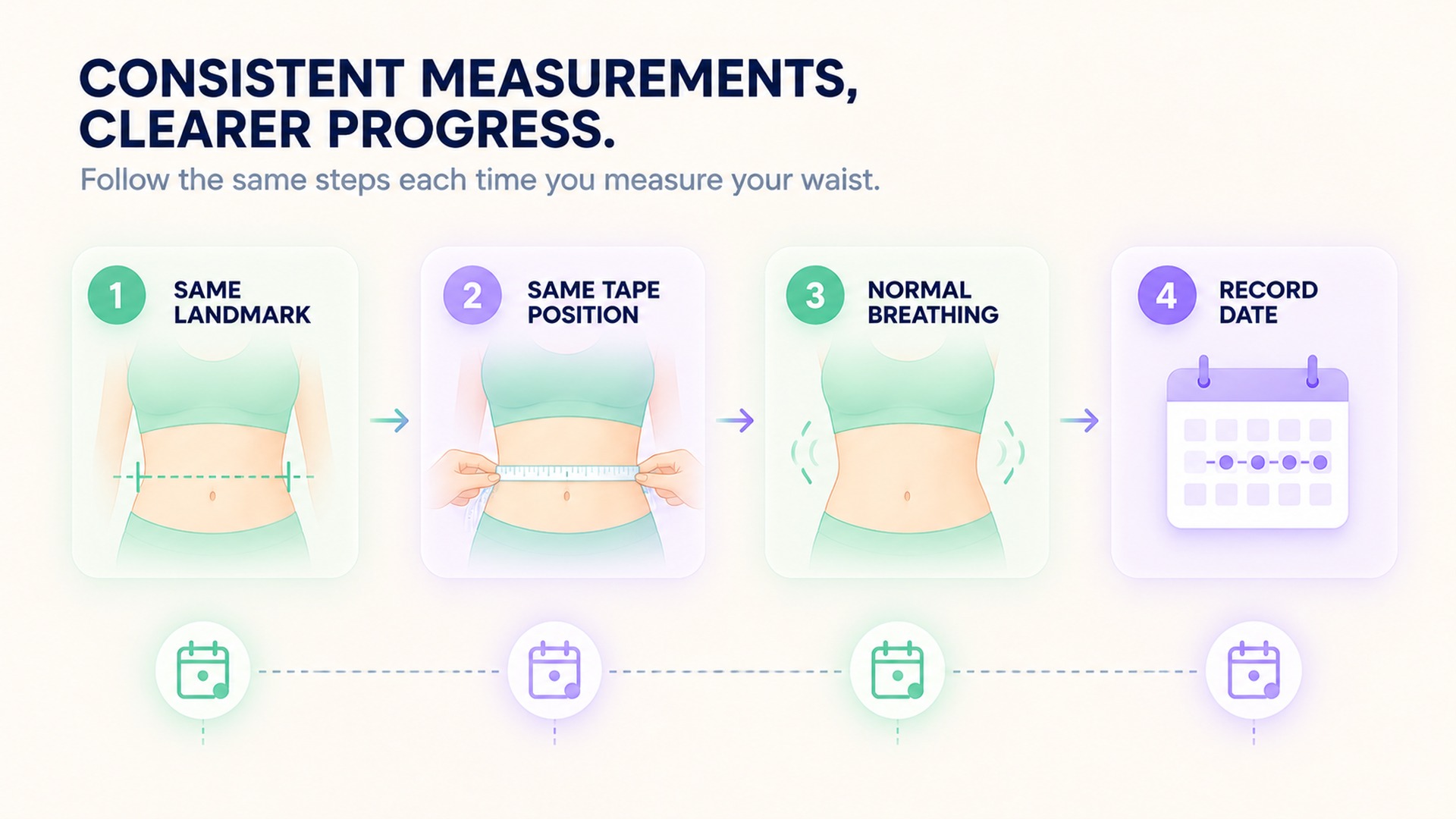
For a useful trend, keep the date, unit, landmark, posture, tape placement, breathing instruction, and whether the reading was repeated. Keep the first reading and any repeat rather than only storing an average. If the method changes, mark a clear break in the record. A clinician can then distinguish a technique change from a possible change in the measurement itself.
A related note on short-term weight changes explains why a body measurement should stay separate from conclusions about tissue composition. Waist circumference is a different measure from total body weight, but both require the method and date to remain visible. Neither single value describes a person's overall health.
Frequently asked questions
Should the tape go at the navel or above the hip bone?
It depends on the protocol. Some methods use the top of the iliac crest, while others use the midpoint between the lowest rib and the crest. Use the landmark specified by the clinician or study and keep it the same for the trend.
How tight should the tape be?
It should sit snugly and level without compressing the skin. Follow the method's instructions for tape type and placement, and record the technique if the measurement is used over time.
Can a small waist change show a change in visceral fat?
No. Waist circumference measures the external circumference at a defined site. It does not directly measure visceral fat or explain the reason for a change. Interpret it with the full method and clinical context.
*This article is for informational purposes only and is not a substitute for professional medical advice, diagnosis or treatment.*
Sources:
National Heart, Lung, and Blood Institute·World Health Organization·National Center for Biotechnology Information Bookshelf·American Diabetes Association·American Heart Association·PhenX Toolkit
Related articles

Lean tissue on a body scan includes more than muscle
A body-composition scan reports method-dependent compartments such as lean soft tissue, not a direct count of skeletal muscle. Keep the exact scan label, body region, method, date, and testing context with the result before comparing it over time.

Urine albumin concentration needs its creatinine context
A spot urine albumin concentration changes with how diluted the sample is. The albumin-to-creatinine ratio adds context, while the full report and clinical question still guide interpretation.

A hemolyzed blood sample can complicate a potassium result
Cell damage during collection or handling can affect a measured potassium value. Keep the sample-quality comment with the report and have the result reviewed in its clinical context.

Biotin supplements belong in the record before a blood test
Biotin in supplements can affect selected laboratory assays, and the effect depends on the method used. A clear product, amount, and timing record helps the testing team decide whether an assay-specific review is needed.

A post-vaccine HRV change is not a personal immunity test
A wearable HRV change after vaccination can describe a physiological signal, but it cannot measure antibodies or personal protection. Learn why study associations, symptoms, and immune status answer different questions.

Vitamin D blood levels should not become an automatic supplement dose
Learn what a vitamin D blood test measures and why the result does not automatically set a supplement dose. See how symptoms, medicines, testing reason, and health history shape interpretation.

Blood sodium concentration is different from sodium eaten
Learn why a sodium blood test measures a concentration while a food log estimates an amount eaten. See why a blood result cannot be converted into an instruction to add salt or change intake.

Recent lifting belongs in the context of a liver enzyme result
Learn why recent lifting belongs beside liver enzyme results and why it should not be assumed to explain an abnormal test. See how AST, ALT, CK, timing, symptoms, and the rest of the panel help shape clinical interpretation.

Keep the kidney function equation beside an eGFR trend
Learn why a change in the eGFR equation can shift a reported estimate without an equivalent biological change. See what to record beside each value so a trend can be interpreted with its method and clinical context.

Creatine kinase after exercise requires symptoms and timing
Learn why recent exercise, test timing, and symptoms all matter when a creatine kinase result is reviewed. See why CK is a clinical marker rather than a training target and when unusual symptoms need prompt attention.