Snoring, Sleep Apnea, and Smart Rings: What They Can Actually Detect in 2026
By Mr. Apps · Aug 5, 2026
Category:Sleep

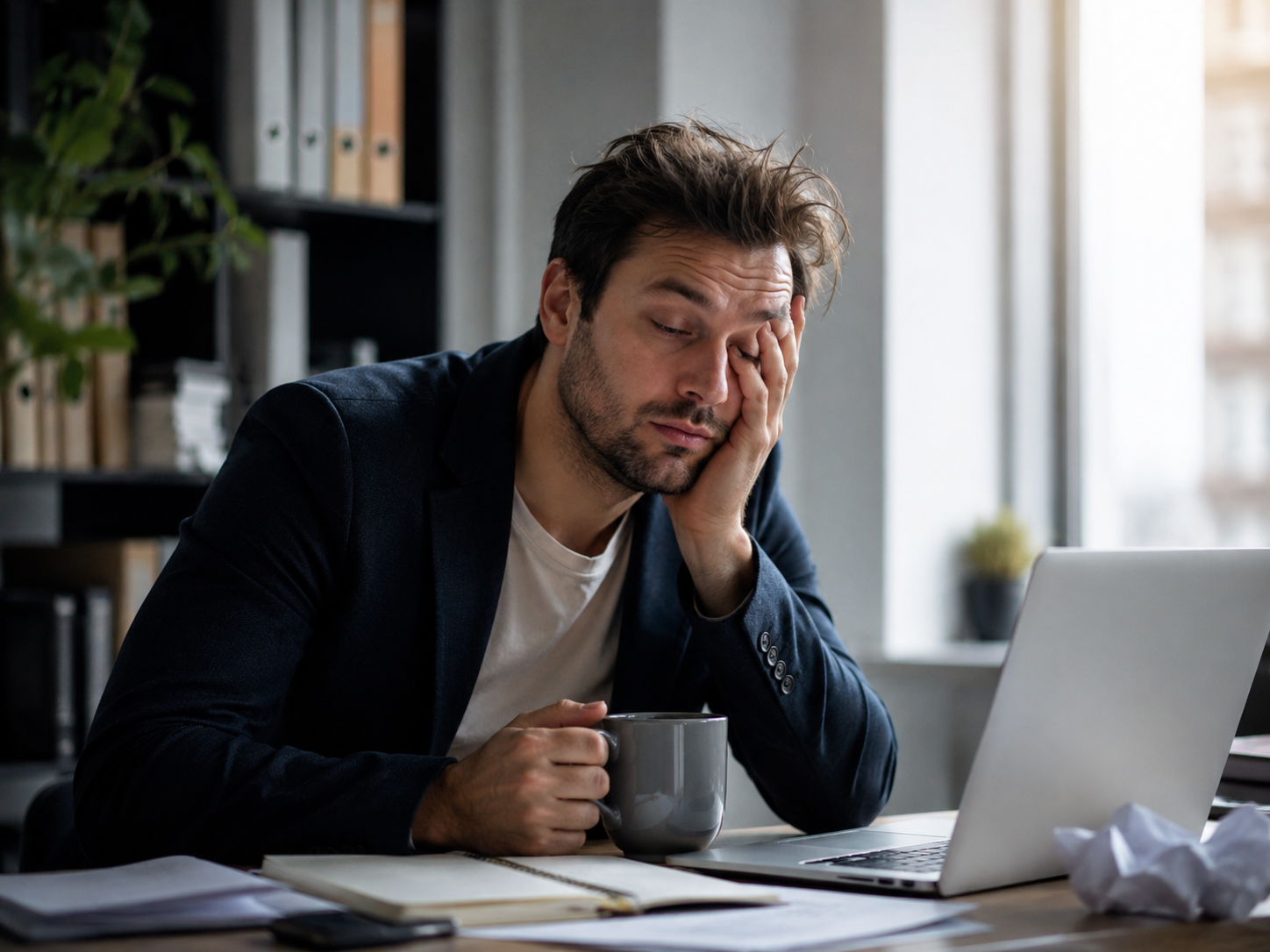
A while back my team spent a few weeks working through overnight sensor data for a project on sleep metrics. On the third morning one of the engineers said something at the whiteboard that stopped the session. His wife had been telling him for two years that he stops breathing at night, sometimes long enough that she woke him to check. He had worn a smart ring every single night across that entire period. It had never mentioned anything.
Nobody had a good answer for why. We spent the rest of that week on a question none of us had planned to ask: what can these devices actually see?
That gap between what a person lying next to you can hear and what a sensor on your finger can infer is the subject of this article. Wearables have gotten considerably better at sleep-disordered breathing since then, and some of them now carry real regulatory clearance for it. They still are not sleep studies, and the difference matters more than most product pages admit.
Snoring is a sound. Apnea is an event.
Snoring happens when the soft tissue at the back of your throat narrows and vibrates as air passes through. It is noisy, and on its own it is not a diagnosis of anything.
Obstructive sleep apnea is a different thing. The airway does not just narrow, it closes. Airflow stops for ten seconds or longer, blood oxygen falls, and your brain briefly wakes you up enough to reopen the throat. You usually do not remember any of it. A partial version of the same event, where airflow drops but does not stop, is called a hypopnea. Clinicians count both per hour of sleep and call the result the apnea-hypopnea index.

The two conditions overlap but they are not the same population. Plenty of people snore loudly and have a completely normal index. Plenty of others, especially women and adults over sixty, have significant apnea with very little snoring at all. And the scale of the problem is larger than most people assume: one widely cited analysis in The Lancet Respiratory Medicine estimated that close to a billion adults aged 30 to 69 have some degree of obstructive sleep apnea, with most of them undiagnosed.
What the sensors on your finger are actually doing
A smart ring has no way to measure airflow. It cannot see your throat, it does not know whether your chest is straining against a closed airway, and it is not touching your nose or mouth. Everything it reports about breathing is inferred from a small set of indirect signals.
The main one is reflectance pulse oximetry. Light is shone into the tissue of your finger and the sensor reads what bounces back to estimate oxygen saturation. The same optical signal gives heart rate and heart rate variability, and an estimated respiratory rate can be pulled out of it. Then there is an accelerometer tracking movement and body position. Watches add wrist micro-movements, and phones add a microphone that can classify snoring audio.

None of that is airflow. It is a reconstruction, and reconstructions inherit the weaknesses of their inputs. Optical oxygen readings in particular are sensitive to fit, circulation, skin temperature, and skin pigmentation, which is why the FDA has published specific guidance on the limits of pulse oximeter accuracy for consumer use.
We found that out quickly once we started logging our own nights. One person came back with a shelf of readings in the high eighties that would have looked alarming at sea level, until we lined the dates up against a long-haul flight and four nights in a mountain town. Someone else produced the same shape for a week and traced it to a ring worn on a different finger, sitting loose. Both sets of numbers were real. Neither meant what it looked like it meant.
Wellness metric, cleared screening tool, and actual diagnosis
There are three separate things being sold under roughly the same vocabulary, and telling them apart is the single most useful skill a wearable owner can have in 2026.
The first tier is general wellness. Breathing regularity scores, snore minutes, oxygen variation graphs. These are not regulated as medical devices, they are not validated against a sleep lab, and the manufacturer is careful never to use the word apnea in the same sentence as the word detect.
The second tier is genuinely different. Regulators created a formal category for it, an over-the-counter device intended to assess risk of sleep apnea, and several watch and ring features now sit inside it. These have cleared review and carry indications that are limited on purpose: adults over a certain age, no previous apnea diagnosis, a set number of monitoring nights, and an explicit statement that the feature does not replace clinical diagnosis.
The third tier is the sleep medicine itself, and the professional bodies have been consistent about where the line falls. The American Academy of Sleep Medicine's position on consumer sleep technology is that these devices can support a conversation with a clinician but cannot stand in for validated testing.
A positive alert is a reason to make an appointment, not a result
If your ring or watch flags a pattern consistent with sleep-disordered breathing, the correct response is boring. You take the alert, and any symptoms you have noticed, to a doctor.
Symptoms carry more weight in that conversation than the graph does. Morning headaches, waking with a dry mouth, needing to urinate several times a night, daytime sleepiness that survives a full eight hours in bed, high blood pressure that resists treatment. A clinician may run a short structured screen such as the STOP-Bang questionnaire, which scores snoring, tiredness, observed pauses, blood pressure, body mass index, age, neck circumference, and sex.
From there the path is either a home sleep apnea test with airflow and effort sensors, or an attended overnight study in a lab. The AASM guideline on diagnostic testing for adult sleep apnea treats the in-lab study as the reference standard and reserves home testing for uncomplicated cases with a high pre-test likelihood.
An older relative of mine went through this sequence last year. Her watch flagged nothing across months of wear, but her husband had been telling her she gasped in her sleep, she was falling asleep in the afternoon, and her blood pressure would not come down. She pushed for a referral on symptoms alone and came back with moderate apnea. The wearable was not the instrument that could answer the question.

Why a quiet wearable proves nothing
This is the part that gets underplayed, and it is the reason I am cautious about how these features are marketed.
Apnea is not evenly distributed across a night or across nights. It clusters in REM sleep, it worsens on your back and with nasal congestion, and it varies with weight and sleep position. A device sampling two nights can easily sample two good ones. On top of that, a meaningful share of hypopneas end in a brain arousal without a large oxygen drop, so an oxygen-led algorithm never sees them.
Then there are the mechanical failures. A ring rotated out of position, a finger you slept on, a night the battery died at 3 a.m. We ran a small side-by-side test on this, with five of us wearing a ring and a watch together for two weeks. On roughly a third of the nights the two devices disagreed about the lowest oxygen reading by more than four percentage points. They cannot both have been right.
The AASM's own diagnostic guidance makes the same point about clinical equipment: a negative home sleep test in someone with persistent symptoms is a reason to go to a full lab study, not a reason to stop looking. That logic applies with far more force to a consumer device. And the stakes are real, since the American Heart Association's scientific statement on sleep apnea and cardiovascular disease links untreated apnea to hypertension, atrial fibrillation, heart failure, and stroke.
What we took away from it
We stopped reading single nights, and it is the first thing I say now when anyone asks me about their sleep data. A ring is reasonable at showing a trend across a month, and a trend is the thing worth bringing to a doctor if it shifts. Individual nights are noise dressed up as data.
The second lesson came from that first morning at the whiteboard. Two years of overnight readings had told my colleague nothing useful. His wife had been telling him the answer the entire time, because she was in the room and she was paying attention. He booked a sleep study a few weeks later. If someone who sleeps near you says you stop breathing, that observation outranks anything on your phone.
The technology is genuinely improving and the cleared screening features are a real step forward, especially for people who would never have thought to raise sleep with their doctor. Use them as a prompt. Do not use them as an answer.
Frequently asked questions
Can a smart ring diagnose sleep apnea?
No. A ring can flag patterns that suggest sleep-disordered breathing, and some cleared features can indicate elevated risk, but a diagnosis requires a home sleep apnea test or an in-lab polysomnography study interpreted by a qualified clinician. The regulatory clearances for these consumer features say so directly.
My ring shows my oxygen dropping to 88 percent some nights. Should I be worried?
Worth investigating, but not on its own. Optical oxygen readings on a finger are affected by ring fit, circulation, sleeping position, and altitude, so a single low number can easily be an artifact. Look at whether the pattern repeats across weeks and whether you have daytime symptoms, then raise both with a doctor.
I snore loudly but my wearable says my breathing is fine. Do I still need to get checked?
If you have symptoms such as observed breathing pauses, daytime sleepiness, morning headaches, or blood pressure that will not come down, yes. Snoring plus symptoms is worth a clinical evaluation regardless of what your device reports, because consumer wearables miss a share of events and were never designed to rule the condition out.
*This article is for informational purposes only and is not a substitute for professional medical advice, diagnosis or treatment.*
Sources:
The Lancet Respiratory Medicine·U.S. Food and Drug Administration·American Heart Association·American Academy of Sleep Medicine·SleepApnea.org
Related articles
Social jet lag: why sleeping in on weekends can wreck Monday energy
Sleeping in on weekends shifts your body clock and drains Monday energy. Learn how to calculate your social jet lag and four realistic ways to reduce it.
Sleep Debt Is Real: How Long It Actually Takes to Recover Lost Sleep
Sleep debt doesn't clear in one long weekend. Here's what the research says about realistic recovery timelines, plus a 3 to 7 day plan that works.
Does Working From Home Improve or Hurt Your Sleep?
Exercise timing and sleep quality
Why Evening Screens Can Leave You Wired but Tired
We're told blue light is why screens ruin our sleep, so we dim the display and turn on the warm filter. But if you've ever put the phone down exhausted and then lay there wide awake, the light was never the real problem. Here's what is.
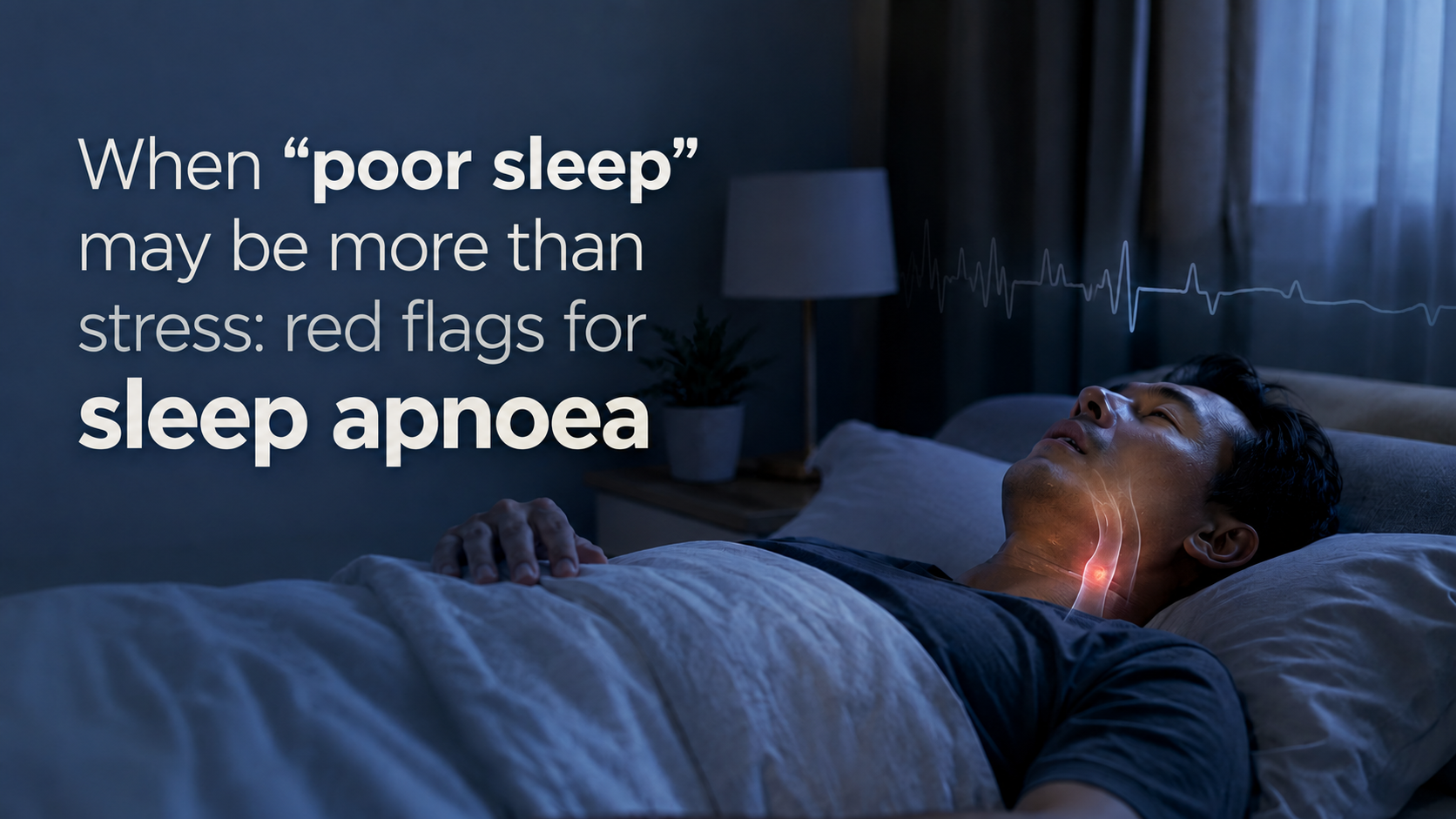
When "poor sleep" may be more than stress: red flags for sleep apnoea
Loud snoring gets dismissed as a quirk, morning headaches get blamed on stress, and daytime fog gets chalked up to a heavy calendar. Taken together, though, these signs can point to something a GP should know about: obstructive sleep apnoea. Here's what the real red flags look like, what home screening tools can and can't tell you, and when it's time to ask for a proper referral.
How to protect your sleep when your job keeps changing the clock
Shift work doesn't fail because people lack discipline. It fails because the body was never built to run a factory schedule. Here's what actually helps between rotating shifts, why "just going to bed earlier" doesn't work, and when persistent fatigue stops being normal and starts being something worth getting checked out.

When naps help your energy and when they quietly make sleep worse
The morning light habit that can improve sleep without changing your bedtime
Most sleep advice focuses on the evening, dim the lights, put the phone away, but that's only half the equation. A few minutes of daylight soon after waking helps set your body clock earlier, making it easier to fall asleep at a reasonable hour that night, no bedtime changes required. Here's why it works, what actually counts as "morning light" in a real schedule, and when the habit alone isn't enough.