Peak flow and spirometry report different breathing measures
By Mr.Apps · Nov 2, 2026
Category:Energy

Two breathing measurements with different jobs
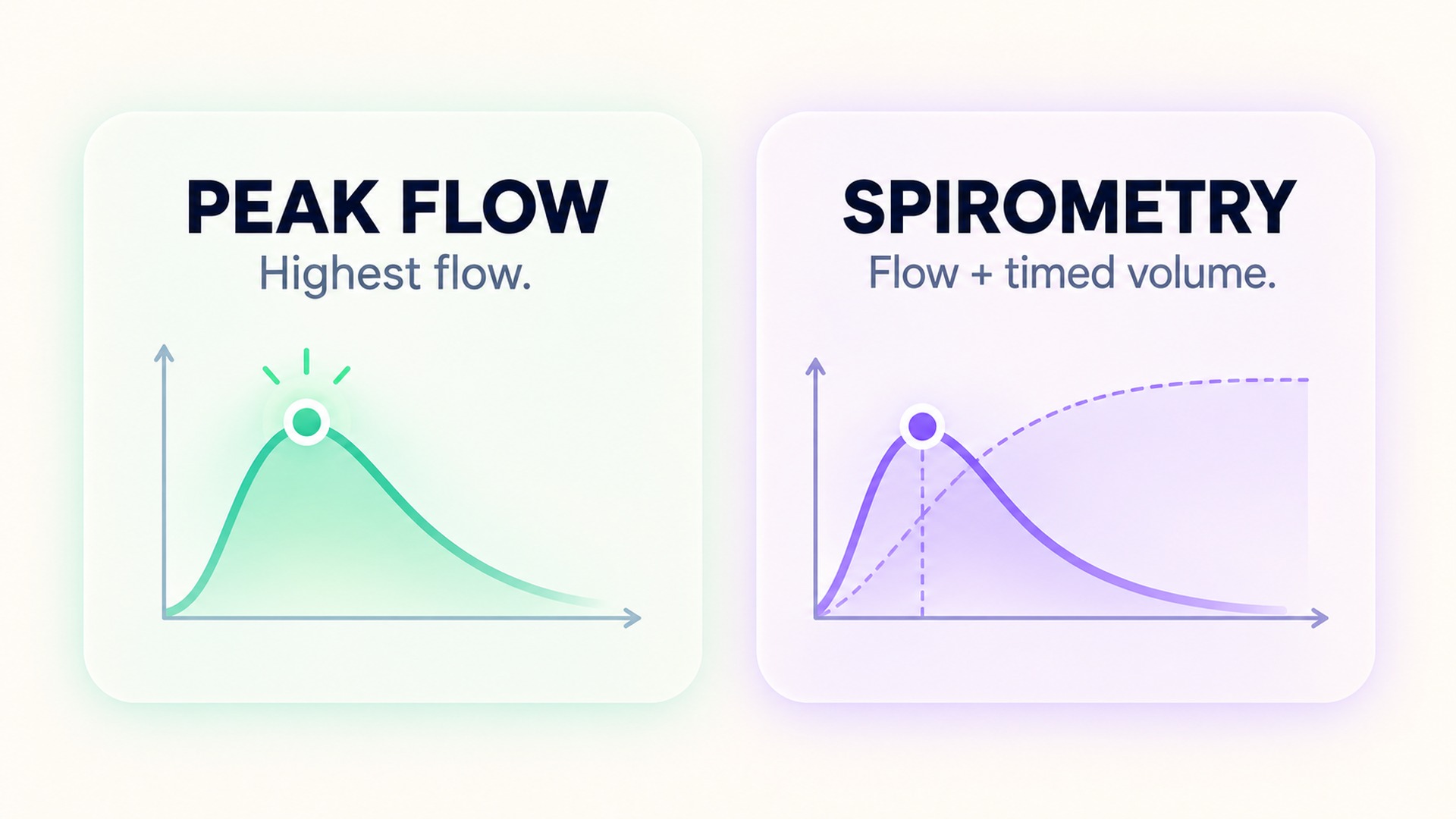
Peak flow and spirometry report different breathing measures. A peak flow meter records the highest expiratory flow achieved during a forceful breath out. Spirometry records airflow and the volume moved over time during a set of breathing maneuvers. A spirometry session can include a peak expiratory flow value, but that single value is only one part of the full set of measurements.
The distinction matters when saving a result or comparing tests. “Peak flow” may refer to a handheld meter reading taken at home or to the highest flow recorded during a laboratory maneuver. Spirometry may include forced expiratory volume, forced vital capacity, ratios, and flow-volume curves. Keep the exact test name, units, device, date, and report comment attached to the value.
The patient overview of pulmonary function tests describes spirometry as a test that measures how much air a person breathes in and can quickly blow out. It also explains why a test may involve several repeated efforts. The purpose and test method belong with the number.
What a peak flow reading represents
Peak expiratory flow, often abbreviated PEF, is the maximum flow reached during a forceful expiration that begins after a full breath in. A handheld peak flow meter is designed to capture that highest flow. It does not report the full volume exhaled over time. The reading can depend on a good seal, the starting breath, the speed of the effort, body position, and the specific instrument.
A meter's scale and units should stay visible in the record. Some reports use liters per minute; laboratory devices may report liters per second. Values cannot be compared until the unit and device are clear. Follow the instructions for the specific meter or clinic procedure, including how many attempts to record and which result is retained. Do not substitute a peak flow value for a different spirometry field just because the numbers both describe exhalation.
The public guidance on peak expiratory flow records describes serial peak-flow measurements as one kind of monitoring information and emphasizes recording results over time. It does not mean that a series of peak flow numbers alone identifies the cause of a breathing symptom or replaces a full clinical assessment.
What spirometry adds
Spirometry examines a more complete maneuver. In a typical forced test, the person inhales fully and then exhales as forcefully and completely as directed through a spirometer. The instrument measures how volume and flow change over time. Depending on the test and report, it may include FEV1, the volume exhaled in the first second, FVC, the total forced volume, the FEV1/FVC ratio, peak expiratory flow, and the shape of the flow-volume curve.
The technical statement on spirometry standards explains that spirometry measures volume or flow over time and that test quality depends on the maneuver and equipment. The operator checks whether each effort meets acceptability and repeatability criteria before interpreting the values. A strong or weak effort can change the recorded results, which is why the report may include quality grades, notes, or a reason to repeat the test.
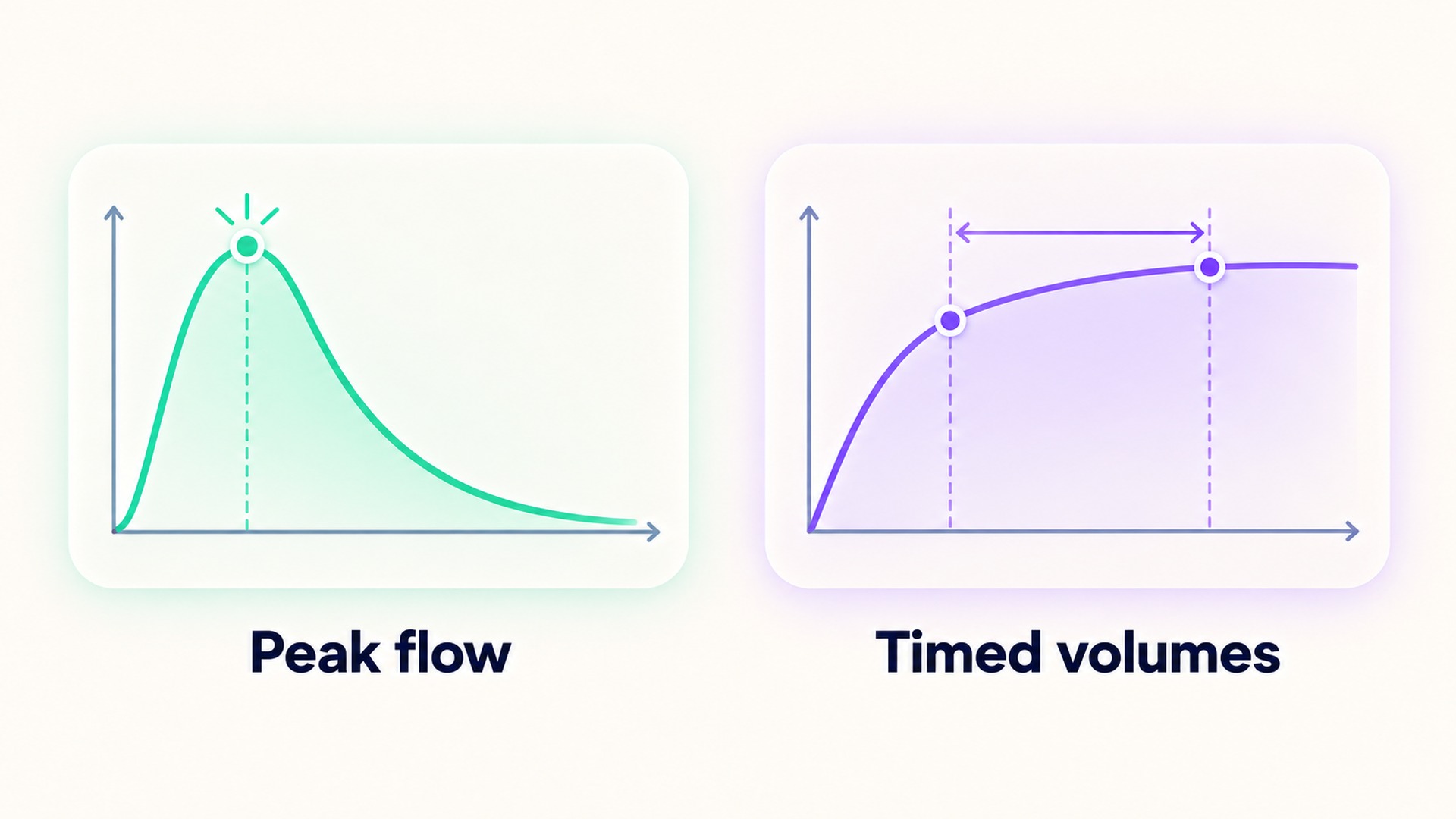
The peak flow value within a spirometry session is therefore related to, but different from, the broader spirometry report. The initial peak of a flow-volume curve can reflect how quickly flow rises during the start of expiration. Timed volumes describe how much air was moved by a certain point in the maneuver or by the end of the effort. These values answer separate questions about the same breathing test.
The spirometry description from a public lung-function laboratory explains that a forced inhalation and exhalation are used to measure total volume and maximum flow at time points. The pulmonary function test overview also lists peak expiratory flow among the possible measurements. A report may combine several values, but the labels and units still determine what each one means.
Why effort and technique belong with the result
A breathing maneuver is effort-dependent. A cough, hesitation at the start, early stop, leak around the mouthpiece, poor seal, or a change in posture can affect the trace. Instructions, coaching, and repeat maneuvers help the testing team assess whether a result is usable. If the report says an effort was limited or suboptimal, retain that comment rather than treating the number as equivalent to a high-quality test.
A home peak flow entry and a clinic spirometry result also come from different settings. The home reading may be repeated under a familiar routine, while spirometry is performed with a particular instrument and technician. The equipment, timing, and coaching differ. Trends are easier to compare when the same method is used and the testing conditions are documented.
The peak flow meter instructions emphasize setup and technique for obtaining a reading. The spirometry standards describe repeated maneuvers and quality assessment in a clinical test. These procedures serve different measurement settings; a record should not blur one into the other.
How the graphs represent different information
A peak-flow meter reduces a forceful breath out to a maximum flow reading. A spirometry display can show flow against time, volume against time, or flow against volume. Those curves allow the operator to see how the maneuver developed, not only its highest point. The curve's shape and timing can help the testing team evaluate technique and quality, but a reader should not diagnose a condition from a graph without the report and clinical interpretation.
The timed volume values depend on when the measurement begins and how long the person continues to exhale. FEV1 describes volume in the first second of a forced expiration; FVC describes the total forced volume when the test meets its end-of-expiration criteria. A value can be affected if a person does not start quickly or stop too soon. The report's acceptability note and the trace help the interpreter decide whether those values are usable.
A peak-flow reading and an FEV1 value may both be related to forced expiration, but their units, scales, and calculation rules differ. A peak flow meter records a speed of airflow, while FEV1 records a volume by a defined time point. Do not convert one into the other or compare their numeric magnitudes as if they were on the same scale. Save the displayed label exactly as printed.
When each record is useful
A peak flow series can preserve repeated observations made with the same meter and technique. A spirometry test provides a more detailed set of measurements collected during a supervised session. A clinician may choose one, the other, or both depending on the question. The fact that a home meter is convenient does not make it equivalent to spirometry, and a clinic test does not automatically replace a home monitoring plan that a clinician has recommended.
The record should identify whether the result came from the person's home meter, a clinic spirometer, or another device. It should also say whether a bronchodilator or other testing step was involved when the report includes that information. Follow the instructions for the specific test. Do not change a treatment plan or repeat a test at home because a single reading differs from a prior value without consulting the care team.
Keep the interpretation with the test
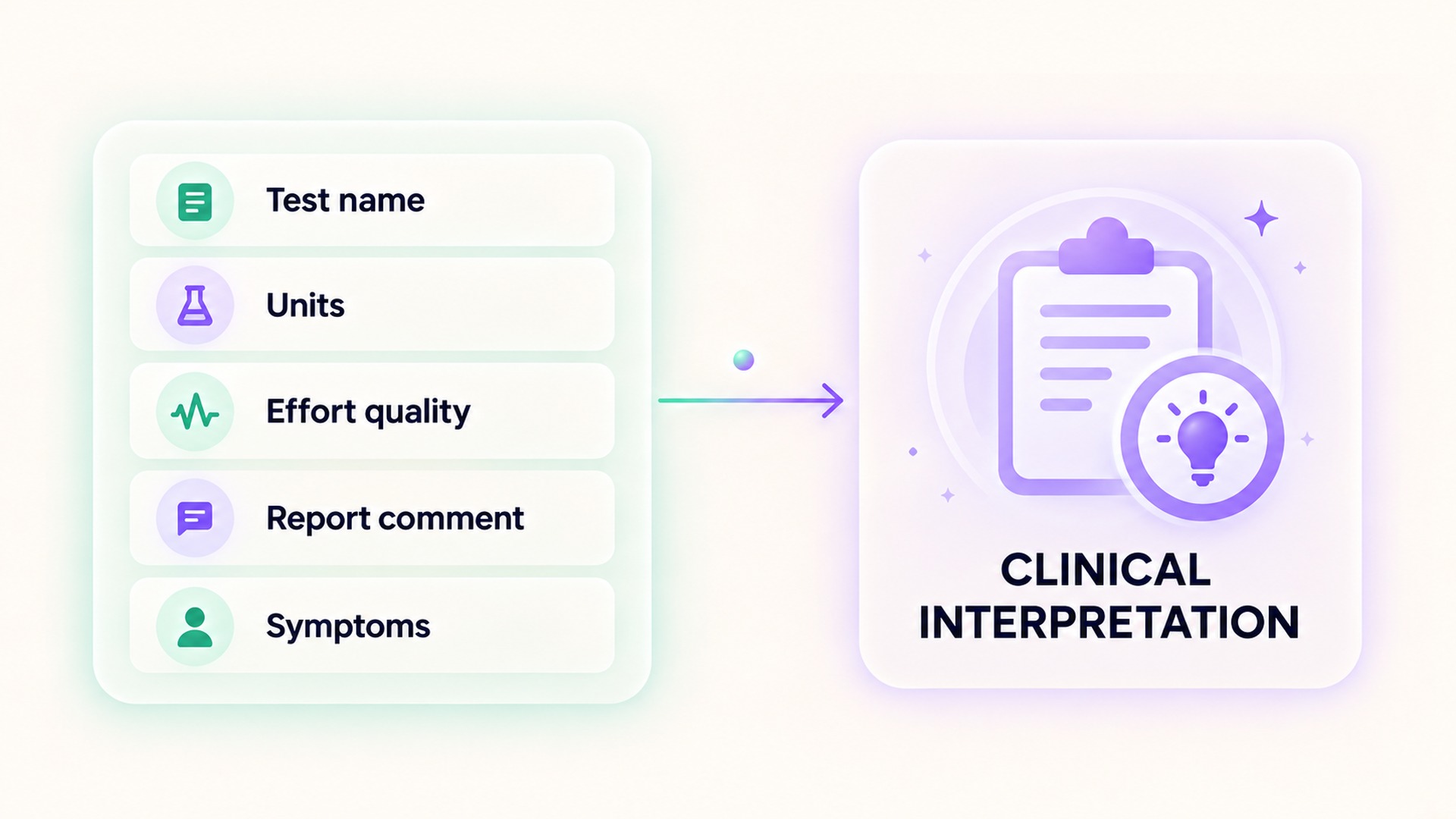
Save the full report with test name, date, units, method, device, effort-quality note, and any clinician interpretation. For peak flow, record whether the value came from a handheld meter and the meter's scale. For spirometry, keep the full report rather than copying just FEV1, FVC, or PEF into a generic breathing field. If a test was repeated, preserve the repeat values and report notes.
Symptoms and test results are related records but they are not the same observation. If the care team asked about symptoms, note what was present and when. A breathing test does not explain every symptom, and a single peak flow reading does not replace clinical advice. Follow the plan given by the responsible clinician, especially if the result is abnormal or the report flags an issue with effort or test quality.
When comparing two dates, check that the tests used the same method, device or laboratory, units, and reporting fields. An apparent change may reflect a different technique, a different point in the maneuver, or an actual change in lung function. The clinician can determine which explanation is relevant and whether another measurement is useful.
Frequently asked questions
Is peak flow the same as spirometry?
No. Peak flow is the highest expiratory flow from a forceful breath out. Spirometry measures airflow and exhaled volume over time and may report several values, including peak flow.
Can a spirometry report include a peak flow value?
Yes. Peak expiratory flow can be one value within a spirometry session. The test name and report fields show whether the value came from a handheld meter or a spirometer maneuver.
What should I keep with a breathing test result?
Save the exact test name, units, date, method, device, effort-quality note, and clinician interpretation. Keep symptom notes separate and follow the instructions from the testing team.
*This article is for informational purposes only and is not a substitute for professional medical advice, diagnosis or treatment.*
Sources:
American Thoracic Society·Centers for Disease Control and Prevention, National Institute for Occupational Safety and Health·American Journal of Respiratory and Critical Care Medicine·National Heart, Lung, and Blood Institute·MedlinePlus·American Lung Association
Related articles

A resting metabolic rate test depends on the test protocol
A resting metabolic rate test estimates energy use from gas exchange under defined conditions. The preparation, equipment, analysis method, and report details all affect how the value should be interpreted.

Bone density T-scores and Z-scores use different references
A T-score compares bone density with a young-adult reference, while a Z-score uses a more closely age-matched reference. Keep the score type, skeletal site, and report interpretation together because the two numbers are not interchangeable.

Waist measurements need a consistent anatomical landmark
Waist circumference can differ when the tape crosses different anatomical sites or follows a different plane. Keep the landmark, posture, breathing phase, and tape position with each date so a trend uses a consistent protocol.

Lean tissue on a body scan includes more than muscle
A body-composition scan reports method-dependent compartments such as lean soft tissue, not a direct count of skeletal muscle. Keep the exact scan label, body region, method, date, and testing context with the result before comparing it over time.

Urine albumin concentration needs its creatinine context
A spot urine albumin concentration changes with how diluted the sample is. The albumin-to-creatinine ratio adds context, while the full report and clinical question still guide interpretation.

A hemolyzed blood sample can complicate a potassium result
Cell damage during collection or handling can affect a measured potassium value. Keep the sample-quality comment with the report and have the result reviewed in its clinical context.

Biotin supplements belong in the record before a blood test
Biotin in supplements can affect selected laboratory assays, and the effect depends on the method used. A clear product, amount, and timing record helps the testing team decide whether an assay-specific review is needed.

A post-vaccine HRV change is not a personal immunity test
A wearable HRV change after vaccination can describe a physiological signal, but it cannot measure antibodies or personal protection. Learn why study associations, symptoms, and immune status answer different questions.

Vitamin D blood levels should not become an automatic supplement dose
Learn what a vitamin D blood test measures and why the result does not automatically set a supplement dose. See how symptoms, medicines, testing reason, and health history shape interpretation.

Blood sodium concentration is different from sodium eaten
Learn why a sodium blood test measures a concentration while a food log estimates an amount eaten. See why a blood result cannot be converted into an instruction to add salt or change intake.